← Thru the Bible Daily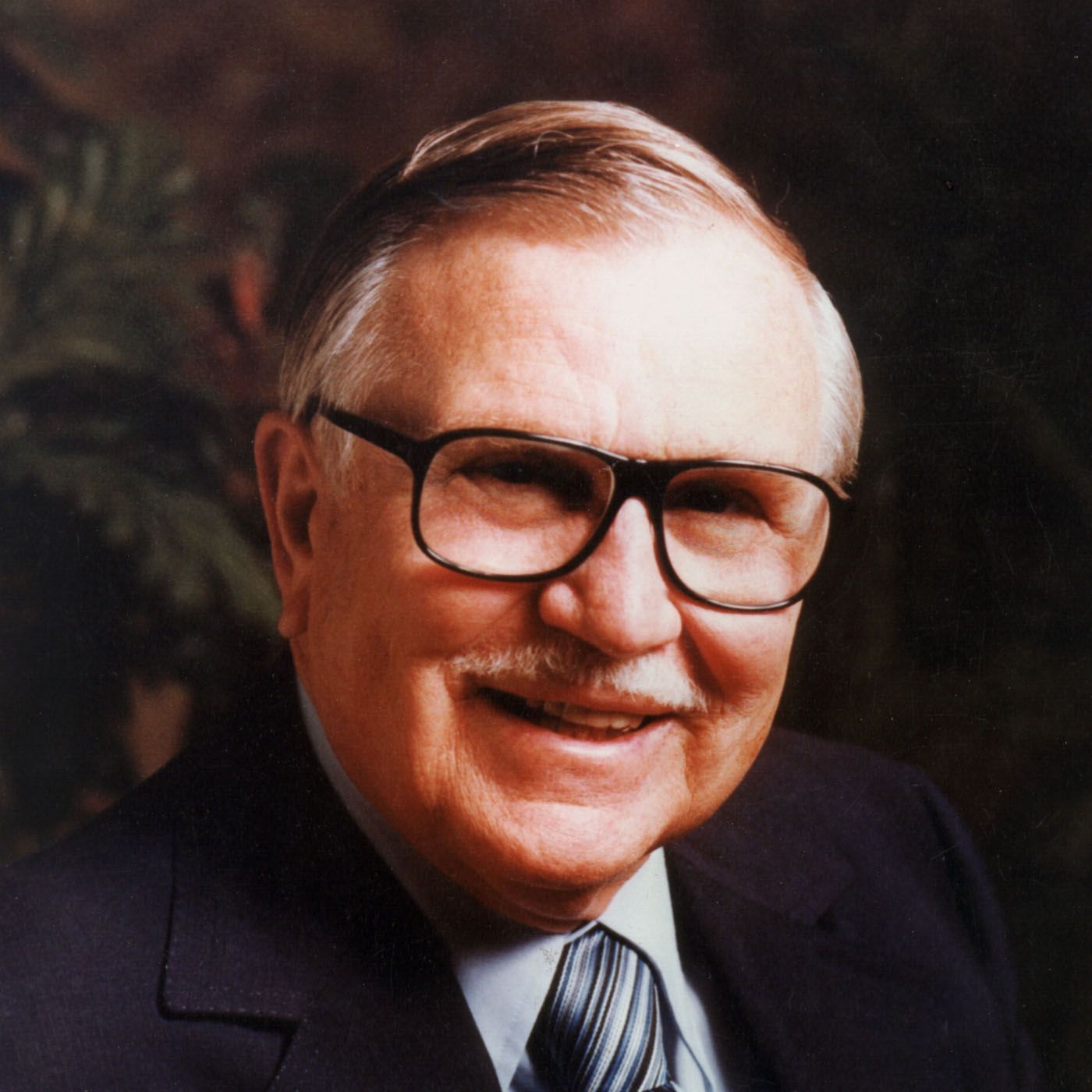
Thru the Bible Daily
Matthew 18
00:26:01
Do you ever wish you could have sat at Jesus’ feet and just listened? In a manner of speaking, we get that chance in this study of Matthew 18 as we read what Jesus said about conflict and forgiveness, as well as what happens when “two or three gather...
Loading summary
Transcript8 lines
- [00:00]
Dr. J. Vernon McGee
How firm a foundation, ye saints of the Lord is made for your faith
- [00:13]
Steve Schwetz
in his excellent way. Do you ever wish you could have sat at Jesus feet and just listened? Well, today, in a manner of speaking, you'll get that chance. Welcome to through the Bible. I'm Steve Schwetz, your host. Our teacher of course is Dr. J. Vernon McGee and he's about to guide us through Matthew 18 where we'll hear straight from Jesus himself. It's a great study, one that answers some questions about the kingdom of heaven and talks about the importance of forgiveness. So go ahead, grab your favorite seat on the Bible bus and as you get comfortable, let's hear from a fellow passenger named Fred, who hopped back aboard after a long break.
- [00:51]
Fred
This is Fred. I live in Grand Prairie, Texas. I was saved in 1971. Having been a former professional drummer. Should be dead like a lot of my friends were at that time. But I got saved. Then I joined a questionable group. I was in that for about three years and when I got out I started listening to J. Vernon McGee and through the Bible on the radio here and there in the Southern California area in mid-70s. And then I eventually went to Dallas Theological Seminary and got a Master's degree in Christian Education and was in ministry full time for a long time encounter cult missionary work. And then recently after having had some health problems and being out of ministry, retired, I started listening through the Bible again back in Hosea this last session and I decided to continue in Genesis and just ordered a set of notes and outlines. So I appreciate all that you guys are doing and how Dr. McGee has helped me and I want to help more people and hope to be teaching the Bible somewhere again in his time. God Bless. Bye bye.
- [02:15]
Steve Schwetz
Well Fred, I'm so glad you're here and I'll continue to save your seat as we travel along and you keep us posted as you fling the seed and share the word with others. You know we'd love to hear from you as well. So if you've been on the Bible bus for a while, what's standing out to you in a fresh new way? And what advice would you share with someone maybe who's just climbing aboard? And if you're new, what brought you here and what's surprised or excited you so far, send us a note, won't you? Through our Feedback section in the app, you can email us@biblebusttb.org you can write to Box 7100, Pasadena, CA 91109 or in Canada, Box 25325 London Ontario N6C 6B1. Or like Fred, leave us a voicemail at 1865 Bible let's pray. Heavenly Father, increase our desire for your word, and let each word that we hear delight our souls. In Jesus name we pray. Amen. Now Turn to Matthew 18 as we go through the Bible with Dr. J. Vernon McGee.
- [03:20]
Dr. J. Vernon McGee
Now, in the 18th chapter of the Gospel of Matthew, we have a very wonderful chapter. Here we find first the Lord places a little child in the midst as an object lesson for the kingdom of heaven today. And then he pronounces the parable of the lost sheep. And he provides a new pattern for conduct in the church. And he proclaims a new proviso for forgiveness. You see these chapters here, though they do not seem to further advance the movement that's in the gospel, but they do fill out many of the dark corners which have risen because of the sudden digression in the kingdom of heaven due to the rejection of the King. Now, Matthew 13 gave us an overall outline of the kingdom of heaven in this age in the mystery parable discourse. But there are still questions to be answered. These chapters I find very helpful in answering many of the questions that arise. Now. We find that the new birth is made essential in entering the kingdom. And and so let's begin there with verse one now, and I'm reading at the same time came the disciples under Jesus, saying, who is the greatest in the kingdom of heaven? I wonder if you detect anything there of personal ambition, or is that just because I have a very critical mind that I see it there? Well, I feel that these men probably been talking it over, and I suppose that maybe two or three of them would express themselves and probably get the impression that they might be the ones that could reasonably be considered as the greatest in the kingdom of heaven. And our Lord did a rather sensational thing here. Jesus called a little child unto him. Something that you may miss here is this. And set him in the midst of them. What does that tell you? It tells us that the little child, without hesitation came to him. I think this is a very remarkable thing. The little ones came to him. Suffer the little ones to come unto me and forbid them not. The problem was not in getting the little ones to come to him. The problem was to stop the older ones, the adults, from hindering the little ones to come to him. I think this is a very lovely thing that we have here. So our Lord put him in the midst and said, verily I say unto you, except ye be converted and become as little children Ye shall not enter into the kingdom of heaven. Now that verse has certainly been abused and misunderstood. There are those that think that he's talking about reversion and not conversion. They think that it means you're to revert back to your childhood in some unusual fashion. Are you to become like a juvenile in your actions? And I am afraid that we've got a lot of the saints that act like spoiled children. And we've already seen our Lord talked about spoiled brats also. And there are a lot of the saints that think that's what it means. He's not talking about going back to a former childhood, but rather of going on to a new life. Here our Lord gives logic to the thinking of the disciples as he diverts their attention from the matter of holding an exalted place in the kingdom to that of primary importance, namely of first being able to secure entrance into that kingdom. And this is just as radical as what our Lord said to Nicodemus that night. He said to him, that which is born of the flesh, it's flesh, and that which is born of the spirit is spirit. And that unless you're born again, why, you're not even going to be able to see the kingdom of God. So that the important thing here is the new birth. And that is what, what he's talking about here. You've got to become a little child in the sense that you've got to be born again. And when you're born again, you start out as a child spiritually. And so many today like to be very active, be doing things. There are a lot of folks that like to give testimonies. You'd be surprised that over the years, the number of, of requests that I've had from so called new converts that wanted to come and give their testimony. May I say to you, that is the same thing he's talking about here that these men said, who's the greatest in the kingdom of heaven? We'd like to get a good slice of the kingdom. We'd like to be pretty prominent in it. This is a day that is overemphasize activity and methods and getting everybody involved. This is the savers of that. Now our Lord said that if you have been converted, why think of your spiritual age. You're to become a little child. Now, should a little child get up and blabber out a testimony immediately, should a little child be an officer in the church? Paul says not. And I think our Lord is saying something like that here. This is a very important section, as you can see. Now, he goes on to say this. Verse 4. Now of Matthew 18. Whosoever, therefore, shall humble himself as this little child, the same is greatest in the kingdom of heaven. Now, this is the thing that's important, is to go back to the entrance into the kingdom, and not the position that is in the kingdom. And when you go back and emphasize the entrance, the new birth, then you'll find out that that one is the greatest in the kingdom. And whoso shall receive one such little child in my name receiveth me. Now listen to him. But whoso shall offend one of these little ones which believe in me, it were better for him that a millstone were hanged about his neck and that he was drowned in the depth of the sea. And, friends, that's rather strong language, by the way. And what he's doing here in this entire section, seems to me he makes the evangelization of children a divine imperative. He gives top priority to this type of ministry. And I commend anyone that's working with children today. There's nothing as important as that. Remember the stories told that Dwight L. Moody came home one night and his family asked him, how many converts did you have tonight? And he said, well, I had two converts and a half of a convert. And they said, oh, you had two adults and one child? Oh, no, no, he said, I had two children. One adult. The adult was an old man. He didn't have but a half of a life to give. Anyway, he's just half of a convert. The little one is the important one. We today just don't emphasize that. I guess they never did. A pastor of a Scottish church years ago turned in his resignation. The elders asked him, well, why are you resigning? Well, he said, all year I've just had one convert. And that was wee Bobby Moffett. Well, wee Bobby Moffitt was the man who actually opened Africa, the missionary work. And that was the biggest year that preacher ever had. And I don't care whether he had a thousand other converts. You see, the little ones, Our Lord is putting a great emphasis upon them here and grows out of this question that they ask him. Verse 7. Woe unto the world because of offences. For it must needs be that offences come, but woe to that man by whom the offence cometh. Wherefore if thy hand or thy foot offend thee, cut them off, cast them from thee. It is better for thee to enter into life halt or maim, rather than having two hands or two feet to be cast into everlasting fire. I can't think of Anything more harsh, friends, than this right here? And if thine eye offend thee, pluck it out, cast it from thee. It's better for thee to enter into life with one eye rather than having two eyes to be cast into hell fire. Take heed that ye despise not one of these little ones. For I say unto you that in heaven there angels do always behold the face of my Father which is in heaven. Now, there are two things I want you to see here that are all important today. And especially if you are a person who has lost a little one by death. Now, when it says here, their angels do always behold the face of my Father which is in heaven. This is one of the verses that the belief in a guardian angel has come. And fact, this is the primary verse. Many people believe that all of us have a guardian angel. Now, we may have. Don't misunderstand me. I don't know whether we do or not. If I have one, he hasn't caught up with me yet. So I don't know too much about him. But I personally am sure that this passage hasn't anything to do with guardian angels. The word for angels here is spirits. Now, what he's saying is this, that in heaven their spirits do always behold the face of my Father which is in heaven. What he's saying is this. Don't you offend one of these little ones. Now, when one of these little ones dies, his spirit goes immediately to be with God. All little ones, they go to heaven, friends, and they go to heaven. Not because they're innocent or they happen to be your child, but they go to heaven because Jesus died for them. That's what he's talking about here. Don't you offend them. Don't you get in their way. Let them come to me. And he says, even if they die, their spirit's going to be right there in the presence of my Father. So many people wonder about their little ones. Well, David knew about his. When the little one died, he said, no use mourning anymore. He's not coming to me. One of these days, I'm going to him. That is a very precious truth. So many people that have lost little ones. I've lost a little one also. I have one buried up here in Altadena, Southern California. Every now and then to this good day, and that was years ago, I go by there and put a few flowers there. Just, you know, she's not there, she's with him. But I just go there because that's all I got left now. But someday, someday, Some golden someday I'm going to be there. And when I am, I'm going to see my little one. She's saved. I have two children. And I always hesitate to say that because I only have one living. And people begin to look around and they think maybe something's happened to me that I don't know how to count or something. I have one in heaven, one that's out in Pasadena. She's married. I must confess I worried more about her than I ever have. The little one. Heaven. I know where she is. And someday I'll go to her. This is a glorious passage, friends. And he says, don't block their way. Have you ever stopped to think how important this is in this day when there's so many crimes against these little ones? Recently in Southern California, parents, that is the mother and a stepfather, left a precious little girl along the freeway up here in the San Joaquin Valley. I was up there at the time. How shocking it was to read about. They were cold nights there. They just wanted to get rid of the little one. May I say to you, I be honest with you, friends. You may not believe in a hell, but I want to say this. If there isn't a hell, there ought to be one for folks like that. And there is one. I believe there's one. He said, it'd be better that anything happened to you than cause these little ones to a fan. This is a great passage for this day in which we live. Now he moves from that into this wonderful parable. Here he says, for the Son of man is come to save that which was lost. Now, this is different from the parable in Luke 15 of the lost sheep. There the lost sheep was lost and needed to be found. Actually, here it's a little different. The emphasis here is upon saving the lost, not finding the lost, save that which was lost. How think ye? If a man have a hundred sheep and one of them be gone astray, Doth he not leave the 90 and 9. And goeth into the mountains. And seeketh that which is gone astray? And if so, be that he find it. Verily I say unto you, he rejoiceth more of that sheep than of the 90 and 9 which went not astray. Now we come here to a new pattern. And notice how he closes this. Even so, it's not the will of your Father which is in heaven that one of these little ones should perish. Now he'll take care of them until they get to the age of accountability. But, parent, it's your responsibility until then. My I'm afraid our school systems today are making guinea pigs out of the little ones. They're paying an awful price today in our schools. They've become nothing but guinea pigs in many cases. Through a great many crackpot leaders today that we have. May I say we have a tremendous responsibility before God here. Now he says in this section he provides a new pattern for conduct in the church. Moreover, if thy brother shall trespass against thee, go and tell him his fault between thee and him alone. If he shall bear thee, thou shalt have gained thy brother. Now, if he has trespass against you, you go to him. And if he will not hear thee, then take with thee one or two more. That in the mouth of two or three witnesses every word may be established. Now, this is order in the church. And if he shall neglect to hear them, tell it unto the church. But if he neglect to hear the church, let him be unto thee as a heathen man and a publican. Now, there are those that like to smother things and cover them up. Today that's not the way that he said to do it. You are to try to work it out in an amiable and very peaceful manner and a quiet manner. But if the individual or the group won't let you work it out, then, my friend, you are to take it to the church. Now he says here again, verily I say unto you, whatsoever ye shall bind on earth shall be bound in heaven. And whatsoever ye shall loose on earth shall be loosed in heaven. We've had this before us at another time. And I pass over it again. I say unto you that if two of you shall agree on earth as touching anything that they shall ask, it shall be done for them of my Father, which is in heaven. For where two or three are gathered together in my name, there am I in the midst of them. Now, touching anything somebody says. You mean if we agree down here touching anything, that he'll hear us? Well, why don't you read all of it? For where two or three are gathered together in my name, bear in mind the midst of them you'll hear them. And touching anything that's in his name. And this is the simplest form here actually, of church government, by the way, on the day of Pentecost, it says, they continued steadfastly in the apostles doctrine and the breaking of bread. And in fellowship and in prayers, they were gathered together in his name. Now we have verse 21, this last section on forgiveness. Here we have a real example in Simon Peter. Then came Peter to him and said, lord, how oft shall my brother sin against me, and I forgive him till seven times. And this man Simon Peter, he really thought that he was being magnanimous. Two or three times was the limit, according to the rabbis. But Simon Peter was willing to go seven times. But actually Peter's generosity was parsimonious in comparison to the new estimation of Jesus. Listen to this. Jesus saith unto him, I say not unto thee until seven times, but until 70 times seven. That's 490 times, I think. And by that time, may I say that things may be just pretty much worked out. If not why both of them have reached the old age to the extent won't amount to much anyway, will it? I think this is really, shall I say, go the limit. And that's exactly what our Lord is saying. Here, therefore, is the kingdom of heaven, likened unto a certain king, which would take account of his servants. When he had begun to reckon, one was brought unto him which owed him 10,000 talents. But forasmuch as he had not to pay, his Lord commanded him to be sold his wife and his children and all that he had, and payment to be made. The servant therefore fell down and worshiped him, saying, lord, have patience with me, and I'll pay thee all. In other words, he said, I'd like to pay it back on installment plan. Then the Lord of that servant was moved with compassion and loosed him and forgave him the debt. And I want to tell you, the amount was quite a sum, about $12 million. That's a lot to forgive anyone, and I think our Lord is using a ridiculous illustration. But the same servant went out and found one of his fellow servants which owed him a hundred pence, and that's $17 over against 12 million. And he laid hands on him, took him by the throat, saying, pay me that thou owest. His fellow servant fell down to his feet, besought him, saying, have patience with me, and I'll pay thee. And he would not but went and cast him into prison till he should pay his debt. So when the fellowservants saw what was done, they were very sorry, and came and told unto the Lord all that was done. Then this Lord, after that he called him, said unto him, o thou wicked servant, I forgave thee all that debt because thou desirest me. Shouldest not thou also have had compassion on thy fellow servant? His Lord was wroth, and delivered him to the tormentors. So likewise shall my heavenly Father do also unto you. If ye from your hearts forgive not everyone. His brother, their trespasses. Now may I say that is a new principle, but that today is something that is not quite the basis for forgiveness for believers. Listen to him and be ye kind one to another, tenderhearted, forgiving one another, even as God for Christ's sake hath forgiven you. Now, because he's forgiven us, we are to forgive, and we are to forgive the same way, tenderhearted, forgiving one another. This parable that he's concluded with of the king who forgave his servant, but the man in turn refused to forgive another. It illustrates the principle of forgiveness. You see, if God forgave our sins on the same way we forgive, none of us would ever get forgiven. This is a great principle after you become a child of God because you have been forgiven, and it's on that basis we're to forgive today. This is the principle of Christ Christian conduct, of course. Now we will leave off there. We'll begin next time with chapter 19. Until then, my beloved, may God richly bless you.
- [24:08]
Steve Schwetz
Well, I love the connection that Dr. McGee made between the parable of forgiveness and Ephesians 4:32, don't you? Now, as we go about our day, let's look for ways to be tenderhearted towards one another and forgive each other. If you'd like to spend maybe a little more time in Matthew, get our app or visit ttb.org to access several really good resources, including our Bible Companions that I've mentioned before. You can download your free copy today and bring it with you on the Bible Bus. Next time, let it be your guide as you study on your own, or maybe together with a group of friends, and let it prompt important group discussions. That's all available in that Bible Companion. Again, you'll find them in our app or@ttb.org or just call 1-865Bible if we can help you find it. And when you get in touch, why don't you tell us how you catch the Bible bus? Whether it's on the radio or with one of our many digital offerings, we'd love to know because it really does help us make wise ministry decisions. I'm Steve Schweitz, and I'll see you when the Bible Bus rolls your way again. And remember, if you you don't have to wait for it to pull up at a certain time or place, you can hop aboard anytime, anywhere, through the app or online. God's word is never out of reach and there's always a seat saved just for you. Jesus made it all
- [25:31]
Dr. J. Vernon McGee
to be my home Sin had left a crimson SA.
- [25:49]
Steve Schwetz
Through the Bible is a five year study of God's entire word. And together we discover God's purposes in history and our lives found only when we believe in Jesus Christ. Do you know him yet?