← Thru the Bible Daily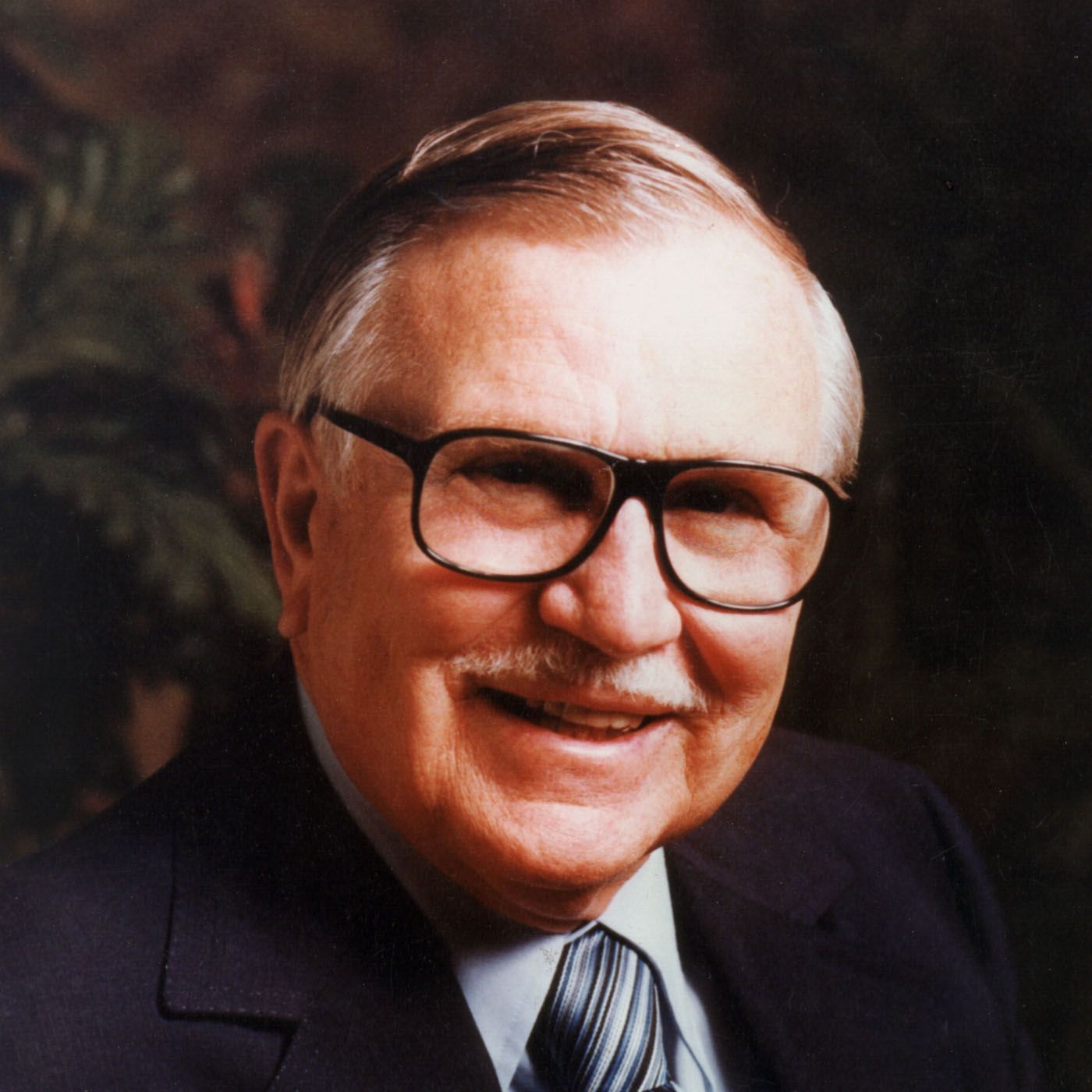
Thru the Bible Daily
Matthew 1:16-25
00:26:01
Was Jesus born of a virgin? Many people deny this is true. Others go so far as to say the Bible doesn’t even teach the virgin birth. Dr. J. Vernon McGee tackles these objections as we continue our study in the Gospel of Matthew.
Loading summary
Transcript6 lines
- [00:00]
A
How firm a foundation, ye saints of the Lord is made for your faith in his excellent birth.
- [00:18]
B
Was Jesus born of a virgin? Well, you might be surprised by how many would deny that it's true. Others go so far as to say that the Bible doesn't even teach the virgin birth. Welcome to through the Bible where our teacher, Dr. J. Vernon McGee tackles these objections. As we continue our study in the book of Matthew, beginning in chapter one, verse 16, I'm Steve Schwetz. And on our five year journey through the entire Word of God, Dr. McGee continually reminds us that our faith is based on the truthfulness of the Bible. If indeed it is the inspired word of God, then it must be true and trustworthy in every respect. As we study Matthew further, we're going to see once again that the Bible is a truly remarkable and supernatural book. It's the the message about the Lord Jesus Christ. He's the central personality in all of scripture and especially here in Matthew. So as we see him revealed as the promised Messiah and King of Israel, it's going to be a very meaningful study. And I'm so glad that you're here with us. Well, what does a ministry of through the Bible mean to you? You know, the letters that we receive from our listening family give us a variety of answers, don't they? You know, but one thing we hear over and over is that our time in God's Word is teaching you to live by faith. And that's exactly what a listener told Dr. McGee some time ago. Let's listen as he reads that letter.
- [01:35]
A
Now, I have a letter that comes from Independence, Kansas. And this party writes, your ministry of through the Bible has been a real revelation to me. I was saved 30 years ago, but my Christian life was a constant struggle. I lost most of the battles. I lived by do's and don'ts when I could. Frankly, I think most of the Christians I know live the same way. I was taught to tithe, but there was no joy in giving that way. And it became almost impossible to keep my bills paid. As a Christian, I was a failure. Then about two years ago, the Lord led me to listening to your program through the Bible on kggf. By mistake, I ordered what I thought was one tape and the Holy Spirit album came. The Lord used these tapes to put my life under his control. He taught me how to live by faith. The Lord is using your tapes, books and through the Bible Bibles to save a young man who I thought was very unlikely prospect. Now his wife and their two children. Every evening they gather and have their Bible study. Now his mother and father have joined their Bible study.
- [03:11]
B
Isn't that great? Let's pray for all those joining us here as we open God's word together. Heavenly Father, use your word to teach us to live by faith and then give us wisdom and knowledge to trust you in all things in all situations in Jesus name. Amen. Let's open to Matthew 1 as we go through the Bible with Dr. J. Vernon McGee.
- [03:32]
A
Now, friends, we've come to the end of the genealogy that is here. And this is a very remarkable genealogy as we've seen in many ways, and it's very interesting also. Now, it concludes in verse 16 by saying, and Jacob begat Joseph, the husband of Mary, of whom was born Jesus, who's called Christ. Now you see, that immediately breaks the pattern that began as far back as verse two where it says Abraham begat Isaac, and from then on it was just a whole lot of begetting friends. And here verse 16 started out and Jacob begat Joseph. All right, then the next should be and Joseph begat Jesus, but doesn't say that. It says Jacob begat Joseph, the husband of Mary, of whom was born Jesus, who's called Christ. Now, obviously Matthew is making it clear that Joseph is not the father of Jesus. He's the husband of Mary, but he's not the father of Jesus. That, I think is crystal clear here. What is the explanation of this? Well, we're going to have to take time out now. And in the rest of this chapter, Matthew will give the explanation and show how it fulfills Old Testament prophecy. Now, when we get to Dr. Luke's gospel. Dr. Luke is a doctor. And he's going to give you quite an extended section on obstetrics, the virgin birth of Christ. Now, both of these gospels make it clear that Jesus was virgin born. Again, I want to repeat that you can deny the virgin birth, that's your business. But you can't deny that the Bible teaches the virgin birth. Therefore, the only Jesus that we have any knowledge of is one that was virgin born. That's the historical record. Now, if you want to take the position he is not virgin born, then may I say that you will have to come up with some sort of a document other than just your own puny reasoning. The puny reasoning of man. We need something just a little bit more explicit than that. May I say to you, it's so easy today to sit in a swivel chair in a library in some theological seminary and sit down and write a thesis that you don't believe the virgin birthday. And you may have a very cogent document and you may write a very profound tome on the subject, friends. But I want to say to you that you haven't any documents to back up your denial. All you have is just rationalism. Just by a process of rationalization, you have to come up and say, well, it couldn't happen. And may I say, who are you to say that it couldn't happen when a few years ago man said you couldn't go to the moon? But they've gone there. And they've gone there, by the way, by natural means, using the laws of God. And here we have this statement in the word of God that he's virgin born. Now this requires an explanation. Now we have here in verse 17, a statement that will explain something in the genealogies. It says so all the generations from Abraham to David of 14 generations, and from David until the carrying away into Babylon of 14 generations. And from the carrying away into Babylon unto Christ are 14 generations. Now he left out some. We saw that last time. Why did he leave it out? In order that he might give us 14 in each one of these and make a real connection. Of course, because you go back and pick up the story in the Old Testament, you'll find out that so and so did beget so and so, but he did it by begetting a son who begat another son who's his grandson, and then the great grandson is mentioned. I believe that that happened way back at the beginning of Genesis and that mankind has been on this earth lots longer than we even contemplate today. But I don't care to enter into that. As you noticed, I didn't even get involved in that when we were in Genesis, because I don't think we can arrive at any satisfactory solution. And I don't think that you can arrive at one that's unanimous even among those that are conservative in the faith. Now Matthew is going to take time out to explain what he meant when he said that Joseph was not the father of Jesus. Will you listen to him? Verse 18. Now the birth of Jesus Christ was on this wise when as his mother Mary was espoused to Joseph before they came together, she was found with child of the Holy Ghost. Now we have here the birth of Jesus Christ was on this wise. This is the way that it happened when his mother Mary was espoused to Joseph, that is engaged to him. Before they came together they had no relationship. She was found with child and listen to Matthew of the Holy Ghost. Now, Dr. Luke will go into some detail in that connection. Joseph was not the father and that actually she was not being unfaithful to him at all, and that Jesus is not illegitimate. But this is something new. A woman shall encompass a man, verse 19. Then Joseph, her husband, being a just man and not willing to make her a public example, was minded to put away privilege. Now the Mosaic Law was very specific at this point. It said when a woman was guilty of being unfaithful that she was to be stoned to death. That would be the extreme remedy. Joseph is a remarkable man. I wish I had time to talk about him. You see, we mention a great deal about Mary, that God chose her and how remarkable she was, and all that is true. By the way, just because you're Protestant, don't let yourself be deterred from giving Mary a great deal of credit. She was a remarkable person. Remember, she's the one that God chose to be the mother of our Lord. And God makes no mistakes in this connection. He picked the right one, by the way. Now this man Joseph is a remarkable man. God made no mistake in choosing him. How many men hot headed would immediately have had her stoned to death or have wanted in some way to have got justification by making her a public example, by exposing her? But that was not the kind of man Joseph was. He was a gentle person. He was in love with her and he didn't want to hurt her in any way, but he felt like she had been unfaithful. But while he thought on these things, behold the angel of the Lord appeared unto him in a dream, saying, Joseph, thou son of David, fear not to take unto thee Mary thy for that which is conceived in her is of the Holy Ghost. Now, in order to keep this man from putting her away, in order to prevent a really very tragic situation to happen, the angel appeared here to Joseph and made clear to him what was taking place. And he says now to him, verse 21, and she shall bring forth a son, and thou shalt call his name Jesus, for he shall save his people from their sins. The name Jesus means Savior, and he's given that name because he shall save his people from their sins. Notice what Matthew, who is writing now for the nation Israel, what he says now all this was done that it might be fulfilled which was spoken of the Lord by the prophet saying, in other words, if Matthew's going to appeal to the nation Israel, then this one who's come must be the fulfillment of Old Testament prophecy. And it's estimated. Apparently somebody's counted it that there are over 300 prophecies concerning the first coming of Christ that were literally fulfilled. I do not know how many of them are in Matthew, but I know that Matthew quotes more from the Old Testament than the other three gospels put together. Everything that he records, it seems he's recorded it. And he's not attempting to give a life of Christ, but showing that this is a fulfillment of Old Testament prophecy concerning him. Now, it was to be fulfilled, which was spoken by the prophet saying, now here is the prophecy. Behold, a virgin shall be with child and shall bring forth a son, and they shall call his name Immanuel. Which, being interpreted, is God with us. Now, I want you to look at that for just a moment because that is very important. Now, this may sound like a Christmas message, maybe we should have given it at Christmas time, but it just didn't fit into our program. Now, the liberal has, of course, denied the virgin birth. He's denied that the Bible teaches the virgin birth. And I very candidly, I know I'm rather suspicious, but I believe that the new Revised Standard Version was gotten out in order to try to maintain some of the thesis of the liberal. I'm sure of that, because one of the things they've denied is the virgin birth. And where in the world is Matthew quoting from? Well, he's quoting from the seventh chapter of the book of Isaiah, and at verse 14. And it says, therefore the Lord himself shall give you a sign. Behold, a virgin shall conceive and bear a son, and shall call his name Immanuel. Now, the very interesting thing is that in the Revised Standard Version, he says, behold, a young woman shall conceive and bear a son. And, friends, that's no sign at all. Because if that's a sign, then right here in Los Angeles, one's taking place about every minute. A young woman, but not a virgin bearing a son. They translated it that way, and they've attempted to tone down that word. Now, I'd like to have you look at something with me today that I think is very important. The word in the Hebrew is alma. And they have gone to Geus, who, by the way, was an outstanding scholar, and he has a very exhaustive Hebrew lexicon. And I can testify that it's also exhausting to look at it. Now, he admitted, yes, that the common translation of the word is virgin. But he said that it could be changed. A young woman. And the reason he said that was because he rejected the miraculous. And for one to be born of a virgin, that had to be a miracle. Therefore, his use of the term young woman. Now, this new translation and others that followed it have attempted to say that Alma means young woman and not virgin. Well, I have a little evidence to offer myself. Let's look at this incident. This was the time when Ahaz was on the throne. And he was one of those that was far from God. And I list him as a bad king. And that's exactly what he was. And God sent Isaiah to bear a message to him. He wouldn't listen. And verse 10 of the seventh chapter says, Moreover, the Lord spake again unto Ahaz, saying, ask the a sign of the Lord thy God. Ask it either in the depth or. Or in the height above. And Ahaz said, I'll not ask, neither will I tempt the Lord. And may I say, that's pious hypocrisy for him to say what he did. God asked Isaiah to meet him on the way. And Isaiah did. God had a message for him that he would give him the victory. This man couldn't believe God. And in order to confirm his faith, Isaiah said, God wants you to ask for a sign. And he in a very pious way, oh, do we have these super pious folk? He said, oh, I wouldn't ask of the Lord a sign. Isaiah said, then God's going to give you one whether you like it or not. But not to you, to the whole house of David. This is the sign. Behold, a virgin shall conceive and bear. A son shall call his name Immanuel. Now, obviously, if it just be a young woman, that will be no sign to Ahaz or the house of David or anybody else. But I tell you, a virgin conceived and bore a son. That, my friend, is a sign. And that's exactly what it means. But somebody goes on and says, well, wait just a minute. Maybe it can mean young woman. Well, if you want to translate it like that. And by the way, it appears several times in the Old Testament, Alma, every time it means virgin. Rebecca, for instance, was the sister of Laban, and she was given to Isaac. There's description given of her that she was a virgin and she'd not known a man that evidently is a virgin. I was talking to a very fine Hebrew Christian in the east, and he was also a good Hebrew scholar, by the way. I asked him about that, and he said, well, look at it like this. He said, suppose that you went to visit a friend of yours and he had three daughters, and two of them were married and one was single. You did not know. And you would say to him, are these three daughters Yours? He'd say, yes. And he'd introduce them. He'd say, now, these two are my married daughters, and this young lady is my daughter also. Now, when he said young lady, and I'm quoting my Hebrew friend, he said, do you think he meant prostitute? He said, if you had said that she was anything but a virgin when he said young lady, he probably would have knocked your block off. May I say to you, I'd hate to be some of these that are denying the virgin birth and will have to come into the presence of the Son of God someday. And they've called him everything. I'm afraid some folk are going to be wanting to take back what they've said about him. You may disagree, but it's clear. The Scripture means virgin. You say, how do you know that? I know that because of one great fact. And that is that the Septuagint translation was made of the Old Testament. And the Septuagint was made by 72 Hebrew scholars. Six, I guess it was, from each tribe down in Alexandria, in Egypt, they translated the Old Testament into Greek. And when they got to this word, do you think that they called her young woman? No. Those 72 understood that it meant virgin, and they translated it into the Greek parthenos. And that's what it is here in the Gospel of Matthew, where it's translated virgin. And, my friend, parthenos doesn't mean young woman. It means virgin. Athena was the virgin goddess of Athens. In fact, that was called the Parthenon because Parthenon means virgin. And so here it's quite clear what the word of God means. It's not quite clear what the liberal means. Because, my friend, you can't come to but one conclusion, and I do mean to be dogmatic about that. Now, here is the thing about this that is so wonderful. I read this again. Behold, a virgin shall be with child and shall bring forth a son. And they shall call his name Emmanuel, which, being interpreted, means God with us. Now, here is a problem. Would you tell me where Jesus was ever called Immanuel? Well, up here it says that he was to be called Jesus. And he was called Jesus. Christ, by the way, is merely a title. And this is his name, Jesus. He shall save his people from their sins. But here it says he shall be called Emmanuel. That is, his name will be Emmanuel, which, being interpreted, is God with us. I think this is one of the most wonderful things that you have in the entire Word of God. Friends, there's nothing quite as wonderful as this. Will you look at this? Emmanuel Means God with us. He can't be Emmanuel God with us. Unless he's virgin born. That's the only way. And listen, unless he is Emmanuel, he can't be Jesus. And the reason they could call him Jesus Savior. Is because he's God with us. May I say this is without doubt. One of the most wonderful things that you have in the entire Word of God. How this one came down to this earth. We see Jesus, who's made a little lower than the angels. Because of the suffering of death. Crowned with glory and honor. That he, by the grace of God, should face death for every man. And he had to be a sacrifice that was acceptable. I couldn't die for the sins of the world. Couldn't even die for my own. But he can. And how can Jesus be a savior? Because he's Emmanuel God with us. And how did he get with us virgin born? May I say this is one of the most wonderful passages that we have in the Word of God. Now, will you notice these next two verses? Then Joseph, being raised from sleep. Did as the angel of the Lord had bidden him. And took unto him his wife. And knew her not till she had brought forth her firstborn son. And he called his name Jesus. Not Immanuel. He was never called that. But you see, you can't call him Jesus unless he is Emmanuel God with us. He has to be Emmanuel God with us. Or he can't be the Savior of the world. That's how important the virgin birth is. Somebody said to me, can you be a Christian and deny the virgin birth? Will you hear me? Very carefully. I believe that it's possible to accept Christ. Christ as your Savior. Without knowing anything much about him. You may not even know that this record is in the Bible. But after you become a child of God. May I say this? You will not deny the virgin birth of the Lord Jesus. You may not have to know it to be saved. But as a child of God, you can't deny the virgin birth. Do I sound dogmatic, friends? Well, I hope I do. I intend to be. Because I consider this all important. Because I want a savior who's able to reach down and save Vernon McGee. And I am of the opinion. If he's just another man like I am. He's not going to be able to help me very much. But if he is Manuel God with us. Then virgin born. Then my Savior. Is he your savior? Today he took upon himself our humanity in this way. That he might taste death. That is, that he might bear your penalty. That he might die a redemptive death for us on the cross. Until next time. May God richly bless you, my beloved.
- [24:19]
B
Is he your Savior? If you can't answer that question with a powerful yes, then we encourage you to consider who Jesus really is and his offer of relationship, forgiveness and mercy. Dr. McGee often spoke and wrote about this, and we've gathered many of these resources online. Just click on How Can I Know God? In our app or@ttb.org where you can read and listen to them for free. Or if you'd rather have a few sent by mail, well, we can help you there. Call 1-865-Bible and you can always write to Box 7100, Pasadena, CA 91109 in Canada, Box 25325, London, Ontario N6C 6B1. And if you already have a relationship with our Savior but are maybe looking to take your study of who he is a bit deeper, you can Visit us@ttb.org where you'll find an entire virtual library of resources available to you. Or call us at 1-865Bible if we can help you find something specific. Our five year journey through God's entire Word continues. I'm Steve Schwetz, and until next time, I pray that God blesses and keeps you as you walk with Him. Today's study with Dr. J. Vernon McGee is brought to you by through the Bible, and it's made possible by the generous prayer and financial investments from listeners like you on the Bible Bus all around the world.