
Podcast
Tim Wilborne's Podcast
Hosted by Tim Wilborne · EN
Helping you become a better technician. We talk about manufacturing, industrial automation, PLC programming, and help you remove the roadblocks to success.
12episodes
Episodes
Newest firstAll episodes
How to Get Your First Clients When Starting a Service Business
Jun 2700:12:02Tap to summarizeStarting an independent service or contracting company comes with massive challenges, and finding your very first clients is often the hardest part. In this video, we answer a question from JT about how to land those initial accounts and how to recognize when you are truly ready to take the leap into starting your own business. We share the story of how TW Controls started—including the mistakes we made by jumping in without a safety net—and contrast that with the ideal balance of preparation and timing. You will learn practical strategies for leveraging low-hanging fruit, such as transforming former employers into professional clients, building relationships with local competitors, collaborating with equipment distributors, and putting in the sweat equity needed to solve immediate breakdown emergencies for local facilities.Helping you become a better technician so you will always be in demand Not sure what video to watch next?Enhance your skills and track your progress at https://controls.tw/yt-courses!Items used in this video:PLC Trainer https://controls.tw/yt-plc-trainersThe above links make these videos possible. Please use them!
Transcribe →Why Your Manager Is Stressed About Downtime (And How to Fix It)
May 3100:19:56Tap to summarizeIt has been a busy few weeks at the training center with custom guest training covering IO-Link, sensors, and TIA Portal. In this update, I discuss the progress on our new pneumatic trainer and pick-and-place robot trainer, both of which will be featured in upcoming videos. I also take some time to answer your questions regarding the real-world application of IO-Link, how to transition between different PLC platforms, and how to effectively communicate with your manager about justifying the need for training equipment to reduce costly downtime. Using a practical, data-driven approach to justify the hardware you need for your sandbox environment is the most effective way to transition from reactive maintenance to planned machine shutdowns.Helping you become a better technician so you will always be in demand Not sure what video to watch next?Enhance your skills and track your progress at https://controls.tw/yt-courses!Workforce Readiness for Managers https://twcontrols.com/workforce-readiness-for-managersThe above links make these videos possible. Please use them!
Transcribe →Insulation Testing, Legacy Networks, and Shop Fires: Weekly Q&A
Mar 100:14:05Tap to summarizeThis week we dive into a wide range of topics gathered from your questions on YouTube and LinkedIn. We start by addressing a common terminology correction regarding motor insulation testing and why it is so difficult to provide a universal "good" or "bad" resistance value. The conversation moves into the technical hurdles of migrating from legacy 1734 POINT I/O to the newer 5034 modules, including the unexpected challenges of scope creep and input filter settings.We also tackle the "heated" debate over legacy networking protocols like ControlNet and DeviceNet. While many agree these systems are nearing their end of life, the physical media and downtime requirements make replacement a complex planning task rather than a quick fix. Finally, we share a personal story about a project vehicle fire that serves as a reminder of the importance of thinking under pressure, and we reflect on how our responses to industry events define our professional community.Helping you become a better technician so you will always be in demandNot sure what video to watch next? Enhance your skills and track your progress at https://controls.tw/yt-courses!
Transcribe →The Truth About the Skills Gap: Practice vs. Pushing a Broom
Feb 2200:16:21Tap to summarizeThe news that Yokohama Tire in Salem is closing its doors on March 18th is a "plant obituary" for our community. For me, it’s personal. I started in that facility at 12 years old, and those foundations are exactly what built TW Controls. But as we look at the 2,700 local lives impacted by the economic multiplier effect, we have to ask: Are we waiting for a lifeline from Washington, or are we building our own resilience?I am tired of hearing about the "workforce skills gap" from companies that force their technicians to push a broom the moment the line is running. If your team is "looking busy" instead of practicing on the bench, you aren't managing—you’re falling behind. Training isn’t a one-and-done checkbox; it’s a yearly requirement to stay in demand. Today, we’re talking about taking ownership of our backyards, from Master Electrician CEUs to bridging the gap between legacy 1734 and modern 5034 Point I/O.Helping you become a better technician so you will always be in demandNot sure what video to watch next? Enhance your skills and track your progress at https://controls.tw/yt-courses!
Transcribe →Stop Trying to "Fix" Everything: Lessons from the Plant Floor and Rotary
Feb 800:12:18Tap to summarizeWe dive into the common pitfall of new engineers: the urge to provide solutions before understanding the existing environment. Drawing parallels between manufacturing and recent Rotary District training, we explore why a "Health Check" is vital for both machines and organizations. We discuss the importance of listening to the voices and "baggage" of an old facility before attempting to rewrite its history. You’ll also learn about reciprocal teaching, a method that moves beyond lecturing to create true engagement and knowledge retention.We also tackle technical questions from the community, including a deep dive into NFC security on the 5034 IO. While some suggest disabling it for security, we look at the balance between defense-in-depth and the necessity of troubleshooting tools. Other topics include configuring gateways on the SIM IP, designing rotary phase converters, and the distinct, unmistakable smell of "magic smoke." Whether you are preparing for a week in the lab or heading out to a job site, these insights will help you approach your work with more confidence and perspective.Helping you become a better technician so you will always be in demandNot sure what video to watch next? Enhance your skills and track your progress at https://controls.tw/yt-courses!
Transcribe →Industrial Networking Rants and Insulation Tester Tips
Feb 200:12:26Tap to summarizeWe cover a variety of automation topics starting with a helpful tip from a viewer regarding the lock button feature on insulation testers that makes using alligator leads much more practical. I answer a viewer question about using a Greenlee keyhole nibbler on stainless steel panels and explain why it is not the best tool for that job due to material flexing and drilling difficulties. We also dive deep into industrial networking, specifically addressing the debate between using explicit message instructions versus produced and consumed tags. There is a common misconception that produced and consumed tags should replace all messaging, but I explain why both methods have their place depending on the frequency of data updates and network traffic management. Finally, I highlight some impressive student projects, including a fifth-generation can crusher, and tease an upcoming pneumatic pick and place trainer accessory.Helping you become a better technician so you will always be in demandNot sure what video to watch next? Enhance your skills and track your progress at https://controls.tw/yt-courses!
Transcribe →Why We Don't Accept Paid Product Placements: Staying Authentic in Automation
Jan 2500:18:30Tap to summarizeTim and Amber recap an energetic week at the A3 Business Forum in Florida and discuss the hard facts behind making business decisions based on data rather than gut feelings. We tackle a frequently asked question regarding how to get products featured on the channel, explaining our "no pay to play" policy and why authenticity is vital for the community. The discussion moves into the nuances of job interviews, specifically how new technicians should research companies to show they are prepared to add value from day one. We also look ahead to PLC integration week, where we cover topics ranging from Ignition SCADA and data logging to industrial networking and troubleshooting on the Rogue Rig. Finally, we highlight an upcoming machine safeguarding seminar featuring the Banner SC10 safety controller.Helping you become a better technician so you will always be in demandNot sure what video to watch next? Enhance your skills and track your progress at https://controls.tw/yt-courses!
Transcribe →Your PLC Questions: Switching Brands, Scaling 4-20mA, & Starting a Business
Jan 1800:12:57Tap to summarizeIn this episode, we are diving deep into your questions from the past week and sharing stories from our most recent training class. We start by addressing the common fear of switching between PLC brands, specifically for those who feel stuck with Mitsubishi knowledge when the industry is calling for Allen Bradley. I explain why mastering the core logic instructions is more important than chasing every brand name for your resume. We also break down a technical deep dive into 4-20mA scaling for tank levels, explaining why adding intermediate steps usually just creates more work for the next technician.Beyond the technical side, we explore the mindset required to make a career pivot into automation. I share some of the feedback from our recent video about starting TW Controls with almost nothing and highlight inspiring stories from our community members who moved from banking and labor roles into successful engineering and systems roles. We also have a bit of fun reviewing the results of last week's visual puzzle and discussing how a technician’s job is often just about changing your perspective until the data makes sense.Helping you become a better technician so you will always be in demandNot sure what video to watch next? Enhance your skills and track your progress at https://controls.tw/yt-courses!Items used in this video:PLC Trainerhttps://controls.tw/yt-plc-trainersThe above links make these videos possible. Please use them!
Transcribe →The $100 Startup: Building a Business Out of a Shed
Jan 1100:28:53Tap to summarizeIn 2007, we walked out of the hospital with a newborn baby, less than $100 in our bank account, and a radical plan to start a company. Most people told us we were crazy. They said we needed an engineering degree, a massive savings account, and high-end equipment to survive in the industrial world. They were wrong.In this episode, Tim Wilborne shares the raw, unpolished history of TW Controls—from building panels by trouble light in a shed with no electricity to shoveling a 500-foot dirt driveway just to get a shipment out. We discuss why the "messy middle" of a career change is where the most growth happens and how a $20,000 business failure became the catalyst for everything we do today. Whether you feel stuck in a "dead-end" job or you're terrified to take the next step in your career, this is a reminder that you don't need a silver spoon to build a legacy; you just need to get started.
Transcribe →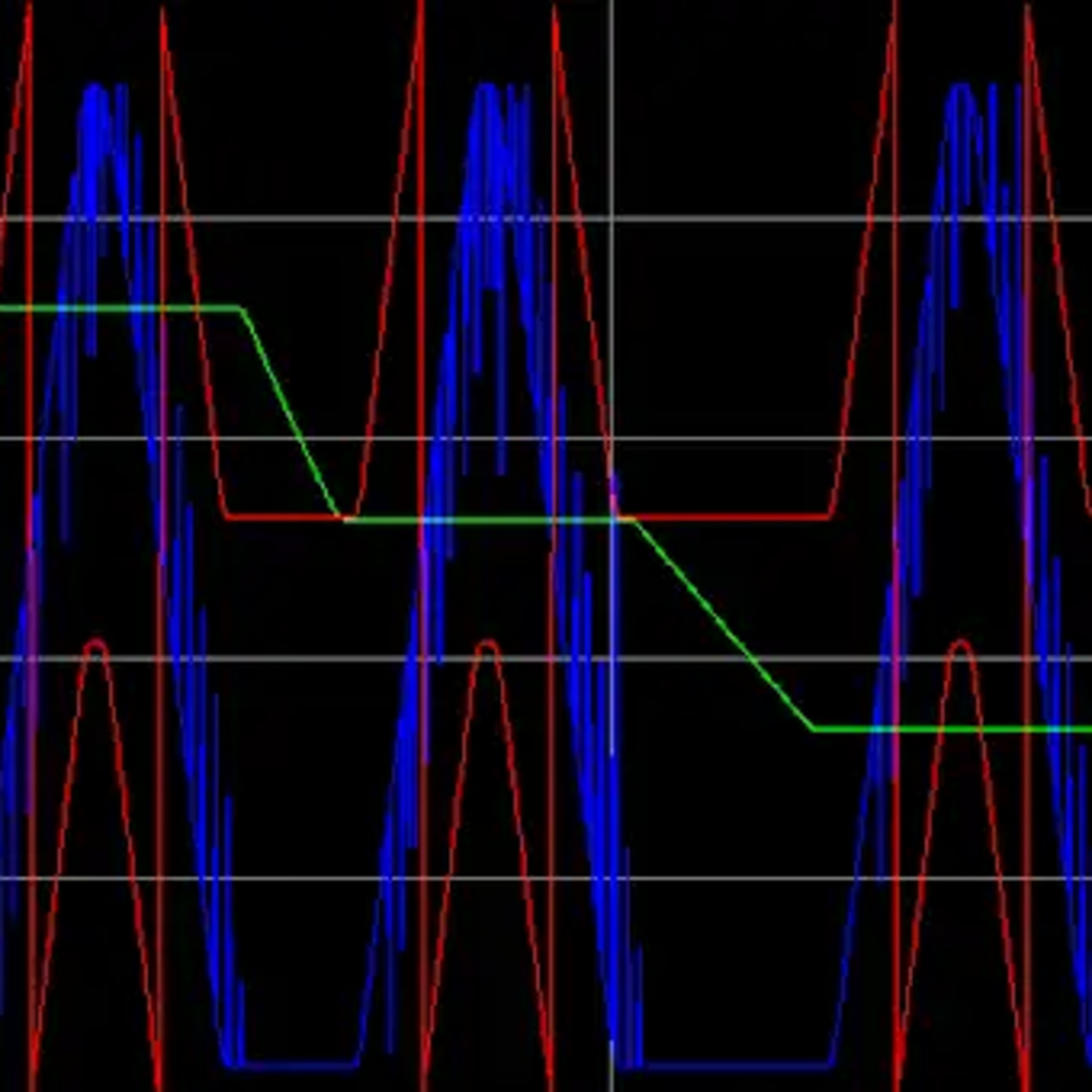
Stop Patching the Noise and Start Finding the Root Cause
Jan 400:19:34Tap to summarizeFinding the root cause of an erratic signal can feel like chasing a ghost, especially when your trend lines show noise that shouldn't be there. In this session, we walk through a real-world troubleshooting scenario involving a Yamaha robot simulation where the A3 axis exhibited mysterious spikes. While it initially looked like signal noise or a math error in Studio 5000, the investigation led deep into the interaction between the PLC and the Ignition SCADA system. We explore why a standard cross-reference in the PLC didn't reveal the culprit and how switching to read-only communications finally exposed a hidden bidirectional tag write.We also discuss the common trap of "patching" problems with software filters instead of identifying the source. Whether it is a bad shield on an analog line or an accidental setting in your HMI, understanding the "why" behind the spike is what separates a technician from a parts changer. Additionally, we touch on the challenges of modern Ethernet troubleshooting, the limitations of Wireshark without port mirroring, and why the "View Diagnostics" tool in Ignition is a game-changer for identifying communication conflicts.Helping you become a better technician so you will always be in demandNot sure what video to watch next? Enhance your skills and track your progress at https://controls.tw/yt-courses!Items used in this video:PLC Trainer https://controls.tw/yt-plc-trainersThe above links make these videos possible. Please use them!
Transcribe →