Podcast
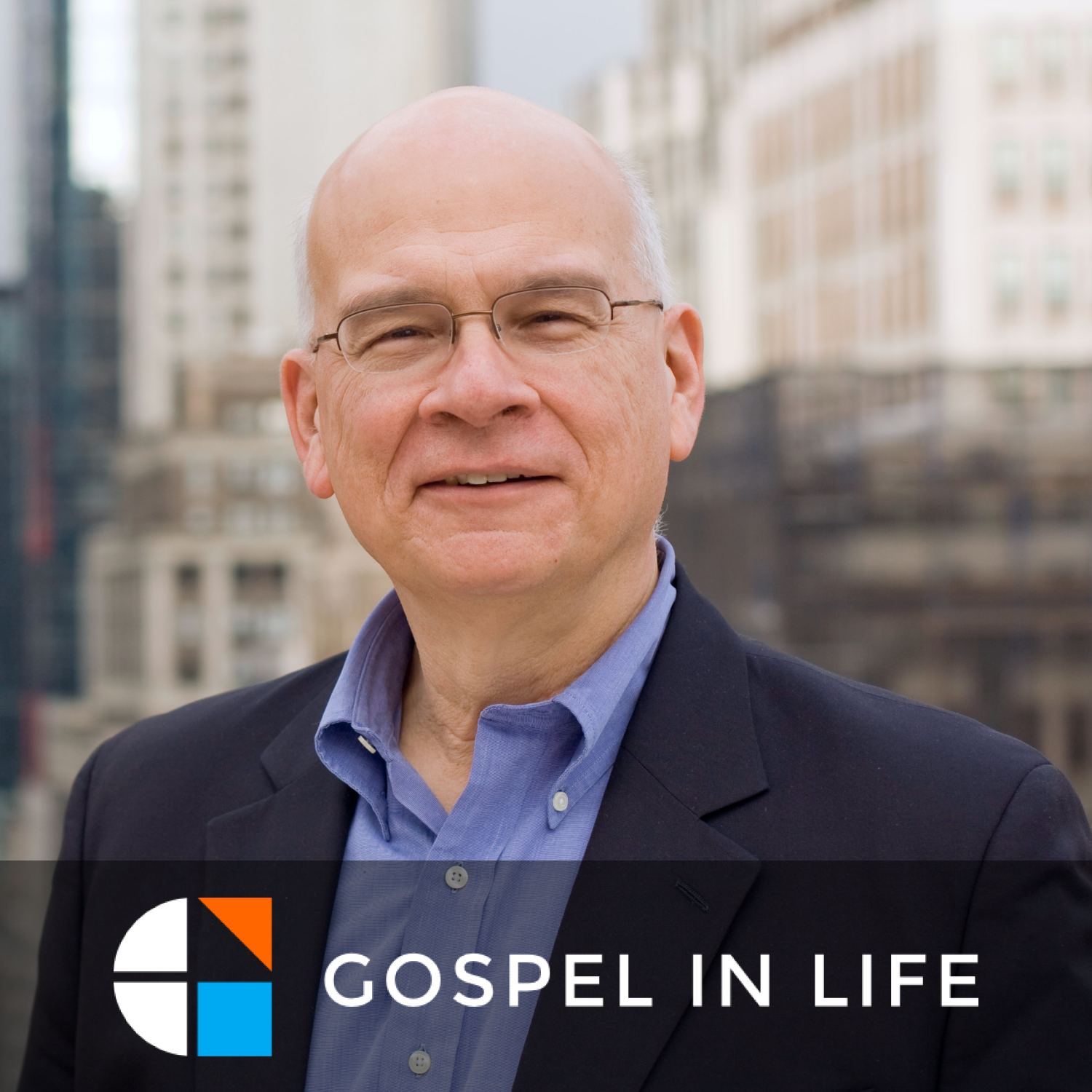
Timothy Keller Sermons Podcast by Gospel in Life
Hosted by Tim Keller · EN
Sermons by Tim Keller, founder of Redeemer Presbyterian Church in NYC and NY Times best-selling author of ”The Reason for God: Belief in an Age of Skepticism.” For more sermons and resources, visit www.gospelinlife.com.
262episodes
Episodes
Newest firstAll episodes
Wisdom: How To Get It
Jul 28, 202500:42:40Summary readyWe live in a culture in which there are more choices than there ever have been. But you can be incredibly good, moral, and knowledgeable and still make pretty stupid choices. Wisdom is knowing the right thing to do in the 80 percent of choices that the moral rules don’t directly apply to. What you need in order to make good choices is wisdom. In Proverbs 3 we learn 1) where wisdom develops, 2) the vehicles through which wisdom develops, and 3) the catalyst that sparks and fuels them all. This sermon was preached by Dr. Timothy Keller at Redeemer Presbyterian Church on September 15, 2013. Series: Wisdom in Life. Scripture: Proverbs 3:1-8, 11-12. Today's podcast is brought to you by Gospel in Life, the site for all sermons, books, study guides and resources from Timothy Keller and Redeemer Presbyterian Church. If you've enjoyed listening to this podcast and would like to support the ongoing efforts of this ministry, you can do so by visiting https://gospelinlife.com/give and making a one-time or recurring donation.
SummaryWisdom: What is it?
Jul 25, 202500:39:33Summary readyThere are choices everywhere, just zillions and zillions of choices. And if you don’t make good choices, it can be very destructive. Bad choices blow up on you. Every choice is like a fork in the road, and once you make it, you really can’t go back to where you were. What does it take to make good choices? It takes wisdom. And the book of Proverbs is perhaps the most famous text in the world on wisdom. If we look at Proverbs 1, we can see the basics: 1) what wisdom is, 2) why it’s important, 3) why it’s a problem, and 4) where you can find it. This sermon was preached by Dr. Timothy Keller at Redeemer Presbyterian Church on September 8, 2013. Series: Wisdom in Life. Scripture: Proverbs 1:1-9, 22, 32-33. Today's podcast is brought to you by Gospel in Life, the site for all sermons, books, study guides and resources from Timothy Keller and Redeemer Presbyterian Church. If you've enjoyed listening to this podcast and would like to support the ongoing efforts of this ministry, you can do so by visiting https://gospelinlife.com/give and making a one-time or recurring donation.
SummaryTrue Spirituality
Jul 23, 202500:39:33Summary readyThe trouble with the Sermon on the Mount is it’s so familiar that almost nobody listens to it, almost nobody knows what it’s saying. How do we know that? At the very end of the sermon, it says the crowds were amazed at Jesus’s teaching. And that word, “amazed,” in Greek meant thunderstruck, shocked, astounded. That’s the prevailing way people responded. Have you been thunderstruck? Are you shocked by it? If you’re not astounded, you haven’t listened to it. So let’s listen to it. There are basically three great things Jesus says that are utterly astounding: 1) that there are two ways, two options spiritually, 2) that at the end of those two ways, there’s a judge, and 3) that at the end of that judgment, there’s a sentence. This sermon was preached by Dr. Timothy Keller at Redeemer Presbyterian Church on May 23, 1999. Series: The Mount; Life in the Kingdom. Scripture: Matthew 7:15-29. Today's podcast is brought to you by Gospel in Life, the site for all sermons, books, study guides and resources from Timothy Keller and Redeemer Presbyterian Church. If you've enjoyed listening to this podcast and would like to support the ongoing efforts of this ministry, you can do so by visiting https://gospelinlife.com/give and making a one-time or recurring donation.
SummaryThe New Community
Jul 21, 202500:37:39Summary readyThere’s no one section where Jesus lays out how a relationship with him radically changes our human relationships and forms a new, deep, radical human community in Christ. It’s not in one place — it’s all throughout the Sermon on the Mount. The Sermon on the Mount is really a description of a new kind of community. What does Jesus teach us about this radical new community that is formed by his gospel message? When it comes into your life, how does it create this new community between those who believe in Jesus? Jesus teaches us four things: 1) the necessity of this new community, 2) the intensity of this new community, 3) the symmetry of this new community, and 4) the causality of this new community. This sermon was preached by Dr. Timothy Keller at Redeemer Presbyterian Church on May 16, 1999. Series: The Mount; Life in the Kingdom. Scripture: Matthew 5:21-24, 45-48; 7:1-6. Today's podcast is brought to you by Gospel in Life, the site for all sermons, books, study guides and resources from Timothy Keller and Redeemer Presbyterian Church. If you've enjoyed listening to this podcast and would like to support the ongoing efforts of this ministry, you can do so by visiting https://gospelinlife.com/give and making a one-time or recurring donation.
SummaryJesus’ Model of Spirituality
Jul 18, 202500:42:51Summary readyWhen people say, “I’ve tried prayer, and it didn’t work,” what Jesus is saying is, “You used prayer, not the way I designed it, but with a false model of spirituality.” For Jesus, the importance of prayer is revealed in a little unobtrusive word at the beginning of this passage in the Sermon on the Mount: the little word “and.” Right before Jesus talks about prayer, he talks about our engagement with the poor and the needs of the world. Then he says, “And when you pray …” Because in Jesus’ understanding, it’s the people who are characterized by the most radical interiority who have the most courageous, visionary engagement with the needs of the world. And before Jesus gives us a model of prayer, the famous Lord’s Prayer, he tells us two other models of prayer that we should avoid. Let’s look at 1) the two false models, 2) the true model, and 3) a few practical ideas on how to go about it. This sermon was preached by Dr. Timothy Keller at Redeemer Presbyterian Church on May 9, 1999. Series: The Mount; Life in the Kingdom. Scripture: Matthew 6:5-13. Today's podcast is brought to you by Gospel in Life, the site for all sermons, books, study guides and resources from Timothy Keller and Redeemer Presbyterian Church. If you've enjoyed listening to this podcast and would like to support the ongoing efforts of this ministry, you can do so by visiting https://gospelinlife.com/give and making a one-time or recurring donation.
SummaryTreasure vs. Money
Jul 16, 202500:38:42Summary readyIf we actually take the gospel, the essential message of Jesus Christ, and we live it out, what will it look like? That’s what the Sermon on the Mount is about. And in this part of Jesus’ Sermon on the Mount, we get to the area of money and possessions. Jesus tells us three things we can draw out here: 1) how money exercises power over us, 2) why money exercises power over us, and 3) how we can break the power. This sermon was preached by Dr. Timothy Keller at Redeemer Presbyterian Church on May 2, 1999. Series: The Mount; Life in the Kingdom. Scripture: Matthew 6:19-34. Today's podcast is brought to you by Gospel in Life, the site for all sermons, books, study guides and resources from Timothy Keller and Redeemer Presbyterian Church. If you've enjoyed listening to this podcast and would like to support the ongoing efforts of this ministry, you can do so by visiting https://gospelinlife.com/give and making a one-time or recurring donation.
SummaryLove, Lust and Liberation
Jul 14, 202500:45:29Summary readyOn the surface, one of the most unattractive things about Christianity to our culture today is its view of sex; but if you look underneath the surface and get a better grasp on what is really taught, the Christian view of sex is one of the most attractive things about it. In other words, a lot of people see the Christian understanding of sex as undermining its credibility to them, but when you look down deeper, I think you’re actually going to see the Christian view of sex is one of the evidences for its truth. Because Christianity accounts for how sex operates in our lives, in our relationships, and in our society. Let’s draw out four things Jesus is saying about this in the Sermon on the Mount: 1) there is such a thing as lust, 2) what it’s not, 3) what it is, and 4) how it can be healed. This sermon was preached by Dr. Timothy Keller at Redeemer Presbyterian Church on April 25, 1999. Series: The Mount; Life in the Kingdom. Scripture: Matthew 5:27-30. Today's podcast is brought to you by Gospel in Life, the site for all sermons, books, study guides and resources from Timothy Keller and Redeemer Presbyterian Church. If you've enjoyed listening to this podcast and would like to support the ongoing efforts of this ministry, you can do so by visiting https://gospelinlife.com/give and making a one-time or recurring donation.
SummaryIntegrity
Jul 11, 202500:35:50Summary readyDo you understand what your heart is really like? In the Sermon on the Mount, Jesus is saying that the reason we’re inauthentic or hiding from other people is because we’re actually being inauthentic with ourselves, hiding from ourselves. We’re deeply uncomfortable with the reality of our own hearts. Jesus wouldn’t mention hypocrisy in the Sermon on the Mount unless he thought it was a pervasive issue, something we’re all struggling with. Jesus says this is the way we are, that there’s a real problem and the human heart desperately wants to get into image management. Let’s look at how Jesus shows us 1) two manifestations of hypocrisy, 2) how you can’t stand to see what’s in your own heart, 3) how you know the plank in your own heart is huge, and 4) how to remove the plank from your heart. This sermon was preached by Dr. Timothy Keller at Redeemer Presbyterian Church on April 18, 1999. Series: The Mount; Life in the Kingdom. Scripture: Luke 6:39-49. Today's podcast is brought to you by Gospel in Life, the site for all sermons, books, study guides and resources from Timothy Keller and Redeemer Presbyterian Church. If you've enjoyed listening to this podcast and would like to support the ongoing efforts of this ministry, you can do so by visiting https://gospelinlife.com/give and making a one-time or recurring donation.
SummaryLove in the Neighborhood
Jul 9, 202500:43:23Summary readyAs soon as you hear the word relationships, right away you say, “Ah, relationships,” and you think of friendship or romance. But the main purpose of the Sermon on the Mount is to talk about our relationships to other people, to those outside of our close relationships. Right away, Jesus talks about three groups of people. And when we see how Jesus calls us to be toward them, we’re immediately shocked and upset. Many of us will say, “First of all, I can’t do it. And if I did, it sounds terrible.” And almost as if Jesus knows we’ll say that, he tells us three things. Let’s look at 1) the three groups of people: people who oppose us, people who are less fortunate than us, and people who are different from us, and then 2) the three things Jesus tells us: the difficulty we have, the inner dynamic we need, and the directions we’re given. This sermon was preached by Dr. Timothy Keller at Redeemer Presbyterian Church on April 11, 1999. Series: The Mount; Life in the Kingdom. Scripture: Luke 6:27-38. Today's podcast is brought to you by Gospel in Life, the site for all sermons, books, study guides and resources from Timothy Keller and Redeemer Presbyterian Church. If you've enjoyed listening to this podcast and would like to support the ongoing efforts of this ministry, you can do so by visiting https://gospelinlife.com/give and making a one-time or recurring donation.
SummaryLet Nothing Move You (Easter)
Jul 7, 202500:29:41Summary readyWhat is the meaning of the resurrection of Jesus? In 1 Corinthians 15, there are three basic things Paul says about the resurrection as he answers three questions. We must confront these three questions about Jesus’ resurrection: 1) did it happen? 2) what did it accomplish? and 3) what should we do about it? This sermon was preached by Dr. Timothy Keller at Redeemer Presbyterian Church on April 4, 1999. Series: The Mount; Life in the Kingdom. Scripture: 1 Corinthians 15:3-6, 20-26, 51-58. Today's podcast is brought to you by Gospel in Life, the site for all sermons, books, study guides and resources from Timothy Keller and Redeemer Presbyterian Church. If you've enjoyed listening to this podcast and would like to support the ongoing efforts of this ministry, you can do so by visiting https://gospelinlife.com/give and making a one-time or recurring donation.
Summary