← Tomorrow's Cure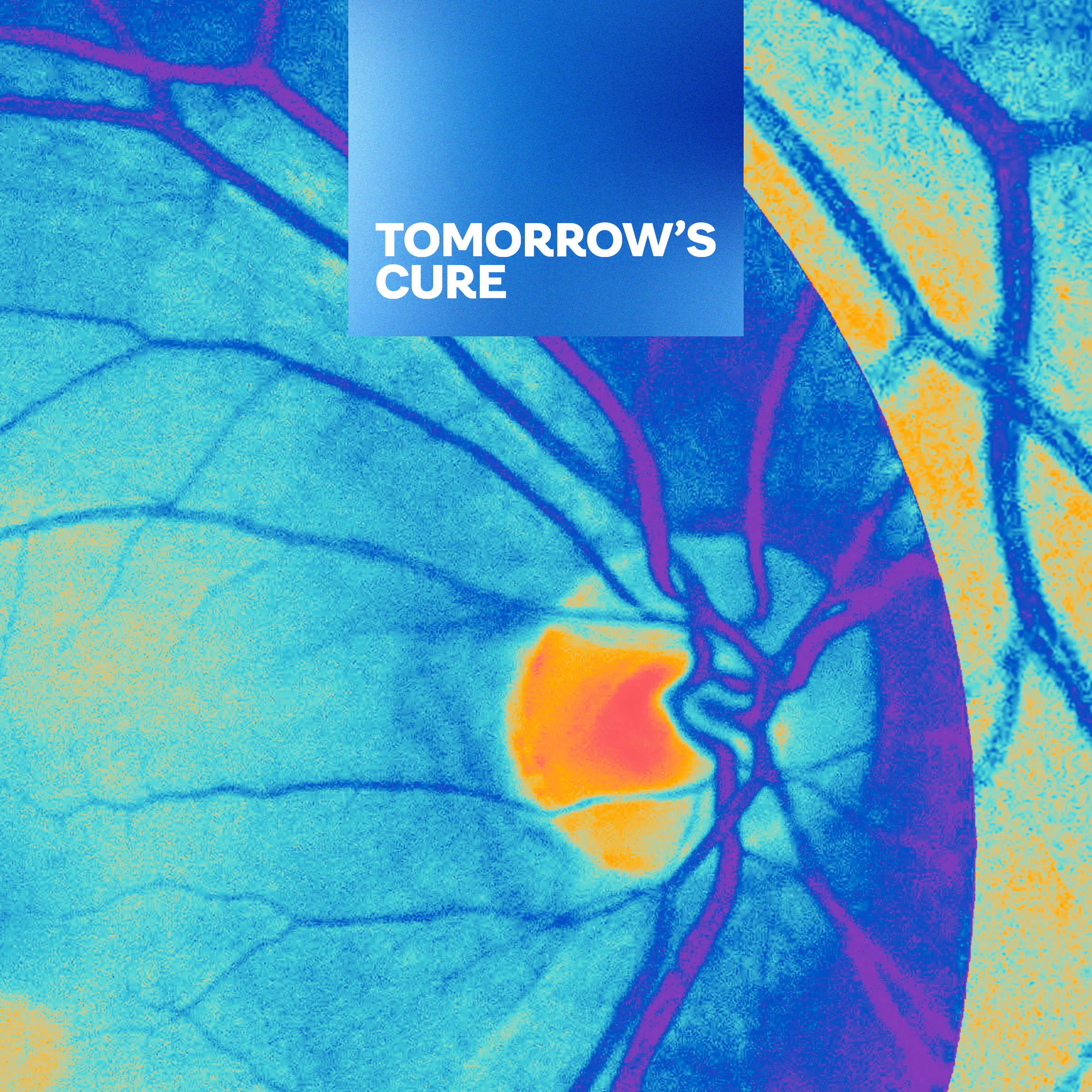
Loading summary
Transcript187 lines
- [00:00]
Planet Money Narrator
Planet Money helps you understand the economy. We find the people at the center of the story.
- [00:05]
Dr. Sanjay Gupta
Garbage in New York that was like a controlled substance.
- [00:09]
Planet Money Narrator
We show you how money influences everything.
- [00:12]
Lindsay Sievert
Tell me what you like by telling me how you spend your money.
- [00:15]
Planet Money Narrator
And we dig until we get answers.
- [00:17]
Dr. Yalin Wong
I had a bad feeling you're gonna bring that up.
- [00:19]
Planet Money Narrator
Planet Money finds out. All you have to do is listen. The Planet Money podcast from NPR.
- [00:25]
Dr. Sanjay Gupta
On his podcast Chasing Life, I'm Dr. Sanjay Gupta, CNN's chief medical correspondent brings you the secret of the happiest and healthiest people on the planet so that you can live your best life.
- [00:38]
Dr. Yalin Wong
Are some people just born happier than others? And what might they be doing that the rest of us aren't?
- [00:44]
Dr. Sanjay Gupta
Follow chasing life with Dr. Sanjay Gupta on Apple, Spotify, iHeart podcasts, Amazon Music, or wherever you get your podcasts.
- [00:55]
Dr. Oana Dumitrasco
My vision is that a patient can have when they have their regular eye scans with their optometrist every year. That particular eye scan can be coupled with an AI model that is really fast and very well validated and accurate. And those well validated algorithms can generate a very clear and individualized risk profile for both cerebrovascular disease as well as neurodegeneration.
- [01:25]
Lindsay Sievert
A lot of people think of Alzheimer's disease as something that becomes visible only when the memory starts to slip. But by the time symptoms appear, the disease may have been unfolding quietly for years, even decades. Now imagine this. One of the most revealing clues about the brain may be hiding in plain sight in the back of the eye. The retina is the only part of the central nervous system that can be seen directly and non invasively. That gives researchers a remarkable opportunity to look for patterns linked to Alzheimer's disease in a way that feels almost magical but grounded in real science. Teams at Mayo Clinic and beyond are studying whether artificial intelligence can detect retinal patterns linked to Alzheimer's risk long before symptoms appear. That's what we're talking about on this episode of Tomorrow's Cure from Mayo Clinic, a podcast that brings the future of medicine to the present.
- [02:24]
Dr. Oana Dumitrasco
Foreign
- [02:29]
Lindsay Sievert
I'm Lindsay Sievert. It's great to have you with us. Joining me today are Dr. Oana Dumitrasco, a neurologist at Mayo Clinic, and Dr. Yalin Wong, a research faculty member in the School of Computing and Augmented Intelligence at Arizona State University. Today we're really talking about the possibility of finding Alzheimer's disease earlier with a routine eye image and AI artificial intelligence. But before we get into all that technology, I first want to zoom out and understand when it comes to Alzheimer's, why early detection matters so much. And according to the latest information from Mayo Clinic, nearly 7 million Americans are living with Alzheimer's disease today. That number is expected to double in the coming decades as our population ages. And more than 70% of those individuals with Alzheimer's are age 75 and older. Mayo Clinic researchers found measurable Alzheimer's related biological and cognitive changes begin with a lot of people in the late 50s, decades before these symptoms appear. Which really brings us to this conversation about early detection. So Dr. Dimitrosko, I'd love to ask you, when you talk to patients and families about Alzheimer's disease, what makes early detection so important?
- [03:41]
Dr. Oana Dumitrasco
As you pointed out, Alzheimer's disease poses a significant public health concern and is a national research priority. And this research priority stems from the fact that this disease is currently often diagnosed too late when the symptoms become apparent. And therapies are not applicable in late stages as they were shown in multiple studies to not be effective. Additionally, Alzheimer's disease may coexist with cerebrovascular disease and the presence of concomitant cerebrovascular disease often excludes the patients from currently existing Alzheimer's disease targeting therapies. So there is significant evidence that supports that Alzheimer's targeting interventions are the most effective in the Alzheimer's disease pre clinical stage, something that we call pre symptomatic stage. When individuals have normal cognition, they have no concerns in their activities of daily living, either basic or instrumental activities of daily living. However, they do have evidence of deposition of abnormal proteins in the brain and there is evidence of neurodegeneration already despite
- [05:02]
Interviewer/Moderator
them having no symptoms.
- [05:05]
Lindsay Sievert
What are the general protocols today of how do we detect and diagnose Alzheimer's disease?
- [05:10]
Dr. Oana Dumitrasco
The general protocols are when patients present either to their primary care providers or to neurologists in specialized cases with cognitive concerns concerns. So that time point the standard of care is cognitive testing, usually a screening type of test in the primary care provider's office or a more detailed neuropsychometric testing that takes a couple of hours that is usually done by a psychologist. In addition to that there are some laboratory testing that are being conducted and usually a brain mri. This is pretty standard. Most recently we have emerging blood based biomarkers that are showing evidence of significant promise to diagnose Alzheimer's disease in early stages, probably not yet in pre clinical stages they are not yet ready for prime time. Once a patient is being diagnosed with possible Alzheimer's disease, then that's when they are usually referred to a tertiary care center or to cognitive neurological neurologist. And that's when more specialized testing is
- [06:23]
Interviewer/Moderator
being conducted, such as lumbar puncture and
- [06:27]
Dr. Oana Dumitrasco
the analysis of the cerebrospinal fluid for those abnormal proteins that deposit in the brain. Or a specialized type of PET type of imaging called amyloid.
- [06:38]
Podcast Announcer
Pet?
- [06:39]
Lindsay Sievert
Yeah. I think that's where a lot of us, you know, living our lives or within our families first encounter those symptoms of Alzheimer's disease within a family member or relative. For me personally, right now, I'm caregiving for an aunt with Alzheimer's disease. And it first came from a call from her doctor saying they had concerns. And we followed up with a neuropsychological exam. It went from there. And we realized that it probably started to accelerate during the pandemic when there weren't a lot of interactions with people and we weren't able to visit her a lot. And we did realize that, yes, this has probably been happening for years. Dr. Hoang, you come in with sort of this new frontier to detect Alzheimer's disease, and that is with the eye. I would love to hear more about that.
- [07:21]
Dr. Yalin Wong
I started this research by following Dr. Domischius work. They discovered that the eye has the early symptom and we can find the features which correlated to neurodegeneration, such as Alzheimer's disease. And what we do in our lab is we try to develop and apply the AI technique so that we can achieve the stability, so that we could identify Alzheimer's disease in an early stage in a more inexpensive and scalable way in the primary clinics, for example.
- [08:00]
Lindsay Sievert
So you said that your jumping off point was you're following Dr. Dumotzko's work.
- [08:05]
Dr. Yalin Wong
Yes.
- [08:05]
Lindsay Sievert
What really intrigued you or how are you collaborating with Dr. Dumitresco?
- [08:09]
Dr. Yalin Wong
Our past work, we focused on the structure of brain. Mr. And also, for example, the PET I, inspired by the vision of Dr. Dumestroki, proposed seeing the brain through the eyes, essentially eyes part of the brain. So basically, it share all the features of the brain, but distinctively from other parts, this part of brain is not covered by the skull. So it's something some part of the brain we could directly visualize, we can directly image so that the eye imaging technique was used in diabetes retinopathy and also glaucoma already. So basically, we find that this is also a very intriguing new direction based on Dr. Dimitrio Ku's work, so that we could use imaging technique for early Alzheimer disease discovery, the identification.
- [09:07]
Lindsay Sievert
So Dr. Dumitresco take me back to the work that Dr. Wang is speaking of. Where was this shifting point for you when you had your tools for diagnosing Alzheimer's disease and then entered the eye or the images that you can see through the eye?
- [09:20]
Dr. Oana Dumitrasco
I've been researching retinal imaging as a window to brain health for almost a decade now. We all know that the eye is an extension of the brain and it's actually the only part of the body that we can quickly and non invasively visualize the health of the brain and the health of the vascular. The back of the eye, called retina, is the only place where we can actually quantify the vascular health. And those vascular parameters in the back of the eye correlate with the brain vascular health as well as with the systemic vascular health. Furthermore, we have shown that using specific analysis of the retinal vasculature, we can be effectively distinguish patients with presymptomatic Alzheimer's from controls. Perhaps because those abnormal proteins that deposit in the brain and retina are affecting the health of the vasculature as well. In my prior work, I was able to demonstrate that the retina can accumulate the same type of proteins, tau and amyloid, that the brain of an Alzheimer's disease patient accumulates. But the advantage of the retina is that those proteins can be visualized non invasively, repeatedly, without any radiation. However, the easiest type of retinal imaging that is currently available widely is retinal fundus photography. So using fundus photography that is a very cost effective technique of visualizing the back of the eye, we can't really quantify those abnormal proteins that deposit in Alzheimer's disease. So that's when the advantage of artificial intelligence come into play. Artificial intelligence assisted analysis of fundus photos was shown to be able to distinguish patients with Alzheimer's disease from patients with normal condition in a few studies, including ours. So now we're taking this to the next level, researching the accuracy of an AI assisted tool in presymptomatic Alzheimer's. So we're trying to screen for patients with presymptomatic Alzheimer's not only in our academic center, but also in a demographically diverse population in rural Arizona.
- [11:50]
Lindsay Sievert
In general, people tend to have more regular eye exams, which gives this pool of data. And Dr. Wang, that's where you come in. Can you enlighten us of how AI sort of overlays with the images of the retina?
- [12:03]
Dr. Yalin Wong
So my understanding is that the imaging, for example color founder photograph, is very easy to obtain, inexpensive, non invasive, but the Challenge regarding our work is that the Alzheimer related retina change actually can be relatively subtle, for example, not that obvious as diabetes, diabetic retina atoprosis. So that's why we rely on AI. AI allow us to analyze this kind of millions of tiny image features simultaneously. The feature include vascular branching pattern, vessel tortuity and all those kind of spatial organizations of the vessel structure. So if we do it manually, unrealistic to quantify another exciting aspect, our work is that we also use the AI, the general model, for example, the one we use in ChatGPT Gemini, we use similar technique generative model, which could rescue the lower quality retinal image collected in the real world setting. Especially for example in the rural or the mobile clinics, such like in Arizona. We help recover the features otherwise will be discarded.
- [13:23]
Lindsay Sievert
So did you have to develop your own AI platform specifically to analyze these images?
- [13:28]
Dr. Yalin Wong
Yes, we develop our own system and for example the general AI. And also in this system we have lots of different components, we have actually several patterns and also we have different framework. And then more importantly, we develop a comprehensive way to evaluate the system including aquapor rating, including the ground truth data, the voxel wise comparison or also the downstream applications and others, for example, the Alzheimer identification. We also utilize our own tools to analyze the image to get the conclusion.
- [14:08]
Lindsay Sievert
How much of a game changer was this? When you're uploading all these images into the AI platform that you created and all this data is coming back, what kind of wow, aha moment was this?
- [14:18]
Dr. Yalin Wong
So basically the team in Arizona, so the mobile lab, they drive a van and driving along on the Arizona rural area to collect all different data, including the retina images. So in their device they have a green light indicating the quality. They find that even with the green light, 42% of image actually were not usable. With our AI tools we can roughly rescue 57.7% of such images. We turned them into usable images, 57% compared to 42%. So among these 42%, we converted 57.7 from the unusable to usable.
- [15:06]
Lindsay Sievert
That translates to early detection for more people.
- [15:09]
Dr. Yalin Wong
Yes, and the more reliable featured identification. And at least it rescue receives the time and all the resource to collect such data.
- [15:19]
Lindsay Sievert
Dr. Dimitrosco, could you tell us a little bit more about this mobile lab and rural Arizona where you're collecting a lot of this data and gaining a lot of these retinal images?
- [15:28]
Dr. Oana Dumitrasco
This work is done in collaboration with one of our academic institutions that have a mobile laboratory in a van, in fact, in which they collect blood Low field brain mri. They perform cognitive testing as we discussed, this is the screening. They also perform genetic testing using a very simple methodology. Very recently they became interested in our very cost effective and simple and non invasive retinal imaging. So they adopted this retinal imaging using a portable scanner. It had a very fast learning skill for the entire research team and patients provided informed consent to have their retinal imaging taken. We are utilizing their retinal images to provide a quantification of their vascular health as well as to correlate the retinal
- [16:25]
Interviewer/Moderator
imaging findings with more established biomarkers of early neurodegeneration.
- [16:34]
Lindsay Sievert
So a lot of things are sticking out to me as just low barriers. You said it's a very simple tool, early detection, not everyone might have access to leading to a primary care doctor and having neuropsychological exam. What are the benefits to that process that you described specifically then? AI being the best one of all.
- [16:54]
Dr. Oana Dumitrasco
Yeah, so my vision is that the patient can have when they have their regular eye scans with their optometrist every year, that particular eye scan can be coupled with an AI model that is really fast and very well validated and accurate. And those well validated algorithms can generate a very clear and individualized risk profile for both cerebrovascular disease as well as neurodegeneration. And that will help in two ways. It will help with guiding counseling, prevention and when appropriate, early treatment, as well as screening patients for clinical trials. We really need to find better ways to conduct clinical trials in neurodegeneration to identify those patients early as well as to have a very accurate modality to monitor them during those particular treatments that are being studied. This ideal scenario patient could have this type of scan in a familiar setting and the results are standardized, reliable and connected to the appropriate follow up care.
- [18:06]
Life Kit Host
Hey, do you have about 20 minutes? I know you're busy, but what if I told you spending that time could help improve your life? That's what we aim to do on each episode of Life Kit. Evidence based tips in about 20 minutes or less, listen to the Life Kit podcast in the NPR app or wherever you get your podcasts.
- [18:26]
Lizzie O'Leary
Now more than ever, technology is a dominating force in our lives. Then there's the threat of AI everywhere. And yet tech can be inspiring and help level playing fields. I mean a YouTuber with a self funded debut movie just dominated the box office.
- [18:45]
Podcast Announcer
I thought, hey, if you interview me it'd be good for your publication. And that's not ego. I just have a lot of followers. But it's that stigma. It's like YouTubers, they're not real.
- [18:56]
Lizzie O'Leary
Join me, Lizzie O', Leary, the host of what Next TBD, Slate's podcast focused on technology, power and the future. Follow what Next TBD now, wherever you get your podcasts.
- [19:11]
Lindsay Sievert
Dr. Wong, can you describe a little bit more of your work in this field when it comes to the retina revealing a lot about brain health? Why is the retina the optimum viewpoint for brain health and what are you seeing?
- [19:25]
Dr. Yalin Wong
So I'm the computer scientist, so basically we are doing the imaging analysis. My interest was in the imaging research for neurodegeneration disease. So when Dr. Dumichuku introduced this topic to us, I was very excited because we see the potential, we see the scalability, we see the affordability to have this kind of data collected. We find that AI give lots of benefit to analyze such image. We could analyze them using today's technique. We could analyze them very fast way. And also we developed several techniques, different technique. For example, the unsupervised learning technique so that we could achieve the zero short or few short approach to analyze the image. The Alzheimer research using Rentina image are still a very challenging AI research. No matter the general tier AI or those kind of different foundation models and even the vision language models provide lots of tools for us to achieve our goal for the early detection of Alzheimer's disease.
- [20:34]
Lindsay Sievert
And Dr. Dimitrosco, you said you've been researching the retina's relationship to observing Alzheimer's in the brain for over a decade. Do you remember the point when artificial intelligence came into the picture and you realized this could be a tool?
- [20:48]
Dr. Oana Dumitrasco
Yeah, absolutely. So when FDA approved the first AI based algorithm for disease screening, which is retinal imaging coupled with AI to screen for diabetic retinopathy. So that was the first FDA approval and we wanted to follow this and prove that AI assisted retinal imaging can
- [21:12]
Interviewer/Moderator
screen for neurodegenerative disorders.
- [21:16]
Dr. Oana Dumitrasco
Second was when I was trying to identify these abnormal proteins in the retina and that proved to be a very complicated retinal imaging system for the patient. And I realized that this may not
- [21:31]
Interviewer/Moderator
be scalable anytime soon.
- [21:35]
Lindsay Sievert
Were you skeptical at some point?
- [21:38]
Dr. Oana Dumitrasco
I was skeptical about the scalability of
- [21:41]
Interviewer/Moderator
this type of approach.
- [21:43]
Dr. Oana Dumitrasco
Our first AI study was using both Mayo clinical population as well as a large European population of patients with Alzheimer's disease and normal control that had fundus photos. And with the help of Dr. Wang and his team, we are able to see that an AI applied model can
- [22:04]
Interviewer/Moderator
very accurately distinguish patients With Alzheimer's disease from normal controls.
- [22:11]
Dr. Oana Dumitrasco
That gave us a lot of confidence. The next challenge that they took on
- [22:16]
Interviewer/Moderator
was translating this into a preclinical Alzheimer's disease population.
- [22:22]
Lindsay Sievert
If you have a scan of someone that has the early signs of Alzheimer's, you could not read that with your naked eye. You need AI to give you those clues up close. Is that right?
- [22:34]
Dr. Oana Dumitrasco
Currently there are no validated specific retinal
- [22:38]
Interviewer/Moderator
vascular biomarkers for Alzheimer's disease on Fundus Photography.
- [22:44]
Lindsay Sievert
Dr. Wang, then what does AI do? What does that look like? As you put these images into your platform, your AI platform, what is revealed?
- [22:53]
Dr. Yalin Wong
Our tools. We have some computer models. We could tune the model neural networks because the different mobile net and so that we, by providing annotated image, some image from Alzheimer's disease patients, some image from the cognitively unimpaired persons, so that the our neural networks, together with our unsupervised learning technique and the different technique put them together, we could achieve the identification of Alzheimer's disease patients or for example, even early stage. This is like the purely technical approach, but eventually we would follow the medical doctor like Domestrochio give us the final circumstances to check whether the results are reasonable biologically funded.
- [23:47]
Dr. Oana Dumitrasco
Dr. Wang's team was telling me using this AI model, we have 90 plus percent accuracy in classifying and distinguishing fundus photograph deriving from a patient with Alzheimer's with a normal control. So my next question was, can you tell me what is telling the AI
- [24:06]
Interviewer/Moderator
model that this photo is from a
- [24:08]
Dr. Oana Dumitrasco
patient with Alzheimer's disease and not from
- [24:11]
Interviewer/Moderator
a patient that has normal cognition?
- [24:14]
Dr. Oana Dumitrasco
A lot of work in the past four years was done trying to understand what's the underlying biomarkers that is particularly
- [24:21]
Interviewer/Moderator
specific for Alzheimer's disease.
- [24:24]
Dr. Oana Dumitrasco
Because neurodegeneration tends to be really complex, we thought that we learned that medium sized blood vessels and small sized blood vessels in the back of the eye and those surrounding areas are the underlying biomarkers for Alzheimer's disease. We're still trying to understand what is particularly telling the AI model in presymptomatic Alzheimer's disease, which tends to be even
- [24:51]
Interviewer/Moderator
more challenging than Alzheimer's disease itself.
- [24:55]
Lindsay Sievert
And just to pull that out a little bit more, what are the underlying biomarkers that you're looking for?
- [25:00]
Dr. Oana Dumitrasco
Underlying biomarkers of Alzheimer's disease in the retina are amyloid and tau and inflammation and vascular dysfunction. But you cannot simply visualize them on a fundus photograph other than the vascular dysfunction, which may not be necessarily particularly specific for Alzheimer's disease. So we are trying to ask the AI model if what is the underlying biomarker as well. And of course, the next step is to rigorously validate this against specific Alzheimer's disease biomarkers, such as amyloid, PET cerebrospinal fluid analysis, and most recently blood based biomarker markers.
- [25:46]
Lindsay Sievert
So you essentially have to compare this new process with the retinal images and AI to these standard ways that you would diagnose Alzheimer's through the amyloid PET imaging, the blood based tests, right?
- [25:59]
Interviewer/Moderator
Absolutely. That's our current challenge.
- [26:02]
Lindsay Sievert
Dr. Wang. I imagine if a patient hears that a doctor is going to take an image of the retina and put it into AI, you might have some raised eyebrows. How do you really know if AI is correct here and reliable? It's still a scary wilderness for a lot of people when you mention AI. So I ask you, Dr. Wang, how do we make sure that AI is reliable and not misleading?
- [26:25]
Dr. Yalin Wong
We need the careful validation. For example, we need the large multicenter studies and also diverse populations and also the different environment, the data and to be validated with other biomarkers, which is
- [26:43]
Lindsay Sievert
where a clinical trial would come in.
- [26:45]
Dr. Yalin Wong
Yes, that's what we need to do next.
- [26:47]
Lindsay Sievert
Dr. Dumitrozco, how do you speak to patients who might have some very well founded qualms about AI analyzing their retina? How do you believe that AI will be reliable in analyzing the retina for signs of Alzheimer's disease?
- [27:02]
Dr. Oana Dumitrasco
Well, what I tell my patients currently when I enroll them in our research studies is that we need to learn more. A part of AI that is that I am most interested in is explainable AI.
- [27:16]
Interviewer/Moderator
So really understanding that particular underlying biomarker that is telling the AI model that a disease process may be going on.
- [27:25]
Dr. Oana Dumitrasco
And I tell my patients that this is the first step for us to try to build a model that may work. Second is to validate it against existing biomarker and third, to deploy it in
- [27:39]
Interviewer/Moderator
a large scale once it's well validated.
- [27:43]
Lindsay Sievert
Dr. Wang, what do you see as a computer scientist yourself, the scientist's role in exploring Alzheimer's disease detection through the retina?
- [27:51]
Dr. Yalin Wong
To me, it's a very exciting direction and also very useful direction. We have seen that the fast advancement of AI technique everywhere. If we could use any data collected from the clinics, not necessary to be very complicated device, and we could have strong confidence at least to do the screening. I think this is really the very exciting direction. And also this line of research provided me and my students the real problem, the real world research problem so that we could directly see the impact of our research about our technical development, if
- [28:40]
Lindsay Sievert
this becomes part of routine practice, could really shape or reshape who gets screened, when they get screened, and how the healthcare system thinks about brain health and prevention. What's the next challenge? How do you keep exploring this in order to pursue this as part of practice?
- [28:57]
Dr. Yalin Wong
Our vision is that eventually we want AI system with different input, together with our knowledge. We learn from the, you know, from the past literature of, even from the electrical health record, so that we could, the AI system could become an assistant to the physician, like domestic, provide this assistant for the doctors to make diagnosis or prognosis. I think that's the vision and that's the goal we are trying to achieve.
- [29:33]
Lindsay Sievert
Dr. Dumitresco, what do you think about what Dr. Wang is saying about creating a more robust system that's available to physicians like you?
- [29:40]
Dr. Oana Dumitrasco
Yeah, absolutely. That's, that's why we're doing this work. So we empower providers. And our next project is to utilize
- [29:49]
Interviewer/Moderator
the electronic health record, as Dr. Wang
- [29:52]
Dr. Oana Dumitrasco
said, the robustness of an electronic health record, and to perhaps create a model
- [29:58]
Interviewer/Moderator
that can accurately predict the risk of neurodegeneration just using electronic health records, when available.
- [30:05]
Dr. Oana Dumitrasco
I think the most important challenge that we're having currently is differentiating Alzheimer's disease from mixed dementias, mixed pathology, mixed cerebrovascular and neurodegeneration, particularly monitoring these patients with
- [30:22]
Interviewer/Moderator
mixed pathologies carefully in Alzheimer's disease targeting clinical trials.
- [30:29]
Dr. Oana Dumitrasco
It was shown in prior clinical trials that Alzheimer's disease targeting therapies may actually
- [30:35]
Interviewer/Moderator
worsen the cerebrovascular disease.
- [30:39]
Dr. Oana Dumitrasco
So we would like to understand this
- [30:41]
Interviewer/Moderator
relationship better, utilizing the advantage of AI.
- [30:47]
Lindsay Sievert
Yeah, I know that's often the case. The aunt that I mentioned, my mother's sister, who we're caring for, has a mixed diagnosis of Alzheimer's and vascular dementia. And so you're talking about some of these coexisting types of dementia or conditions. Do you think that we will also get to a point where you can diagnose other neurological conditions through the retina too?
- [31:07]
Dr. Oana Dumitrasco
There is work that we've done, but very limited in Parkinson's disease as well, which is another neurodegenerative disorder in which another is depositing in the brain. It's in the synucleinopathy type of disorders. And there is significant work showing that maybe the eye is the window to the brain in Parkinson's disease as well. And interestingly enough, retinal vasculature is also affected in Parkinson's disease as well. Just like in Alzheimer's disease, just like in cerebrovascular disease. That's why we need more rigorous studies to really understand understand what's that particular vascular biomarker in each of these disorder.
- [31:49]
Lindsay Sievert
I'm just wondering about people out there listening who might have a family like mine. There's Alzheimer's in the family. What should we know as patients or what kinds of questions should we be asking with our own providers?
- [32:01]
Dr. Oana Dumitrasco
Taking care of a family member with Alzheimer's disease can be difficult.
- [32:06]
Interviewer/Moderator
It could increase probably our level of anxiety that this could happen to me one day. So being proactive and talking to your primary care provider about brain health and what you can do to preserve your brain health long term is extremely important.
- [32:25]
Dr. Oana Dumitrasco
Then considering enrolling into presymptomatic Alzheimer's disease.
- [32:31]
Interviewer/Moderator
Clinical trials.
- [32:32]
Dr. Oana Dumitrasco
There are clinical trials that are just monitoring patients and trying to develop existing biomarkers such as ours. Or there are therapeutic clinical trials at
- [32:42]
Interviewer/Moderator
different stage of the disease on the
- [32:45]
Dr. Oana Dumitrasco
big continuum of Alzheimer's disease, starting from normal cognition all the way to probably
- [32:51]
Interviewer/Moderator
mild or moderate dementia.
- [32:53]
Dr. Oana Dumitrasco
So trying to understand what you can do before the symptoms develop. Some patients may want to know what's their genetic risk and that's something to be discussed with the provider as well, as well as trying to understand what's
- [33:06]
Interviewer/Moderator
the role of less invasive testing such as blood based biomarkers.
- [33:12]
Dr. Oana Dumitrasco
When should you have this type of testing?
- [33:15]
Interviewer/Moderator
When should you have a cognitive testing done?
- [33:18]
Dr. Oana Dumitrasco
These are very good questions to be
- [33:21]
Interviewer/Moderator
addressed with the primary care provider.
- [33:24]
Lindsay Sievert
Are you hopeful that someday in your lifetime doing this work, that this test, this retinal imaging using AI will be routine for patients just as part of your regular eye examination?
- [33:36]
Interviewer/Moderator
Absolutely.
- [33:37]
Dr. Oana Dumitrasco
This is my vision. But we do have a lot of work to validate the accuracy.
- [33:43]
Lindsay Sievert
And then Dr. Wang, I mean every day AI is developing at lightning speed far beyond what we can even grasp our minds around. So as AI continues to advance, how does that advance the way that AI reads the retinal images?
- [34:00]
Dr. Yalin Wong
The AI technique developed very fast. We have the new ideas very quickly to address the problem we couldn't solve in the past. The more results will come along. Currently we view the AI development has three pillars. One is the model, the other one is the compute, the computational power. The third one is data. We think that the next big opportunity is the data. So that's actually, that's our group and we work with Dr. Dumischukio. We try to study the problem we are trying to study. So we try to have more data and more high quality data and more annotated data so that we could fit them in our system. And so that makes our system smarter and improve its accuracy. For example, in our recent work we use different public resource, for example the PubMed, the public library from NIH or even the YouTube. We go there to collect the data. And then using the current vision language models such as ChatGPT, Gemini, or our own vision language models, we could do better annotation. And then to enrich our data based on that, we also do the data synthesis so that we could have large amount of data which cannot be imaginable in the past. And with this kind of the development, with this kind of accumulated data, we think our system will be more practical and will be more adaptive, robust to different population, different aging people and then the current difficult problems.
- [35:50]
Lindsay Sievert
And Dr. Dimitrosko, data that Dr. Wong speaks of, data drives change.
- [35:55]
Interviewer/Moderator
Absolutely.
- [35:56]
Dr. Oana Dumitrasco
And we need hundreds and thousands of
- [35:58]
Interviewer/Moderator
individuals with preclinical Alzheimer's in order to validate this.
- [36:04]
Dr. Oana Dumitrasco
And preclinical Alzheimer's is not very well
- [36:07]
Interviewer/Moderator
characterized in the general population.
- [36:10]
Dr. Oana Dumitrasco
I'm hopeful that with the emerging blood based biomarkers, this is going to be easier, but currently it is challenging. That's why we are shifting towards using the advantage of electronic health record and
- [36:25]
Interviewer/Moderator
agentic AI to move forward with this type of research.
- [36:30]
Lindsay Sievert
There's so many shifts at the cusp of what we're discussing today. Not only is it that you can see the brain through the eye, you can see the retinal changes that could be a clue to Alzheimer's, you overlay it with AI. Another big aha. The other shift is that earlier diagnosis, earlier detection, which really changes everything. Instead of just realizing that you have Alzheimer's at the dawn of your memory loss. Right. So I'm just curious about what you both think about how this shifts, sort of the emotional journey of Alzheimer's and the way that we live our lives.
- [37:05]
Interviewer/Moderator
Absolutely.
- [37:06]
Dr. Oana Dumitrasco
That's why I think we need to be very careful. I think the most important application of this will be not necessarily to screen for preclinical Alzheimer's and telling them that maybe in two decades from now they
- [37:18]
Interviewer/Moderator
will develop Alzheimer's disease, but most importantly, to enroll them in preventive clinical trials
- [37:25]
Dr. Oana Dumitrasco
and to monitor them during these clinical trials with a well validated monitoring test
- [37:31]
Interviewer/Moderator
that will show an effective response to therapy. That's what we currently have lacking in the field.
- [37:38]
Dr. Oana Dumitrasco
Unless we're going to have an excellent preventive regimen, we will have an emotional response to the notion that we may
- [37:49]
Interviewer/Moderator
have presymptomatic Alzheimer's disease because currently there is no treatment. However, preventive medicine and preventive vascular health
- [37:58]
Dr. Oana Dumitrasco
is a field that is emerging and developing as we speak and that is mainly consisting of multi targeted lifestyle interventions that we know to be effective even
- [38:10]
Interviewer/Moderator
in patients at high genetic risk for Alzheimer's disease.
- [38:15]
Dr. Oana Dumitrasco
So I do see the benefit, even
- [38:17]
Interviewer/Moderator
if it's only multifaceted lifestyle intervention.
- [38:21]
Lindsay Sievert
So while we don't have a cure at this moment, what you're kind of telling us is that there's still a lot we can do and there's still a lot of hope on the Horizon.
- [38:30]
Interviewer/Moderator
Absolutely, yeah.
- [38:32]
Lindsay Sievert
Dr. Dumitroska, you talked a lot about needing data to launch a clinical trial to drive change. I mean, how long is this horizon or the timeline to get all this data?
- [38:41]
Interviewer/Moderator
Yeah, this is a moving target because
- [38:44]
Dr. Oana Dumitrasco
it all depends on how powerful the computational analysis as well. When we first started AI studies even five years ago, we needed million of patients in order to develop an accurate tool. Nowadays things are changing.
- [39:02]
Interviewer/Moderator
Moving from unsupervised to self supervised models was able to decrease the sample size significantly.
- [39:11]
Dr. Oana Dumitrasco
So the short answer is I cannot give you a timeline but I'm optimistic that Dr. Wang and his team will be able to develop accurate models with more limited sample size. What is very important though is to validate this in demographically diverse populations with
- [39:31]
Interviewer/Moderator
various ethnicities as well as genders and populations across the nation to begin with and globe in a secondary stage.
- [39:42]
Lindsay Sievert
Dr. Wang, what is the role of AI as an assistant here in this situation and what are the next steps steps towards getting there.
- [39:49]
Dr. Yalin Wong
This line of research, the multi center clinical trial would be very important became it is a fair standard for us to test evaluate the technology. And so basically everything I try to talk about here, it's from the technical development point of view. So we really want to have the data and then we have feeding our system using the current infrastructure to advance our technology deployment. That's the next step. We in the clinical trial we should have better understanding to the available technique, for example the biomarkers, how robust our system could develop the biomarkers and how useful those biomarkers are. And eventually from my vision or point of view, so basically the the data to advance the current AI system so that to help to provide this AI assistant, assistant for the medical doctor for the diagnosis and prognosis. I think the current bottleneck is the data. That's why we spend so much time to collect data from the public domain or from the electronic health record. So Basically all those kind of resource. We try to improve, collect the data so that we could move our AI system to the next level. The clinical trial will be the standard, will be the test bed to validate our systems, our technology.
- [41:25]
Lindsay Sievert
Before, when you had these images of the retina and now when you have these images of the retina reviewed by AI, why could you not collect as much data? Before AI was a tool.
- [41:36]
Dr. Yalin Wong
If we define AI as complicated machine learning algorithm before we use them. For example, the medical doctor as domestrochio already use other methods, statistical method, so that to do the different feature analysis, regression model, or different statistical method to identify the biomarker. What the AI help most is that the AI could do this very quickly and scalable, so that analyze them very quickly, very accurate. I think that what AI help us the biomarkers steal from the medical doctors, vision from medical doctors practice from their experience. But AI kind of the automatic method to do it quickly and then more comprehensively.
- [42:26]
Lindsay Sievert
So that's where the scalability comes in. AI can just do it faster in larger quantities.
- [42:32]
Dr. Yalin Wong
That's what I think. You know, medical researcher, medical doctor already work on this image and they use different ways to try different biomarker, different biomarker features and study them, just try to do another level to be faster, to be more accurate and then automatically.
- [42:52]
Dr. Oana Dumitrasco
So quantification of vascular biomarkers in the back of the eye was extremely tedious when I first started to do this type of research. And it's currently still not existing in routine clinical practice. Semi automated pipelines to quantify the retinal vasculature or even retinal amyloid deposits have been developed over the years. However, they were not successfully translated into clinical practice as they required a lot of human help. So the first challenge that we took on together is to generate point of
- [43:28]
Interviewer/Moderator
care applicable biomarkers for brain health.
- [43:31]
Dr. Oana Dumitrasco
We have one of our research outputs is an automated retinal vascular health biomarker that now we are studying the correlation with neurodegeneration as well as brain vascular health. So this is the AI assistance that
- [43:52]
Interviewer/Moderator
can be provided to the physician.
- [43:55]
Dr. Oana Dumitrasco
Just the generation of an automated retinal
- [43:58]
Interviewer/Moderator
vascular health biomarker that can be currently performed in seconds using an automated method.
- [44:06]
Lindsay Sievert
If you did this yourself, you mentioned it was tedious. This would take you a really long time. Like what is it like to look at the image without AI with your own eyes?
- [44:16]
Dr. Oana Dumitrasco
So the image itself shows us the vasculature. It does not provide an automated biomarker of how complex the retinal vasculature is prior semi automated methods or even deep learning methods that were published still require a lot of computational expertise. So still not available to each of the providers, each of the physicians, optometrists, ophthalmologists, primary care providers, within seconds. What we have developed is something that will take this automated biomarker, that is
- [44:54]
Interviewer/Moderator
the output of the AI model to
- [44:57]
Dr. Oana Dumitrasco
the next down the stream decision making processes.
- [45:03]
Dr. Yalin Wong
So what I learned from Dr. Tomichioki was that the medical doctor can explain the structure change by the blood flow, by the, you know, the degeneration process, by the observing, measuring the vascular structure, they can tell whether it's normal or abnormal. Recently, the project we do is that we use AI to enhance the image to try to identify this feature more accurately, fast, so that we could provide the medical doctor this kind of feature quickly. And so still we depend on Dr. Dumas Chukio's experience or the vision to check whether this is a correct observation or is just false positive.
- [45:48]
Lindsay Sievert
Yeah, so the doctor is still making all the clinical observation and the diagnoses. It's just more data. Sounds right. For a clinical trial, as you mentioned.
- [45:57]
Interviewer/Moderator
Right.
- [45:57]
Dr. Oana Dumitrasco
This is just an assistive tool for
- [46:00]
Interviewer/Moderator
providers that will need to be validated against existing biomarkers that are well recognized.
- [46:06]
Lindsay Sievert
As you know, this podcast is called Tomorrow's Cure and unfortunately today no treatment can stop, reverse or cure Alzheimer's. But I'm just wondering for the both of you, what gives you real hope about progress and the sense of wonder with this treatment and where we're at now. And Dr. Wang, I'll start with you.
- [46:24]
Dr. Yalin Wong
I have a high confidence to find the drug so that could prevent the Alzheimer's development in its early stage. In the past several years, we already see several FDA approved medicine for the Alzheimer's disease prevention and treatment. Personally, I'm very promising for the industry to discover this kind of drugs so that could prevent the Alzheimer. And also our research actually also help with the biomarker we discover actually could reduce the cost to speed up the drug development process. I am very optimistic.
- [47:07]
Lindsay Sievert
You're optimistic that the research now can accelerate drug development?
- [47:12]
Dr. Yalin Wong
Yes, yes. I also think that it's promising to have new drugs available to the patients.
- [47:19]
Lindsay Sievert
Dr. Dumitresco, what is giving you hope about progress right now in this field?
- [47:23]
Dr. Oana Dumitrasco
The hope is coming from understanding how complex things are and the fact that
- [47:28]
Interviewer/Moderator
we need multifaceted strategies.
- [47:31]
Dr. Oana Dumitrasco
I think we need medications to target neurodegenerative process. We need better medications to target vascular
- [47:38]
Interviewer/Moderator
dysfunction, and then we need lifestyle interventions.
- [47:41]
Dr. Oana Dumitrasco
Every day we're learning more about the complexity of neurodegenerative disorder, the importance of the associated vascular dysfunction in the brain, as well as the importance of preventive medicine to maintain brain health for more decades.
- [48:00]
Lindsay Sievert
I really appreciate you both. The Alzheimer's journey is just gutting and brutal for so many Americans living this reality and the fact that this is in development and that you both are working on this with such brilliance is really gratifying and gives people like me and so many out there a lot of hope. So we just really appreciate it and wish you the best of luck.
- [48:22]
Interviewer/Moderator
Thank you for having us.
- [48:23]
Dr. Yalin Wong
Thank you.
- [48:24]
Lindsay Sievert
Tomorrow's Cure is a production of Mayo Clinic with production help from the podglomerate. Be sure to follow tomorrow Tomorrow's Cure wherever you get your podcasts and if you like today's episode, please like and subscribe. I'm Lindsay Siebert. Thank you so much for being with us.
- [48:47]
Podcast Announcer
Mayo Clinic Key into Quality is a podcast focused on healthcare quality, safety and patient experience, offering actionable insights and strategies to help organizations address quality challenges. Dr. Timothy Margenthaler and co host Sherry Nemec invite Mayo Clinic experts to share insights about innovative work to drive excellence and explore some of the biggest challenges in healthcare quality, safety and experience. Podcasts are released twice per month on Tuesdays. Tune in to learn more by listening to Mayo Clinic Key Into Quality on your favorite streaming services.