Loading summary
Transcript446 lines
- [00:01]
A
Alright, guys, so check this out. Have you ever heard of Gold Belly? Okay, so it's this amazing site where you can order the most iconic famous foods from restaurants all across the country and they will ship it straight to your door. That's right. These guys will ship you Philly cheesesteaks from Jim's or Pat's in Philly, Buffalo wings from the Anchor Bar in Buffalo, and even Kansas City's most legendary barbecue. So if you're looking to host an epic super bowl party, go to goldbilly.com and get free shipping and 20% off your first order. With promo code Gameday.
- [00:31]
B
I'm here with Spinquest where you can play and win from the comfort of your own home with hundreds of slot.
- [00:37]
C
Games and all of the table games you love with real cash prizes. Right now, $30 coin packs are on sale for $10.
- [00:45]
B
For new users, it's all@spinquest.com that's s.
- [00:50]
C
P I n q u-t.com SpinQuest is.
- [00:54]
B
A free to play social casino void where prohibited. Visit spinquest.com for more details. Is the English opening the goat of openers?
- [01:04]
C
No.
- [01:04]
B
No. Posh show. Posh show. Posh show. Welcome to Tosh Show. I'm your host, Daniel Tosh. Eddie.
- [01:19]
D
Yes.
- [01:19]
B
How old am I?
- [01:21]
D
You are 50.
- [01:22]
B
How old is Georgia head coach Kirby Smart?
- [01:27]
D
65.
- [01:28]
B
He's 50. He's 50. We are the same age. Look at him.
- [01:33]
D
Yeah.
- [01:34]
B
Do I look young or does he look like he's going to die?
- [01:37]
D
A little bit of both.
- [01:38]
B
Man, that's crazy to me. I just found out that Kirby Smart was 50 years old and I just went, what if he was married to my wife, I would have him arrested.
- [01:49]
D
Him walking around with Carly would be weird.
- [01:51]
B
I'm like, you can't be with that woman. Ah. You know what I like about football?
- [01:55]
D
What?
- [01:56]
B
I love this new trend of officials that are all jacked as shit.
- [02:01]
D
Yeah.
- [02:01]
B
And then they wear the tight little ref shirts showing their arms. But now that we have female officials, I think it needs to go both ways. We need to get jacked. Female officials wearing real tight skimpy outfits, crop tops, just like, showing their camel toe.
- [02:21]
D
Oh, yeah.
- [02:22]
B
Let's see it. Let's see. Let's see the buns of steel. If the men can be sexualized as officials, then I think it is only fair that we sexualize the female officials.
- [02:36]
C
Yep. I agree.
- [02:39]
B
Let's see some cleave. Hey, big news over at Tosh Farm.
- [02:44]
D
Okay.
- [02:46]
B
Our flock has three new members.
- [02:49]
D
Well, well, well. Congratulations.
- [02:51]
B
Thank you. I got three new birds, three new chickens. Silkies. One kind of a gray one. Her name is Travis. One of them Red Carol. And then one of them, like, a light tanish color, Deborah. And each color of the silkies has a specific name, but I forgot what it is. Now we name them after our aunts and grandmothers.
- [03:17]
D
Okay.
- [03:18]
B
That's how we come up with the names for all our birds in our flock. But I didn't want to be this person. But I love them. I didn't think I'd care. It's like, oh, yeah, you get eggs. Yeah, you do. But you also get a lot of joy. I can sit out there and watch these chickens and play with them. Now, tragically, I've lost two chickens since I started this. This farm. Two hawks. But I've gotten better now. Both of them lived to about five or six years old before they were taken down. And I'm told that's a pretty. Pretty fair life for chickens. Now. It's not ideal. Nobody wants to be eaten by a hawk.
- [04:01]
D
Right.
- [04:02]
B
You don't want that to be your last day.
- [04:03]
D
Nope.
- [04:04]
B
No. But, man, do I love the chickens. They're just fun. It's not as much work as people think, you know? And I don't know what eggs cost, but I don't care.
- [04:15]
D
And you never will?
- [04:17]
B
No. I'm getting. I'm getting, you know, 12, 20 eggs a week now. You know, if I'm gone or on the road, my neighbors who. Egg salad, omelets, French toast, baked goods. Okay. All at a fraction of the normal cost because they're getting free eggs. I don't refrigerate the eggs either. I know some people refrigerate eggs, but that's usually if you. You're not supposed to clean it. If you clean an egg, then apparently you're supposed to refrigerate. But if it's just you take them out, we put them in a bowl. I try to come up with a system where the newer eggs on the outside, you reach in the middle of the bowl for the older eggs. But there's a good chance if you come to my house and have eggs, that one egg could be a few weeks old, just sitting out. I don't know how long they last sitting out with the membrane still on them. I've never gotten sick from them. I mean, how would I know?
- [05:19]
D
But that's true with your system.
- [05:22]
B
No, but nobody in my house has gotten real sick, so I got three new birds in the hen house.
- [05:27]
C
Ah.
- [05:28]
B
That's what I like to do. That's how I like to pass time that in a good game of backgammon. I love backgammon.
- [05:35]
D
I like backgammon.
- [05:36]
B
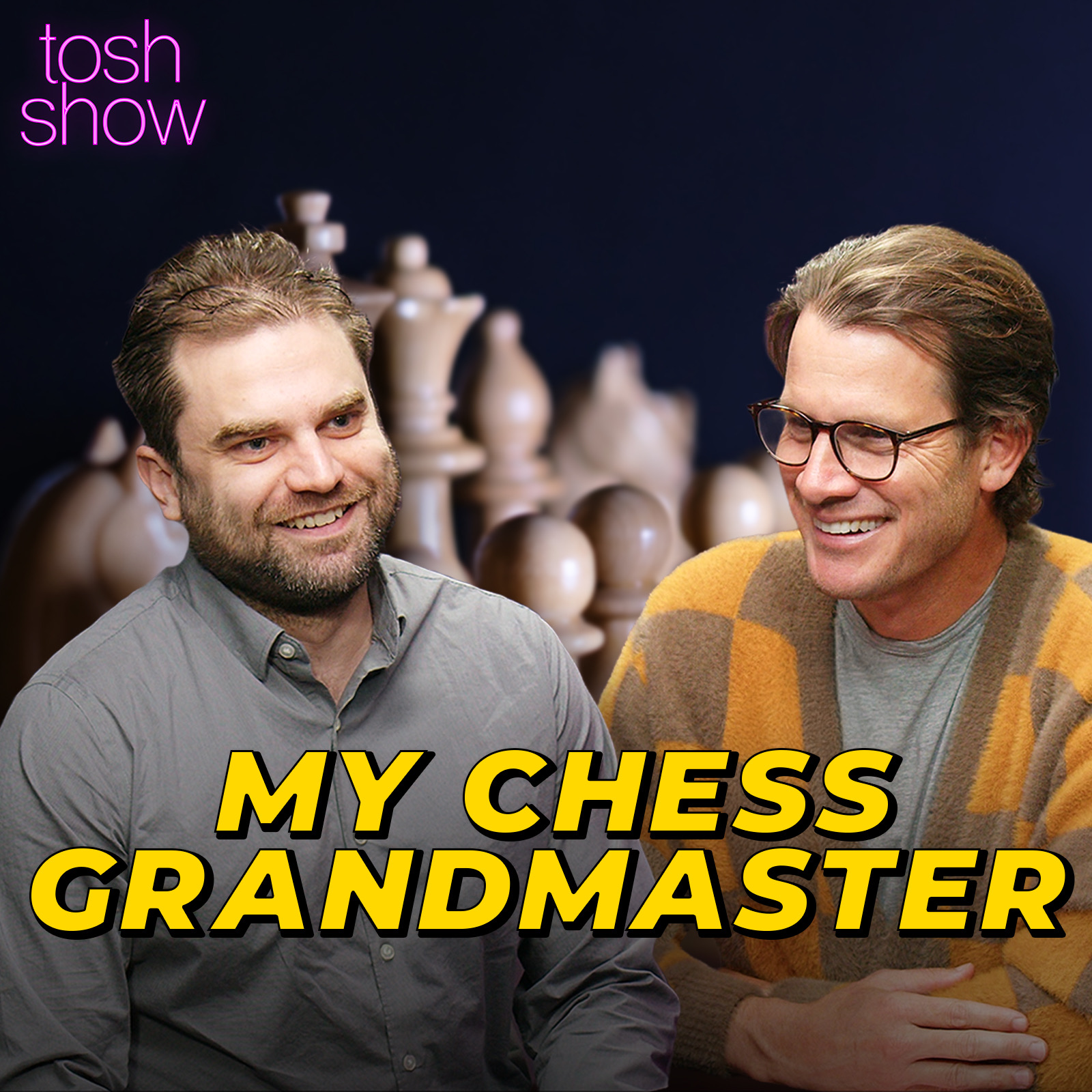
The problem with backgammon is it doesn't take the level of skill and sophistication that chess takes. Now the problem with chess is I live in a household of morons. So it's like, okay, so it's like I'm either going to play on my phone or I'm not going to play at all. Usually that means I'm not going to play at all. Enjoy. No one needs a personal trainer to hit their goals in 2026. There's a better way. All you need for a personalized workout is fitbod. We're living in the future. Fitbot is a fitness program that continually adapts with new exercises and dynamic intensity that adjust to how you progress. It creates a program based on your unique body, experience and environment. The algorithm uses data and analytics to help you build on your last workout to maximize your results. Whether you're exercising three days, a week, or twice a day, every workout is scientifically proven to be better than the last. I had my shirt off on the show when Phil Dolhouser was on. Let that be my before photo. I'll check back in after fitbody turns my dad bod into a hot rod. Brace yourself, America. You may not have noticed any changes yet, but this is my first time talking about fitbod. So stick around. Level up your workout in the new year. Join Fitbod today to get your personalized workout plan. Get 25% off your subscription or try the app free for seven days at Fitbod. Me tosh that's f I t B O D Me Tosh A New Year Colder days this is the moment your winter wardrobe really has to deliver. If you're craving a winter reset, start with pieces truly made to last season after season. You know why I love quince? Quince brings together premium materials, thoughtful design and enduring quality so you stay warm, look sharp, and feel your best all season long. Quint has everything you need. Men's Mongolian cashmere sweaters, wool coats, leather and suede outerwear that actually hold up to daily wear and still look good. Their outerwear is especially impressive. Thick down jackets, wool coats, Italian leather outerwear that keep you warm when it's actually cold. Refresh your winter wardrobe with quint. Go to quints.com tosh for free shipping on your order and 365 day returns. Now available in Canada too. That's Q U I N C E.com tosh free shipping and 365 day returns. Quince.com tosh this episode is brought to you by Prize Picks let's make some NBA picks this week for prize picks. Saturday, January 24th LA Lakers at Dallas Mavericks we got Luca vs Dallas flag Verluka points. I'm going to choose more. Assist. I'll choose more. Number of times he dribbles in the lane. Stutter stops so defender can climb up his back for an and one. Choose more. Does it have number of times LeBron will lay on the floor whining about a missed call while the game continues on around him. If it does choose more. Cooper Flag leads the Mavs in scoring. And that won't change against the Lakers, who who are in the bottom half of the league in points allowed 18th. So for flag, choose more for points. Coop also leads the Mavs in steals and the Lakers are in the bottom 10 in turnovers. So for flag, choose more steals. Download the prize picks app today and use code tosh to get $50 in lineups after you play your first $5 lineup. That's code tosh to get $50 in lineups AFTER you play your first $5 lineup. Prize picks. It's good to be right. My guest today is a grandmaster chess player and one of the greatest Americans to have ever played the game. His current rating is 2,664 on a scale from 1 to. I have absolutely no clue. Please welcome to the Tosh tournament table. Thank you for being here.
- [09:54]
C
Pleasure.
- [09:55]
B
Oh, man. Sam, do you believe in ghost?
- [09:58]
C
In ghosts? No. Not normally, no.
- [10:00]
B
Okay. Where'd you grow up?
- [10:02]
C
Orinda, California.
- [10:03]
B
Is that just outside of Berkeley?
- [10:04]
C
Yeah. Ish. It's real suburbia.
- [10:06]
B
Did you know where Orenda was?
- [10:08]
D
No, I did not.
- [10:09]
C
It's BS Spanish. Like, it's supposed to sound like Spanish, but it's not actually Spanish.
- [10:12]
B
Okay. They do that a lot in California.
- [10:15]
C
Yeah.
- [10:15]
B
You attended the Berkeley chess school? Two. Part question. How many state football championships does that school have?
- [10:23]
C
And.
- [10:23]
B
And what was the average student gpa?
- [10:26]
C
So it's the Berkeley Chess school. They just do after school programs. I don't think we have GPAs. You'd be a bit surprised at how physically athletic chess players can be, but I don't think we have a football team.
- [10:35]
B
Okay. I wouldn't. I wouldn't be surprised. I would believe it. I'll believe anything anybody tells me.
- [10:40]
C
Ghosts are real.
- [10:41]
B
Oh, tough for me to swallow that one. Were you athletic as a child?
- [10:46]
C
Yes and no. Like, I loved sports when I was a kid, if There were like 60 boys in my grade in elementary school, I would easily be like number five or something, which is good, but it's not gonn. You're not going to make any MLB drafts or anything like that.
- [10:57]
B
I'm glad you said mlb because you look at Major League Baseball players and you show their bodies and you could never convince me that that's $100 million athlete.
- [11:06]
C
Well, it's a lot about coordination too, and form. But yeah, funnily enough, actually, baseball was my first love and I was quite good. I mean, I certainly wasn't going to go pro or anything, but there's someone, I don't even know his name, but there was a pitcher from when I was like 12 years old or so, maybe 11. If you look at me now, you don't see it, but if I do that, you can see this little bump towards the end of my nose there. I don't know if you can see that.
- [11:28]
B
Yeah, gave you a little chin music and actually hit it.
- [11:30]
C
If that guy had not drilled me in the face, I don't know if I'd be US Chess champion. Like, I might have just kept playing baseball and not quit and it would have split my time. So if to that pitcher, I don't know your name, but if you're out there, I'll happily send you a bottle of scotch.
- [11:42]
B
It scared you away from the game forever.
- [11:44]
C
Yeah. I mean, so I had never been seriously hurt before in my life. I had fractured an arm or something. But like, you know, just take a baseball straight to the face at 70 miles an hour, you know, go gushing BL covered in blood, go straight to the ER and, you know, have like cotton swabs up your nose for like weeks. I mean, it was, oh, you got packed.
- [12:01]
B
It's not good.
- [12:02]
C
So when I finally came back, I would basically be standing on the very outside edge of the batter's box watching a ball, like a perfect strike straight over the center of the plate and yelling at the umpire, wasn't that inside? So like I turned into like, from a very solid good contact hitter to like this guy striking out every at bat and complaining to the umpire every time. So it was actually a three part thing because baseball was my first love. And in the same year I took that fastball to the face, the Giants were up in three or four runs in game six of the World Series against the Angels, blew it and then lost game seven as well. And my biggest hero was Barry Bonds. And it turned out he was using Steroids and all that happened in the same year.
- [12:39]
B
Should Barry Bonds be in the hall of Fame?
- [12:41]
C
I would say no. Just the steroids is, you know, like performance enhancing drugs is effectively cheating. I think he's sort of unfairly singled out in terms of who's sort of the name and face of all that. But there's so many guys, of course there were from that generation who used the drugs and are not in the hall of Fame.
- [12:58]
B
So many pitchers that were throwing to him. Yeah, I'm. I'm team. Get him in the hall of Fame.
- [13:03]
C
Okay. So that's.
- [13:05]
B
That's where I am. And I hate that. You know, I'm not. I'm not a fan of the team at all. How did you get into chess? We're gonna go all the way back.
- [13:14]
C
My dad taught me to play when I was like, six, and I didn't think much of the game. And then when I was nine, there was this after school class with the Berkeley Chess School at Glorietta elementary, where I grew up. And there was one kid who was just the best in the school and everybody knew it. I came to the. To the chess class and just tore him to shreds.
- [13:31]
B
And that was. You had only played with your father before playing? Okay.
- [13:34]
C
Yeah. And then there was a rule that if anyone ever beat the teacher, that next week the teacher has to bring pizza and the kids have a pizza party. They had to amend that rule to only one pizza party per semester because I kept beating the teacher. So I just sort of took it from there. I've always been very competitive. I loved sports growing up, and since chess was, I guess, I mean, at the time, it wasn't considered a sport. Now it certainly is. But it was the competitive pursuit that I was clearly the best at. Compared to baseball, basketball, soccer, you name it. I was just growing super quickly, and I basically put my foot on the gas and essentially never took it off.
- [14:08]
B
It was fun. Were your parents excited by this discovery?
- [14:12]
C
Yeah, I mean, they were very supportive. Overall, there were times that we didn't always see eye to eye. When I was growing up, there were definitely different priorities, and there were times that I would butt heads with them a little bit, but overall they were extremely supportive. And when I became an adult and I took a gap year before college, they were supportive of that as well. And then once the gold medal started piling up, they have a lot to brag about.
- [14:35]
B
Do you have siblings?
- [14:36]
C
Yeah, I have a younger brother.
- [14:37]
B
Oh, how's his chess game?
- [14:39]
C
He doesn't play.
- [14:40]
B
Yes, but he knows how to play chess.
- [14:42]
C
I'm sure he does. He definitely does actually, but I don't.
- [14:45]
B
You never sat across from him on a table?
- [14:48]
C
Not, not in 20 years for sure.
- [14:50]
B
Okay.
- [14:51]
C
But he likes other games. It's funny because most chess players are really good at lots of games. I'm not. Chess is the only game I'm like really good at. But I think he likes like magic cards and like Dungeons and Dragons and stuff like that.
- [15:01]
B
How's your poker game?
- [15:03]
C
Not great.
- [15:03]
B
Do you enjoy poker?
- [15:04]
C
It just doesn't do it that much for me because I've always liked. One of the things I like most about chess is the absolute fairness and that in poker, like I can just totally play better than you all day long and still lose. And you can play better than me all day long and still lose. And so I remember the one poker tournament I played, it was a home game tournament and I finished in the top three when we just agreed to split the prize money at the end. So you might say, great, you got top three in a poker. But at some point I was all in with tens against kings and I won with my 20% hand. So, you know, did I really deserve that? I don't know. I mean this is, this, this is.
- [15:37]
B
The only reason that I prefer poker because I could play you chess every day forever and I would never win.
- [15:47]
C
If we had a heads up poker match in Texas hold' Em and you took the best heads up poker player in the world and I trained your dog over there to click all in every single time. The world champions may be a 4 to 1 favorite or a 5 to 1 favorite.
- [16:01]
B
These are the odds that I like to play with. These are the odds I like to play with. Well, that's the only reason I like it because I know that I'm not good enough to for one game. How'd you do in college? Did your grades go up from high school when you went to college?
- [16:13]
C
Yeah, so I was at a very rigorous high school. And when I was in college, I was sort of one foot in, one foot out. So like for example, when I was a junior in college, I sort of was a little bit questioning my priorities. Am I going to be, you know, doing more chess or more school? And then my first semester, junior year, I got my invitation to make my debut for the US Olympic team during final exams. And I signed my contract before asking permission. So at that point it was clear to me that asking permission from professors.
- [16:43]
B
Gotcha.
- [16:44]
C
You know, at that point it was clear to me where my Priorities lay, but they were pretty accommodating with me, you know. I guess an Olympic contract seems like a pretty good excuse. I mean people ask to take exams late all the time for a variety of excuses from the absurd to totally legitimate.
- [16:59]
B
Did you graduate?
- [17:00]
C
Yes.
- [17:01]
B
Oh, look at you.
- [17:03]
C
Yeah.
- [17:04]
B
I would have bet all the money in the world that you walked away from everything at school.
- [17:07]
C
I thought about it at times, but no, I finished. I have a degree in economics and in theory I could have had a minor in French, but I didn't actually fill out the paperwork.
- [17:15]
B
Have you ever or do you have a day job? Are you just a full time chess player?
- [17:19]
C
I'm a full time chess player. I've never had a job. The last like proper, normal kind of job I had was when I was 12 and a soccer referee.
- [17:26]
B
You were a referee at 12? A prodigy in your own right there?
- [17:29]
C
Yeah, it's a local youth league. I wasn't allowed to be a full referee because I was so young, but I was a substitute referee. So if ever there was a time where one of like the, I guess the high school kids or adults was unavailable on the weekend, the guy would call me up. His name was Ben. He had a very thick accent. I don't know where he was from, but he would always, I, he would always say, hi, this is Ben. Sam, how you doing? Can you come referee this day? I'm like sure. You know, I got my 10 bucks a game for refereeing, you know, eight year old soccer games.
- [17:55]
B
Good gig.
- [17:56]
C
That's a good job for a 12 year old.
- [17:58]
B
Do you travel constantly?
- [18:00]
C
Yeah, probably 130 ish nights a year is a good guess.
- [18:02]
B
No, that's, that's too much. Is that wearing on you?
- [18:05]
C
Yeah, I mean especially now I'm 34. I'm not the young pup anymore. When I was 19, this was no problem at all. I was even doing more back then.
- [18:11]
B
I mean, I feel for you. That's, that's real travel.
- [18:15]
C
Six days ago I got back from a two month trip which included St. Louis, Thailand, India and London.
- [18:21]
B
Now those are the big three.
- [18:22]
D
That's the, that's the circuit.
- [18:24]
B
That's what you want. St. Louis.
- [18:26]
C
Yeah. That's where the most, the top chess events in the U.S. are.
- [18:29]
B
They are played in St. Louis, Missouri.
- [18:30]
C
Yeah.
- [18:31]
B
Didn't know that. Did anybody know it?
- [18:32]
D
Nope.
- [18:33]
B
No. I lived in St. Louis for many years.
- [18:36]
C
So they hold the U.S. championship there. That's what I was just playing. And then I went from there. I just took a short break in Thailand. Before playing the World cup in India. And then I had a really deep run at the World cup, so I was there for a few weeks, and then I went from there to London for London Chess Classic. And then I came home.
- [18:51]
B
Can you jump off of a plane and play, or do you need, like, time to kind of.
- [18:56]
C
I mean, you can absolutely jump off of a plane and play. Can you jump off of a plane and play? Well, that's a better question. For me. I always try to have one day of rest for every two to three hours of time difference.
- [19:08]
B
It would be, do you enjoy traveling and playing all over the world?
- [19:12]
C
Less so now than I did before, just because I've seen so much of the world and most of the traveling I've done is to places I've already been. There are certain places I like more than others to go.
- [19:22]
B
Where do you love to play?
- [19:23]
C
So some of my favorite cities that I've been to are Barcelona, Prague, Biel, or Bien for the French speakers in Switzerland. I really like Shanghai. Yeah, I've been to lots of fun places.
- [19:34]
B
You play in Russia ever?
- [19:36]
C
I did. Certainly not since the invasion, but I've played in Russia five times.
- [19:39]
B
Were you scared at all?
- [19:40]
C
Yes.
- [19:41]
B
Ah, that's a great answer.
- [19:43]
D
Yeah.
- [19:44]
B
Like the right answer. Do you play chess every day?
- [19:47]
C
Not always. I mean, certainly not play in the kind of way that I would in a tournament. Like, I'm not, you know, playing a classical game with an hour and a half on the clock, but it's pretty rare that I go a day without, like, playing a blitz game or something online or something. Quick.
- [20:00]
B
What's the longest stretch you've ever gone since being a pro chess player that you haven't played chess? How many days or weeks?
- [20:08]
C
So probably it's actually probably. It's probably exactly eight days or nine from when I was on this television show kicking and screaming. Okay, So I was out starving in the jungle, and I was not playing chess or training chess at the time.
- [20:23]
B
Did you enjoy the time away from the game, or was that too big of a distraction?
- [20:26]
C
It was. It was a very different experience. Of course, you know, when you're starving in the jungle, like, a lot of things just go out the window. For example, among the cast there, there were three exceptionally beautiful women. There was a model, there was an NBA cheerleader, and there was, like, a former Miss Wyoming. But if you're starving, your libido shoots to zero. Your desire to play chess shoots to zero. Like, every single iota in your body is just, get me food. And that's really all I was sort of thinking about.
- [20:51]
B
You prefer in person, over the table?
- [20:54]
C
Absolutely, yeah. I've. I'm classically trained. A lot of people will do their training online. Like, they'll have tactics, exercises that they solve on the computer. For me, I always print out my exercises and then write them down on the piece of paper and solve them on a 3D board. And interestingly, in terms of board vision, what I found is I calculate best on a 3D board. I calculate second best blindfolded and third best on a 2D board. So in 2020, when the US championship was held online, people are, like, wondering, like, what's wrong with Sam? Why is he, like, looking into the ceiling? Like, is there something written on the ceiling? Why is he not looking at the board when he's playing? Just 2D boards don't work very well for me, just because it's not what I've been trained on. Luckily, there were no suspicions on me because I played very badly that tournament. So.
- [21:39]
B
Okay.
- [21:40]
C
But. Yeah.
- [21:41]
B
Is there drug testing in the chess world?
- [21:44]
C
Yes, there is. So actually, the International Olympic Committee says that if a drug helps you in one sport, then it's illegal in all sports.
- [21:52]
B
Like Adderall. Can you take Adderall?
- [21:53]
C
That one, I don't know. But I do know that you can't.
- [21:57]
B
Take steroids, which I thought something just more like, like to keep you awake, focused attention. Those seems like.
- [22:03]
C
I don't know. I mean, I don't know exactly. Also, like, I guess, like, for something like Adderall, probably. Also just country by country. Even if the Olympic Committee allows it, if you try to bring something like that into, like, a certain country, they might just chuck you out. I've only been drug tested once. I don't know exactly what they were testing me for, but I do know that if I had tested positive for steroids, which in theory should have absolutely no impact on my chest playing ability, I would have been kicked out.
- [22:27]
B
Have you ever gone through a drug phase in your life? Recreational. Any drug? Marijuana? Any of that stuff up your alley, or.
- [22:34]
C
No, no. I've done weed four times in my life, three intentionally. There won't be a fifth. So the unintentional one was great. It was my mother's. I think it was her 65th birthday party, or maybe it was her retirement party or something.
- [22:46]
B
I'm loving the start of it.
- [22:47]
C
Maybe it was 60th. It was. Big moment. It was either. It was either 60th, 65th or retirement. I forget which one. But her two brothers Came in from New York and so I came to my parents house late and there were like, you know, some stuff on. There was like, you know, charcuterie board out and some cookies on the table and stuff. And I thought, oh, that cookie looks good. So I, you know, ate one not knowing this was a California cookie.
- [23:07]
B
Okay.
- [23:08]
C
And then I ate a second one not knowing it was a California cookie. And I was stoned out of my mind because you're supposed to eat like half a one.
- [23:13]
B
Okay.
- [23:13]
C
And I'm not a pot smoker, and so I'm just stoned out of my mind at my mother's party, which was.
- [23:19]
B
Did you enjoy the party?
- [23:21]
C
Not so much at the time, but I really like the story afterwards. I'm glad it happened. But yeah, it's a funny story.
- [23:27]
B
Does your mom do edibles regularly or.
- [23:29]
C
No, absolutely not. No. That's just my uncles. They thought it was. And they thought it was hilarious.
- [23:34]
B
Do you consider chess a board game?
- [23:36]
C
Well, it's a game that has a board, so I do consider it a board game, but I also consider it a sport.
- [23:41]
B
Oh, you know. Yeah. Do you not like the word game? Is that insulting?
- [23:44]
C
It.
- [23:45]
B
Okay.
- [23:45]
C
I think it's both a game and a sport. I don't. I think you could call baseball and soccer and basketball games as well, that you literally say, I'm going to the baseball game.
- [23:53]
B
Is there a code of conduct?
- [23:54]
C
Yeah, there's both an informal code of conduct. Just. And like, for example, if someone's just a jackass and they have an explicit.
- [24:00]
B
So people are jackasses? Oh, yeah, occasionally.
- [24:03]
C
I mean, you have the full range of behaviors in chess the same way you have the full range of behaviors in the rest of society. If someone's just kind of a jackass, but doesn't actually break any rules, so to speak, they're not going to be explicitly banned. But tournaments just won't invite you to come play. They'll invite someone else. The worst one, I think, just objectively was Karyakin, who was banned for six months because he was recording propaganda videos and raising money for the Russian army to invade Ukraine. That was pretty bad. It's a completely different tangent on bad behavior, but we also had an incident where the coach of the US Women's team was accused of, like, molesting half the players on the team across 10 years. So we've had some. We've had our own cases of bad behavior.
- [24:45]
B
Yeah. Okay, that's. No, I meant just even at the table, player to player. Oh, yeah. Are you allowed to utter Things under your breath. You're not.
- [24:56]
C
No. You're not allowed to utter things under your breath. You're not allowed to kick your opponent in the groin.
- [24:59]
B
Under the table is the table that you play at. Is it like this table where your feet can actually touch? Yeah. I mean, that's gotta be an uncomfortable moment. It depends on a match when you accidentally touch them, but it doesn't happen often.
- [25:13]
C
Like, the typical way it would happen would be, like, let's say it's your move, I'm away from the board in the bathroom or something, or walking around, and you're sort of, like, thinking long term. You're sort of sprawled out like this. I come back to the board, I sit down, and I accidentally hit your foot on the table. And then you sit back up like, it's fairly innocuous.
- [25:29]
B
Okay. Okay. How many moves ahead can you strategize during a match?
- [25:33]
C
Depends a lot on the position. If it's a very linear position, as many as I want, it can, you know, be 20, 40, whatever you want. It's basically just counting. Okay, this, this, this, this, this, this, this, this, this. You can count, you know, 20, 30, 40 moves ahead all you want. But if it's one of these complex positions where there's like five moves to consider for me, then five moves for you. If I can calculate four total moves ahead. That's huge. I mean, this is just. The tree will explode so quickly.
- [25:57]
B
Yeah, it's exploding right now. It's a Beautiful mind. That's what's going on in your head. That's pretty great.
- [26:01]
C
Sure.
- [26:02]
B
Ugh. In your mind, who is or was the greatest chess player of all time?
- [26:06]
C
So you have to draw a distinction between the greatest and the best. The best. It's very clear. It's Magnus the currently the best player in the world. But that's just because in sport, every single generation of athlete is always better than the one that came before it. You've got all these nostalgia guys who'll say about any sport, oh, you know, Pele was the best soccer player. It's just not true, of course. Like, so if you were to take a player from the past who was world champion for 30 years and put him up against the world champion of today, the player from the past is just demolished. Like, not even remotely close. But at the same time, they held the crown for 30 years, and the world champion today might only hold it for five, you know, there's a real difference between the greatest and the best.
- [26:48]
B
I just want you to know, Sam, that you're preaching to the choir. I couldn't agree more with you on that exact statement of presentism where it's like, the people today are.
- [26:57]
C
Yeah, it's easier to judge in sports that are sort of individual and timed. So, for example, you look at whoever set the record for the Marathon in 1900 or 1920 or whatever it would be, and you look at where their ranking would be today. It would just not be very high. It's different in a sport like soccer or baseball or whatever that's interactive because you can sort of say, oh, this person's batting average was the same as that person's batting average, et cetera. But, like, you know, all this nostalgia around Babe Ruth, for example, as the best baseball player. I'm sorry, you didn't even play with black people. Like, come on. You know, I'm pretty sure.
- [27:29]
B
I'm pretty sure I had that bit at one point.
- [27:31]
C
You know, maybe he was the greatest baseball player ever, but it's kind of a crime against humanity that we never got to see him hit against Satchel Page. Yes, that would have been amazing.
- [27:40]
B
So.
- [27:41]
C
But, yeah, in terms of greatest ever, I just have a soft spot for Kasparov. I think he's the greatest chess player of all time. He's certainly the one that has inspired me the most. He came out of retirement at age 58 to play, like, a sort of an exhibition of edge event against me and a bunch of the other, like, top players in the world. I got third, he got fourth, and, like, he finished. He beat me in our individual game, too, like, very violently as well. I was like, wait, let me get this straight. This guy is 58 years old, retired for 16 years, comes out of retirement, like, plays against, like, nine of the best players in the next generation, finishes in the top, and, like, beats a bunch of them and crushes me. I was like, this has got to be the best athlete.
- [28:18]
B
But you still finished above him.
- [28:20]
C
I did that time. I mean, we've played. I've played him three times. He's up 2:1. And also. But in the tournaments that we've played, twice I finished above him, and once he finished above me. But I certainly don't consider myself a peer with him. That would be absurd. But the fact that he and I were sort of. I mean, still, he's obviously better, but sort of comparable when he's 58 and, like, 16 years retired or even up to 60. Like, I mean, that's just insane.
- [28:45]
B
Okay, but you. You say this, you know, again, you have to understand who you're talking to. But you believe that or you know, I should say that there is a real fall off at a certain age in chess.
- [28:57]
C
Absolutely. So there's a fall off in literally anything you do. So the question just becomes, at what age does that happen? So let me give you an analogy. You need to have open heart surgery and you have a choice between three surgeons.
- [29:08]
B
I like this.
- [29:09]
C
Your first surgeon is a 25 year old kid who has 100% of his acumen, is straight out of medical school. Your second surgeon is 50 years old, has, let's say, 90% of their mental processing raw power that they had at 25, and has done this surgery 100 times in their life. And your final surgeon is 85, has, let's say, 55 or 60% of their mental acumen that they might have had when they were young and has done the surgery 200 times in their life without knowing a thing about medicine. I'm pretty sure you know which surgeon you want for this job.
- [29:40]
B
They didn't give me their ethnicities, but okay. But taking that off the table, let's.
- [29:44]
C
Assume the same ethnicity and gender.
- [29:46]
B
Oh, oh.
- [29:48]
C
Just to isolate age.
- [29:49]
B
Oh, you put.
- [29:50]
C
Just isolate. Age is the only valid constraint here.
- [29:53]
B
Fine, fine.
- [29:54]
C
My guess, I'm pretty sure I know which surgeon you want.
- [29:57]
B
Which one of them. Which one of them does my insurance take? That's also going to play.
- [30:02]
C
Realistically.
- [30:02]
B
Yes. We all know we want the 50 year old.
- [30:04]
C
Exactly. So the question is, in every profession you have, that drop off is going to happen at some point. In chess, it's definitely in your 20s. The trajectory of top chess players is very similar to the trajectory of top athletes in other sports. The absolute best players of all time can play into their early 40s or something, and the really, really good players can play into their 30s or mid-30s. You know, the players who are, you know, real elite of their generation, but not really in like the goat conversations. That's sort of me. For example, when we won the Olympiad, I was 24, five guys on the team and I was the second oldest young man's game. Absolutely.
- [30:38]
B
Pete's nephew James loves chess and he said that you play the London like a menace. Is that a compliment?
- [30:47]
C
Yeah, it's implying that the London system is an opening that you can play. I'm not much of a London system player, honestly, but I played one game earlier this year in the London system that was a really sparkling gem. I'm not the biggest London practitioner. I haven't had amazing results that I don't play it that often, but this one game, I think it sort of turned a lot of heads. Okay.
- [31:06]
B
Is the English opening the Goat of openers?
- [31:09]
C
No. No.
- [31:11]
B
All right.
- [31:12]
C
Absolutely not. It's a good opening, but it's not the goat.
- [31:14]
B
You ever heard of the Myrtle Beach? That's where you sit at a board and then you shotgun two beers, then you go play Flip cup instead. You ever played Flip cup?
- [31:23]
C
I've been to college.
- [31:27]
B
How many moves would it take you to destroy me? Do you think you could pull off the Fool's Mate?
- [31:33]
C
Are you a fool?
- [31:34]
B
Yes.
- [31:35]
C
Then yes, I could. That has nothing to do with me and everything to do with you.
- [31:38]
B
Yes, it does. Are there top level female players or was the queen's gamut less of a drama and more of a fantasy?
- [31:46]
C
So. Yes and no. There are top female players who play women's chess. There's definitely a big gap between them and the top male players. But we have had one exception. Judith. Or Judith is technically, but I always call her Judith for American audiences. When Judith Polgar beat Garry Kasparov In 2000, to my knowledge, that's the only time in the history of sports when a woman has defeated the world number one male in, like, an officially sanctioned match. Judith was absolutely amazing. She was born a science experiment. Like, her father was a Hungarian professor who, if I. I mean, I hope I'm getting this story right, but I'm pretty sure it's right. But he wrote to a Ukrainian professor saying, I have this theory that geniuses are made, not born. I would like to test this theory. I'd like you to come move to Hungary, be my wife with me, and we'll raise children to, like, become, you know, great chess champions.
- [32:34]
B
How many kids do they have?
- [32:36]
C
They have three.
- [32:37]
B
Uh huh.
- [32:37]
C
Uh, so Susan is the eldest. She became the first woman to become a Grandmaster. There is a woman's grandmaster title which is substantially less stringent than grandmaster. She became a gender neutral grandmaster, the first of many women to earn this title. And then Sophia, the middle child, became an international master. She wasn't necessarily as talented, but she just wasn't as into the game in general. And she sort of went in other directions as an adult. And then Judith, the youngest one, is just out of this world. She got to, like, number seven or eight in the world somewhere around there. I hate to break it to you. I did a very big disservice to the world. She doesn't play anymore. And I beat her in her final game before retirement.
- [33:14]
B
Whoa.
- [33:15]
C
So it was USA against Hungary, hit the Olympiad in 2014. And I sent her home. But, you know, at that point it was tough because she was clearly past peak. She just wasn't nearly as good as she was before. And I was clearly far from peak. I was 22. I wasn't, you know, US champion yet or anything like that. So neither of us were even remotely close to our full strength at the time of this game.
- [33:36]
B
Listen, you can put all the asterisks that you want on it, but it's a good feather in your cap.
- [33:40]
C
Yeah. She's not the only top player I sent home. Vladimir Kramnik was world champion for a few years, and I beat him in his last game as well. So whenever you get an old guy like Anand or Gelfand and you get the Indian or Israeli federation will tell me, you know, you're not allowed to play with this player in the last round of a tournament. You can play in. Not in the last round, but if it's the last round you can't play, they'll still quit.
- [34:00]
B
Well, would you like to go out on a win if you, if you're like, oh, this is my last pro.
- [34:06]
C
Yeah, of course. But it's hard. I mean, there's just this enormous pressure upon you when, you know, this is your last game.
- [34:11]
B
Well, no, I'm just saying, just size it up. Wait, wait till you get a good win and say, that's it, I'm done. I'm going out on that one.
- [34:18]
C
It's hard to do because if, like, let's say you are going to retire at the end of a tournament, you can't just win round five of this tournament and then say, oh, I'm not playing the rest.
- [34:25]
B
Yes, you can. You can.
- [34:26]
C
It will not reflect well on you.
- [34:28]
B
Well, I'm. Listen, you want, you want your legacy to end in a win? I walked away from the game. I beat my father and I said, that's it. I'll never play again.
- [34:37]
D
Send him home.
- [34:39]
B
Send him home. What's the time limit in a standard chess tournament?
- [34:44]
C
So usually you'll get an hour and a half for all of your moves with 30 seconds bonus after every move.
- [34:50]
B
Okay.
- [34:51]
C
And then it depends. The longer tournaments will have. You get an extra half hour as well if the game lasts 40 moves or more. And other tournaments will just say, no, that's the hour and a half and the 32nd increment is all.
- [35:02]
B
Are all chess players smart in general or is it a skill that anyone can learn?
- [35:07]
C
It's definitely a skill that anyone can learn. Can anyone learn it to the point that they'll be a grandmaster? No, but I've always had a theory that if you just decide I'm going to make this particular pursuit my life and my existence, you're going to get to easily within the top 1% of that field. Like, I remember I had a conversation with my mother where she said, yeah, I could just never run a six minute mile. And I'm like, really? She's telling me if you quit your job today, abandoned your family, took all of your money and went off to Kenya and did nothing but train with the best, you know.
- [35:36]
B
How old were you when you had this conversation?
- [35:38]
C
I was an adult. Okay. But I was like, if you did all of that and just, and then, you know, had your best dietitian and everything, maybe even like, you know, some kind of surgeries to like lose weight to make yourself run faster and like started taking hormones and something to gain muscle mass. Like, if you did all of this.
- [35:55]
B
Together, you tell me, what age, what age is she in this scenario?
- [35:58]
C
I don't know, late 50s, probably.
- [36:00]
B
I'm taking the over. She can't get to under six minutes.
- [36:03]
C
Is it completely impossible or is it just that the choices that you would have to make in order to get there are just completely incompatible with the life you want to live?
- [36:10]
B
I would be so glad that you don't live under my roof anymore.
- [36:14]
C
Yeah. So can anybody become a master in chess or a FIDE master, for example? I do think that that's available to anybody. Can anybody become a grandmaster? That's a hard no.
- [36:23]
B
All right, explain all the master grandmaster levels and how they are decided.
- [36:28]
C
So the rating system, you start at effectively like 0 or 100 or something, and then every 125 points is roughly a doubling of ability. And when I say that this is not settled science, but I believe it, just because the way the system works is If I'm rated 125 points higher than you, then I should beat you by a ratio of 2 to 1. So you might say, oh, well, if I'm 2000 and you're 1875, that doesn't mean you're twice as good as me. But if I were to make an analogy, Usain Bolt is not even close to twice as fast as me. Like in absolute terms, not even remotely close. But if we race a thousand times, the result will be a thousand to zero. So I don't really think you can argue I'm half as good a runner as him or better than half as good a runner as him, just because I can run over half of his speed. So if it's 125 points is roughly a doubling of ability. You know the highest rating ever achieved was like 2880 something. There's been a lot of rating deflation now which is mathematically interesting. But the Grandmaster threshold is 2500 and then in addition to making that rating you have to have three norms which is performances of 2600 or higher playing against at least three grandmasters at least five different countries across nine total games, which is not that easy to come by.
- [37:40]
B
And how is the KKK involved?
- [37:43]
C
The Ku Klux Klan?
- [37:44]
B
Yeah, that's just reference to all the Grandmaster talk.
- [37:48]
C
Oh yeah, I don't know of any Klansmen who play chess. If there are any, please get the hell out.
- [37:56]
B
We'll be right back.
- [37:57]
E
What if I told you the tossing and turning all night and waking up sore could be the result of sleeping on the wrong pillow? Sounds too good to be true. Hear me out Coop Sleep Goods Pillows are designed for every type of sleeper, side, back, stomach and everything in between. They adjust to how you sleep, keeping you supported and comfortable all night. And right now, new customers get 20% off site wide. From new parents navigating sleep schedules to wellness minded sleepers focused on recovery, to grandparents exploring new hobbies, Coop helps everyone sleep better and wake up actually feeling refreshed. There's a lot waiting for you tomorrow. Let Coop help you show up feeling rejuvenated and ready to go. Get 20% off your first order and try Coop risk free with a 100 night sleep better guarantee at coopsleepgoods.com ComedyPodcast that's Coop sleepgoods.com ComedyPodcast do you have.
- [38:51]
F
$10,000 or more in credit card debt? Maybe you're even barely getting by making minimum payments. With credit card debt hitting record highs, National Debt Relief offers real debt relief solutions for people struggling to keep up. These options may reduce a large portion of credit card debt for those who qualify. You don't need to declare bankruptcy and you may be able to pay back less than you owe regardless of your credit. National Debt Relief has already reduced the credit card debt for more than 550,000 consumers. So don't wait if you owe 10, 20, or even hundreds of thousands of dollars in credit card debt. You can now take advantage of this financial debt relief as the cost of living increases. To find out how much you could save, Visit National Debt Relief.com that's NationalDebtRelief.com.
- [39:37]
G
The New Year means new health goals not just for your body, but for your finances too. But did you know financial health is directly related to identity protection? You need Lifelock because your personal info is in endless places that are outside of your control. It only takes one mistake, and not even your mistake stake to expose you to identity theft and lost funds. Lifelock monitors hundreds of millions of data points per second and alerts you to threats you could miss on your own. If your identity is stolen, LifeLock's US based restoration specialists will fix it, backed by the million dollar protection package. In fact, restoration is guaranteed or your subscription money back. Don't face drained accounts, fraudulent loans or other financial losses from identity theft alone. Resolve to make identity health and wealth part of your New Year's goals with LifeLock. Visit lifelock.com iheart and save up to 40% your first year. That's 40% off@lifelock.com iheart Terms apply.
- [40:39]
B
PA show when you're ranked number one, is it for a calendar year or can it be at any time? Is it.
- [40:49]
C
Your ratings are dynamic. They're always going up and down. But like at some point if Magnus is like 2850 or something, the next guy is like 2790 and the maximum you're going to move from any one game like six or seven points, you know, it's going to be. It would take a lot for him to suddenly not be a number one.
- [41:06]
B
In your opinion, when will Magnus fall?
- [41:09]
C
Honestly, just when he feels like stopping playing. I mean he's basically stopped training to my knowledge. I mean I'm sure he still does some work, but he's still so much better than the number two guy. Like I think he will retire at number one in the world. I don't think he's going to be number two when he retires.
- [41:23]
B
You have any idea what kind of money he pulls in? Yeah, outside, I mean just all things, not just that, are chess related. I, I, I want kind of like the number one player in chess can pull in blank a year.
- [41:36]
C
My best guess for him would be somewhere in the eight figures. Ten plus, certainly over 10 million. I don't, I think he's over 10 on under a hundred million. I'm pretty confident of that.
- [41:46]
B
How much does the money fall off when you're in the top 100? Like, like versus 100 versus 1.
- [41:53]
C
Quite a lot. I mean 100, 100 in the world.
- [41:56]
B
Like can you make a living?
- [41:57]
C
It depends where you are. Let's say like for example, if you're number 100 in the world and you're making like $60,000 a year or something from playing in leagues and whatnot. If you're playing in European leagues and living, you know, somewhere in Italy or Spain or wherever, that's not. That's not Rome or Barcelona. And your cost of life isn't that high. Yeah, you absolutely can, you know, Los Angeles. 60,000 a year. You're going to struggle a bit.
- [42:21]
B
F. Marry. Kill. You know how to play it?
- [42:23]
C
I do.
- [42:23]
B
Here we go. Bobby Fischer. IBM's Deep Blue. The Queen's Gamut. Chick with the big eyes.
- [42:29]
C
Okay, so I will definitely kill Deep Blue because the idea that computers are just so superior to humans is kind of offensive. It's definitely the case, and it has been for a while. Fisher. I don't know. I guess enough shots in, you won't notice it. And then, I mean, Anya Taylor. Joy, she seems lovely. I'm not sure if I have to spend my life with one of the three. I guess I'll choose with her.
- [42:55]
B
I mean, really answered it. Yeah. Gotta give it to him. Have you met your checkmate yet?
- [43:00]
C
My checkmate?
- [43:01]
B
Yeah. Do you have a special someone in your life?
- [43:03]
C
I have a girlfriend. Yeah.
- [43:04]
B
How does she like all this traveling?
- [43:06]
C
She misses me when I'm gone, but she enjoys the. She enjoyed it when she came with me to Thailand for a little break and she was at the World cup for two days.
- [43:15]
B
So do you like having someone in your corner like that traveling with you.
- [43:18]
C
Or do you prefer for the mind during tournaments themselves? I'm usually on my own. I mean, a lot of the places I go don't really. People might not necessarily want to be there for three weeks.
- [43:29]
B
Is that how long a tournament can be?
- [43:31]
C
Well, the World cup, for example, is elimination. I mean, I made it to the quarterfinal, so I was there for a very long time.
- [43:36]
B
How long?
- [43:37]
C
I mean, I guess I arrived in India on November 1st, and I left on, like, the 22nd. So, yeah, that was three weeks.
- [43:44]
B
And do they put you up?
- [43:45]
C
It depends. Tournament by tournament. So the World Cup, I actually like their format the most. They don't put you up. They don't buy your plane tickets. But it's elimination format, and if you lose in the first round, you get 6,000 bucks.
- [43:56]
B
What's the biggest cash prize you've ever won?
- [43:59]
C
$50,000.
- [44:01]
B
You're paying tax on that?
- [44:02]
C
Yeah.
- [44:03]
B
Yeah. You wrote a book. You've written three books. Three books. How many books you've written lots of books.
- [44:10]
C
Five. By the time this is live, it's probably six. I brought one for you, actually.
- [44:14]
B
How well, do these sell the book?
- [44:17]
C
I guess between the print books and ebooks, that sold the best for me has made me more money than winning the US Championship. Two Olympic golds, two World cup quarterfinals, the Prague Masters and the Beall Masters combined.
- [44:31]
B
So. Yeah, but. But had you not won those things, there would be no book money.
- [44:35]
C
Of course. Yeah. I mean, I need to get the credentials for it, but it's just like any other sport, you know, if you look at what any top athlete, you know, Federer or whatever, makes, yes, he's won tournament money, but almost all of his money is coming from endorsements and, you know, books and stuff like that.
- [44:51]
B
You gotta look at the pasta money. I once sat behind Federer's team at a tournament, and the whole time I'm just watching them. I can read their cell phones because they're sitting right in front of me. And they're just these pasta people and they're all, like, talking about the sales this quarter and what Federer's doing. It was just one of his million sponsored. But he's sponsored by some Italian pasta. And I just was laughing at them, just talking numbers the whole match about how. How fetters do it.
- [45:25]
C
You're reading their phones over your shoulder.
- [45:27]
B
Basically. I was curious. I was like, what are they? Oh, look at. Look at that. That's rigatoni. Those are a lot of zeros.
- [45:33]
C
Forgive my skepticism. Okay. How's your Italian?
- [45:36]
B
Oh, no, no. Poor.
- [45:37]
C
So what language were they writing?
- [45:38]
B
They were speaking in English.
- [45:40]
C
Okay.
- [45:40]
B
Theoretical out rook end games.
- [45:42]
C
Yeah.
- [45:43]
B
Is that. Is that the most popular of the books?
- [45:45]
C
No, the most popular shacks are the first one, largely just because of timing. Like, I wrote that book, and then right when it came out, I went on the biggest tear of my life. I won the US Championship, the Capablanca Memorial, and the American Continental Championship back to back to back. The one I'm most proud of is definitely theoretical rookend games. That one took the most work on my part.
- [46:03]
B
Lot of pictures in these books of chessboards.
- [46:05]
C
Yeah, there's a lot of diagrams.
- [46:07]
B
Yeah, I like the diagrams of the chessboards. Have you ever played against any of those speed hustlers in Washington Square Park?
- [46:15]
C
Yes.
- [46:15]
B
Are any of them good or are they just, like, playing so fast that who cares?
- [46:20]
C
They're decent.
- [46:21]
B
And do all of those players know who you are when you sit down now?
- [46:25]
C
They probably do. The last time I was in Washington Square park and I was just walked past the tables, and one of the hostlers is calling out, you know, hey, let's play 100 bucks a game, 100 bucks a game. And I just turned around and raised my glasses. I had sunglasses, raised my glass, like really in the eye shells. Holy shit. And I just turned around and kept walking. And he'll never know if it was me.
- [46:45]
B
Oh, he.
- [46:46]
C
I guess if he watches now, he'll know.
- [46:47]
B
Uh huh. Well, I doubt he'll watch this, but. Have you ever hustled?
- [46:51]
C
Nah, it's not my thing.
- [46:53]
B
Do you have like some VPN on your computer where you can play, like gambling chess whenever you want?
- [47:00]
C
If I want to get ejected from tournaments, that's a great way to do it.
- [47:03]
B
Okay, so that's the rule. There's a hard line there.
- [47:07]
C
Using any kind of computer technology to play while you're playing is absolutely forbidden.
- [47:12]
B
No, no, no, I'm. I'm all right. But can you like, can you make a living just. No, I don't.
- [47:17]
C
I mean like making a spoof account and then finding a way to play somebody online where they don't know. Somebody crazy strong. Yeah, like if I have someone, like if you play on your account for a while, then I just jump in on your account and play for you and somebody.
- [47:30]
B
Thank you.
- [47:30]
C
So I don't really think there's a site that does chess gambling. At least I don't. I'm not aware of.
- [47:34]
B
That's what I wanted to know.
- [47:36]
C
But if there was and something like that was found out, I don't think I'd ever be playing chess again.
- [47:41]
B
Well, I mean, you can't stop somebody from playing chess. Okay, Everybody that's on the show gets a gift. Okay.
- [47:46]
C
All right.
- [47:46]
B
This here Raycon, they gave me these. You're gonna love them. They're earbuds. You ever. You put anything in your ears?
- [47:54]
C
Yeah, I have earbuds.
- [47:55]
B
I got a new pair.
- [47:56]
C
They're better. All right.
- [47:57]
B
I don't know if they're better. I hope they're better. Raycon probably makes the best earbuds ever. I don't know. All right, Ridge. Ridge is. Here's.
- [48:03]
C
Oh, I have one of those.
- [48:04]
B
Another one? You ever get stuck in a game where you're like, oh, I don't know what to do?
- [48:09]
C
Yeah.
- [48:09]
B
So no, not anymore. Okay.
- [48:12]
C
Bring this to the board.
- [48:15]
D
Would that be allowed?
- [48:16]
B
This frust. I've never been able to solve a Rubik's cube in my life. And my son one day was just sitting down and he was just going to town on it, and I go, and I go, am I going to have a genius for son? And do you know what he did What? He just started trying to break it apart. And I'm like, oh, I got a good kid. He's like, me.
- [48:34]
C
I think there's three layers to a Rubik's cube. I know how to solve two of them. Like. Yeah. So if this is there, then the. We're looking. So, like, yeah, this is the green center piece. So, like, here we're looking for the green white piece. So that's correct. And that's correct. I probably could solve this thing if you gave me, like, an hour, but.
- [48:49]
B
I'm gonna give you more than an hour because it's yours. Okay. Put that on the floor. But this. Oh, this Subaru. I'm still mad at Subaru. They did me dirty. I don't want to. I want you to have that for your coffee or whatever. Drink coffee.
- [49:02]
C
I like tea.
- [49:03]
B
Good. Put your tea in there.
- [49:04]
C
Awesome.
- [49:05]
B
Subaru, did you ever play checkers? No, I don't know that I know how to play checkers. If I'm being. If I'm being honest with you guys.
- [49:13]
C
I know there's, like, basic stupid checkers rules, which I played as a kid, but, like, the advanced checkers rules that they play in tournaments, I'm not sure I know all the rules.
- [49:20]
B
Okay, well, I. I don't know that I know how to play checkers. Like, my son was like, oh, certainly, we. We've sat at a chessboard, and I. But I. I'm positive I don't know how to play checkers. Now, do you move diagonally, or can you go straight forward?
- [49:33]
C
You do move diagonally, but, like, the real differences is, like, I think if you get to the final at the end, the way I was taught, you can now move backwards as well with a king.
- [49:45]
B
Once you get king, you move backwards. Once you get two on top of.
- [49:49]
C
Each other, you move backwards.
- [49:50]
B
But you can only overtake somebody from a diagonal position.
- [49:53]
C
Yeah, you only move diagonally. You jump diagonally. But then I believe that in the proper checkers, the king now can basically move like a bishop in chess and jump something all the way across the edge of the board if it's on the same diagonal. I could be wrong, but.
- [50:04]
B
Oh, that's. I don't know.
- [50:06]
C
And then also, I. I believe that there's a rule that if you're able to capture something, you must. So I can, like, make a move forcing you to take my guy, and then I've calculated ahead. Then I'll take your guy, you take something, and then I take something, and then it works out well for.
- [50:17]
B
So you're playing chess while playing checkers. That's.
- [50:19]
C
I think that's what the.
- [50:20]
B
That's bonkers.
- [50:20]
C
That's what the real checker players do. I don't play checkers.
- [50:22]
B
The real checkers players. What a group that those real checker players are, huh?
- [50:27]
C
Yeah.
- [50:29]
B
What's the best advice for an aspiring chess player? Like, an actual person that wants to make a go with this?
- [50:34]
C
Two things. One, always play for the love of the game. As soon as chess stops being fun, you're gonna stop improving. And two, if you want to be a top athlete, you have to treat yourself like a top athlete in sport, in soccer or something. If you don't come to practice, your coach is gonna yell at you, get kicked off the team eventually. In chess, no one's gonna be there to yell at you. If you don't train tonight, you know, or tomorrow or whatever, you have to have that same level of dedication that an athlete in any other sport would have and that they're forced to have by their peers around them, on their teammates, their coaches and whatnot. You need to have that same level of discipline and dedication. And if you do and you continue pushing yourself to improve and getting better, and you enjoy that process and you continue loving the game, you're absolutely going to make great strides.
- [51:13]
B
You've already had this illustrious career, and you're only 34. How much fight do you have left?
- [51:19]
C
I mean, I'm trying to get back to where I once was. I mean, for me, unfortunately, you can just point to a very clear moment in my career where everything went downhill, which was May 2022. And I got Covid. Just ever since then, I haven't been the same, and I've been working really hard to try to get that old level back. But it's hard to tell, like, how much of my fall from grace, so to speak, you know, fall from, like, you know, number 20 in the world, multiple Olympic golds, you know, both individual and team, US Champion, all the way down to, like, you know, number 60 or 70 or wherever I am now. How much of that is, you know, isolated to this one particular moment. You got Covid. And that changed you somehow in the upcoming years, because you can clearly see, like, that's exactly the point where the graph starts going down.
- [51:59]
B
Have you only gotten Covid once?
- [52:00]
C
To my knowledge, yeah.
- [52:01]
B
Oh, man, I've had Covid 30 times, at least. I tell you what, I don't. I don't feel I'm sharper now than I've ever been.
- [52:06]
C
And then how much of it is just, you're getting older or. It's not only that I'm getting older, but these younger players coming up just had so much more resources to train than I did. Just like I had more resources to train than the people before me.
- [52:17]
B
But you have all access to all the same resources that they have right now. And you're still 34, you're still young. I feel like you just need a hype man. I think I could do some head work with you and get you right back to the tip top.
- [52:29]
A
Sure.
- [52:30]
B
No, not possible.
- [52:31]
C
I mean, I've done a lot of. I do a lot of hype stuff before my games. You know, I'll dunk my face in ice water. I'll, you know, play the Rocky music or whatever.
- [52:37]
B
Whatever. Do you ever have. Do you ever hire help? Do you ever hire, like. Like, you know, an actual team? Treat yourself like a real sports franchise?
- [52:45]
C
Yeah. I have a coach, I have a manager. I have all that.
- [52:47]
B
34 is not. We're going to get you back. This is.
- [52:51]
C
You look at the top rating of any individual player. It's Almost always between 25 and 30.
- [52:55]
B
Who's number one in the world right now?
- [52:56]
C
Magnus Carlsen.
- [52:57]
B
Okay. How old is he?
- [52:58]
C
35.
- [52:59]
B
Sam, all the best. Thank you.
- [53:01]
C
Pleasure to meet you, Dan.
- [53:02]
B
Very nice to meet you. Oh, such aggressive handshake. You almost broke my arm, Sam.
- [53:06]
C
Hey, we played one game of yours. We could play one game of mine. How about that?
- [53:09]
B
Oh, what's that? We don't arm wrestle.
- [53:12]
C
Hell yeah.
- [53:12]
D
9.0 days.
- [53:14]
B
I'm not against. I'm not against an old fashioned. If you break my arm, they'll be so mad. Okay, we're not cheating and holding on to anything, right?
- [53:23]
C
All right. Can we get a peanut gallery to call? Ready, set, go.
- [53:25]
B
Yeah.
- [53:25]
C
Ready, set, go. Oh, shit, he's strong.
- [53:30]
B
Where's that arm going?
- [53:31]
C
Yeah, over the top. All right, I'll be a chess player and offer a draw.
- [53:39]
B
I'll take it.
- [53:40]
C
Okay.
- [53:40]
B
Good game.
- [53:42]
C
I thought you were gonna play chess.
- [53:46]
B
Sam. Good stuff, buddy.
- [53:47]
C
Strong man. I usually win those.
- [53:55]
B
I want to thank Sam for being on the show. I knew within the first 30 seconds of interviewing him that I was going to love him. I like people that I know almost have no desire to talk to me. I just liked his energy. I think he's great. I wish him all the best, and I hope he, you know, climbs back up the charts and becomes one of the great American chess players of all time. You know what? I wish I would have asked him if he ever plays lawn chess or does he have a lawn chess board? Anytime I go to a hotel that has lawn chests, I get so excited and my kids get excited and then they run toward it. I'm like, oh, man, am I gonna find out right now that my children are geniuses? Nope. My son just grabs the bishop and pretends it's his large uncircumcised penis. Starts chasing his sister around. But it's still fun, you know? I like to sit on the rook. What do you do?
- [55:03]
D
I just stare at the game.
- [55:05]
B
Yeah. You don't ever play. You play chess?
- [55:07]
D
I do like to play chess. Not the big lawn.
- [55:09]
B
You don't like to play lawn chess?
- [55:10]
D
No.
- [55:10]
B
It's fun. You pretend you're in Harry Potter.
- [55:12]
D
I guess you could just pretend like you're one of the characters.
- [55:15]
C
Mm.
- [55:16]
B
We got some plugs. Carl, you interested? Patreon.com tosshow check it out. Extended interviews, old interviews, some uncut gems, no border. Oh, wow. That is a steal. My first Farewell tour. My first farewell tour. Tickets are on sale now. All locations, Multiple shows have been added. Guys, it's not going to get any better than that. Tossshowstore.com get yourself some merch. And we gotta find love still for my wife's cousin. Panda. You got some voicemails for me?
- [55:55]
D
Ed, got you some voicemail.
- [55:56]
B
Let's hear it.
- [55:57]
H
Hey there, Daniel. My Name's Josh. I'm six foot. I weigh 185 pounds. I'm a behavioral health specialist. And I'm gonna be honest with you. I don't give a shit about horses. I've got a dog. His name's Kano. I trust him. He will come first every time. That's. That's tough shit for Amanda. Go ahead, give me a call back. I can promise you on vacation, I know when to shut the fuck up and stay in my lane.
- [56:26]
C
All right.
- [56:26]
H
Y' all take care.
- [56:28]
B
That guy came in hot.
- [56:29]
C
He did.
- [56:31]
B
Hey, got a mouth like a sailor. Behavioral specialist, right? Just swearing up a storm. I like him. Yep.
- [56:39]
D
Put him in.
- [56:40]
B
Put him in the. Maybe. Definitely. Anybody else?
- [56:45]
D
Yeah.
- [56:45]
B
Okay. Kamala supporter. Okay. Now that's a horse wanting to date Panda. That seems like a good fit. Or was there a person doing something to the horse that. Yeah, I don't think we'd want that person around her.
- [57:20]
D
Discover this.
- [57:21]
B
No. I don't know if that was serious or not, but yeah, let's keep this to just male humans.
- [57:27]
D
Right? Like people.
- [57:28]
B
It's people. I don't. I don't want to rule anyone out, but I don't think we should have animals calling in.
- [57:35]
D
No, I don't think so either. That's a good. Yeah, I agree with you.
- [57:39]
B
How do you think that horse even called in? Just got real lucky. Maybe they had us on speed dial. Did you ever have speed dial?
- [57:52]
C
Yeah.
- [57:53]
B
See you next week.