Loading summary
Transcript37 lines
- [00:01]
A
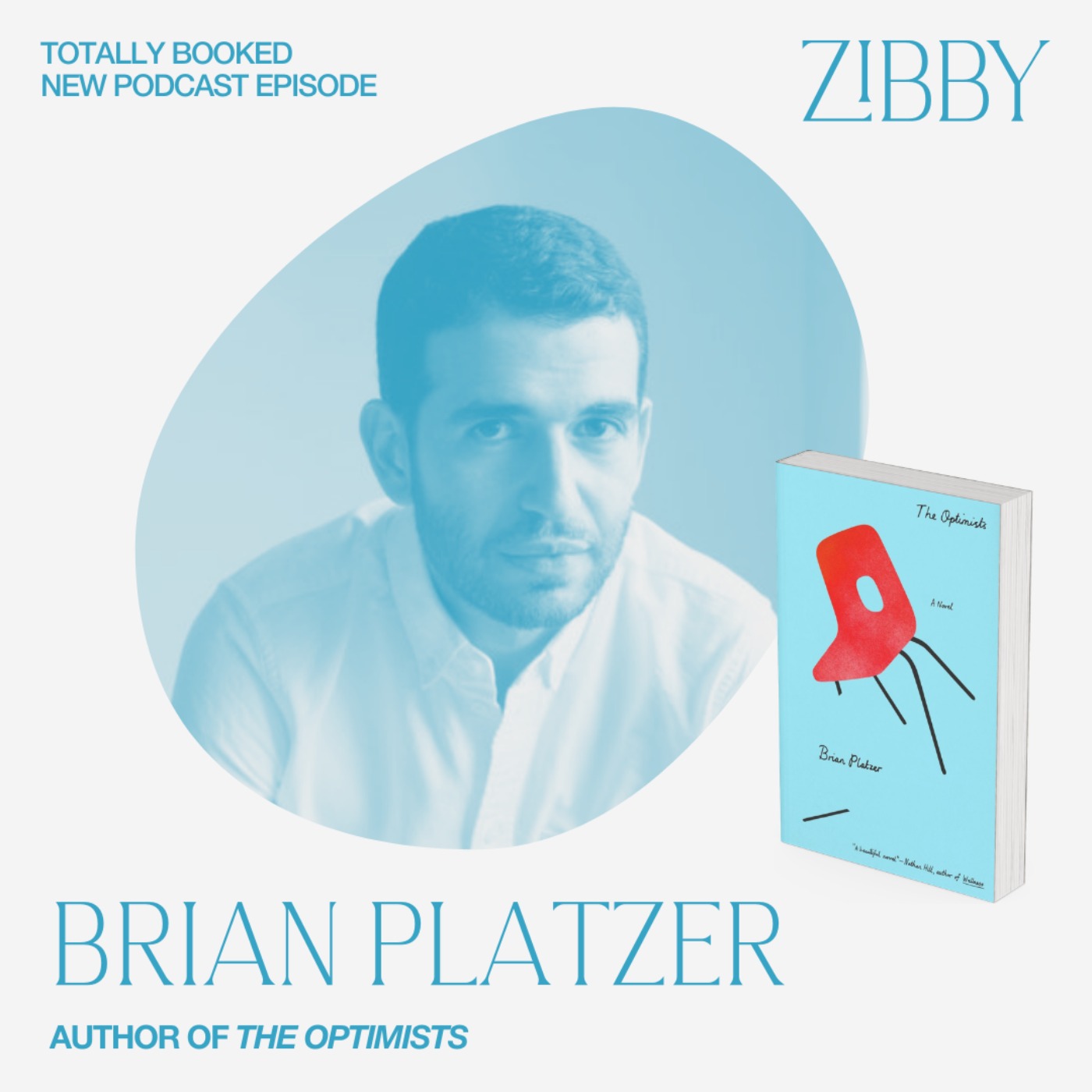
Hi, this is Zibby Owens and you're listening to Totally Booked with Zibby. Formerly Moms don't have Time to Read Books. In my daily show, I interview today's latest best selling, buzziest or underrated authors and story creators whose work I think is worth your time. As a bookstore owner, publisher, author, and obviously podcaster, I get a comprehensive look at everything that's coming out and spend my time curating the best books so you don't have to stay in the know, get insider insights and connect with guests like I do every single day. For more information, go to zibbymedia.com and follow me on Instagram ibbeowens. Brian Platzer is back on Totally Booked to discuss his new book, the Optimists, a novel. This was recorded live at the Whitby Hotel. Brian was the education columnist for the Atlantic and has written frequently for the New York Times, the New Yorker, New York Magazine, and many other publications. He was on this podcast first for the Body Politic, then came Taking the Stress out of Homework, Bed Stuy is Burning. And now the Optimists. Welcome to Totally Booked with Zibby. I'm delighted to be here today live at the Whitby with Brian Platzer, who has been on my podcast before, but is back again with his new book, the Optimists. Congratulations.
- [01:22]
B
Thank you so much. I've been so looking forward to this.
- [01:28]
A
FYI, Brian also wrote Bed Stuy Is Burning, the Body Politic, the parent taking the stress out of homework, and as a middle school English teacher. So yay.
- [01:39]
B
Yeah, I'll take applause for that. The writing. Who cares about the eighth grade English?
- [01:45]
A
Well, there's a lot about teaching in this book that centers around a teacher, a relationship. It comes from your own relationship with your teacher. Talk a little bit about the inspiration for the book and what it's about.
- [01:58]
B
So the book is a novel. It's a fictional story narrated by a very real man. That man was Mr. Keating, who is my seventh and eighth grade English teacher. And he completely changed my vision of what a teacher could be. But before him, I was sort of intimidated by teachers and wanted to get good grades and be patted on the head. And then he came in and he absolutely exploded my notion of what an educator was. He brought himself to it. He was performative. He would treat each one of us differently. He would push some of us and scold some of us and hug some of us. And it just, it made me realize that important people in my life could care about books and could care about teaching and entirely changed my vision of the world. So after I graduated from my MFA program, you know, 10 years later, I needed a way to pay for rent and health care in New York. And we'd been in touch, and Mr. Keating says, you know, I can get you a class here if you want. And then for four magical years, he was a mentor of mine. And he sat in on my classes and helped me teach 8th grade and pointed out what I could be doing differently or what I could be doing better. He became a reverend to officiate my wedding to my wife. Did a wonderful job. A week after which, he had a massive stroke and never spoke or wrote again. So for the last, he passed during the pandemic, but for the last 10, 15 years of his life, I would visit him a couple times a week and read to him and talk to him, and he was entirely unable to communicate. And during that period of time, I was just obsessed with this idea of how much of him was still in there, because this was someone I had idolized in these sort of various times of my life. And I would go home and the book started where I would imagine my way into his mind. And I sort of invented for the novel, I invented a way for him to communicate by staring at the screen for a second. And that would let him tell a story. So it began as little excerpts of just what I was thinking he might have been thinking for these final 10 years. He was such a brilliant man. He would poly lingual in five, six languages. He would read a novel a week. He would, you know, spend hours grading essays that took 20 minutes to write. He was just, like, the most dedicated, wonderful person. And I was obsessed with this idea of, like, what was he thinking about? So the novel came from my trying to put a story to it, where he is narrating my vision of the story he would tell, which is the story of a fictional student, Clara Hightower, and her ascent from his knowing her in kindergarten through teaching her in eighth grade to her conquering the world after that and him trying to get a handle on her story.
- [04:55]
A
Amazing. Well, the way you wrote from his point of view, I mean, it made me want to cry. There are some sections. Can I just read, like, a little paragraph here?
- [05:04]
B
I'd be honored.
- [05:05]
A
Okay. My brain, when focused, is as sharp as ever. But since my stroke, for many hours of the day, it isn't focused. I can't speak or write or read. Well, when I try to read, I can't make meaning from the letters. They blur. It's like trying to read in a dream. The letters are there, but they're too difficult to decipher. I can spell, so I can sound out the letters usually if I focus. But I can only occasionally make meaning. You're wondering how I'm able to compose words and sentences if I can't read them. My neurologist wonders the same thing. But don't worry. Just because I've lost control of my body below my neck doesn't mean this book will be a downer. I believe novels should contain jokes. I've long wondered why more don't. Catch 22 has its funny moments. Then you say there aren't enough true jokes in these books. At their best, they contain witty observations or manifestations of the absurd. But nothing's better than a good old fashioned setup and punchline. Okay, so that's the setup. By the way, there are like 8,000 knock knock jokes, which you should do a little pamphlet or something. So you could just take out the jokes and read them to somebody else because they're quite funny. Many of them as well.
- [06:09]
B
Thanks. Yeah, I mean, I. I know what it's like to be confronted with a book saying like, this is a book narrated by someone having had a stroke, in a wheelchair, trying to express his last thoughts. And like, I don't want to read that book like that. That sounds like a big miserable downer. And I realized that if I put that thought in his mind, there could be real, like, propulsive energy there. So I wanted to. I wanted him to be aware that he is writing a joke, that he's entertaining his reader. So if I have him feel that same anxiety that I felt as a writer, I felt he could say, like, okay, this might be a little bit of a depressing moment, but. And then come out with whatever ridiculous knock knock or otherwise joke. To have that anxiety of him saying like, I still want to entertain you. I still want to make this page turning, gripping narrative. Although there are some serious things we're here to talk about.
- [07:09]
A
Can I read a sadder section?
- [07:10]
B
Yes, please.
- [07:11]
A
Not to make you know. I promise it's not a downer. But the past couple of weeks have been difficult. I've been unable to write. I couldn't think clearly. Clara wasn't on my mind. Just mist and clouds and the body that can't feel except weight or ache or something in between. Doctors are useless. They smile at me and talk to Caroline, which is his wife. Wife. I don't blame them. What are they supposed to do? And then later you say how to Explain my particular variety of pain that is the same as fatigue and itch and loneliness. Because even if I tried to explain it to Caroline, who is living it alongside me, I'd need metaphor. No one who hasn't been stuck inside a non functional body can imagine what it's like, how awful it is when no one visits and how awful it is when someone does. It's like what a fish feels when the water around him suddenly freezes. It's like what a baby feels when it leaves the womb. Except it's the opposite of that. Except there is no opposite of that. It's probably something like watching your child die. I'm getting farther away, not closer. My body itches and I can't scratch. My limbs are sore and I can't stretch them. Blades are forever slicing off the skin of my fingers and toes. I'm hungry, but I can't eat. My eyes are dry. I am hot, stiff, aching, itching, bored, constipated. I am heavy, full, angry. My God, am I angry.
- [08:25]
B
I.
- [08:25]
A
But these are just words.
- [08:34]
B
There were no jokes in that section. Yeah, I mean, I spent 10 years with this guy, and he would smile and I would talk to him. And I became obsessed with what was going on in his mind. You know, when he was lying awake and unable to sleep, when he was there trying to be a good host, when I was visiting, and he could move one hand so he would go like this when he wanted me to talk to him more. And it's that contrast, which is really the energy behind the book. It's his desire to be a good host and a good entertainer and a good storyteller. And then he interrupts his own telling with these moments of just honesty and saying, but this is really, really painful, but I don't have the words to express the pain. And it's that contrast between him wanting to tell a good story and him interrupting that story just to need acknowledgement of his suffering that I think creates. Exciting, is too positive a word, but creates a motivating energy for me that once I found that tension, I really enjoyed being there because it let me both be honest about what this man I loved was enduring. And it let me tell what I hope is a hell of a story.
- [09:49]
A
In the book, you also have Clara and Jacob. You have a teenage love story. You have what it means to overcome poverty, a difficult family life, single motherhood. There's so many different themes, and yet you also have the point of view from the teacher, from the educators. You have one funny scene where one kid gets into Dalton. And then the other one, one head of school, doesn't want him to get into Dalton because he wants the other kid to go to Dalton. And you're like, oh my gosh, how have I ended up in this, in this thing? And you have teachers reflecting on what it's like to meet former students, which I also found really interesting. So there's so many layers to it. Maybe talk about meeting the former student and what that can feel like, because that was a really interesting perspective I hadn't heard before.
- [10:35]
B
It's something I put in his voice, but I feel it profoundly. I'm an 8th grade English teacher and these students mean so much to me in those moments. And the goal is for me to mean as much to them. And. And sometimes it clicks, right? And I know that I learn about this one student whose parents are divorcing, and I try to navigate her through that. And at the end of the year, she'll come to me and give me a hug and say, I couldn't have done it without you, or, I finally found literature because of your class. And then she disappears. And for 3, 4, 10, 15 years we exist in each other's memory. And it's incredibly sort of nice and sweet to have those memories with her. And then she revisits or she comes by the school or I see her in the subway station and it's terrifying because, like, how in that moment do you manifest that? Like, what you want to say is like, remember when we meant so much to each other? Like, remember what we had. But you can't say that to a 19 year old without being like a creepster. So you sort of, you know, I shift my weight and I'm like, you still play volleyball? Or like, is your sister still there? Right? Like, I don't. You sort of say generalities, but it's this funny moment which is, you know, not at all like an ex girlfriend and boyfriend for obvious reasons, but has that same, like, you meant so much to each other for a confined period of time and you get to own those memories and there is that human being in front of you afterwards and like, you don't want to mess it up, so you. Yeah, so it's a complicated. I don't know why. Yeah, so that's what it's like.
- [12:17]
A
Well, in the book, the teacher has this relationship with the student Clara, who he, yes, feels affection for, but also follows, and their paths cross over time and then she ends up taking a detour. I don't know, maybe it's not giving it away.
- [12:30]
B
No, please, nothing. Give it all away.
- [12:32]
A
Well, I don't want to give it all away.
- [12:33]
B
No, I mean, give it. Give as much. I trust you to give away the appropriate amounts.
- [12:37]
A
Well, anyway, she comes to him and asks him for this big favor many years later, which could put his own safety, perhaps at risk. And is he willing to do this for her, even though their paths have. They haven't been in each other's lives for a really long time, based on the memory and how much they meant to each other, which is also a really interesting question. How do you make that determination? Tell me a little more about that, for sure.
- [13:01]
B
Well, when I decided that what this novel was going to be was not just a bunch of thoughts by a guy in the room, but it's his attempt to tell the life story of one of his most extraordinary students, I had to figure out how much he could think about her and how much she could ask of him to create a real plot, the point of which is you want to know what's going to happen next, and there is anxiety there. And he wants. At the end of his life, he wants to have mattered, Right. In a way that's very difficult for him to feel like he matters because his life has gotten so slow. And he then finds that mechanism by remembering his most extraordinary student and sort of giving himself credit for building her up into this wonderful version of herself. So when she comes back to him at a later time in her life and says, I need this from you, theoretically, he could say no, or he could say, this is crossing a boundary. I'm not willing to. But. But in the novel, she matters so much to him in his sense of self and what he's been able to establish and achieve that when she comes to him and says, can you do me this favor, which is a little bit illegal and a little bit dangerous and could put him in a reputationally precarious zone, he realizes that he's sort of been boxed into this corner where he needs to say yes because of how much of his own personal and professional life he has put into her. So it's not at all that she bullies him into it at the end, but it's as though, because he's invested so much into her, there's almost nothing she could ask at this point that he could turn down. And that's where the power imbalance, forgive me, shifts. Because he had been her teacher and her mentor and her guide throughout life. And then she comes back and says, you're going to do this for me. And for a moment, he thinks, can I? Should I? Maybe not. But even then, he knows he's going to do whatever she asks of him because of how much she means to him.
- [15:10]
A
Wow.
- [15:11]
B
And then I know I'm keeping that sort of annoyingly ambiguous for the sake of your needing to read the book, but that anxiety is real in him. He feels like he could say no, even though he knows there's no way he could.
- [15:25]
A
It's also a really beautiful meditation on marriage and what it means to love and all of that talk about his relationship with Caroline.
- [15:33]
B
The real Rod Keating was dedicated to his students, to me, to all of us. But, God, did he love his wife. And seeing her dedicate the final 10 years of his life and, you know, just a little bit more of that, of hers to him and try to maintain that excitement and joy and love was incredibly buoying for me to just think, like, I still get to be married to somebody. Like, I can still do it. Like, it was. Seeing what they got out of the final 10 years of their marriage in this incredibly difficult situation made me feel just so lucky in what I had in mind. And I thought, like, why isn't he writing about his wife? Like, why is he writing about this student instead? And the answer is, it's too much for him that he wouldn't know how to encapsulate all of it, where, at least with the student, there's a beginning, a middle, and this final ask. But his wife, who's there every day, who's taking care of him, who's bathing him and feeding him, who was the sexiest, most beautiful woman in the world at one stage and then became a caretaker at the end. It's. He tries at one point to put it into words, and he just can't. He doesn't know how. He says something like, I can't even write a Valentine's Day card to her without it feeling paltry or insufficient, like, how am I going to write a whole novel? And I think he puts a lot of that energy, a lot of that love that he feels for his wife into this character just because trying to. Trying to articulate that is just impossible. He can't express romantic, familial, sexual love in the way that he can. Mentorship and admiration.
- [17:34]
A
And now to pivot to Sarah Jessica Parker. So your launch event with Sarah Jessica Parker that you were just telling me about had 800 people. She loved the book. Talk about that.
- [17:47]
B
Turns out Sarah Jessica Parker's really great. I don't know. I mean, I think that she's admirably pivoting a little bit from being a giant movie star to being a literary movie star. And I sent out some copies of the novel to folks I admire, and she liked it and was willing to read it and host an event for me. And, you know, she has some association with the school where I teach. And it just turned into the most wonderful, exciting thing. I mean, we're all in our little rooms in our offices writing stories, thinking, no one's ever gonna read this. And then when people we admire, such as Sarah Jessica Parker and Zibby Owen, say, you know, this is worth talking about, and this is no, I mean, you have to nod and roll your eyes. But I mean it. Like, there are. There are these people in the world whom you admire and you think that they curate and they perform and they present, and then being lucky enough to have them read your work and say it's worth something is the most exciting, valuable thing in the world. So thank you to Herb and thank you to you, because what you do is. A real mitzvah. And I see I have a colleague out here whom I love and admire and a 12 year old son here whom I love and admire. And just you. It just. It's. Yeah, it's hard not to. Hard not to blush, so.
- [19:20]
A
Aw. And what do you think Mr. Keating would make of this whole thing? Of the book? What would he make of the book, of you and all you've become?
- [19:29]
B
I think he'd really like it. I mean, I think he'd be embarrassed. I think he'd be modest. I think he would think I should write about something else. I was very lucky in that I was scared to show the book to his son and his best friend. They're both out there. He passed away. His wife passed soon thereafter. And I wrote with a real anxiety of just thinking, like, why am I the guy to tell this story? Like, there are hundreds of us for whom he meant the world. And it felt selfish, it felt callous, it felt indulgent, you know, to do it. But at this event on Tuesday with Sarah Jessica Parker, he stood up at the end and he said, like, I rushed to read it and I just want to say, like, thank you for giving my father life and for creating a legacy for him. And that's something I didn't dare imagine for myself. And I feel incredibly blessed because he. I mean, Rod Keating, he's a better teacher than I am, a better writer, a better man. The ability to ventriloquize and to try to give him voice after he wasn't was like a real bold sort of obnoxious risk I took. And I'm incredibly relieved that people who love him felt I did him justice.
- [21:02]
A
Amazing. All right, last question. Working on anything new?
- [21:12]
B
Yeah. It has to be fake and different and pretend. I'm thinking aliens and monsters, and I just. I've got to get out of my own real world. I don't quite know whether it'll be aliens or monsters or. But it's gonna be different. It's gonna be different.
- [21:32]
A
Amazing. Brian, congratulations. Thank you so much for coming.
- [21:35]
B
Thank you so much for this opportunity and thanks to all of you for being here. Thank you.
- [21:41]
A
Thank you for listening to Totally booked with Zibi, formerly Moms don't have time to read books. If you loved the show, tell a friend, leave a review, follow me on Instagram ippyowens and spread the word. Thanks so much. Oh, and buy the books.