← Totally Booked with Zibby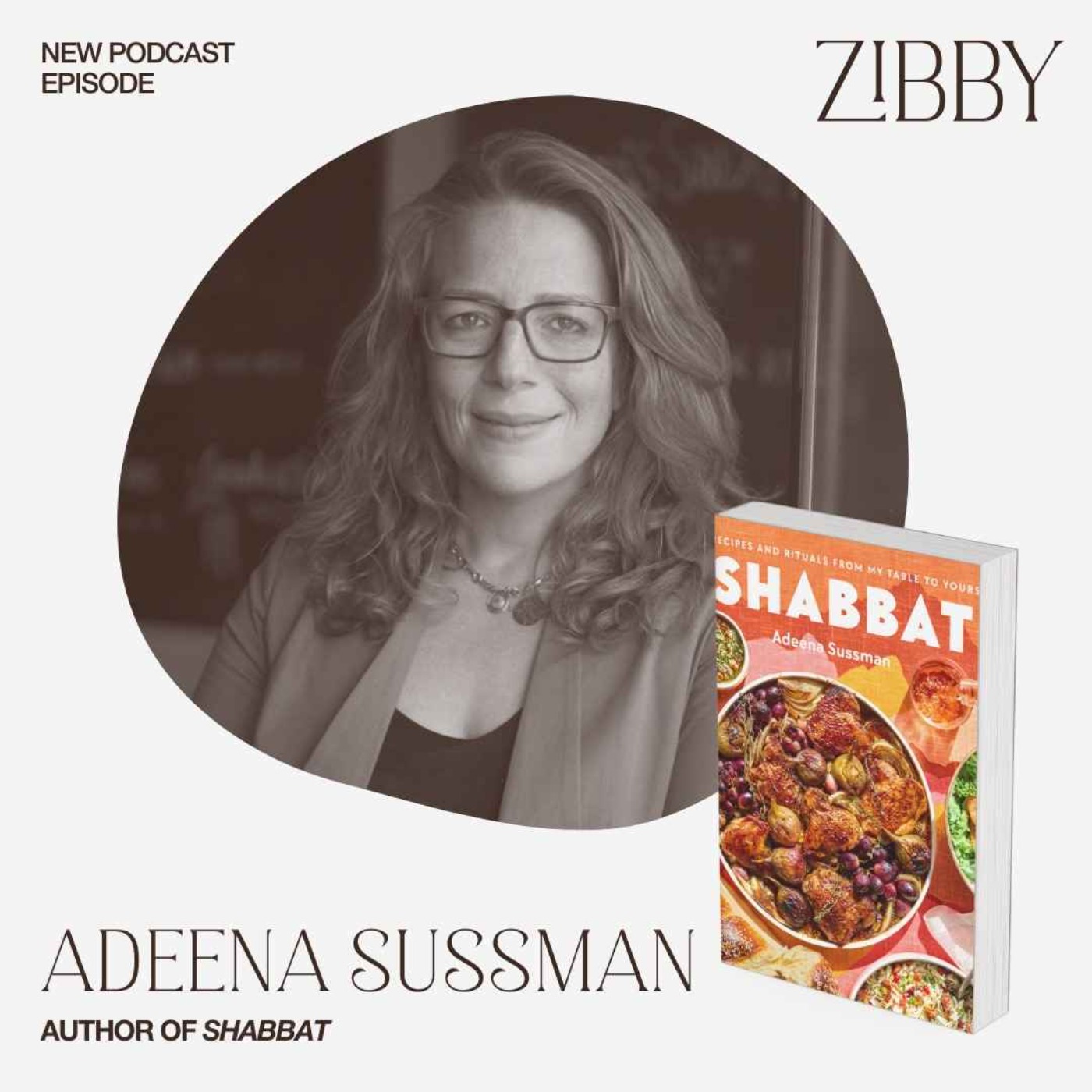
Totally Booked with Zibby
Adeena Sussman, SHABBAT: Recipes and Rituals from My Table to Yours
00:23:10
Loading summary
Transcript39 lines
- [00:01]
A
Hi, this is Zibby Owens and you're listening to Totally Booked with Zibby, formerly Moms don't have Time to Read Books. In my daily show, I interview today's latest best selling buzziest or underrated authors and story creators whose work I think is worth your time. As a bookstore owner, publisher, author and obviously podcaster, I get a comprehensive look at everything that's coming out and spend my time curating the best books so you don't have to stay in the know, get insider insights and connect with guests like I do every single day. For more information, go to zibbymedia.com and follow me on Instagram ibbeowens.
- [00:45]
B
Adina Sussman is the author of Shabbat, a New York Times best selling cookbook, Shabbat Recipes and Rituals From My Table to Yours, which was released in September of 2023. It's the follow up to Sababa, which was named a best fall 2019 cookbook, the New York Times Bon Appetit and Food and Wine. The co author of 15 cookbooks, Adina's three most recent collaborations, including Cravings and Cravings Hungry for More with Chrissy Teigen, were New York Times bestsellers. A lifelong visitor to Israel who has been writing about that country's food culture for almost 20 years, Adina lives, cooks and writes in Tel Aviv, where she lives in the shadow of that city's Carmel Market with her husband, Jay Shofet. You can follow her on Instagram. Dina Sussman welcome Adina, I'm so glad to have you here on Totally Booked with Zibby. I know we were already just chatting for a while, but now for the official podcast. As the author of Shabbat and Sababa and just such a force in this whole world of food and Judaism and everything, it's really wonderful of you to come on.
- [01:49]
C
So thank you, thank you for having me. It's an honor to be here and I feel like we know each other better than we do because I think authors and in many intersecting Venn diagrams of friends and people over, you know, a short time. So and I'm glad I got to meet you in person before we doing the podcast in Toronto. So thank you so much for having me.
- [02:08]
B
And by the way, I don't even think I told you this when you came. So when we saw each other by the av little room over there, I dropped my jacket like on the side because I was holding it and I wanted to like give you a hug and say hello or whatever. And then after the event ended in the synagogue. I came back to get my jacket and it had fallen in this garbage can, but the garbage can was full of water. So I went to pull out my coat and it was, like, soaked. And then I didn't have a coat and it was so cold in Toronto. And I was like, oh, my gosh. Anyway, so then we replaced my coat. So now when I wear my coat, I think about you. You didn't know that, but it's true.
- [02:40]
C
Good. Yeah.
- [02:41]
B
Okay. Okay. Well, your cookbooks are amazing. You're amazing. Why don't you just tell people a little bit? Go back and like, where did this whole thing come from? How did you start writing cookbooks? How did you get into food? Just go. Go all the way back to how it all started, if you don't mind.
- [02:57]
C
Okay. Yeah. I mean, I, you know, I've always been a writer since I was a kid. I started like a, you know, a typewritten newspaper in the fourth grade called Jews in the News in school had like a readership of two my parents and, you know, you know, high school newspaper, of course, and studied communications and always loved cooking. You know, I, from a young age was cooking with my mom. She worked, and she had us helping out a lot in the kitchen. And we were in, I grew up, servant Jewish home. And so we were always cooking. Shabbat was a huge central part of our cooking. So starting on Wednesday, we were. The family was all involved in kind of getting everything ready. And so, like, there was always a real sense of the intersection of cooking and hospitality. But, you know, when I graduated from high school back in 1988, culinary school was not really a viable option for, like, you know, a good student from a decent high school. You just went to college. So I remember, I thought about it briefly for a minute, but at the time, it was considered a vocational school. Now I think it's amazing that kids can go straight to culinary school out of college, and they did then, too, but it's a more widespread option for people. So I went to college, studied communications, and then moved to Israel after college for five years, worked in television. And it was around that time that this idea that I could work in food kind of started, kept bubbling to the surface because food media was becoming. It was like the heyday of print magazines and epicurean magazines. But also at the same time, food television was becoming a big deal. And this thing called the Internet happened, opened up the world, and I really, I did have this idea that at some point I would love to figure out A way to work at the intersection of cooking and publishing. And so I moved to New York actually at age 25 from Israel, where I had work in TV and started freelancing for places like Timeout New York. I was doing like little capsule restaurant reviews for $10 just to get clips. And I was temping at a media research company. And eventually through my work at this media research company where I became an account executive selling media research, I got a job at Gourmet magazine as a copywriter on the publishing side of the magazine. So writing all these advertorials, like special advertising sections and really getting to know publishing from the inside. And like many times in my culinary career, like I had that moment where I was like, that's a job, you know, like I. There were just so many things that I didn't know were careers that I learned just by doing them. So someone took a chance on me at Gourmet. Then I went to culinary school and came out of culinary school about 20 years ago from right now and started doing a lot of what we call recipe developing. A woman named Ellie Krieger, who had a healthy cooking show on the Food Network and wrote some best selling cookbooks, hired me to help her develop the recipes for her books. Like another time that someone took a chance on me more because of a personal personality click than because I was necessarily the most qualified person, which is something that has happened to me many times in my.
- [06:00]
B
You should not. Don't say that you. I'm sure you were qualified.
- [06:04]
C
I was qualified, but I wasn't the most qualified. But I, I say it because I think that in work and life, like your soft skills and your, the way you are with people is as important as just having talents. Like a lot of people have talents, but being a mensch and being curious and being humble and asking a lot of questions and, you know, all those things, like are things that I take with me even to this day. And I think people saw my genuine curiosity, you know, about, about food. I got out of, I start. I got out of Gourmet at 34 and started my freelance career, which is not old, but when you think about, you know, people today who are starting out as food influencers at age 17, you know, it was just a sort of a different. I was just running to do as much as I could and I was recipe developing and I was a food styling assistant on photo shoots and I was doing catering and I was doing meal prep for people's kitchens. And I was still doing marketing, writing and I was a travel writer. And I was just like, I was like your freelancer person, you know, when.
- [07:04]
B
You were at Gourmet, was it in the Ruth Reichel days era? Okay.
- [07:09]
C
And even though I was on the marketing side of the magazine, I sort of broke that wall that, you know, the publishing versus advertising side. And I made friends with editors. And when I left the magazine, actually I left with a freelance assignment. I wrote an article about Yemenite Jewish cooking in Israel that was. Really helped launch my freelance career as a food writer. And that was also the time that I really started drilling down on cookbooks. Like I was reading cookbooks, like novels. And I kept seeing this woman's name on all the books that I was reading. And I was like, who is this person Melissa Clark and why is her name on all of these other chefs cookbooks? And that was another one of those. That's a job like cookbook co author. And a light bulb went off for me that I felt like that was a job that I would be good at because I love to write. At that point, I had quite a few years of culinary editorial experience under my belt. So I started pursuing the idea in my own mind of doing that. And I got hooked up with an agent in 2010 who started getting me jobs as a cookbook co author. And that was. That's what I started, was doing for about seven years until my own sort of thing happened. So I wrote a lot of cookbooks in a really short time for other people, with other people.
- [08:24]
B
So what does that look like? Are you in a professional kitchen testing out all the recipes? Or are you. Do you have the recipes and you write them? Like, what is that pens?
- [08:34]
C
Like, you know, with Ellie Krieger, for instance, when I worked with her, she had. She was working out of her home for the first few years. Eventually had like a studio kitchen. But when I started co authoring cookbooks, I mean, if a professional kitchen is a tiny, you know, 20 square foot new York City kitchen with a tiny countertop, that belongs to a Dean assessment, and that's the professional kitchen that I was using. I was doing everything at home. You know, every wall, every pot rack was hung from the ceiling, the spices were on the wall. You know, I maximized every oun space. But eventually when I started doing sort of bigger jobs, like I eventually started co authoring cookbooks with Chrissy Teigen. And like, that was an unusual situation where I went to move in with her in LA and lived with her and John in Beverly Hills for three times. Every time I did A cookbook. So I've lived with them for about a year at this point because I've done three books with them.
- [09:26]
B
Wow.
- [09:26]
C
And those are true collaboration books where we're sort of sitting all these all day. I'm in the next room, whether I resting or we're hanging out in the kitchen or on the living room in pajamas or whatever, and we're writing, cooking, and collaborating together. But there should be honest other jobs where I did everything lock, stock and barrel, and like, the author put their name on the book, like, at the end. I would say that as my career progressed, I became less interested in those jobs because I always wanted to be learning and have it be like a true collaboration. But some of the earlier jobs were, you know, again, like, me learning on the job. I always. People always ask me if it's worth going to culinary school, and I say yes, but really, like a 90% of what I learned, I've learned just through working. But yes, the culinary. The recipe developing process is very technical. Like, I sort of liken it to computer coding. You know, you're like, creating a program with lines of code. Like, I know if I cook a certain onion a certain way at a certain temperature with a certain pan and a certain kind of oil for a certain amount of time, it yields a certain result. And that's like one. I have, like thousands of those little nuggets in my head, and I can sort of visualize the recipe. And then being creative is about filling in all the gaps and sort of burying the program, essentially, you know, so, like, there is like a technically a right way to, you know, make bread rise, but it's about how you. What flour you use and what seasonings you use and, you know, what size is the bread and all the different other things that can go into it. So it's very technical and very creative. And then what I love is that I get to then bring the recipes to life through my writing and through storytelling. And I think that really good cookbooks are kind of like good novels. They have a story arc. And more and more people are looking to cookbooks for that story element as much as the recipes. Because as recipes become so readily available online and through social media, what value can a cookbook add? I think it's really digging deep into someone's perspective, their history, their story, their identity, their culture, and how that manifests itself through food. And I know that those are the books that I've always admired and try to write, you know.
- [11:37]
B
Yeah, that's amazing. There was someone I interviewed recently, not in the food space at all. And I said something like, what do you like to read? And they said, I literally have a stack of cookbooks next to my bed, and every night, that's all I want to read, is I read cookbooks. And now I have a huge cookbook collection. I was like, that's amazing. I love that.
- [11:56]
C
You know, it used to be. I mean, we're both old enough to remember the time when there were 20. There were 20, like, amazing culinary magazines every month that you could subscribe to at your home. Now there are, like, three. And I think a cookbook is, like, a relatively inexpensive entry point into that. You know, you used to flip through it for the beautiful pictures and the travel element and, you know, personal essays and all those things. And, like, if you think about how much value is packed into a cookbook, you know, for usually $25, $30 tops, sometimes less. As I see my books go on sale online, and I'm like, is that how much you think my book is worth? But, you know, I think that. That cookbooks have kind of filled that niche, especially in the culinary world. And then as interest in food has just blossomed and exploded, people. People like to have them around. It's like a. It's a category that seems to keep growing, which is. Which is really nice.
- [12:47]
B
I mean, the good thing is people always need to eat right. It's like one of those things.
- [12:51]
C
And also, you know, I think a lot of times a cookbook is a little bit like a Viking stove. Like, you. Maybe you buy it and it. But it's really nice to look at and enjoy. And it's sometimes just having the book and experiencing the book and reading the book is enough. You don't have to cook to enjoy a cookbook.
- [13:09]
B
I think, too, having it there, you know, that if you just took the time and bought the ingredients, it might not turn out that great as you did it, but it's a path. You could do this. You could follow steps and produce this thing. So it's like aspirational life. Like, I. On a good day, if this is what I chose to do, I could maybe make one of these recipes turn out half this good, and that would be amazing.
- [13:31]
C
Yeah, I mean, I always say, you know, there are certain elements of cookbook production that are very subjective. Like, if you don't like the COVID or the design or even the prose in the book, that's. That's up to you. But, like, if I made a recipe and it fails you, then that's where I Feel like I failed. Like, that's why I take the recipe portion so seriously. Because you're paying cold hard cash to like produce food in your home with like precious, beautiful, delicious ingredients. And like, I need to make sure that they work. So I put a lot of time and energy into the back end to make sure that when it gets to your kitchen, you're just gonna be able to, you know, seamlessly make it. And also my style of recipe writing is quite conversational. There's a lot of like, don't worry if, or you'll find that, you know, just so that I want you to feel like I'm there with you, like in the cooking process, you know.
- [14:21]
B
So when you're doing all the food testing and all of this for the cookbooks, do you then also make yourself a nice meal or are you just picking, like, what is your relationship to food? Like, when you're working in food?
- [14:33]
C
I mean, oftentimes when I say making myself a nice meal, like if I have four different recipes in play, like making myself a nice meal for myself and my husband is reheating some of the many different things that I've made that day, you know, so because there's, it also just feels incredibly wasteful to not eat all this wonderful food that's around. Although, you know, my, my poor long suffering husband often has to taste the same fish recipe four or five times, like in the course of a couple of weeks when I'm working through it. But yeah, I really, you know, one of the things, I live in Israel and Shabbat starts on Friday night and Friday is not a work day here. And it's, you know, our weekend is Friday, Saturday as opposed to Saturday, Sunday. And I've really gotten much better about not working on Fridays and Saturdays. I really, it's not a religious thing in Israel. It's, it's a cultural thing I had the first few years that I was here. You know how in the States you kind of like shoot off work emails on the weekend and like, don't expect people to respond maybe till Monday. Like here even the sending of the message is a little bit like you've crossed a line. So like I've learned I don't really do that. And also that kind of my cooking on the weekend is more personal than it is during the week. Like either I sort of distinguish between work cooking and personal cooking. Like when I am cooking for myself, I'm not using recipes. I'm going to the shook the market right by where I live and I'm Just like gathering the best ingredients that I find or that speak to me that week, and then I'll make dinner, you know, from those things. Or sometimes I'll have a plan in mind for some project ish that I want to make, and I'll throw that together. But, yeah, I. I do cook nice meals. Not all the time, but. And this year, I was working on a new cookbook all last year, and now that that is essentially in the bag, this year is kind of like an off year for recipe developing for books. So I think I'm going to have a lot of fun. Just like cooking for fun again, you know, not that I don't enjoy my job, but just like doing that extemporaneous freestyle cooking.
- [16:37]
B
And what is the third book then?
- [16:39]
C
It's a quicker, easier sort of dinner cookbook that is inspired by all the flavors and the place that I live and love and all the people that I meet in the market. And also just sort of touching on a little bit on, you know, finding simplicity in complicated times through. Through cooking.
- [16:56]
B
Oh, I love that. Does it. Will it start with an S?
- [16:59]
C
It won't, but it's another Hebrew word that's easy to pronounce for Westerners, which is always a consideration because a lot of the best Israeli words have a ha sou or a ra sound, or a sound that's hard for people to pronounce in the Western Hemisphere. But I think I have a good name. I haven't announced the name yet, so.
- [17:17]
B
Okay, I won't pry too much. That's very exciting.
- [17:20]
C
I'm excited about it, though.
- [17:21]
B
And, you know, obviously the past year plus in Israel has been. Israel has been in the news every second. It has been devastating what has happened over there. How do you cope with a trauma like that? Like, do you go like. Yeah, yeah. How do you cope with.
- [17:39]
C
Yeah. I was actually in the States on book tour for Shabbat, my shabbat cookbook, when October 7th happened. And my tour very quickly morphed from just like a fun book tour, you know, to something that had more meaning. And, you know, I assumed that my tour was going to just end because of everything that was going on. But what I found that. I think what you have found, I. Through the last year, year and a half, is that people are actually cleaving to one another and wanting community and connection and gather. So I, My, my events were. Actually grew, you know, sometimes a lot in a week before. And then when I got back to Israel, you know, I was paralyzed. I was like, how can I. How can I post like a satar Mac and cheese recipe when there are hostages, you know, suffering over here in the region, Hostages and people in Gaza everywhere. It was just very hard. And also, obviously, the added element of all the craziness going on with, you know, how people feel about Israel and feeling sort of at the center of that and sort of somehow being asked to answer for things and decisions and things that happened that I personally had nothing to do with, you know, but I did manage to deal with that. And I came back to Israel and I did start cooking again for my social media, but also started going out all over Israel to meet people who were impacted by October 7th. And, you know, I went to bake with a baker who lost his bakery on Kibbutz Be'eri, and I went to a juice, juice machine factory that is like my favorite juicer in the world that I have in my own kitchen. And they were on a kibbutz that was attacked and where many people were killed and kidnapped and got to see the factory reopen, opened, and I cooked with hostage relatives and, you know, tried to try to do things just to be a part of it and contribute. And so that was helpful to me personally. And it's just a constant evolution, you know, it's, you know, being a relatively public person, but also having my own personal, you know, thoughts and experiences. This year has been a challenge, as I'm sure you can relate to. But I feel like it's. I'm. I'm good, I'm fortunate. I compared to many people. And I feel also that I have managed to. I have managed to use my platform, platform in a way that I'm comfortable with. And also I managed to, like, write a whole nother cookbook this year, just, like, have a place to channel all of my energies and distraction. I came out of it, I've come out of it knowing who I am more and caring less about insignificant things, comments, people, and like, really being able to drill down on the things that are meaningful to me and, and, and the meaning of my life and, and life here.
- [20:23]
B
That's amazing. I had heard from Martha Beck in her book Beyond Anxiety, how creativity is like the main antidote to anxiety. Because if you are being creative with that part of your brain, you literally can't activate the anxiety part of your brain. So I feel like you and your cooking and your production and making a new book and like, all of it, like, we all cope in our way with whatever's being thrown at us or the world and how great when everyone else can then be the beneficiary of your creativity by, you know, whatever book this is that's coming next and the books that you've already put out into the world.
- [20:55]
C
So I would say that also, I mean, in the middle of all the crisis of this year, like, for some reason I decided to start a substack and like, I think I just subscribed. Oh, you did? Yeah. You know, because, you know, also, you know, my cookbook, I don't want to make my cookbook like my personal place to unload all of my feelings and emotions, you know, and I. I wanted to find another place that would both be a place for me to express myself writing wise. And also just like, you know, a cookbook to me is still at the end of the day, it's a joyous experience. It's about living and cooking and sustaining, nourishing and feeding. But I was. The sub stack has just been a place where I can. There are many weeks where I will just create a recipe or I'll talk about, like, great places to eat in Israel. But then there are some weeks when there's something really heavy going on here that it's a place where I can share my own feelings, like with an audience that I know has bought into what I'm writing about. I don't want to unload that onto everyone in my cookbooks.
- [21:57]
B
Well, that's great, Adina. Thank you. Sorry for our WI FI issues, but thank you so much for. And I know it is Shabbat now, so thank you for coming on on a Friday, which is not a workday for you, and thank you for taking the time.
- [22:12]
C
I'm gonna go light my candles.
- [22:13]
B
Oh, well, Shabbat Shalom. And thank you so much for being a part of it and being just so awesome and supportive.
- [22:20]
C
Yeah, thanks. I just wanted to personally thank you for everything you've been doing. And, you know, it's been really. I've been watching it all from afar all year, and it really is meaningful and making a huge difference. I know it's not always easy and with everything else just going on in our lives as people, you know, all the other stuff, like, it's just. But it is. It's meaningful and important and it makes a difference. So thank you so much.
- [22:43]
B
Thank you so much. Thank you. Okay. All right. Bye, Adina. Thank you. Shabbat Shalom. Stay in touch. Okay, Bye. Bye.
- [22:51]
A
Thank you for listening to Totally Booked with Zibby, formerly Moms don't have Time to Read Books. If you loved the show, tell a friend, leave a review, follow me on Instagram ibbyoans and spread the word. Thanks so much. Oh, and buy the books.