← Totally Booked with Zibby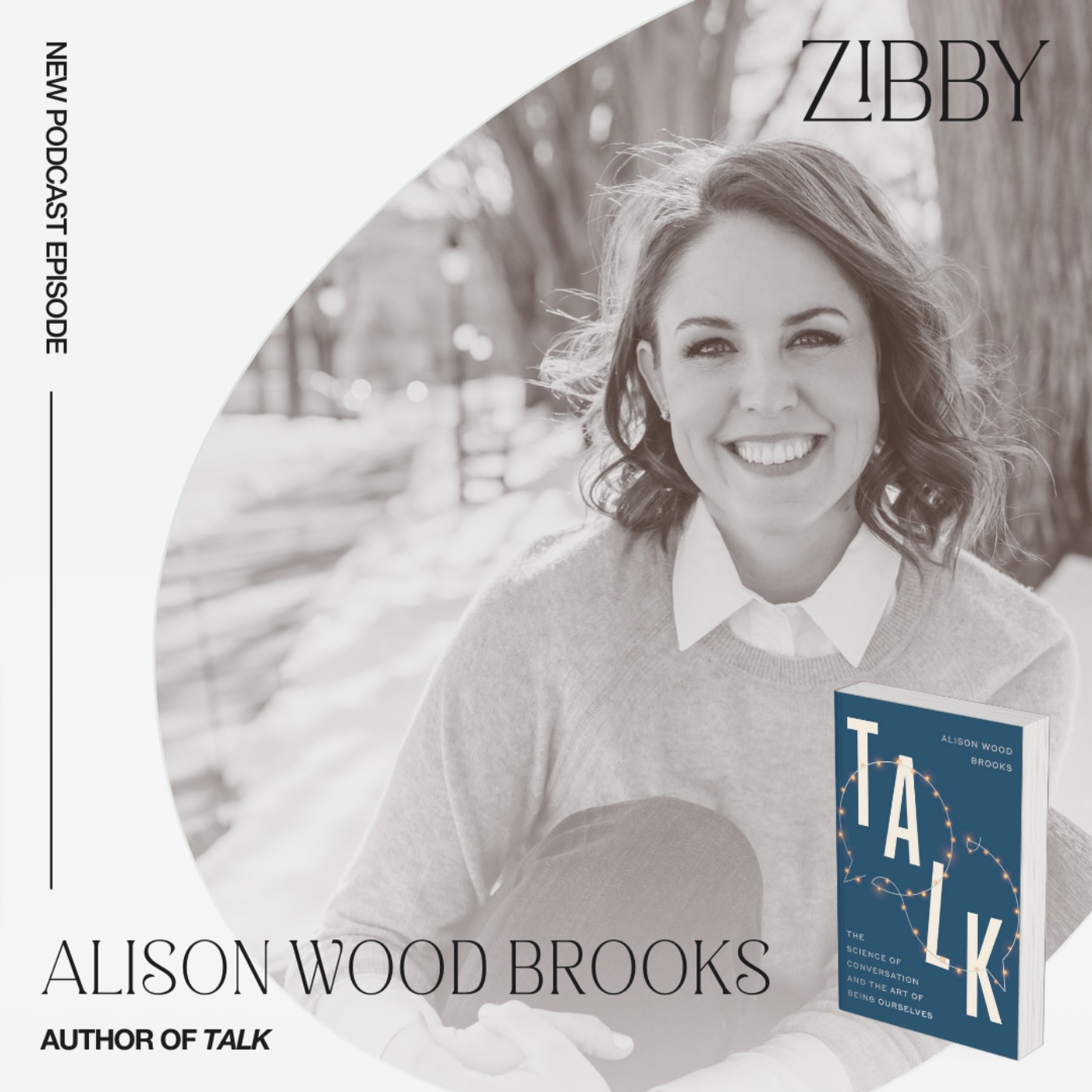
Totally Booked with Zibby
Alison Wood Brooks, TALK: The Science of Conversation and the Art of Being Ourselves
00:30:38
Loading summary
Transcript68 lines
- [00:01]
Zibby Owens
We will be re airing some episodes by authors from this podcast whose homes have been lost in the horrific fires in Los Angeles. We hope that hearing from these authors makes this tragedy feel a bit more personal and real for those who have not experienced it directly and provides a sense of comfort to those who have lost everything. At Zippy's Bookshop in Santa Monica, we are giving away books to anyone affected. We are giving away clothing from 30 brands who have donated their merchandise. We know both of these things are small comfort to the thousands of people who are now homeless, but we are trying to do some good amid the destruction. I hope you understand that I am not recording new podcasts right this second as I am struggling to deal with the fires myself. Our home was saved by by firefighters in the Palisades, but so many loved ones have lost everything and our community is rallying to help. Therefore, I will be airing some older episodes of those who have lost their homes interspersed with episodes that I have already recorded. I will be back to podcasting as soon as I can put on a happy face and really support the authors as I have been doing for the last seven years. Thank you for understanding. I hope you all are safe Hi.
- [01:29]
This is Zibby Owens and you're listening to Totally Booked with Zibby, formerly Moms don't have Time to Read Books. In my daily show, I interview today's latest best selling buzziest or underrated authors and story creators whose work I think is worth your time. As a bookstore owner, publisher, author and obviously podcaster, I get a comprehensive look at everything that's coming out and spend my time curating the best books so you don't have to stay in the know, get insider insights and connect with guests like I do every single day. For more information, go to zibbemedia.com, and follow me on Instagram ibyoans.
- [02:12]
Alison Wood Brooks
Alison Wood Brooks is the author of the Science of Conversation and the Art of being ourselves. Dr. Alison Wood Brooks is the O'Brien Associate professor of Business Administration and Hellman Faculty Fellow at the Harvard Business School where she created and teaches a course called Talk as a Behavioral Scientist. She is a leading expert on the science of conversation. Her award winning research has been published in top academic journals and is regularly cited in media outlets such as the New York Times, the Wall Street Journal, Harvard Business review, and NPR. Her research was referenced in two of the top 10 most viewed TED Talks of all time and depicted in Pixar's Inside Out. In 2021 she was named a Best 40 under 40 business school professor by Poets and Quants Talk. The Science of Conversation and the Art of Being Ourselves is her first book.
- [03:00]
Zibby Owens
Welcome, Allison. Thank you so much for coming on my show to talk about talk. I guess I didn't need quotes, but the Science of Conversation and the Art of Being Ourselves. Thanks for being here.
- [03:11]
Alison Wood Brooks
Thank you so much for having me, Zibby. I'm so happy to be here.
- [03:15]
Zibby Owens
So, as I was just saying, this is so meta to have a conversation about conversation. And I'm also just so excited because I went to HBS. I don't know if you know that I was 03, section B and all of the references here. I could just imagine myself in class. I was obsessed with organizational behavior. I did a whole study with Monica Higgins. I thought about doing a PhD in this whole department, and I was like, oh, my gosh, this book. So anyway, we are fated.
- [03:40]
Alison Wood Brooks
We are like star, like ships passing in the night. You are a part. And you could have been a part of building this talk book for sure.
- [03:48]
Zibby Owens
Yeah, or I would have been there. I would have taken your class. I would have eaten it up. You know, I could have worked for you. Anyway, all to say, obsessed with the content and think about this all the time as sort of a professional conversationalist. So tell everybody about how you started the class. I also want to hear all about your music life and marrying a drummer and being a singer and all of that. So feel free to break into song at any point.
- [04:15]
Alison Wood Brooks
I love it. I love it. Okay, so the sort of quick story, the quick sequence of events is I was first. I'm a person, so I was. I'm an identical twin, which is not insignificant, I think, in the development of my obsession about conversation and P. S.
- [04:31]
Zibby Owens
You said in the book that you and your sister got the same score in every exam ever. That is insane.
- [04:37]
Alison Wood Brooks
Listen, twins are so privileged and so lucky. But also, we're so creepy. I mean, it's so weird to go through life with an identical copy of. And it's like, not only do you have this conversation partner right next to you your entire childhood, and you're, you know, like siblings, but even closer, you know? But also you're watching a version of yourself, like, interact in the social world up close. And so you see all the things. I would see all the things that she did that were amazing. And I was like, of course I. I could do that, too. Like, I'm gonna do that, too. And then I would see all the embarrassing sort of little failures that she would have. And I'd be like, oh, God, well, I'm gonna avoid that. Right? So it's just getting. You're getting, like, extra feedback compared to everybody else. So first there's that. That's my. It's the beginning of my obsession. Then, you know, I went on this sort of educational journey and became a scientist over time, got my PhD at Penn, started my professorship at Harvard studying negotiations, and realized, wait a second, before we get into hard conversations and fraught conversations I like, what about the easy ones that people seem to mess up all the time, too? And so I started to develop this fascination with that idea. And then I learned we, as a field, learned enough about conversation and the psychology of conversation that I just felt this undying need to design a course. And so I did to share all of the things we'd learned with the students at hbs. And it's called Talk. And it really feels like I've hit a nerve in some ways. Like, it's really. The students love it. It really feels like it makes a meaningful difference in their lives. And it's been quite the labor of love. And now all of the stuff that's in the course is available for everybody in the book.
- [06:27]
Zibby Owens
Well, I feel like the book is timely in so many ways, especially at a time sort of societally, where conversation is not. Conversations aren't even being had.
- [06:35]
Alison Wood Brooks
Right.
- [06:35]
Zibby Owens
And we need to find a way into that. So, anyway, on the most micro to the most macro level, I feel like this is incredibly needed. So I'm so glad it became a book. It has to become more things, though. Are you doing a TED Talk? Have you done a TED Talk?
- [06:49]
Alison Wood Brooks
So many. I've been trying. Here's a secret. I've been sort of dodging TED Talks my whole career, trying to keep my head down, like, focus on the science. There might. Hopefully TED Talk coming everyone's way at some point. There's lots of other things. Yes, a book is a wonderful and exciting launching pad. And I'm thrilled, very excited to see what else comes my way from it. For sure. You said we're not even starting the conversations we need to have. When I was googling around about you before our conversation, something I really admired is that you are so good at raising topics, especially around some of the difficult topics societally and in public discourse recently. I just wanted to say that I really admire that in you, and it takes courage and you're good at doing it, and more people should do it.
- [07:34]
Zibby Owens
Thank you very much. I'm also trying to analyze which of your skills you're using in our conversation as it's ongoing. Are we topic jumping? Are we getting into the rich material yet? Like, what is she doing?
- [07:46]
Alison Wood Brooks
I think you're experiencing what all of my students experience, which is this sense of hyper vigilance. It's almost like the book helps you. It's like you become Neo in the Matrix and you see the Matrix and then you're sort of like hyper vigilant about the Matrix. You're like, what's happening now? And now and now and what, what topic we on? And when is she going to ask a follow up question? And have we had enough levity yet? And how can I be more focused on Zibby? How can I be more focused on Allison? Yeah, the hyper vigilance does dissipate over time once it becomes more second nature.
- [08:21]
Zibby Owens
Well, I have spent a lot of time thinking about conversation, and ironically, I think it started for me because when I was a child, I could not talk at all. And so I spent so much time listening to conversation and trying to analyze conversation patterns because I had so much social anxiety that I just froze up and couldn't talk. And I kept wondering, how is it so easy for people to talk? And I would watch and be like, okay, she said that, and he said that, and then she said that. And then. So I approached it sort of from a young age, analytically. Which is why I also really appreciate your book because you, like, take it apart with a scalpel. Like, what makes a good conversation? How can everybody make themselves better conversationalists? And how can you get the most from every conversation, which, of course is the fabric of life. So in effect, you're teaching everyone how to have a better life. Right?
- [09:12]
Alison Wood Brooks
Just a small goal, you know, just like, easy. Yes. I love imagining you as like a tiny scientist, as a little girl who's like. And I think in a way, this topic is so approachable for all of us because we are all little sort of observationalists of the world. We're constantly observing ourselves, we're observing other people interact with other people. And so we're all kind of trying to figure out, figure it out all the time. And what is so hard about conversation is like, you practice doing it every day of your life from the time you're a toddler onwards. And so we feel like we should be experts by the time we are adults. And it's not true. Right? Like, even the best conversationalists have tons of room for improvement forever. You could never be perfect at it. And aiming for perfection isn't the right Goal. And then there's this thing about, like, you see other people who are so charismatic and they seem so confident, and you somehow feel, by comparison, like, deficient in some way. You're like, what are they doing that I'm not doing? Or what are they getting that I don't get? And in the book, we talk about this as the myth of naturalness. Yeah. Because it's like, you see other people being funny or saying something super smart and articulate, or they're asking a really great question, and you're trying to piece out what they're doing, but turns out that's not necessarily natural for them either. You can't say, see all of the effort and hard work and many good and bad conversations that they've been through to get to the point where they have this moment of charisma. So it's not effortless for anyone, and it is learnable, and we can all do it.
- [10:48]
Zibby Owens
It's like public speaking. It's the same thing, right? When you have to do it in front of a group. Like, I used to be so nervous, and now people are like, you're so comfortable on stage. And I was like, I used to sweat so much, I would soak through my clothes. But I've done it now thousands of times, so I'm okay with it. Right. You don't see the backstory, and then you feel wor about yourself, which, of course, you point out in the book. So one of the things you talked about is preparation for conversations, which is the hallmark of this show. Right. I love it because I have a book. I'm always prepared. I know what I'm going to talk about or what I'm in. I'm always interested in the thing that the person I'm about to talk to is also most interested in. So it sets it up for success. I've been, like, analyzing the podcast in your rubric here, but you say that even in casual conversation or if you're going to a dinner party or whatever, you can prepare, and that is not weird. It actually makes your conversations better and all that. So talk a little bit about that.
- [11:41]
Alison Wood Brooks
I love the framing of podcasts, especially a podcast about books. The book is like a huge topic seed, right? Like, it is the. It provides the content you've prepped so thoroughly just by reading each book that you talk about with the authors. It just provides such beautiful fodder, and you've thought ahead, and clearly they have also thought. They've been thinking about this, their book, for, who knows, 20 years. So it's just a beautiful it's why your converse, it's part of why your conversations can be so rich and fulfilling and fun and meaningful. But the same is true for all of our conversations. It's not just for podcast episodes between gifted talkers who have these rich topic seeds. We can do the same things in all of our conversations. And many of my students have this reaction when we talk about topic prep as like, well, I'm not going to prep for a conversation with my mom, or I'm not going to prep for I don't need to prep for a conversation with my best friend. We're just going to know what to talk about. Always. We always know. And the insight here is, even with people that you know really well, once you get in a conversation, it's so easy to get lost in the sauce of this cognitively demanding task that we often forget to ask questions that we really need or want to know the answers to, or that we know they need to talk about. Or we just sort of get very egocentric, so we just start talking about our own perspective too much. We forget to focus on the other person. It's just so easy to get overwhelmed by the coordination game of conversation that you forget to talk about things that are most important and in like, the most direct pursuit of your actual goals. So even with people you know really well. Your best friend, for example, maybe one of her parents is sick. Like, you should remember to ask about her parents. And you might forget to if you don't actually, like, write that down or reflect about it for even 10 seconds before the conversation starts. So topic prep doesn't need to be time consuming, elaborate. It doesn't require any Googling or anything. You just literally need to think about for even 30 seconds. What are the things that we should be talking about? What do you think? What will my partner find interesting? What was this person doing the last time I talked to them? What were they doing in between the last time we talked and now? What should I ask them about, will they find interesting? And just that 30 seconds of reflection makes the conversation so much better. It makes you feel less anxious because you always know a place you can go next that will be rewarding. There's fewer disfluencies, meaning fewer stutters and stumbles and moments of panic where you don't know what to talk about next. You're also more likely to land on mutually interesting topics, like things that you know you should talk about and that will be fun to talk about and productive. An interesting finding. It makes it all Much more enjoyable, which is the point of life. What we also find with topic prep is that it leads people to talk about more topics. So instead of sort of staying on the same thing and stagnating and letting it get boring and you start repeating your things you've already said, you pick up on the cues of like, oh, we should switch to something else and oh yeah, I have a thing ready. So we're just going to go there. And that makes conversation much more engaging and fun. So yes, topic prep is a huge winner. And I don't just mean for some conversations. Sometimes every conversation with every partner, even with like archetypes like, hey, I know I'm going to run into a stranger behind the bar at Starbucks, I could have a really great question ready for them. Or I know that I might be having a coffee in a coffee shop and someone at a nearby table might like lean over and talk to me. I can have like a cool question ready for them. That's a different form of topic prep and it will also make that conversation better.
- [15:34]
Zibby Owens
In a way, you're teaching emotional intelligence, right? It's part of that part and parcel. And I love in the back you have all these questions which people can sort of memorize. And I was literally on the street last night with my kids and my husband. We were walking to sort of a more formal holiday situation and we were talking to them like, hey, at dinner, instead of getting up and running around, ask questions. And I. And we were talking about open ended questions like don't say, you know, where are you going for the holidays? Like say something like, you know, what was something you struggled with at work today or something that will lead them to a bigger conversation. So I actually also feel like this has huge applicability for parents and kids and in teaching at an early age versus when we're grownups and have to play catch up.
- [16:20]
Alison Wood Brooks
Perhaps I am biased because I am a scientist of conversation, but I have three kids and they're nine, seven and five. They're in their peak learning social skills age. I suppose that's your whole life. But it really feels like one of the main purposes of being a mom right now is helping them learn social skills and giving them feedback and role modeling social skills for them as well. So I'm with you. I've constantly, if I realize any of them have gone too long without asking a question of somebody, I'll say, you know, you could ask a question right now and you know what, they do it. They're pretty great, right? And if they teach them about open ended questions. Instead of where are you going for Christmas break or for holiday break, they might say what are you excited about for over break? Like what are you, what are some things that you're going to be up to?
- [17:04]
Zibby Owens
Right?
- [17:04]
Alison Wood Brooks
And it's so magical to watch those skills unfold in, in our kids, but it's also a reinforcement in ourselves of like, oh yeah, I should, I should ask my friends what they're excited about on holiday break. And it's all this sort of reinforcing social network that's just so fabulous.
- [17:23]
Zibby Owens
Today's episode is sponsored by Acorns. Acorns. Acorns makes it easy to start automatically saving and investing so your money has a chance to grow for you, your kids and your retirement. You don't need to be an expert. Acorns will recommend a diversified portfolio that fits you and your money goals. Acorns lets you invest with the spare money you've got right now. You can start with $5 or even just your spare change so you don't need to feel like financial wellness is impossible. Acorns gives you small, simple steps to get you and your money back on track. And it's the New Year when we all make New Year's resolutions. Last year I made a resolution to go to the gym more often. I tried to say I would go once a week. Basically I think I've gone to the gym like three times in the whole last year. But I am not giving up on my resolutions. And saving money and making smart financial decisions is a resolution that Acorns makes.
- [18:18]
It really easy to keep.
- [18:20]
By the way, I invested with Acorns in 2023 and in my portfolio I am up 20.24%, which is really awesome. So you should do it too. It's amazing. Head to acorns.com books or download the Acorns app to start saving and investing for your future today. Paid client Endorsement compensation provides incentive to positively promote Acorns tier one compensation provided investing involves risk. Acorn Advisors LLC and SEC registered investment advisor. View important disclos@acorns.com books you have lots.
- [18:56]
Of charts and things which dissect this even further when you and you have four different things. T A L K so you have I'm not gonna remember them topics. What's a what are the other ones? Hold on.
- [19:07]
Alison Wood Brooks
Asking.
- [19:08]
Zibby Owens
Asking. Levity. Levity. What was what's K? Give me a hint.
- [19:13]
Alison Wood Brooks
You're gonna get it. It's like the most important thing in life. We learn it as children. It's the kindness.
- [19:17]
Zibby Owens
Kindness, yeah. Yes.
- [19:19]
Alison Wood Brooks
We just won some sort of games that be. Good job.
- [19:20]
Zibby Owens
Okay, great. Thank you. I'm so eager for approval that I have to like, have you ask me school questions that I can answer. Okay, so say a little bit about each of those. We spoke about topics already.
- [19:32]
Alison Wood Brooks
Yes. So at every moment of every conversation you're choosing topics. It helps to prep, it helps to switch a little bit more quickly when you feel like things are getting boring. Those are. There's a lot in the book about managing small talk as well and how we kind of use small talk as a launching pad. A is for asking questions. The top line sort of takeaway is we should be asking more questions. And there are some particularly heroic questions, including, like you said, open ended questions, especially questions that start with the word what, which have informational benefits, relational benefits. Questions that start with why can feel a bit accusatory, like why did you ask your question your kids to do that can feel like a little bit like an attack. And another heroic question is the follow up question. It shows that you've heard what someone said and you want to know more. They're just magical. L in talk is levity. And levity is not trying to turn anyone into a comedian or a clown. It's literally trying to find these opportunities, these fleeting moments that can add some sparkle and fizz to our conversation so we don't get bored. It's the antidote to boredom. And it can come in the form of humor and laughter, but it also comes in the form of warmth and sort of grabbing people in. So compliments and just changing the topic to something new that they might find interesting. So moments of levity to maintain mutual engagement. K is for kindness. And in a way, all of the maxims, all of this framework are working their way towards kindness. I don't know about you, but I feel like you learn the importance of kindness as a kid and all the way along you're like, but what does it mean? Like, what do I. How do I do that? How do I be the most kind person I can be? And so the goal in the book was to provide a really concrete roadmap for what kind people do when they're talking to people. And it feels so satisfying to get that out into the world.
- [21:27]
Zibby Owens
And all of this, of course, then adds up, right? To rich conversations and meaningful conversations, just like conversation gold. So what is that look like? How is that? This is how you achieve it. And then like, what is the.
- [21:41]
Alison Wood Brooks
Look at the outcome.
- [21:42]
Zibby Owens
Yeah, the outcome.
- [21:43]
Alison Wood Brooks
Yes. The meaning of Success in any conversation depends on what the people want, right? It's not my job as the author of this book. It's not your job as a podcast host to tell them to tell people what they want and need. Everybody has their own desires, their own needs, their own relationships. And so it's up to the people in the conversation to sort of know and figure out, what do I want out of this and what does my partner want out of this, maybe even more importantly. And so in the book, we provide a really concrete framework that we call the conversational compass. Because part of what makes conversation so tricky is that every person, everybody involved in the conversation doesn't just have one goal. Often you have many goals, right? You want to ask about how their mother is doing. You want to persuade them to agree with your view of the new policy on abortion. You want to hear about the wedding they went to. You want to have so much fun. You want to laugh as much as you can. You want to get their advice about a new upcoming work thing. You want to. Also, by the way, you need to leave in five minutes. There's all of the. We all have these goals, and the challenge is, one, figuring out what they are, like, what is the meaning of success when we connect? And two, how do I prioritize all of these many things that we all care about? And then three, coordinating with other people because they also have their own goals. You know, you only have 30 minutes to talk to me. I would die to talk to you for hours. How are we going to coordinate that? Right. Like, just that alone is a hard thing to manage. And so we have this framework in the book called the Compass. It helps us to organize all of our goals and really think a lot more concretely about, like, well, what. What is varying here? What's the most important thing and when.
- [23:33]
Zibby Owens
Amazing. So what's the best, most successful quote, unquote conversation you feel like you've had lately?
- [23:40]
Alison Wood Brooks
Oh, my gosh, Zibby, what a question. I've fantasized about going around these Instagram people go around on the street, and this is the question that I fantasize about asking people. It's like, what's a great conversation? Honestly, I feel like every conversation I have is such a gift. I know some people really love traveling the world. I honestly feel like I get to travel the world by talking to other people. It's like I go on a journey through their perspective, learn so much from them that I get to see the world through a different person's mind. It's Just incredible. So yesterday I had three fabulous conversations. One with a visiting scholar from London who's been visiting all semester. And she sat in on all of my talk class sessions. She's just the sweetest and most competent, brilliant woman. And she's now flying back to London, so we had to say goodbye and we were just kind of debriefing the whole semester. Then I had this fabulous conversation with a visiting scholar, my longtime friend who was visiting from Wharton. And he also studies conversation. And he's just this brilliant, brilliant man. And he just had a baby, so we got to talk about him in this new role as a father. So that was far ranging and energizing and so wonderful. And then last night I play in a band and we had band practice, so I got to have this very challenging five person songwriting. We're prepping for a show on Friday and so we got to, we, you know, got to practice all of our songs and what's better than that?
- [25:13]
Zibby Owens
So where do you perform?
- [25:15]
Alison Wood Brooks
Oh, my gosh, we practice. One of our bandmates built a band barn, so we practice in this state of the art, gorgeous band barn at his house. This Friday, we're playing at the Lizard Lounge in Cambridge. Really small, underground, intimate place and there might be some holiday themed surprises in the show. Zibby, Great.
- [25:37]
Zibby Owens
Actually, this is like a pet peeve of mine. I don't feel like you mentioned this in the book, but maybe I missed it. So. Growing up, my mother was always like, you have to use the other person's name all the time in conversation to the point where she picks up the phone and it's like, hi, this is Brooke. You know, how can I help you? And she'll be like, oh, hi Brooke, how are you? And like, maybe it's just reaction to my own mom that I intentionally do not, but I've. I always pay attention when I'm especially in a podcast situation to how often people are using my name and I wonder, are they doing that deliberately? Like, is that a skill that they are forcing themselves to do? Do they do this with everyone? Is it because we're on a podcast? Like, how do you feel about name use?
- [26:19]
Alison Wood Brooks
Yeah. We touched on this briefly in the chapter on kindness. Names matter a surprising amount. Everyone wants to feel seen and known. And when you don't know someone's name, it can cause a surprising amount of awkwardness in a conversation. And I think that comes from two directions. One, you're not going to be able to make someone feel seen, unknown if you don't even know Their name being on Zoom helps because our names are, like, right on the screen. Right. But also, I think for the person saying someone else's name out loud, it's almost like a reminder to yourself of, like, this is who I'm talking to. It's a reminder of, like, they have their own perspective, and I should consider that they are a different person than me and that I care about them. So for me, it is actually helpful to say people's names. So as a reminder to myself, like, who am I talking to? What do they care about? How can I focus on them? In the book, in different situations, people have different preferences about how they want to be referred to. So in the book, we talk about, for example, traffic stops where police pull over citizens who've been speeding. And in those situations, people prefer being referred to by formal names, like, good evening, sir. How are. Right. Because it's the formality that that situation demands. In other situations, when you're with your close friends or your kids or your family, we love nicknames, right? It's so endearing. It's so loving and shows closeness. And in other situations, nicknames might be completely inappropriate. So it's nuanced. But underlying all of it is this deep desire for everyone to feel known and seen. And so keeping in mind that, like, if you don't know someone's name, you should probably ask, it's worth saying, will you remind me what your name is? That's not as awkward as you think it might be to ask. And then you know it, and everything feels much closer and easier from that point forward. By the way, before this podcast, I wrote down your name.
- [28:15]
Zibby Owens
Interesting.
- [28:16]
Alison Wood Brooks
Almost as a reminder because, you know, I'm doing a lot of conversations. I want to make sure that I know who I'm with. Not just know, like, on a name basis, but, like, seeing your name reminds me of all of the things that now in my brain are associated with your name. And that's quite helpful.
- [28:32]
Zibby Owens
So interesting. Oh, my gosh. The last piece that I found so interesting is you used a case study, and I was actually wondering if this was a case in your class with Carrie Fisher and Terry Gross and how Terry interviewed Carrie three different times over the course of her life. And actually, Carrie's daughter Billy is my husband's business partner in their production company. I know, it's so funny. I know. This whole world is so small.
- [28:53]
Alison Wood Brooks
But anyway, Billy is an actress, right?
- [28:56]
Zibby Owens
Yeah, she's an actress. Yeah. Yeah.
- [28:57]
Alison Wood Brooks
I love. She was in Book Smart.
- [29:00]
Zibby Owens
Yeah.
- [29:01]
Alison Wood Brooks
Yeah. Oh, God, that feels thematic. I know, Right.
- [29:04]
Zibby Owens
I know everything is related. But you track the progression of the intimacy between Carrie and Terri and even different things that Terry asked or said in response that elicited even more information. So this is something I think about not consciously in the way you analyze in the book, but like every conversation I'm interested, like, how do I get to that next level? That's always my goal. Not always, but it's something that I aspire to do. So what did Terry Gross do with Carrie Fisher that we can all incorporate in our own conversations?
- [29:39]
Alison Wood Brooks
Yeah, Terry Gross is a gifted conversationalist. She does all of the things that I talk about in the book in terms of topic prep. I mean, she, in interviews has talked about how thoroughly she preps for every conversation. Really sort of next level topic prep out of Terry Gross. She's also an incredible listener.
- [29:59]
Zibby Owens
Right.
- [29:59]
Alison Wood Brooks
So once she's in the conversation, she is listening very intensely, not only for content and ideas, but I think she does something that we should all do, which is she chases the energy. If she senses that there's energy on a topic or that someone might have more to say, she's gonna ask a lot of follow up questions to sort of draw that out of them. If she feels the energy flagging or stagnating, she's quite quick to switch to something else because she has so many topics prepped to ask about and it's so easy to move somewhere else. But I do think she's quite gifted at sort of keeping her hand on that emotional temperature dial and sensing like, where should we chase the energy? And you can hear it in the conversations with Carrie Fisher, who herself is quite good at chasing the energy as well and creating the energy actually. She's so funny.
- [30:49]
Zibby Owens
Wow. Okay, so what's your biggest goal for this whole book?
- [30:52]
Alison Wood Brooks
Oh, all the things. I want everyone to have this. Not only have this book, but read it and share it and learn it. I really think that, that the world would be a better place if everyone learns to communicate better. There's no competitiveness in this. Meaning, like the more people who learn to talk well, the better off everyone is. So I just am dying for people to absorb these ideas, try them in their lives, see what feels good, see what works for you and what doesn't, and then talk about it with other people so that they can learn it too. I'm really excited to see what other opportunities come my way from and to hear how people. What resonates with people the most. Though I've already taught all this stuff to sort of you know, thousands of people. So I know that. I know that it works, and I know that it can work for a lot more people.
- [31:50]
Zibby Owens
Well, maybe because you can't sort of quadruple yourself and be everywhere, you should do some sort of training where you have talk coaches. And like every school there's like the talk coach or somehow make modules and scale it. Because I was already thinking you should come talk to my school. Actually, no, you should come talk to the Child Mind Institute. You should talk to this person. You can't be everywhere, but if you could make everyone talk ambassadors or something.
- [32:14]
Alison Wood Brooks
I would love it. It is a huge dream of mine that someone will feel inspired and turn this into sort of like K12 educational curriculum. I really think. I mean, the book would be appropriate for high schoolers to read, probably middle schoolers as well, but you could adapt it for younger children and it would just be so this is what we're talking about when we're talking about, like, social, emotional learning in schools is like, this is where it happens. It happens when people are talking to each other.
- [32:40]
Zibby Owens
Okay, so next you have to do a middle grade adaptation or a children's book. Let's talk and make it, like, with some pictures. And then my kids could buy that book. Anyway, you have your work cut out for you. But I find this so energizing. I'm so excited. This whole science of conversation, the psychology of conversation exists and that you are the front runner of this whole thing, it is so exciting to me. So anyway, congratulations. And I'm going to be spreading the word far and wide. So, yes, congrats.
- [33:06]
Alison Wood Brooks
Thank you, Zibby. And thank you for being such a wonderful talker and spreading so many great ideas through conversation. You're amazing.
- [33:12]
Zibby Owens
Thank you. Okay, have a great day.
- [33:15]
Thank you.
- [33:16]
Alison Wood Brooks
Bye. Thank you.
- [33:17]
Zibby Owens
Bye, Els, thank you for listening to Totally booked with Siby, formerly Moms don't have time to read books. If you loved the show, tell a friend, leave a review, follow me on Instagram ibbyowens and spread the word. Thanks so much. Oh, and buy the books.