← Totally Booked with Zibby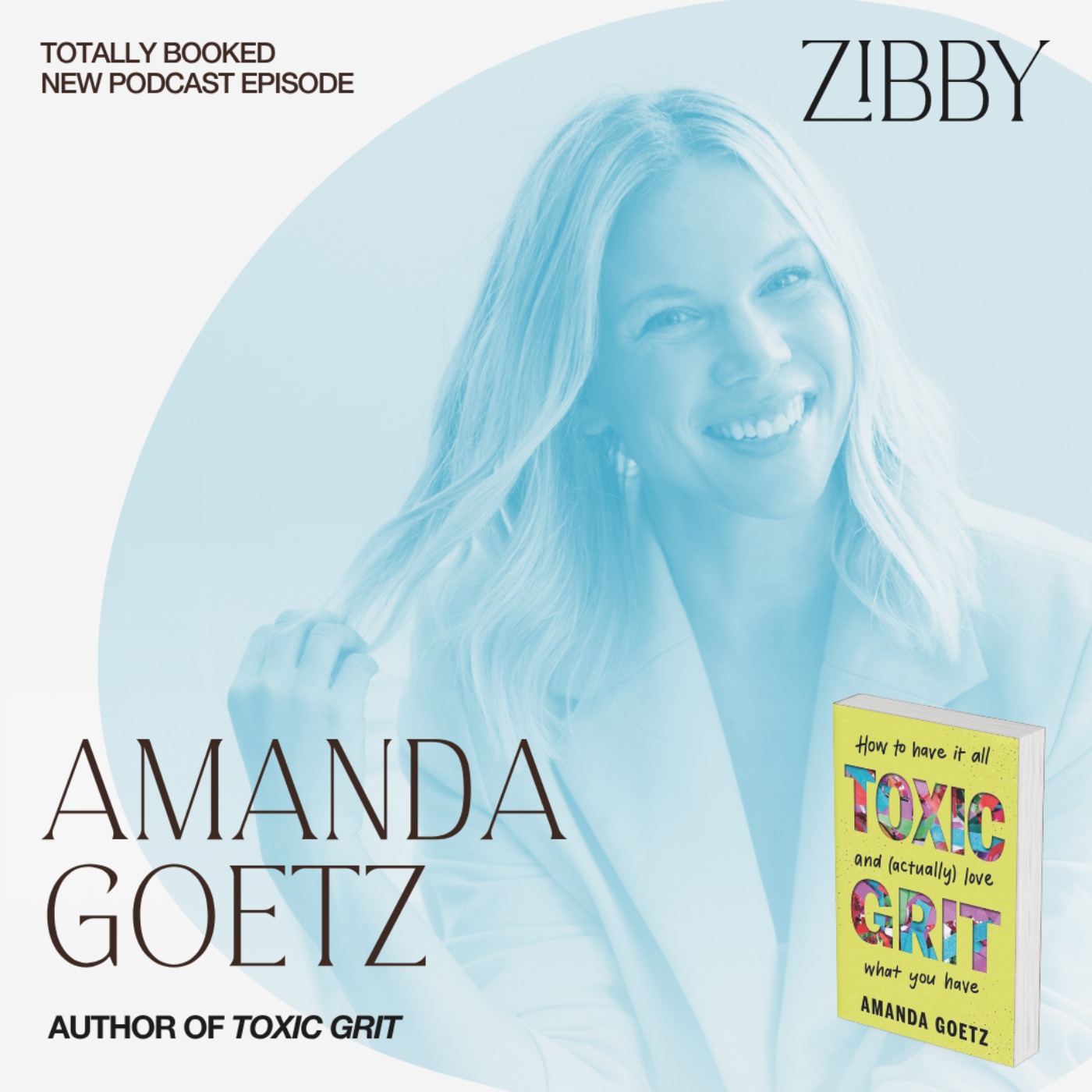
Totally Booked with Zibby
Amanda Goetz, TOXIC GRIT: How to Have It All and (Actually) Love What You Have
00:24:52
Loading summary
Transcript84 lines
- [00:01]
A
If you love to travel, Capital One has a rewards credit card that's perfect for you.
- [00:05]
B
With the Capital One Venture X card.
- [00:07]
A
You earn unlimited double miles on everything you buy. Plus you get premium benefits at a collection of luxury hotels when you book on Capital One Travel.
- [00:15]
B
And with Venture X, you get access.
- [00:17]
A
To over 1,000 airport lounges worldwide.
- [00:21]
B
Open up a world of travel possibilities.
- [00:23]
A
With a Capital One Venture X card. What's in your wallet? 20 terms apply. Lounge access is subject to change. See capital1.com for details.
- [00:30]
B
Did I talk too much?
- [00:31]
A
Can't I just let it go? I wish I would stop.
- [00:33]
B
I wish I was thinking so much.
- [00:36]
A
Take a breath. You're not alone. Counseling helps you sort through the noise with qualified professionals. Get matched with a therapist online based on your unique needs, and get help with everyday struggles like anxiety or managing tough emotions. Visit betterhelp.com randompodcast for 10% off your first month of online therapy and let life feel free. Better this holiday Give the gift that says let's cancel plans and just lounge. Meundies has dropped their new holiday collection, and it's made for maximum cozy we're talking soft as snow, ultra modal fabric, festive prints, and loungewear so comfy your couch might get jealous. Onesies, hoodies, joggers, even delightfully quirky holiday designs. You're welcome. Knock out all your holiday gifting needs with deals up to 60% off@meundies.com acast enter promo code acast that's meundies.com acast code acast.
- [01:40]
B
Hi, this is Zibby Owens and you're listening to Totally Booked with Zibby, formerly Moms don't have Time to Read Books. In my daily show, I interview today's latest best selling, buzziest or underrated authors and story creators whose work I think is worth your time. And as a bookstore owner, publisher, author, and obviously podcaster, I get a comprehensive look at everything that's coming out and spend my time curating the best books so you don't have to stay in the know. Get insider insights and connect with guests like I do every single day. For more information, go to zibbymedia.com and follow me on Instagram ibbeowensk. Thank you for coming to Totally Booked Live at the Whitby. We are here today with Amanda Goetz, who's the author of Toxic how to have it all and actually love what you have. Welcome.
- [02:37]
A
Thank you for having me. This is amazing. I love it.
- [02:40]
B
We just saw each other at Zivi's Bookshop which was so great. Thank you for coming there.
- [02:44]
A
Oh, my gosh. The community there, it just felt like a family. Like everybody knew each other. And it was my first book tour event. So it was so fun to meet other authors. So thank you.
- [02:53]
B
Oh, you're welcome. It was great to have you. Why don't you tell listeners a little bit about what Toxic Grit is about?
- [03:00]
A
Yeah. So I wrote this book. I'll share a quick little story that led to the Framework inside. But I was leading marketing. I was living in New York City, leading marketing at the Knot with three young babies at home under the age of four, going through a divorce. And I came home one night, and I remember after I got the two older ones in bed, I was rocking my son and I took out my notes app and I wrote the words, you can have it all. I was like, where is the friction coming from? And it dawned on me that it wasn't about the all. It was about the you. Because there's so many different ways versions of me inside of me. There's the version of me that wants to kill it at work and wants to have an amazing career. Then there's a version of me that just wants to be a mom and, like, let all the work stuff go. Then there's a fun party girl inside of me that wants to go have fun and see my friends and travel the world. And so I realized the friction was coming from the word or that comes up so often. You're either a girl boss or you're a trad wife. And we keep trying to pull apart and put us in these neat buckets. So Toxic Grit really came from this idea of character theory. How do we create space for all of these somewhat competing parts of ourselves and honor that they don't always share the same goals, same values, same energy, same. So meet those parts of yourself and then start to see which characters took over the whole movie and maybe which ones need to be written back into the script so that you can honor all those different parts of yourself.
- [04:48]
B
Amazing. And you define toxic grit in the book, so just explain what that is.
- [04:52]
A
It's hustle without intention. We all have seen the headlines like, oh, hustle is bad. Hustle is bad. It's like, no, that's actually just one part of yourself that you have to honor. Create some. What I call spin cycles, some checkpoints to say, is this still in alignment with what I want right now? Have I written other characters off the script entirely that I need to build back in? So I call Toxic grit Hustle without Intention. So if you don't have these kind of frameworks and checkpoints built into your kind of life operating system, then you will burn out. You will wake up one day and be like, I don't know who I am anymore. So it's about the intention piece and writing that back in so you can still hustle, go after a big goal. The next three months of my life will look very much like hustle. However, I have a spin cycle coming up at the end of that. And for anyone that does laundry, I know it's New York City, but for anyone that does laundry, we do laundry.
- [05:54]
B
In New York City, thank you very much.
- [05:55]
A
I never had a laundry. I always had wash and fold. But for the last cycle of a washing cycle is called the spin cycle. It's intentionally designed to take out all the water, all the heaviness before you put it into the dryer so that the next part goes a little faster. It doesn't take as long to dry. And for me, spin cycles should be built into our life. We will have a period of intensity. And how many times do you get to that work project and then you're just on to the next one. Or you had a series of intensity with your kids and they needed a lot from you, and then you're just onto the next part. And so it's this intentional moment to really alleviate that heaviness that built up in whichever character you're prioritizing in that season.
- [06:42]
B
So before we get into your theories and frameworks, how did you get from that moment with your three kids post divorce to today?
- [06:54]
A
Lots of inner work and lots of therapy. And I would say so during COVID I left my job and started a VC backed startup, raised millions of dollars in VC capital, built it and sold it a few years later, all while having three young kids at home during COVID And I remember this one particular moment where I was in my bedroom and I had a babysitter watching the three kids. And I had to come out and go straight from what I call CEO character into mom character. And I remember coming out of that door and I had just been dealing with like a legal issue. I was pitching an investor. There was a supply chain thing that I was working on. I remember coming out and trying to be in mom mode. And for me, mom mode. When I'm a mom, I am so silly. I want to dance, poop jokes, like, you name it, we're having fun. That is really hard transition for me. So I that day said, I'm gonna go take a bath and put on Bluey and take 20 minutes to transition into mom mode was Bluey for you. I was like, that mom episode where mommy needs a break.
- [08:08]
B
It's your guilty pleasures, watching kids animated.
- [08:11]
A
Put on a bluey. And then. And no. And so from that point forward, my kids would be like, oh, are you gonna go turn into a mommy? And I was like, yes, I'm gonna go become a mommy. Because I honored the fact that I could not transition neatly. And this goes for a lot of roles. How many of you have tried to work or be on with your kids all day, and then you're like, oh, I have to be sexy. I have to go on a date. And I found that that was really hard for me when I became a single mom. So creating these intentional transition sequences is what I call them in the book. And you go through and figure out what each character needs to build a transition sequence so that we don't guilt ourselves for not being able to be present on a date. It's like, no, you needed a time to get out of that last character that you were in.
- [09:04]
B
And you also show this through a few diagrams where you show us what balance is. And you're like, balance is not half and half. There's like a half line down the. But balance can also, some days look like this little piece or some days, this giant piece. Why don't you say that a little better than me?
- [09:21]
A
Yeah, no, that's exactly right. So balance happens in the macro, not the micro. Right? So we wanna look back at the end of our life and be like, I allowed each character to have some character development. Like, if you got to the end of a movie and you just saw one character go through the whole thing. The best movies, you see the arc for multiple characters, right? So intentional imbalance is this idea that it's okay if you choose that one day you're going to be really on at work, and then you might maybe give 20% in mom mode. And I kind of talk about the minimally viable day. So if you think about the. These different versions of you, there's the ideal scenario. So the version of me that wants to take care of myself and work out and be super healthy, the ideal day would be, okay, I'm going to get an hour workout in. I'm going to sauna. I'm going to really be present and give myself some time. That's the ideal. Does that happen most days? No. So what's the minimally viable version of that character that would feel like I'm still satiating that need for me, that's like 20 minute walk. If I could get a 20 minute walk in, I'm like, okay, that's the minimally viable version. So if you go through a good.
- [10:42]
B
Day for me, but anyway, keep going. That's like years I got in those steps.
- [10:47]
A
But I like to say if you only have 20% to give and you give 20%, then you gave 100%, you gave what you were able to give. But so much of like so many of us go through life and we're just constantly putting guilt, injecting guilt into everything. So if I only have 20% to give at work because I took my kids to the trampoline park and then I was there with them, if I only had 20% to give at work, then that was okay. The next day it may shift and I'm more present at work and maybe I have to work a little later. But it's just about the intentions of so that you can say which character is in the spotlight so that you don't feel guilty about the other ones.
- [11:32]
B
So have you essentially eliminated guilt?
- [11:35]
A
Yes. Like that is what my goal, my whole mission in life is to just remove guilt. Women are constantly just inundated with guilt. And I do believe that these societal trends are really designed to just make us feel guilty. Because every movie, every person in here has a different movie of their life and at different times, the characters will switch. And so whatever's on trend by society, that's not your movie, that's not your script. And it's really important to understand who wrote the script that your characters are reading from. Is it society? Is it generational? Is it cultural? Is it your family? Is it your experiences? Like who is the writer of your script and which of your characters are reading from that script versus the version of you that you are today writing your own script.
- [12:30]
B
So you also not to expose your innermost sexual secrets here, but you do go into this in the book a little bit. Do you want to share a little bit about what happened after your divorce? You don't have to.
- [12:40]
A
Oh yeah, no, I'm an open book. It's there, you can find it. So it was really important for me. I got married when I was, well, engaged at 19, married at 21. Yeah, I was from the Midwest. And so when I became single at 32 with three kids, I had to relearn what it meant to allow what I call the goddess character, the character that really does deserve and seek out pleasure, not just sexually, but just pleasure from life and looking at the world in this lens of just fun and pleasure seeking. And. And it was really freeing for me to understand that I had that character inside of me that I thought was gone. I had been married for over 12 years, and I just thought that character had been written off the script for me and realized that, no, I actually, that character still very much is in this movie. But I had to create space for her to. To come back out, and that was really important. And now I'm getting married again next year to an amazing man. And it's so amazing to realize I have the agency with a lot of the tools from this book to write that character back in, even during the days that other characters are trying to take over.
- [14:04]
B
There was more in the book, but you're gonna just have to okay the characters. How do we know when we're overdoing it? I mean, obviously deep down we know when we're overdoing whatever, but how do you align? I mean, it's one thing to say, yes, I have all these different versions of myself, and sometimes I'm a mom and sometimes I work out and whatever, but how do we do a better job of getting the balance in total even, right? I mean, how do we do that? That's like the goal of life, right?
- [14:36]
A
Yeah, it's definitely the goal. So I have an exercise in there that I would really love for you all to do. It's called the perfect day exercise. And I was on a retreat with a bunch of female founders and I went on this retreat and they had us do this exercise on the beach. And it was this very kind of like kumbaya moment. And they had us close our eyes and we pictured our most perfect day. Money is not an object you could be doing anything with your day. You start from the moment you wake up. What do your sheets feel like? What's outside, like, in great detail. So then you go through your whole day till the point where your head hits the pillow again at night, and.
- [15:22]
B
Then you get depressed that your real day looks nothing like that.
- [15:25]
A
Well, so this is interesting. After you did the visualization exercise, you then had to reveal to the group and I went first because I'm like the type A straight A student. I was like, I'll go first. So I shared that. My perfect day. Now granted, I'm the founder of a VC backed startup. I am hustling. My CEO character was in the spotlight for a long time. My perfect day had nothing to do with work. It was truly about, like, I was still single at the time. I was like, I woke up and I had a partner. I woke up and I went and found friends to go for a walk with. I hosted a barbecue at night. It was so much about community and friends. The woman next to me went, she woke up. She was on Good Morning America. Cause she was on the COVID of Forbes. And I literally said to myself, fuck, I did it wrong. I'm on a founder retreat. But this exercise illuminated to me that the CEO character was taking over. And I hadn't created space for the characters that crave connection, meaningful connection, community, stability. So that visualization exercise led to me selling my company because I realized I wanted to create more space. Now, funny enough, a year later, I had met my partner and was in a relationship. We were moving in together, and I had built community. After I'd moved to Miami from New York City. And I did the exercise again, and I pictured walking into a bookstore with my kids and seeing my book and talking in front of people. I was like, oh, I'm ready to have the CEO character take over a little bit more. So it's this idea that you create these intentional moments where you just check in with yourself to say when you do that exercise. And I've done this now with countless groups of people in coaching sessions and workshops. Every time somebody's like, ah, it illuminates to them what. Which character they've kind of repressed from the movie.
- [17:31]
B
Today's episode is sponsored by Wayfair. The holiday season is just around the corner, and it's time to start getting your spaces ready with Wayfair. I recently just purchased a beautiful blue console table to go behind one of our couches on Wayfair. For such a good deal, it's unbelievable. They have holiday deals on everything. And Wayfair's Black Friday sale is the perfect time to score on everything for your home, no matter what your style is. Because Wayfair is the place to shop for all things home. Everything from sofas to spatulas. You name it, they have it. And you can get up to 70% off. That's 70% off during Wayfair's Black Friday sale. Wayfair also has styles you can't find anywhere else. No generic things that you've seen everywhere. You can make your home more. You get this. It starts October 30th. You can shop Wayfair's can't miss Black Friday deals. Not just on one day, but all month long. Plus, you can sit back and relax because Wayfair has free and easy shipping. Just in time for the holidays again. I am obsessed with everything that I buy from Wayfair, which is probably way too much actually. I also just got desk chairs for my office for Wayfair as well. Wayfair is the go to destination for everything home. You can earn rewards and get the best savings in the neighborhood with Wayfair's loyalty program. And you'll just get a huge selection of home goods from appliances and area rugs to beds and wall art. Did I convince you I am obsessed? Don't miss out on early Black Friday deals. Head to Wayfair.com now to shop Wayfair's Black Friday deals for 6. 70% off. That's W-A-Y-F-A-I-R.com sale ends December 7th. Get going. Today's episode is sponsored by Quince. As the air turns crisp and the holidays draw near, comfort becomes the best gift of all. Quince delivers layers that last. Sweaters, outerwear and everyday essentials that feel luxurious, look timeless and make holiday dressing and gifting effortless. Quince really has it all. $50 Mongolian cashmere sweaters made for everyday wear. Denim that never goes out of style. Silk tops and skirts that add polish and down outerwear built to take on the season. Perfect for gifting or upgrading your own wardrobe. Honestly, Quint's Italian wool coats are at the top of my list. The cuts feel designer and the quality rivals high end brands but without the high end markup. By working directly with ethical top tier factories, Quince skips the middleman and offers prices 50% less than similar brands. Personally I just got a new down parka in Storm Blue which is so gorgeous and at retail would have been like 10 times the cost. Go check it out. So step into the holiday season with layers made to feel good, look polished and last from Quince. Perfect for gifting or keeping for yourself. Go to quince.com zibby for free shipping on your order and 365 day returns. Now available in Canada too. That's Q U I n c e.com ZiVy z I b-b y to get free shipping and 365 day returns. Quint.com ZiVy.
- [20:52]
A
Ready to order? Yes. We're earning unlimited 3% cash back on dining and entertainment with a Capital One Saver card. So let's just get one of everything. Everything. Fire everything. The Capital One Saver card is at table 27 and they're earning unlimited 3% cash back. Yes Chef. This is so nice. Had a feeling you'd want 3% cash back on dessert? Ooh, tiramisu. Earn unlimited 3% cash back on dining and entertainment with the Capital One Saver Card. Capital One. What's in your wallet? Terms apply. See capitalone.com for detail.
- [21:25]
B
My perfect day involves me waking up on the beach in Mexico. I don't know what that says.
- [21:29]
A
We all have to leave because now.
- [21:31]
B
I'm quitting the podcast. No, no, no, I'm kidding.
- [21:33]
A
No, but you're so what that says to me is you're craving maybe novelty and exploration and rest. So which characters do you need to write back in so that those needs, those human needs that you have right now are getting met a little bit more right now?
- [21:47]
B
I'm sure we could all use some rest. Anybody need a little more rest in their day?
- [21:52]
A
Oh, my goodness.
- [21:53]
B
Okay, so is this your perfect day? Then you get to be in CEO mode. You're, like, on stage, like, is this a good day for you? A bad day? Like, how is your perfect day? Ooh, how has your perfect day shifted?
- [22:04]
A
This is exactly what I pictured for this season of life. And I have a check in scheduled in December after I get through the book tour to do that exercise again. And I have a feeling it's going to look different the next time I do it because I'm letting the CEO take the spotlight for this chunk of time. I have a feeling in December, it's going to be probably mom mode and a little bit softer characters.
- [22:30]
B
And you weave in Maslow's hierarchy of needs into your book as, like, a founding principle. Talk a little bit about that.
- [22:36]
A
Well, when you think about our basic human needs, we start with, obviously, everybody knows Maslow like, the bottom is food and shelter. And then you kind of move up to self actualization. But when you think about our human needs of, we want to feel significant. We want connection, we want play. When you look at those human needs and then you start to look at each of your characters, and I have in the workbook that comes with it, there's a spectrum for each of these human needs. And you look at your character. Okay, my CEO character, does that give me significance? For some people, their job may or may not give them significance. It may or may not give them creativity or connection. So every character for each person is different in how they meet their human needs. So when you start to look at those, oh, if you've been living in your CEO character for so long and you have a need for significance and creativity and your CEO character is starving that from you, that's Line of sight into. Okay. I now need to create some intentional time for these other characters that will help me meet those needs.
- [23:50]
B
And how was it for you getting all of these thoughts and theories into practice and putting them all into a book?
- [23:56]
A
It was so fun. So for me, I started a newsletter first just to see. I had been writing for a very long time and I had never put anything out into the world. So I was like, newsletter first. This seems like a safe spot to write like a thousand words at a time. And it was just incredible to see the response from putting some of these frameworks that I had put into my life that really helped me balance three kids jobs. Finding love again and writing the book was literally. I felt like it kind of just like poured out of me. I wrote it really fast and it was such a fun moment to kind of get 20 years of a lot of life and lived experience that I had lived into this book. So there's a lot of sharing, as Zibby already mentioned in the book, but it's a lot of raw, real stuff that has happened that I've learned from over the years.
- [24:55]
B
Were there books that you turned to as you went through this big life transition?
- [25:01]
A
I mean, so many. I'm so fortunate to be surrounded by so many amazing women that write. I mean, gosh, there's just.
- [25:10]
B
I put you on the spot. You don't have to.
- [25:12]
A
Yeah, there's so many that I read so many people's newsletters and just. I get fascinated by writing style too. Just really kind of getting nerdy about how someone writes and what it makes you feel, which I find fascinating.
- [25:29]
B
So if somebody was going to attempt to do a book like this, which illustrates frameworks and is self help, but also brings in emotions and your personal story, how do they get started?
- [25:40]
A
Journaling? I mean, getting comfortable knowing your story and being able to share it is hard. I think that that takes time and I always like to remind people, share lived experience from a place of processed emotion, especially if you're doing it with the purpose of helping others. And so I could not have written this book in 2021 when I was still going through my divorce. Getting through Covid like I hadn't processed a lot of it. So it took me years to actually work through what I learned from it, not just what I felt from it.
- [26:21]
B
Amazing. And what do your kids think about this whole situation?
- [26:24]
A
I've turned my middle daughter into a writer. She's got. She's trying to find an agent, she wakes up in the morning, she writes, she Has a new little book, Peanut Butter and Jelly. The Adventures of Peanut Butter and Jelly. And yeah, so it's really cool to see them wanting to do that. So makes me so happy.
- [26:45]
B
Had we known, we could have sold it here too.
- [26:46]
A
I know, right?
- [26:48]
B
That's amazing. So of all the frameworks and I only touched on a few of them, but there are many in the book. What do you find on a day to day basis? When you get out of bed in the morning helps you the most. How do you make sure you are essentially living your best life every day? What do you use most regularly?
- [27:07]
A
It's the concept of the to do list. The one two do list. So for each of my characters that I'm choosing to place in the spotlight that day, I pick two things that would be meaningful or impactful for that character to move their plotline forward. And for me that's enough. I think the journey of knowing what is enough is important as you're writing your script. But the to do list. So what are the two most meaningful and impactful things I can do for work? What are the two most meaningful and impactful things I can do in my mom character? For me, that's usually we have to have sit down dinner and I have to be present phone free for tuck ins. I love tuck ins. Like I think that you can have a great tuck in experience when you're present and there. And so the to do list. Figuring out what are two things that I can do to honor each of those characters has helped me. Because how many of you have written? You're like, okay, I'm gonna write a long list of all the things I need to do today. First of all, you're like, okay, I feel accomplished cause I wrote it. But then you didn't do anything then. We are wired to crave dopamine. So what do we do? We go for the easiest thing to get done on the list. That doesn't mean it's most impactful. And the same with kids. It's like a day can really go by where you are just like in robotic mom mode. And it's important to just really take a moment to say what does meaningful and impactful look like for that character?
- [28:36]
B
Awesome. So what's on your list today?
- [28:38]
A
Today is really CEO mode all day. And I'm allowing all my other characters to have a very tiny to do list. Like we're gonna get a small little walk in hopefully if it's not so raining. But today I recorded audiobook this morning, then this and then I have I'm the host of a new podcast coming out and we have three episodes to film today.
- [29:02]
B
Oh, my gosh.
- [29:03]
A
So it's CEO character, but that is intentional by design. It's a big CEO character day, and then tomorrow I fly home and I'm in mom mode.
- [29:13]
B
Amazing.
- [29:14]
A
Wow.
- [29:15]
B
One piece of parting advice for everybody. What would you say.
- [29:19]
A
When you start to feel the word should coming into your vocabulary? Oh, I should be doing this. I should be doing that. Ask yourself, who's writing that script? Who is directing that movie? It's probably not the current version of you. It's somewhere from your past. It's you from younger years. Six year old Amanda likes to try to direct the movie of my life a lot. And I have to remind her she's not the director. So it's just reminding yourself who you are the director. You are the writer. You are casting the characters.
- [30:00]
B
Amazing. Amanda, thank you so much.
- [30:02]
A
Thank you for having me.
- [30:05]
B
Thank you for listening to Totally Bucked who with Zibby, formerly Moms. Don't have time to read books. If you loved the show, tell a friend, leave a review. Follow me on Instagram, ibbeoens and spread the word. Thanks so much. Oh, and buy the books.
- [30:27]
A
Ready to order? Yes. We're earning unlimited 3% cash back on dining and entertainment with a Capital One Saver Card. So let's just get one of everything.
- [30:35]
B
Everything.
- [30:36]
A
Fire. Everything. The Capital One Saver card is at table 27, and they're earning unlimited 3% cash back. Yes, chef. This is so nice. Had a feeling you'd want 3% cash back on dessert. Ooh, tiramisu. Earn unlimited 3% cash back on dining and entertainment with the Capital One Saver Card. Capital One, what's in your wallet? Terms apply. See capital1.com for details.
- [30:57]
B
Hey, I'm Paige Desorbo, and I'm always thinking about underwear. I'm Hannah Berner, and I'm also thinking about underwear, but I prefer full coverage. I like to call them my granny panties. Actually, I never think about underwear. That's the magic of Tommy John. Same. They're so light and so comfy. And if it's not comfortable, I'm not wearing it. And the bras, Soft, supportive, and actually breathable. Yes. Lord knows the girls need to breathe. Also, I need my PJs to breathe and be buttery, soft and stretchy enough for my dramatic tossing and turning at night. That's why I live in my Tommy John pajamas. Plus, they're so cute because they fit perfectly. Put yourself on to Tommy John. Upgrade your drawer with Tommy John. Save 25% for a limited time at tommyjohn.com comfort. See site for details.
- [31:44]
A
Why Choose a Sleep Number Smart Bed.
- [31:45]
B
Can I make my site softer?
- [31:47]
A
Can I make my site firmer? Can we sleep cooler? Sleep Number does that cools up to eight times faster and lets you choose your ideal comfort on either side your Sleep Number setting. Enjoy personalized comfort for better sleep night after night. It's our Black Friday sale. Recharge this season with a bundle of cozy, soothing comfort. Now only 1799 for our C2 mattress.
- [32:07]
B
And base plus free premium delivery. Price is higher in Alaska and Hawaii.
- [32:10]
A
Check it out at a Sleep Number store or sleepnumber.
- [32:13]
B
Com today.