Loading summary
Transcript35 lines
- [00:01]
Zibby Owens
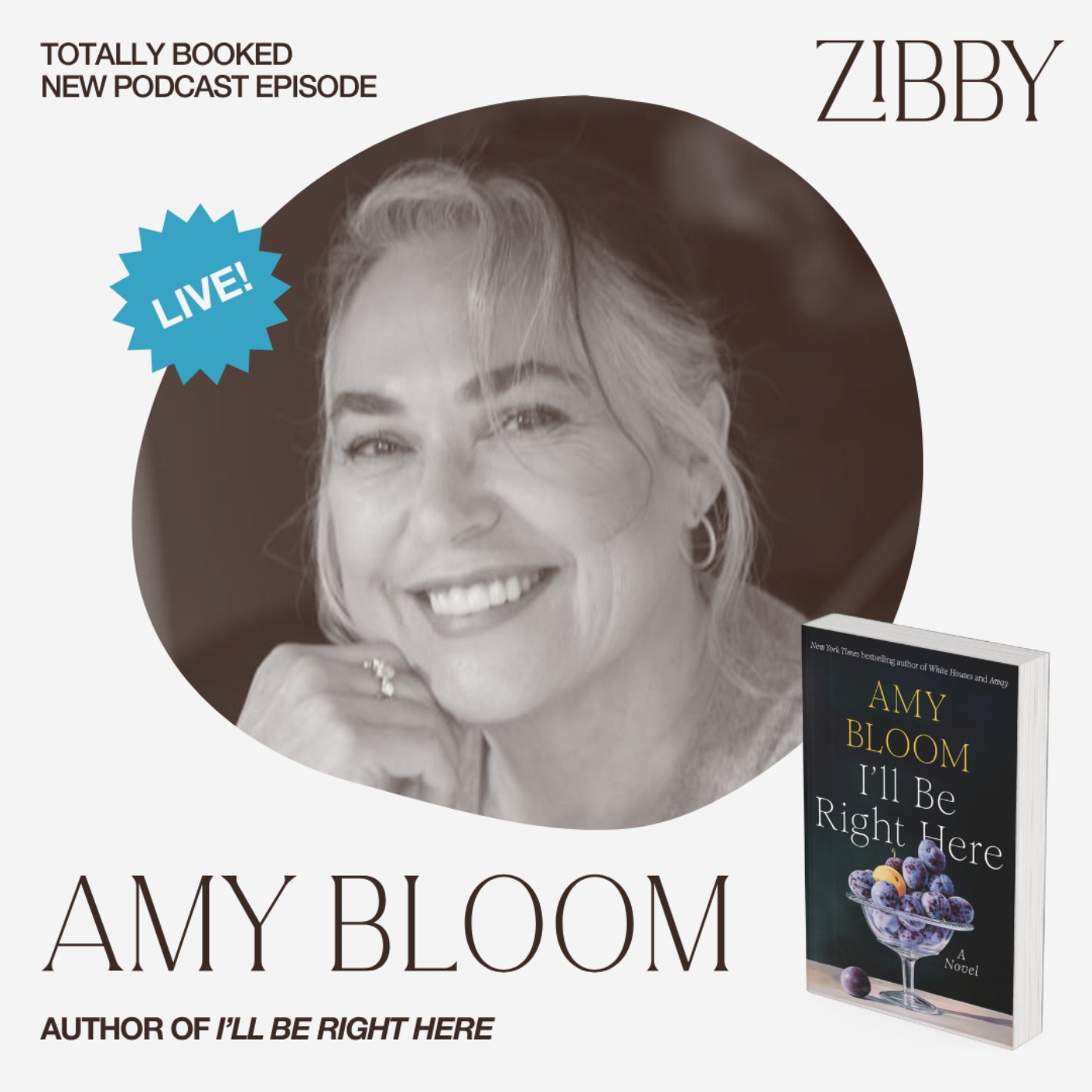
Hi listeners of Totally Booked with Zibby this June we have one episode coming out every single day and to celebrate that I've started the June Listening Club. You can sign up on zibbedia.com or you can just keep listening and every day there'll be a little quiz on Instagram. We're giving prizes away every single day this month you're gonna get amazing stuff. You would all be invited to a party and a zoom at the end of the month to celebrate with a special certificate. So sign up on Zibbe Media today. Make sure following Totally Booked with Zy on Instagram and get ready to listen. Make it a challenge. June is crazy. Find some airtime for yourself. Put it on in the background. Get ready to listen, learn, laugh and enjoy life. Instacart is on a mission to have you not leave the couch this basketball season because between the pregame rituals and the post game interviews, it can be difficult to find time for everything else. So let Instacart take care of your game day snacks or weekly restocks and get delivery in as fast as 30 minutes because we hear it's bad luck to be hungry on game day. So download the Instacart app today and enjoy. $0 delivery fees on your first 3 orders. Service fees apply for 3 orders in 14 days. Excludes restaurants does it ever feel like you're a marketing professional just speaking into the void? Well, with LinkedIn ads you can know you're reaching the right decision makers. You can even target buyers by job title, industry, company seniority skills. Wait, did I say job title yet? Get started today and see how you can avoid the void and reach the right buyers with LinkedIn ads. We'll even give you a $100 credit on your next campaign. Get started at LinkedIn.com results terms and conditions apply. Today's episode is sponsored by gab. The youth mental health crisis is all over the news and we know social media is driving it this shock. The US Surgeon General warns that kids who spend more than three hours a day online are twice as likely to have depression and anxiety. With four kids of my own, we are constantly debating when is the right age to give some of our kids a phone? How do we monitor the phone usage for others? It is non stop, but now there's a solution. Here's the good news. A company called Gab has solved the problem by doing something no one else is doing. Their approach is tech in steps. Teckin Steps works by providing kids safe phones and watches tailored to every age, offering the right device at the right time. From GPS tracking enabled watches for young kids to increased features and parent enabled apps on the phones for tweens and teens, each device grows with your child. Bottom line, you don't have to give your kid a device that was made for an adult. Get them Gab, which keeps them socially connected safely. I can't recommend Gab enough. Use our code to get the best deal on something that will make parenting easier and and give you peace of mind. Visit gab.com that's G-A-B-B.com totallybooked and use code totallybooked for a very special offer. Hi, this is Zibby Owens and you're listening to Totally Booked with Zibby, formerly Moms don't have time to read Books. In my daily show, I interview today's latest best selling buzziest or underrated authors and story creators whose work I think is worth your time. As a bookstore owner, publisher, author, and obviously podcaster, I get a comprehensive look at everything that's coming out and spend my time curating the best books so you don't have to stay in the know. Get insider insights and connect with guests like I do every single day. For more information, go to zibbymedia.com and follow me on Instagram ibbeowensk Welcome back to Totally Booked Live. I'm here today with Amy Blume. I'm so excited. Welcome. Yay clap. Oh yay clap. Amy is her latest book is I'll be right Here. And I interviewed Amy before for her last book, In Love, which is like one of my favorite books. Has anyone read that book here in the audience? So good. Oh my gosh. Okay, I'll read you her bio and then we'll get into this new book. Amy Blum is the author of four previous novels, White House's Lucky Us Away and Love Invents Us, and three collections of short stories, where the God of Love Hangs Out. Come to Me. Finalist for the National Book Award and A Blind man Can See How Much I love you. Finalist for the National Book Critics Circle Award. Her first book of Nonfiction, normal transsexual CEOs, cross dressing cops and Hermaphrodites with Attitude, is a staple of university sociology and biology courses. Her most recent book is the widely acclaimed New York Times bestselling memoir, In Love. She has written for magazines such as the New Yorker, the New York Times Magazine, Vogue, Elle, the Atlantic, Slate, and Salon, and her work has been translated into 17 languages.
- [05:04]
Amy Blum
All true.
- [05:04]
Zibby Owens
All true. Few. They got it right. All right, I'LL be right here. Can you tell everybody what this book is about?
- [05:12]
Amy Blum
Sure I can.
- [05:16]
Zibby Owens
Would you also please do that now?
- [05:18]
Amy Blum
I was thinking about it on my way over here. My kids say that I only have four topics, and depending on which kid you ask, they would say family, love, sex and death. I feel like that's plenty. I feel like I have covered the waterfront. And that's what the book is about. It begins in occupied Paris, I should say. Well, because we're all friends, I should say. I was beginning a historical novel, which was my mandate from my publisher. And so there's a great deal about occupied Paris during the war. And our central protagonist, a woman named Ghazala, who is French born but of Algerian parentage, becomes basically the dog's body and tweeny of Colette, the writer. Colette had always been a favorite writer of mine and also seemed to be one of those terrible great monsters that you read about. My favorite story of Colette is she is entertaining a lot of very fancy people at her family's home in Burgundy. And they are late and she is hungry, so she eats the tops out of the deviled eggs and the custard out of the eclairs and leaves them there for the late arriving guests. I thought, well, how do you not want to get to know this woman better? Also, she was sort of a cheerful, bourgeois, polite Parisian anti Semite for most of her life. And then she fell madly in love with her third husband, who was Jewish. And so the story of her evolution and her struggles with the Germans and hiding Maurice for 18 months really captured me. And so I put Gazala into that world. And when the war is over, Gazala comes to America and she finds two girls who live across the street over the bakery, which is where she has come to work. And they are Alma and Ann Cohn. And the three of them become best friends. And then her brother returns from Algeria and. And now they are four best friends. And later on, one more friend joins the group. And they are known in their family as the greats, because they are, of course, the grandmother, they are the great aunt, they are the great uncle. And it covers about 50 years in a family's life. I think. The other thing I tend to write about, because it's interesting to me, are found and made families. I am deeply attached to the family I was born into and the family that I gave birth to. But I am also really interested in who comes in from the wings, you know, that cousin to whom everybody is very attached for 10 years, who then Moves far away or the person who has been far away and suddenly makes a connection with your sister. And now this person is it every family holiday and half the time you're still thinking, where did you come from? So all of those things came together for me and it is really portraits of everybody in the family and the weaving in and the weaving out. I think the other thing is that I did not come from a family. My parents and grandparents were, I think old school would be the polite way to describe it, silent on the subject of their personal histories. And so, you know, I would say at one point to my mother's mother, to my grandmother, you know, grandma. I see like I know my uncles here in America. But I see in this photograph that when you left Russia you had eight siblings and when you came to America you had four. To which I would get a response that was something like, uh huh. I found that interesting. I found the closed doors compelling. And so part of this novel is really a way to write about the fact that our parents and our grandparents are so mysterious to us that we do not know who they were before we came on the stage. And I wanted to write about what people are willing to share, what people keep closed forever and how that affects the, the family's life. That's what I think.
- [09:52]
Zibby Owens
That was a great cab ride pitch development.
- [09:56]
Amy Blum
Thank you.
- [09:57]
Zibby Owens
Check plus. Oh my goodness. What did you end up finding out about your own family?
- [10:02]
Amy Blum
Well, not as much as I would have liked. My other favorite story about my mother's mother, for whom English was, I think, a fourth language and just tired of it by then. She was like, I have learned languages. And so I said to her, so what was it like in the old country? And she goes, not so nice. I said, well, what about here? Nice. So that was my maternal side of the family. That was that. And my grandfather, my father's father had the distinction of being deported from Russia. Not something that happened that often for. For being depending on which relative you asked a terrific hellraiser and union organizer, which we were all quite pleased with. Also, it seemed to me a not very talented burglar. So combining his two loves, he came to America and went to work in a factory. So the stories in the past I like and I liked. I found a letter from my dad for my 21st birthday, which really delighted me. This was not a man who was really put on earth to have children. I mean, he did his best. It wasn't a great idea. It was all right. I mean, it worked out good DNA as he himself would say excellent DNA. And I would be like, yes, but. And he's like, no, no. But he was an enormously curious person. I mean, there is nobody he met that he was not interested in. And I feel like that was really part of the DNA. And in his letter to me on his 21st birthday, he said, it's okay to hate things and institutions. He said, especially institutions and especially policies that hurt other people. He said, don't be sorry if you hate them. He said, just don't forget to do something about it. So that is also probably folded in to the novel as well.
- [12:09]
Zibby Owens
So interesting to back up for a minute about In Love, your memoir. You wrote so beautifully and obviously we'll stick mostly on this. But just for context, if people haven't read it before, so beautifully about your late husband's Alzheimer's and his decision to take his life with dignity and you're helping with that and writing about that in his telling you you had to write a book about it and how you were not when people would ask you did you want to? And you were like, no, he didn't ask me, he told me to. And so you did. You shared all of this about your life when really you're mostly writing in fiction. How did that experience of writing about it change things and how did it help you? How did it if at all change your approach to writing fiction afterwards? Today's episode is sponsored by Wayfair. There's just something about a beautiful outdoor space that is so satisfying. Having your own backyard oasis is like a dream come true and Wayfair has everything that you need to level up your outdoor space and make it really yours. They have patio sets, lounge chairs, outdoor bars, hot tubs, fire pits, gazebos and of course string lights. It is so easy to have a one stop shop where you can make over your entire entire outdoor space with a resort feel or whatever you love without a resort price tag. I, as you know, am obsessed with Wayfair and have decorated my home and office using Wayfair. I recently loved the new outdoor rugs that they have. I love the Waikiki blue indoor outdoor rug which will look great in my new temporary place in Santa Monica. I want my outdoor space to feel like me. I want it to welcome people and make them feel comfortable and right at home. And Wayfair has everything. Plus shipping is so fast and the prices are fabulous and it's convenient that Wayfair has everything your home needs, especially for this warm weather season. Wayfair's huge selection of outdoor items makes it easy to find exactly what's right for you. There's something for every style and every home, no matter your space or budget. Wayfair makes it easy to tackle your summer home goals with endless inspiration for every space and budget, including the outdoors. So don't wait. Make your outdoor space your dream oasis today with Wayfair and enjoy it all summer long. Head to Wayfair.com right now to shop a huge outdoor selection. That's W-A-Y-F-A-I-R.com Wayfair Every style, every home.
- [14:54]
Amy Blum
Race the rudders, Race the sails.
- [14:56]
Zibby Owens
Race the sails. Captain, an unidentified ship is approaching, over. Roger, Wait.
- [15:02]
Amy Blum
Is that an enterprise sales solution?
- [15:05]
Zibby Owens
Reach sales professionals, not professional sailors. With LinkedIn ads, you can target the right people by industry, job title and more. We'll even give you a $100 credit on your next campaign. Get started today at LinkedIn.com results, terms and conditions apply. BetterHelp Online Therapy bought this 30 second ad to remind you right now, wherever you are, to unclench your jaw, relax your shoulders, take a deep breath in and out. Feels better, right? That's 15 seconds of self care. Imagine what you could do with more. Visit betterhelp.com randompodcast for 10% off your first month of therapy. No pressure, just help. But for now, just relax.
- [16:06]
Amy Blum
If I'm lucky, I'll never write a memoir again. It was not my goal and it really was true. People would say in interviews in a very lovely manner, oh, did your husband ask you to write about this? And I would be like, no, no, he didn't ask me. He said, you're a writer, you gotta write about this. He said, if we had a leaky faucet and you were a plumber, I'd ask you to fix it. You have to write about this. And so I did. And I certainly shared more of myself than I am inclined to in fiction. And when I first started writing fiction, I thought that I could hide. I thought that I could create these interesting characters who were not me, as it turns out, not not me. And that I could keep myself to myself, which is my preference. This public speaking is all fairly hard won. It is not actually my nature. And I think returning to fiction was first of all a certain kind of relief. It's like, oh, good, I don't have to make any embarrassing announcements about my own personality. But it's also coming to terms at this point in my writing with the fact that whoever you are, whatever you are writing yourself will leak out. It will come out in the little round spaces of the A's and the E's, it will just. You cannot hide who you are. I remember, you know, when. I remember when Philip Roth died, I was on a couple of panels because I was a great admirer of many aspects of his work. And, you know, somebody said to me, well, do you really think that people's personalities come out? And I said, yes, nobody ever read Philip Roth. And said to themselves, boy, if I were down with the flu, this is the guy I'd really want bringing me a bowl of soup. Said, no one ever. I don't think it's a bad thing. And it doesn't even speak to whether or not the man might have been completely great as a caregiver. But you cannot keep who you are from the reader. And I think I don't try as hard. Now, it's like when you have a novelist who says to you, oh, it's all made up. They are lying. When you have a memoirist who said, this is exactly what happens, they are also lying because we're writers, so we drag ourselves with us just like everybody else does. In every conversation, you are you. I mean, one makes an effort, as my mother would have said. In the green room, I was brushing back my hair and I could hear. I could feel my mother's hand. Right, just. Off your face, darling, off your face. And I feel like, you know, they come with us. We come with us. They come with us in whatever form the writing is.
- [18:57]
Zibby Owens
I can't believe you said this doesn't come naturally to you. I feel like I'm just sitting here watching, like, a standup show, and I could just watch you all day.
- [19:04]
Amy Blum
Happy to hear it.
- [19:10]
Zibby Owens
Okay, well, on a more serious note, in the book, there is so much about, obviously, anti Semitism, about the Holocaust, more than just antisemitism, but the extinction of Jewish people and how one girl tried to take some matters into her own hands by, you know, one by one, sort of stealthily saying goodbye to some German men, which we could talk about.
- [19:33]
Amy Blum
I'd be happy to, because those are based on real people.
- [19:36]
Zibby Owens
Really?
- [19:37]
Amy Blum
Yeah. So in the novel, you know, Gazala is trying to find her way as a human being. And part of what I wanted to write about, you know, is that I grew up with a lot. Part of my family is French, and I grew up with a lot of stories about the French Resistance, you know, which, if you read the first person accounts from the early 1950s, it sounds like 97% of the country was engaged in resistance. More like 2. So. But there were these two girls who were tremendous heroes in World War II. They were Dutch girls, they were teenagers and they were in the resistance. And their form of resistance was, this is a little dark, I should warn. This is not cheerful. And so they walk past the German soldiers and they're like, hi. And the German soldiers, naturally, you know, foreign guys in another country go, hi. They go, want to take a stroll? And they go, sure, let's take a stroll. And they walk through sort of, I guess the Dutch equivalent of the Bois de Boulogne and into the groves of trees, and then they slit the Germans through throats and roll up their skirts and off they go. And they were tremendous heroes. And they did this more than once. And I really wanted to write about that. I thought, what is it to be a 16 year old girl in an occupied country and decide that this is the thing you can do? Not delivering maps on your bicycle. People did that. Not handing over a code, not just trying to protect your parents, but that you could actually be a fighter. And I was very taken with that. So I use that story. But I always try to make it really clear. This is not a story I made up. This is based on history of World War II.
- [21:21]
Zibby Owens
It was not your own experience?
- [21:24]
Amy Blum
No, it was not my own experience.
- [21:26]
Zibby Owens
We have to ask after your last. Just have to ask.
- [21:30]
Amy Blum
Yeah, I don't think there's a lot in there that's my own experience, although there is, I think, a very entertaining section of a early, like late 1970s feminist consciousness raising group that is based on my own experience. And it's from my point of view, hilarious.
- [21:54]
Zibby Owens
How do you feel in this climate of antisemitism here in the US and everywhere with this book coming out? Are you. How do you feel about it?
- [22:05]
Amy Blum
I would say about myself as a writer, I don't write to recommend. And I say that partially because I have often gotten letters from people saying, how could you let this happen? Or why did you choose to describe this? Or, you know, the wicked are not punished and the good are not rewarded. And I'm like, entirely correct. That would be consistent with my life experience. Right. The bad are not necessarily punished, the good are not necessarily rewarded. For me, I don't think of myself as a political writer at all, but I think there is enough of a shift in the world that now I feel to write about women as people, to write about Jews as people, to write about people of color as actual human beings turns out to be, for me, unexpectedly, a political stance. It had not Occurred to me that the world would be shifting in such a way that any of those viewpoints would have more impact than just being the basis of how I tend to operate and see the world. And I feel more than I have, I think, in the past that it is important. It's important to tell the truth, which one wants to do in writing, which is not necessarily about the facts, but about things that are true. And also, my view of the world is that this is a big, extraordinary bouquet that we are handed in this lifetime, and I do not see it as my job to pluck out some of the flowers and trample them underneath.
- [23:44]
Zibby Owens
Okay, beautiful. When you were writing about the close relationships, especially the brother and sister relationship, talk to me a little bit about that and how you structured that, the varying layers of their relationship, all of it.
- [24:02]
Amy Blum
So Ghazala has a brother, Samir, who's her big brother, and he is, in fact, not her biological brother. He is brought into the family as a baby when his mother dies in childbirth, and Gazella's mother is his mother's best friend. And so they grow up together. And I think, especially for people who have had what we would now call deeply traumatic childhoods, you know, like a war and an invasion and the death of your parents, there is a very particular bond that can be formed, certainly between parents and children and also between siblings. And they are just. There's a Greek myth, gosh, Bausis and Philomene, whose greatest wish, right when the fish jumps out of the ocean and grants them their magic wish, is that they would be together forever. And so they become bushes, and their roots are entwined and their branches are entwined. And that's how I think of this brother and sister, that they are the center of each other's lives, and it allows them to be a very strong base for others, but they are always at the center for each other.
- [25:12]
Zibby Owens
I love that, and I love the Cohen sisters, and the whole family love the Cohen sisters. I mean, they're like a comedy act in the middle of the. In the middle of the novel. How did that come about?
- [25:23]
Amy Blum
Well, again, you'd have to speak to a lot of my dead relatives, but there is a moment. I actually have a big sister. This is a woman who only stopped introducing me to people as Baby Amy in the last 10 years. And I said to her, you have to stop. I said, you make us sound like Bette Davis and Joan Crawford. It's like it's upsetting to people. And she says, well, that's how I see You. So in this whole section in the early 1950s, I really wanted to write about New York post post World War II, because it was a period of such, you know, on one hand, such constriction socially, but also people who had been released and were actually going to be able to move forward. And there is a moment where I stole a line from my sister's mother in law. I don't know what that would mean. She is to me. I'm sure there's a word in Yiddish, but I don't know what it is, but. And so. So she would say very sternly during a conversation if you said something that she thought was untoward. I mean, it could have been anything. It could have been Aunt so and so's new hairdo or, you know, da, da, da, whatever it is that, you know, Uncle Archie was doing. And she would say very repressively, I could make a remark and I just. That just stayed with me. And so I had to build an entire scene in the Cohn family apartment, you know, where they moved down from the Bronx around. I could make a remark and I felt like it was sort of like a combination of like the worst of the KGB and sort of borscht belt comedy, you know.
- [27:10]
Zibby Owens
Are you working on another project now?
- [27:12]
Amy Blum
My publisher must have sent you. I have two things that I am working on and one of them that will happen more immediately is actually next year I have my first mystery coming out. I love mysteries. I always used to read them for like just kind of mind candy. And the mysterious press was nice enough to buy it. And they said, oh, we like this character very much. How about two more? And I said, sure. I think what they liked is when I was an undergraduate, one of my gigs, this was back in the day you didn't have to be 21. I was a bartender for like the alumni events. And because I was the most junior member of the staff, my job was to, they would say, wake up the alumni who are still here. I don't think that's what they meant. I think what they meant is make sure nobody is dead. And so, you know, and I'd wake up the gentleman, I'd say, oh, Mr. So and so, time to go home. And either he would get up or he wouldn't. And. And I thought, what a great setting for a murder. So in the murder mystery, I have a disgraced English professor who takes up being a private eye and is called into her alma mater for the death by bludgeoning with a bronze bust of Nathaniel Hawthorne. So. So that's the next one.
- [28:41]
Zibby Owens
Amazing. Amy, thank you so much. Congratulations. Thank you for listening to Totally Booked with Zibby formerly Moms don't have Time to Read Books. If you loved the show, tell a friend, leave a review, follow me on Instagram ibbeowens and Spread the Word. Thanks so much. Oh and buy the books. If you work as a manufacturing facilities engineer, installing a new piece of equipment can be as complex as the machinery itself. From prep work to alignment and testing, it's your team's job to put it all together. That's why it's good to have Grainger on your side. With industrial grade products and next day delivery, Grainger helps ensure you have everything you need close at hand through every step of the installation. Call 1-800-GRAINGER, click grainger.com or just stop by Grainger for the ones who get it done. Looking for high quality maternity and baby clothes that don't break the bank? Quince has you covered. Think super soft PJs and sleep sacks for babes. Bump friendly styles and all the postpartum essentials you need, all at half the cost of similar luxury brands. By partnering directly with top artisans and factories, they pass that saving onto you. Get elevated essentials for mom and baby with quince. Go to quince.comlittleluxuries for free shipping and 365 day returns. Quince.comLittleLuxuries Ever wonder what your lashes are destined for? The cards have spoken. Maybelline New York Mascara does it all. Whether you crave fully Fan lashes with Lash Sensational Big Bold volume from the Colossal A dramatic lift with Falsies Lash Lift or Natural looking volume from Great Lash. Your perfect lash future awaits. Manifest your best mascara today. Shop Maybelline New York and discover your lash destiny. Shop now at Walmart.