Loading summary
Transcript54 lines
- [00:00]
Capital One Bank Narrator
With no fees or minimums on checking accounts, it's no wonder the Capital One bank guy is so passionate about banking with Capital One. If he were here, he wouldn't just tell you about no fees or minimums. He'd also talk about how most Capital One cafes are open seven days a week to assist with your banking needs. Yep, even on weekends, it's pretty much all he talks about in a good way. What's in your wallet? Terms apply. See capitalone.com bank capital1na member FDIC
- [00:31]
Hannah Burner
hi, it's Hannah from Giggly Squad. Bottomless apps for $9.99 are back at Buffalo Wild Wings so you can mix and match favorites like mott sticks, fried pickles, onion rings, hatch queso and chips and salsa. It's perfect for a girls night, a double date, or just a full on yapping session. Order your apps and keep them coming while you spiral on the same gossip from every possible angle. So grab your besties or your frenemies and head to Buffalo Wild Wings to get bottomless apps for $9.99 while you still can.
- [01:00]
Zibby Owens
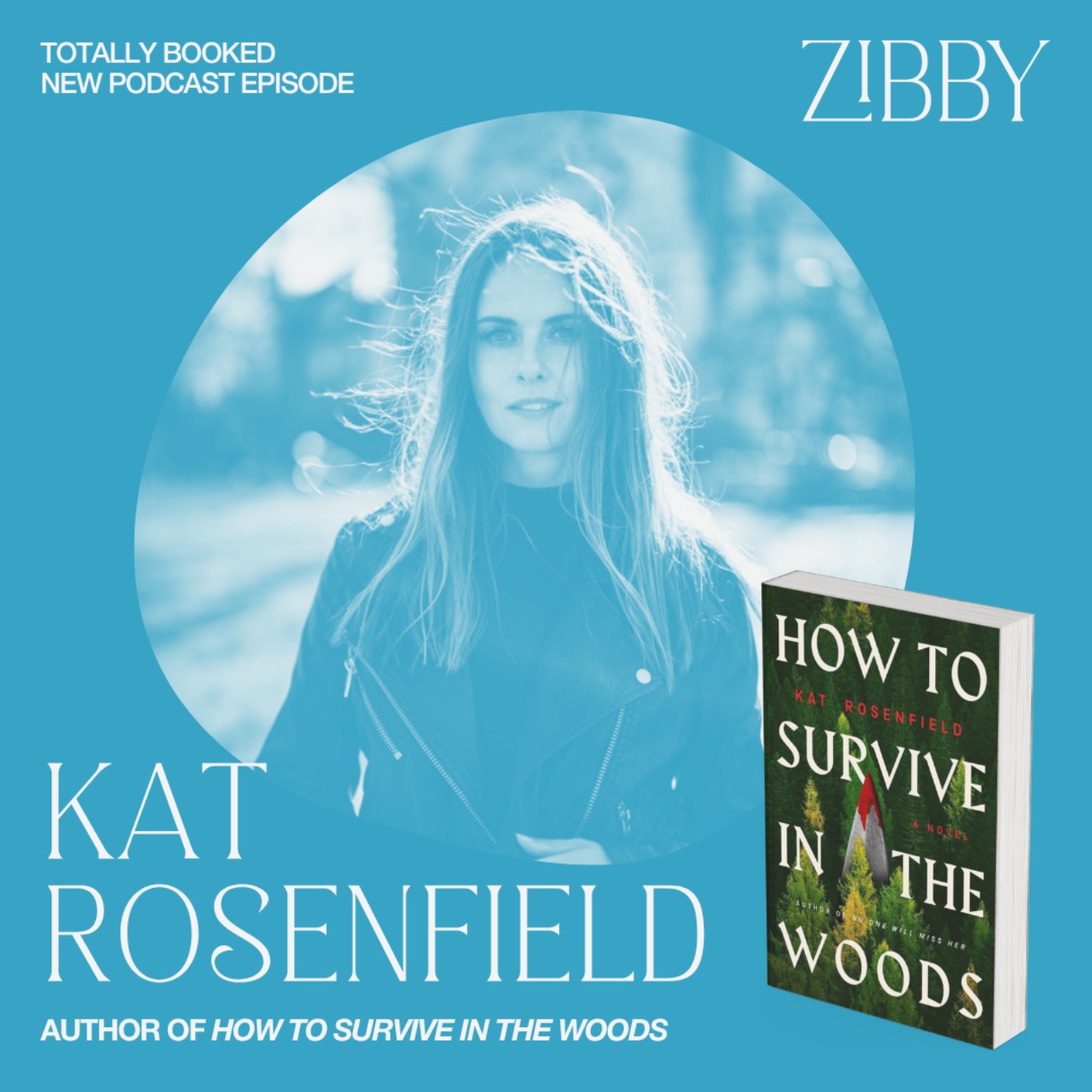
Today's episode is sponsored by Nutrafol. Nutrafol is the number one dermatologist recommended hair growth supplement brand and it's the number one hair growth supplement brand personally used by dermatologists. I love Nutrafol. I started feeling like my hair was thinning a little bit. So I started researching and found that Nutrafol has growth supplements that are peer reviewed, NSF certified for sport and clinically tested. They seem to be the best and I only want the best for my hair. So I want you to worry less. Don't let hair be something on your worry list. See visibly thicker, stronger, faster growing hair in three to six months with Nutrafol. For a limited time, Nutrafol is offering our listeners $10 off your first month subscription and free shipping when you visit Nutrafol and enter promo code Zibby. So please go do that. That's Nutrafol.com spelled N u t r a f o l.com promo code ZIBBY. Please do it right now. You won't regret it. Hi, this is Zibby Owens and you're listening to Totally Booked with Zibby, formerly Moms don't have Time to Read Books. In my daily show, I interview today's latest best selling, buzziest or underrated authors and story creators whose work I think is worth time. As a bookstore owner, publisher, author and obviously podcaster, I get a comprehensive look at everything that's coming out and spend my Time curating the best books so you don't have to stay in the know, get insider insights and connect with guests like I do every single day. For more information, go to zibbymedia.com and follow me on Instagram IBBEowens. Kat Rosenfield is the author of how to Survive in the Woods, a novel. She is the author of six books, including no One Will Miss her, which was an Edgar Award nominee for best novel, and the New York Times best selling A Trick of Light, co authored with the late great Stan Lee. A former reporter for MTV News and current columnist for the Free Press, her essays and cultural criticism have appeared in the Boston Globe, Vulture, Wired, Airmail, and the New York Times. She lives in Connecticut. Welcome, Kat. Thank you so much for coming on to talk about how to survive in the woods. Congrats.
- [03:26]
Kat Rosenfield
Thank you so much for having me.
- [03:28]
Zibby Owens
It's my pleasure. I have to say, I could not put this book down. You got me like across the country. It took me, I think, three quarters of a flight and I was like, I'm just gonna read for an hour and then I have to get to my emails. And then I was like, I'm just gonna read another half an hour. Anyway, I read the whole thing. It was so good. I just couldn't.
- [03:44]
Kat Rosenfield
Famous last words. I love it.
- [03:46]
Zibby Owens
Yeah, that rarely happens to me, I have to say. Well, I don't know. Anyway, it happened this time, so congrats. It was really good.
- [03:52]
Kat Rosenfield
Thank you.
- [03:52]
Zibby Owens
You're welcome. Why don't you tell listeners what your book is about?
- [03:56]
Kat Rosenfield
Sure. So I'm going to try not to do any spoiling. I'm going to just give the very short elevator pitch, which is if you enjoy 90s era sex thrillers like Basic Instinct, but you're like, I love this. I wish there were bears in it. I have written the book for you. Wilderness thriller survival takes place on the Appalachian Trail and there's a little bit of a love triangle at the center of it.
- [04:21]
Zibby Owens
That's so interesting. I in a million years would not have pitched it as Basic Instinct in the woods. And that is why your mind is very creative and pretty awesome. Oh my gosh. I felt like it was more like wild gone wrong or something like that.
- [04:36]
Kat Rosenfield
It could also be that many different approaches to the same subject matter.
- [04:41]
Zibby Owens
Okay. You wrote in your note at the end that your mother had gone hiking into some sort of similar place. And that was part of how you learned the ins and outs of this particular region where you set the book. Can you talk a little bit about that and also just where this whole idea came from.
- [04:58]
Kat Rosenfield
Yeah, of course. So my family has always spent a lot of time in Maine, and particularly in the part of Maine where the Appalachian Trail runs through. The northernmost part is called the Hundred Mile Wilderness. It is so called because for 100 miles there is no real easy exit from the trail. You need to have everything that you need to do this last push, starting in Monson, Maine, 100 miles north to Baxter State park, where you summit Katahdin and finish your hike. So my mother grew up going to this part of Maine. Her parents had a home there. And in 1970 she. She set out with a girlfriend to do a day hike on the Appalachian Trail. Now you can hop on and off the trail if you're willing to do some pretty serious hiking through the woods or down little logging roads to get to the access points. And so she and a friend started around this area called Bodfish, and they went in, they did a climb, very strenuous climb up Barren Mountain, which is a bit of a rock scramble, to this place where there are very epic views. And they stayed the night in a lean to called Cloud Pond. And then the next day they were going to come back down the other side of the mountain and exit from a different logging road. And my mother was, I think, 17 years old at the time and she had gotten permission to do this. You know, all was well. She's a very resourceful woods person. But as she was leaving the trail, she and her friend were accosted by two men in a jeep who called them by name. And it turned out that my grandmother, who thought that this was a very good idea, very reasonable in the bold light of day. As day became night, she became nervous. And by 3 o' clock in the morning, she had decided that my mother had no idea what she was doing in the woods, had definitely been eaten by bears, and she had called the forest rangers to go and rescue her. So obviously you're a teenager in this scenario. Pretty humiliating. And the men involved were not particularly nice to them. But it meant that when I asked my mother if she could think of a really good place for me to set the kind of wilderness story where any horrible thing might happen and nobody would hear you scream, she opened up the map of the Appalachian Trail and she pointed at this one spot, the Cloud Pond lean to, and she was like, this is the one. And I had been considering writing a story about a love triangle with a little bit of a maybe murdery aspect to it. Part of this book is derived the central premise, the central dynamic between three characters is derived from a movie called Diabolique. It's French and It's from the 1950s. And this is a movie about two women who are involved with the same man. One of them is married to him, the other is his mistress. The two women are friends. They decide that he's kind of a real son of a bitch, and they're like, you know, I've had it with this guy. We ought to do something about this. And, you know, I'm not gonna say much more, but that idea has always stuck with me. I saw this movie when I was maybe 12 years old, and I was like, that's cool. And I've thought about it for a long time, and I thought it would be great to take that premise and update it, make it into a contemporary thriller. But where to set it? And here it was, the Appalachian Trail, the 100 mile wilderness, which, in addition to being very remote, being a great place to kind of strip people down to their essence and see how they fare when they're trying to hide secrets from each other, but also not die in the woods. It's also, as every thriller writer knows, a place where there is no cell service, which is very important. If you write this kind of book, you're always trying to figure out ways to get people's devices away from them so they won't whip out an iPhone at an opportune time and just ruin the story.
- [08:50]
Zibby Owens
Yes, one of the pitfalls of modern technology. So what is your relationship to the woods like? Is this a place where you grew up? Like, I am not comfortable at all in the woods. So I don't even think, no matter how much research I did, I could write a book like this.
- [09:06]
Kat Rosenfield
I used to think that I was medium comfortable in the woods. And then as I was researching this book, I discovered that I'm actually above average comfortable because it might just be my environment. Most of my friends are really afraid of bugs, and, you know, they don't bother me, but I don't sleep on the ground. That's kind of my one rule. I've never enjoyed that. And so I do a lot of day hiking. I spent a lot of time outside, but I just need to be in a bed at the end of the day. What this means is that I am pretty experienced at doing these incredibly grueling hikes that are not really intended to be done in one day, where I'll go out and back and I'll climb something really strenuous and then have to Scramble back down. And in this way, I've done a bunch of pieces of the Appalachian Trail without having to hike the entire thing, which would involve sleeping on the ground, which is, of course, against my rules.
- [10:05]
Zibby Owens
Interesting. Oh, my gosh. And what about the writing piece? Where. How did you get your training? Like, where did this whole thing come from in your life, the writing?
- [10:15]
Kat Rosenfield
Oh, my goodness. Well, it fell backward into being a professional writer about 17 years, and that's sort of a complicated story. Basically, I was working as a publicist in book publishing, and I realized I was a terrible publicist, for one thing, But I had a lot of exposure to authors and to journalists and other writers, and I realized I wanted to be doing what they were doing, not what I was doing. And so I took steps to make that happen. It got a little hairy because it was 2008 and the economy imploded, and so I spent many, many years scrambling. But I always love to tell stories, and I've always loved, especially the freedom that fiction offers to just put some people in a crazy scenario of your own creation and find out how they behave.
- [11:05]
Zibby Owens
Wow. Wait, so what made you a bad publicist? What did you do wrong? Let me hear.
- [11:11]
Kat Rosenfield
So if you're a publicist, you have to be really, really good at lying about things being good when they're actually bad or mediocre. And it's just part of the game. You're sending the same pitch over and over, and you're saying, this is the book of the summer. This is the most important book that you will have ever read in your life. And somebody will write back to you, and they'll say, you said that about the last book. And you're like, yes, but I was lying then. This time I am telling the truth. My instincts ultimately, though, are not really to obscure things. Things in that way. One of the things that I love about writing fiction and also about doing journalism, which is my other job, is that it's a chance to describe the world, to really try to say something true. I think publicity is at base about trying to say something attractive that is nicer than the truth. It's about trying to hoodwink people. And I'm really into the revelation that writing offers unless the books are really good.
- [12:21]
Zibby Owens
And all you have to do is market great books. That is a possibility.
- [12:26]
Kat Rosenfield
Yeah.
- [12:26]
Zibby Owens
Yeah.
- [12:26]
Kat Rosenfield
Well, you know, you've got that covered, I think. And so we can thank you for. Thank you for what you're doing.
- [12:32]
Zibby Owens
Thank you.
- [12:33]
Kat Rosenfield
You're doing the Lord's work.
- [12:34]
Zibby Owens
Me? No, this wasn't about me I was just saying as a publicist, I think about pitches that I get and publicists who are pitching amazing books. It might not feel like they're making things any better than they are. That's on.
- [12:47]
Kat Rosenfield
No, that's very true. And I mean, the problem with being a publicist is sometimes the books are great and you have to still describe them using the exact same language as the ones that used to describe the ones that are not great.
- [12:59]
Zibby Owens
Yeah, I guess this is why you were not the best publicist, because we
- [13:03]
Kat Rosenfield
can just go ahead and say that I was the worst publicist. I don't think anybody has ever been worse at this job than me.
- [13:09]
Zibby Owens
I'm sure that's not true. But I'm glad that you are no longer a publicist so that your publicist could send me this book and you could free your time to write the books, which is obviously what you were meant to be doing. So it all worked out. One of the many themes in the book, and I of course will not go towards any spoilers, was basically control and being in really unhealthy relationships, particularly women and men, but not exclusively relationships with a husband, a father. How those patterns sort of saturate and get stuck. What you do when you find yourself in a situation that is suddenly much more toxic than you thought, but yet you can't reach out about it and all of that, the slow act of being stuck in something that you don't know necessarily how to get out of if you even wanted to. Of course, your book opens on the heels of a suicide attempt, so it's sort of like after that, you know, you might as well be in a bad relationship. That was her conclusion, in a way. Sort of oversimplification. Talk a little bit about that element of the book, the control and really unhealthy relationships.
- [14:24]
Capital One Bank Narrator
With no fees or minimums on checking accounts. It's no wonder the Capital One bank guy is so passionate about banking with Capital One. If he were here, he wouldn't just tell you about no fees or minimums. He'd also talk about how most Capital One cafes are open seven days a week to assist with your banking needs. Yep, even on weekends, it's pretty much all he talks about in a good way. What's in your wallet? Terms apply. See capitalone.com bank capital1na member FDIC
- [14:54]
Kat Rosenfield
hi,
- [14:55]
Hannah Burner
it's Hannah from Gigli Squad. Bottomless apps for $9.99 are back at Buffalo Wild Wings, so you can mix and match favorites like Mott Sticks, Fried Pickles onion rings, hatch queso and chips and salsa. It's perfect for a girls night, a double date or just a full on yapping session. Or order your apps and keep them coming while you spiral on the same gossip from every possible angle. So grab your besties or your frenemies and head to Buffalo Wild Wings to get bottomless apps for $9.99 while you still can. Hi, this is Hannah Burner from Giggly Squad. Have you ever put on a bra that makes you feel like a goddess? Prepare to be obsessed with the Dream Angels Wicked bra from Victoria's Secret, the iconic brand behind the world's most comfortable bras. And I only wear the most comfortable bras. The bestseller features an innovative sling for perfect lift without padding and the fit is chef's kiss. Awaken your inner goddess with new colors and super femme lace embroidery. Find out why this bra has thousands of five star reviews and counting. Shop it in stores and online@victoria's secret.com
- [15:59]
Kat Rosenfield
yeah, I think that this is something that is very much sort of ripped from the headlines of real life. You can see it happening all around you. Women, very strong and very competent in one area of their life will end up sometimes gravitating towards relationships where they don't have to make decisions. There's something about just being able to say, I don't want to have to deal with this. You deal with it. Man. Man. That I've chosen. And it's not unusual for relationships like that to start out from a place of feeling like an active choice, of feeling like taking control by seating control. But then eventually, if the person you've chosen is a certain type of guy, and often this type of guy is that type of guy, you may find that a person who's willing to take whatever control you willingly hand it over to them also wants more than you're willing to give them. And it's a very difficult door to close once you've opened it. I was very interested in in Emma, my protagonist, as a person who has made a choice like this to begin with. She's very intentionally chosen a man who will tell her exactly what to do, will tell her exactly how to live, and she finds comfort in that. It feels safe to her and it feels safe to her because she doesn't trust herself. You'll find out why she doesn't trust herself. We're not going to spoil that. But once she's made that choice, she really does begin to disappear. And for her, this is a mode of survival. But eventually the space that she's made for herself, becomes smaller and smaller until maybe she can't really live in there anymore. And that was what I really wanted to explore with this. The ways that we make choices to move on from things or to not move on from things. Everybody in this story are keeping secrets from each other. They're all, each in their own way, a different kind of survivor. Everyone has been through something, everyone is trying to get past something. And they're all dealing with it in very different ways.
- [18:10]
Zibby Owens
Is there anything in particular you are trying to get past or that might help inform the narrative?
- [18:17]
Kat Rosenfield
Well, that is a personal question. I wouldn't say that I am putting myself into these books. I would say, actually I should say up front, these are not auto fiction. I have, you know, I was raised by normal, loving parents and I have a really nice husband who I have never wanted to murder in the woods. Please do not put it in the newspaper that I want to murder my husband in the woods. But I love this idea as more of a cultural observer because I do look at this a lot. You know, how do we perform our identities and how do we deal with the things that were formative to us? How much of them do we reveal? Now, we have different approaches to this in the book. I probably, when it comes to things that I've been through, I'm more of a close to the best kind of person. I do not like to put a lot of. I mean, I may use my personal life, I may. May take it as inspiration, but I'm not going to roll over and slash my belly and let my intestines come spilling out and be like, hey, everyone, come look at this. Come look at my trauma. Come look at my damage. But there are women who do that. There are women writers who do that. And I think that's very interesting. I think it's very interesting that we live in a culture where that is incentivized and often rewarded.
- [19:40]
Zibby Owens
Does it just make you uncomfortable or do you. Are you philosophically opposed?
- [19:45]
Kat Rosenfield
I think I'm actually philosophically opposed. I think. I mean, for one thing, of course, I am by nature a private person and that's, you know, a matter of taste. But I also do kind of resent the expectation that women writers are going to reveal pieces of themselves that are nobody's business in order to kind of gain access or gain permission to tell stories.
- [20:09]
Zibby Owens
There was a whole. Who wrote it? Did you read? There was an essay. Of course. I'll remember it once we get off of this. Somebody who wrote that specific an essay, I think, in the Times about this very thing. An author who was like, I write fiction, and I don't want to be expected to tell my personal stories. Just let me create. And you don't ask men to share their personal stories in the same way.
- [20:32]
Kat Rosenfield
Yeah, well, I mean, there have been periodically moments in literary culture where we've really had to confront this head on. One of them was with the author of My Dark Vanessa, whose name is escaping Me. But that book was about a student teacher dalliance, you know, that was being looked back on years later. And this was at a moment when everyone was sort of on high alert for things that could be construed as problematic, politically or otherwise. And that resulted in what I thought was a very ugly outcome where this woman who had written this story was confronted and said, what gives you the right to tell this story? What gives you the right to tell this story, you know, is this. Own voices. And it turned out that it was. And so she had to out herself as a survivor of an inappropriate relationship with a teacher. And I thought that was awful. I was like, this is nobody's business. And how awful that, you know, that she was put in a position where she felt like she had to reveal this in order to be taken seriously as a writer.
- [21:35]
Zibby Owens
I remember interviewing her before that book came out. She came over to my house and it was like one of her first interviews. And I was asking her, like, did this happen? And she did not want to talk about it. And I don't know why. It felt unsatisfying when I felt like she must know because she told it in such detail. I just wanted to hear. So I don't know. Maybe it's the appetite for this kind of stuff that we've all become conditioned to expect. The salacious reveals or something. I don't know.
- [22:07]
Kat Rosenfield
Yeah, I think that there is. You know, obviously we live in a culture where it's to your benefit, or at least you can get a lot of attention if you're willing to reveal pieces of yourself that are otherwise private. It makes it feel. Makes people feel they know you. And we live in this era of the parasocial relationship. But it's something that I'm trying not to indulge as a writer.
- [22:30]
Zibby Owens
I actually write about myself a lot, but I don't feel like I'm doing it to get attention. I'm doing it so that other people feel they're less alone. Like, if I share something that's troubling me and someone reads it and says, like, oh, my gosh. I feel the same way. Then we somehow are helping each other in that relationship. Not as an exploitative thing, but anyway, not saying it's wrong or right. Just, you know, everybody approaches writing in their own way. I don't know. Yeah, absolutely.
- [22:59]
Kat Rosenfield
I think that the confession or confessional narratives serve a very interesting place in the literary landscape right now because they are sort of like service journalism in a lot of ways, disguised as diary entries where they're really written to be consumed by a reader who might take away something from it, especially regret narratives. And, you know, often if you're writing personal essays or writing about your personal life, what you're talking about is something where it's sort of too late for you. Probably it's a fait accompli. Maybe you've learned something, but you've been through that. You're sharing it in the hopes that other people might either feel seen by it, feel less alone, or maybe that they could avoid. If you've made a mistake making the same mistake you did. And I find that very interesting in terms of what purpose that serves in the culture. What do these stories do? And then what do we tell ourselves that we.
- [23:51]
Zibby Owens
That they do. Interesting. Okay, so what books do you have in the works? Anything else? Have you started your next novel?
- [24:01]
Kat Rosenfield
I have. I'm trying to play it a little bit close to the vest, but it is a. It's inspired by Rosemary's Baby, and I am looking to set this story in the world of high end reproductive technology.
- [24:20]
Zibby Owens
Interesting. Wow. Amazing. All right, well, thank you so much. It's been really interesting. And again, your book had me on the edge of my seat and I just completely escaped my own life by getting into your characters. So thank you for transporting, which of course is something that fiction and perhaps narrative nonfiction can do. Takes us out of our own lives, lets us. Absolutely.
- [24:48]
Kat Rosenfield
Thank you so much for having me.
- [24:49]
Zibby Owens
Thanks for coming. Okay, bye bye. Thank you for listening to Totally Booked with Zibby, formerly Moms don't have Time to Read Books. If you loved the show, tell a friend, leave a review, follow me on Instagram, ibbeowens and Spread the word. Thanks so much. Oh, and buy the books.
- [25:14]
Hannah Burner
Hi, this is Hannah Burner from Giggly Squad. Have you ever put on a bra that makes you feel like a goddess? Prepare to be obsessed with the Dream Angels Wicked bra from Victoria's Secret, the iconic brand behind the world's most comfortable bras. And I only wear the most comfortable bras. The bestseller features an innovative sling for perfect lift without padding and the fit is chef's kiss. Awaken your inner goddess with new colors and super femme lace embroidery fit. Find out why this bra has thousands of five star reviews and counting. Shop it in stores and online@victoria's secret.com
- [25:48]
Capital One Bank Narrator
with no fees or minimums on checking accounts, it's no wonder the Capital One bank guy is so passionate about banking with Capital One. If he were here, he wouldn't just tell you about no fees or minimums. He'd also talk about how most Capital One cafes are open seven days a week to assist with your banking needs. Yep, even on weekends it's pretty much all he talks about in a good way. What's in your wallet? Terms apply. See capitalone.com bank capital1na member FDIC
- [26:19]
Zibby Owens
hi,
- [26:19]
Hannah Burner
it's Hannah from Giggly Squad. Bottomless apps for $9.99 are back at Buffalo Wild Wings so you can mix and match favorites like mott sticks, fried pickles, onion rings, hatch queso and chips and salsa. It's perfect for a girls night, a double date, or just a full on yapping session. Order your apps and keep them coming while you spiral on the same gossip from every possible angle. So grab your besties or your frenem to Buffalo Wild Wings to get bottomless apps for $9.99 while you still can.