← Totally Booked with Zibby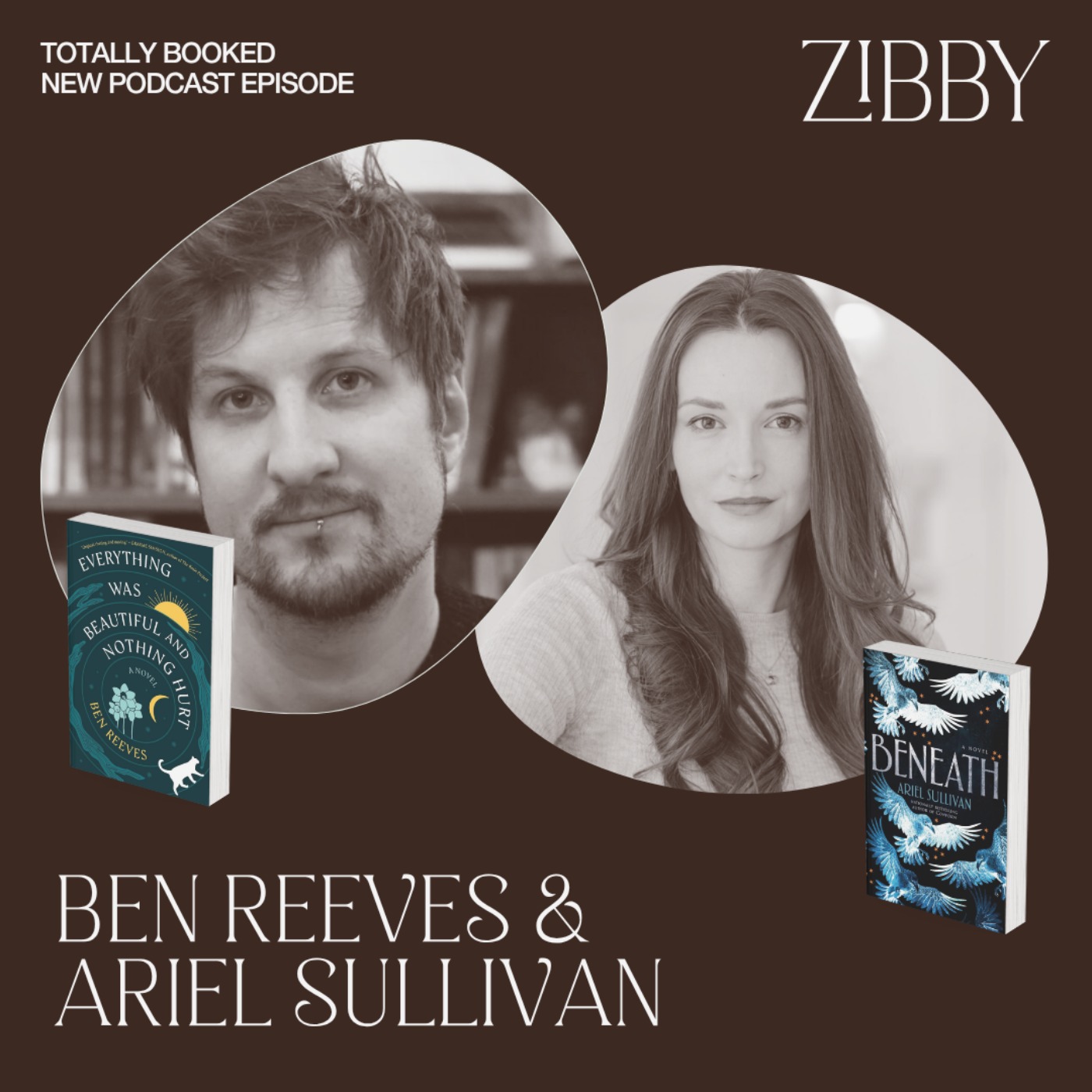
Totally Booked with Zibby
Ben Reeves, EVERYTHING WAS BEAUTIFUL AND NOTHING HURT + Ariel Sullivan, BENEATH
00:32:10
Loading summary
Transcript70 lines
- [00:01]
Michaels Advertiser
Is your kid's birthday coming up? Don't stress the prep the party Shop at Michael's is your one stop shop for everything from Bluey to Rodeo. Transform your space into a birthday wonderland with dream worthy tablescapes and decor starting at $0.99 plus get free helium inflation on select balloon styles. Whether you're crafting a one of a kind bash or grabbing the essentials, Michaels has everything to make their big day legendary. Shop now and order ahead for delivery or in store pickup. Michaels Everything to celebrate Anything with no
- [00:33]
Capital One Advertiser
fees or minimums on checking accounts, it's no wonder the Capital One bank guy is so passionate about banking with Capital One. If he were here, he wouldn't just tell you about no fees or minimums. He'd also talk about how most Capital One cafes are open seven days a week to assist with your banking needs. Yep, even on weekends it's pretty much all he talks about in a good way. What's in your wallet? Terms apply. See capitalone.com bank capital1na member FDIC
- [01:03]
Michaels Advertiser
a
- [01:04]
Ariel Sullivan
better help ad hold on one second, I just need to. What if you had a room where no one interrupts? No notifications, no expectations, just space to talk with. Better help Therapy happens in a space that's yours. Visit betterhelp.com randompodcast for 10% off your first month of online therapy.
- [01:38]
Zibby Owens
Welcome to Totally Booked. I'm Zibby Owens. I've interviewed more than 2,000 authors on this show and learned endless amounts about storytelling, reinvention and life itself. Because when you talk about books, you're really talking about life. So get ready to hear from today's best authors. The best selling and the not yet discovered. Come find your next great read and the story behind it. Enjoy. Today is a joint episode with two authors who look at the world a little bit differently in their fiction. Ben Reeves is the author of Everything Was Beautiful and Nothing Hurt and the joint episode is with Ariel Sullivan Beneath a Novel, the Rebirth series. Book 1 Ben Reeves lives in Peterborough, UK with his wife and two children. An early draft of Everything Was Beautiful and Nothing Hurt won the international 2024 Beth Novel Award. His book is told from the point of view of death and it is original and haunting and somehow makes us all want to live better lives in the moment. And then Ariel Sullivan is the author of Conform and Now Beneath, which are both published by Thousand Voices, which is Jenna Bush Hager's imprint. She lives in Connecticut with her husband, two sons and two French bulldogs and grew up a military brat, moving every two years where she could often observe life from the outskirts. Ariel's book is about a different type of universe. Think the Giver by Lois Lowry. Both Ben and Ariel, who I have to introduce by the way, think about life in different ways and through the use of literary devices, challenge the way we think about the world. So taken together, I think this is a really thought provoking episode and I hope you will agree. Welcome, Ben, thanks so much for coming on Totally Booked to talk about Everything Was Beautiful and Nothing Hurt, a novel.
- [03:32]
Ben Reeves
Thank you.
- [03:33]
Ariel Sullivan
Congratulations.
- [03:34]
Ben Reeves
Oh, thank you very much. Thanks for having me.
- [03:36]
Zibby Owens
Okay. Your book is very original. I've never read anything quite like it. Talk to me about what the book is about and tell listeners what they can expect to find.
- [03:46]
Ben Reeves
Sure. Okay. So Everything Was Beautiful and Nothing Hurt is a story about life told by death. So in this story, death is the main character, but he's not like your classic grim reaper type with a herd and a scythe and that sort of thing. He's just a normal guy in many ways. He wears jeans and a T shirt. He lives in an apartment building. And his job is very much to spend time with people in the last few minutes, hours, even days of life. And he never judges them or anything like that. He just listens to them, listens, listens to their stories, comforts them and just, just offers a listener at the end of their life to ease them into whatever follows afterlife. And so we see a lot of this throughout the book. We see Travis. I didn't even mention his name's Travis. He spends a lot of time with these people. And we see that throughout the book. And you can imagine being death could be quite a lonely job because you know that every single person you ever meet, you're going to watch them die. So you, you might be very careful about how you would spend. Spend time with people and whether you even would spend time with people outside of your job. But the problem is, one day Travis meets a little family that lives across the hall. A young single mother called Dahlia, who is a midwife, and her two daughters, one of whom is 8 years old and she, she's called Layla. And against his better judgment, Travis finds himself drawn to this little family. He kind of falls in love with them and they fall in love with him. And he can't help but just spend time with this little family because he just adores them. Which, you know, is maybe not the best decision for Travis because he knows where they don't know his death, but he knows where this is eventually going to, to end. So we sort of see this. This relationship unfold, and there's the question of, you know, what's going to happen, because he's generally quite a solitary person, and he has decided to pursue this little family. So it's very much a story about life. It, you know, a story about death could be depressing, but I think it's very much about life. It's about cherishing people you love, cherishing your time, and deciding how you're going to spend your time and what you're going to decide to pay attention to. And I think it's ultimately quite an uplifting book, even though it is very sad. In fact, that's one of the things people have said to me. They've said it is really sad. But ultimately, I felt like I was invigorated, which is beautiful. That's exactly what I wanted.
- [06:21]
Zibby Owens
Oh, that's wonderful. The only other time I have met a main character of Death is in the book Thief. Did you read that?
- [06:27]
Ben Reeves
Yeah, I did, yeah. Yeah. I love the book Thief. I was conscious of that while writing this because I didn't want to just copy. But I do think my Death is very different from. From the one in the book Thief. He plays much more of a. He is the protagonist. I know that the book Thief is sort of narrated by Death, but he's not so much a protagonist in that book, I wouldn't say. But in this one, he really. He really is. And he's called Travis. And I wanted him to just. Just be a normal, normal guy, because I thought that'd be really interesting. One sort of thing people have said is that they maybe wanted to see a bit more of how his kind of how he works, you know, how is he Death? How does he do these things? But I never really wanted to get too deeply into that. I wanted to just keep it very down to earth. And he is just Death, but his job is basically just offer people comfort at the end.
- [07:18]
Zibby Owens
Wow. Well, you really do a beautiful job of including both the scenes where Travis goes in and we see sort of entering different people's lives, all at the very end, which is kind of heartbreaking, honestly, one after the next. But we, as you said, the family is like a comic, comic, heartbreaking family scene. You open with Dahlia's car breaking down and just trying to deal with the baby and getting her daughter Layla, to school. And I was like, oh, my gosh, I feel like I am in that car in the pouring rain. And I get it. And then you have us really get to know them. I Love Dahlia's sentiments about being midwife and the pain of watching one bad birth. And that was so vivid. Wait, tell me a little bit more about that. And even Dahlia and her character and crafting that other family and poor Laila's heartbreak when Travis bails on her birthday party. My gosh.
- [08:14]
Ben Reeves
Of course. So, yeah, that is funny you mentioned that scene with the car breaking down. Cause that was very much taken from real life. I remember being a little kid and we didn't have much money and my mum would take us to school, and it felt like it was every week, but it probably couldn't have been every week, but it felt like the car would break down every week and things would get really stressful. She was a single mum as well, so a lot of that was sort of taken from real life. And I wanted to really show that she was struggling. You know, Dahlia is struggling in the book in a similar way. You know, maybe she's a bit lonely in a similar way to how Travis is lonely. But she's obviously got her two daughters, whereas Travis's has got no one at the beginning of the book. And I wanted their relationship to unfold very organically throughout the book. You almost, on a first read, possibly don't even know where it's going that these characters are going to become so important. I wanted it to almost sneak up on the reader because it does sneak up on Travis. He's not actively pursuing this. They just sort of. You know, I think the first thing, as you said, is Leila puts a little birthday invitation through his door, and it says, come to my eighth birthday party. And he actually turns it down because he's. He can't. He's like, so. He would love to, but he just knows that he can't get involved with people's lives because it just. It's just not gonna end well. But he does. He just can't help himself but to pursue it.
- [09:35]
Zibby Owens
When Travis comes into people's lives, you have it so that people kind of understand right away who he is. And sometimes they're like, okay, let me just, like, finish what I'm doing. And are you sure now's the right time? And how do people know? And where did you even get this whole idea? Do you feel like when death sort of knocks on our doors, so to speak, we all are aware? Like, where is this coming from?
- [09:58]
Ben Reeves
Yeah, that's interesting. So I guess I tried to really put myself in the shoes of death, whatever that might be. You know, death could mean a lot of different things to a lot of different people. But for me, I wanted to really explore, okay, what if he was just a normal guy? What would that involve? And obviously I've mentioned the loneliness. But I think also, just like, there's a scene in the book where he goes to a guy's house and the guy is a bit of a shut in. You know, he lives in this kind of squalor. There's mess everywhere, there's a lot of rubbish, and this guy's just sort of a bit of a recluse. And Travis turns up with a mop and bucket and he's wearing full overalls and he's almost tailored himself to what that person needs in those last moments. And there's a few different examples of that. You know, in one scene he's a lawyer doing, you know, the last will and testament of someone and things like that. And he, you know, he really tries to tailor each person's experience at the end. And it was a lot of fun, actually. I don't know if I remember exactly how I came up with that. It was more of an organic thing. You know, I'd write a scene, I'd be like, oh, he could be dressed as kind of a cleaner to help this guy. And it sort of evolved and it was a lot of fun. I actually really, really miss writing from the point of view of Travis because it was such a beautiful thing to, you know, I really felt like I knew these people that were dying and it was. It was a really fun space to be in and hopefully fun to read, even though it's obviously very sad.
- [11:23]
Zibby Owens
Well, the hoarder scene in particular at the end, after Travis helps him clean up and people are like, oh, what a shame. He was finally getting Zach together because he had successfully cleaned one of the rooms and he's like, ah, just decided, then it was too late.
- [11:38]
Ben Reeves
Yeah. And I think that is the nature of death in a way. You know, you're never quite done. You're not going to be. There's no full stop. It's sort of just an ellipsis. And you might be in the middle of something. You might be thinking about what you're going to be doing tomorrow, but death is going to sneak up on you. And I guess that's one thing I really wanted to highlight in this book, is that I don't think we actually think about death very much. Well, I do, but I think people generally don't think about death very much day to day. But I really think that having an awareness of death and Thinking, you know, actually one day there is going to be a day where I die and I don't know how or who I'm going to be with or anything like that, but it's definitely going to happen. We know that for a fact. And I think thinking about those things can actually make your day to day life really precious because you know, you could easily be scared of it. But I think thinking about it a bit more, you just get, you get more of an awareness for it. And little things that would normally annoy you like traffic or anything like that don't annoy you quite so much when you think to yourself actually one day that this all going to end and even maybe being stuck in traffic could be a beautiful thing. If you really think about the fact that this is going to end one day, you know, you can just sit there in the traffic and look around and realize you are alive right now. And that's one thing I really wanted to try and get across in this one.
- [13:01]
Zibby Owens
Why do you think about death so much?
- [13:04]
Ben Reeves
I've always thought about it. I don't know why. I started thinking about it a lot more when I had kids. So my kids are now 12 and seem to be 9. And seeing them grow up every year was almost a kind of death because they would just become a completely different person as they're growing naturally. And you know, your kid at 8 years old, you kind of look back at when they were four and it's a different person. And I almost kind of grieved it because I miss that little 4 year old. I love the 8 year old just as much, if not more, but I still kind of miss that four year old bumbling around and messing up their words and you know, drawing silly little pictures and stuff. I do. I really missed it. So I was really aware of time passing and that naturally gets you thinking about death. I even, I was kind of obsessed with it. Like have you ever seen the. There's a chart of your life in weeks. So it's like 52 squares is obviously a week, a year and then there's like 80 rows and it looks like nothing. It's nothing. These squares, there's like hardly anything. And you think wow. And I'm like halfway through that and it was scary. So I suppose what I was really trying to do with this book was to kind of help myself to think about that and be aware of it and just heal a bit of that and think that actually maybe it's okay to, to think about these things.
- [14:33]
Zibby Owens
So with only a limited Number of squares to do what you will with. Why write this book about it? Why become a writer?
- [14:42]
Ben Reeves
I've always wanted to write, and I think this particular book, I really think literature is something very special. And that's not a. You know, it's not an original opinion at all, but I really do think it is. I think that words and stories and characters can really change lives for the better. And I'd love to try and put my little piece in there amongst all the beautiful books that people write. I'd always be a writer, even if no one ever read the books. But it is nice to have people reading it now. It sort of becomes something else then, as you probably know. Like, there's one thing of sitting in your room writing this thing, and now and then it's out in the world and people have their opinion on it, and lots of people like it, and some people don't like it, and all of it's good, whether they like it or not. And, yeah, just, you know, I'd like to write some more. And it's just fun to be a part of the canon, just part of. Part of the world of literature. I really enjoy that.
- [15:44]
Zibby Owens
So when you look at your own life, knowing that death could come knocking at any moment, if it were to come today, for example, God forbid, knock wood, what would you be in the middle of? What would be left undone?
- [15:59]
Ben Reeves
Well, I'd like to obviously see my kids grow up. That's huge. There's a lot of unfinished business there. Yeah, I'd love to see every single thing that they're going to do in their lives. I'd be about 3/4 away through the next book. I'd sometimes think that when a book's going well, I actually think to myself, I hope I don't die because I want to finish this. This is actually going okay. In fact, that's how I know that a book is going well. I think I'd probably be in the middle of probably pottering around making something. I like making all sorts of things. Paintings and puppets and random stuff. I'd probably have my hands in something. And if he asked me or she asked me or it asked me, are you ready? I'd probably say, no, I'm not ready. I'd like to think that when I die, I will be ready. Which is a tough thing because you could say, well, you're never ready. But I think you. I think you can be ready. I think you can achieve a peace. You know, you'd still like to see what happens afterwards, but you can achieve a kind of peace where you're just happy with things how they went and you're ready to go. That'd be nice. I've always said I'd like to, like to die with my eyes closed, which might seem strange, but it just means that, yeah, I've accepted it at the end. If you die with your eyes open, I feel like maybe you weren't ready to go. I know it's a bit strange.
- [17:23]
Zibby Owens
Wow. Interesting. Well, lots to think about. Lots of ways to reconceptualize life. I feel like anyone who is very familiar with loss and death and all of that is so eager to, like, shake everybody else by the shoulders and be like, no, no, no, you don't get it. Like, this is, you know, this is happening. And I feel like this is. This is your way of shaking our shoulders and making sure we all appreciate the goodness of life.
- [17:51]
Ben Reeves
Yeah. And the great thing about doing that through a book is you can stop reading at any point if it gets too much or. I never, ever with this book wanted to just shove it in people's faces or just make you feel miserable for the sake of it. There are sad things in the book. A lot of sad things in the book, naturally, have been about death, but I never, ever wanted it to feel gratuitous or, you know, I'm just trying to make you feel sad for the sake of it. But, yeah, being in a book form, you can just. If it gets too much, you can just stop reading.
- [18:24]
Zibby Owens
I agree. I totally agree. Well, Ben, thank you so much for coming on and thank you for the thought provoking read.
- [18:31]
Ben Reeves
Thank you so much and thanks for having me and for everything that you do with books. It's. It's really good. Thank you.
- [18:36]
Zibby Owens
Thanks. Thank you. Today's episode is sponsored by quints. The best summer pieces are the ones you end up wearing on repeat. Comfortable, versatile, and somehow right for almost every occasion. That's why I love Quince. They make elevated essentials using premium materials like European linen, organic cotton and washable silk without the traditional retail markup. Quince's 100% European linen pants, dresses and tops are the pieces you'll reach for all summer long. They're lightweight, effortless to style and start at just $32. Their denim is soft and comfy, and their organic cotton sweaters are perfect for layering when evenings cool down. Personally, I love my white tank dress that I wear all the time. I've actually pinned it to my Instagram as one of my top three posts. I also love my new jean jacket from there and I'm just so grateful to Quince every single day. Especially because quince is priced 50 to 80% less than similar brands. And it's not just apparel. Quint also offers elevated essentials for your home, from bedding to bath and all the kitchen essentials and furniture so make your summer wardrobe feel easier. Go to quince.com zibby for free shipping on your order and 365 day returns. Now available in Canada too. That's Quince Q U I n c e.com Zibbee Z I b-b y for free shipping and 365 day returns. Quince.com Zivvy Enjoy.
- [20:11]
Michaels Advertiser
Is your kid's birthday coming up? Don't stress the prep. The party Shop at Michael's is your one stop shop for everything from Bluey to Rodeo. Transform your space into a birthday wonderland with dream worthy tablescapes and decor starting at $0.99 plus get free helium inflation on select balloon styles. Whether you're crafting a one of a kind bash or grabbing the essentials, Michaels has everything to make their big day legendary. Shop now and order ahead for delivery or in store pickup. Michaels everything to celebrate anything with no
- [20:44]
Capital One Advertiser
fees or minimums on checking accounts, it's no wonder the Capital One bank guy is so passionate about banking with Capital One. If he were here, he wouldn't just tell you about no fees or minimums. He'd also talk about how most Capital One cafes are open seven days a week to assist with your banking needs. Yep, even on weekends it's pretty much all he talks about. In a good way. What's in your wallet? Terms apply. See capital1.com Bank Capital One NA Member FDIC.
- [21:16]
Zibby Owens
Welcome Ariel, thank you so much for coming to discuss Beneath your second novel. Congratulations.
- [21:22]
Ariel Sullivan
Oh thank you so much for having me.
- [21:24]
Zibby Owens
Oh it's my pleasure. I know. Last we were on a panel at the Miami Book Fair and now here we are. So here we are. Another book already. It's amazing and not not a slim book either. Like you wrote a full on big other novel and it's really good and I don't even know how you did that.
- [21:41]
Ariel Sullivan
Well I like to like caveat because I was like oh you're so prolific. I wrote this back in 2223 and I wrote conform in 2020 and 2021 so it allowed me to kind of have this quick turnaround between the two of publishing but been fun.
- [21:56]
Zibby Owens
Wow. Well Beneath is quite different and it's full of soul and rage and sadness and feeling trapped. I mean, there's a lot in here, physically. You have your characters below ground after a nuclear fallout, basically. Well, why don't you tell. I was gonna say where they've developed this whole new system underground, but it's a new way of sort of coping with life and anger and all of it. Tell me. Maybe do a better job of expl, you know, the plot, but that's how I felt reading.
- [22:30]
Ariel Sullivan
That's great. I always feel like the plot, you can give any synopsis you want, but it's really what the reader takes away and feels like. That's the true story of the book. This story took place. You know, I'm taking you back in time to six years right after this war that everybody in Conform talks about. And the whole society, like you mentioned, is living underground after a nuclear fallout. And life is now about surviving, not living. And so there's different sectors, and each sector has a role for a very, like, basic idea of what society could look like. And you follow the main character, Emily, or, sorry, Emmaline's from Conform. You follow the main character, Sasha, who has been. She's lost everything. She was working in the ward. She's known as Death's Angel. She wants to join her family. She doesn't really have a reason to live anymore. And she's pulled into a secret surface mission with a group from the Force, and she doesn't want to be a part of it, but all of humanity is relying on it, and she has to fight not only the elements and the dwindling supplies, but also herself, really, through this mission. And she finds a lot at the end of it.
- [23:39]
Zibby Owens
Wow. Well, where is all the darkness of this coming?
- [23:42]
Ariel Sullivan
Yeah. So I started. I've wanted to write since I was 8. I moved a lot growing up. And so, as sad as it sounds, reading was really my consistent friend throughout life. I was able to take the books with me as I assimilated into new schools and try to find new friend groups. But I constantly knew that every hello had a goodbye. So it made me an outsider very early on because it hurt worse to dive into those groups and then to be ripped out. I thought about writing. Off and on. I've dabbled. I didn't actually get out of my own way and pursue this until I was struggling with postpartum depression in 2020. It just. It hit a new rock bottom for me and it was horrible. But the beauty in it, having now been on the other side, is it really allowed me to silence my inner crit. I allowed myself to just sit with the imposter syndrome and thought, you know, I already feel horrible. I already feel this low, so why not? Why not try? What could I possibly lose? And that was really a breath of fresh air for me and liberating. So I started writing Conform. And I feel like Conform has that feeling of when you're clawing yourself out of a dark place, there's a lot of hope and you're grasping at every light you can find. I think once you heal, the hard part about it is you kind of sit and reflect and you think you're going to be better. But there's all this stuff that you typically dig up when you're healing that you then have to sit with and decide what you're going to do with it. And beneath is really everything that I had dug up that went. I went to traditional therapy. I'm a firm believer in saying that out loud so people who think they're struggling can go. It's, I think, the biggest form of self love you can give yourself is to go talk to someone if you need it. And in that, I found all of these little crooks and crannies I had, you know, decorated and made seem nice within myself to keep going. And so it was really kind of a coming to myself and meeting myself exactly where I was. And there was a lot of darkness and a lot of pain and a lot of struggle that I had just kept running from my whole life. And so beneath is me sitting in it with my main character and figuring out, you know, what do we do? Because I'd say to people, no one character is me, but I like to give my characters parts of myself. And so I gave Emeline this part of myself I didn't quite understand, but I wanted to. I gave Sasha everything I hated about myself. And I kind of. It allowed me to get, you know, into places that can feel scary in real life. And I think that's the beauty of writing, is you can explore thoughts, ideas, feelings that you may be too afraid to say out loud in real life.
- [26:17]
Zibby Owens
I mean, one of the things that Sasha says is that when she thinks about her family and what she has become since she saw them and what she's had to do to survive, that she has all this shame sort of around it. Right. How do you square the shame of survival and what you have to do with who you believe you are?
- [26:38]
Ariel Sullivan
Yeah, I think shame might be the worst human emotion we have. I think it destroys more dreams. It silences more confessions than it should. And so giving her that, you know, she has to really come to the idea of survivor's guilt is a real thing. Or you can apply that to so many different areas. It doesn't have to be as doomsday as her situation is, but we carry a lot of shame in our life, and I think that's where it comes out as judgment, whether on ourselves or on others. And so you have this person, she's so guarded, and I think that's part of her. The beauty of her is finding those moments, because when she finally does let down her guard, she's not as horrible as she seems. She's not as angry as she seems. Levi has a line in there which I think encompasses who she is in general. He's like, it was never anger, it was always grief. And when you can sit with that, you can move on. And so she really has to tackle so many different levels of survival and try to make new relationships. And so it's a heavy book, but it's. Was by far the most cathartic I've ever written.
- [27:42]
Zibby Owens
She also says, you know, sort of repeatedly, this. This refrain that she's never going to forgive her dad for leaving.
- [27:50]
Ariel Sullivan
Yeah, I think when I. On a personal level, when I went to therapy and I looked at things, there were boundaries that I had drawn in my life that I didn't even realize were hurting me as much as I. They were. And there were things I had said that I thought that I had to. Almost, like you draw this line, you think you have to live and die on it. It's a hill that you think that you have now. It's become a part of who you are. And so this has become a part of who she is, and she carries that. And again, it touches on that shame and that guilt. And I think there's a big part that wishes she hadn't said it. And it's funny that we as humans typically can forgive others pretty easily. And like, forgiving yourself is always a very sticky, very hard situation when you're stuck with a situation where you feel helpless or that you have no control and you tend to spew that pain onto others. And the beautiful thing about the people who love you the most is they typically accept it, but you have to live with it later. And she has no way to fix this emotion with her father. She has now said it, he's gone, and there's no resolution. And I think that is by far one of the most painful things humans go through. When you realize that you can forgive yourself all you want, but you're never going to have that conversation with that person to say, I'm sorry, or to, you know, hold the hand out and say, I shouldn't have. And so I think that weight of that alters every decision because she's so afraid of doing it again.
- [29:11]
Zibby Owens
What do we do with all of this fury that is on the page?
- [29:15]
Ariel Sullivan
Yeah, I think I wanted. I think one of the emotions women aren't permitted to feel or encourage to feel from a very young age, the same way as our counterparts are, is anger and rage. I think there's a narrative around, like, be a good girl, or like, you know, you don't yell. There's all this stress. And I wanted to write a woman who was just angry because I think a lot of women feel it. I think that's why people, like, drift to her, is because she gives life to the parts of ourselves that we may try to be. Like, you know, tamper that down. That's not appropriate. And she just rages. And I think that's also a beauty of her being 23, because at 23, we can't. Although she is, like, mentally more mature than that based on her circumstances. But she is able to just rage at everything that she doesn't like, that she doesn't want. And I wanted a home for that because I think feminine rage is a very powerful thing. And I wanted women to come here and feel like, okay, maybe, you know, you. You relate to so many different characters for so many different things. Not a lot of people see a woman who's just rageful and she's trying her best. And I think rage is easier to hold than the grief. And so as the way she expresses it, instead of sitting there and realizing there's no changing this outcome, I am alone. I have lost everybody. Instead of sitting with that, it's so much easier to just say, I hate everything and I hate everyone, because she really hates what she's been given in life. But what do you do once you say that out loud? Like, where do you go? And so I think this is. This is her shield. This is her. Her way of saying that what I truly hate I can't give life to, or it might bury me. So I'm just going to hate everything. And hopefully that can allow me to keep going, because she does keep going, despite odds where she. If she gave up, everybody would understand.
- [31:05]
Zibby Owens
So do you consider this fantasy? Is this fantasy, or is it just a dystopian?
- [31:11]
Ariel Sullivan
I wouldn't really say this is fantasy. I don't have any magic. I have no magic coming because people keep being like, when's it going to happen? I'm like, it's. It's not. There's no magic in either timeline. I would consider this dystopian. There's definitely a romance angle to it. And I love love in general. There's a reason we all keep writing love stories. It's the most basic human need ever to be loved and to be seen. But it's much more than just the romantic scenes like within this, this book. I love the romance. I am obsessed with the soul, like platonic mates that you have within this book of people who just keep showing up. Because I think friendship, love, that needs to be talked about more. It's not the flowers and the gifts and the anniversaries. It's just another person seeing you, expecting nothing and showing up over and over again.
- [32:00]
Zibby Owens
Have you read the Giver by Lynn? There is something tonally very similar in this book in a way of just.
- [32:08]
Ariel Sullivan
I am flattered.
- [32:12]
Zibby Owens
Right. It's like this, this other construct of a world where I mean, you have to learn to live and you know that there was something else and yet you can't access it and only certain people can access it. And I don't know, I feel like it was definitely.
- [32:27]
Ariel Sullivan
I mean, I'm thrilled that was in there. I love so many of what I consider the classics of dystopian. I joke all the time that Conform is like a 1984 and a brave New World sandwich put together where you have one group that's like so indulgent and one group that's completely deprived. So yeah, I would love. I love being considered among a book like the Giver because it is beautiful. And the way that they do have to search for what wasn't and what is the human need to survive and make sense of it is the story we're all looking for. So I'm thrilled.
- [33:00]
Zibby Owens
This notion also of a death angel, essentially like a death doula of sorts. Tell me about that. Have you like, where is that coming from? And do you find comfort? Do you think there is really comfort in the last moments? And how impactful can we be when someone is dying?
- [33:18]
Ariel Sullivan
I mean, so it's, it's a deep thought of mine and something that I sit with a lot of the idea of. And I've got a 10 year old who has been obsessed with what happens, what comes next. We have a lot of philosophical talks at pickup or at six in the morning over coffee when I'm not quite prepared to answer them. But I Think that's another thing that humans are drawn to is what comes next. You know, like there's this idea of here we are, and everybody has different beliefs and religions. And in this book, you kind of lose. You see humanity losing that. And I was like, well, what would step in it if you didn't have your faith to cling to, if you didn't have all these things? And for Sasha, there really is that moment where she has lost everybody. And she makes a very single one line comment. And I made it that way because hopefully the reader just sees it. But she says that when her mother passes, she died utterly alone. And for the rest of the book, I think we do that. When something happens, much like her father, you spend the rest of your life trying to fix something that will never fix that moment. And so she's kind of chasing this and she's looking for ways to help, and everybody is separated. And I think that it shows. For as angry as she is, she has such a huge heart. Because the idea of anyone being alone in that moment, and I think more than it helping, I just think it's a vulnerable moment. And I would like to think that whenever my time comes, I'm certainly not alone because that sounds incredibly scary. And so she just sits in a space that I think a lot of people would want to run from. And that is a power of her and her strength. And it's kind of more of the quiet side of her strength rather than this loud, vengeful, angry side. But, yeah, I've always been intrigued with that moment. They say your life flashes before your eyes. What is it people are looking for and who stands in it?
- [35:06]
Zibby Owens
If you were to speak to someone grieving today who maybe is feeling the rage, but maybe is in another phase, how would you. What would you say?
- [35:16]
Ariel Sullivan
Oh, gosh, mostly that there's. There's no right way to handle it, I think. And I don't think grief has to be the loss of a human either. I think that we don't give ourselves enough credit. That loss of a relationship, a loss of a way of life, a loss of a path that you thought you were on, all of that is a huge upheaval to who you are and the plans you had. So I think that it's to give yourself enough grace to feel wherever you're at, however it is that it manifests. Amazing.
- [35:44]
Zibby Owens
Well, Ariel, thank you for this really deep, dark, and yet somehow bizarrely satisfying, you know, like emotional maelstrom.
- [35:57]
Ariel Sullivan
I'm rewrite my bio and it's going to say that. Okay, go ahead.
- [36:01]
Zibby Owens
Anyway, thank you. Thank you for this.
- [36:04]
Ariel Sullivan
Yes, thank you so much for having me.
- [36:05]
Zibby Owens
It's my pleasure. Thank you for listening to Totally Booked with Zibby formerly Moms don't have Time to Read Books. If you loved the show, tell a friend, leave a review, follow me on on Instagram, ibeowens and spread the word. Thanks so much. Oh, and buy the books.
- [36:29]
Capital One Advertiser
With no fees or minimums on checking accounts, it's no wonder the Capital One bank guy is so passionate about banking with Capital One. If he were here, he wouldn't just tell you about no fees or minimums. He'd also talk about how most Capital One cash are open seven days a week to assist with your banking needs. Yep, even on weekends it's pretty much all he talks about. In a good way. What's in your wallet? Terms apply. See capital1.combank Capital1NA Member FDIC
- [36:59]
Michaels Advertiser
is your kid's birthday coming up? Don't stress the prep the party Shop at Michaels is your one stop shop for everything from Bluey to rodeo. Transform your space into a birthday wonderland with dreamworthy tablescapes and decor starting at $0.99 plus get free helium inflation on select balloon styles. Whether you're crafting a one of a kind bash or grabbing the essentials, Michaels has everything to make their big day legendary. Shop now and order ahead for delivery or in store pickup. Michaels Everything to celebrate anything?
- [37:32]
Ariel Sullivan
This year's girls trip to Telluride was the best.
- [37:35]
Michaels Advertiser
We one upped ourselves with my Sapphire
- [37:37]
Ariel Sullivan
Preferred card and with 5 times points
- [37:39]
Michaels Advertiser
on Chase Travel plus 3 times points
- [37:40]
Ariel Sullivan
on vacation homes with top brands, we got this incredible cabin. It was a mansion and with three times the points on dining. We ordered a Wagyu steak dinner and
- [37:49]
Zibby Owens
that pistachio gelato was too good. So where should we go next year? I've got ideas.
- [37:54]
Michaels Advertiser
Chase Sapphire Preferred the card that's preferred for a reason.
- [37:57]
Ariel Sullivan
Cards issued by JP Morgan, Chase bank and a member FDIC subject to credit approval terms apply.