← Totally Booked with Zibby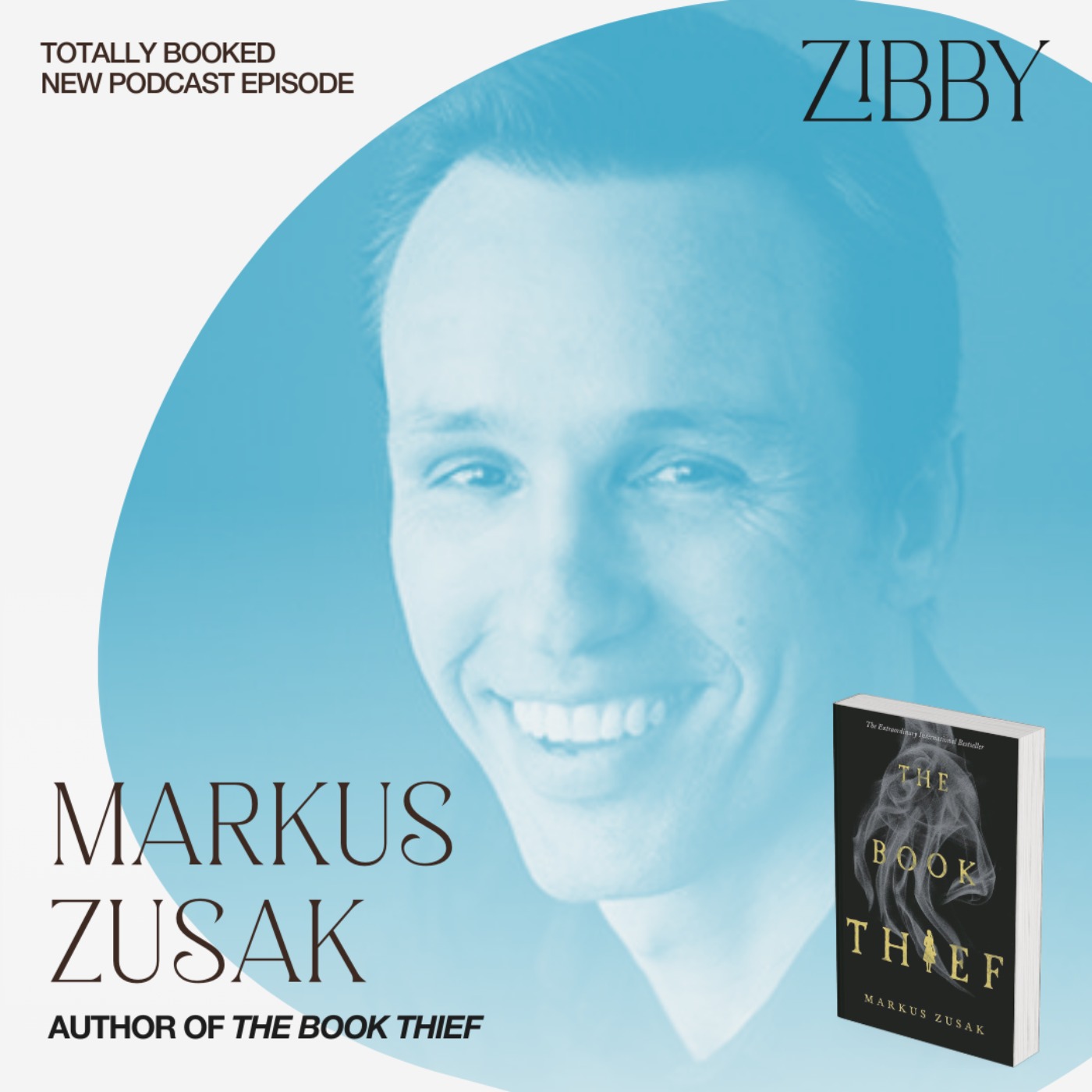
Totally Booked with Zibby
Best Writing Advice I’ve Ever Received from The Book Thief’s Markus Zusak
00:31:21
Loading summary
Transcript51 lines
- [00:00]
A
Hey, this is Paige Desorbo from Giggly Squad and today I want to talk to you about Boost Mobile. Quick question. Why are we letting our phone bills bully us? Here's a money tip. Stop paying a carrier tax when you bring your own phone and switch to boost mobile's $25 unlimited forever plan. You can unlock up to $600 in savings. That's real life money, not money trapped in a pricey phone bill. $600 is a trip, a shopping spree, or paying something off. Your money belongs in your life. You get unlimited data, talk and text for $25 a month with no contracts and no minimum line requirement. Your phone head to boostmobile.com to switch today and unlock the savings you actually deserve. After 30 gigabytes, customers may experience lower speeds. Customers pay $25 per month while active on Boost Mobile Unlimited Plan savings claim based on a January 2026 Boost Mobile survey comparing average annual payments of major carrier customers to 12 months on the Boost Mobile Unlimited plan. Visit boostmobile.com for details.
- [00:54]
B
Hi, this is Hannah Burner from Giggly Squad. Have you ever put on a bra that makes you feel like a goddess? Prepare to be obsessed with the Dream Angels Wicked Bra from Victor, Iconic brand behind the world's most comfortable bras. And I only wear the most comfortable bras. The bestseller features an innovative sling for perfect lift without padding and the fit is chef's kiss. Awaken your inner goddess with new colors and super femme lace embroidery. Find out why this bra has thousands of five star reviews and counting. Shop it in stores and online@victoria secret.com
- [01:31]
C
Today's episode is sponsored by Nutrafol. Do you ever worry about your hair? I was convinced that my hair had gotten a little bit thinner once I reached a certain age, which had me in a complete panic. So I started taking Nutrafol and it helped. Nutrafol is the number one dermatologist recommended hair growth supplement and the number one hair growth supplement brand personally used by dermatologists. Nutrafol offers multiple formulas for men and women tailored to different life styles, stages like postpartum or menopause, and lifestyle factors for all of you who abide by a plant based diet, I do not. Adding Nutrafol to your daily routine is easy. You just order online, no prescription needed. You get automated deliveries and free shipping to keep you on track. Plus, with a Nutrafol subscription you can save 20% and get added perks to support your hair health journey. You just take four supplements a day and you'll be on your way. Let your hair be one less thing to worry about. See visibly thicker, stronger, faster Growing hair in three to six months with Nutrafol. And for a limited time, Nutrafol is offering our listeners $10 off your first month subscription and free shipping when you visit nutrafol.com and enter promo code ZIBBY. That's nutrafol.com spelled N U T R A F O L Promo code Zibby. Go do it. Hi, this is Zibby Owens and you're listening to Totally Booked with Zibby, formerly Moms don't have Time to Read Books? In my daily show, I interview today's latest best selling buzziest or underrated authors and story creators whose work I think is worth your time. As a bookstore owner, publisher, author, and obviously podcaster, I get a comprehensive look at everything that's coming out and spend my time curating the best books so you don't have to stay in the know, get insider insights and connect with guests like I do every single day. For more information, go to zibbemedia.com and follow me on Instagram ibeowens this was one of my favorite episodes ever. I interviewed Markus Zusak about the Book Thief. If you didn't read the Book Thief when it came out 20 years ago, you have to read the new 20th anniversary edition, which by the way, is beautiful. But the Book Thief, which I'm having trouble pronouncing, has been one of my favorites for a long time and it was such a thrill to talk to Markus Zusak about it. He is the internationally bestselling author of six novels, including the Book Thief, I Am the messenger and Bridge of Clay. His most recent book is Three Wild Dogs and the A Memoir. He lives in Sydney, Australia with his wife and children and just listen to all he had to say about writing and so much else. Welcome Marcus, thank you so much for coming on Totally Booked to talk about the Book thief. Congratulations on 20 years of this amazing, amazing book. Oh my gosh.
- [04:33]
D
Thanks Divi. Thanks for having me too. It's great to be talking to you and yeah, so I've been looking forward to it. And it's funny, you were just holding up the book and it's just such a glorious addition. It's amazing. So I feel so lucky. I feel honestly like it's my older, more successful brother or sister and it just drags me around behind it. So. And part of that's talking to you today. So thank you. We can't take anything for granted in this job, as you know and so, you know, this is just one of those real privileges. So I'm really great. I'm really happy to be here.
- [05:12]
C
Oh, my gosh. I can't even believe you're saying that. I read the book Thief like everybody else in the world probably 20 years ago when it came out. And I was like, I think I remember everything about it. And then I opened it up again and I was like, I actually don't remember everything about it, so I'm going to reread it. So I just finished rereading it and have, like, you know, my hand on my heart. Like, I just. It's. It's such a gut punch of a powerful, emotional. I mean, it's amazing. It's amazing. Like, and it's. You just can't put it down. It's. I mean, I know this is nothing new, but just to reread it at a different stage in my life, as I'm sure many people are doing with this gorgeous new edition and with everything going on in the world today, it is just incredibly powerful. Wow.
- [05:57]
D
Oh, thank you. It's so interesting. I mean, I'm just relieved it held up after that amount of time because what's happening now is whenever I do a talk, I don't really do readings, I suppose, but when there's been an event here in the last couple, whenever I come now, I'm getting people who read it when they were in middle school or high school and now they're in there, they're adults and they're saying, oh, no. And some of them will say, I read it then, I read it through high school, I read it in college and now. And I just think it never ceases to amaze me that people have read it more than once. And like, I'll often say to people, when I know how I feel about my favorite books and books I've loved, and when someone says, I loved your book or it's my favorite book, you just think, God, I can't. I can't believe that's happening. And I never take that for granted. The best is that they often say, oh, I'm sorry. They usually apologise, oh, you must hear this all the time. And I say, I could never get tired of someone saying they love my book because that's what you get into it for. And when you. A lot of people think, the Book Thief is my first book and it was my fifth book, and so I've had the experience of putting books out that no one reads. And then to have a book that has sort of captured people's imagination, what you dream about. And of course, I still have regrets. There are certain moments in the book or lines in the book where I feel like I went too far with something or I just, like, that was a bit too whimsical or a bit too much, but I think it's okay. I think ultimately, after 20 years, you gotta forgive yourself a bit.
- [07:42]
C
Wait, I'm curious. What parts you regret?
- [07:45]
D
I think it's often just where Death as a narrator, like, I wanted his language to be, you know, just slightly odd in that way. And I. And I like that kind of language anyway, where you'll. You'll write an image or a metaphor or something that doesn't quite make sense literally, but it has a feel to it or it's got a meaning somewhere buried under it that you kind of know or you count on the reader to bring to it, you know, that they'll. They'll get it, you know, and so I just have a few, like, just a few little moments. I think there was one where Death, for whatever reason, in one of his little, like, asides, I think there's one where he says something like, I don't know, and I don't know why it felt right at the time. Where he says. It was like where he would normally say, here is a small fact or here is a small note or here's this or that. And there's one that says, book Thief Productions presents.
- [08:43]
C
Oh, yes.
- [08:44]
D
Sort of like Monty Pythonish sort of. It was a kind of strange thing. And at the time, it felt right. And when I look back, I'd go, that. That'd be the one. That'd be the first thing I'd change.
- [08:55]
C
So interesting.
- [08:56]
D
But as you know, when you're getting, you know, your book's just gone to print, and then. Then you just go, oh, my God, you're so worried. And then. Then you think, oh, but this is what makes me write the next book. You. You write the next book to atone for the sins of the last one. And. And I guess. And I don't know if I'm repeating myself now, but I still think it was better to go too far with the Book Thief than not far enough. And I think, you know, the book, it was. I think that there are. There are a lot of gambles in that book. And I. But I wanted to just keep going for it and going for it and going for it. And that's why it has that spirit, I think. And I think, you know, whilst there, I. I Think there could be those few missteps throughout the book or quite a few missteps. The book a spirit because of those things. And, and so, and you know, one of my, my heroes is Neil Young and, and sometimes you'll hear a track, you'll hear a song and you go, oh, there's actually a mistake in that. Or there's a bit where his voice faltered and you know that they probably sat there and listened to it and they went, do you want to fix that? And he probably said, I mean, I don't know, I don't want to assume, but you feel like probably he's. There's an idea of no, that had a feel to it and we would destroy that if we went in and tried to fix it. So I think I'm happy to let the book thief sit and try to improve the book thief by writing another book maybe. But yeah, we'll see that for whatever reason it's just got some lucky magic dust sprinkled over it. And again, that's why I get to talk to you and why I get to come in Philadelphia at the moment and had a really great night with readers here and you just see what it means to people and you just think, yeah, I've got the best job in the world.
- [10:51]
C
Wow. Well, the fact that you regret a couple lines in here, which I just read and didn't think twice about that section, like I was like, oh, that's funny, you have to kind of go for it. And your whole thing in this book is words and how they're not always right and you know, words themselves become like a character. And so the fact that now you look back and you know, like all of us self critical people have thoughts about it, that just like goes along with the territory.
- [11:23]
D
Yeah. And I think writers, artists or people, you know, songwriters that, you know it, at the end of the day we're all like quite vulnerable and, and that's a really good thing. And, and that, and that takes you into the creative areas where, where you're unsure and, and, and that's the best place to be, even though it's the trickiest. I often talk about writing as, and I'm always trying to structure things. You know, where people say, oh, are you a gardener or a plant, whatever the term is, or that
- [11:58]
C
A pantser or a plotter.
- [12:00]
D
That's right. Listen to me, are you a gardener? And yeah, and I'm definitely a plotter, but you can't control everything. And so I think I've been guilty in the past of just like, I'll write chapters, headings over and over again all the way through towards the end of the book. Because ultimately I just always want to feel close to the book. Just want to feel like it's near me and I don't have to run 10 miles to get there and then beat the door down to climb back inside the book. But a lot of the time you do feel like you're walking down a dark corridor, like trying to find a light switch. No matter how much, how hard you've been trying to, to, to be, to feel safe in it, you're never quite safe. And that's, that's when, that's. That's how you discover your surprises. So the, the best part of any day is I, I describe it a little bit like climbing a mountain, but there's the promise of a sand pit at the top where you just get to play and. But you don't get the sand pit without going up the mountain. Yeah, climbing the mountain first. And, and that's what I love when I'm reading where you. I'll read a sentence in someone's book and go. I mean. And the example that I often use is from the Amazing Adventures of Cavalier and Clay, where Michael Chabon, I never know how to pronounce the last name is. He says, he describes a big ocean liner coming into New York harbour. And he says the Rotterdam looked like a mountain wearing a dinner jacket. Or the Rotterdam came into New York harbour like a mountain wearing a dinner jacket. And that's where I just go, oh, that's a writer who's, who's in the sand pit playing with words. But then again, there are writers like him and others that I feel like, you know, they just wake up in the morning, you know, scratch, you know, yawn, scratch their back, and then get to work and come up with amazing, amazing things. But, you know, I would never want to again presume how other people come up with these, these beautiful lines. I think it might just be a mystery to all of us.
- [14:11]
C
But you do it yourself. So, you know, it's that whatever magic you said is sprinkled. I mean, it happens. But I think that you show us. And also in all of this bonus material in the new edition, which is beautiful, you show us how you're painstakingly, you know, crossing out chapter headings and trying again. And how first you had the book thief told from Liesel's perspective and you had to try to get into it. And telling it from the perspective of death came later. And once you make a decision like that, you know, the creativity knows no bounds because you could do anything.
- [14:45]
A
Right.
- [14:46]
C
Who else has tried that?
- [14:48]
D
Yeah, that was a real freedom. And then there were little breakthroughs within that. Even the first Death I used was not quite right. It was only when I came back to thinking and I'd written 200 pages with death, and he was a bit too mean spirited, let's say, and sarcastic and sardonic and sadistic. He was really enjoying his work too much. And it was when it was, when I went, I thought of the last line of the book and then I went, oh, that's it. Death's actually kind of vulnerable as I am writing it. And Death's trying to work us out and how the same thing can be so beautiful and so relentlessly terrible and terrifying. And put those two things together and you have all of us, you have humans, you have everything that's happening now. You have everything. Yeah, you have how you want to treat your neighbor and how we deal with everything that's going on. And I wanted Death to feel like that too. And so this idea that Death was the missing piece of us, that was when the book really came to life. That was the first breakthrough. And the other one, actually, that came second. But the first one was when I started using those little asides where it says, here is a small fact, and here is, let me tell you a little bit about this. And, and. And that lent itself to the playfulness of the book and that playfulness of language. And. And also I. When that happened, I was. I still can see exactly. Sitting at my desk at home in this little townhouse we were living in. And I was going through the work. And that's, I guess, the thing where I say to people, you don't always have to be working really hard. You don't have like. I think it's easy for us writers to sort of, you know, we like to act like, oh, it's so hard. So. And it is. It is hard. And it is a struggle. And it is, but it's also a joy. And one of my favorite quotes is from a great Australian playwright named David Williamson. And there was a movie made based on one of his plays, and there were. And I love DVDs. Cause you get the extras. And in the extras there was an interview with him and he said, he said, ah, these writers who say every word is like a drop of blood on the page. And then he smiles. And he just said, oh, it's bullshit. He said, you do it because you love it. And so I love that it's not easy as well. And it's those moments where the light does suddenly shine down. And so when I first had that, I was going through the work and just being near it, not working hard, just tinkering with it really. And I heard that sentence, here is a small fact, you are going to die in the first page. And my instinct immediately when I heard that in my head, I saw it in the middle of the page. And so I just went, do it. Just do it the same way. You'll hear in a way, not that I would compare, but. And I remember hearing an Olympic swimmer who had won the backstroke in maybe 1992 or something. He said he gave a talk at my university because he was one of the students there. And he said I had a whole race plan where I was going to accelerate with 20 meters to go or whatever. And he said, but I came off the wall at the 50 meter mark and I heard a voice in my head and it said, go now. And he said, and I did, and I won. And so it's just that thing of, you have these instincts that you don't know where they come from. They're in your subconscious, but they're alive at the time of writing. And when they come to you, it's really important to recognize them, even if they sound like a mistake. And it's, again, a pretty ludicrous. Yeah, ludicrously great comparison. You know, just when I think it's in a documentary from ages ago or an interview ages ago, where John Lennon was talking about, oh no, Paul McCartney was talking about John Lennon. And he said, when he was writing hey Jude and one of the lines in it, I think it's about the, you know, with the world on your shoulder or something. And he, he said as he was just playing an early draft, and he, and he said to John, John who? He said, oh, yeah, I'll fix that bit, don't worry. And, and apparent. And he said, and, and John said to me, no, you won't. You know, you won't, because that's the best thing in the whole song. And I, I love that story of just sort of recognizing nonsense a little bit. And I think that's such a big part of being a writer that it's a kind of, you know, recognizing nonsense and then taking that nonsense seriously to make it work and, and, and make, make a book kind of stand out in its own peculiar way as well. And, and, and then so it's kind of. You're always balancing, you know, I, I guess joy discipline, Joy discipline all the time to, to make a book work. I mean, I don't know. I mean, we could talk in such a jumble all day about how creativity comes to us and how we kind of try to corral it into something that makes sense to the world.
- [20:12]
C
Today's episode has been sponsored by Quince. These days I am all about quality over quantity, especially in my closet. If it's not well made and versatile, I am just not wearing it and it's not worth it to me. That's why I love Quince. The fabrics feel elevated, the cuts are thoughtful, and the pricing actually makes sense. Quince makes high quality wardrobe staples using premium fabrics like 100% European linen, 100% silk and organic cotton poplin. Lightweight cotton cashmere sweater is perfect for the changing seasons and can't miss seasonal Colors and prints for spring are amazing. They're versatile, well made pieces that make getting dressed simple. Quinn's clothing is consistently rated 4.5 to 5 stars by thousands of customers. I personally would rank them five stars. That's just me. Real people wearing these pieces every day are actually loving them and they work with safe, ethical factories and cut out the middleman. So it's just quality clothing. As I have told you all and post on Instagram, my winter coat is Quince, so I think about Quince every single day. It is my go to and has gotten me through this dreary, terrible winter that we've all had and that I can't wait to be over right now. Go to quince.com zibby for free shipping and 365 day returns. That's a full year to wear it and love it. And you will now available in Canada too. Don't keep settling for clothes that don't last. Go to q U-I-N c e.com zibby for free shipping and 365 day returns. Quince.com.
- [21:47]
E
With no fees or minimums on checking accounts, it's no wonder the Capital One bank guy is so passionate about banking. With Capital One. If he were here, he wouldn't just tell you about no fees or minimums. He'd also talk about how most Capital One cafes are open seven days a week to assist with your banking needs. Yep, even on weekends, it's pretty much all he talks about in a good way. What's in your wallet? Terms apply. See capitalone.com bank capital1na member FDIC.
- [22:18]
F
Hi. Who here loves when their nails are perfectly done?
- [22:22]
D
Me.
- [22:22]
F
I'm Sarah Gibson. Tuttle and I started Olive in June because, let's be real, we all deserve to have gorgeous nails. But who wants to spend a fortune or half their day at the salon? And that's why I created the Mani system. So you can have that salon perfect manicure right at home. And guess what? But the best part, each mani only costs $2. Yup, you heard me. $2. No more. 30, 40, $50. Salon trips that eat up your day. Now, you can paint your nails whenever you want, wherever you want. And trust me, you're going to be obsessed with your nails. And everyone is going to ask you, where did you get your nails done? And here's a little something extra. Head over to oliveandjune.com and get 20% off your first mani system with code perfectmanny20@oliveandjeune.com perfectmanny20. That's code perfectmanny20 for 20% off in June.com perfectmanny20. You're all set for a nail glow up. Let's get those nails looking fabulous, shall we?
- [23:20]
C
Well, you show us also in the book, how creativity is fostered in Liesl, right from learning the Alphabet to the end, where she's actually writing and sharing her feelings. And it's like tracking the writer's experience as well. How do you make sense of the insanity of the world? You have to start with one letter at a time, and then you have to write one page at a time. And who knows, it just might be the thing that saves you.
- [23:44]
D
Yeah. And I mean, and to me, it's what you're talking about, that we're talking about one line at a time is to me. And that's why novels, for so many reasons. It's funny, every time you say something or ask something, like six answers come up because it's such a good thought or question. And I just, to me, it's what made me want to be a writer in the first place was reading books as a teenager. And it was just black words on white paper. But I was seeing it in color. And to me, and I was believing it. And, you know, just. I love that idea. And that's what I say to people, too, who want to be writers, is I say, like, yeah, it's really hard and it's really complicated. But if you really distill it to a really simple thing, what you're trying to do is make something up that someone else can believe. And so the idea is like, that's the question I'm always asking myself, because you're building Something as you're writing it, and you're sort of going, okay, does it have enough words in it? But not too many words so that the reader is sitting there and that. And that magic act has happened where they know it's not. I'm almost sounding like George Costanza. Whereas.
- [24:57]
C
No, you're not.
- [24:58]
D
His advice to Jerry, you know, remember, it's not a lie if you believe it.
- [25:04]
C
Kramer's about to come into our zooms, Slam, open the door.
- [25:08]
D
Exactly. And it's just that that thing of I'm convincing myself the whole time. I'm convincing myself that this is true, what I'm writing. And in a way, it is true because you're making something up to arrive at a truth. And that's what all novels are doing. And I remember going to the legendary Robert McKee, you know, story seminars about film writing. Just in. In the sense of just going there to hear someone talk about story. And. And I remember in the book he signed. It was right. He. He signed it as right in every book that he's ever signed. I think it's like, write the truth. And. And every now and again, a friend of mine, that's. What will you sign? If he finishes a book and he'll. He'll write. Write the truth to me in it. And just as a flashback to that. And you're always wanting to learn. You're always wanting to figure out how to do it. And I think that's why it's such an interesting job as well. Especially you sit down. You're trying not to write the same book every time either. And so 20 years later, I think, why as well, you can look back and sort of forgive yourself because you're always trying to improve. And otherwise, if you're always looking back going, geez, I was really good back then, it's probably time to stop. So I think there's definitely still plenty of room for improvement and just trying to get it right and as we try to do with everything in our lives. So, yes, I'm just lucky I get to do it through writing and through the novel, which I still think is so essential because it's one of the best ways to open up the world and to imagine what life is like for somebody else, as we all know.
- [27:00]
C
Yeah, the capacity for empathy. When you show us the real truth of the characters and who they are and their wants and feelings and it's just. It's incredible. I mean, I feel like I literally know these people in your book and, you know, tears in my eyes at Some of the outcomes, it's just incredible. These people don't even exist. And I'm sitting here, like, in 2026, you know, crying over the loss of a fictional character like that. That's sort of messed up when you think about it.
- [27:30]
D
You know, it's so funny that you say that, because people often will say, oh, who do you write your book? Like, who is this book for? Or. Or they say. And a really. An example of, like, the book after the book Thief that I wrote, Bridge of Clay took 13 years. And I was really struggling with that book, and it was a really hard one. And it. But so I started reading through it with, like, I read through it with my wife, so she'd have a manuscript, I'd have one. And I did that with some of my most trusted colleagues as well. And there was one point where I was really emotional at the end reading that book. And one of my friends who was with me, and she said at that moment, she said, oh, who is that? Who is that in your real life, like, that you're sort of crying for there? Like, who is that that you're emotional about? And I said, oh, no, it's nobody in my real life. Like, it's for them. It's for them that I'm getting emotional. And so I've realized that especially that's when a book really starts to work, is when you start to let go of the audience. And you're writing the book not for any real person. You're writing it for the people in the book because they're real to me. They matter to me. And that belief or that suspension of belief that you will see. And that's the thing. It's not a suspension of belief. It's almost like a special form of belief, almost like a supersonic belief when you're inside a novel, believing everything in it. And to me, that's one of the great joys of being alive. And as is, you know, this. The idea of even some of the. The most. There are beautiful tragedies in your life, whether it's losing your dog or losing a parent or losing, you know, something where you just. Where you feel something really intensely. And that's actually some of the. There's also some of the best moments of your life. Because what are we alive for if not to feel, feel things with that intensity? And to feel and to get that. And that's what I'm trying to reach in a novel, is for. For people to feel things, to feel extra human when they're reading and And I think maybe that is. People say, how does. How has this book survived 20 years? And maybe it is that kind of intensity and that kind. The intensity that's in that book. That. And I, you know, and if I think it was a bit. I wrote a bit too emotionally, I don't regret that. That's one of the things I don't regret, is that it is a really emotional book. And I'm an emotional writer. And, you know, and I'm happy to take criticisms for that as well, because you've just. You got to do what you have to do.
- [30:13]
C
I'm not throwing out any criticism, so worry about that here. You know, it's funny because I've been walking around carrying this book, which is obviously quite large, beautiful, but, you know, it's 500 plus pages. And my kids who are my younger kids are middle schoolers, and, you know, they're in the graphic novel generation and all of that. And, you know, they're like, how can you read a book that long? Like, how are you doing that? And, you know, isn't it so much work? And you have to use your. You have to think about all. I'm like, what are you talking about? This is the greatest gift. Like, I know I'm walking around the apartment right now, but I'm really in a totally different world. Like, how do you sell that to kids and this new generation who's, like, not even reading as much.
- [30:55]
D
I think it's a couple of things where sometimes we despair when we're at Town Hall Station in Sydney and there are these long benches that are diagonally against the wall so you can sort of just lean back against them, and you just see everybody on their phone, and you just go, oh, my God, what? Like, what has become of us? And. And then every now and again, you see somebody reading a book, but at the same time, I think it's. It's kind of okay. You know, I mean, they're reading graphic. You talk about your kids reading graphic novels and, and. And that's. I still think there's still. At the end of the day, story comes before books, you know, at the end. Or story comes before movies. So, like, movies, graphic novels, books, like, they're all part of that. They're all different things except that they all have story in them. And so I really like that idea. And I think. So I look at it a little bit more of that. Fiction's important. Making things up is important. Imagination is important. And so when. And it's quite funny, I went from that Experience of being at the station or anytime I go on public transport and hardly anyone's reading a book. Some people are reading a Kindle, some people are reading on their phone. I realise that. But we went into one of the great big and great bookshops in Sydney and I went in with my daughter and she's 19, and I jokingly said to her, and there were people everywhere. They're in the manga section, they're in the novel section, they're in the nonfiction and all of that. And it's a huge bookshop called. Called. I call. I think, called Kinokania. And we're in there and I said. I turned to my daughter and I said. I said, see all of this? Like, just like. Like going to the Strand or Powell's or something in Portland and, like, it's a whole block of books. I just said, see all that? That's the competition. And. Yeah, and. But it's the best competition in the world. Like, it's great in the. In the sense of. You still think, oh, this still matters to people, it still matters. And we all still want to be taken away. We all still want to be part of something within us. And I think we understand that. And a lot of people, people coming back to vinyl records, people coming back to books, people wanting to read Moby Dick, people wanting to read. And I still often think, as well, that we underestimate young people at our peril. You know, they're so much more capable of things. And, you know, my son, who's 15 or 16, I worry a bit about him because he used to be such a big reader and he, you know, and less so at the moment, but then you sort of go, but because of him, I'd never read the Hobbit. And that's probably his favorite book. And he's the only person in our family who's read Lord of the Rings. And so I think in a lot of cases, we underestimate each other all the time, too. And so, I mean. And last night here in Philly, there was a dad with his daughter and just seeing her clutching her copy of the Book Thief, I mean, the fact that it's the Book Thief is obviously extra special for me. But if I saw that on a train or on a bus or out on the street, I'd be just equally happy, no matter what the book was. Cause then that's where you just think it's still happening and still going to happen. And it's just. Yeah. So we just need to have that luck sometimes to have someone in our life to say, all right, just do the work here, and it will reward you.
- [34:36]
C
Markus, I want to talk to you for, like, the rest of the workday or forever. I feel like I've just taken a master class in writing or something. And to get to talk to you after rereading this book has been just such a joy. And I love that. One of the main takeaways is just to listen to the voice in your head, even if it doesn't make total sense. And you think you're doubting yourself, and you're like, I have to do it. And that's what makes great art. When you take a stand and you try something different and you add to the conversation, and that's exactly what you did. And it's why it will always hold up, because still, nobody has done exactly the same thing since. It's very, very cool. So, anyway, it's been an honor.
- [35:17]
D
Oh, no, Gibby, thank you. And it's also. It's just that idea. I just say to people. It's not that the book thief is better than anyone else's book or worse. It's sort of the one thing that I kind of finally understood at some point was that I realized that it's a book that only I could have written. And that's what I wish for people who are just starting to write or want to be writers is, yeah, write the book that only you can write and you just can't. You don't get to decide what sort of success you have or what happens beyond that. But that is what you do get to decide and to be close to it without being too hard on yourself sometimes, too. You don't have to be killing yourself the whole time. We sometimes forget that we're supposed to love this job. And we do love it. And it goes both ways. Talking to you has reminded me of that. And so, yeah, it's been a joy for me having a chat as well. And just to. I love one of my favorite words, and I'm sure you have as well have all these favorite words, but probably, number one, my favorite word is camaraderie. And to feel that through books, through stories, and the love of that talking to you. It's been. It's been special. So thank you. Thanks so much for having me.
- [36:33]
C
Thank you. Thanks for coming on. All right. Have fun on your tour.
- [36:37]
D
Thanks, Divi. Okay. Yeah. Have a great day over there.
- [36:41]
C
You, too. Sorry I didn't meet you in person. Next time.
- [36:43]
D
No, same one day. One day.
- [36:45]
C
One day.
- [36:46]
D
All right. All the best with everything you're doing. You're doing a thousand things, you know. I admire it so much. I'm so. I feel so lazy in comparison.
- [36:56]
C
If you are not lazy, thank you.
- [36:59]
D
And all the best for your family too.
- [37:01]
C
Thanks to you as well. All right.
- [37:03]
D
Bye bye bye.
- [37:05]
C
Thank you for listening to Totally Booked with Zibby, formerly Moms don't have time to read books. If you loved the show, tell a friend, leave a review. Follow me on Instagram Iby Owens and Spread the word. Thanks so much. Oh, and buy the books.
- [37:27]
E
With no fees or minimums on checking accounts, it's no wonder the Capital One bank guy is so passionate about banking with Capital One. If he were here, he wouldn't just tell you about no fees or minimums. He'd also talk about how most Capital One cafes are open seven days a week to assist with your banking needs. Yep, even on weekends it's pretty much all he talks about. In a good way. What's in your wallet? IT terms apply. See capital1.com Bank Capital One NA Member FDIC
- [37:57]
B
hi, this is Hannah Burner from Giggly Squad. Have you ever put on a bra that makes you feel like a goddess? Prepare to be obsessed with the Dream Angels Wicked bra from Victoria's Secret, the iconic brand behind the world's most comfortable bras. And I only wear the most comfortable bras. The bestseller features an innovative sling for perfect lift without padding and the fit is chef's kit. Awaken your inner goddess with new colors and super femme lace embroidery. Find out why this bra has thousands of five star reviews and counting. Shop it in stores and online@victoria's secret.com
- [38:32]
C
Hey y', all, it's Kelly Clarkson with Wayfair, where delivery and setup are as easy as a few taps on your phone. You're relaxing in an old hammock. Scrolling Wayfair's app when you spot it. A brand new patio set next. Next thing you know, Wayfair delivers it right to your patio and sets it up. Oh, you need a new grill too. All right, Wayfair's got you covered. With Wayfair's room of choice delivery and fast expert setup on qualifying orders, life gets a little easier. Visit Wayfair.com or the Wayfair app. Wayfair Every style, every home.