← Totally Booked with Zibby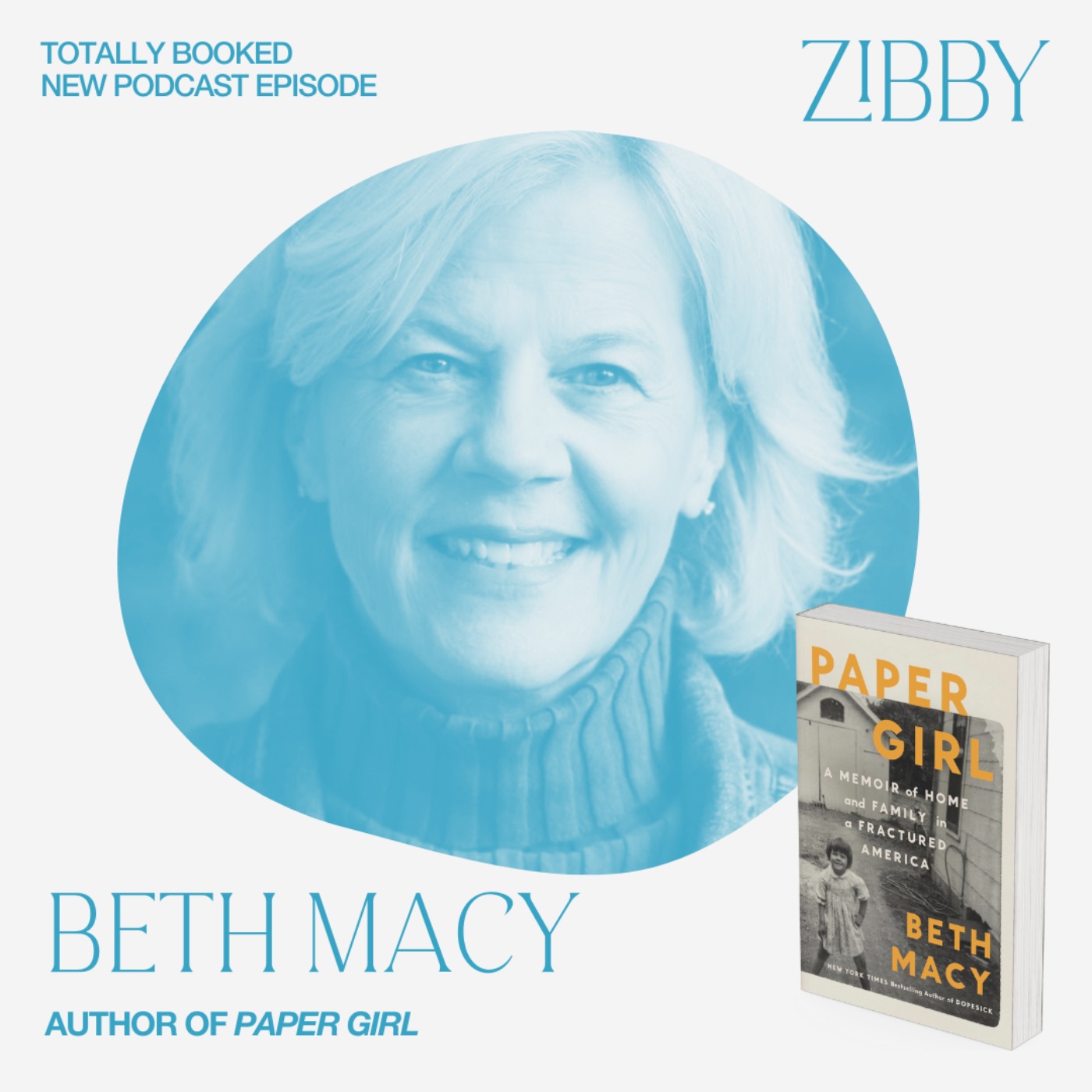
Totally Booked with Zibby
Beth Macy, PAPER GIRL: A Memoir of Home and Family in a Fractured America
00:22:36
Loading summary
Transcript44 lines
- [00:00]
A
Did I talk too much? Can I just let it go? I wish I would stop thinking so much.
- [00:06]
B
Take a breath.
- [00:07]
C
You're not alone. Counseling helps you sort through the noise with qualified professionals. Get matched with a therapist online based.
- [00:14]
B
On your unique needs and get help.
- [00:16]
C
With everyday struggles like anxiety or managing tough emotions.
- [00:20]
B
Visit betterhelp.com randompodcast for 10% off your first month of online therapy and let life feel better.
- [00:29]
D
Old school Security kicks in after the break in Too late simplisafe rewinds the story Stopping crime before it starts Active Guard Outdoor Protection uses AI powered cameras to detect intruders, alert live monitoring agents and can deter intruders before they reach your door. It's proactive protection plus a 60 day money back guarantee and no contracts. To get 50% off your new system, go to SimpliSafe.com podcast that's SimpliSafe.com podcast. There's no safe like SimpliSafe.
- [01:01]
C
Today's episode has been sponsored by Paramount Pictures Corporation. Okay you guys, there is a movie coming out called Regretting youg based on Colleen Hoover's best selling book of the same name. I know many of you already know about this because I sent out an invitation to a screening when they so kindly gave us some tickets and over 250 of you asked for tickets even though at the time we only had 20. We got a lot more. Anyway, I know you're all already excited about this movie, but for those of you who don't know, let me tell you more about it. This is about Morgan Grant, played by Allison Williams and her daughter Clara, played by McKenna Grace, as they explore what's left behind after a devastating accident, reveals a shocking betrayal and forces them to confront family secrets, redefine love and rediscover each other. Regretting you as a story of growth, resilience and self discovery in the aftermath of tragedy. Also starring Dave Franco and Mason Thames. With Scott Eastwood and Willa Fitzgerald. In theaters October 24th. Are you excited? I am so excited. Director Josh Boone is the one who did the Fault in Our Stars, obviously Colleen Hoover. It's about mother, daughter, relationships, heartbreak, grief, first love, second chances. It's the perfect film to share with your best friend, mom, grandmother, high school niece. It's filled with love and tears and laughter. Everyone will love it. Honestly, I cannot wait to see this movie. Come with us to one of the screenings. Watch it along. Send me notes on Instagram. I want to hear what you say. We'll all watch it together.
- [02:35]
B
Check it out.
- [02:35]
C
Regretting you.
- [02:39]
B
Hi, this is Zibby Owens and you're listening to Totally Booked with Zibby, formerly Moms don't have Time to Read Books. In my daily show, I interview today's latest best selling, buzziest or underrated authors and story creators whose work I think is worth your time. As a bookstore owner, publisher, author, and obviously podcaster, I get a comprehensive look at everything that's coming out and spend my time curating the best books so you don't have to stay in the know, get insider insights and connect with guests like I do every single day. For more information, go to zibbymedia.com and follow me on Instagram. Iby Owens Beth Macy is the author of Paper Girl, A Memoir of Home and Family in a Fractured America. Beth has won more than two dozen national journalism awards, including a Nieman Fellowship for Journalism at Harvard University, a Guggenheim Fellowship, and a Los Angeles Times Book Prize for Dopesick, which was made into a Peabody Award winning series for Hulu. Three of her books have been New York Times bestsellers. She lives in Roanoke, Virginia. Welcome Beth. Thank you so much for coming on Totally Booked to talk about Paper, a memoir of hope and family in a fractured America. Congratulations.
- [03:54]
A
Thank you so much, Libby. It's an honor to be here.
- [03:56]
B
Oh my gosh. Can you tell listeners what your book is about?
- [04:00]
A
Sure. This book grew out of a op ed piece I wrote for the New York Times in 2020. It was right after the election and I couldn't figure out what was happening to my hometown and my family. My mother was dying. She was in her 90s and had had a stroke. And it happened to be this Saturday after the 2020 election and she was literally breathing her last breaths. And the hospice nurse said they called it for Biden. And my sister, who was evangelical and had long been but had never really been political before, said, you wait, it's fraudulent. He won't win and mom is. And I just thought, what the heck has happened? And so I grew up in this small town in western Ohio. It was a place that had been a celebrated stop on the Underground Railroad. And when I had noticed, as I was going home more as my mom was sick, I live in Virginia. There were now Confederate flags dotting the streets and my relatives and I no longer agreed on basic facts, even the weather and what was causing all the storms. So I thought after I wrote this piece in the Times and I got so much feedback in like one hour, I thought, wow, I'm not the only one going through this. And it turns out 20% of Americans are Estranged from family members because of politics. And we weren't exactly estranged, but I decided to like. For two years, I went home, I spent about a week every month embedding in my hometown, which I hadn't lived in in 40 years, to find out what was left of the people I loved, who raised me, and what, if anything, was left of my family.
- [05:52]
B
Wow. Well, the way you tell the story, sort of weaving in your own experiences and the experiences of people in the town paints a portrait of a town not just affected by politics, but just so much strife, so much bad luck, so many, such a lack of opportunity for the people there and sort of the whole class of people who can no longer find their way. And you show us example after example of this and you show a lot about your own family and your parents and all of that, which let us see who you are as a person, which I also found fascinating. And then to see you digging deep into what happened since I found absolutely, absolutely fascinating and eye opening about what, as you said, is happening in so many places.
- [06:41]
A
So, yeah, I mean, I think we all live in bubbles no matter what our bubble is. Pretty much everybody. And so it was, quite frankly, even though I was always in touch with my relatives, it was a shock. It was a shock to me that graduation rates had plummeted in 10 years, that the number of kids in foster care had tripled. That. I mean, these are things you would never know. If you're driving through this town, which just some won some best hometown in Ohio award, it looks like Mayberry on. On the surface, and it's got some cool stuff going on, some new stuff, but, you know, a block or two from the town square, you see the underbelly playing out. And. And the thing that, I mean, the reason why I was so just. It felt so urgent to me is because I had once delivered that paper. I had written for papers. I wrote for papers for almost 30 years, including the paper I delivered when I was little. That was one of my college internship jobs. It's still there, but it's owned by a hedge fund. And there are basically one and a half reporters. They can't even cover city council anymore. All the stuff I was finding out on my research, I was telling other people and they didn't really know. I mean, some did. The teachers know what's going on. The guy who runs the youth center knows what's going. What's going on. The police chief. The police chief who has watched emergency mental health calls increase by a factor of nine in 40 years. He knows what's going on. But as someone near the end of the book says, in Urbana, it's the country club set and the ghetto set. And with the demise of the middle class, these two sets have no idea what's going on with each other. So the whole exercise was really eye opening, and there were some hopeful parts, but it was also a mixed bag.
- [08:41]
B
And so after this whole experience and having written the book, what next? What can we do before more towns keep sliding? I mean, your example of the paper, I know you mentioned that, you know, the paper became like a couple Instagram posts and some press releases, and, like, where is the news? How do people record that? People were watching hours of, you know, what was going on in Russia and developing all these fake ideas, and yet they don't know what's going on a mile from their house. Like, how do we combat things like that? What do we do about it?
- [09:15]
A
Yeah, well, I think we all have to get active in our own communities right now. I have gotten much more politically active since. Even since I finished writing this. I think we have to make alliances, and we need to start running better people for office. We need to support what little local media we have. We need to. I mean, one of the reasons we need better people running things is because we need to shore up our public education system, which is so under attack these days with all these private school vouchers. And, you know, in my hometown, as the middle class thinned out, the middle class families who were still there, they were witnessing the decline. They start sending their kid to an adjacent school district, and then that money goes with them to this more rural farmland. Not so distress. And when that money goes with them, it just hurts everybody that's left behind. And the same with the private school. The real shocker was just every single factory owner I talked to was hard up for employees and were having just terrible attendance issues. And in the school, there was a parallel glut of people showing up as well. So, you know, we know that attendance went down during COVID but in the places least likely to really go out there and do some of the programs, I write about the good examples happening elsewhere. I mean, they just don't have the funding for stuff like that. So it's the same kids not showing up for school are the kids of parents who aren't showing up for work. And, I mean, I was shocked when that Springfield story with the Haitian migrants blew up. I mean, that's like 20 minutes away from Urbana. And I had been interviewing my ex boyfriend, who I hadn't seen in 38 years. And I knew he had gone from being extremely liberal Bernie Sanders to holy cow, a total 180 deep into QAnon and other conspiracies and watching four to seven hours of Russian propaganda every day. And then suddenly I felt like I was in the Forrest Gump movie. He emerges as the leader of the anti Haitian pushback in Springfield. And there he is on PBS NewsHour and all these other shows. And at that point, he had gotten so almost verbally abusive to me that I cut off contact. And a cop buddy of mine said, you need to carry a gun. I'm not totally anti gun. I think there need to be serious restrictions, but I've never owned one. And it was just like, wow, are we really at this verge of being in a civil war? It really shook me.
- [12:10]
B
Wow, my gosh. How do you then go back to your life in Virginia after a week? Like, how are you doing that emotionally? The shifting back and forth, uncovering and writing and trying to process something that shifted quietly and in a deadly way right under our noses. Right.
- [12:30]
A
I know. Well, one of the things I've done, and I'll admit I started doing it just as a way to promote that the book was coming out. I've also always had author newsletters I did with Dopesick and Going Back to Factory man, where I would tell people it was mostly about my stuff. And then I was like the local media here, where I live in a moderate sized city, it's about an urban area of about 300,000. We also have experienced the same decline in news. So I started using my substack as a way to tell stories of how the new Trump administration's cuts and policy choices were impacting real people on the ground here. And that's been, I mean, it's really fun. I'm basically a paper girl at heart. I'm still a reporter. And so, like today I just published a substack about it was an update on this woman I had written about in 2014 who, when she got out of prison, heroin, drug related crime, she was able to be hired by this nail salon that was only hiring felons as a way to help them reenter the workforce. And when I first wrote about her, like, she was a huge success, but in her goal of goals, she always wanted to be a nurse. And the salon owner took her under her wing. One of her patrons happened to be the hospital CEO and encouraged her to go into nursing. And she did with a lot of help. And I was on vacation recently, and I got an all caps email from her 11 years later and on her third try at nursing school. All caps. I am a nurse, exclamation point. So, like, and you see when, I mean, that's what I think we fall for the easy story. But I know I learned best through a person. And when you can see a woman like Ebony, that's her name, like, she had to rely on Medicaid, she had to rely on snap. Both of those programs are being cut. She's now a. She works for a rehab, a drug rehab center, and she helps people in recovery, some of whom are also coming out of jail. But that rehab is paid for because of the Medicaid expansion in Virginia and which was a huge portal for particularly men who we know die at a rate of two to three times more than women with substance use disorders die. That was really. Medicaid has become their lifeline. And a lot of people who are more experts than I believe that these Medicaid cuts are really going to set us back 30 years on the opioid crisis. So I'm just learning how to connect the dots because I'm not, not to disparage my media colleagues. There just aren't enough of them. And so that's been really eye opening and interesting, too. And then I've also just become like, I go to these rallies every Monday at noon. A bunch of people meet outside of our no show congressman's office, asking for a town hall. We've done it every single week since President's Day in February. Asking for a town hall and trying to get him to explain his support from these policies.
- [15:56]
B
Today's episode is sponsored by Wayfair. As you all know, I am obsessed with Wayfair. In fact, I have a new office chair waiting in my lobby for me today to make my bag feel even better. But let's talk about how the holidays are coming up, because there's so much that we all can do to get ready to host for all the assorted holidays from Halloween to Thanksgiving. And actually, I just picked up a few of these pumpkin white soup terrines because it always. They look so pretty when I go to people's houses. And I was, I was like, I think I want some of those. So with Wayfair, as the holidays approach, you can get whatever you need to personalize your house like I just did, whether it's your dining table or a guest room or anything. It's so convenient that Wayfair has literally everything your home needs this season. There is such a huge selection of home items in every style and it really makes it easy to find exactly what's right for you. There's something for every style and every home, no matter your budget. Wayfair makes it easy to tackle your home goals this holiday season with endless inspiration for every space and budget. And there's free and easy delivery even on the big stuff. No more huge delivery fees for furniture. Get big stuff like sofas, dining tables, beds, desks and more. Shift free. Which I have done and it's amazing. So just find all your seasonal must haves from furniture and holiday decor to appliances and cookware all in one convenient place. Find hosting just got a lot easier. Get organized, refreshed and ready for the holidays. For way less head to Wayfair.com right now to shop all things home. That's W A Y F A I R.com Wayfair Every style, every home. And now I have to go get my office chair. Today's episode is sponsored by Live It Up. If you are someone who wants real results and not watered down promises, it's time to upgrade your greens game. Most powders out there either taste like grass or overcharge you for hype. Live It Up Super Greens is different. My cabinet is now stocked with so many different products and it all tastes good. I have a hard time finding time to fit in all of my vegetables. Sometimes I don't even get to eat meals. This is the perfect solution for me and anyone else out there who's running around trying to just make life. Fit it all in and have a good time while you're doing it. Live It Up Super Greens contains more than 20 superfoods from organic vegetables and natural ingredients, all traceable nutrition designed and third party tasted. And did I mention it tastes good. A survey of real Live it up customers who take their greens daily report actual benefits. 98% say it helps them feel healthier overall and 96% say it increased their veggie intake. 95% say it improved digestion. Bottom line, Live it up delivers premium quality at a price that actually sticks. No gimmicks, no bloated margins. Live it up has become a quick and easy way for me to stay on top of my health. It's such a simple step that fits into my morning routine without any hassle. And I love that I don't have to overthink it. One scoop and I am set for the day. Honestly, I was surprised by how good it tastes. Not grassy or chalky like so many others. I actually look forward to drinking it but which makes it easier to stick with. I've noticed I feel more balanced throughout the day. When I make it part of my mornings, it gives me that feel good energy I can count on without the crash right now. Get 33% off your first Live It up order when you subscribe at letsliveitup.com booked and use code booked. You can cancel anytime with a 30 day money back guarantee or to get 15% off when you purchase without a subscription. Head to let's live it up.com booked and use code booked for 15% off your first order. These statements have not been evaluated by the fda. This product is not intended to diagnose, treat, cure or prevent any disease. Today's episode has been sponsored by Quince. Cooler days call for layers that last and Quince is my go to for quality essentials that feel cozy, look refined and won't blow your budget. Think $50 Mongolian cashmere premium denim that fits like a dream and luxe outerwear you'll wear year after year. These are the pieces that'll turn into your fall uniform. I'm eyeing their wool coats. They look designer level but cost a fraction of the price and the quality honestly just as good, if not better because Quince partners directly with top tier ethical factories and cuts out the middlemen. They deliver luxury quality pieces at half the price of similar brands. It's the kind of wardrobe upgrade and that feels smart, stylish and effortless. I am particularly a fan of the Fisherman cashmere Mongolian sweater in brown. The light brown is already sold out. I am obsessed and it is so cozy and is a staple. Find your fall staples at quinte. Go to quinte.com zibby for free shipping on your order and 365 day returns now available in Canada too. That's Q-U I N C E.com Zybee Z I B B Y to get free shipping and 365 day returns. Quince.com Zibby and you also write about yourself that you were a beneficiary of a Pell grant when you were trying to get yourself out and into the world and into college and all these things that you had aspired for and that those programs are being cut as well, right? If I got that correct, yeah.
- [21:29]
A
And that's something you wouldn't notice if unless it was on your radar. I didn't notice it until I started teaching at our local community college and I realized there was this huge stigma against Pell grant holders and I'm like wait guys I was a Pell Grant holder. Now when I went to college and went to a four year state school in Ohio, we were so poor that I got a full Pell Grant and it paid for everything. You know, College was like $2,300 a year, right? It wasn't a lot, but it paid 100%. Now if you're as poor per capita as I was, a Pell Grant is only going to pay for 30%. So me, born 15 years later, would not have been able to go to college, which would have been awful for me. I say going to college saved my life. But also, if you think about it, it's just, it's not fiscally sound. I have more than paid back 100 times over anything I got from a grant with my taxes because I earned so much more money and have been able to have a family and a very stable middle class, middle class life that otherwise had never been available to me before. And you know, I get asked to give graduation speeches a lot. And I always tell the story of feeling like a food stamp recipient in line at a Whole Foods the first time I showed up at my cost cutter college because everybody had beer and pizza money. You know, I had to have three jobs, but. Which was fine, but it was just, it just opened me up in so many ways that people who don't get that experience not only don't get to see that, but they don't give, they don't get the opportunity to give back and do meaningful work that helps their communities. Not everyone, but by and large, particularly since the dumping of opioids in these very same communities where the factory jobs went away. I mean, I write about that a lot in Dopesick and then in the follow up book in the communities where the jobs went away, or in particular the same communities the big pharma companies targeted because there were lots of people on Medicaid, people with workplace injuries, legitimate injuries, who needed meds. And then they, you know, they did their pitch saying that this drug is non addictive. And so you saw that playing out in Urbana as well as Appalachia and in cities and towns all over America. But I was so busy raising my kids and having a career, it didn't really occur to me what had happened with the Pell Grant. And it got, it got virtually zero press because who would be the lobbyist that would stand up for that? Like they're just. There were a few but not many. And so that was a really interesting thing. I had this hunch that that happened. But really to Go out and report it and, and see the figures. It was, it was astonishing. And you know, it goes back to Reagan's secretary of Education called the idea that education, you know, lbg, LBJ said the secret to every problem of the world is education. That's profoundly moving to me because it was for me. But Reagan comes along in the 80s and starts the first real cuts of these programs. His secretary of education, William Bennett says the idea that if a poor kid goes to college and that's going to help America is sociological flim flammery. And I mean we were just sold a bill of goods about that. And it's that same thread that you're seeing coming out now in Project 2025 and the dissolution of the Department of Ed that's coming. And just, just one more story if I may. I knew that when I started going back because I learned through people better than I learned through studies and academics. I wanted to pick a young me. I went all over town asking teachers, counselors who was a. Because I was a good student. I wasn't top of the class, but I was in the top 15 who was a promising poor kid. And everybody pointed to the same kid. And he happened to be the director, the student director of the band, the drum major. And I was the president of the band. So the same Urbana Hill Climbers marching band. Only the, only the band is now a quarter the size we used to spell out the word hill climber in the field with our bodies. Now they can barely spell out the word Ohio. And Silas, I watched him at graduation. He gets a full scholarship to a nearby community college. But it's actually, it's rural, so it's an hour away. And that full scholarship isn't going to pay for him to have reliable transportation. So I watch him go through a series of five clunker car, something like four different jobs just during this ten month certificate program to become a welder. And the difference in us because I would go back to these teachers and I would report what I was seeing, what was happening with Silas and so much family drama. Dad overdosed and died. Mom is in and out of prison. He was homeless junior and senior years of high school. I mean so much my trauma would fit on Silas's pinky. He has so much more trauma than I have. But when I would go back to report that to the people who suggested he's the one I profiled, they would said, yeah, that's the new Beth Macy. And that was like, oh, that just got me. Because it, because he is he's gutsier and grittier and smarter than I was and hats off to him. And he's now raising his two younger siblings. He just turned 20.
- [27:27]
B
Oh my gosh. Well, I appreciate you introducing us to Silas in the book and all of breaking it down the way you described it now, but really in detail in the book of this is why this is not going to work out for him. These are the obstacles people don't think about. This is what's getting in the way. It's not enough to give a scholarship even if you're lucky enough. And just really spelling it out for people who haven't thought a lot about the ins and outs and what that means and, and therefore how change can happen as a result is really important.
- [28:03]
A
And also it's also an explanation for why we're so divided too, you know, so like, I'm certainly not the only one that has a hard time talking to her sister about politics. I mean, we don't even talk about it like period anymore and. But we have to find a way to have a common language again. Our trust is so broken down now. Yeah. And I don't know how you do that other than having conversations, getting really active in your local communities and rebuilding up networks that can help build back trust and community.
- [28:41]
B
I did say the same thing, by the way, to my husband the other day. I was like, I feel like we are going to have a civil war. Where else is this leading? Everything is so divided. I feel like this is actually in the cards. And anyway, the fact that every day.
- [28:55]
A
There'S a new fresh hell about it. Yeah. Like the gerrymander in Texas. So they flee and then the people in California are going to do the same thing. And it's like somebody in my book says we're going to end up in little districts all clustered with like minded people, like in the Hunger Games. I think of that almost every time I read the news.
- [29:13]
B
My gosh. Great. Well, this is depressing. Thanks for sharing.
- [29:20]
A
I wish I would. So, yeah, happy day.
- [29:24]
C
I was having no time for ice cream.
- [29:28]
A
There is hope. There were people like that I reconnected with and you know, one of my best friends, I've known her Since I was 4, she's a business leader in the town. She read an early copy and she said, you know, I think I'm going to change my media diet. Wow, Betty, good on you.
- [29:44]
B
Yeah.
- [29:45]
A
And some people aren't going to like it. And you know, if it gets a few people to just go beyond that simple story that we have been fed in order to make corporations and wealthy people wealthier. That's all I can ask for.
- [30:02]
B
Well, thanks so much for coming on. Really appreciate it.
- [30:05]
A
I appreciate it.
- [30:05]
B
Okay, take care. Bye. Bye.
- [30:07]
A
Take care.
- [30:08]
B
Thank you for listening to Totally Booked with Zibby, formerly Moms don't have time to read Books. If you loved the show, tell a friend, leave a review, follow me on Instagram, izippyowens and spread the word. Thanks so much. Oh, and buy the books.
- [30:28]
C
Today's episode has been sponsored by Paramount Pictures Corporation. Okay, you guys, there is a movie coming out called Regretting youg based on Colleen Hoover's best selling book of the same name. I know many of you already know about this because I sent out an invitation to a screening when they so kindly gave us some tickets and over 250 of you asked for tickets even though at the time we only had 20. We got a lot more. Anyway, I know you're all already excited about this movie, but for those of you who don't know, let me tell you more about it. This is about Morgan Grant, played by Allison Williams, and her daughter Clara, played by McKenna Grace, as they explore what's left behind after a devastating accident, reveals a shocking betrayal and forces them to confront family secrets, redefine love and rediscover each other. Regretting you as a story of growth, resilience and self discovery in the aftermath of tragedy. Also starring Dave Franco and Mason Thames. With Scott Eastwood and Willa Fitzgerald. In theaters October 24th. Are you excited? I am so excited. Director Josh Boone is the one who did the Fault in Our stars, obviously Colleen Hoover. It's about mother, daughter relationships, heartbreak, grief, first love, second chances. It's the perfect film to share with your best friend, mom, grandmother, high school niece. It's filled with love and tears and laughter. Everyone will love it. Honestly, I cannot wait to see this movie. Come with us to one of the screenings. Watch it along, send me notes on Instagram. I want to hear what you say. We'll all watch it together.
- [32:01]
B
Check it out.
- [32:02]
C
Regretting you.
- [32:09]
A
Acast powers, the world's best podcasts. Here's a show that we recommend.
- [32:16]
E
On his first day back in the White House, Donald Trump signed a controversial executive order stating that there are only two genders, male and female, and that those genders are tied to biological, sexual. This statement was simple and devastating, and it signaled that the gender backlash had reached a boiling point. I'm Julie Koehler, the host of White Picket Fence. This season we're examining the many faces of this gender backlash, how it's showing up in our politics and culture. It's a scary time, but it's also a moment for imagination. What becomes possible when we imagine a better future? Subscribe to White Picket Fence Wherever you listen to podcasts.
- [33:02]
D
ACAST helps creators launch, grow and monetize their podcasts everywhere.
- [33:08]
A
Acast.com.