← Totally Booked with Zibby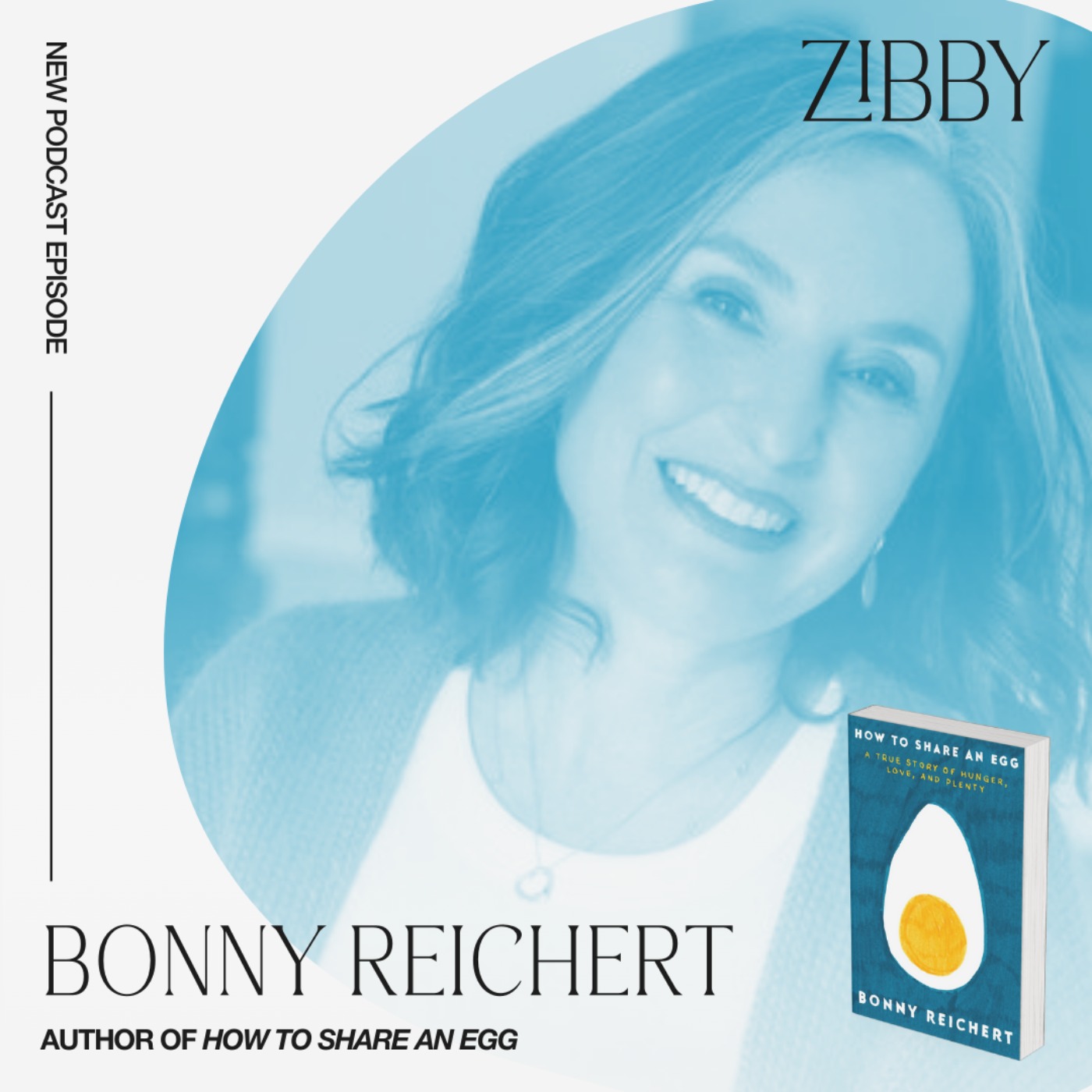
Totally Booked with Zibby
Bonny Reichert, HOW TO SHARE AN EGG: A True Story of Hunger, Love, and Plenty
00:24:43
Loading summary
Transcript52 lines
- [00:01]
Zibby Owens
The recent fire in LA destroyed many schools in the Pacific Palisades area where we have our home. I am currently raising money to completely rebuild the library collections of four schools in the neighborhood. If you are interested in helping me raise up to $800,000 to restock the libraries, go to zivimedia.com donate one book donate a thousand books but please help imagine if this was your school or your kids school. Thank you. Hi, this is Zibby Owens and you're listening to Totally Booked with Zibby, formerly Moms don't have Time to Read Books. In my daily show, I interview today's latest best selling buzziest or underrated authors and story creators whose work I think is worth your time. As a bookstore owner, publisher, author and obviously podcaster, I get a comprehensive look at everything that's coming out and spend my time curating the best books so you don't have to stay in the know. Get insider insights and connect with guests like I do every single day. For more information go to zibbymedia.com and follow me on Instagram ibyoans Bonnie Reichert is the author of how to Share an Egg, A True Story of Hunger, Love, and Plenty. Bonnie is a National Magazine Award winning journalist. She has been an editor at Today's Parent and Chatelaine and a columnist and regular contributor to the Globe and Mail. When she turned 40, she had a now or never feeling in her bones and quit her job to enroll in culinary school, which by the way, she writes all about in the book. After that, she began to explore her relationship with food on the page, seeing her childhood in the restaurant business and her background as the daughter of a Holocaust survivor in a new light. Bonnie was born in Edmonton, Alberta and lives in Toronto with her husband and little dog, Bruno. Her three almost adult children come and go. She holds a Master of Fine Art in Creative Nonfiction and teaches writing at the University of Toronto's School of Continuing Studies. How to Share an Egg is her first book.
- [02:03]
Bonnie Reichert
Welcome Bonnie. Thank you so much for coming on Totally Booked to talk about how to Share an Egg, which as you know, I have been raving about and I loved and was so good and I am excited to talk to you about it.
- [02:14]
Me too. I'm excited.
- [02:16]
So tell listeners what the book is about.
- [02:18]
The book is, I call it, a memoir wrapped around a family story and really I grew up in the shadow of this dark family history. My father is a Holocaust survivor and I always felt a need to write about it and my father wanted me to write about it But I never could. And interestingly, it was through food. You know, my father almost starved to death in the lodge ghetto and in the camps and on death marches. And it was through food that I found my way into this story. I. I started to cook. I became a chef, and I started to see that food was a way to tell this story.
- [02:58]
I love that. Well, I love how you have sort of the bear, like, you have some foodie, like, terrible chef moments, and then you have, you know, coming of age career story and the Holocaust story and your love life, like your family, your marriage, everything is, like, all woven together. And of course, that is what life is like. You can't just tell one story sometimes without telling the whole story. Right?
- [03:25]
Yeah. Somebody said. I mean, I didn't realize. I knew that I wanted to tell the story through food. That food was like the path that I was going to walk down, and that's how I chose which stories would fit. That was sort of my. But I didn't really realize that I was writing three different kinds of memoirs. In one, somebody said, it's a Holocaust memoir, it's a food memoir, and it's a mental health memoir. I didn't think of it that way, but I think that's probably, you know, accurate, what I've ended up with. It's funny how that happens.
- [03:55]
It's funny how that happens. And I didn't realize you had achieved so much in the professional food world. When I first started reading it, I just sort of dove right in and I was like, wow, she writes about food so beautifully. My gosh, I feel like I can taste all this. And I was like, oh, she's a fish food writer. Okay, I get it now.
- [04:12]
Yeah, yeah. But I never written about myself that way, so I had done a lot of journalism, food journalism, and written about chefs and a little bit of recipe development, but not writing into sort of the. The deep center of what food meant to me.
- [04:28]
There's such a beautiful scene where you try to recreate this soup, essentially, that you found in Poland. And it was the soup in Poland that you were trying to recreate at home. What was the soup has a special.
- [04:41]
There's both the borscht, which is the very beginning of the book. And that's like a clear beet.
- [04:47]
No, not that one.
- [04:48]
And then there's the cholent, which is my father's. So that's like a stew that my father ate as a child before the war. And he would talk about it when I was a child all the time. My mother made the best cholent. Everybody could smell it and everybody was jealous of our cholent. But nobody made it. My mother could have made it. She was a good cook. She's born in Canada, but also a child of immigrants. She could have made it. She didn't make it. My father knew how to cook. He didn't make it. And it was almost like this dish was too powerful and almost mystical and we didn't eat it. Also, my mother hated stew, so because she thought that was poor people food. Like, I grew up with all these food contradictions. My mother didn't want stew because she associated it with poverty and her own poor childhood. My father loves stew, but we didn't eat it. But then after I became a chef, I thought, well, I could just make this. I know how to make this. It's, it's, you know, it's just this plus this plus this equals that. So it's not magic. Although when I made it, it's. It's beans and it's barley and it's potatoes and a little bit of meat, and it goes into the oven overnight. And the reason that it's from the old country is that the religious Jews would make it on Friday afternoon and take it to the community oven. And in that way they didn't have to turn the oven off or on because it would be out of the house and it would sit all night in the sort of the community bakery, and then they would pick it up after services on Saturday afternoon. So I made it at home. I don't keep Sabbath, so it had nothing to do with that. But I made it at home and I went to bed, I left it in the oven. Just about killed me to leave food in the oven overnight. And came down at 5 o'clock in the morning and, you know, added water. And after a couple of tries, my father said it was perfect. So.
- [06:44]
Oh, I mean, I feel like it's a symbol of the book itself. Right. Getting closer and closer to the truth and trying and adding this ingredient and taking this away and getting just the right temperature until all the ingredients sort of line up to tell the story.
- [06:59]
That's a beautiful way to put it.
- [07:01]
Thank you. I just thought of that. But it's true. In the book, write about your initial resistance to writing about your dad and his Holocaust history. And in fact, your dad didn't talk about it much growing up, and he sort of wanted to be much more positive, like, let's enjoy life, let's. Okay, I got through that, but I'm not going to, you Know, dwell and let's enjoy, let's embrace this and that. And yet there were all these stories. And you felt, as I'm sure many Holocaust survivors do, compelled to record because, of course, it's also a slice of history, right? What your family has been through. And yet time kept on ticking. And you're like, I still haven't written this book. So somehow we're almost reading this book as you're. And going through your process of deciding to write it with you as you wrote it. Talk about even that decision, like when you were writing it. Is this how you found your way to, like, getting into the story and exploring, explaining to us, the reader, why it's not only this and not only that.
- [08:01]
I think at a certain point, my dad wanted me. Again, there's a lot of contradictions because my dad wanted me to write this story. He wanted to record this story of survival and resilience. And always he stressed that the positive, the survival and the resilience. And of course, to remember all the people that didn't make it and, you know, our own family, my own grandmother, my own aunts, and to. To have a record of what happened. He wanted me to do that. He did talk about it, but his stories were very upbeat if. If that could be possible. They were almost like fairy tales. So I knew things, and they were amazing things, like tales of survival, near misses, the things they ate, the places he hid, the strangers that saved him again and again and again. And I knew these stories, but they were kind of cutely packaged, you know. And then when I got old enough and I had information from the outside world about what this was, you know, the enormity of what this was, I became very scared and I became very avoidant about anything to do with the Holocaust. So my dad would still talk about it at home. You know, he wasn't like this traumatized. I mean, sure, there's trauma, but this sort of deeply disturbed person, he was like this very well adjusted, happy person who had this dark past. But I became resistant to talking about it. And that went on for a long time. And then after I went to Warsaw with him, we went to find a family tomb. And we didn't go to the camps on that trip, and we didn't go to where he came from. And it was a really successful trip. He found this tomb, and it was his grandfather's, and there was his. He's named for his grandfather. So there's my father's own name in this TOMB that's like 100 years old. And you know, my dad lost not just family, but his whole way of life. Right. So I think that that proof that that had existed was really incredible. So we had this amazing time, but I still didn't really want to be in Poland. And then it was that bowl of borscht that I had after the cemetery that spoke to me and made me realize that I had roots. You know, what is a beat, but a root, right? And I had roots in this place. And I came home and I started to see that maybe I could write this book not the way that my dad wanted, which would be head first into these horrible things that I eventually had to face anyway. But I didn't have to start there, but sort of my experience of being the child of someone like this and as I said, this journey of food.
- [11:02]
Wow. Well, his story was inspiring. Your story also layered on top of it. Also inspiring. I mean, when you wrote about some of your own reactions and trigger, like the way you were triggered by the story. And as the wider world as you, you know, as you sort of synthesize the information with the information coming in at you and how at times you felt too anxious and you didn't know if you could deal with taking this trip and all of that. When you think back on all of that and obviously you processed it to write about it, but when you look back about the moments where your personal history became part of a bigger thing and that thing became triggering, how do you process that now?
- [11:48]
I'm so glad that I figured out how to face this, because I feel it's not a very happy time in the world. There aren't very good things happening. I'm fully aware of that. The news is insane. But I have to say, on a personal level, I feel better than I've maybe ever felt because I faced this thing that I was really afraid of. And I guess I did it incrementally. The first was the trip to see the tomb.
- [12:18]
Y.
- [12:19]
And my dad, I mean, I don't want to say insisted because he wouldn't insist, but he said to me, when I said I wouldn't go, we'll go for three days. You can't spare three days. So who says no to their Holocaust survivor father who asked them to give up three days? So we did that. And then I came home and that the door kind of creaked open a little bit, and I started to. It started to kind of well up in me, this sort of need to. To create something. And what's really especially wonderful is to take something really awful and to make something new out of it. And the creative part of that has been very healing for me. I think about that movie a real pain. And I don't know Jesse Eisenberg's motivation or anything, but I see something in it that I understand, which is that you have this thing in your background and you want to do something with it. You want to make something and you don't necessarily want to just rehash what's happened. You want. It's in the transformation to make a new piece of work that you feel healing. I don't know. It's been incredible. And that my father, you know, I wouldn't even talk about the launch date or anything because I was so superstitious about my dad being there. But he was there. You know, the book launched a couple of weeks ago and he was there and he's 94. And so that he was here to see this really full circle. It's big.
- [13:56]
Zibby Owens
Yeah.
- [13:56]
Bonnie Reichert
It's been really so amazing. My gosh. Well, you wrote beautifully about your dad, but also about your mom and what the experience of her sort of slow, slow demise essentially was like for you. Can you talk about that?
- [14:10]
Yeah, that was. That was such a painful experience for all of us, for my sisters and my dad and me. And of course, most of all for my mom. Just, she was so. She was complicated woman and, you know, not. Not a cookie baking mom, you know, she had a bit of an edge to her. Very smart. And to watch her lose herself like that was so painful. And actually being able to write about it, you know, it was a balance. I mean, it's mostly the story of me and my dad and our relationship. And I had more about my mom. I took some out and then I took out too much and I put some back. Because she was an important part, of course, of what our life was like and what our household was like and who I am. And she was very quick and smart and together and capable. And to watch those things disappear was really shocking. Like, just shocking because it wasn't. She didn't have like a. A really mild kind of dementia. She. She had a really aggressive type of dementia. And it was just unbelievable. And then that she had to go on like that. It was really, really tough. And being able to write about it was. Felt very good for me.
- [15:35]
Well, I'm sure it's going to help the many people who have similar things or have that sort of slow, ambiguous loss they call it.
- [15:45]
Zibby Owens
Right.
- [15:45]
Bonnie Reichert
When someone is still with you, but in a new way.
- [15:49]
Yeah. I mean, my sisters And I say it's, it's so long since we really had her. Right. But all of these things, you know, I had a divorce and my mom got sick and I had struggles with my career. And they're so ordinary and I know they are. And so it, I hope that the reader finds themselves in those things and, and sees that you have these everyday struggles against something else. Right. Against this big thing that my dad went through and you're weighing, you know, does this really matter? Is this important enough? And, and I'm sure that so many people have tried to do this calculus in different ways and I really wanted to kind of illustrate that.
- [16:33]
But don't you think too that the ordinary things, I mean, that is what we all have, we have our day to day life and not everybody has giant backdrops of historic struggles necessarily. Right. But we all have to deal with the annoyances of life or the imperfections in some of our choices or all these things. The parenting, the way you wrote about that too, I mean, there's all. That's what most people wake up to every day in some way, shape or form. The outside can be different, but the things, the ordinary things, reading about it in a book, that's like making the reader feel seen. Yes.
- [17:10]
That's what life is made up of, is all these ordinary struggles and yeah, this is the stuff of life. Right?
- [17:17]
Yeah. Would you, if you had to do it all over again, that the chef program that you did was quite demanding with some outsized personalities. And I know the chef world, the food, cooking, whatever instruction world gets this kind of bad rap. But you showed us why. Would you go back to the program again or are you happy looking back that at that point that was the right thing for you?
- [17:45]
I would do it again. I was looking for something hard. I was, you know, I went for a couple of reasons. One reason was that I, I just loved food and I wanted to throw myself into that world. I also was looking for a challenge and I, until I kind of came to terms with this, this holocaust stuff, I was always looking for challenges. I was always looking and I didn't really understand why I was, I was trying to look for a way to earn my own self esteem. Nobody told me, you know, you, your life isn't hard enough, you're not, you know, it's too easy for you. This was something I was telling myself and I wasn't even aware of it until I sat down to write. But yeah, I think I would do it again because I came out and I was a better Cook. And I was a little tougher, a little stronger. And I was also prouder of the food that I had grown up with, which I had kind of dismissed. You know, oh, French food is better. Italian food is better. I wasn't so big on Eastern European food. Right. But when I came out, I thought, well, all food is equal. You know, it's just. It's. It's. It's like. I always think about David Chang talking. This is years ago, long before he was super famous, about his friends coming over and there being kimchi being made at his house and that he was embarrassed at the smell. And I always connected with that so much. So, of course, the sort of weird ethnic thing that you have at home is embarrassing, but I'm not embarrassed anymore. So, you know, that was my path.
- [19:25]
Amazing.
- [19:26]
Zibby Owens
I love that.
- [19:27]
Bonnie Reichert
So what has happened? Because now I feel quite invested in you and your story and everything. What happened after the book ended? Till now, nobody's asked me that before.
- [19:37]
I've got to think about that. Well, I don't know. My dad is doing well. That's such a good question. I don't. I mean, I wrote like the scene where we have to be careful about spoilers here.
- [19:52]
Yes. Yes.
- [19:52]
Okay. Well, then I won't say that. I don't know. I. It's been. It's been quite wonderful. I've been waiting for the book to come out, and my. We've been taking extra good care of my dad. He's been. He was extremely excited. We were counting down. Yeah, he was very, very excited. It's not that long ago that I. I sort of finished those. Those last few words. So, you know, we've been. We've been taking care of ourselves and getting ready.
- [20:22]
Amazing. And now that you've done this project, are you inspired to write another book?
- [20:27]
Yeah, I'm dying to get into another book. Yeah. Yeah. I learned something about myself, which is that I can do this and that there are other things that I have to say that didn't fit in here. And I am. I have some ideas for. My agent keeps saying to me, don't say autofiction, but it's autofiction. So a novel, an autobiographical novel.
- [20:52]
I love that. Oh, good. I can't wait. What advice would you have? Having been through this process now and learning that you can do it, what made you go from wondering if you could to. Aside from finishing it?
- [21:05]
People, if you have the urge to write, lean into that urge. I. When I'm really working hard, I get up at 5 and I work for the first few hours of the day. Those are the best hours. Your inner critic hasn't woken up yet at 5. So those I find, I mean, what do you think? Are you an early morning writer?
- [21:29]
No, no, it's too early. If I have the opportunity to sleep and my kids haven't woken me up, I'm not Getting up at 5 is.
- [21:35]
How I feel for me, I'd much rather go to bed early. So I find that that's very, a very good time. And I can work for a couple of hours before that doubting voice starts to say, that sentence isn't good. Oh, that's the wrong direction. It's just like, right, so she's not up yet then. And just. It's worth it. It's worth the struggle. It's worth, like you have to dig deep and you have to lean into it and really, really hang on. Like it's, it's a commitment and it's absolutely worth it. I, I wish I could tell my earlier self, you know, you can do it. You can absolutely do this. And also, I mean, my kids aren't really young. You still have younger kids, but it's really hard to find the time to, to do this and the level of concentration and absorption that's required. And again, I would say your work is worth it and you are worth it and take the time. It feels selfish. I felt selfish working on this book and now I'm saying to everyone, see, see, I was actually making something, you know, that matters. So it. I, I think that people should know.
- [22:56]
I love that. Thank you. That was inspiring. As I think about trying to find my own time to do a million things. You know, everybody's asking now what it's like to be a Jewish author in this context. And you know, have you experienced any anti Semitism yourself as a result of the book?
- [23:12]
No, I haven't. And I was worried, I was, I think, in editing on October 7, I think, and I was quite triggered and I thought, how am I going to come forward in this world? And I had some time to sort of, you know, work with myself and, and talk myself off the ledge. And the book has been so nicely received. Not just in the Jewish world. I mean, it was really important to me and that all kinds of people could connect to the book. You know, children of immigrants and people who love food and people from different backgrounds and all kinds of people. And it's happening. And that's just amazing. No, it's been great.
- [23:55]
Really amazing. I'm so glad you hear that. That's great. Actually, a few people recently have said the same things, so maybe the industry has woken up and said, okay, we're not going to do that anymore. So that would be great.
- [24:07]
Yeah, I've had really amazing support. You know, I'm Canadian, and the support in Canada has been great. The support in the US has been great. So it's been really wonderful.
- [24:20]
Amazing. Great. Well, thank you so much. Thanks for coming on, Bonnie and I really enjoyed it. And as I found the book so interesting, I learned so much about culture and food and environment, and I got to go on these trips with you to places I hadn't been myself and learned yet about another story of survival and what that does, sort of generationally. And I found it really, really well done. So thank you so much.
- [24:48]
I loved it. Thanks. It was so great to talk to you.
- [24:50]
You too. All right. Okay. Good luck with everything. Bye.
- [24:54]
Zibby Owens
Thank you for listening to Totally Booked with Zibby, formerly Moms don't have Time to Read Books. If you loved the show, tell a friend, leave a review, follow me on Instagram, ibbeowens and Spread the word. Thanks so much. Oh, and buy the books.