← Totally Booked with Zibby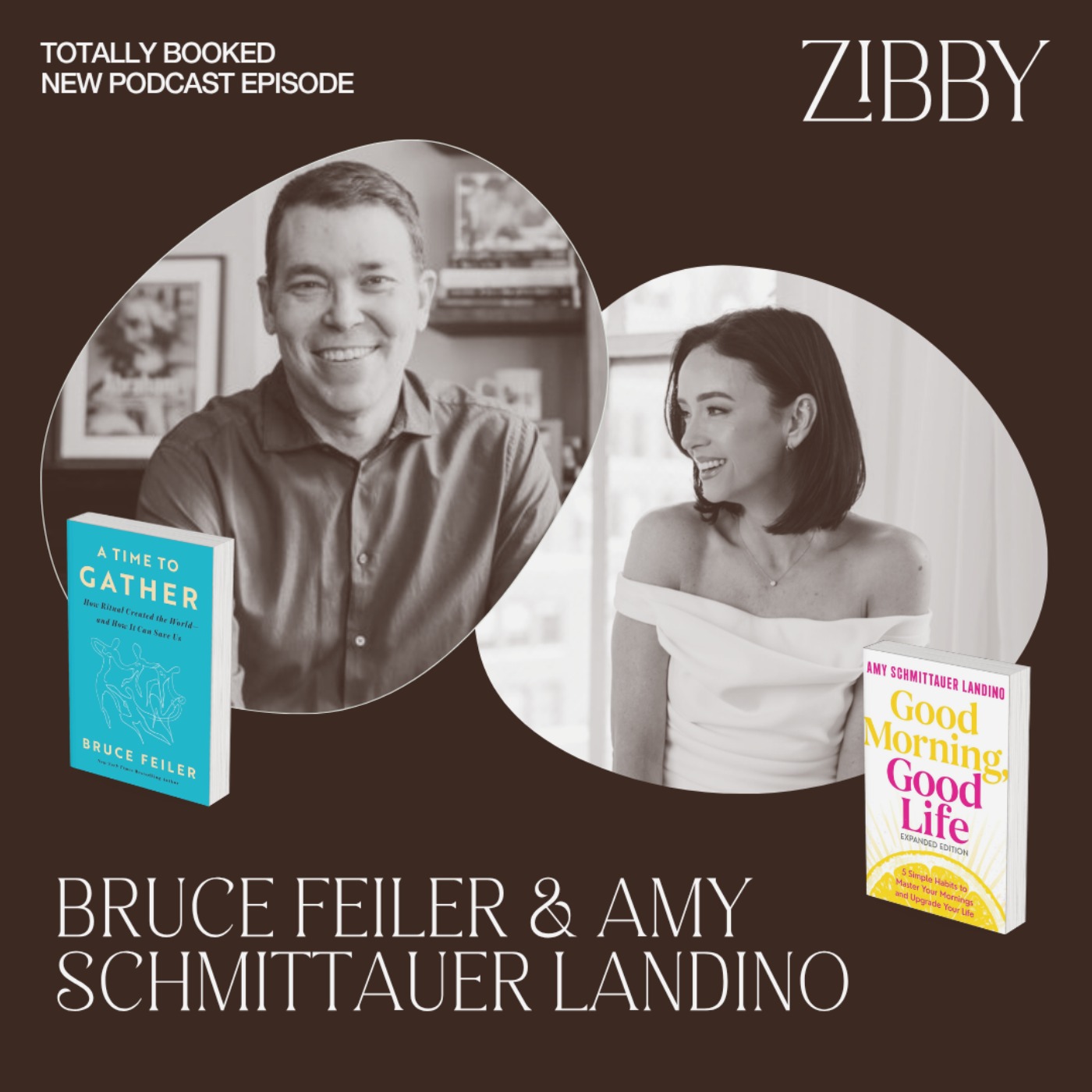
Totally Booked with Zibby
Bruce Feiler's A Time to Gather, and Amy Schmittauer Landino's Good Morning Good Life
00:31:11
Loading summary
Transcript49 lines
- [00:01]
Dr. Susan Swick
I'm Dr. Susan Swick, a child psychiatrist and the host of Talk About Able. This season, I'm talking with parents and experts about how we tackle the everyday challenges of raising kids. We'll get real about those pebble in the shoe issues we all face as parents and how to build resilience and community through our own experiences. Talk About Able Season 2 from Lemonada Media in partnership with Montage Health and their Ohana center for Child and Family Mental Health is out now.
- [00:30]
Bruce Feiler
Then I thought, what if I've scaled businesses? What if I scaled my philanthropy? What if I did as much in one year as I've done in my whole life? See how your wealth could have even
- [00:39]
Dr. Susan Swick
Greater meaning@creativeplanning.com Impact
- [00:44]
Zibby Owens
Today's episode is sponsored by Nutrafl. Do you know that feeling when you're brushing your hair and somehow it just looks a little thinner than usual, maybe a little less full? And you're like, what is going on here? Well, Nutrafol supports hair health from within, helping you grow stronger, visibly thicker hair so that those moments happen less often where you're worried about your hair. Nutrafol is the number one dermatologist recommended hair growth supplement brand and it's the number one hair growth supplement brand personally used by dermatologists and by the way, personally by me. This is the brand that I trust. Adding Nutrafol to your daily routine is easy. Order online, no prescription needed, with automated deliveries and free shipping to keep you on track. Plus, with a Nutrafol subscription, you can save up to 20% and get added perks to support your hair health journey. So let your hair be one less thing to worry about. See visibly Thicker, Stronger, Faster Growing hair in three to six months with Nutrafol. For a limited time, Nutrafol is offering our listeners $10 off your first month subscription and free shipping when you visit nutrafol.com and enter promo cod code Zibby Z I B-B-Y that's nutrafol.com spelled N U T R A F O L.com promo code ZIBBY. Enjoy. Hi, this is Zibby Owens and you're listening to Totally Booked with Zibby, formerly Moms don't have Time to Read Books. In my daily show, I interview today's latest best selling buzziest or underrated authors and story creators whose work I think is worth your time. As a bookstore owner, publisher, author and obviously podcaster, I get a comprehensive look at everything that's coming out and spend my time curating the best books. So you don't have to stay in the know, get insider insights and connect with guests like I do every single day. For more information, go to zibbymedia.com and follow me on Instagram ibbeowensk. Amy Schmidauer Landino is the author of Good Morning, Good Life, Expanded five Simple Habits to Master your Mornings and Upgrade youe Life. We recorded this live at the Whitby. Amy is a best selling author, international keynote speaker and award winning YouTube creator known for helping ambitious women command their time, energy and influence. She's best known for her global bestseller Good Morning, Good Life, a morning routine manual that has inspired thousands of readers worldwide and is now in an expanded edition. A four time author and high performance personal brand coach, Amy has spent nearly two decades teaching entrepreneurs how to direct their attention with intention. Her lifestyle Design channel, Amy TV has earned more than 37 million views and nearly half a million subscribers. With Midwestern roots, from her hometown of Columbus, Amy resides in Connecticut with her husband and two daughters. Welcome to Totally Booked Live. I'm really excited to be here with Amy. Amy Landino, author of Good Morning, Good Life three Simple Habits to Master your Mornings and Upgrade your life. Welcome Zippy.
- [03:54]
Amy Landino
Thank you for having me.
- [03:55]
Zibby Owens
Of course. Thank you. An applause. Amy, tell us about your book.
- [04:02]
Amy Landino
Good Morning, Good Life actually came about in 2019 and it was all just a conversation with my audience about time and time management. And I'd actually started in my creator life as somebody who advised businesses how to leverage digital platforms. It was early days, right, like Facebook and Twitter. And it all just continued to evolve. People were watching my videos and saying, this is great advice. I intend to do none of it. I don't have the time. And I was like, what? Why are you watching?
- [04:34]
Zibby Owens
That's so funny.
- [04:35]
Amy Landino
But it was a really fun thing to unravel. It was like, okay, time management, what does that mean? And then it was like, well, let's talk about morning routines. And that just went bonkers. And it just kind of came about. I started saying Good Morning Good Life in the videos and it really is born from a conversation with my audience. And my thought process is I've read every morning routine book. I love them all. I live for them all. There's been incredible authors that have presented amazing ways for us to consider how we start the day. I've just seen different versions of my life happen where sometimes they work and sometimes they don't. And I just thought maybe it's a little bit simpler than that, that to start the day on your terms. That you could really do it your way if you just kind of fill a couple of buckets and say, all right, world, now I can take whatever you throw at me.
- [05:28]
Zibby Owens
Why does the morning routine even matter?
- [05:31]
Amy Landino
You know, part of it, I think, is just everybody's talking about it. Literally. I think it's because, oh, there's successful people. What do successful people do? Successful people start the day on their terms. Great. So now it's like, well, what's the morning routine? Let me do their morning routine. So it starts down this road of, okay, well, if they do that, then I should do that. And I think it's interesting that we can start the conversation there, but then say, okay, but what would actually be in alignment with who you are and what you want to achieve in this life or who you want to be and have that be true to you? I also think it's a really fun conversation about what somebody's current morning looks like that they don't even like that. They're not even saying, like, I want to achieve anything. I just want to not wake up and be miserable. And it's like, okay, well, then let's just unpack that. Like, let's just talk about what's not working, and let's find the thing that works for you. So it's really sort of the cake. It's the cake. Everybody wants a slice of cake. Like, the cake is like, let's talk about your morning routine. But we open it up and we're really gonna, there's broccoli in the cake. And I trick you into eating it because it's really gonna help you kind of get that foundation for who you're trying to be all day long?
- [06:47]
Zibby Owens
So in the book, you outline kind of five big buckets. Why don't you talk about that and how they can help us live better?
- [06:52]
Amy Landino
There's a lot of buckets, and I don't want to go through all of them because I think they're very deep. But the first one, I think is the most important, and that is to decide to make a decision is so important. It's basically saying, I know this is right for me, and this is what I'm going to do, and I'm going to do it. And a lot of people, I think, struggle with that, and that's what I've noticed. So the decision to even say I'm going to do this is huge. In the beginning of the book, I talk about the fact that I went to work one day and somebody that works with me was talking about the Fact that she was gonna do a half marathon. And I was like, I just. I just. I would never have guessed that she would have said to do that. And so I thought that she's not really a half marathon person. She's not a runner. She's not a runner. I'm not a runner. The two of us are the same. We are not runners like that. And now she's changing the narrative. She wants to do something different. She's made that decision, and that's when I started entertaining it. Well, if she could do it, could I do it? And I talk about that. And I made that decision. And all of a sudden it went from I could never be a runner. That's not my thing, to completing that half marathon. It doesn't even matter if you complete it. It was just the decision that you were going to show up and believe that it was true. And most of the time, when I'm hearing about morning routines from people who are saying they're struggling with it, they're saying, I'm not a morning person. I'm not a morning person either. I would never identify as a morning person. But what I do know is that I'm a life person. And I like the idea of starting the day on my terms so that I can do the things I want to do. But that was only something I could learn myself by taking first small actions. So I feel like that moment was really big for me in identifying what does it mean to be ready? Well, ready is actually a decision. It's not a feeling. So saying I'm ready to run and learn how to run a half marathon, or I'm ready to become a morning person, even if I don't feel like I am just doing things differently. I think that's really big. I think that's really big. But there's a lot more to it. You know, there's a whole bucket called Rise, and it's about sleep. So, you know, it's not what you think it would be, but it's really identifying the fact that your morning routine doesn't start at 8am it starts at 8pm and when we don't rectify that fact, we don't start seeing better mornings. We're borrowing from what could be. And the things we're procrastinating on, we're borrowing from that time in the evening to a point where we're not happy doing things we think we should do because they're easy and so that we can avoid the rest of it. So the staying up late, the Binging, the scrolling, the whatever. I'm not even against any of that. It's just the conscious awareness of the fact that you are doing it.
- [09:59]
Zibby Owens
So you give us a bunch of tactical tips, which I appreciated. I'm always looking for time optimization. I try to do everything right away. I try to block time for things. Do one thing at a time. You talk about time blocking and I'm sure you've blocked this time on your
- [10:16]
Amy Landino
schedule for today, color coded and all.
- [10:18]
Zibby Owens
Yes. What are some hacks and tips for managing time most efficiently?
- [10:24]
Amy Landino
Stop trying to manage time. It's not something you can manage. The time passes whether you like it or not. My big thing is it's all about energy management. When you realize that it's where you're applying your energy or where you're exerting energy. Better yet, when you're doing something that actually gives you energy, like right now, I feel like having conversations with authors. That's something that just like gives you energy. Right? And knowing and identifying those things and say I need to insert more of that into my life. Put that on the calendar, schedule time for that. There are going to be things we have to do in life that we don't want to do and those things are usually exerting energy. They're taking energy away. We just have to figure out how much of that is my life and how can we kind of minimize that? If it's not what feels good, then we continue to go down this road of doing things that we don't like feeling good. And I just want people to feel like they could do less of that. So stop looking at it as time management and energy management. If you're multitasking because you have too much on your plate, what are you doing that you shouldn't be doing? How can we just look at that and say it needs to be deleted? A lot of people have a hard time with the word delegation. Me too. Delegate to whom I'm the best at it. That's what I'm talking about. It's not just that you could delegate it. There's a very good chance it could get deleted. We take on so much more than the average person could ever imagine. I guess I'm saying we in the sense of ambitious, high performing women, most of the time that I'm speaking to. And I just think that we could be masters at one thing or maybe two if we gave ourselves the chance.
- [12:13]
Zibby Owens
So what do you feel like you're a master in and what did you give up to get there?
- [12:17]
Amy Landino
I feel like I'm a master in learning about people and coming up with a framework to help them become better at who they want to be.
- [12:27]
Zibby Owens
How does one become a YouTube star? How did you become a YouTube star?
- [12:30]
Amy Landino
That's a really good question. I wouldn't even know how to, to be honest with you. When I discovered YouTube, I'd made a video for an old friend of mine. She asked me to be in our wedding and I was like, I want to stand out, I want to be different. And I was like, maybe I could make a video. This was in 2007. Like I had a digital camera that had a video mode on it that was like, okay, great, we're off to a running start. I had a huge computer in my kitchen and I found Windows Movie Maker on it. I made her video. That video was burnt on a DVD and wheeled into the rehearsal dinner to be played. So at the time it was. I didn't even know YouTube existed. And I think it did at that point. But after that I was very inspired because at the dinner I'm like, this is fun, let's play the video. And it's, you know, a montage, right? Like, it's like where we went to school and people who are wishing her well that she hasn't seen in years and all that. But the entire room was captivated and I just couldn't believe it. Cause it's like you guys don't even know who these people are. Like, what do you care? And. And everybody was like, that was amazing. That was amazing. That was amazing. And I thought, how cool is it to have the emotions of everyone in the room in the palm of my hand. Cause I played something that I created. And as somebody who did not have this God given talent in school where it was like, well, you're gonna be an architect. My best friend from kindergarten was like, he's gonna be an architect. That's what it is when you don't have that. It's a really cool feeling when you find out you did something and you made something yourself and that you actually have been built some kind of a talent. So after all of that, I just was like, okay, well how can I start making more videos? And I didn't want to be on them. I was just filming my friends and just like kind of stitching them together. And I was like, let me find another way. Maybe I can upload it and share the link to my friends so they can watch it. That's how I found YouTube. I had no idea it was a sharing network. I had no idea. People were building audiences and finding their people. You're talking about 2009. And it was totally groundbreaking. And it was the thing that became what turned into me leaving a very comfortable job at a law firm that should have been where I stayed, raising money for a political party, working for rock stars. And I was supposed to stay there. I was supposed to be there. That was the right thing to do. But I found this other thing that lit me up and so I left and I never turned back.
- [14:58]
Zibby Owens
Amazing.
- [14:59]
Amy Landino
Thanks.
- [14:59]
Zibby Owens
Well, Amy, thank you so much. Good morning. Good life. I'm totally thinking about my mornings differently at this point and it's very inspiring. Thank you so much.
- [15:08]
Amy Landino
Thanks, Ippy.
- [15:12]
Zibby Owens
Today's episode is sponsored by Quints. As you guys know, I am obsessed with quints. I've been talking about them for a while because I love the quality of the clothes, the fit, the price, really everything about it. My two latest finds, which I'm sure you'll see me wear wearing on Instagram, are this adorable white dress. It goes to the ankle basically and has a tank top on top. And I also got a jean jacket from Quince and I plan on wearing them together all summer long. And I'm just super excited about it. Quince has always been my go to, but now the fabrics just feel elevated. The fits are so flattering. Everything just works and I don't have to overthink it. Quince uses premium materials like 100 European linen, organic cotton and ultra soft denim. Maybe that's why I like it all so much. Their lightweight linen pants and dresses and tops start at $30 and are effortless, breathable and easy to wear on Repeat. Everything at Quint's is priced 50 to 80% less than similar brands. It's amazing. They work directly with ethical factories and cut out the middlemen. So you're paying for quality and craftsmanship, not brand markup. Refresh your everyday with luxury you'll actually use. Head to quince.com zzivi for free shipping on your order and 365 day returns. Now available in Canada too. That's Q-U-I-N-E.com zivi for free shipping and 365 day returns. Quince.com zivi Today's episode is sponsored by Whatnot. Okay, so Whatnot is a live shopping platform where you can get items across all different divisions from beauty, apparel, bags and more. But what I have found is it is the perfect place to get kids birthday gifts. There are needos for those of you who don't know. Neato's are these little plastic toys which are all the craze people go neato hunting anyway. They have Neatos and squishies and everything you can imagine for better prices than competitors. There are great deals and it is so fun to shop in this dynamic interactive platform. My steals included a Jelly cat Heart for $5.38 and Jelly Cat Toasty Marshmallows for $9.89, not to mention Anito for $6.26. I'm not surprised that Whatnot is the largest live shopping marketplace in the country because it's a trusted shopping experience in a real time format and There are over 10,000 fashion, beauty and bag sellers all over and you almost never pay full price, which of course is amazing. So let me tell you, I had the best time with my kids going on whatnot and then there were things for me too, but it was more fun for them in my opinion. So download the Whatnot app today and get free shipping on your first order. Just search Whatnot wh a t n o t whatnot in the App Store and start scoring amazing deals.
- [18:13]
Bruce Feiler
Then I thought, what if I've scaled businesses? What if I scaled my philanthropy? What if I did as much in one year as I've done in my whole life? See how your wealth could have even
- [18:21]
Dr. Susan Swick
Greater meaning@creativeplanning.com impact
- [18:27]
Zibby Owens
Bruce Veiler is the author of A Time to How Ritual Created the World and How It Can Save Us. Bruce is the author of seven New York Times bestsellers, including Life is in the the Secrets of Happy Families and Walking the Bible. His three TED talks have been viewed more than 5 million times, and he teaches the TED course How to Master Life Transitions. A native of Savannah, Georgia, Bruce lives in Brooklyn with his wife, Linda Rotenberg, and their twin daughters. Welcome back, Bruce. So excited to have you on. Totally booked to talk about A time to How Ritual Created the World and how it Can Save Us. Congratulations.
- [19:00]
Bruce Feiler
Thank you. And let me just say, let me just first of all start by saying I'm such now. I want to say it in a way that captures what I feel. I'm not only an admirer, I'm an appreciator. And I'm a. I don't know, I'm so grateful that you have taken these various worlds that can be very lonely and isolating. Right. You know, like people whether it's parents who are very busy or workers who were busy, readers, writers, booksellers, like, and gathered them all in one place. It's Such the spirit of what I've been working on and thinking about with this book for the last three years. And you've turned us all into this community. You know, you've opened your store, you've opened your home, you've opened your life, like, you know, in your public Persona. And it's just amazing. And it's really exactly where my head is at and kind of what's the sort of the spirit of this book, right, which is that we can push back against all of the loneliness and, you know, the algorithms and all this. Like, you've created this algorithm of togetherness that kind of rivals the algorithm of aloneness. And I'm just so happy to be here. And this is my first interview about this book. So I'm also. I have no idea what's going to come out of my mouth.
- [20:19]
Zibby Owens
I mean, you could just. More praise is fine. I'll just listen. We don't even have to talk about anything. That was probably the nicest introduction to a podcast ever. So thank you, Bruce, for that. And actually, as we're recording, Today is the 8th anniversary of starting the podcast. So you are the.
- [20:38]
Bruce Feiler
Oh, my gosh.
- [20:39]
Zibby Owens
The first podcast on my eighth anniversary. So it's a ritual for both of us. This is like a full circle moment. Okay, how does my togetherness, which you use as an example, how does it illustrate what you are going for in the book, explain?
- [20:54]
Bruce Feiler
Here's how I think about it. I belong to the tribe of groupkeepers, right? Like, I'm the one who, like, you know, manages the backyard Olympics and, you know, produces the family meeting and goes to the dinner table with the family. You know, I have identical twin daughters, as you know, they will be 21 in nine days. Like, I'm the one who had the. What seemed like a brilliant idea when they were two because they had just learned to, like, speak and talk and look at letters. Like, oh, we're gonna blow up all 26 letters and hang them in the house, which took till four in the morning. And one of them said, oh, all the letters came to visit. And now at 21, we're, like, dispatching things to college roommates and department mates because something has to. I'm the producer of the family of the kids birthday party. So there are group keepers, right? That's what you are. You're a group keeper. And even if you've never heard that word, and I made that word up, it doesn't matter. There are those of us who care about the group. And this is sort of a celebration. It's a little bit of how this happened and that we have been gathering as for 300,000 years before there were anatomical humans. Right. So how did we get to this place? And also a sort of blueprint for how to do it more effectively. Right. So how to. Whatever it is, it can be a joyful thing, like a wedding or a family reunion or a backyard picnic, or it can be a sad and sorrowful thing, like the loss of a loved one, or I'm going through chemotherapy and. And I want my friends around me, or I just lost a pet. Right. So whatever it is, this is how to do it better and more effectively and to, as I said earlier, like, push back against all of the algorithms that are dividing us. We need to bring us together. We've been hearing this for a generation. What I've tried to do is bring it all into one place, to help people do it in a way that brings belonging and meaning to everyone.
- [23:00]
Zibby Owens
And you did the work for us and traveled to all these places and learned so much and aggregated all the information intuitively. We all know that it helps to gather when during COVID obviously, especially the lack of funerals in Covid, we felt. I've particularly felt that, like, intensely how it helps to be around people. But why exactly? What is it about us as humans, or not even just humans, why does it help so much to be in community?
- [23:29]
Bruce Feiler
Let me just first of all emphasize kind of what you said. It is the first essential human act. Actually, you know, we think right now that sort of like religion created ritual. In fact, it's the other way around. Like, you know, people started burying. One of the first things that humans did was, was bury their loved ones. And then what happened was they used red ochre and they sang songs and they made paintings, and then they would come back every year to market. So this, we know that this happened, you know, long before there was organized religion. And then so organized religion came along, and then it sort of like, took it over in a lot of ways and added a lot spectacle like the. You know, as, you know, my book opens in the backstage at a group baptism at the Vatican. And like, you know, they invented sort of. If I asked you to think of a wedding or a funeral, like, you would think, even if you're not Christian, as I know that describes you, like, you would think of those weddings and those funerals. And so now we're in this moment where kind of a lot of people still embrace religion. Half of my adult life has been talking about it, but a lot of People are like non religious or I'm spiritual but not religious. And so what's happening is that people are taking it over. So the one thing is, it's the essential glue that holds us together. We know for 100 centuries, in every corner of the culture we've ever looked, when someone comes into the group, right, There's a wedding, there's a baby. When someone leaves the group, there's a coming of age, as happened to me recently, and a funeral. When someone gets sick or moves, the group reconstitutes itself. I just lost a loved one, my sister in law, 10 days ago. And so what happens is the group wants to get together and find meaning. And so that's the sort of essential. It is the essential human act to gather together. That's the first we now know. So that's the 300,000 year history. What's happened in the last 30 years and in some cases in the last 10 years is we now can peek inside the human brain. So we know that when we're going through life transitions, the rituals help us regulate them, right? We know it makes us feel less nervous, less fearful, okay. We also know that the more we invest in these kinds of gatherings, we know that the more we get out of them. Okay? So that you know, and then I think that you know a lot of ways. Like what? These rituals, they do four things, right? They connect us, okay? You and I are going to go through a time together. You're going to reach out to me, I'm going to go out, I'm going to reach out to you. We're going to do something. So they connect us, okay? They also, you know, they chronicle our lives. If I asked you to think of the 10 high points of your lives, probably eight of them would be things that you shared. A wedding, the birth of a child. Right. You know, a graduation, a milestone anniversary or whatever. We tell our lies for these. But here's the fourth of the Cs is that they correct imbalances within the group. So one of the reasons. So people don't like to do these now in a lot of ways because of the conflict, right? So you and I are going to get married. You have one background, I have one. You want a big wedding, I want a small wedding. Okay? You want a rabbi, I want, you know, I want a justice of the peace. You want it indoors, I want it outdoors.
- [26:45]
Zibby Owens
You can avoid. We're fighting so much. We haven't even, you know, started.
- [26:50]
Bruce Feiler
Exactly. But now we have to compromise, right? So rituals are compromised. Rehearsal like do it at the wedding or you're going to do with. Should we have children? Should the child be involved in ballet or should they be involved in basketball? So it forces the conflict onto the table and allows us to resolve it, which is one of the more kind of joyful and surprising things that I discovered. Because it's okay that we're different because then we have to work it out. Like it forces us to create what I call a peace plan.
- [27:16]
Zibby Owens
Well, in the book you talk about your father's funeral and how your mother did not want to put dirt on the casket and your sister, I think, wanted to put roses on and the conflict between them. You had to mediate and figure out how to handle. And that was an example of conflict in these difficult times.
- [27:35]
Bruce Feiler
Well, first of all, I love that you brought that up. Exactly. So it was slightly, first of all, great memory, but it was slightly inverted. Right. So that my mother didn't want to do the dirt on the coffin because that she thought it was barbaric. Right. My sister wanted to do long stemmed yellow roses, which seemed very Hallmark. Right. And so like voices were being raised. I was on the phone, you know, trying to mediate this, and I was like, okay, we're gonna call you back, Rabbi. And then I sort of middle childed my way through a, through a resolution. Something that I learned. You know, I talked to 100 ritual designers who do this for a living around the world. And it was okay. I just. Okay, let's just do it. You and me, we just had the conflict. You want a big wedding, I want a small wedding. Right. That's the example I just gave. So Zibby, what is it that you really want? Why is it that you want, like what's underneath the surface for why. Why do I want a small. Maybe I get nervous. Maybe I don't want the performativity. Maybe you have a lot of friends. Maybe I feel self conscious that I don't have a lot of friends. Right. Or maybe your parents are going to be very. Maybe min. Divorced. Right. And therefore I don't know how to. So now we've gone, the conflict has realized there something is different going on. So how did we resolve this? With my dad's funeral on two days notice. Okay. So we got the roses. Okay. But we also, instead of using the dirt that would offend my mother, we went to his beloved beach on Tybee Island. We got little bags of sand and we gave everybody a choice. So you don't have to decide. And then some of us did both and then, as you know from my book, I then went, you know, you mentioned I should probably say it. I went to rituals on six continents in 16 countries, right? You know, like a group baptism in the Vatican, a tooth filing in Bali, a traditional bride price in South Africa, six weddings in a day in Vegas and 10 funerals in Ireland. And so there I was in Ireland at this funeral of a 90 plus year old woman. And we drive to the synagogue, to the synagogue, listen to me, to the cemetery. And the funeral director who's invited me, I had taken an Uber. And she says, well, how are you? You know, I said, how am I gonna get there? She's like, come with me. And without thinking I say yes. And so she opens the hearse, plops up the bumper seat or whatever you wanna call it, and there I go, riding to the cemetery alongside the, the casket with Mrs. Burke. And when we get there, they have a beautiful little service. It's very traditional. She's being reunited with her husband in Ireland. They bury people in the same graves and then the family comes up and each of the kids gets each and the kids and the grandkids and the cousins gets a long stemmed yellow rose. And I am bawling at the cemetery thinking, this is what happened to me. And that's what happens in all of these. You know, when you go to a great wedding, you're like, you're at every wedding you've ever been to, right? When you're at a funeral, you're thinking of everyone you know who've ever died. And when you're at a celebration, you're thinking of all the joyous moments. And that's just such a lesson of how these become such the universal backbones of our life stories.
- [30:40]
Zibby Owens
I feel like the premise of your book is so clear and I totally buy into it and I feel like anyone listening will buy into it. But what about people who are like, yeah, that's great, but I feel like I don't belong to a community or I don't know how to connect or, you know, maybe I don't have a funeral coming up or a wedding. And I'm at a stage in my life where there's just, there aren't a lot of moment markers. What then?
- [31:02]
Bruce Feiler
So this I think is the great story that's going on, which I'm a little shame faced, you know, given the things I've written about family and I've written about life transitions. I've written, I wrote five books about the, about the Bible. Like, I feel like the thing I was shocked that I didn't realize. And that is that we have turned. I said for 100 years, 100 centuries, we've done these kind of events until this century when we're turning our backs on the traditional calendar. Okay, fewer people are getting married, of course, fewer people are having birth rituals. Coming of age rituals have collapsed and you know, no one's having funerals. It's a shocking thing. And in 1975% of Americans were cremated. Now it's 65% going to 80 in the next 10 years. And only one in four has a funeral and only one in five is buried. So most of our kids and grandkids are not going to have funerals. My sister in law just mentioned is being cremated. And there is no we're having. Now what we are doing is having a celebration of life. What we did do is when people gathered to say goodbye and she had already died, we had an impromptu gathering. So here is the answer to your question. Top down, pre scripted, you know, hierarchical, patriarchal, you know, all of these rituals, that's what's going away, what is replacing it. That's what I call the celebration recession. But the reason that I feel like my book chronicles this ritual renaissance is that bottom up, bespoke. I want them when I want them, when I need them. A young ritual designer at the end of my book tells me I want a ritual when I want it. I want to have my friends over and I don't need anyone's permission, I don't need my parents to tell me it's okay. So I think that what's going on is that pre scripted is empty, but do it yourself is more meaningful, but it's harder, which is the gap, precise gap. I'm trying to say you want to have people over here. I mean, I can do it right now there are five things you need to do. Okay? So if you are going through, if you have a surgery coming up, you want to have people over, invite people over, you don't even have to have bring food. You know, a lot of people don't want to do the dishes. I get it. You know, there are five simple things and that's what I've tried to outline. You need boundaries, okay? You need to pull the people together. We did this for my sister in law. We just lit a single candle, okay? And what that says is outside we were that and inside the circle we are this. We are entering the special place, the sacred space. That's what you need, number one. Number two, you need stakes to say this is why we're here, okay? You know, Zibby is going through a surgery next week, and we're here. And I tell a beautiful story about this, okay? Somebody put up their kid to adoption. 35 years later, the kid suits them. We're here because a lot of emotion and a lot of time has passed, and there's pain and confusion and desire to reconnect. We don't. This is why we're here. We're not going to sugarcoat it. The stakes elevate it, okay? Somebody did something, you know, that they are now ashamed of. They put a kid up for adoption. In this case, this beautiful story, the son sought them out, and now we want to do it, or. I tell the story of a woman I met at a grieving and weaving circle, whose mother, when she got unwed and pregnant at 17, the mother took her, and she was forced to take the. Give the baby away. And she felt I couldn't track down my kid, but the kid tracked down her. We're now going to connect a lot of feelings there. Okay? We're going to get together. In that case, they went to a museum. We're going to say out loud, this is our intention. This is what we're here. This is what's at stake. Then compromise, okay? Then we're going to. We're going to work it out, okay? I have my motto for this is the four somethings. Do something old, do something new, do something borrowed, and do something new. Okay? Something from your tradition. I said that earlier with our wedding. Right. My tradition, okay. Some quirky thing that you have that suits you. Okay? We met when I. The story I tell in my book was where I sent you a brandy shot at the airport. We're gonna bring two glasses of brandy, and we're gonna. So you're gonna create something that recognizes the messiness and the fact that we're different. You're then gonna. You're gonna have empathy. You're gonna hold space, as the woman said at this double mastectomy circle I describe in my book, we're not here to give advice. We're just here to listen and to offer support. Whatever you're feeling before your surgery, the death of your pet, the loss of a loved one, okay? A child who is now, you know, decides that they want to change their name. We're gonna just listen and be there. And then the last and most important thing you need. You need hope. That's what the circle is. It's the hope of who we can be at our best possible selves. And then we're gonna close the circle and we're gonna go on so simple things. You don't need music. You don't need to sing, you don't need to bake. You don't need to do the dishes. You just need to gather people and say, we're here for one another.
- [35:50]
Zibby Owens
Bruce, thank you so much. A time to gather. I'm excited for our mythical wedding and I hope that we have a fabulous
- [35:56]
Bruce Feiler
time and anybody who joins us too. Again, thank you for all you do. Thank you for including me in this community and we will get through this, but the only way to do it is to get through it together.
- [36:07]
Zibby Owens
Agree?
- [36:08]
Amy Landino
All right.
- [36:08]
Zibby Owens
Thank you so much. I really appreciate all of it. Thanks, Bruce. Thank you for listening to Totally Booked with Zibby, formerly Moms don't have Time to read Books. If you loved the show, tell a friend, leave a review, follow me on Instagram Iby Owens and Spread the Word. Thanks so much. Oh, and buy the books.
- [36:35]
Bruce Feiler
Then I thought, what if I've scaled businesses? What if I scaled my philanthropy? What if I did as much in one year as I've done in my whole life? See how your wealth could have even Greater meaning@creativeplanning.com impact this is a vacation with Chase Sapphire Reserve. The butler, the spa. This is the edit a collection of handpicked luxury hotels and a $500 Edit credit Chase Sapphire Reserve now even more rewarding. Learn more@chase.com Sapphire Reserve cards issued by JP Morgan, Chase bank and a member FDIC subject to credit approval.
- [37:02]
Dr. Susan Swick
I'm Dr. Susan Swick, a child psychiatrist and the host of Talk About Able. This season I'm talking with parents and experts about how we tackle the everyday challenges of raising kids. We'll get real about those pebble in the shoe issues we all face as parents and how to build resilience and community through our own experiences. TalkAboutable Season 2 from Lemonada Media in partnership with Montage Health and their Ohana center for Child and Family Mental Health is out now.