← Totally Booked with Zibby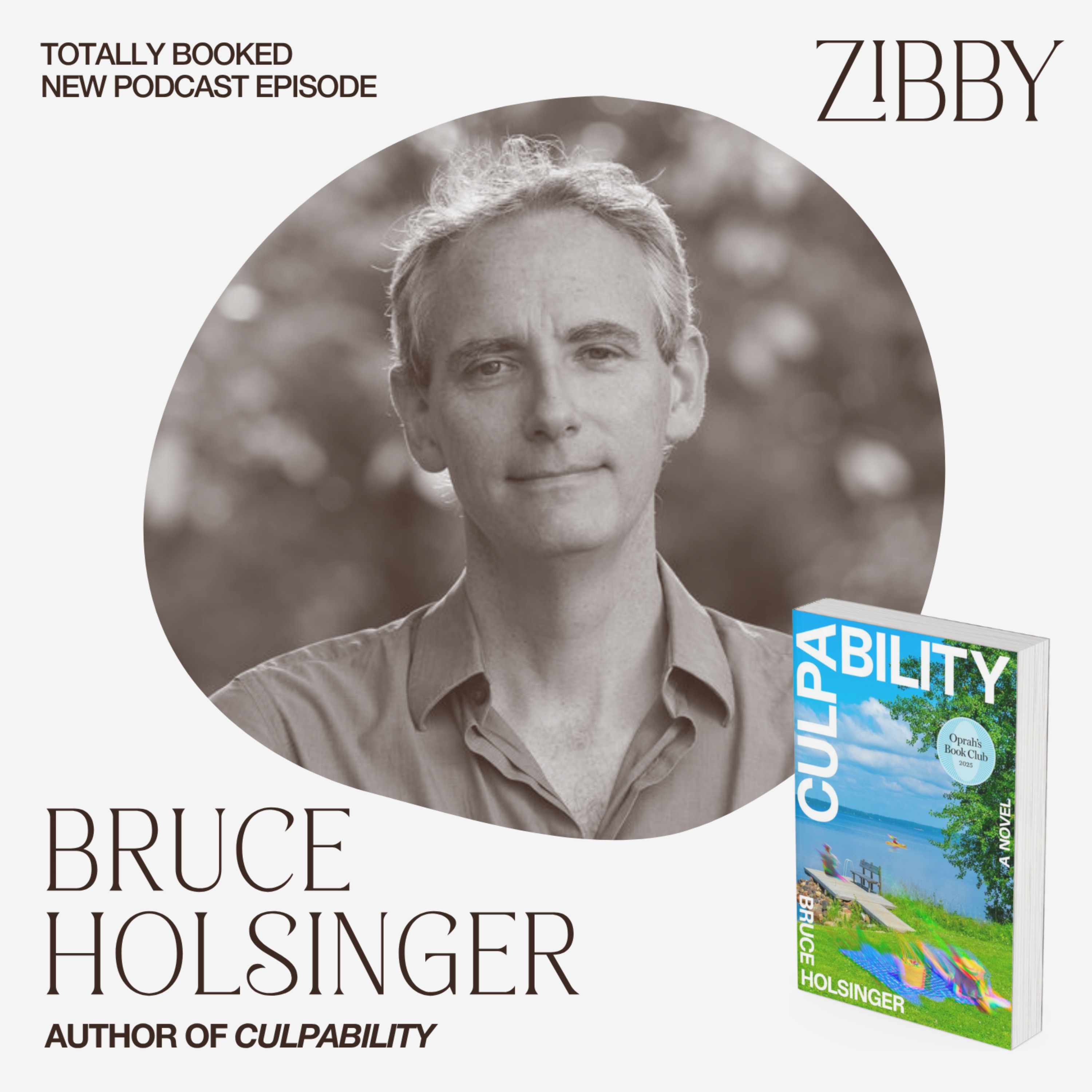
Totally Booked with Zibby
Bruce Holsinger, CULPABILITY
00:22:49
On AI, Family Secrets, and the Novel Everyone Is Talking About
Loading summary
Transcript61 lines
- [00:01]
A
Welcome to Totally Booked. I'm Zibby Owens. I've interviewed more than 2,000 authors on this show and learned endless amounts about storytelling, reinvention and life itself. Because when you talk about books, you're really talking about life. So get ready to hear from today's best authors, the best selling and the not yet discovered. Come find your next great read and the story behind it. Enjoy. I was so excited to talk to Bruce Hulsinger about culpability. My mother recommended this book to me, said, oh my gosh, Zib, you have to read this. So I read it. Even though it had come out a year before, it had been an Oprah's Book Club pick and I don't know how, but somehow I had missed it and I read it and could not put it down. I can't stop thinking about it. And so I posted about it. We started DMing and I was like, could I talk to you like tomorrow? So this was a hastily scheduled podcast because I just had to talk to Bruce to hear more about him and his life and how wrote this extraordinary book. More About Bruce Bruce Hulsinger is the author of four novels, including the Displacements and the Gifted School and many works of nonfiction, most recently On Parchment, Animals, Archives and the Making of Culture From Herodotus to the Digital Age. His books have been recognized with the Colorado Book Award, the John Hurd Fisher Prize, and more. In addition to him being an Oprah's Book Club pick and the recipient of a Guggenheim Fellowship, Hulsinger teaches in the Department of English at the University of Virginia, where he specializes in medieval literature and modern critical thought and serves as editor of the quarterly journal New Literary History. I loved this book. If you read it, I don't know. DM me, I want to talk about it. I feel like it's such a provocative AI centric family story that I just cannot get enough of. Welcome Bruce. Thank you so much for coming on Totally Booked to discuss culpability. Congratulations.
- [01:55]
B
Thanks so much. I'm happy to be here with you.
- [01:57]
A
As you know, I'm obsessed with this book. I could not stop reading it. I know I was late to the party. I don't know how. It just somehow I don't know. Sometimes I just miss things the first go round and I'm so glad that I read it. I am obsessed. And wow, I haven't stopped thinking about it.
- [02:12]
B
Oh, good. I'm glad to hear that. Well, so many books come out every month that, you know, how can you keep track? Even you, I guess you have a Hard time keeping track of.
- [02:21]
A
Okay, for those who haven't read Culpability yet, would you mind telling them a little more about what it's about?
- [02:26]
B
Yeah. So the premise of Culpability is about how a family gets through an accident. Something. Something bad that happens to them. They're in a car on the way to a lacrosse tournament. They get in a really awful accident and the people in the oncoming car killed. A few members of the family are. Are injured, but nobody's super seriously. But the twist is that the car is in self driving mode. It's in autonomous mode. So the novel ends up being about issues of moral responsibility in the age of artificial intelligence. Every member of the family is responsible in some way for what happened on the highway that day. And the whole rest of the novel after the accident is the family kind of reckoning with the aftermath, reckoning with this changing world around them and how it bears on their own relationships to each other, whether sibling to sibling, parent to child, spouse to spouse. It just gets very complicated and sticky and everything is even more. Made even more complicated, by the way. AI is just interpenetrating so many aspects of it.
- [03:28]
A
Oh my gosh. Well, there are so many compelling themes. The characters are so incredibly real. I mean, I know that sounds like a trite thing to say about a novel, but the way you developed each one of them in such detail, I really felt like I got to know each one. Can you just speak for a minute before we get into AI and everything Just about you as a novelist, developing characters and making them each so real clear to the point where I feel like I could tell maybe what they were going to do next by the end of it.
- [04:01]
B
Oh, that's such a great compliment. Thank you, Cindy. Yeah, you know, this is my culpability as my fifth novel. And my first two were historical novels and they were set in late medieval England. And for me, one of the hardest things has always been character. And I often will set aside. I've probably written twice as many novels as I've published because I set aside books when I can't figure out who my characters are, when I can't really get inside their heads. And often, you know, writing. It's only when I really start loving someone that the novel really starts filling out and the story comes. And story always comes with character. I think theme does too. I'm a very. I like writing suspensefully. I'm a very big. I'm not an outliner, but I like to think about plot and how you keep things moving pretty Quickly, but that also just is never sacrificed here. And in the case of culpability, it was particularly difficult because all my other novels are written in third person. Multiple points of view. This is the first time I've written a first person novel where you really have one character. There's a lot of other ancillary elements of the book, we can talk about those. But for the most part, the book is written in the point of view of the dad who's sitting in the passenger seat when this accident happens. And that didn't start out that way. The first draft was in three or four different points of view. And it just wasn't working for me. And it was because I couldn't nail the main character or one of the main characters, Lorelei Shaw. She's the wife of Noah, the mom of the kids in the car. She's also a world leading expert in the field of AI And I was just trying to write from her point of view and I couldn't. And I realized really one of the things that the story is about is about Noah's relationship to her. And what if I kind of narrowed everything down so that the book would be, yes, the story of an accident, the story about ethics and AI, but also the story about this woman, this remarkable genius, who is only partially known by her husband. And that's when I really felt like I started to nail. But it was precisely by getting out of her head and getting into the head of only of her husband is when it really started to click.
- [06:13]
A
Wow. Well, Lorelai is probably of all of them, the most of an enigma, Right. She has so much going on, even when we look in her, it doesn't even make sense necessarily to the outsider because she just has so much going on. And yet here she is, especially by the end, in such a position of importance in the communication about what AI is going to do for the world. And yet we have to see her in the kitchen making breakfast. So how do you sort of square both of those?
- [06:46]
B
Yeah, how do you create this kind of depth to her? And for me, it's always important with characters, especially when I'm writing adult characters is their jobs, their careers, what obsesses them when they're out of the house, away from their families. And in her case, once I figured that out, it became, I wouldn't say easy, but it became much more of a joy to kind of fill out those other aspects of her life.
- [07:09]
A
And what obsesses you when you're out of the house?
- [07:12]
B
Oh, well, I'm a. In my Day job when I'm not writing novels. I'm a professor of English literature. I teach at the University of Virginia and so I work on medieval literature. I'll often teach classes about Chaucer or our big literary survey that goes from Beowulf to Paradise Lost. Yeah, so I. That's what obsesses me. Medieval books, manuscripts, medieval stories, but they also inspire me in my working on contemporary literature. I'm always interested in stories within stories like in the Canterbury Tales which has I think something like 15 or 16 different genres of literature represented within it. And I like writing across genres and playing with, with kind of metaliterary gestures in my book.
- [07:53]
A
So interesting. So the AI component. I'm fascinated like everyone probably in the world right now with AI and I feel like I only recently have gotten into using it myself because I was so scared of it. And now that I'm deep in it, it's become something consuming me. And so the book was really timely in that way at least for the rise of AI becoming not just for the industry, but the average person at home is now feeling like it's part of the day to day and now it's Google is AI and you can't get away from it. It's just integrated everywhere. Lorelei has a very unique viewpoint of this as someone who is really driving the ship. Actually we could talk about ships later but driving the boat on this one. When you think about AI and the self driving car even and you know, I took my first Waymo a couple months ago and you know how all of this affects how we make decisions. Do you feel there are clear answers here? I know we look at all of the sides of this but how do we know what is right and what is wrong and who's in charge and all of that. Does this consume you as well?
- [09:04]
B
Oh yeah, I'm really, I mean it consumed me when I was writing the book and I would say even more since the book came out. Just doing so many events really at this point around the world and, and talking to like every time I'll do an event I'll get a question from somebody in a completely new industry to me where AI is becoming, you know, just the kind of bottom line where everybody is thinking about it from the medical community to, to people working on autonomous weapons. I was at a conference down in Alabama with where there was a whole panel on autonomous weapon systems and there is a small theme of that in culpability to self driving cars, which is of course what the precipitating incident in the book is, is really about. And you know, the novel started out having nothing to do with AI. It was just a simple kind of analog story about same premise, family in a minivan, they have an accident, everybody's responsible in some ways. But it didn't have anything to do with self driving cars or AI. And then I was on a tour for my last book, the Displacements. I was out in Santa Monica and I was on my way to a bookstore event, not at Zibby's at that time, but at a different one.
- [10:10]
A
I'm glad you did one, everybody.
- [10:13]
B
And I got, I got in a, a wayo for the first time and it really shook me and I just. And as I was mulling over how it felt not to have a driver, I just thought, okay, well that would be really interesting if the car could be an autonomous mode. But I wasn't thinking about AI. And then I, I start. Right. Rewriting it with that in mind. And then ChatGPT comes onto the scene. Suddenly the whole world is talking about AI. And I realized what the book is about. And you know, the, the everything, the, the, the discussion about safety versus, you know, human centric versus AI. That's all at the center of the way Lorelei thinks about autonomous navigation. Right. We lose 30, 000 people on our roads every day in the United or every year in the United States. The safety studies that have been done in, I think especially in the Bay Area on wemos versus Ubers and Lyfts, there's really no comparison in terms of incidents per passenger hours. But just the other day a Tesla in self driving mode got into a building and an elderly woman died. And you know, so if that had happened in a regular old car, you never would have heard the story.
- [11:26]
A
Right.
- [11:26]
B
It wouldn't be news. It'd be a tragedy, but it wouldn't be news. So I think the world is very nervous about these systems and driving, let alone everywhere else. Yeah, it's a very mixed bag.
- [11:38]
A
I was definitely really scared sitting in the backseat.
- [11:41]
B
Oh yeah.
- [11:42]
A
Mostly because you can't talk to the person. Like at least in an Uber you can, I mean, usually, you know, speak to them and if they speak your same language and say, you know, careful or watch out or whatever, which of course might actually be worse than not saying anything at all. Yeah.
- [11:58]
B
And you get in an Uber or a Lyft, what's the first thing the driver does? They start looking at their phone for their next fare. Right. And their eyes are off the road. That's, you know, they're gig workers. That's what they. They need to do to make money.
- [12:11]
A
Yeah, but I still think I was more nervous merging onto a highway in the passenger seat when my son for the very first time went onto a highway than I was in a. I still remember that with no driver.
- [12:24]
B
Yeah.
- [12:25]
A
So, you know, human error versus sheen learning. I don't know.
- [12:30]
B
Yeah, exactly.
- [12:31]
A
Today's episode is sponsored by Quints. The best summer pieces are the ones you end up wearing on repeat. Comfortable, versatile, and somehow right for almost every occasion. That's why I love Quince. They make elevated essentials using premium materials like European linen, organic cotton, and washable silk polish without the traditional retail markup. Quince's 100% European linen pants, dresses and tops are the pieces you'll reach for all summer long. They're lightweight, effortless to style, and start at just $32. Their denim is soft and comfy, and their organic cotton sweaters are perfect for layering when evenings cool down. Personally, I love my white tank dress that I wear all the time. I've actually pinned it to my Instagram as one of my top three posts. I also love my new jean jacket from there and am just so grateful to Quince every single day. Especially because quince is priced 50 to 80% less than similar brands. And it's not just apparel. Quince also offers elevated essentials for your home, from bedding to bath and all the kitchen essentials and furniture, so make your summer wardrobe feel easier. Go to quince.com zibby for free shipping on your order and 365 day returns now available in Canada too. That's Quince. Q U I n c e.com Zibbe Z I B B Y for free shipping and 365 day returns. Quince.com Zivvy enjoy you also in the book, yes, AI, but also, as you said, love, which I feel is the counterpart to AI. Like it is the counterbalance rather. Right. The more we become automated, the more we think about what life means. And I feel that love rises up to the top as one of the guiding principles. And so you have both the escalation of AI, but then also both young love, midlife love, sibling love, parent love, and all the different ways from like, lust and newness to very old love to the couple next door. I mean, you have so many ways of showing us the power of this. Talk a little bit about portraying love and how you feel its importance lies in the current landscape.
- [14:50]
B
You know what? No one has ever asked me that question. Before. I'm so thrilled to think about it that way. Yeah, I guess it's, you know, when you're writing about a family, you have so much kind of inherent conflict, right? You have conflict between siblings, you have often conflict between spouses. How many novels are written about that? And you know, that, I guess, when a family is going through something, what is a source of resilience, what can get you past that? And in my last novel, the Displacements, it was about the World's first Category 6 hurricane and what it does to South Florida and to Houston. And this, you know, we follow a family that's seemingly very well off from South Florida. They end up in a massive kind of mega shelter in Oklahoma for people who are displaced, you know, and they're miserable. But really what gets them through it is these new bonds of love, especially from a mother to her stepson after her stepson's father dies and she really becomes his mother in that story, even though he's very. They're very, you know, clashing at the beginning, driving each other crazy and in culpability, I guess. Similarly, you know, we start out, I don't think Noah and Lorelai are estranged, but they are, you know, they have a very close, kind of loving, sexy marriage. But they, you know, there are things about her that he just doesn't know, doesn't comprehend. And he's allowed that ignorance to kind of cloud his vision of her and maybe make. Help him make bad decisions because she suffers from ocd. She's. She's really obsessed with her job. And, you know, she's in two moves in this world of tech billionaires and so on that he just has no access to, and he doesn't want access to it. And yet, you know, by the end of the story, I don't want to give anything away, but, you know, they've discovered new ways to love each other. That is new ways all through new ways they've learned about each other, new things they've learned about each other. And the same way for their son Charlie, who really goes through some things, but ends up, you know, okay in the end. But he's changed a lot, and that change, I think, has helped him see
- [17:00]
A
his parents love and so interesting. Do you feel like you think now more about what it means to be human when the world.
- [17:07]
B
Oh, I do.
- [17:08]
A
Right. Like, what does that even mean?
- [17:09]
B
Absolutely. Well, in fact, I, you know, this. This writing this novel, and again, mostly just the year or so since it's come out, I've started working on a new project that's about AI and the humanity of art. Because there's so many artists and so many different mediums that have been experimenting with what we call artificial intelligence for so long. And I think right now, all the discourse and polemic, the humanity of the artist is getting lost a little bit. So this book is about that. It's about pushing back against what? Those sources of humanity that are always going to be discernible. No matter what role AI has in producing art, I don't want it to have a role. But it's already. Way before we were arguing about ChatGPT, there were artists like Dario Amadei, Sheila Hedy writing a story in the New Yorker using a kind of early version of a chatbot. So to me, those. It's something that, you know, the history of art has always had that kind of tension between the medium, the machine, and the human. And that. That is. This is just another part, I think, of that long history.
- [18:15]
A
Oh, I can't wait for that. What's that called? Do you have a title yet?
- [18:17]
B
Yeah, I think it's. Well, at the moment, it's called Songs of the Parrots. Artificial Intelligence and the Humanity of Art. Parrots comes from this very famous early essay about large language models, where they were. Where these. The metaphor of parrot is used to talk about how AI, you know, shoots our language and everything back to us. I think it's a helpful one.
- [18:41]
A
And culpability was an Oprah's Book Club pick. Did that change your life? How has your life changed since that happened?
- [18:46]
B
Oh, my God. It's completely changed my life in ways that I never could have foreseen. And it, you know, it's just given the book much more visibility than any of my other novels have had. But it's also made the book part of a public conversation about AI that I think has, you know, completely changed my brain chemistry in ways that I wouldn't have anticipated. Yeah, but she was so generous, you know, it just. It was like the lightning bolt out of the blue last summer, you know, there were 200 novels that were published over the summer that easily could have been her pick. So I just felt so, so lucky to get that nod.
- [19:20]
A
I'm sure more than 200. I'm sure many more that were.
- [19:24]
B
Well, I mean, I imagine ones that were sent. Right. I think. I don't think imprints are allowed to send everything that comes out.
- [19:30]
A
Yeah. Oh, my gosh. There were times where I wasn't sure. There was one moment in particular where I was like, oh, wait, maybe I'm not supposed to really like Noah. Like maybe he is more sort of culpable or more enmeshed in some negative decision making or whatever. How do you feel about writing characters with all of that nuance and having times where your narrator is not betraying the reader, but definitely like veering off the course a little bit.
- [20:03]
B
Yeah, yeah. Because Noah, in terms of just his, what he knows he's not an unreliable narrator, but he is a little bit of a clueless narrator, oblivious at times. Right. And I, I never, I, I probably write a lot of unlikable characters just because I love unlikable characters. I love getting into a novel where someone is just really detestable and I, I, but I find things to root for or to hate read or whatever, I, I really enjoy that. Like one of my favorite reads recently was Yesteryear, and that character was purposefully unlikable. Of course she was. That novel doesn't need any more publicity from me, but I just enjoyed that part of it so much. Just kind of getting into that. And that's why I always love 19th century novels like Charles Dickens. Some of my favorite characters are people like Uriah Heap. Right. Just these detestable old characters. But, but you just, you want to see what they do in the world. So I've, I've always, I kind of embrace unlikable characters in many ways, so.
- [21:04]
A
Interesting. I love it. Well, what advice do you have for the aspiring novelist?
- [21:09]
B
Well, the biggest piece of advice, it's the biggest cliche, but it's stick to it. And what I mean by that especially is often what most keeps aspiring novelists from publishing a novel is only writing one novel. Right. And often, you know, when I'm teaching a class or when I'm, when I'm working individually in a mentoring situation, you know, someone will finish a novel and they'll, they'll be in great shape and they'll query it, they'll try to get an agent and they won't, or they will get an agent, the agent will send it out, they won't get an offer, and then they'll just start working on that same novel again rather than starting something completely new. I think, you know, if you finish the novel, that's great, you've done a huge thing. Don't put it away, don't think about it and start something else because it's going to be better. That was my lesson. Now at the same time, of course, you see 25 year olds getting huge success for their first novel, but that's very Unusual. I think it's much more normal.
- [22:04]
A
Quite annoying.
- [22:05]
B
Quite annoying. Exactly. Thank you. Yeah. But good for them.
- [22:08]
A
Yes.
- [22:08]
B
But for me, I think I much have the much more normal career in that I spent 10 or 12 years trying to write, trying to get a novel that could get in an agent's hand that she would represent. And it finally happened, but after a long time.
- [22:25]
A
Interesting. Well, I think about Dani Shapiro's Signal Fires, which she found, like in her closet after such a long break, and then she went back to it finally with a whole new attitude and it became. Yeah, but, you know, you just never know.
- [22:36]
B
There's a lot of stories like that. I'm sure you've heard many of them.
- [22:39]
A
Yeah. Well, I have a request which I don't even know how you would pull this off, but I feel so attached to this family. Like, I would like more updates, so I feel like you should do a holiday card this, this season with like, what they're all up to. A little holiday letter. You can just post it or something. Because I would like the update and I want to keep track of them and see how they're all doing. So if you get extra time to do a little, you know.
- [23:04]
B
Yeah. It can be so hard because I'm, I'm trying. I'm in the middle of this, this new novel I'm writing another contemporary family drama and I still do so many events for culpability that those characters keep bubbling up.
- [23:17]
A
Yeah.
- [23:17]
B
But maybe I should say goodbye in a holiday letter. It's a great idea.
- [23:21]
A
Well, maybe you could have them have little cameos in your new book. I always love when authors do that. It's very fun.
- [23:27]
B
Yeah, that's an idea.
- [23:29]
A
Bruce, thank you so much. Thank you for all the thought provoking themes and issues that are continuing to percolate in my head, but also just the story of how one family gets through life because ultimately that is all we were all doing, is just one family getting through life. So thank you for all of it and the experience of reading such great fiction.
- [23:51]
B
Well, thank you, Zibby, for having me.
- [23:52]
A
My pleasure, my pleasure. All right, you get to work on the holidays.
- [23:55]
B
Great. Well, so good to talk to you.
- [23:58]
A
So good to talk to you too. All right, take care.
- [24:00]
B
Thanks. Take care. Bye. Bye.
- [24:02]
A
Thank you for listening to Totally Booked with Zibby, formerly Moms don't have Time to Read Books. If you loved the show, tell a friend, leave a review, Follow me on Instagram, ippyowens and Spread the word. Thanks so much. Oh, and buy the books.