← Totally Booked with Zibby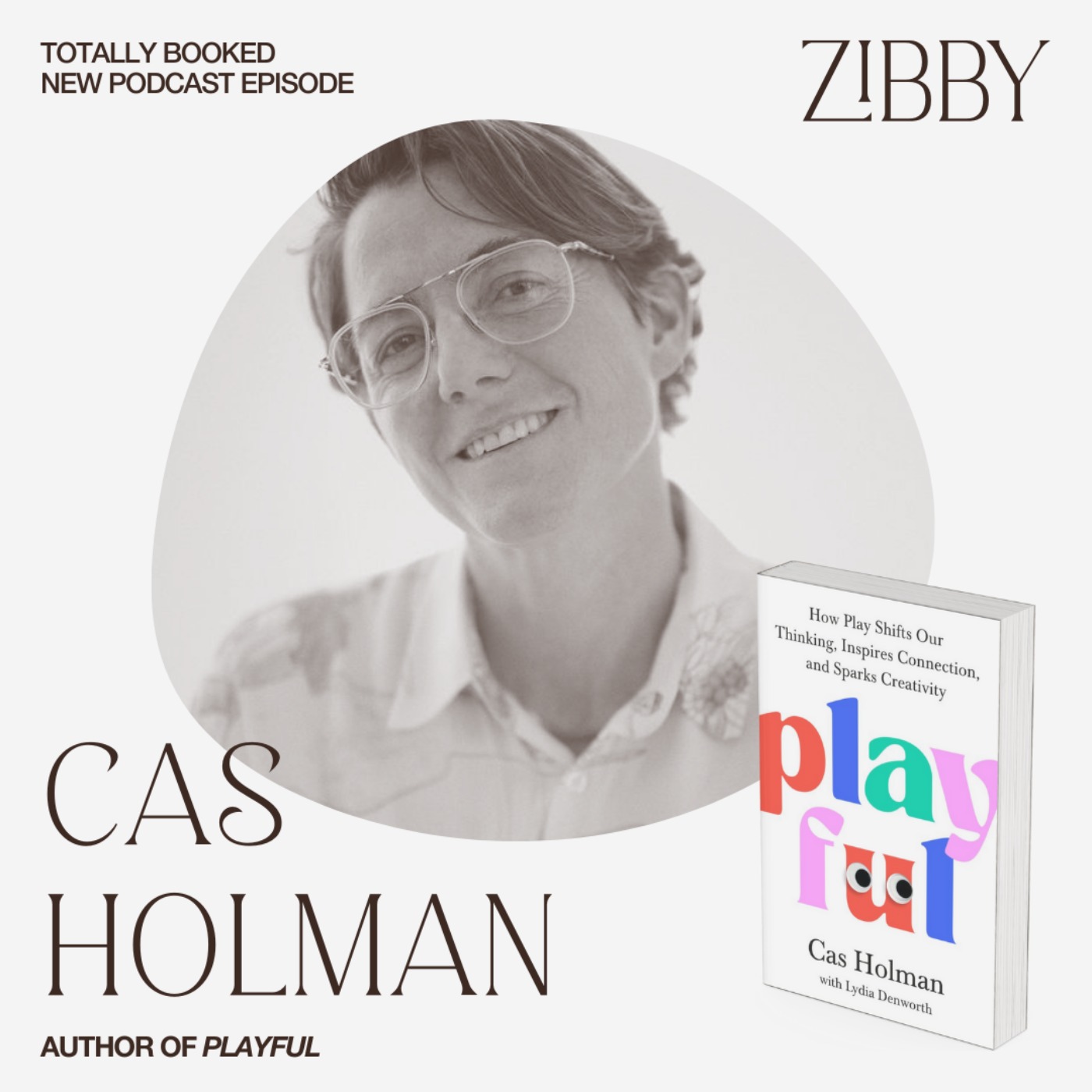
Totally Booked with Zibby
Cas Holman, PLAYFUL: How Play Shifts Our Thinking, Inspires Connection, and Sparks Creativity
00:27:23
Loading summary
Transcript61 lines
- [00:00]
Ad Voice
Did I talk too much? Can't I just let it go?
- [00:04]
Zibby Owens
Thank you so much.
- [00:09]
Ad Voice
Take a breath. You're not alone.
- [00:12]
Zibby Owens
Let's talk about what's going on.
- [00:14]
Ad Voice
Counseling helps you sort through the noise with qualified professionals and online therapy makes it convenient. See if it's for you. Visit betterhelp.com randompodcast for 10% off your first month of online therapy and and let life feel better.
- [00:30]
You've worked hard to build your business. SimpliSafe helps you protect it with SimpliSafe for Business, AI powered cameras watch over your entry points and instantly alert live monitoring agents. They can deter intruders before they get inside. It's protection built for growing companies. 24. 7 monitoring, no contracts and a 60 day money back guarantee. To get 50% off your new system, go to simplisafe.com podcast that's simplisafe.com podcast for 50% off there's no safe like SimpliSafe. If you're a maintenance supervisor at a manufacturing facility and your machinery isn't working right, Grainger knows you need to understand what's wrong as soon as possible. So when a conveyor motor falters, Grainger offers diagnostic tools like calibration kits and multimeters to help you identify and fix the problem. With Grainger, you can be confident you have everything you need to keep your facility running smoothly. Call 1-800-granger clickranger.com or just stop by Granger for the ones who get it done.
- [01:34]
Zibby Owens
Hi, this is Zibby Owens and you're listening to Totally Booked with Zibby, formerly Moms don't have Time to Read Books. In my daily show, I interview today's latest best selling, buzziest or underrated authors and story creators whose work I think is worth your time. As a bookstore owner, publisher, author, and obviously podcaster, I get a comprehensive look at everything that's coming out and spend my time curating the best books so you don't have to stay in the know. Get insider insights and connect with guests like I do every single day. For more information, go to zibbymedia.com and follow me on Instagram IBBEowens. Cass Holman is the author of Plain.
- [02:20]
Interviewer
How Play Shifts Our Thinking, Inspires Connection, and Sparks Creativity.
- [02:24]
Zibby Owens
Cass is the founder and chief designer of the toy company Heroes Will Rise and a former professor of Industrial design at risd. Cass travels the globe speaking about playful learning, the design process, and the value.
- [02:36]
Interviewer
Of play in all aspects of life.
- [02:38]
Zibby Owens
She has shared her perspective in workshops.
- [02:41]
Interviewer
And seminars with teams at Google, Nike, Lego Foundation, Disney Imagineering, and art museums around the world. Some of her designs include toys like.
- [02:49]
Zibby Owens
Rigamajig and Gimo, as well as play experiences at the Highline and the Liberty Science Center. Cass lives in Brooklyn and designs from her studio in the Catskills, New York.
- [02:59]
Interviewer
Welcome, Cass. Thank you so much for coming on Totally Booked to talk about playful how play shifts our thinking, inspires connection, and sparks creativity. Congrats.
- [03:09]
Cass Holman
Thank you. Thank you so much. I'm really, really excited to have some of the ideas festering out in the world.
- [03:16]
Interviewer
Awesome. I have to admit, and this is quite lowbrow of me, but I did watch Grownups last night with my kids. I don't know if you've seen the Adam Sandler movie, which is all about getting back to play and skipping rocks on the surface and putting down devices and using nature to make forts and all of that stuff. So I had just read this book and then I watched that and I was like, all right, the universe is pointing me towards more. Play is basically what's happening.
- [03:40]
Cass Holman
Nice. I'll have to see that. That's funny. I was also just a couple days ago, skipping rocks with kids, trying to. It's interesting. Trying to teach rock skipping. It's like, it's an odd. It's more of a body posture than any other type of skill. I think it's like, put your body in the right place and the rock will jump. I don't know.
- [03:58]
Interviewer
Yeah, I don't know. I've never been particularly great at it. But anyway, I guess it's an art form. But anyway, that's one type of play. Of course, you outline like 10 different types of play in the book and all of that. But tell listeners about your book, your work, and your passion for play.
- [04:14]
Cass Holman
Yeah, so actually the book is for adults. Most of my work has been focused on children and creating and designing and advocating for free play for children, which is kind of play that is intuitively driven and child directed. So things that don't have a lot of right and wrong answers, things that kind of usually require the child show up and figure out what they want to do and how they want to do it. And it's often very collaborative. And so my design work for over 20 years has been focused on that. And in the time that I was doing that, people were constantly asking me, what about adults? And I would kind of brush the question off in part because I kind of thought, well, I'm not really qualified for that. What we need is therapy. Right? And then after a while I kind of realized that not only do a lot of the same principles that I design with for children apply to adults, but in fact, I had quite a bit of experience working with adults as an industrial design professor and an art professor for over 10 years at RISD. I was faculty there working with young adults. And what I was doing in the classroom or the studio was create the conditions for them to feel safe in order to play, which is largely what art making and design and any creative work is. And so I partnered up with Lydia Denworth, my collaborator in the book, because I love a collaborator. For me, language and conversation is quite playful. Ideas are playful. And so I had to really talk it through with someone and kind of figure out not only, like, what is it that adults need and how can we, like, inform that with science and with psychology and with whatever research we can find, but also how do we kind of like, communicate that in the most effective and efficient way? Right. How do we tell the story of why adults need to play and how to do it? And so, yeah, it was really fun. And I think that we. I think we're onto something and kind of where we got with the. With the different kind of principles, but also free play, specifically why that matters so much and why adults can really benefit from reconnecting with their free play.
- [06:32]
Interviewer
Amazing. And just as context for people who don't know. You have been on Netflix talking about your design and the abstract. You did the High Line. What are they called? Widgamajiggots or something? Rigamajigamajig, Reagan Magig and the High Line. And just all these amazing projects for the greater good. Right. That you keep putting out into the world and you have your, I guess, reasons or motivations. Maybe I could. Could I read a couple things?
- [07:01]
Cass Holman
Oh, sure. Please. Yeah.
- [07:03]
Interviewer
Okay. You said. Looking back, I can see my experience of those years in the context of society's expectations. On the one hand, it was a time of adventure, fueled by curiosity. On the other hand, I had no idea what I was doing or wanted to do with my life. The guidance office in my high had a filing cabinet containing folders about different possible jobs. I pored over the files to try to imagine myself in any of the jobs I found inside them. Accountant, secretary, veterinarian, doctor, nurse. Not one of them inspired or excited me. They were also limiting. These are the only things I can do. These are my only options. We're encouraged to follow our passion. Except that following your passion doesn't always line up with following the rules and norms of adulthood. We Let people follow their interests within the boundaries of understandable jobs. Okay, so take us from there to you today and how this happened that you became a play advocate and built your own job.
- [07:56]
Cass Holman
Yeah, yeah. And I think that I was describing kind of my high school years and then even my early 20s. Through my early 20s, I kind of continued adventuring around. I was a research assistant in the Galapagos Islands for a year and change. I was a chef for a very long time. Pastries and a breakfast cook, like a short order cook. While I was in undergrad, I worked for a furniture company. So I adventured my way into what I do now. And in a way, all of it, I think, informed how I do what I do. So, yeah, I think in particular the pace at which things change and always have, but now is particularly fast. We have no idea what jobs are gonna. Right. And I think less and less we're understanding people's work as jobs. It's needing to be less tied to work or people are identifying more as having a life's work that may not be related to a job. For some people, their life's work is their family. For some people, their friendships or their community is their life's work. And then of course, often we have to figure out how that might also support us or pay bills that maybe aren't related to that particular work. Right. But so I think that increasingly there's a need to connect our play and what we've thought of as work. And I think there's an opportunity there that I was striving for without realizing it, but I was really trying to bring together the fact that, like, I had a drive to be making art and having an impact on the people around me and the, the bigger world, the kind of greater good, as it were, and also the very real need to support myself. And I think I was like in my 30s when that kind of came together in the form of design, which I, you know, growing up in rural California in the 80s, I did not know that design was the thing. So I'm grateful now that there's like a kind of a more of exposure of the way that people can live their lives and that everybody is a little more aware and it's more accessible to realize, like, how many different ways we can live and be in the world. And, and I think that we'll continue to. To want. People will continue to want to bring together the kind of. You know, when I came up as a. As a creative person, the, like, the most supportive thing my family ever did was Say like, you know, this is, you'll make you keep making art at night. But like, here's the thing that'll give you a lot of time, right? Like my dad wanted me to be a firefighter because then I would have time off to make my art, which felt really, really supportive. And also I was like, but aside.
- [10:41]
Interviewer
From part where you have to run into burning buildings, right.
- [10:45]
Cass Holman
I was like, but my art could also be the job. But I didn't know that. I was trying to figure that out.
- [10:51]
Interviewer
Oh my gosh. Can I read just one more section and then get into some of the principles and everything? Okay. So you were talking about your Netflix documentary series. It featured you and your work. You said, I'm very open about my own struggles in school and to be seen and accepted for who I am. After it aired, my inbox was flooded with messages. Then later you say, I think my visible lack of regard for adult rules resonates with people. They get emotional telling me about it and sometimes I get emotional listening. Ignoring those norms is so natural for me now that I don't think about it much. But I've been known to cry when I hear from people who are struggling and I catch a glimpse of how oppressive it is not to not be able to be yourself. Those messages in my inbox are a testament to this. And then you later say, some messages are so full of pain and rejection, they are frankly heartbreaking. Play taps into our authentic selves, but those selves don't always align with the community we find ourselves in. So talk a little bit about that.
- [11:46]
Cass Holman
Yeah. And I had opportunity to also to invite some of these people to different events. This, all the abstract aired right before the pandemic. So there was this little window where there were a lot of events where when people reached out and were nearby, I'd say like, hey, I'm going to do a talk over here if you can come. So I did get to meet some, some of the people who'd reached out which was really lovely and you know, for many it was, it was about their children that their kids didn't fit in in school either because they were gender like non binary or just kind of gender weirder tomboys. However they described it in their, in their notes to me and also often it was kind of parents who were worried that they're because their kids didn't fit in not just because of their gender, but maybe they were neurodivergent in ways that, that weren't understandable or easily readable. They were really concerned and something about seeing and hearing from me made them feel like they either like understood their children differently or felt like reassured that their children would be able to find a way. So that felt really good. And then also from adults who kind of experienced similar things but never had language for it or had never heard something that resonated as clearly or as specifically with their experience. So that's been really nice that it it kind of affirms the need to share. And the other thing that has come in quite a bit is just how much of a difference it makes when people can kind of understand each other and kind of watch something together that gives them a platform or a language again to kind of talk about. So I think most parents love their kids and want to understand them, but understanding isn't essential in loving and respecting someone. Right? But it's nice. It's like a nice to have but not a need to have. So I think that not just caregivers and kids, but also kind of partners. It's a new way in of understanding when you can play together. And so what I also hear from people is that it's given them another way to try to connect or that they'll play together and kind of be more cognizant of what they're noticing in the meantime. Right. Like being kind of self aware as you're playing, but also being open to what we can discover about each other while we're playing. I think it's just a whole new way of understanding someone that you might already love, but it is different to be able to understand.
- [14:15]
Zibby Owens
Today's episode has been sponsored by quints. Cooler days call for layers that last and Quince is my go to for quality essentials that feel cozy, look refined.
- [14:25]
Interviewer
And won't blow your budget.
- [14:28]
Zibby Owens
Think $50 Mongolian cashmere premium denim that fits like a dream and luxe outerwear you'll wear year after year. These are the pieces that'll turn into your fall uniform. I'm eyeing their wool coats. They look designer level but cost a fraction of the price. And the quality honestly just as good, if not better. Because Quince partners directly with top tier ethical factories and cuts out the middlemen. They deliver luxury quality pieces at half the price of similar brands. It's the kind of wardrobe upgrade that feels smart, stylish and effortless. I am particularly a fan of the Fisherman cashmere Mongolian sweater in brown. The light brown is already sold out. I am obsessed and it is so cozy and is a staple. Find your fall staples at quints. Go to Quince.com Zibby for free shipping on your order and 365 day returns. Now available in Canada too. That's Q-U-I-N C E.com Zibbee Z I B-B-Y to get free shipping and 365 day returns. Quince.com Zibby.
- [15:36]
Ad Voice
Why does every recipe I try need 18 ingredients, including a jar of something paste I'll never use again but will sit in my fridge for nine months? I just want dinner in the oven fast. That's why I love Blue Apron's new one Pan Assemble and Bake meals. They send you fresh ingredients that are already chopped. All you do is put it all together and bake. That's it. No chopping, no weird leftovers. Just delicious, easy to make meals. Get 20% off your first two orders with code APRON20. Terms and conditions apply. Visit blueapron.com terms for more.
- [16:06]
This holiday Give the gift that says let's cancel plans and just lounge. Meundies has dropped their new holiday collection, and it's made for maximum cozy. We're talking soft as snow, ultra modal fabric, festive prints, and loungewear. So comfy your couch much might get jealous. Onesies, hoodies, joggers, even delightfully quirky holiday designs. You're welcome. Knock out all your holiday gifting needs with deals up to 60% off at Meundies.com acast enter promo code acast that's Meundies.com acast code acast.
- [16:47]
Interviewer
It'S like how you're supposed to go on drives with people so you can like, look forward and have the boundaries you feel more comfortable sharing. That's like step one, then step two, go play. Then you get into a whole new realm. So tell me about why play is so important for adults as well, and setting the conditions in your life so that play enters.
- [17:12]
Cass Holman
Yeah. The three conditions that we've kind of tried to distill for an adult to kind of reengage with free play are release judgment. That's a big one. One of the reasons that it's hard for us to play is that we fear judgment. And I frame things as kind of we all have an adult voice and a play voice. I mean, of course we have many. We have a lot of input guiding us through our day. But I think we have a play voice. Who's the voice that says, like, hey, look at that hill. Like, wouldn't it be fun to go roll down that hill? Or like, ooh, a ball. Don't you just want to kind of bounce It. Or like, you know, when you're in line at the grocery store, maybe, you know, a song comes on and you want to kind of dance around a little bit. And that's your play voice. And your adult voice is the voice that says, no, you can't do that. Like, you're. You'll look silly, or, like, people won't take you seriously, or your shirt will get dirty. You can't roll down a hill, you know, or people will laugh at you. And so your adult voice is trying to protect you from social rejection. Of course. And I think that this all starts, like, during adolescence and during grade school where we're taught to not play. So I don't think that we necessarily forget to play or stop needing to play. I think it's that we learn to not play. Right? But it's always. It's always there for us. It's always something that can be incredibly useful in connecting to ourselves and each other. It's just that we've. We've learned to not do it and really, like, embodied that information that play is dangerous. Play is misbehavior. Play is. Is not safe because of the need for social acceptance. So the. The first one is. Is release judgment. The second one is to embrace possibility, which is the kind of, you know, moving with curiosity, like, what might come and trying to be comfortable with whatever the outcome is, right? There's, like, opportunities everywhere. You just pick up a. A rock and find an animal, or you take a different route through the city and you discover a new park or a shop or something. And then the third one is reframing success. And that's where I think that one in particular with adults is tricky because we're very attached to success. I think it reassures us to know what we're doing and feel confident in whatever form of success. Maybe it's like we do the sport that we're kind of good at because we experience success and we're good at that, or at work, we might kind of tend to play it safe because we want to show that we're good and feel successful and that we're good at what we do, and that makes us feel good. But if we reframe success and think of it not as getting the right answer every time or kind of playing it safe, but if we think of success as being bold or being brave or trying something new or discovering something that no one else had thought of, which is also, I think, more likely in play because we embrace the potential for failure. If we reframe success Then we get to wind up in new places and experience new things, which helps us grow. And growth also feels good. If success is that we grow, we're much more likely to grow when we try new things that may or may not work out or we may or may not be good at. Those are the three tenets that will help an adult kind of step into a playful space.
- [20:32]
Interviewer
I think it really helps to have a kid along. Like, I feel like when I'm with my kids, I feel less stupid than. Perhaps I shouldn't say the word stupid, but I feel like when I play, the judgment is suspended because they are playing. But if I were just with friends, you know, I think about places like the Color Factory. Have you been there in New York? I think it's. It's really fun. And it's all about, like, immersion and color and dancing and, you know, and it's, like, very playful, for lack of a better word. Like, I feel like it would fit in your mandate here. But if I were to go do that with, like, a group of people from high school or something versus my two of my kids, I feel like I. That judgment, it would be harder to suspend the judgment. So it's easy to put as a principle. But how do we actually do it unless we're all. We all decide to, like, not care. Do you know what I mean?
- [21:23]
Cass Holman
Well, I think that's exactly it. I think the child is the permission to play, right? So I'm assuming that part of this is about when you're either in public because there's a child with you, you feel like you won't be judged because it's like, yes, you're meant to be playing. There's a child, or I'm playing for the child. It's not for me. I wouldn't play. Right? But if you and your friends from high school are all on the same page and you say, we need to play more, you know, and say you've all read the book, for example, and then you all say, let's do this. You are giving each other permission, right? I mean, I think we do this, and places give you permission, right? So in a way, like this Color Factory you've described, like, that the place is designated a safe place for play, right? Just by the social contract of public behavior, right? And so similarly, I think, you know, dance clubs are kind of similar thing, art studios. And so where do we get to kind of act weird, right? Public parks, maybe certain music festivals and things like that. We get to step out of what is typically known as normal behavior or acceptable public adult behavior. But it's a social contract. It's not real. It's real in that it impacts our own thinking, but it's not actually real. You won't get in trouble for singing at the grocery store. And if someone gives you a look that's about them, that's not about you. Right. And they might be a little bit jealous, too, to be honest. So I think that, yeah. That being with a child is the permission to play that you can give to yourself and to your friends. And actually, I recommend. In the book, I recommend that you talk to your friends about that. One of the ways that I think adults typically play is through drinking. And, you know, there's a number of ways that, like, it kind of is a shift in the social contract or, like, certain behavior becomes more acceptable when you're in those types of spaces. And without condoning that, because I think there's something there if there's so many of us that do that and need it. But I'm also trying to figure out, like, how can we get there without it? Right. Like, what is it that makes it. What is it in that that makes it work in a similar way that, like, what is it about you being with your child that makes you feel like you can. And how can we recreate that for you so that you'll be in your own play? Right. Because I have a feeling when you're with your child, you kind of are playing their play. Right. And what would it look like for you to be playing your own play, which is probably pretty different since you're developmentally at a different stage of life.
- [24:03]
Interviewer
Than your child, we hope. I don't know.
- [24:07]
Cass Holman
Maybe not. You don't have to be, but. I don't know. But don't judge yourself if your kid's play isn't super fulfilling to you, other than connecting with your child, like, that is in itself fulfilling. But also you might be getting something else out of play if it were your own play.
- [24:24]
Ad Voice
True.
- [24:24]
Cass Holman
Which, you know, could look like rearranging the living room. I think for many, like, my sister's play was in books she loved reading. You know, her imagination would play. Lydia, my co writer, and I, our language was really playful, so we would kind of rearrange words to play with. Like, what does it mean when we do this? Or how does it change the. You know, I think poetry is like a playful language. So there's all kinds of way that ways that play. You know, we can kind of be more playful in our thinking. Like, it's not as literal as I think. People think of play as, like, big gestures, clowns, which. Yes. And also, you know, imagination is play. I talk about one form of adult play is attention play. When we're watching people on the subway or when we're bird watching, you know, like, I think a lot of these. Those are ways of play. Even, like, meditation in certain ways, can be quite playful when we're kind of looking inward and being curious and, like, exploring.
- [25:25]
Interviewer
I feel like this is playing out just talking to you. This is so fun. Yeah, this is so fun for me. Okay, so what is next? You have the book. You have your whole life's work. Where do you take this from here, boy?
- [25:41]
Cass Holman
Yeah, well, so my design. I have a design practice. I design things. I have a few toys and play spaces that I'm working with, a couple different museums that I'm still working on, spaces for that are opening in the future, and those are little. They're longer timelines than most because I'm doing so much thinking about and working on trying to catapult the book into the world. And I also have been kind of looking for more opportunities to work with adults in play, which is interesting. I don't. You know, as a designer, of course, I love designing things. I always. I approach things from a design perspective. But in this case, and this is kind of why I wrote. Wrote a book, I don't think adults need, like, more toys or the perfect space. You know, we could use some better spaces for us to play in, but I think it's much more of a mind shift. You know, I think it's more of a perspective shift and much more of a way of approaching how we live our lives that will help us play more than another product. We've got plenty. I feel like we're good. And so I really think it's like, the work is with each other and with ourselves. So that said, I've been looking for more and finding more opportunities to work with adults as kind of adult summer camp, sorts of things, workshops that I do. And those are really fun and fascinating, and it helped me connect with adults. You know, like I said, when people were first asking me, like, what about adults? Part of it was also, like, I think I relate to children more. I like people in general, whether they're five or 50. But I really. Children make more sense to me than adults do. And I think in the process of writing the book and talking to adults more about their play, I realized, like, okay, there's still something there. Like, people still Want this. We just are really out of practice and kind of awkward and a little bit, I think, afraid. Like it's vulnerable. Playing is a vulnerable state. And like I said, adults tend to be a little bit afraid of failure for good reason. We've had a lot of years of experiencing things that hurt.
- [28:15]
Interviewer
So don't judge all of us by a few adults who don't want to play. Give up on adults as a category.
- [28:23]
Cass Holman
Yeah, so I'm not, I'm not, I'm in the game. So. Yeah. And intergenerational play, I think is incredibly powerful. And so I've been doing some work around bringing together 8 year olds and 80 year olds to see what can come of that and trying to create kind of a non hierarchical dynamic, which is a challenge. You know, we step into roles when we're around people of different ages.
- [28:53]
Interviewer
So yeah, love that. Is it something like Disney, like, what do you think of something like Disney World as play? Is it too structured? Is it as play for adults? Or what do you make of that?
- [29:04]
Cass Holman
I mean, I think, I think anywhere that helps people step into a state where their imagination is engaged or their bodies, or a state that's kind of not related to productivity or what we consider productive, I think is a positive one. I prefer play opportunities that are more generative. Right. So a lot of the theme parks and video games are kind of, I think of them as consumptive. Right. We kind of sit back and say, entertain me. And we're like, give me the. I want it to be fun, I want it to be bold, I want it to be scared. And I'm like, well, do it for yourself. Why do you need somebody else to do that for you? Or why are you expecting someone else? How about if you generate those experiences and those feelings in and of yourself rather than kind of sitting back and like waiting to consume it, that was like designed by someone else who has an idea of how you need to feel. Like, you probably know how you feel. It's gonna take a sec, but like, jump in, do it yourself. So I, yeah, I, I think that, like I said, like, if, if it, if it helps people step out of their normal daily routine and have fun together, great. And also, what if there's a way that you can do that, that you're generating together, Right. That you are participating in how it's done and what it feels like and how it got there and you get to understand how to make yourself feel that way rather than needing to consume something that someone else has designed for you to make you feel a specific way.
- [30:52]
Interviewer
Totally get it. Amazing. Okay, Cass, thank you so much for coming on to talk about playful. Thank you for the book, the inspiration and the nudge that probably many of us need. So thank you.
- [31:03]
Cass Holman
Oh good. Thank you so much, Zibby.
- [31:05]
Interviewer
All right, take care.
- [31:06]
Ad Voice
Bye.
- [31:07]
Interviewer
Thank you.
- [31:08]
Zibby Owens
Thank you for listening to Totally Booked with Zibby, formerly Moms don't have Time to Read Books. If you loved the show, tell a friend, leave a review, follow me on Instagram at Zippy Owens and spread the word. Thanks so much. Oh, and buy the books.
- [31:30]
Kim and Pen Holderness
Hi, this is Kim and Pen Holderness from the Laugh Lines podcast. Boost Mobile offers the same nationwide coverage, network, speed and service consumers are used to, but at more affordable prices. Why pay more if you don't have to?
- [31:43]
Ad Voice
Boost Mobile offering reliable nationwide coverage backed by a 30 day money back guarantee. Love your service or get your money back, no questions asked.
- [31:51]
Kim and Pen Holderness
While other carriers blow millions on super bowl ads, we put that money to work for you, delivering reliable 99 nationwide coverage at affordable prices.
- [32:01]
Ad Voice
Start saving on wireless today with Boost Mobile's Unlimited plans. Starting at just 25amonth, the Boost Mobile.
- [32:08]
Kim and Pen Holderness
Network, together with their roaming partners, cover 99% of the U. S population. 5G speeds not available in all areas.
- [32:16]
Ad Voice
Visit your nearest Boost Mobile store. Find us online@boost mobile.com Customers who cancel.
- [32:20]
Kim and Pen Holderness
Within 30 days of activation will have Boost service fees refunded, activation fees if applicable, and phone payments will not be refunded.
- [32:30]
Ad Voice
This holiday, give the gift that says let's cancel plans and just lounge. Meundies has dropped their new holiday collection and it's made for maximum cozy. We're talking soft as snow, ultra modal fabric, festive prints, and loungewear so comfy your couch might get jealous. Onesies, hoodies, joggers, even delightfully quirky holiday designs. You're welcome. Knock out all your holiday gifting needs with deals up to 60% off@meundies.com acast enter promo code acast that's meundies.com acast code acast.
- [33:09]
You know what's faster than your paycheck? Literally everything. It's time to get your pay up to speed with Earnnnn. You can access your pay as you work instead of waiting days and weeks for a paycheck, get up to $150 a day with a max of $750 between paydays. No interest, no credit checks and no mandatory fees. Because I mean, hey, it's your money. Download the Earnnin app now to get it and join millions of people making any day payday that's E A R N I N Earnin is not a bank example are based on your earnings and risk factors available in select states. Expedited transfers available for fee terms and restrictions apply. Visit Earnin.com for full details.