← Totally Booked with Zibby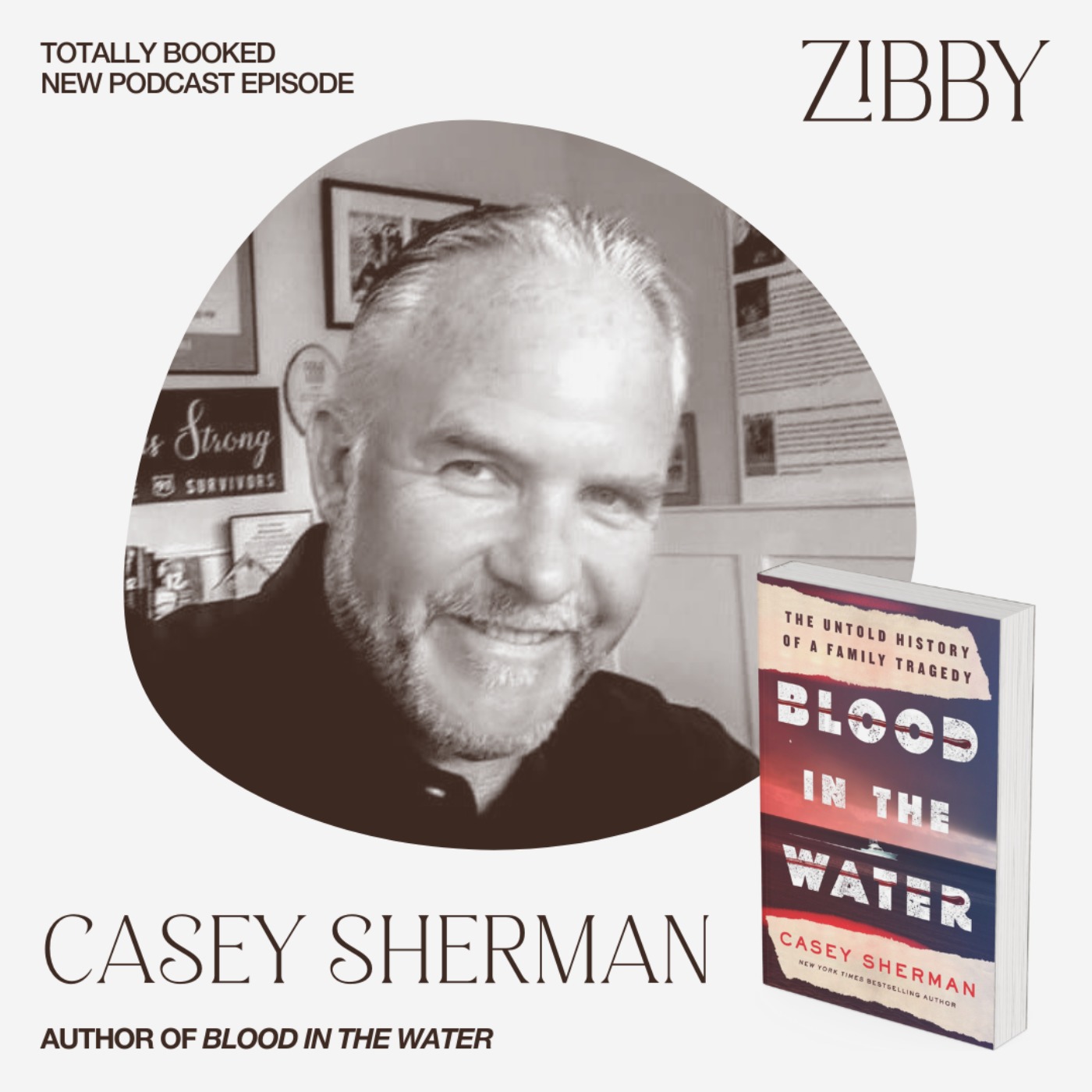
Totally Booked with Zibby
Casey Sherman, BLOOD IN THE WATER: The Untold Story of a Family Tragedy
00:27:12
Loading summary
Transcript70 lines
- [00:00]
Zibby Owens
Are you interested in being part of the live studio audience while I film a series for Totally Booked with Zibby Live in New York City? Sign up@zibbyowens.com I have a little Google form that you can fill out and if you get selected you can come sit in the audience, hear from authors before their books have even come out, and be a part of the show again. Go to zibbyowens.com Filmings will be on April 16th, 23rd, 30th and May 7th in New York City. Be a part of it Instacart is on a mission to have you not leave the couch this basketball season because between the pre game rituals and the post game interviews, it can be difficult to find time for everything else. So let Instacart take care of your game day snacks or weekly restocks and get delivery in as fast as 30 minutes because we hear it's bad luck to be hungry on game day. So download the Instacart app today and enjoy. $0 delivery fees on your first three orders. Service fees apply for three orders in 14 days. Excludes restaurants.
- [01:10]
Casey Sherman
Race the rudders. Race the sails. Raise the sails.
- [01:14]
Zibby Owens
Captain, an unidentified ship is approaching.
- [01:16]
Casey Sherman
Over Roger, wait, is that an enterprise sales solution? Reach sales professionals, not professional sailors. With LinkedIn ads, you can target the right people by industry, job title and more. We'll even give you a $100 credit on your next campaign. Get started today at LinkedIn.com results, terms and conditions apply. Hey everyone, I'm Jenna Bush Hager from the Today show and I'm excited to share my podcast Open Book with Jenna. It is back for season two. Each week, celebrities, experts, friends and authors will share candid stories with me about.
- [01:54]
Zibby Owens
Their lives and new project guests like.
- [01:57]
Casey Sherman
Rebecca Yarros, Kristin Hannah, Ego Wodom, and more.
- [02:00]
Zibby Owens
Like a good book, you'll leave feeling inspired and entertained. Join me for my podcast Open Book with Jenna.
- [02:06]
Casey Sherman
To start listening, just search Open Book.
- [02:08]
Zibby Owens
With Jenna wherever you get your podcasts. Hi, this is Zibby Owens and you're listening to Totally Booked with Zibby. Formerly Moms don't have Time to Read Books. In my daily show, I interview today's latest best selling, buzziest or underrated authors and story creators. Work I think is worth your time. As a bookstore owner, publisher, author and obviously podcaster, I get a comprehensive look at everything that's coming out and spend my time curating the best books so you don't have to stay in the know, get insider insights and connect with guests like I do every single day. For more information, go to zibbymedia.com and follow me on Instagram. Iby Owens Casey Sherman is the author of Blood in the Water, the untold story of a Family Tragedy. Casey is a New York Times, LA Times, Wall Street Journal and USA Today number one best selling author of 19 books including Patriots Day, now a major motion picture starring Mark Wahlberg, the Finest Hours, now a major Disney motion picture starring Chris Pine, Hell Town, A Murder in Hollywood, James Patterson's the Last Days of John Lennon, and more. He is also a contributing writer for the Washington Post, Esquire, the Daily Beast, and Boston Magazine. Casey Sherman has appeared on more than 200 television programs, including the Today Show, CNN, MSNBC, the History Channel, and even the View. Welcome, Casey. Thank you so much for coming on Totally Booked to talk about Blood in the Water. Oh my gosh. So good. Wow, What a story. Congratulations.
- [03:49]
Casey Sherman
I'm very excited to be here. Zibby. Thank you for having me.
- [03:52]
Zibby Owens
Okay. I'm obsessed with this family now. I like, can't get enough of Casey and the grandfather with the sex toys and his mistress and the mom and their special needs. Oh my gosh. There's so many pieces of the story and it is like completely immersive. And of course, you write in such a compelling way that it's impossible to put down. Tell everybody about this true crime, which of course is your genre, that you have mastered this story and what happened.
- [04:19]
Casey Sherman
Sure. You know, I mean, I think on a high level the story is about wealth, greed and murder.
- [04:25]
Zibby Owens
Yes.
- [04:25]
Casey Sherman
And this is a story that takes place over probably a span of about 10 years. I learned about it in 2016 when the young man at the center of the story, Nathan Carmen, took his mother out on a deep sea fishing trip off the coast of Rhode Island. And after a couple of days at sea, he just disappears and he ends up a castaway on a life raft for what he claims to be seven days. And when he's rescued by a passing cargo ship, they realize that his mother is not with him. So, you know, when it was first announced zibi it made headlines around not only the country, but around the world. And it was considered almost the bittersweets story because it was a miraculous rescue of this young man at sea, but his mother is still missing. And they, they basically treated Nathan Carmen like the Tom Hanks character on Castaway for a few days and then they bring him back to the Coast Guard station in Boston and the in the investigators there begin to peel away the layers of his story. And what he's telling investigators doesn't add up to them because they've spent the last several days scouring 58,000 square miles looking for any sign of Nathan and his mother, and they couldn't find any. So they ultimately didn't believe that he had lost his the way he said he did. And they believed that he had murdered his mother on the high seas.
- [05:52]
Zibby Owens
Not to mention that when he showed up, it did not look like he had been on the seas for seven days, that he wasn't parched, and he looked basically like he had just gone out a couple hours prior, which is.
- [06:02]
Casey Sherman
Such an odd thing. That was something that the medical doctor on the ship picked up right away. He wasn't hypothermic, he wasn't dehydrated. He managed to get up onto the deck of this major freighter fine, without really any assistance. So if you're on the ocean for seven days or even two days, you know, you lose muscle control. You are hypothermic, certainly, and dehydrated. He showed no signs of that when they plucked him out of the ocean. And when they get him to Coast Guard station in Boston, not only are they discounting his story, but then they uncover the idea that he's also the prime suspect in his grandfather's shotgun murder three years prior, all allegedly to gain control of a $50 million family fortune.
- [06:51]
Zibby Owens
Wow. And then you tell us all about that murder and how basically, like, his grandfather's head was half shot off and that it looked like there were two. Two shots to the head and one to the stomach, and it looked like it was from the foot of the bed. And Nathan had been with his grandfather before, and then he had left to talk to his girlfriend or whatever, and then his aunt at the funeral was like, no, this must have been Nathan. And anyway, how did this all happen? And why was he let go? It said the search warrant was. Was issued, but then it was not. There wasn't enough evidence or something.
- [07:30]
Casey Sherman
So they couldn't bring him evidence. No, they couldn't arrest him. So we have to go all the way back to 2013, when the grandfather, John Chaklis, was murdered in his bed. Now, John was a multimillion dollar real estate developer in New England. He was at that time, 87 years old, and he was the proud patriarch of a large Greek American family. And it's very Shakespearean the way that this whole story unfolds, because on one side, he is this benevolent person, does a lot for his community, but he's also got A dark side. John Chocolates. He, you know, all of his four daughters are always vying for his loyalty. And you know, and he's paying for his, their loyalty in many respects because he's doling out allowances to them without allowing them to, you know, really, you know, get jobs on their own for the most part. But within this large family, there's this multimillion dollar business. And John Chaklis, at 87 years old, is now grooming young Nathan Carman who is on the autism spectrum. He is, you know, kind of a fledgling college student. But the grandfather wants Nathan to be his heir apparent and run the family company because he's doting on his first born male grandchild. And I think there are people around John Chaklos and even people within family that didn't want that to happen.
- [08:49]
Zibby Owens
Wow. Well, it's so fascinating. And then how everything gets linked up later and all the suspicion and then that he died in prison. I mean, this whole thing like just.
- [09:01]
Casey Sherman
Keeps the mysteries continue to unravel. You know, the interesting thing about this story is when I first took it on, I've read all the newspaper reports about it, the magazine profiles, and I thought there was a clear direction between the allegations against Nathan Carmen and his guilt in both crimes. And when I had to gums through this case, and by that meaning, really putting on my investigative reporter hat and interviewing well over 30 witnesses, you know, the case became much more complex and more potential suspects began to emerge here beyond Nathan Carmen.
- [09:38]
Zibby Owens
Oh my gosh. Well, we won't give anything away, but so interesting. And there's so much attention, not randomly, I guess, maybe the time it takes to investigate. But now there's a Netflix documentary in the works about this. There's another book from like one of his prosecutors coming out. Like this is.
- [09:53]
Casey Sherman
Yeah, the prosecutor is writing kind of a self published book which will come out in a couple years. Netflix is doing their thing. I'm developing a feature based on Blood in the water with Leo DiCaprio's company, Appian Way. So we're in the process of, you know, telling this story hopefully on the big screen as well. So there's a lot of attention surrounding this story. I think it's the Netflix case in my book that have really, you know, triggered a lot of renewed interest in the story because Nathan died a couple years ago in his jail cell. And it's a very mysterious death. The jail officials claimed that it was suicide. Members of his family and his legal team certainly don't think that was the case initially. There was rumor that a suicide note was left behind, but there wasn't. It was actually a note for that Nathan had written to his legal team. Nathan was incredibly active in his defense. And now writing this book, I will say that I'm not sure that prosecutors would have won a conviction against Nathan. Carmen, there's too much other circumstantial evidence surrounding this that point to other directions. And I think the defense would have had a field day with the prosecution. Therefore, there was no real reason for Nathan to kill himself behind bars.
- [11:11]
Zibby Owens
Wow. Well, this is amazing. It will be an incredible movie, but it's already an incredible book. It's like, why do we have to.
- [11:20]
Casey Sherman
Like, you know, the talented Mr. Ripley meets the Murdoch case. You know, that's really. You know, Nathan is such an enigma. You know, on one side, he's incredibly volatile. He's got a very difficult relationship with his mother. And then on. On this other side of him, he's also, you know, kind and, you know, certainly a loner because of, you know, he's struggling with this disorder. And Nathan certainly felt that because he was on the autism spectrum disorder, that police immediately put a target on his back and didn't look at any other potential suspects. And I think to a degree, you know, that's true. When you go back to his grandfather's murder in 2013, the murder allegedly happened around 2 o'clock in the morning. And that's when his next door neighbor heard a loud bang coming from the the home. Therefore, a gunshot must have happened. And then there was the sound of a squeal of tires leaving the neighborhood. And, you know, they lived in a very safe neighborhood, a cul de sac in Connecticut. Things like that usually don't happen. But at the same time, Nathan is in his apartment several miles away. Surveillance cameras at his apartment complex pick him up, only leaving the apartment at 2:57am that morning and almost an hour after his grandfather was shut down. And they also pick him up later at a convenience store getting ice cream. So, you know, Nathan has got somewhat of an alibi where he can be tracked on surveillance video. But why investigators focused on him, Zeb, is that there was a missing rifle, a Sig Sour that they believed was used to shoot John Shackles, the grandfather, three times. Like you said, the first time went through his torso up to his chest area. That would have killed him. And then the two other shots, I think were either done out of mercy or done out of pure hate right to the skull.
- [13:12]
Zibby Owens
But also, didn't you say that he had Changed his laptop and phone so you couldn't track him before. Or was that for.
- [13:21]
Casey Sherman
No, that's. You're absolutely right. So he not only changed, you know, he kind of got rid of his laptop. He also took his. He turned his phone off later that morning when Nathan allegedly was supposed to meet his mother to rendezvous for a fishing trip. So investigators could not track where he was during those critical hours. So there's a lot of question about why Nathan would do that. And so, you know, every day I wake up and I wrote the book, and one day I'm gonna wait. I wake up and I think, this guy is a criminal mastermind. He murdered his grandfather, he murdered his mother. Then the next day I wake up and I think, there's no way this kid could have pulled it off. His brain just didn't work that way. So, you know, I think that this. What this book allows for are those parlor games, right? Those great debates between readers. One side is going to say he's guilty, the other side is going to say he's innocent. And maybe the truth is somewhere there in the middle.
- [14:17]
Zibby Owens
Wow. So you have this ability to not only get all these interesting facts, but uncover stories and tell them in a new way that makes them feel so propulsive. And you have to stop everything in your life to focus on these particular stories. And when I first met you in person at the bookstore, you were talking about a cult case of a Hollywood murder, which now has, by the way, it's like everywhere. And I'm like, that's like from the bookstore. That's the same talk. Like, I hear about it all the time. And I hadn't. Why don't you talk about that and then how you've had so much success adapting all of your stories from Patriots Day to like, there's just so many. And now you have a play in the works. Like, talk about the adaptations and also the Hollywood murder and how you find all these stories. That was like 100 questions.
- [15:06]
Casey Sherman
But yeah, no, but, you know, I can kind of go way back a little bit because, you know, I call myself the Accidental Author Zibby. I never believed I'd be writing books one day, but that is until I was thrust in the spotlight because of my work on one case. One of the biggest cases in the history of American crime, the case of the Boston Strangler. Now, for those of you in your audience that don't know, my aunt, 19 year old Mary Sullivan, was the youngest and final victim of that notorious 1960s murder spree. So I, you know, the questions around that case led me to journalism school in the late 1980s and led me to really where I am today. Always looking to uncover something new about a story that really either has been overlooked or not even touched. And you mentioned a murder in Hollywood, which is how we met a year ago at your wonderful bookstore. This is a story from 1958 involving a Hollywood superstar named Lana Turner. And Lana Turner was basically Marilyn Monroe. Before Marilyn, she was the icon of the silver screen in the 1940s and early 1950s. 50s. And in 1958 she's dating someone who turns out to be a really bad guy. A gangster named Johnny Stompanato. And Johnny is very violent. Johnny beats her regularly. Now Lana in 1958 can't go to the police. There's no, no such thing as a restraining order at that time, Zibby. So Lana just takes the beatings, hoping that Johnny will one day go away. But Johnny doesn't. Instead he really, he leans in on the violence. And one day Johnny makes a mistake and says, Lana, if you ever leave me, I'm going to kill you. And I'm going to kill your 14 year old daughter too. Now her 14 year old daughter is Cheryl Crane. And she becomes very involved in the story. So I think, you know, we're parents, right? So I think Lana had the epiphany that, that moment, what do I do to protect my child? Not to protect me, but to protect her at all costs. A few weeks go by. Lana rents a beautiful mansion at North Bedford Drive in Beverly Hills. The first thing she buys is a set of cutlery, which I always thought was odd because Lana didn't even know where her kitchen was. She didn't cook. She always ordered out or had somebody.
- [17:15]
Zibby Owens
No judgment, no judgment. It's all good.
- [17:19]
Casey Sherman
I'm the same way. I think, you know, Lana needed a weapon because Johnny was going to get violent again. And certainly Johnny did. And Johnny ends up dead in the bedroom of her Beverly Hills mansion. And in the public's mind, and what history will claim is that Lana's 14 year old daughter Cheryl heard the violence, heard the fight, grabbed a knife and broke up the fight between her mother and Johnny and stabbed Johnny in the stomach. And that's what history would lead you to believe. But my story's a little different. You know, I put the knife in Lana's hands and I do so not to make her a villain. You know, to me she's a feminist icon. She's somebody who had to survive the studio system. Somebody who had to survive multiple abusive relationships until she had to take, you know, action for herself. And that's what she did. You know, it's interesting, I, I show people all the crime scene photos of the murder scene and they're all out available on the Internet. And Johnny is left on a white carpet in the bedroom and he's almost, he looks like a Hollywood prop. And there is one thing that's curious. There's no blood, no blood anywhere in the bedroom because all of the blood had been cleaned up before police arrived. And Johnny was basically murdered on a bed. They took all the bed sheets, they put them, you know, sent them out and they burned them. You know, I've investigated 200 homicides in my career. Gut injuries, especially a knife wound. Those are very bloody crimes. And no one questioned it.
- [18:48]
Zibby Owens
Today's episode has been sponsored by Quince. It is spring and I have so many travel plans, from book touring to travel with my kids to everything else. So this year I am treating myself to the luxe upgrades I deserve with Quince's high quality travel essentials at fair prices. And seriously, these prices are amazing. Whether you get this beautiful cashmere blue throw, which I got because, you know, how nice is it to wrap yourself in a cozy blanket because airplanes don't give you blankets anymore and a navy blue suitcase, they have this fabulous hard shell carry on suitcase that I am just so excited to use. The best part about Quince, all items are 50 to 80% less than similar brands. By partnering with top factories, Quince cuts out the cost of the middleman and passes the savings on to us. And Quince only works with factories that use safe, ethical and responsible manufacturing practices and premium fabrics and finishes, which I just love. So for your next trip, treat yourself to the luxe upgrades you deserve from quince. Go to quince.com zibie for 365 day returns plus free shipping on your order. That's Q U I n c e.com Zivi to get free shipping and 365 day returns. Quinns.com Zibby Today's episode has been sponsored by Fast Growing Trees. Did you know Fast Growing Trees is the biggest online nursery in the US with thousands of different plants and over 2 million happy customers. They have all the plants your yard or house needs, like fruit trees, privacy trees, flowering trees, shrubs, and so much more. Whatever plants you're interested in, Fast Growing Trees has you covered. Find the perfect fit for your climate and space. Fast Growing Trees makes it easy to get your dream yard order online and get your plants delivered directly to your door in just a few days without ever leaving home. Their alive and thrive guarantee ensures your plants arrive happy and healthy. Plus get support from trained plant experts on call to help you plan your landscape, choose the right plants and learn how to care for them. I am obsessed with the fiddle leaf fig tree, an indoor plant that I got from fast growing trees. It is so beautiful and it just came right to my door. No annoying trip to a nursery or I once had to go in midtown in New York City, not even midtown. All the way to the flower district to find a tree and put it in the car. And that was such a pain. Anyway, now these came right. Everything comes right to my door and it's amazing. This spring they have the best deals for your yard, up to half off on select plants and other deals. And listeners to our show get 15% off their first purchase when using the code Readbooks at checkout. That's an additional 15% off at fastgrowingtrees.com using the code readbooks at checkout fastgrowingtrees.com code readbooks now's the perfect time to plant indoors or out. Use Readbooks to save today. Offer is valid for a limited time. Terms and conditions may apply. G'day America. It's Tony and Ryan from the Tony.
- [22:13]
Casey Sherman
And Ryan Podcast from Down Under.
- [22:15]
Zibby Owens
Today we want to talk to you about Boost Mobile, the newest 5G network in the country.
- [22:19]
Casey Sherman
These guys are no longer the prepaid.
- [22:21]
Zibby Owens
Wireless company you might remember.
- [22:22]
Casey Sherman
They've invested billions into building their own 5G towers across America, transforming the carrier.
- [22:29]
Zibby Owens
Into America's fourth major network alongside the other big dogs. Yep, they're challenging the competitors by working harder and smarter, like this amazing new network they've literally built.
- [22:41]
Casey Sherman
The Boost Mobile network together with their.
- [22:43]
Zibby Owens
Roaming partners, covers 99% of the US.
- [22:46]
Casey Sherman
Population, but 5G speeds not available in all areas. Yep, they have blazing fast Internet and plans for all the latest devices. Visit your nearest Boost Mobile store or find them online@boostmobile.com.
- [23:01]
Zibby Owens
What is it about the crimes that is so compelling to you? And does it not turn your stomach having to like all the gory details and all of that?
- [23:11]
Casey Sherman
Sometimes it does, you know, but I tried to find humanity in these stories because again, you know, my family has experienced deadly violence and I think, you know, I come. My approach is empathy toward the victims. I want to give them agency and a voice. I wrote a book a couple of years ago called Hell Town and it's about Kurt Vonnegut and Norman Mailer, these two literary icons Investigating a real serial murder case in provincetown in the 1960s. And that was a case, Zibby, where I had to step away from my computer several times during that journey because I was constantly researching and staring at the autopsy photos and the crime scene photos. And they were the worst I've ever seen. This looked like something that Jack the Ripper had done in the 1880s in London, but it was actually a serial killer in Provincetown. You know, during the so called Age of Aquarius.
- [24:02]
Zibby Owens
Oh my gosh. How do you feel like walking down the street and living in the world when you have. When you spend so much time investigating the darkest moments?
- [24:13]
Casey Sherman
I mean, my head's always on a swivel. You know, I'm always prepared for the worst. You know, I've come face to face with, you know, gangsters, murderers, and, you know, you have to have a thick skin over time, but, you know, you're still in the. In the presence of these very dark and evil people. So it takes a lot to get used to. I don't think you ever get used to it. You just do the best you can to write the best story you can and not necessarily glorify the killers in these stories. You know, lot is a different case. But, you know, I want to deconstruct, you know, these serial killers because there's so much attention and fascination and celebrity, you know, regarding these serial killers. And I know what killers do to families. You know, my aunt was murdered in 1964. That loss is still felt within my family in 2025. So the ripple effects that these crimes take over generations is profound.
- [25:09]
Zibby Owens
My gosh, I'm so sorry that that happened to your family.
- [25:12]
Casey Sherman
I appreciate that.
- [25:13]
Zibby Owens
Can you tell us any more about that?
- [25:15]
Casey Sherman
Sure. My aunt was a 19 year old girl who had just moved up to Boston in the winter of 1964. And she moved into an apartment on Beacon Hill, which is, if anybody's been to Boston. The cobblestone streets, it's. Every postcard in Boston is basically from that neighborhood. Very safe. But on January 4, 1964, my aunt was murdered. She was strangled with three ligatures, two scarves, and a nylon stocking wrapped very tightly around her neck. She'd also been sexually assaulted, Zibby, with a broomstick. Because the crime had happened just after New Year's, the killer showed he had a macabre sense of humor. He left a Happy New Year card placed by her left foot. And, you know, growing up in an Irish Catholic household, Zibby, you know, things like that weren't talked about. So I was a young child. I wasn't even born when my aunt was killed, but I knew the hole that she had left in my family. And I had heard whispers about the Boston Strangler and my aunt Mary Sullivan for years until I was a teenager. And I saw the film the Boston Strangler, an old movie starring Tony Curtis and Henry Fonda. And I thought, okay, well, now I know what happened to my aunt. So I broached the subject to my mother, Diane, the next day. My mother was 17 when her best friend and sister was taken from her. And I said, mom, tell me about Mary. And she said, casey, Mary just wasn't my sister. Mary was my best friend. And my mother was getting emotional, kind of for the first time because she'd been very protective of her children and not, you know, the perennial victim, if you will. But I could see that she was getting a little emotional. And I hugged her like any child would. And I said, mom, at least they got the guy. And she looked up at me, Zibby, and she said, I don't think they ever did. And it wasn't. She had no facts to base her beliefs on. It was merely a sister's intuition. It was a bond between two sisters that couldn't be broken. That bond led me to journalism school to investigate this case and kind of where I am today. And what I found out, unfortunately, which was a much darker story than the public had been led to believe, there wasn't just one Boston Strangler, there were several men committing these crimes under the guise of this Jack the Ripper type character, resurrected to stalk the women of Boston.
- [27:22]
Zibby Owens
Gosh, how terrible. I'm so sorry. That is just horrific. So horrific.
- [27:27]
Casey Sherman
It's horrific. And, you know, just to show you how close you get in these cases, you know, I had to have my aunt's remains exhumed for DNA testing. And I also had the remains of the so called killer, Albert DeSalvo exhumed. So I've actually held his skull.
- [27:43]
Zibby Owens
Oh, my gosh.
- [27:45]
Casey Sherman
And you know what I was thinking? Am I holding the skull of one of the most notorious killers in American history, or am I holding the skull of someone who was a con man, a predator and a thief, and who confessed to these crimes in an effort to make money, which is what I think he did.
- [27:59]
Zibby Owens
Really? Oh, my gosh. So you don't think that the. That he was her murderer? And that is. Is. Do you think your aunt's murder is still at large?
- [28:08]
Casey Sherman
My aunt's murderer died a couple of years ago, but not before I confronted him.
- [28:13]
Zibby Owens
Really?
- [28:14]
Casey Sherman
Yes. I had to. I felt I owed him, you know, his story. And he was a 19 year old kid at the time dating one of my aunt's roommates. And he was looking to find some type of evidence that she was cheating on him. She was. They're 19 year old kids. So he stole the apartment key from his girlfriend's keychain the night before, slips into 448 Charles street, doesn't realize that Mary Sullivan, my aunt, is moving in her belongings that day. So she catches him, confronts him. Now, Mary was a tough Irish kid from a tough Irish family. She could give as good as she got. But he was bigger than her and he was stronger than her. And he killed her. And then he made it look like a Boston Strangler murder. Out comes the broomstick. Out comes the Happy New Year card. Police are smarter. They knew right away he was the prime suspect. They gave him three lie detector tests which he failed. Witness was able to put him at the scene of the crime looking through the window of my aunt's apartment that morning. But once the police went with Albert to Salva, so called Strangler, because he wouldn't just confess to one murder, Zeb, he had confessed to all of them. And they never charged him with any of the murders. These murders are still open, according to Boston police. But in the public's mind, the case was solved. And this prime suspect disappeared. Until I found him 40 years later and he was working, get this, as a golf pro at a resort in northern New Hampshire. So what did I do? I booked a golf lesson under an assumed name. And that's how we met at the golf course. And you can imagine it was like the ghost of Christmas past coming back to haunt him so many years afterwards. And at first he said he wouldn't talk, but then Zibby, all he could do was talk. And he began to stutter. He had a pronounced stutter, which I thought was revealing because two months after my aunt was murdered, her roommate got a call from a drunken young man who said he had a pronounced stutter. And he said, I'm going to do to you what I did to that Mary pitch. And here's that stutter coming back 40 years later. Ultimately, I was able to prove that this suspect's alibi was a complete lie. Brought this to the attorneys general in Massachusetts and all the police departments, and nobody would touch it. Because I think. Yeah, and one of the reasons I think that is the case is because so many people within The Boston Police Department made their careers off saying that they caught the Boston Strangler. When I was heavy in this case, I used to get calls at home saying, we know what route you take to work every day. Stay away from this case. I didn't think those calls were coming from killers. I thought they were coming from somebody within law enforcement who wanted to keep a lid on this case after 40 years.
- [30:53]
Zibby Owens
Oh, my gosh. Wait, is this a book? Did you write. This is a book.
- [30:57]
Casey Sherman
It was my first book. It's called Search for the Strangler, and it's. It's still in print. I wrote it 20 years ago, but people can find it at their local library. They can find it, you know, online.
- [31:09]
Zibby Owens
Wow. I did not know that story. Well, good for you for finding him. And I'm sorry.
- [31:14]
Casey Sherman
I appreciate that. Thank you.
- [31:15]
Zibby Owens
Wow. Did you not want to be like, a detective? I mean, I feel like.
- [31:20]
Casey Sherman
Did you ever talk to you? I am in many ways. You know, law enforcement does its thing, I do mine. You know, sometimes we collaborate, you know. You know, I always tread over, you know, some of the work that they did, whether it's really great work and a lot of it is, or whether it's, you know, sloppy work. You know, police officers are like any other industry. You get your great cops and detectives, and you got your terrible cops and detectives. And, you know, ultimately some of the. The holes that I find in these cases are, you know, based on sloppy detective work.
- [31:55]
Zibby Owens
Wow. Well, all of this explains why your current book, Blood in the Water, is. Is as great as it is. There's all this background and they just keep getting better. It's just amazing. So, wow. You're like this, like, quiet resource at large, you know?
- [32:16]
Casey Sherman
Yeah, certainly. I'm always consulted. You know, people will call me, whether they're families looking for justice for their, you know, loved ones or investigators looking, you know, you know, for me to review something that they may have missed. I'm working on my 20th book right now, which is a story about Frank Lloyd Wright, the world famous architect. Frank was involved with a mass murder in 1914, which changed the trajectory of his career and how he designed his buildings. It's a horrific, horrific crime, and I'm knee deep in the research right now.
- [32:50]
Zibby Owens
Oh, my gosh. Well, I can't wait to read that. Wow. Okay. Casey, thank you so much. Thank you for all the work that you do and essentially a public servant who knows how to write. So it's pretty awesome. And thank you for these stories and for trying to get to the truth, which is really all that we have. So thank you.
- [33:09]
Casey Sherman
Amen to that. Zibby, thank you for having me on. This has been a great conversation.
- [33:12]
Zibby Owens
Thank you. Bye.
- [33:13]
Casey Sherman
Good luck.
- [33:15]
Zibby Owens
Thank you. Thank you for everything. Thank you for listening to Totally Booked with Zibby, formerly Moms don't have Time to read Books. If you loved the show, tell a friend, leave a review, follow me on Instagram, ibbeowens and Spread the Word. Thanks so much. Oh and buy the books this Mother's Day. Show the moms in your life just how much they mean to you with A stunning bouquet from 1-800-flowers.com for almost 50 years, 1-800-flowers has set the standard for high quality bouquets. Right now, order early from 1-800-flowers and save up to 40% on gorgeous bouquets and one of a kind arrangements guaranteed to make her day. Save up to 40% today at 1-800-flowers.com acast that's 1-800-Flowers.com acasth, the official florist of Mother's Day. Everyone has a reason to change. Growing old, heartbreak, a fresh start. Whatever it may be, Peloton is here to get you through life's biggest moments with workouts you can do on your time and motivation that keeps you coming back. Peloton's tread and all Access membership help you track progress in classes from runs to Pilates, making you stronger and your fitness goals a reality. Find your push. Find your power peloton visit1peloton.com what makes.
- [34:38]
Casey Sherman
A great pair of glasses at Warby Parker, it's all the invisible extras without the extra cost. Their designer quality frames start at $95 including prescription lenses plus scratch resistant, smudge resistant and anti reflective coatings and UV protection and free adjustments for life. To find your next pair of glasses, sunglasses or contact lenses, or to find the Warby Parker store nearest you, head over to warbyparker.com that's warbyparker.