← Totally Booked with Zibby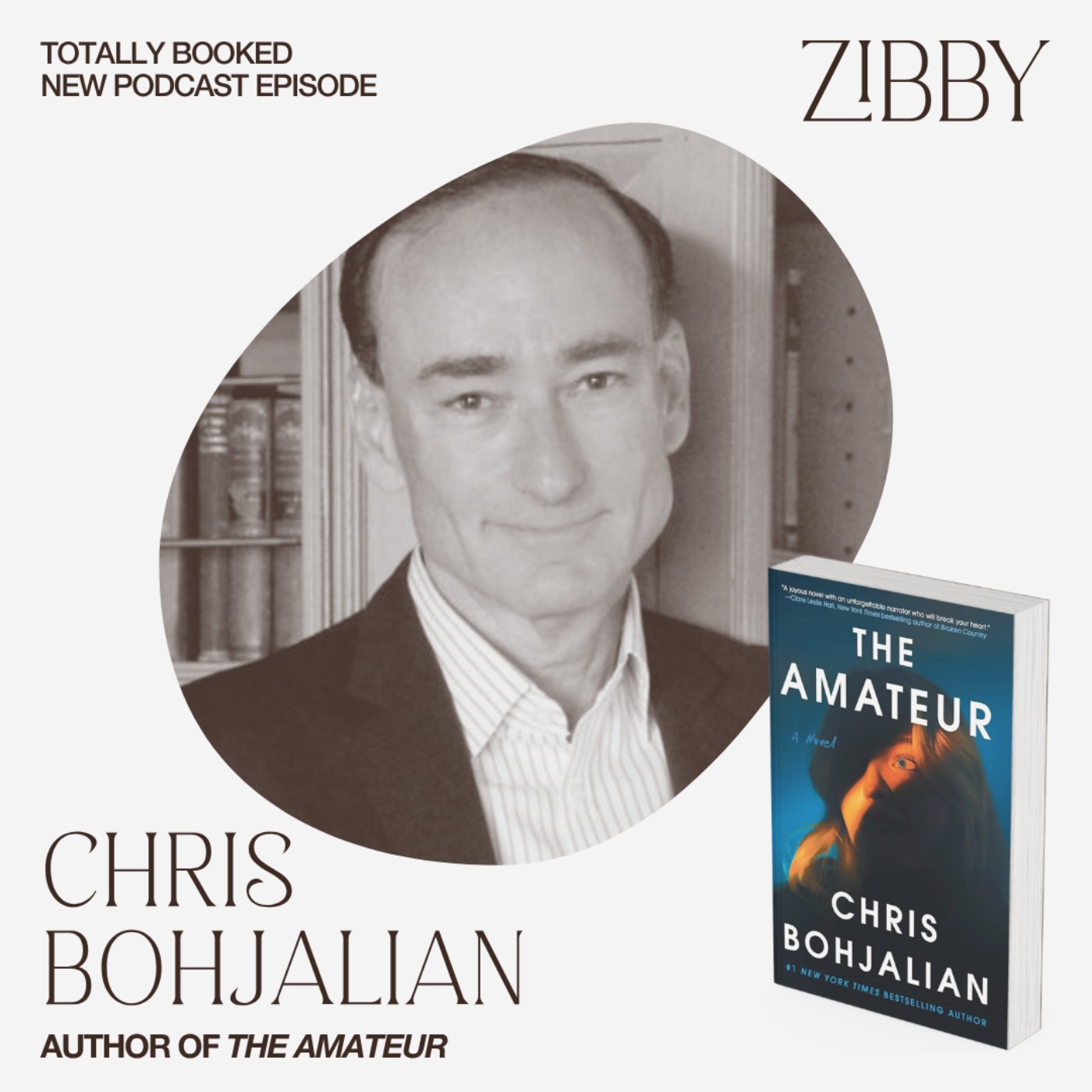
Loading summary
Transcript51 lines
- [00:01]
A
Welcome to Totally Booked. I'm Zibby Owens. I've interviewed more than 2,000 authors on this show and learned endless amounts about storytelling, reinvention and life itself. Because when you talk about books, you're really talking about life. So get ready to hear from today's best authors, the best selling and the not yet discovered. Come find your next great read and the story behind it. Enjoy. Chris Pajalian is back on the podcast to talk about the Amateur. Chris Pajalian is the number one New York Times bestselling author of 26 books, including his most recent the Amateur, as well as the Lioness, Hour of the Witch, Midwives and the Flight Attendant, which has been made into a max limited series starring Kaley Cuoco. His novels Secrets of Eden, Midwives and Past the Bleachers were made into movies and his work has been translated into more than 35 languages. He's also a playwright and and lives in Vermont. Welcome, Chris. Thank you so much for coming back on Totally Booked to talk about the Amateur novel. Congratulations, Zibby.
- [01:06]
B
Thank you. And it is wonderful to see you, if only virtually right now.
- [01:10]
A
You too. You too. Okay. Yale Dreams Deferred and so much else in this totally riveting novel. Congratulations. Why don't you tell listeners what the Amateur is really about?
- [01:23]
B
The Amateur is about how one moment can completely derail your life. We all have those before and after moments when we look back on what life was like before and what it is like now. And in this case, it's 1978. And at a swank country club outside of New York, New York City LPGA aspirant Mira Winston, planning to go to Yale in less than four weeks, drives a golf ball through the little practice net at the country club, instantly killing a classmate in caddy. And instead of going to Yale and instead of going to the LPGA and remember it's 1978, suddenly she's going to the Lower east side punk clubs and doing way too many drugs. And her life begins to unravel. And what everyone just assumed a was a tragic, horrifying accident derails her life in ways she never expected. And so suddenly she is on trial for involuntary manslaughter. And her trial reveals all of the Peyton Place esque mysteries that surround this beautiful little suburb of New York City.
- [02:48]
A
Wow. Well, Chris, I remember and this isn't from looking back, this stayed in my head since we last spoke. You talked about how dread is the emotion that is in a lot of your books. And I keep thinking about that because how specific and wonderful to have that emotion that evokes so much in all of us immediately when we think of it. And there is so much dread in this book. The feeling of what happens when Mira first realizes that it wasn't a joke. That she really did affect this boy's life forever and his family. The dread of her family finding out certain things that she's kept hidden. Her dalliances with older men in different parts of her life. I mean, there is so much dread. Talk about how you use that emotion to really draw in the readers in this book.
- [03:38]
B
Yeah, dread is what fuels my fiction. Hopefully. You care deeply about the characters as flawed or damaged or in some cases, not especially likable. But you care about them because you understand who they are and you fret for their decisions. Dread is everything in the amateur, but I hope in a way that keeps you turning the pages. But from the very beginning, I understood the role dread was going to play. For the first time ever, my novel has a table of contents. You see the dread right away. There are three parts. Part one, there won't be a trial. There will never be a trial. Part two, the season of depositions. Part three, the trial. So as a reader, you know right away that Mira's hope that this will all be okay is unfounded. What's also interesting to me is how much of me is in both Mira Winston and the dead caddy, Kenny Foster. I wrote this book in an alchemic frenzy of 90 days, and I think it worked that way because the narrator, Mira Winston, once upon a time, this great golf prodigy is now a novelist with 26 books behind her. One about an alcoholic flight attendant, one about a midwife on trial, and the dead caddy. I caddied for my summers in high school, and I loved that job. You know, you're tan, you're buffed between the loops. You get to read books. I loved everything about it, but it was hard work, and I understood what it showed about the class divide in America. And so I wrote this book in a frenzy, channeling so many much autobiographic minutiae, including the way Mira Winston, the novelist, lives in this world of magical thinking and guilt. Guilt over things that she did, guilt for things that she is blameless for, guilt that she doesn't deserve, but nonetheless, guilt that infuses all of her actions.
- [05:57]
A
And what do you feel guilty about?
- [05:59]
B
You know, I'd love to tell you, but that's not my story to tell, unfortunately. And I made a decision early on that while I was going to pull those Demons out of therapy and into a book. It wasn't fair to the other people involved to shout it from the rafters on a publicity tour. Would you forgive me?
- [06:18]
A
Yes, I would forgive you. I didn't know there was even a specific something, but there we go. Of course, everybody is. You can't ruin your life for the sake of a book.
- [06:27]
B
Well, it's not my life. My life is fine. Thank you. But I don't want to dredge up the demons of that dog. Other people. I had lunch with one of them the other day, and I considered dropping the bombshell that I've got this book coming out and some of it might be kind of triggering for you.
- [06:49]
A
Interesting.
- [06:50]
B
And I made the decision, you know, it's a novel, so I didn't.
- [06:54]
A
Interesting. You. Also, speaking of biographical details, you even included with Mira the fact that your voice was affected during COVID And in the book, you talk. Talk about how it was long Covid that affected it and that you had an intermira. Had an interaction with a clerk at a store who had a scratchy voice. Talk about that. And did that happen?
- [07:18]
B
Yes, that did happen. And that I can share completely. Yes. In February of 2020, I was on my way to see a show, and I knew there was this virus out there. I mean, I knew very much it was out there because I had my own play, Midwives, that just opened at the Arthur Lawrence Theater at the George Street Playhouse. And by late February, a lot of the cast had gotten sick. We didn't know what it was. Their spouses had gotten sick. So far, I had not gotten sick, But I have this book called the Red Lotus coming out and a book tour coming up, and I don't want to get sick. I'm not worried about my safety. I'm worried about maybe being a contagion that makes other people sick on a book tour or maybe being stranded, quarantined, far from home, because I get the virus on a book tour, so I don't want to get sick. So I'm driving to this show, and I stop in at a convenience store to get a Red Bull. I, you know, take this stuff intravenously. And the person behind the counter has a really soft, scratchy voice. Think, think. The fairy tale Beauty and the Beast, and I am the prince, and she is the, you know, the witch who comes trying to sell the rose or whatever. And I said to this woman behind the counter, I have to ask about your voice. Are you sick? And she looks at me and says, throat cancer. I was. And I felt horrible and apologized, but I still felt just like the Prince and Beauty and the Beast. And so when I got Covid a few weeks later and was rendered mute, and I was mute from late March until the at least late fall of 2020, and still I have to work my voice every day like a opera star for it to function, I thought often about what an incredible, horrible human being I was at that convenience store. Here someone is working at a convenience store and is dealing with whatever. And my first reaction is my own selfish book tour. So I ask, are you sick? And yeah, I put that in the book.
- [09:36]
A
You have to forgive yourself. It was a crazy time as well. I mean, everybody was afraid of getting sick. I mean, the frenzy around the whole thing. I see your point, obviously, but I feel like at this point, you can be forgiven. I am granting you forgiveness.
- [09:52]
B
Thank you, Zyby. I appreciate that. I really, really do. And I know intellectually that I didn't lose my voice because of that moment, but I think of it a lot.
- [10:04]
A
What has it been like having to struggle to speak when you're giving voice to characters all the time?
- [10:10]
B
Okay, well, first of all, it never affected my writing. We are in the midst of this remarkable post pandemic literary renaissance. I mean, and I've never been more productive than since the pandemic. The Red Lotus was published in March of 2020, but since then, I published Hour of the Witch in 2021, the Lioness in 2022, the Princess of Las Vegas in 2024. My new play, the Club, opened in 2024. The Jackal's Mistress was 2025, and the Amateur's 2026. And I'm not Alone.
- [10:46]
A
And the Flight Attendant was made into a show.
- [10:49]
B
The Flight Attendant was made into a TV show. But all props to that belong to really hardworking, brilliant people like director Susanna Fogel, showrunner Steve Yawkey, and Kaley Cuoco herself. And I do want to give them a big shout out because they had to stop production in March of 2020, and HBO Max really, really needed them. And somehow they got it together and were among the very first TV to resume production in August of 2020 with COVID protocols that were off the charts smart, which is how they were able to finish season one in time for Thanksgiving of 2020 and get started on season two. So all props to them. But we really are seeing great, so many great books. I mean, look what you have accomplished. The books that you yourself are publishing. I mean, we're seeing remarkable new books that were born in the Pandemic by my own editor and great friend Jenny Jackson, and books like Chain Gang All Stars and Tom Lake and romantic comedy and they're just Demon Copperhead. They're just so many and they just keep coming.
- [11:56]
A
Yep, so true. Amazing. In the book there's a scene with Mira and a professor where she shows him a draft of a novel that he feels is way too personal and not even really fiction, and he gets incredibly upset and her hopes and dreams are kind of squashed right away. Rejection, of course, is par for the course as a novelist and something all writers have to contend with. And I was wondering if you have had a blow like that where you showed your work to someone and didn't get the feedback that you were hoping for. Hi, it's Zibby. If you're looking for a companion podcast totally booked, check out behind the Mic with Audiophile. Behind the Mic features reviews and recommendations from Audiophile Magazine, the number one audiobook review source every Monday through Friday. From thrilling mysteries to sweet romances and page turning memoirs, behind the Mic brings the best audiobooks right to your ears in six minutes or less. Not to mention, there are exclusive bonus interviews with buzzy narrators, best selling authors and audiobook industry insiders. So go ahead, follow behind the Mic with Audiophile wherever you get your podcasts. You can also visit audiophilemagazine.com to read thousands of reviews, listen to sound samples and explore behind the MICS 1000 Episode Archive Today's episode is sponsored by Quince. Does anyone else feel like August is like the Sunday of summer? It's the perfect time to hit reset before the autumn rush and for me that always starts with my wardrobe. Quince proves you don't need a crowded closet to look incredible, you just need the right pieces. Quince specializes in effortless high quality essentials like ultra soft organic cotton and premium Mongolian cashmere sweaters. They are beautifully tailored, built to last and transition seamlessly from morning meetings to dinner. I have been wearing my striped sweater from Quint all summer long, plus a beautiful skirt that I got there and a white dress that I can't stop wearing which I switch up with different sweaters and I just love everything that Quince makes. Plus my jean jacket is my go to and I'll be wearing it all through the fall. Quince has premium stretch denim by the way, starting at just $50 so you're all covered. And it's not just apparel by the way. Quince also brings everyday elevation to everything from hotel quality bedding and bath to Kitchen staples Upgrade your everyday Download the Quince app for App Exclusive offers or go to quince.com Zibby get free shipping on your order and 365 day return. Now available in Canada and the UK too. That's Q U-I-N-C-E.com Zitty multiple times.
- [14:44]
B
But here's the one that I was thinking of when I wrote that scene my sophomore year in college. The writer in residence, a novelist of great renown, was teaching a seminar in the spring on how to write the short story. And I'd been writing short stories for a long time and really wanted to be in that course to determine who would be among the few, the proudly chosen. You were to submit a short story before the December holidays. She would read them over the break and let you know in early January if you were in. I submitted my story, went home, returned to the campus in early January, and they're waiting for me in my campus P.O. box was a note summoning me to the brick monolith that housed English department at like 4:30 in the afternoon. The next day I went to school in western Massachusetts. And in early January, at 4:30 in the afternoon the sun is set because the sun sets in the Berkshires at like lunchtime. So it's dark, it's dusky. And there she is in her office at 4:30 in the afternoon with a shawl around her. And she looks up at me in the doorway and she says, ah, you must be Chris. I'm not going to try to pronounce her last name. Come in. So I did. And they're sitting on this great expanse of mahogany that was her desk, was my short story. And she saw that, I saw it and she slid it across the desk as if it were roadkill and said, well Chris, I've got three words for you. And I knew this wasn't going to be good. She said, be a banker. And so of course I was not in that creative writing course. Which is why to this day I have never taken a creative writing course and why I never even to get an MFA in creative writing at a place like Iowa or nyu.
- [16:30]
A
Oh my gosh. And you have that in the book too. The be a banker takeaway. Oh my gosh, that's insane and so mean.
- [16:38]
B
There's so much of my life in this book.
- [16:42]
A
Wow. Well, there's also just a lot of, you know, quote unquote bad behavior in the book. I feel like Mira just can't get out of her own way. She's just you're just like, no, why would you do that at that moment? And like, why would you choose to do this drug at this time? And just like all the decisions she's making, you're just shaking your head and being like, mira, no. Tell me a little bit about that, especially as you relate it so much autobiographically. And then there's so much in the book that's like, oh, no.
- [17:14]
B
Yeah, Mira is one of my favorite characters, not merely because so much of me is in her, but because she's damaged and we're all damaged in some way. And some of us act out our fragility in ways that are toxic not merely to ourselves, but to others. And this is not a spoiler because it's revealed early on, but Mira has been sleeping with one of her father's golf buddies since she was 15 years old. She's nearly raped by a senior in high school when she's a sophomore. And how does she respond to all of this? Well, two ways. First of all, by blaming herself, taking on guilt for things that isn't that aren't her fault. And secondly, by being that ferocious competitor that she is on the golf course. So at one point, yeah, she takes one of her father's irons from his golf bag and smashes in the windshield of the car of the boy who had tried to rape her. One day at college, visiting her older brother at college at Princeton, she sets a door on fire. Did that. I mastered the art as a freshman of covering resistant dorm room doors with rubbing alcohol, knocking on them, and then tossing a match upon them so that when you open the door, the door is on fire for a split second, scaring the hell out of you. Did I do drugs? At inopportune times, no doubt I did.
- [18:58]
A
So is this book a way of putting your own mistakes, so to speak, in the past? Or is it an exploration of the choices that we make or. Or all of the above or something else? There's your multiple choice quiz of the episode.
- [19:17]
B
It's a great question. All of your questions are really good. I've got a really good therapist, so I never would use my fiction as therapy. But I did realize in the summer of 2024 that there is a great story in this composite cast of characters I wanted to create. And beginning with my play the club in 2024, I've been pulling more and more on my life in my work. You can see that even in my next book, the Wedding Cake. What I hope the Amateur is, is a ripping good page turner about people making Some really interesting choices between 1978 and 1981. I find it so interesting that my adolescence is now historical fiction.
- [20:09]
A
I know. I feel the same way. It's like, wait, what do you mean there's historical fiction in, like, the 80s? This is crazy. Really crazy. Wait, tell me about the wedding cake.
- [20:18]
B
Oh, well, the wedding cake you will see in March of 2028. It is set in 1984 on a Saturday in October, when a magnificent Brooklyn bakery accidentally confuses two wedding cakes and delivers the wedding cake that was meant for a delightful young couple, a plumber and an aspiring stockbroker in Brooklyn that goes to the Colony Club in New York City on Park Avenue. And the cake that was supposed to go to the Colony Club on Park Avenue goes out to Brooklyn. And these are very, very different cakes. And the reason why it matters is because at that Colony Club wedding are a lot of important political people. And in the wedding cake topper is a radio controlled bomb.
- [21:04]
A
Whoa.
- [21:05]
B
And that was inspired because when my wife and I were married, my wife created, out of these little porcelain cats, this beautiful wedding cake topper because we loved cats and we had a very specific wedding cake. And we will never know who got our wedding cake because we got someone else's wedding cake.
- [21:22]
A
No,
- [21:25]
B
it was lovely. It was a great wedding. It was a beautiful Colony Club wedding. It was perfect, except for the detail that we didn't get the right wedding cake. The photographer forgot to put film in the camera. Not kidding.
- [21:40]
A
Oh, my gosh.
- [21:42]
B
And Lester Lannan's band had no idea what to do with Ricky Lee Jones and some of the other songs, Madonna songs we picked out to dance to.
- [21:52]
A
And yet you've ended up with a fabulous lifelong marriage. So there you go. It doesn't matter.
- [21:56]
B
It doesn't matter at all. No. And, you know, it was such a great era in its own that when I look at photos that people did take at the wedding, there is my lovely there, my lovely bride and me getting into a car to go from the colony club to LaGuardia Airport to fly to Logan for the start of our honeymoon. And what have we got in our hands in the cab? Two open bottles of champagne and two Colony Club glasses that the airline let us spring through security, whatever security was back then, and onto the plane.
- [22:32]
A
Wow.
- [22:32]
B
Well, so, yep, we were drinking. We were drinking champagne from the Colony Club and chant Colony Club wine glasses at the airport and on the plane because it was a really different era.
- [22:43]
A
I mean, if nothing else, I'm taking away that you were a huge partier Back in the day, perhaps even now. But who knew? Who knows?
- [22:50]
B
I kind of was. Yes.
- [22:53]
A
You've been in the publishing industry for so long because your career has been magnificent and full of success. So many blockbusters for so long. What do you think of publishing today and bestseller lists and the way that books are marketed and fragmentation and do you have a general sense of. What do you think?
- [23:15]
B
Well, okay, fewer people are reading books. We know that. We also know that the few people who still read books read a lot of books and are passionate about literature. We know that there are so many alternatives to books for entertainment and so many alternatives to books for news, and we know that so many book reviews no longer exist. So finding those few people who read so many books is a really interesting task for publishers, which you know firsthand is both a publisher as a. As a writer, as a bookstore owner. How do you find those people who read between 50 and 200 books a year? Given the fact that most of the country reads maybe one or two, It's a great time to be a writer. It's a complicated time to market your books, which is why I'm so grateful to. Well, you, for instance, because you don't simply publish books. You don't simply write about books. You don't simply have a podcast about books. You don't simply have a bookstore. You are one of those angels who get the word out about books. People, you know, like you and Oprah and Jenna and Reese and Ron Charles. You know, it's a really small list of important people who let us know what is out there and what to choose from. And, I mean, you probably see when people walk into your bookstore, it's fun. When you go to a bookstore, you see books that you might not have discovered otherwise because, you know, one of your booksellers or you yourself said, you know, I really want people to find this book. So, you know, you make sure that it's in a good spot. And when people are walking around the tables and walls of books, they see things they wouldn't otherwise have seen. So it's a mixed bag. Great books are being published. There are wonderful readers out there. It's just more complicated connecting us all.
- [25:24]
A
So interesting. And thank you. I'm flattered to be in the category of those great book influencers. So thank you to you. Thanks. Last question. What chapter do you think you're in in your life?
- [25:38]
B
Sometimes I worry that my best buy date is years ago and I'm the chunkiest milk in the refrigerator. I mean, there's so many Great young writers out there doing amazing things. And how many books can you read by one person? My God. I mean, how many people have read all of Joyce Carol Oates books or all of John Irving's books? I sometimes think I would have had a better career if I were Donna Tartt and wrote three really great books, or Toni Morrison or Leo Tolstoy, who wrote considerably fewer books. But the reality is that I love writing. Other than hanging around with my wife or watching my daughter on stage or hanging around with my daughter or riding my bike or running in the woods with my dog, there's nothing that gives me more pleasure than writing. And so I can't imagine not writing, saying, oh, I had a book last year. I can't have a book for three more years, so I'm just gonna do what. I have no idea what I would do with my life if I didn't write. So I have no idea what the next act is. But I hope rather like someone like Philip Roth or John Irving or Margaret Atwood, I write until either dementia or the Grim Reaper comes for me.
- [26:58]
A
Wow. Well, you are not stale milk. You are the freshest thing. Writing about this young, vibrant, troubled protagonist who is engrossing and just draws us into the page like all your other books. So I would not worry about that. Thank you so much for coming on.
- [27:18]
B
And, oh, Zibby, thank you. You're amazing.
- [27:21]
A
Oh, thank you. You too, Truly. All right, thank you, Chris. Best of luck with the amateur.
- [27:27]
B
And to you, too.
- [27:28]
A
Okay. All right, take care. Thank you for listening to Totally Booked with Zibi, formerly Moms don't have Time to Read Books. If you loved the show, tell a friend, leave a review, follow me on Instagram, ibbeowens and spread the word. Thanks so much. Oh, and buy the books.