← Totally Booked with Zibby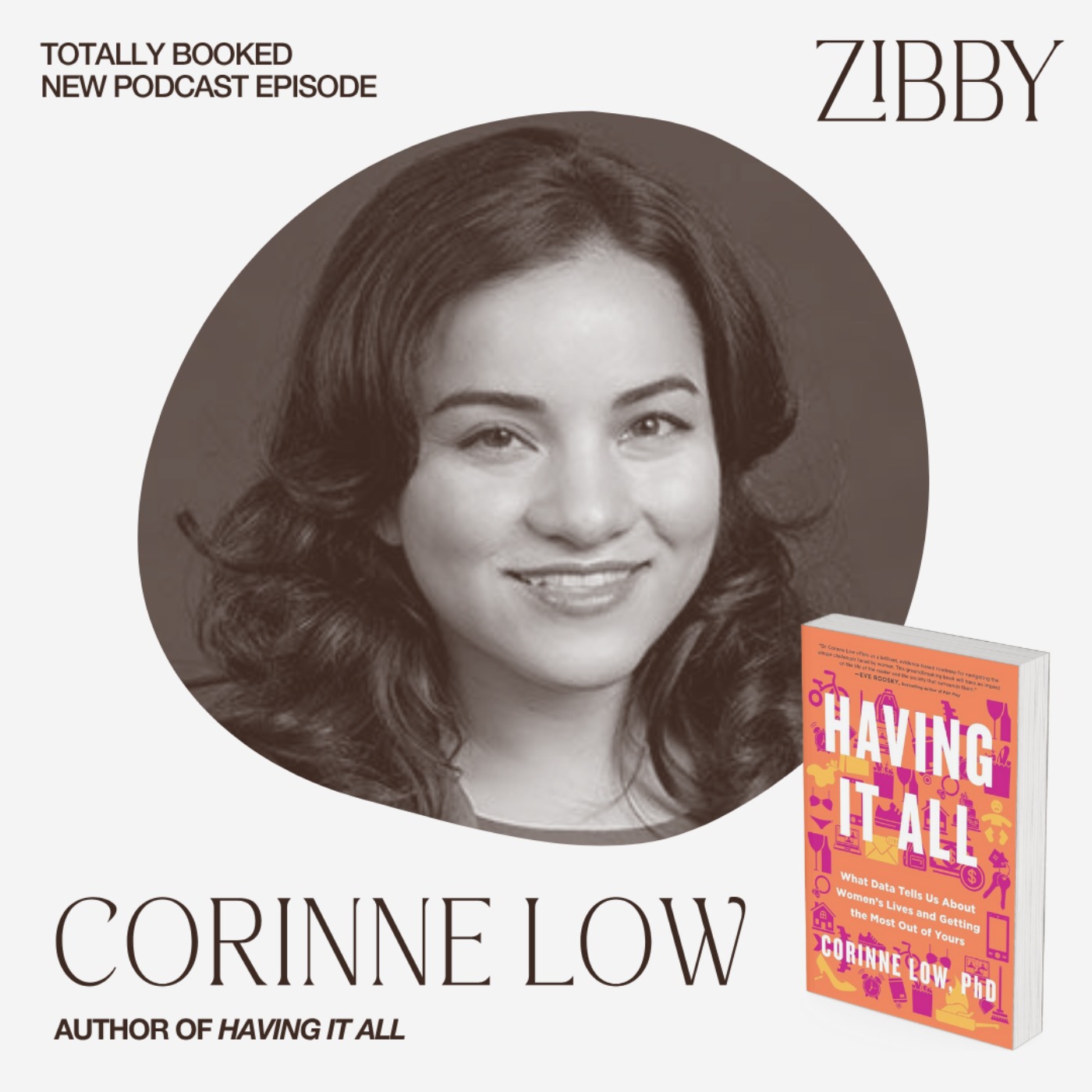
Totally Booked with Zibby
Corinne Low PhD, HAVING IT ALL: What Data Tells Us About Women's Lives and Getting the Most Out of Yours
00:22:17
Loading summary
Transcript66 lines
- [00:00]
Zibby Owens
You know how everything's a subscription now. Music, movies, even socks.
- [00:04]
Corinne Lowe
I swear, if I to continue this.
- [00:06]
Ad Voice
Ad, please upgrade to premium plus platinum.
- [00:08]
Zibby Owens
Uh, what? No. Anyway, Blue Apron, this is a pay per listen ad. Please confirm your billing. Oh, that's annoying. At least with the new Blue Apron, there's no subscription needed. Get delicious meals delivered without the weekly plan.
- [00:19]
Corinne Lowe
Wait, no subscription?
- [00:20]
Zibby Owens
Keep the flavor. Ditch the subscription. Get 20% off your first two orders with code APRON20. Terms and conditions apply. Visit blueapron.com terms for more.
- [00:30]
Ad Voice
This holiday, give the gift that says let's cancel plans and just lounge. Meundies has dropped their new holiday collection, and it's made for maximum cozy. We're talking soft as snow, ultra modal fabric, festive prints, and loungewear so comfy your couch might get jealous. Onesies, hoodies, joggers, even delightfully quirky holiday designs. You're welcome. Knock out all your holiday gifting needs with deals up to 60% off@meundies.com acast enter promo code acast that's meundies.com acast code acast if you love to travel.
- [01:10]
Corinne Lowe
Capital One has a rewards credit card that's perfect for you. With the Capital One Venture X card, you earn unlimited double miles on everything you buy. Plus, you get premium benefits at a collection of luxury hotels when you book on Capital One Travel. And with Venture X, you get access to over 1,000 airport lounges worldwide. Open up a world of travel possibilities with a Capital One Venture X card. What's in your wallet? Terms apply. Lounge access is subject to change. See capital1.com for details.
- [01:41]
Zibby Owens
Welcome to Totally Booked Live at the Whitby. I'm so excited to be here with Corrine Lowe talking about having it all, what data tells us about women's lives, and getting the most out of yours. Welcome, Corinne.
- [01:56]
Corinne Lowe
Thanks so much for having me.
- [01:57]
Zibby Owens
Oh, it's my pleasure. I was so ready to dive into this book because who does not want to get more out of life? Like, let's be the most efficient we can possibly be. Tell us about your very unique point of view as an economist. So I should really call you doctor, but I didn't. So, Dr. Lowe, give us the rundown on how to make the most out of our lives.
- [02:21]
Corinne Lowe
Yeah, so the book is about thinking about your life like an economist. But I think that's going to be a kind of surprising point of view because it's actually a little bit of gentle pushback to kind of the lean in girl boss idea that what that means to get the most out of your life is to maximize your career or try to achieve or accomplish the most. So my reframe is that when economists think about people, about. In order to get the most out of your life, you need to know like, well, what does that mean? What am I maximizing? We know that firms maximize profit, so that's easy. They want to make the most money. What are you trying to do? And economists have this model for this, and it's called maximizing utility. And the reason we have this new word, or different word, utility, is because it's not quite happiness. Because sometimes you have to do something that doesn't feel great in the moment, like close Netflix to work on a project or set a limit with your toddler. But you know, it leads to something better over the long term. It serves your values. And so utility is the. Of the joy, contentment, meaning, and fulfillment over your lifetime. What you would look back on when you're 85 years old, sitting in a rocking chair and say, you know, that was a life well lived. That's what I wanted that to look like. And so the book is about what makes it hard for women to experience that joy, contentment, and fulfillment. What are the structural forces that are making it hard for us, and what do we do about it?
- [03:45]
Zibby Owens
So interesting. So you upended your entire life recently. You were commuting to and from a job in Philly, living in New Jersey as a stepmom. Then you had a baby. Then you had no time at all. You were in a marriage that was not necessarily working out perfectly. And then you changed everything. Tell us.
- [04:06]
Corinne Lowe
Yes. So I start the book with a scene of me pumping in the Amtrak bathroom right after I had my son and then crying because I wasn't gonna make it back in time for bedtime because there's track work. And I was on the train that day for longer than I was in my office. I was on the tenure track at Wharton. Needed, desperately needed, every second of time that I could get. I felt like I didn't have any time. I was exhausted. And even though I was the breadwinner, I felt like I was doing the majority of the parenting, the majority of the home production. And I was like, is this just what life is like now? Is it just always going to feel this hard? And as an economist who studies the lives of women, I started looking at time use data. And I realized that it wasn't just me, that we were at this sort of moment in life where working women were uniquely squeezed because gender roles had converged. In the workplace, allowing us to kind of have the same ambitions for ourselves in our careers as men. And so I was measuring myself compared to my male colleagues and saying, why are they publishing more papers than me? But they hadn't converged at home. So when I look in the time use data, I see that women who are the primary breadwinners still do twice as much cooking and cleaning as their lower earning male partners. And then you add to this that Starting in the 1990s, we have an explosion of parenting time. So parenting time starts skyrocketing in the 1990s. People who have young kids, or if you have grandchildren, you're watching your daughter's generation with their kids. And you know about the extended bedtime routine and processing the day's highs and lows and reading five different books. Well, I grew up in the 1980s, okay? My bedtime routine was go to bed. The way that we parent today is so radically different. And it literally really does not add up in a 24 hour day. And so I realized it wasn't just me, it was these structural forces. And so I personally decided to change my life, reclaim some of my time. I got divorced. I moved to Philadelphia to change from a two and a half hour commute to a seven minute commute. And I upgraded from a husband to an au pair. But that's not what I recommend for everyone. But the book is all about trying to find your level up in your life. So instead of leaning in, we need to level up because leaning in isn't working.
- [06:25]
Zibby Owens
Okay. But then even more, after the au pair, you decided to do away with men altogether.
- [06:31]
Corinne Lowe
Yes. So I'm married to a woman now and I just, I was talking to one of my friends and you know, my wife had been working remotely and so she was kind of the soccer mom. She was the one who could take my son to soccer practice and all those things. And then she got a full time in office, super cool job, dream job. And I was talking to one of my friends about how stressed out I was because I was going on book tour. And she was like, yeah, but that's good because nobody wants to hear you say that. The reason you have it all is because you have a stay at home wife. Like that's not, that's not implementable advice. So it's good that things are getting a little harder for you. But yeah, so that was a change that I made in my life partly because I didn't just want to get divorced from my particular husband. I don't think that it Was anything really uniquely about him. I, I decided to get divorced from heterosexuality and from the gender roles that came with it that weren't working for me as somebody who was a breadwinner. But I think that that doesn't mean. And I'll also say I have a four month old at home. And so I was against the clock because I really desperately wanted to have a second kid. And I was like, it will be more efficient and it'll be easier for me to find somebody whose values are aligned with mine and who I'm going to have this sort of compatible family life that I want if I just shop in a different aisle. So. But I will say that that doesn't mean that I'm not optimistic about men and that men also want to be evolving and bringing more to the table. I'm raising a boy, you know, and I think that everybody, every human being wants partnership and they want connection. And I think for men, what they are going to be realizing, you know, as we've had these changes, we have this unfinished gender revolution where women are able to do so much more now and men are still just playing this one role. Their skills actually haven't evolved to kind of this new reality. And so I think the men who are able to do that, who are able to show up as true partners and as what I call the co CEO of the household, right, they're going to be happier, they're going to find that fulfillment long term. And so in the book I give lots of tips for trying to interview for that position, you know, kind of learning from my own experience because I think we interview for the wrong position when we're dating. I think we interview for the position of boyfriend when what we need is that co CEO of the household, right? So it matters less whether we like the same movies and it matters more like how many recipes he knows that a five year old and a three year old are going to eat, right? So I have lots of tips in the book for kind of how do you think about a partner really as like a co CEO and approach it with the same seriousness that we bring to our career decisions.
- [09:20]
Zibby Owens
The other day my husband was driving and he's a really good driver. And I said, you know, I think that when you're like thinking about your ideal spouse, like you should really put ideal like really good driver at the top of the list because like that was not on my list of, that was not on my wish list when I was in high school. But it actually has been amazing, right? It saves your Life and you take your kids places.
- [09:43]
Corinne Lowe
That's so true. Right. If you think about utility over your lifetime, somebody who's a really good driver is gonna contribute a lot more or utility, you know, then some of the factors, right. That I think, you know, and women are like, it's hard to find the right guy. You can't make this even harder for me. And I'm like, yeah, but did you just set your hinge settings? That's a dating app that, you know, you're not going to look at anybody who's under, who's under 5, 7, because you know, that might be some of the, you know, the things that we're looking for. And some of these things are driven by evolution. And I talk about that in the book because there's been all of these bestselling behavioral economics books and I've never seen behavioral economics kind of applied to the choices that women make. But behavioral economics is all about how evolution and the forces that our genes evolved under and therefore our decision making strategies evolved under is a mismatch for kind of our modern day world. And I think that's so true for women because for women our survival strategy is to propagate our genes and that's dependent on care and love. It's dependent on, we've got to take care of our offspring, we've got to pour love and care into our partner so that he's going to keep bringing food back for us and fight off the lion. We have to pour that love into our communities because then they're going to make sure that we survive the famine, that we get through the winter. Right. But that desire to just endlessly kind of pour ourselves into, into other people around us, I think it's a misfit, right. For our modern society where there's so many other competing priorities and whether or not you're the world's best PTA volunteer is not going to determine whether you survive the winter anymore. Right. But it still feels like it does. It feels like existential whether or not people like me, whether they're happy with me. And so yeah, in choosing a partner and thinking about where to put your time, I think we need to tune into what really is going to drive our well being over our lifetimes and kind of try to tune out some of those short term, like, oh good, somebody's happy with me, I got a pat on the back or the short term, I'm so romantically in love with and obsessed with this person. But are they actually good for me? Do we actually share values that are going to lead to happiness and really joint responsibility for having a family and a household together.
- [12:08]
Paige Desorbo
This is Paige desorbo from Gigli Squad. Boost Mobile gives you the same network coverage, speed and service you're used to, just at a more affordable price. Why pay more if you don't have to? Offering reliable nationwide coverage backed by a 30 day money back guarantee. Love your service or get your money back, no questions asked? Visit your nearest Boost Mobile store or head to boostmobile.com to learn more. After 30 gigabytes, customers may experience slower speeds. Customers who cancel within 30 days of activation will have Boost service fees refunded, activation fees if applicable, and phone payments will not be refunded.
- [12:47]
Corinne Lowe
Why Choose a Sleep Number Smart Bed Can I make my site softer? Can I make my site firmer? Can we sleep cooler? Sleep number does that cools up to eight times faster and lets you choose your ideal comfort on either side your sleep number setting. Enjoy personalized comfort for better sleep night after night. And now max out your savings.
- [13:06]
Zibby Owens
The more you buy, the more you save on beds, bases and more.
- [13:09]
Corinne Lowe
Plus, get free home delivery on any smart bed with base limited time. Check it out at a Sleep Number.
- [13:14]
Zibby Owens
Store near you or@sleepnumber.com today.
- [13:17]
Ad Voice
This holiday give the gift that says let's cancel plans and just lounge. Meundies has dropped their new holiday collection and it's made for maximum cozy. We're talking soft as snow, ultra modal fabric, festive prints, and loungewear so comfy your couch might get jealous. Onesies, hoodies, joggers, even delightfully quirky holiday designs. You're welcome. Knock out all your holiday gifting needs with deals up to 60% off@meundies.com acast enter promo code acast that's meundies.com acast code acast.
- [13:58]
Zibby Owens
I mean, there's definitely a lot on the list and it's not always so easy to find someone. And then what if you, I mean, looking out, I'm not sure how many of us are like, you know, 18 and embarking on a lifetime of trying to meet the perfect spouse and having the right things in mind. Like what if you have a spouse and maybe he is or maybe he isn't like a good co CEO. What do you do with that information? How do you turn a bad co CEO into a good co CEO?
- [14:23]
Corinne Lowe
Absolutely. And you know, the book has, you know, a lot of strategies, but one of the ones that I really recommend is just starting to observe and notice how time is used in your household. And because I think that most men, actually, they do want to do half. And a lot of them, they say, and I know this because I've presented my data on time use all around the world. And all of the men in the audience, you know, they are all sure that it doesn't apply to them. Like, they're positive, they're just like, oh, no, but not me. Like, I do my fair share in the household. Well, what that tells me is to take the charitable approach, is that they want to, they want to actually do their fair share, right? But they're doing half of the tasks that they're aware of. So they say, like, I am contributing equally because I do half the school drop offs. But they don't know that in order to get to the school drop off, right, that mom has already, like, bought the seasonally appropriate clothes that meet the uniform guidelines, has made sure there's food in the fridge and has packed the lunch boxes, has arranged play dates and after school school care, right? Has gotten haircuts last week so that they were ready to go to school. And so they're doing half of the things that they know about and they just don't. They don't recognize, you know, actually that bottom of the iceberg that's under the surface. And so I recommend that couples track their time and actually make that invisible labor visible. And when people do this, you know, sometimes you'll see, like when dads go to work, their spreadsheet for tracking their time is just like, work, work, work, work, work, work, work, work, work, work, work, work. And moms is like, work, work, order groceries on a zoom call, work, answer a text from the teacher, work, work, confirm a playdate, deal with a pickup snafu, make a doctor's appointment real quick. So that makes some of those things visible. And then the nice thing about data and spreadsheets and graphs, right, like, you can't argue with that. You don't need to get defensive about that. That's just like, hey, this is the reality. And so if we have a conversation about what our values are, and we both say that we do value equality and partnership, well, then let's look at the fact that what we're actually doing in reality isn't quite lining up with that. And now let's try to work together as a team to get closer to what we've already established are our shared values.
- [16:28]
Zibby Owens
So I've taken some economics, and it is not my favorite subject by any stretch. And all of the terms in here were kind of giving me some ptsd. But it's okay, I've survived. So batna, best alternative to negotiated agreement. Talk about that and how it applies when we're analyzing our own perhaps romantic lives.
- [16:49]
Corinne Lowe
Yeah, so this, I mean, this applies in any domain of your life, which is that I have a lot of tips for kind of going into a negotiation and trying to actually get like a win win solution. Trying to get something that makes both people better off. But in order to do that in a way where you are empowered, where you don't have to feel like you have to accept whatever crumb the other person is willing to throw you, what you do first is you develop something called your batna, which in negotiation, you know, terminology is your bn. It's your best alternative to negotiated agreement. It's your backup plan. And so if you're going into a negotiation with your boss where you say like, hey, actually I deserve to be paid more, you first find out what is your market price. You actually apply for a couple other jobs. You actually talk to some friends about where they work and who might be hiring. Right. So that you have that little bit of confidence to say, like, no, no, I really am worth this much and I'm not just going to take whatever you give me and be like, oh, okay, thank you so much. Right. So in relationships, that's where for some women who really are at a point like I was in my relationship, where you really are struggling and you've tried so hard to fix things and make things work, I actually think it's important to kind of demystify and take some of the fear out of what divorce would look like. Again, not because that's your goal. Right. But because it is, it's scary. It's financially scary, it's like logistically scary. Right. For me, I was sure that it's was going to be harder, like time wise, because I was like, we're gonna go from having two parents in the household to having one. And someone told me like, no, no, you're gonna be surprised. It's gonna get easier. Well, it did. And I was shocked that when I looked at the time use data that that was true. That women's time cooking and cleaning goes down after divorce because it's not two people in the household sharing the load. He was actually creating more work than he was doing in a marriage that's not working. Right. And so their time actually gets less squeezed and after divorce, and so that's developing.
- [18:45]
Zibby Owens
And divorced women have the most sleep too, didn't you say?
- [18:48]
Corinne Lowe
And they sleep more. Yeah. Because their Time is less squeezed. So that is. It's just. It's demystifying that for yourself so that, you know, like, look, I am going to be okay either way. I want to do this together. I want to do this with you, but I am going to be okay either way, so you need to get on board. And again, actually being a partner with me and trying to make this work.
- [19:08]
Zibby Owens
So it's so interesting because we make decisions from all different parts of our body, essentially, right? Different reasons, different motivations. And right before you, we're at Totally Booked Live now. And before you was a woman, Kathy Heller, who talked about not listening to your mind. And you're training us to evaluate everything as if it is a deal on the table, right? And you talk about, like, is this a good deal? Is this a bad deal? Maximizing utility, using our brains to sort of parse out. Like, is this an effective decision for us? Is this how we should live our lives? Whereas other schools of thought are about, like, how does it feel? Am I feeling like this is the right thing, the right person? So where is the line? How are we supposed to know how much to listen to? Yes, okay, he might not take out the garbage, but he's, like, super cute, or I should throw that away. And maybe I'm not attracted to this guy, but, boy, is he gonna be great at vacuuming.
- [20:09]
Corinne Lowe
Yeah. You know, I think as a scientist, and I know that the way I replace. I model things and I talk about things, people are always like, yeah, you're so, so romantic. You know, like. But I, as a scientist, you know, I know that our minds can lead us astray. Our hearts and our instincts can lead us astray. Right? So the first step of everything is really understanding what you value, and it is tuning into those deepest values for you. And so I don't want people to get the impression that the book is not about optimizing everything and trying to get the most dollars and cents from every aspect of your life. The book is really about trying to be happy and fulfilled and find joy. And one of the things I talk about is paying attention to how you feel when you're spending your time in certain ways and recognizing this thing that I said yes to, it's actually making me feel bad now. It's making me feel drained. It's making me feel exhausted. It's making me feel depleted. So I give you a framework that is a cerebral framework for thinking about the fact that you should be putting your time where you get this highest return. But the way that you Figure out what that return is, is by tuning into yourself. It's by tuning into your sort of deep needs and wants. And it's tuning out both sort of the messages that you've been fed that are then there in your brain that says, like, well, the most important thing is for me to get the promotion or to achieve this goal that I've set for myself. And also tuning out some of these messages in our body that are built by evolution, that are telling us the lion is going to eat us, we're not going to make it through the winter, and are sending us some of those messages that are not compatible with the actual safety and security that we have, where we can be empowered to make decisions that bring us to the version of our lives that from a distance, right, if we zoomed out, we would be satisfied with. And so it's that tuning into yourself, but it's this more constant, present version of you. Kind of over a lifetime, the you like, 15, 20 years from now, what is that person gonna say? Thank you for making that decision? And that's why I also think, you know, I've heard so many women say they want to get this book for their daughters. And I've been so honored by that. But that's because the mother can see that zoomed out perspective and can see like, oh, I see that what you're doing right now, you're actually going to kind of look back on this and wonder if you should have made different choices.
- [22:36]
Zibby Owens
So are you happy? How happy are you in your life?
- [22:39]
Corinne Lowe
I am juggling a lot right now. And so I joke that on the book cover there's the crying baby and there's dinner on fire and the spilled coffee, and that is literally my life right now. Cause I'm running to the airport and I'm pumping and the breast milk just leaked in my bag on my last trip and my laptop is dead now because, yeah, so that's having it all. So it's a lot. I am juggling a lot. And I'm living a life that is rich and full and has so much joy and so much love. And I think one of the biggest things of really changing my perspective is that I gave myself permission to love being a parent, to love spending time with my kids, for that to be central in my life in a way that I just feel like the messages that we get from those kind of girl boss empowerment books told me that I was supposed to resent that and that was supposed to be in competition with the purpose of my life, which was Supposed to be a career. Right. And what I found is that I can actually make those things compatible and I can find joy from all of those different domains.
- [23:37]
Zibby Owens
Wow. And I'm also just curious, and this is none of my business, so you don't have to answer, but when you married your ex husband, he had a.
- [23:44]
Corinne Lowe
Child who was raised a step kid.
- [23:46]
Zibby Owens
Yeah, you raised a step kid and then you got divorced. Do you still have a close relationship with your step kid?
- [23:51]
Corinne Lowe
I do. And that's been one of the most amazing and beautiful things to come out of this. And it was hard for a little while and I, I cried a lot of tears over that. That was the hardest part. And to be honest, part of what made me stay past the point where I should have. But, you know, the teen years are hard and now I have a wonderful 20 year old step kid who is an amazing big sibling to my younger kids. And, you know, we see it every holiday and Rosh Hashanah is when my book comes out this year. So we're not gonna have Rosh Hashanah together this year. But it really has turned out to be a beautiful, wonderful thing. And it was a real lesson for me because I told myself, like, I was willing to do anything, to sacrifice anything for my kids. So to stay in that marriage, that wasn't working because I thought it was best for my son and for my stepkid. And, you know, seeing them thrive now and seeing that for me to put my own oxygen mask on first, it wasn't taking anything away from them. It was a real life lesson for me in saying that, you know, sometimes letting yourself come last and letting yourself become a depleted shell and husk of yourself, you're really not doing anybody any favors. And so even though I would walk through literal fire for my children, I don't think you should walk through metaphorical fire for them every, you know, hour of every day. You are a person that matters. You are a member of the household. If something's not working for you, it's not working for the family.
- [25:14]
Zibby Owens
Amazing. Thank you so much.
- [25:18]
Corinne Lowe
Thank you so much.
- [25:20]
Zibby Owens
As people run out and all leave their marriages.
- [25:25]
Corinne Lowe
I hope I have hope.
- [25:29]
Zibby Owens
Thank you for listening to Totally Booked with Zibby, formerly Moms don't have Time to Read Books. If you loved the show, tell a friend, leave a review. Follow me on Instagram ibbeowens and Spread the Word. Thanks so much. Oh, and buy the books.
- [25:52]
Corinne Lowe
Ready to order? Yes.
- [25:53]
Zibby Owens
We're earning unlimited 3% cash back on.
- [25:55]
Corinne Lowe
Dining and entertainment with a Capital One Saver Card.
- [25:58]
Zibby Owens
So let's just get one of everything.
- [25:59]
Paige Desorbo
Everything.
- [26:00]
Corinne Lowe
Fire everything. The Capital One Saver card is at.
- [26:03]
Zibby Owens
Table 27, and they're earning unlimited 3% cash back.
- [26:06]
Ad Voice
Yes, Chef.
- [26:08]
Zibby Owens
This is so nice.
- [26:09]
Corinne Lowe
Had a feeling you'd want 3% cash back on dessert.
- [26:12]
Zibby Owens
Ooh, tiramisu.
- [26:13]
Corinne Lowe
Earn unlimited 3% cash back on dining and entertainment with the Capital One Saver Card. Capital One. What's in your wallet? Terms apply. See capitalone.com for details.
- [26:23]
Zibby Owens
We all love our pets, but we.
- [26:25]
Corinne Lowe
Love to travel, too. And sadly, they can't always come along for the ride. Don't stress. Trusted House Sitters connects you with verified sitters who will stay in your home and care for your pets, all in exchange for a place to stay on their travels. So while you're off exploring, your pets get to stay safe and happy at home, right where they belong. Find a loving in home pet sitter today@trustedhousesitters.com.
- [26:51]
Paige Desorbo
Hey, I'm Paige Desorbo, and I'm always thinking about underwear.
- [26:55]
Corinne Lowe
I'm Hannah Berner, and I'm also thinking about underwear, but I prefer full coverage. I like to call them my granny panties.
- [27:01]
Paige Desorbo
Actually, I never think about underwear. That's the magic of Tommy John.
- [27:06]
Corinne Lowe
Same. They're so light and so comfy. And if it's not comfortable, I'm not wearing it.
- [27:10]
Paige Desorbo
And the bras? Soft, supportive, and actually breathable.
- [27:13]
Corinne Lowe
Yes. Lord knows the girls need to breathe. Also, I need my PJs to breathe and be buttery, soft, and stretchy enough for my dramatic tossing and turning at night. That's why I live in my Tommy John pajamas.
- [27:25]
Paige Desorbo
Plus, they're so cute because they fit perfectly.
- [27:28]
Corinne Lowe
Put yourself on to Tommy John.
- [27:29]
Paige Desorbo
Upgrade your drawer with Tommy John. Save 25% for a limited time at tommyjohn.comfort. see site for details.