Loading summary
Transcript51 lines
- [00:01]
A
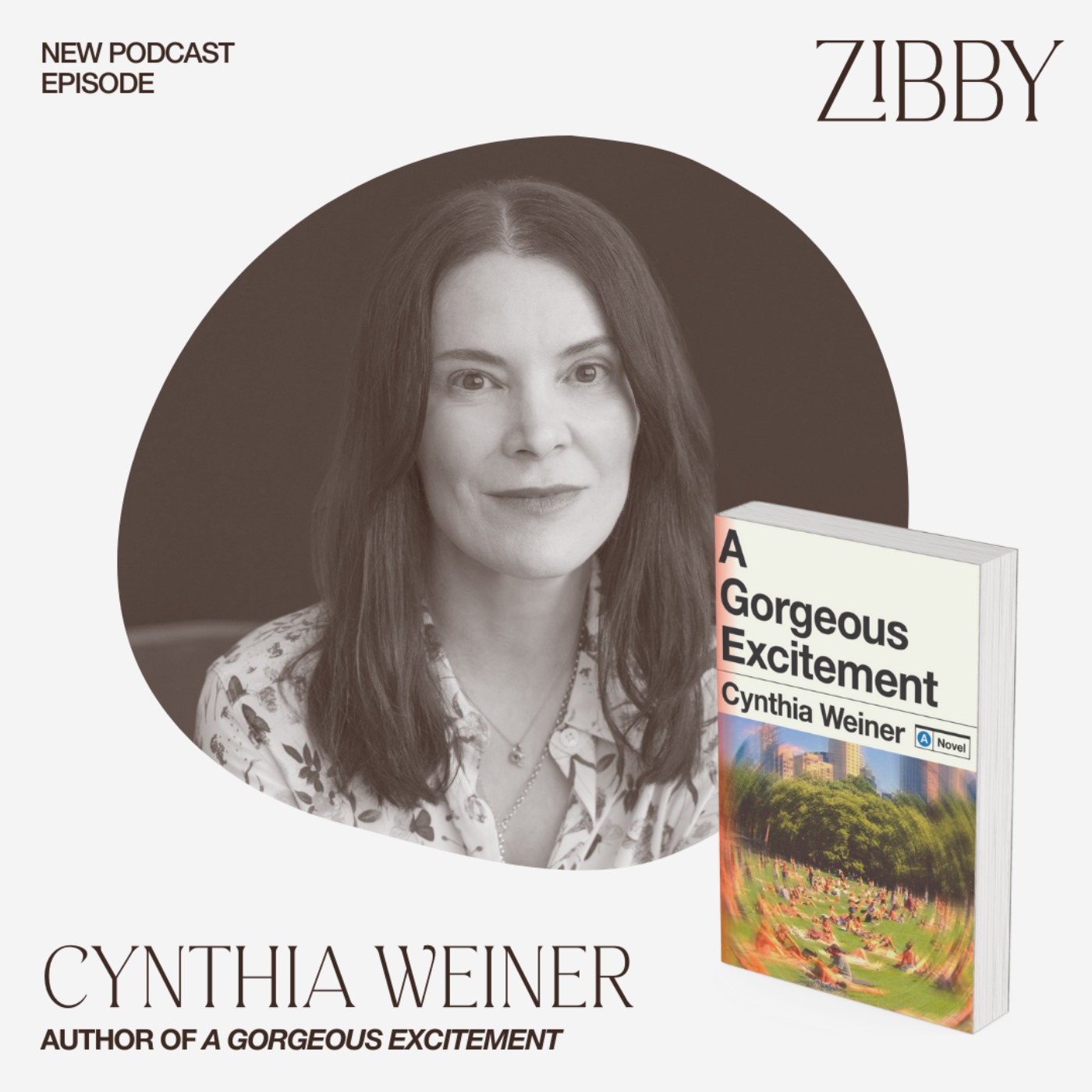
The recent fire in LA destroyed many schools in the Pacific Palisades area where we have our home. I am currently raising money to completely rebuild the library collections of four schools in the neighborhood. If you are interested in helping me raise up to $800,000 to restock the libraries, go to zivimedia.com donate one book donate a thousand books but please help imagine if this was your school or your kids school. Thank you. Hi, this is Zibby Owens and you're listening to Totally Booked with Zibby, formerly Moms don't have Time to Read Books. In my daily show, I interview today's latest best selling buzziest or underrated authors and story creators whose work I think is worth your time. As a bookstore owner, publisher, author and obviously podcaster, I get a comprehensive look at everything that's coming out and spend my time curating the best books so you don't have to stay in the know. Get insider insights and connect with guests like I do every single day. For more information, go to zibbedia.com and follow me on Instagram ibyoans Cynthia Weiner is the author of A Gorgeous Excitement, a novel A Circle. Cynthia has had a long career writing and teaching fiction. Her short stories have been published in Ploughshares, the Sun and Epiphany, and her story Boyfriends was awarded a Pushcart Prize. She is also the assistant director of the writer Studio in New York City. A Gorgeous Excitement, her first novel was inspired by her upbringing on New York's Upper east side in the 1980s and particularly by the notorious preppy murder of 1986. She lives in New York's Hudson Valley. Welcome Cynthia. Thank you so much for coming on Totally Booked with Zibby to talk about A Gorgeous Excitement, which I loved. Oh my go so good. Thank you for writing this. I read every word, bated breath. Loved, loved, loved. Thank you.
- [01:57]
B
Thank you for having me. Cynthia, it's so such an honor to be here with you.
- [02:01]
A
I remember the whole preppy murder so well. I remember where I was like all of it, like hearing about it. I was actually at Hebrew school and I remember sitting in the chair and being like, what happened? Anyway, let's back up. Sorry I had to jump in there but talk about where the story came from, what it's based on, all the stuff, the backstory and what it's about.
- [02:22]
B
Of course. Yes. So the story is inspired, as you alluded to, by the 1986 preppy murder in New York City when an 18 year old Jennifer Levin and we can get into this. A young Jewish girl actually was strangled to death in Central park during a hookup with preppy, very handsome it boy Robert Chambers. But the novel is fiction and it follows a bright but very insecure 18 year old girl during the summer of. The summer of 1986. Her name is Nina Jacobs and she's living with her father and profoundly depressed and very volatile mother on the very WASPy Upper east side of Manhattan. And she's desperate to lose her virginity before she starts college and also desperate to save her mother from kind of last ditch electroshock therapy. And at the start of the summer, she meets this Upper east side legend who I've called Gardner Reed at a very popular preppy bar one night she falls for him. She also makes a new friend who introduces her to cocaine and at the same time her mother starts a new medication. So there's sort of these three interweaving storylines and as the summer goes on, sort of everybody spirals out of control and, you know, sort of oblivious to where they're headed, the danger they're headed into. Yeah.
- [03:40]
A
Wow. I feel like this is so. It's written in such a cinematic way. Like the scene on the sidewalk with the doorman interfering and you know, all of the. And the mother and her antics and all of the scenes in the park and the bar and all of it. The scene when she finally goes up to his room with the pictures. Oh my God. It's just. I feel like I watched the whole thing.
- [04:04]
B
Okay, thank you.
- [04:05]
A
What was your relationship? What happened? Did you know Jennifer? Like, what's your relationship to the story? And why did it come back to you? And why did you make it a book or why did it inspire the book?
- [04:16]
B
Right. I didn't know her. I think I knew of her. And I was at the bar. It was Dorian's, which is great, exists on 84th and 2nd. And so I was at the bar a lot that summer. I was a tiny bit older actually than Nina is, so I was more friendly with Robert Chambers. I was very close with a couple of his very close friends. So I didn't know him, you know, intimately, but you know, I spent a lot of time with all of them as a group. He was at my parents house once, you know, I would see him in the park. So yeah, so I knew him. And I mean, the story was, it was, it was, it was so shocking that something like this could happen. He was one of those people that every. Everybody knew, everybody liked. As far as I know. He had gone to a bunch of school, you know, he was troubled, but in a way that didn't seem so different necessarily from other people, maybe. And, you know, did a lot of drugs and he got into trouble, but it was. He was so good looking, so it was kind of a bad boy appeal. And. But anyway, just the shock of it, the shock of both that he could do something like that and that a young woman who obviously thought she was safe went to Central park with someone she felt safe with could be killed. So the story stayed with me for years, and I tried to write it in various ways as a short story because that's what I was writing for years, and it just clearly needed a sort of bigger canvas. Yeah.
- [05:40]
A
Wow. So where. And where did you come up with the idea of her relationship with her mother?
- [05:46]
B
Well, some of that is based on some, you know, some truth and fictionalized. And, you know, I had been exposed to, you know, both, you know, to depression and mania in my family. So I knew about that. And I think once I realized that the two stories went together, that there was a kind of. There's a sort of mania or euphoria about falling for a new guy, you know, and all. And when he pays attention back, you know, all of that is what happens in the book of a guy who seems completely out of reach and out of your league, suddenly is looking at you and flirting with you. That sort of euphoria combined with the mother's sort of growing euphoria, which turns out to be, you know, quite. Quite destructive and dangerous. It doesn't seem that way in the beginning. In the beginning, seems wonderful because she's been depressed for so long and. And then, you know, and then the cocaine. So those three together, it was clear that the story was about. Was about that kind of exhilaration, you know, and then the darker side of it, as exhilaration goes higher and higher.
- [06:49]
A
You know, so interesting. It also, when she becomes friends with the girl she meets in the park, whose name I'm blanking on at this moment.
- [06:57]
B
Stephanie.
- [06:57]
A
Stephanie. So when they become friends, like, it just shows so clearly. And now, as a mother of teenagers, like, I read it as a teenager myself do, you know, like, in my head, I'm still very young, but I also have teenagers. You do?
- [07:10]
B
I voted as a teenager. Yeah, yeah.
- [07:12]
A
I'm like, I can tap into all that in two seconds. Like, me too.
- [07:16]
B
People keep asking me, how much research did you do? Or how hard was it to connect? And Nina, I was like, I think I'm still 18. It was.
- [07:23]
A
Anyway, I actually think it would be easier to write like I feel more connected to those moments which feel like they lasted for so long and are so clear than like a night in my 20s which like went by in a blur, you know what I mean?
- [07:38]
B
Right, yeah, of course. And certainly any night I've had in the last 10 years, which, oh, forget nothing.
- [07:45]
A
Of course, but the way you show not peer pressure, that sounds too pat, right? But the way one relationship can take you so off course and just how vulnerable really you are at that age to all kinds of influences, whether it's a cute boy or a girl who has like this crazy boyfriend and this cocaine habit and next thing you know you're at gracious home, you know, doing God knows what with your grandfather with dementia, do you know what I mean? Like, but it's almost like a warning because what do you even do as a parent to make sure. And obviously her parents were not like the helicopter parents of today, right? But I don't know, just even reading it from the parent lens, like making sure your kids don't go wobbling off where all. Everybody's just on a tightrope, I feel like. And it's so easy to go one side or the other or fall off.
- [08:37]
B
You know, I don't know if this is the answer, but I remember my sister in law, my older brother's wife is a wonderful mother and she, she used to tell me that she would just lie down next to her one of whichever child she had four kids and you know, sort of in the dark and just lie down and let them talk. And my childhood in the 70s and 80s, parents were very busy then, I don't know, they were always out and they were always traveling and you know, it's just a very different time. We didn't have cell phones, we weren't connected. They didn't follow me on like GPS or whatever people have on their kids phones. So they didn't particularly listen. It was just parents didn't really. Older people didn't really listen to kids back then, I think. And I feel like now that does make a really big difference. And I feel like if parents are just. Even if the kids don't feel like talking just with them feels to me like much more than used to happen and probably would make a big difference because I think people just want to be seen. And I know in the book Nina just wants somebody to look at her and tell her, you know, you're great, you're pretty, of course this guy would like you. Of course, of course people like you you know, and I. Maybe parents, I don't know, do that more, did that more when they wouldn't need it from outside. Other people. I'm not sure. I'm not a parent, so it's hard for me to.
- [09:52]
A
Yeah, no, no, I'm just. That was a great reflection on it. With Nina. You so tapped into that feeling of being other, not fitting in, of feeling conspicuous. And there's that one scene in the bathroom where they're talking about her. And I feel like everybody has some sort of story at some point. Everyone growing up has been on one side or the other of that situation, but it is so painful to read. And just her. Just her longing for acceptance in a way and feeling like there are things in her path that will never really allow her to be part of this group or that group. Tell me more about. About that, because you really nailed that.
- [10:30]
B
Thank you. Well, she grows up Jewish, which isn't necessarily a formula for being an outsider, obviously, but for me in the 80s, I did grow up in that kind of world. And it was more that I didn't. My parents didn't know other people's parents from years back. And we hadn't all gone, you know, to Maine. My parents would. Maine was a fun place to go, or skiing, you know, it was dangerous and we didn't do it, you know, so those sort of. The Hamptons, we didn't. We didn't do those things that people had been doing for years. And everybody knew each other and, you know, it was a very preppy world. And, you know, I had a bat mitzvah and sang and so I had a different kind of last name. You know, things like that felt. Made me feel very apart. I had dark hair, I had very, very pale skin that got summer. You know, just little things like that that matter when you're young. I was joking recently that all my friends, their middle names were these very cool, you know, old family names. Their mother's maiden names like Williams or, you know, or whatever, Miles or Morgan. And mine was Renee, which was lovely, but it was not so, you know, so. So I. I gave myself the middle name of Lifton, which was my mother's maiden name. But it didn't quite have the same cachet, especially since it had been changed from lip shit some years back. So things like that just made me feel kind of separate. And I think that is self perpetuating. So that I became very self conscious and Nina does too, very anxious and not necessarily based on anything and is a perfectly likable young that I was perfectly likable young woman. But I felt so self conscious that I think it separated me. And I think that that can happen with any difference. And as I've gotten older and spoken with so many people from that era, everybody or almost everybody felt like an outsider for some reason or another. Even if they lived in that world or came from that world. Everyone feels separate. But no one wants to say that, I guess. So no one knows that everyone else is feeling that same way. That's one of the tragedies I think of being young.
- [12:37]
A
So true. And I had the same thing. My grade school, which I went to till eighth grade. I was one of, I think three Jewish girls. And everybody was going to Fisher's island and all these places. And I was like. I remember asking my parents like, why can't we go to, you know, this place in Maine? Or whatever. And they're like, why? What? No, we don't like. That's not, we're not going there. I'm like, everybody else does all these things.
- [13:01]
B
And I went to island recently actually, and it was not. I won't say anything. I see why my parents wouldn't have. Not that they would have been allowed there anyway, you know, I mean, yeah, but. But it's funny those places that I so aspire to. Once I was there, I was like, oh, I said, no, I'm too Jewish for that. There's spiders and there's, there's, there's, it's, there's a lot of mold and dampness. I don't like this. I want my hair dry like that. But just. It's funny that I aspire to that world. And then when I was once part, any part of that world, I thought, oh, I, this isn't so great. But it seemed that way from a distance. It shimmered, you know, in the preppy handbook and everything seems so glamorous.
- [13:45]
A
Yeah, well, I'm just a little bit younger and I had the same, I felt the same thing. I don't even know if it still is around for younger kids, but who knows? Anyway, doesn't matter. Tell me more about the writing of the book and like how long it took and how you just. The whole process behind it and if anything changed significantly from how you thought it would be originally.
- [14:08]
B
It took me a long time. It took me about nine years, I think. I try not to go back and look at the exact starting date. Cause I hate to think how long it really took. But that's okay. It took what it took and I didn't really know how to write a novel. I'd never tried to write a novel before. I hadn't really planned to. And I didn't even know what the story. I sort of knew the storyline. I sort of knew it was gonna be a summer. I knew that was the structure. I didn't know who was gonna be killed until quite late. The draf who was going to be the victim and, you know, just making up scenes and figuring out how the scenes went together and all of that. Just, you know, it took a long time. I mean, you know, so writing a novel is a. It's a long process. Yeah. So the main thing that changed was who the victim was. Most of the rest of the story stayed somewhat the same, but that was. That was the big change. Yeah.
- [15:00]
A
Interesting. And when you're writing, where do you like to write? Like, where. Give me a visual of this whole process and all of that.
- [15:08]
B
Well, right at the start of the pandemic, I actually wound up. I had lived in New York City, you know, my whole life. I grew up there and had moved back after graduate school and was there for years in a very small apartment. And the pandemic happened, and I decided to move to the Hudson Valley, to a town I had, you know, sort of been trying out over the years and going to. And so now I am in Beacon, New York. I have a little tiny office in an old high school. It's really cool. They made it into art studios and offices. So at the top of some little stairwell, I have a little office there that I work in. And I just go there every day and sit there and hope that something happens. Yeah, that's pretty much the schedule.
- [15:51]
A
So when people read the book, what do you want them to get out of it? Like, when they put it down, what do you want them to take with them for their lives and all of that?
- [16:01]
B
I think kind of what we started out by talking about just about listening and about paying attention and about, you know, one of the things that happens in the book is that Nina sees things, and yet she justifies everything. You know, she has all these reasons why, you know, because of her own insecurities and her own deprivation, you know, that everything is okay. No, it's not what it looks like. It's not what it seems to be. So, I mean, that's something that I kind of did a lot when I was young and didn't listen to myself, didn't listen to my own counsel. So I guess that would be one thing. And also just that, you know, one of the things that happened after the murder was a lot of blaming of the young woman and of young women were pushy, and they were too aggressive and they were too assertive, and just, you know, I feel like that's back again in some ways. You know, my nieces are both just starting college, and I hear their stories about the way that boys still talk about girls and I guess just, you know, just trying to be more open about that assertiveness and confidence. And those are same things to be proud of and to not waste them on people who don't appreciate them.
- [17:22]
A
I love that. Yeah, that's great. What are some of the books that you like to read or you're reading now? Like, what's your genre? I know you mentioned short stories.
- [17:31]
B
Oh, I love to read short stories. And I love. Oh, gosh. I love Joyce Carol Oates. I love Laurie Moore. I just started, actually. Oh, my gosh. What is it called? Play World. Is that the name of Adam Ross's book? He also grew up in New York, and he's maybe a year younger than me and lived on the Upper west side. So that's been really fun to read.
- [17:52]
A
I have to write that down. That sounds good.
- [17:55]
B
I feel like I might have the wrong name, but it's about a young man who's a child actor. I love books set in New York City. I'm also reading Entitlement by Rumaan Alamo, which has been super fun to read. I don't know. I love, you know, someone's on the subway. I love Ottessa Moshfegh. I'm not sure if I'm pronouncing her name right. I love Hallie Butler. I love young women writers who are sort of. I love that kind of. Maybe what I was saying before, that kind of very sort of brassy, obnoxious, but very sympathetic voice that Ottessa Mashfaq has on, like, my year of rest and relaxation. Raven Leilani's book Luster, I loved. Yeah, so those are some of the.
- [18:31]
A
Yeah, that's a lot.
- [18:32]
B
No, there's so many more. I have so many more that I'm reading, but those are the ones that come to mind at this moment. Yeah.
- [18:38]
A
No, that's. That's great. What advice would you have for aspiring authors?
- [18:42]
B
Just. Just. Just go and sit there and. And. And keep working at it. And. Oh, one of the things I was thinking of the other day that I'll. I'll pass along if this is helpful, talk to people who like listening to you. And that I was saying this to someone that I remember at some point as I was writing. I was so solitary as I was writing, and I came up here to Beacon, and I didn't have that many conversations with people. Everyone was wearing a mask, and no one was really talking to each other. And I remember at one point talking to a friend who said to me, she's my best friend from college. And she said, anything you say, even if it makes no sense, I love listening to you. It was so sweet, and it was such. It made me feel like, oh, so maybe. Maybe people like to listen to me. Maybe when I'm writing, there'll be someone out there who enjoys my voice. And that was really helpful. So I know that's not the greatest.
- [19:41]
A
I love that. No, it's. I mean, essentially, you want to write it for that best friend who listens carefully, and you don't have to try to please everybody. Right? Just. Just.
- [19:51]
B
Yes. And sometimes I would imagine somebody reading who. Who, you know, was a huge critic and who thought I was a terrible writer, and, you know, that can stop you for days or weeks or years, you know, and instead to write. I love what you just said. Right. First, if you're writing for your best friend who loves you and wants to hear what you have to say.
- [20:10]
A
Yeah.
- [20:11]
B
Wow. Yeah.
- [20:12]
A
I'm inspired. We've inspired each other.
- [20:16]
B
That was. I love how you put that. That was really beautiful. Oh, yeah.
- [20:20]
A
Thank you. Oh, my gosh. Okay. Well, Cynthia, this is amazing. Again, I just. I love all your characters. I love the aging grandfather. I love the sidekick boyfriend and the people at the bar and the friends and the sympathetic bar owner. And I don't know, I feel like this should be a play or a movie or just something, because it is so. It's just all so visual and so clear and emotional. Such emotional depth to it.
- [20:54]
B
So thank you so much. That's really, really nice of you to say, and especially coming from you, what a fine writer you are. And I've been following you, and it's really. It means a lot to me to hear this. Thank you so much.
- [21:12]
A
Thank you. That's very nice. All right, well, I look forward to meeting you in person soon.
- [21:16]
B
Me, too.
- [21:17]
A
I'll see you tomorrow. Okay, thanks, Cynthia. Okay, bye. Bye.
- [21:21]
B
Okay, bye. Bye. Bye.
- [21:23]
A
Thank you for listening to Totally Booked with Zibby, formerly Moms don't have Time to Read Books. If you loved the show, tell a Friend, leave a review, follow me on Instagram, ibbyowens and Spread the Word. Thanks so much. Oh, and buy the books.