← Totally Booked with Zibby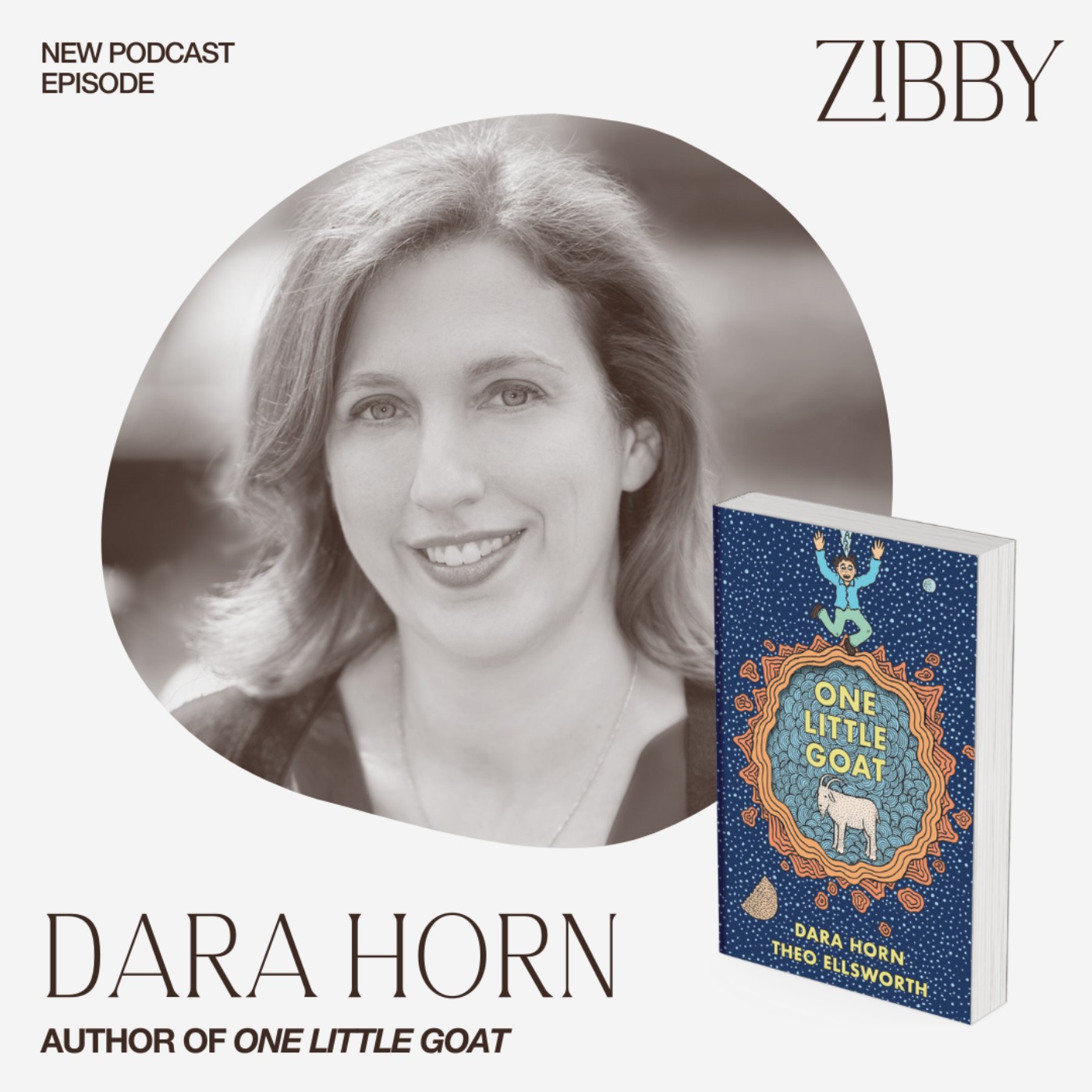
Totally Booked with Zibby
Dara Horn, ONE LITTLE GOAT: A Passover Catastrophe & PEOPLE LOVE DEAD JEWS: Reports from a Haunted Present
00:28:38
Loading summary
Transcript83 lines
- [00:00]
Zibby Owens
Are you interested in being part of the live studio audience while I film a series for Totally Booked with Zibby Live in New York City? Sign up@zibbyowens.com I have a little Google form that you can fill out and if you get selected you can come sit in the audience, hear from authors before their books have even come out, and be a part of the show again. Go to zibbyowens.com Filmings will be on April 16th, 23rd, 30th and May 7th in New York City.
- [00:35]
Be a part of it.
- [00:39]
Great Wolf Lodge Ad
At Great Wolf Lodge, there's adventure for the whole family. You and your pack can splash away in the indoor water park where it's always 84 degrees. There's a wave pool, a lazy river and a bunch of massive water slides, including ones your family can all enjoy together. They even have adventure packed attractions from the Northern Lights Arcade to delicious dining. And you can't miss the nightly family dance parties. With 23 lodges across the country, you're always only a short drive away from adventure, so bring your pack together at a lodge near you. Learn more@greatwolf.com greatwolf.com and strengthen the pack.
- [01:17]
LinkedIn Ad
Does it ever feel like you're a marketing professional just speaking into the void? Well, with LinkedIn ads you can know you're reaching the right decision makers. You can even target buyers by job title, industry company seniority skills. Wait, did I say job title yet? Get started today and see how you can avoid the void and reach the right buyers with LinkedIn ads. We'll even give you a $100 credit on your next campaign. Get started at LinkedIn.com results, terms and conditions apply.
- [01:47]
Warby Parker Ad
What makes a great pair of glasses? At Warby Parker? It's all the invisible extras without the extra cost. Their designer quality frames start at $95, including prescription lenses plus scratch resistant, smudge resistant and anti reflective coatings and UV protection and free adjustments for life. To find your next pair of glasses, sunglasses or contact lenses, or to find the Warby Parker store nearest you, head over to warbyparker.com that's warbyparker.
- [02:21]
Zibby Owens
Hi, this is Zibby Owens and you're listening to Totally Booked with Zibby. Formerly Moms don't have Time to Read Books. In my daily show, I interview today's latest best selling, buzziest or underrated authors and story creators whose work I think is worth your time. As a bookstore owner, publisher, author and obviously podcaster, I get a comprehensive look at everything that's coming out and spend my time curating the best books so you don't have to stay in the know, get insider insights and connect with guests like I do every single day. For more information, go to zibbymedia.com and follow me on Instagram. Ibbe Owens Dara Horn is the author of One Little A Passover Catastrophe and People Love Dead Jews Reports from a Haunted President. Dara is the award winning author of six books, including People Love Dead Jews, which was a New York Times notable book in 2001. One of Granta magazine's best young American novelists, she is the recipient of three national Jewish book Awards, among other honors, and she was a finalist for the Kirkus Prize, the Wingate Prize, the Simpson Family Literary Prize, and the Carnegie Medal for Excellence and Fiction. Her nonfiction work has appeared in the New York Times, the Wall Street Journal, the Washington Post, the Atlantic, Smithsonian Tablet, and the Jewish Review of Books, among many other publications. Dara received her doctorate in Comparative Literature from Harvard University, studying Yiddish and Hebrew. She currently serves as Creative Advisor for the Weizman National Museum of American Jewish History. She lives in New Jersey with her family.
- [04:02]
Welcome Dara. Thank you so much for coming on Totally Booked with Zibby to talk about your latest book, One Little Go, illustrated also by Theo Ellsworth. And then also people love Dead Juice because I just read that too, so we have to talk about it.
- [04:17]
Dara Horn
Well, thank you for having me. Thank you for having me.
- [04:20]
Zibby Owens
Okay, so in both books you talk about how as a kid you wanted to like stop time essentially, and how at the end of every day you had this sort of anxiety, really, that it was like you could never get that day back and what happens to all those past days. And I totally relate to that. Like, oh my gosh, so much talk about that and how it motivates some of your deep digging into history and the tell and everything else.
- [04:45]
Dara Horn
Yes. So yeah, this was what motivated me as a writer was this overwhelming sense of time. And you know, as you said, like when I was a child, you know, sort of constantly feeling like this was slipping through my fingers, which is a bizarre thing to think when you're like six. You'd think you'd feel that when you were much older, but I was feeling this when I was six and feeling also, as you know, as I put it, yeah, like this day that disappeared, where did it go? And you're feeling very disturbed by this. And when I was writing as a child, I was always writing. It was like documenting. I wasn't motivated by making up stories, although of Course, I've since then published five novels and now this book. But that wasn't my prime motivation. It was capturing time and growing up in the Jewish community. And in this tradition, I felt very fortunate to discover many, many centuries of people who, to my child's mind, seem to have solved this problem. Because what I've discovered in Jewish tradition is this extremely deep historical consciousness where it isn't even just an awareness of the past or, oh, this is a long tradition. There's this and this, this part. I, you know, this. I was not articulating these things when I was 6, just so you don't know how prodigy.
- [06:06]
Zibby Owens
Just to shame us and what all.
- [06:08]
Dara Horn
Our kids are doing, you know, like Yosef Chaim Yerushalmi at six. But, you know, at some point when I was reading Yosef Chaim Yerushalmi, who is this, you know, great modern Jewish historian, passed away fairly recently in the past, I don't know, 10 years. He has this book called Zachor, which means to remember. And he says in that. That the idea of history is kind of alien to Jewish tradition, because in Jewish tradition, the foundation isn't history, it's memory. And what he means by that is. And he has a line in that book where he says in. And I'm going to not get the wording right, but it's something like, in Jewish tradition, the past was not a series of events to be contemplated at a distance, but rather a series of situations into which one is existentially drawn.
- [06:53]
Zibby Owens
I get it.
- [06:53]
Dara Horn
And that is, yes, that is very much my experience of Jewish life. And it's very much the way the tradition is designed. Right. So you have this idea that it wasn't just that generation of Israelites who were standing at Sinai to take, you know, to receive the Torah. It was all of their future descendants. And of course, for this Passover related book, it's this idea that in every generation, we see ourselves as if we personally came out of Egypt. Each person is obligated to see themselves as if they personally came out of Egypt. And I was tapping into that and to the idea of the tell, which I will, I'm sure, get to this. It's very foundational to this new book I just published, one Little Goat. A tell is an archaeological mound that's made out of layers of civilization. And, you know, you find these in Israel where there's. It's, you know, there's like. It's like an artificial. It looks like a hill from the outside, but it's actually an artificial hill. Because it's all these ruins of different civilizational layers, one on top of the other. And so that the most recent layers are at the top, and then the oldest are at the very bottom. And, you know, to me, this was sort of this metaphor for Jewish life. And it's something I see in many different ways as a writer. I mean, as a scholar of Jewish literature, I studied my doctorates in Hebrew and Yiddish literature. Like, you see it in the language people use, where there's layers and layers. And I was thinking about this as I was writing One Little Goat, which is my first book for, as we say, young readers. And because I feel like there's something. There's a reason why a lot of popular children's literature is some form of portal fiction, right? Where it's like, you know, there's some portal to some world that's bigger than yours, right? You know, you go to this, you know, the track in King's Cross station, and then there's like, you know, a secret door. You know, there's the door to Narnia in the back of the wardrobe. Like, there's a reason for that, which I think is that children's lives are very, like, very constrained, right? I mean, and they're always looking for some outlet to some access point to get to this bigger world that's bigger than theirs. And that was my experience as a child. Because I feel like, you know, first of all, you know, all children's lives are very constrained. But also, I think there's something about American life in particular which very. Really pushes you to just be living in the present all the time. Like, there's almost a rejection of history, this idea that, like, oh, we're always making progress and, you know, the best is ahead. And, you know, it doesn't matter where your parents came from. It's what you do with your. This, you know, the new opportunities you have. I mean, whether this is true or not, irrelevant. This is like the ethos of the country. And in Judaism, it's kind of the opposite. I felt like I found that portal when I wouldn't have been able to use this language. But as a child, like, I found that sort of outlet. I found where the disappearing days were inside this tradition.
- [09:32]
Zibby Owens
Wow. Well, the way you visually depicted it and with such humor in the book, I can't wait to give this to my kids to read. But it's good for grownups, too. I mean, it's just another way of framing it. And I always think about this, too, when we're at SEDER like, how many seders, what's going on in this part of the world and what happened in this person's family. And it's like, mind boggling the scope of it, right? And it's all going on at the same time and by you having the goat and the main character sort of go into his family life in different parts and then, you know, Sigmund Freud's mom and like, all these places through history just to sort of understand where he is right then and to get a better context for his own family. It was like a genius way to reframe it and make it funny. And I love the scapegoat. I mean, it was, you know, it's such an original way to tell a story that has literally probably been told more than any other story ever.
- [10:31]
Dara Horn
Thank you. Well, yes, I mean, I, you know, yes, it's a. You know, because as you know, in publishing, it's like, you have to be like, it's not even just like, oh, this is a children's book versus an adult book. It's. It's like, you know, oh, this is middle grade. Oh, this is, you know, young adult, obviously, like, you know, for the publisher's sake, like, this is a book for, you know, ages, whatever to whatever. You're right. It's a book for anybody. And I mean, the reality is, like, this is. I feel like this is a book I was born to write. I mean, this is like my, I don't know, seventh or eighth book. I don't know, but. And all my other books are dealing with the same question, right? About how you find yourself in all my books about Jewish culture, but all my books are about this sort of question of how the past lives within the present. This is just like the most direct version of it. And as you say. Yeah, the funniest. And yeah, yes, I can. If we want to say a little more about just what the frame is.
- [11:22]
Zibby Owens
Yeah, Frame the story. Yes, yes.
- [11:24]
Dara Horn
Yeah. So this one Little Goat. Yeah, It's a graphic novel for young readers, whatever that means. It's for whatever reader you want, anybody who knows how to read. Basically, it is a book about a family who's at their Passover Seder and they cannot find the afikoman, which is this piece of matzah that's hidden during the meal and that's needed to end this ceremony of the Seder. And because no one can find this afikomen, the Seder cannot end. And so this family is trapped at the seder for six months, which for anyone who's been to, like, you know, a long, boring Seder. Like, it's kind of a familiar feeling. So, you know, there's. And also, you could sort of tell I started thinking about this idea during COVID So this family's trapped at this never ending seder. And six months in, there's a knock on the door and they're like, oh, maybe it's Elijah the prophet who's, you know, this, you know, you know, legendary idea that this, you know, prophet shows up at the end of the seder. And. But they're like, it can't be the Elijah the prophet because we're not up to that part of the seder yet. The word seder means order. There's, you know, and it's like, well, no, it can't be. And so the oldest child goes to answer the door, and it's a talking goat who says, I'm the scapegoat. I'm the reason for everyone's problems. And he says, I could help you find your afikomed. I think I know where it is. And then the kid's like, great, where is it? And then the goat says, no, no, no, not where, when. And then he says, over the past six months, while you've been sitting at this never ending seder, thousands of years of previous seders have accumulated underneath your seder, and you now have to travel down into those previous seders to find this missing piece of matzah and bring your seder to an end. So, and yes, as you said, it becomes a journey through. I mean, it starts as a journey through his family's history, and it continues as a journey through Jewish history, which is essentially also his family's history. Until you get to the night before the exodus at the very end.
- [13:13]
Zibby Owens
My gosh. Well, it was so cool. And even, like, acknowledging the bravery of his great grandmother in the Warsaw ghetto. And like all the times where passovers weren't always so easy. Right? Because of course, the whole story is that it is not easy. I recently had Rabbi Raphael Shore on this podcast, and he was talking again, just like you at Sinai. We were all given how to behave. We were all not just one person. And that is why we all go into the world trying to do good and all these things. And it's the mandate. It's in our DNA. And that's. That's sort of how we've ended up here. Even though they're always like in your other book, you know, there are always forces against us. So.
- [13:57]
Dara Horn
Yes, well, I mean, and this is it's. A story of. Yes, the great grandmother in the Warsaw Ghetto is a moment of bravery, but they're all moments of bravery.
- [14:06]
Zibby Owens
Yes.
- [14:06]
Dara Horn
Right. Because that's, you know, and sometimes it's, you know, in these dramatic historical circumstances, sometimes it's, you know, personal choices. But, you know, I mean, all of us are. The only reason that we are still Jews today, those of us who are participating in this tradition is because of these courageous choices that everybody before us made. Right. I mean, even in the best of circumstances, this was a countercultural choice, for sure. And I mean, anybody who's raising Jewish children know that, like, this is, you know, it's an enormous amount of effort to maintain this tradition. You know, even in, you know, whatever version of that. Whatever version of that tradition, it looks like it's a countercultural practice. And so, yeah, it's always a matter of bravery. And also, like, I mean, the Passover story. The Passover story is actually really scary. Yes, it's a really scary story. And it's very, you know, this is also very countercultural now where it's like, you know, this is a really scary story. And not only are we, like, not giving people trigger warnings, like, the children are like, the focus of this idea in the story.
- [15:06]
Zibby Owens
Yes.
- [15:06]
Dara Horn
And so, and that, I think, is also, I think, very empowering.
- [15:09]
Zibby Owens
The literal depiction of the firstborn child and the lamb's blood and all of that. And, you know, some of the skeletons and, you know, all the. This, it's like, okay, yeah, this is not like a sweet bedtime story. It's supposed to always be a wake up call. Like, we can never forget. We can never. We have to retell it over and over, and there are reasons why. And then, of course, things play out today and we at least have the context for it.
- [15:35]
Dara Horn
Right.
- [15:35]
Zibby Owens
Like, we know maybe everybody else doesn't know. And as we are seeing in culture today, people don't totally get the whole story or understand. But we all know, I mean, it's in. It's in us. It's like part of the mandate is to know and learn and repeat.
- [15:50]
Dara Horn
Well, it's part of the story, right? It's part of the story. And, you know, this is, you know, there's another part of the Passover liturgy in the Haggadah where it says, you know, that in every generation, you know, people have risen up to destroy. To destroy us, to destroy the nation of Israel, and God always saves us from their hands. So, I mean, that's obviously, you know, that's a religious frame for this idea. But there's sort of this. There's a sense in which this tradition is not just about the past, but about preparing you. It's about preparing you for living in this countercultural civilization.
- [16:23]
Zibby Owens
It's funny to think of it as countercultural and like, for me it's just cultural, but it's.
- [16:30]
Dara Horn
Well, I think this is true for, you know, this is what Jewish civilization is. This is an ancient civil. You know, this is an ancient Near Eastern civilization. There are lots of ancient Near Eastern civilizations. And you know, the radical ideas of this are countercultural, right? I mean, the radical idea of monotheism, right? Refusal to bow to idols. We think of that today as like this. Again, it's like, oh, it's a spiritual, it's a religious thing. This is a political movement in the ancient near east where, you know, all these other cultures in the ancient near east have lots of gods. And one of the gods is the dictator, right? I mean, that's what the Passover story is about, is the pharaoh thinks that he's a God. All of these plagues and things are about the pharaoh being defeated and revealed to not be a God. I mean, that is sort of the idea of that. And when the Jews in the ancient near east said that they don't bow to idols, what they meant was that they don't bow to tyrants because that's what quote, other gods were in that time. And you know, that's when. And so this has always been this sort of anti tyrannical movement which is going to piss off tyrants. And that has always been true. So when I say counterculture, this is a culture that is not conforming to whether it's an empire or whatever, just a dominant society that goes to that dominant society and says, no thanks, that is a very radical thing to do. And it is never going to make you popular, but it is sort of this ultimate expression of integrity and freedom. And to me, that's what the Passover story really is about, is that the integrity and how to live a life of integrity and freedom and how to teach that to your children.
- [18:06]
Zibby Owens
No, you're absolutely right.
- [18:07]
Today's episode has been sponsored by Wayfair. I don't know about you, but I love taking on a home design project. I love improving the house and making houses feel like homes. So it reflects who we are as a family and makes it work better for us. Right now it's home project season and if you have not used Wayfair, and I'm saying this from the bottom of my heart, I Love Wayfair. This is like my go to spot for absolutely everything. Why? The price is great. It is so fast. The delivery is so fast and so reliable and the quality is really great and it holds up. What else could you possibly want? And in in home design recently we've gotten a bunch of new runners for this house that we're in now in Santa Monica and it changed the hallway from something impersonal to something full of color and full of us. And it's just great. So if you have any sort of spring home goal or you're trying to make someplace new feel like you, this is the place to go shop the best selection of home improvement online. Get renovating with wayfair. Head to wayfair.com right now. That's W A Y-F-A-I-R.com wayfair every style, every home Today's episode has been sponsored by Quince. It is spring and I have so many travel plans, from book touring to travel with my kids to everything else. So this year I am treating myself to the luxe upgrades I deserve with Quince's high quality travel essentials at fair prices. And seriously, these prices are amazing. Whether you get this beautiful cashmere blue throw, which I got because you know, how nice is it to wrap yourself in a cozy blanket because airplanes don't give you blankets anymore and a navy blue suitcase, they have this fabulous hard shell carry on suitcase that I am just so excited to use. The best part about quints, all items are 50 to 80, 80% less than similar brands. By partnering with top factories, Quince cuts out the cost of the middleman and passes the savings on to us. And Quince only works with factories that use safe, ethical and responsible manufacturing practices and premium fabrics and finishes, which I just love. So for your next trip, treat yourself to the luxe upgrades you deserve from quint. Go to quint.com zibby for 365 day returns plus free shipping on your order. That's Q U I n c e.com Zivi to get free shipping and 365 day returns. Quinns.com Zivi @Great Wolf Lodge, there's adventure.
- [21:03]
Great Wolf Lodge Ad
For the whole family. You and your pet can splash away in the indoor water park where it's always 84 degrees. There's a wave pool, a lazy river and a bunch of massive water slides, including ones your family can all enjoy together. They even have adventure packed attractions from the Northern Lights arcade to delicious dining. And you can't miss the nightly family dance parties with 23 lodges across the country. You're always only a short drive away from adventure. So bring your pack together at a lodge near you. Learn more@greatwolf.com greatwolf.com and strengthen the pack.
- [21:42]
Zibby Owens
Well, I feel like this is a good Hagada plus, right? This should be at every seat at Passover and will open up conversations. I feel like, in a different way for people's families to connect and just another way into it that feels at once personal and universal.
- [22:00]
Dara Horn
Yes. And I think also, I mean, as you said, it's also like, it's a lot of fun.
- [22:03]
Zibby Owens
Yes.
- [22:04]
Dara Horn
Right over here, I'm sitting here talking about integrity and freedom. But, you know, as you said, like, this is a book where, like, you know, you don't meet Freud, but you meet Freud's mom. Right. And she's like, he never calls.
- [22:14]
Zibby Owens
It's. The whole thing is hilarious when you're like, the tired mom. And I'm like, feel seen. Thank you for that. You know, as I like, flashback to kids, small kids, and other seders, and I'm like, oh, my gosh. You know, everyone is a character and.
- [22:28]
Dara Horn
Those are like, their names. There's like, you know, the exhausted mom. There's like, you know, the opinionated aunt who's like, you know, modern slavery is corporate.
- [22:36]
Zibby Owens
Totally. Oh, my gosh. So funny.
- [22:38]
And how did you come to work.
- [22:39]
With Theo Ellsworth on this?
- [22:41]
Dara Horn
Oh, my God. So this was, you know, I feel so fortunate to have be working with him. This was an idea that, you know, I had had this idea at one point and then kind of back burnered it. Didn't really think about it. And then I was on a road trip with my family. We stopped at a comic book shop, and my kids came out with armloads of all these indie comics, including a really thick indie comic by Theo Ellsworth called Capacity. And they were fighting over this book. Like, it was like, oh, it's my turn for it. No, no, you already had it. And it was like, they could not get enough of this book. And I was like, what is this book that you guys bought? I don't know anything about comics. This is not my world. And I kind of borrowed it from them at one point just to be like, what are you all obsessed with? I was just enchanted by his artwork. Like, first of all, hilarious, right? And he does these things where he makes these, you know, abstract ideas really literal. I remember a page in that book where it was called Walking around with a Yelling Brain. And it was like, this man who had his, like, his head was, like, zipped open, and there was this, like, other man who was popping out of his head. And, like, it was like, you know, then that man had another zipper on his head. It was just, like. Just, like, really interesting and fun and incredibly detailed and really beautiful and haunting. And I just. I just remember thinking, like, when I saw that, I was like, oh, my God, I see how this idea that I have could work. And, I mean, I cold emailed him. I'm thinking, I'm like, your name is Theo Ellsworth. You live in Missoula, Montana. You're probably not Jewish. I'm like, okay, I'm going to have. I have this. I wrote to him. I'm like, hi, I love your work. I'm a writer. I have this idea. It's a little hard to explain. Deep breath. And he was totally game. Just so fantastic. Came up with all kinds of things I would never have thought of. He just. It was, you know, working with him was just amazing. He did a fantastic job. And, yeah, I mean, he's an amazing artist.
- [24:28]
Zibby Owens
Wow. Well, congratulations. It's very cool and fun and entertaining, but so much more than that. So I feel like it fits right in the graphic novel trend, you know, with kids who, like, can't even be bothered to read novels anymore. So, yeah, how cool. Just, it's so nice to have a different way to think about things after so long and just to touch on. People love dead Jews. You're probably so tired of talking about it. You know, I was struck. I read part of it over the break when I was in California. And then in reviewing part of it today, there's a whole scene where you're driving through the Palisades, which gave me, like, goosebumps. Right. You're on Amalfi driving.
- [25:05]
Dara Horn
Oh, my God, yes.
- [25:06]
Zibby Owens
All of that. In fact, then I went on Instagram to see, like, what happened to those houses that you mentioned. The. Now I can't remember the name, but now I'm following them, but.
- [25:13]
Dara Horn
Oh, Aurora. And. Yeah, ye.
- [25:15]
Zibby Owens
But you talk about that in the context of how there was this one man who was such a helper and his whole story. Frederick.
- [25:23]
Dara Horn
Oh, Varian Fry.
- [25:25]
Zibby Owens
Right, right, sorry.
- [25:26]
Dara Horn
One of the only Americans, as we used to call righteous gentiles. Right. Who's one of the only Americans who was involved in rescuing people from Nazi persecution. Yeah, yeah.
- [25:34]
Zibby Owens
And how he basically perpetuated this artistic and literary community, relocated to California, and yet why is he not known so publicly? I mean, there's so many People who have helped and so many people who have heard. But, like, let's broadcast that story. I'm like, where is the documentary on this guy?
- [25:54]
Dara Horn
I don't have it. I mean, there's been some things, actually, since the book came out. Somebody made a Netflix series actually about him.
- [26:01]
Zibby Owens
Oh. Oh, my gosh. Okay. Well, now I can go watch that.
- [26:03]
Dara Horn
Yeah. Which I'm embarrassed to say I haven't seen, but yeah.
- [26:05]
Zibby Owens
Okay. Well, tell me about when you wrote that book. It was obviously a couple years ago. You were responding still to the synagogue massacre. Now things have gotten arguably worse. But of course, I wouldn't call that. It's all relative. It's all relative. And you said in the book you've sort of become this reluctant op Ed person about all of this stuff, and you didn't necessarily want to, but you're like, at least I know my history and I might as well be the person. So talk about it. How you've sort of emerged as this source and how your perspective on everything is so important and original and all that.
- [26:42]
Dara Horn
Oh, God. So, yeah, so people love Dead Jews, which. Yeah, I still can't believe my publisher let me keep that title. People Love Dead Jews is a book about. It's about the role that dead Jews play in non Jewish society. I hadn't even really thought about it as a book about antisemitism, but what this phrase means essentially is that most non Jewish societies only find Jews acceptable when Jews are powerless, whether that means politically impotent or dead. And I, you know, I started thinking about this, you know, about. Yes. Like in 2018, I was asked by Smithsonian magazine to write a long piece for them about Anne Frank. And I was dreading that assignment. And I remember thinking, like, why don't I want to do this? And I remember this news story that I had read about something that happened at the Anne Frank Museum in Amsterdam, where there was a young Jewish man working at that museum. The museum wouldn't let him wear his yarmulke to work. They made him hide it under a baseball hat. And he appealed the decision to the board of the museum. The board of the museum deliberated for six months and then let him wear his yamaka to work. And I'm like, six months. Long time for the Anne Frank Museum to ponder whether or not it was a good idea to force a Jew into hiding. And I'm like. And then I found out something even similar had happened six months earlier with the museum's audio guide display, where they have, you know, 15 languages the audio guide, it says, you know, English, there's a British flag, Francais, there's a French flag. And then you get to Hebrew, no flag, no flag. I mean, they've since fixed these things, but I'm like, these are PR mishaps, but they're not mistakes. And that was this where I got this. You know, the first line of that essay is like, people love dead Jews. Living Jews, not so much. But I've. Now, the refined idea of this is that, yes, Jews are only acceptable when they're powerless, when they're politically impotent, or when they're dead. And I, yes, I published this book in 2021, and I just thought this was, like, sort of a detour for my fiction. I had published five novels before this, and I was like, okay, I'm going to just get this out of my system. This book has eaten my life since this book came out. I mean, it was, like, just inundated with, first of all, Jewish readers who were all coming to me with their horror stories. I'm like, I'm not a therapist. I don't even know what I can possibly do for you. And realized from that how much huger this problem was than I ever thought it was. And also being inundated with non Jewish readers who are all. I mean, yes, I get hate mail and all of that, but non Jewish readers who were basically saying, wow, I had no idea. How can I help? And so this book sort of made me into this national voice on this issue. And then after October 7th, I mean, and I should say already was, I was sort of like this book term. I mean, I was one of the people who was contributing in the Biden administration to, like, this, whatever their national plan was to combat anti Semitism, which I have to say, I don't know that anyone never did anything with this plan. But I mean, you know, I wrote, I don't know, five or six pages of that plan. I mean, like, I was sort of involved in a lot of things that, you know, a person who just wrote a book, comic book about a talking goat you would not expect to be involved in, and then, like, that just exploded after October 7th. So, I mean, in terms of what happened to me after that, the first thing that happened was I was asked to, and I participated in this anti Semitism advisory group to the now former president of Harvard, who did not take our advice, unfortunately. And it went really badly. In fact, it went so badly that then I got halted to Congress to testify about it. So, I mean, I'm like, I was part of this congressional investigation. I now have people just asking me constantly about this. And I'm doing public speaking all the time about this topic in many, many audiences. And what I just started noticing was, like, the way I'm talking about this is very different from other people because it would often happen. It happened just this week at another college. I speak at these college campuses, and there'll be people who show up in like, you know, their keffiyeh, and they start, you know, heckling me, like, asking hostile questions. And I just answer the questions. And then they say, wow, I never thought about it that way. Thank you. And they come to me afterwards. They're like, this was really interesting. Where can I go to learn more? And then I would have, like, non Jewish readers at these events coming to me being like, wow, the way you just said this was amazing. You know, can I. Can you come speak to my school? Can you come speak to my teachers union? And I was just like, no, because, like, I'm me and I, you know, like, I got a plan to go to Phoenix tomorrow. Like, you know, and I don't have, like, a staff. And, you know, this is just like, I'm a novelist whose next book is about a talking goat, right? Like, you know, this is like, you know, no, I'm not like, well. And so what I now actually have done is I've started a nonprofit to address this issue and to sort of scale what I've been doing in terms of changing this conversation. And it's called Mosaic Persuasion. And the goal is to educate the broader American public about who Jews are. Because that's what I saw was completely missing. It's like, you know, there are all these places where it's like, you have required to learn about the Holocaust in school. You're not required to learn who Jews are that we've outsourced to TikTok. So, you know, this is like a broader education problem, because I don't think that there's any possibility of combating it. You can't even understand what antisemitism is without understanding Jewish civilization. Because it does have to do with this idea of opposition to tyranny. And I now have this sort of. I have a whole framework for it. Because what I realized is the whole way that people are addressing this problem is on the anti Semitic terms of the dominant culture. And that once you disrupt that frame, suddenly the whole conversation changes and people understand what you're talking about and see the problem. So we're starting this in K to 12. We have workshops for teachers and stuff. If any of your listeners are educators or involved in. Whether it's in school or museums or interfaith groups or social media channels, we are building this out. But, yeah, we're very new. Don't even have a website yet. But you can contact me through my website@darrowhorn.com if you're interested in this initiative. So, yeah.
- [32:31]
Zibby Owens
Wow.
- [32:31]
That is super excited. I will contact you through your website. I am interested. I. That is great. Clearly, what we're doing now is not working. So by shifting the framework, hopefully we have more success. And.
- [32:44]
Dara Horn
Yes. Well. And I think. Because I think that this, you know, this is really a problem. That is the reason it's a larger problem in our society, because it's about the limits of living in a pluralistic democracy. Right. It's like this test case for what does it mean to live with people who don't all agree? And obviously, this is a broader problem in American culture with the way this culture is polarized and sort of being able to be in conversation with people who are coming from a lot of different places and who don't agree with each other. And that is like something that Jewish tradition offers, a masterclass in that.
- [33:14]
Zibby Owens
Wow. Okay. I am so. I mean, I was already so impressed with you, but just even getting to listen to you, I feel like I'm taking my own masterclass here. I feel like you should be teaching. I mean, you must teach, right? You must teach.
- [33:27]
Dara Horn
I have in the past. But, you know, as I said, like, this is my. This is why, like, I need to figure out how to scale what I'm doing. Because right now it's like, you know, I have taught in universities and things in the past, like, you know, courses and. But I teach courses like, you know, Yiddish and Hebrew literature. That's actually my academic work is. But, you know, need to be able to scale what I'm doing. Yeah.
- [33:45]
Zibby Owens
Wow. Okay. Well, let's keep talking. Not now, but, like, offline. I want to keep talking about what you're doing.
- [33:51]
Dara Horn
Yes.
- [33:51]
Zibby Owens
And congratulations on One Little goat. Totally enjoyed it. We'll be sending it to everybody in my family. Extended family.
- [34:00]
Dara Horn
Way more fun than people.
- [34:02]
Zibby Owens
Yes. Yes. A nice sort of counterbalance. So thank you, Dara. This was really great. Thanks for talking.
- [34:08]
Dara Horn
Thank you so much.
- [34:09]
Zibby Owens
Of course.
- [34:10]
Okay, bye.
- [34:11]
To be continued. Bye. Bye.
- [34:13]
Thank you for listening to Totally Booked with Siby, formerly Moms don't have Time to Read Books. If you loved the show, tell a Friend, leave a review. Follow me on Instagram ippyowens and spread the word. Thanks so much. Oh, and buy the books.
- [34:35]
Warby Parker Ad
If you wear glasses, you know how hard it is to find the perfect pair. But step into a Warby Parker store and you'll see it doesn't have to be. Not only will you find a great selection of frames, you'll also meet helpful advisors and friendly optometrists. Yep, many Warby Parker locations also offer eye exams. So the next time you need glasses, sunglasses, contact lenses, or a new prescription, you know where to look. To find a Warby Parker store near you or to book an eye exam, head over to warbyparker.com retail.
- [35:05]
H
I don't know about you, but the number one thing I look forward to when I return from traveling is a good night's sleep in my own bed. That has never been more true than it is now that I have a Sleep Number smart bed. I get so sore after traveling on planes. But after literally one night in my Sleep number smart bed, my body feels restored, rested and relaxed. The fact that my bed actually listens to my body and adjusts to my needs to keep me sleeping soundly all the way through the night is worth it alone. Not to mention, my husband and I never need to argue over firmness because we can each dial in our own Sleep number setting. Why choose a Sleep number smart bed? So you can choose your ideal comfort on either side. And now for a limited time, Sleep number Smart beds start at $840 $49. Price is higher in Alaska and Hawaii. Exclusively at a sleep number store near you. See store or sleepnumber.com for details.
- [35:56]
Zibby Owens
Hold that.
- [35:56]
I
Sir, there's no time for pickleball because you're gonna want to hear this. NOOM now has GLP1s.
- [36:01]
Dara Horn
No way.
- [36:01]
I
Oh yes way, Fred. Psychology and meds. That's how NOOM helps you lose the weight and keep it off.
- [36:07]
Dara Horn
That's really smart.
- [36:08]
I
Oh Danny, it's NOOM smart. And they started just 149 bucks and they're shipped to your door in seven days.
- [36:14]
Dara Horn
Holy smokes, that's fast.
- [36:15]
I
But not as fast as my service game. Hey, who's ready to get pickled?
- [36:18]
Dara Horn
Get started with Noom GLP1 today. Not all customers will medically qualify for prescription medications. Compounded medications are not reviewed by the FDA for safety, efficacy, or quality.