Loading summary
Transcript39 lines
- [00:01]
A
Hi, this is Zibby Owens and you're listening to Totally Booked with Zibby, formerly Moms don't have Time to Read Books. In my daily show, I interview today's latest best selling buzziest or underrated authors and story creators whose work I think is worth your time. As a bookstore owner, publisher, author, and obviously podcaster, I get a comprehensive look at everything that's coming out and spend my time curating the best books so you don't have to stay in the know, get insider insights and connect with guests like I do every single day. For more information, go to zibbymedia.com and follow me on Instagram ibbeowens
- [00:45]
B
Nancy Foley
- [00:46]
C
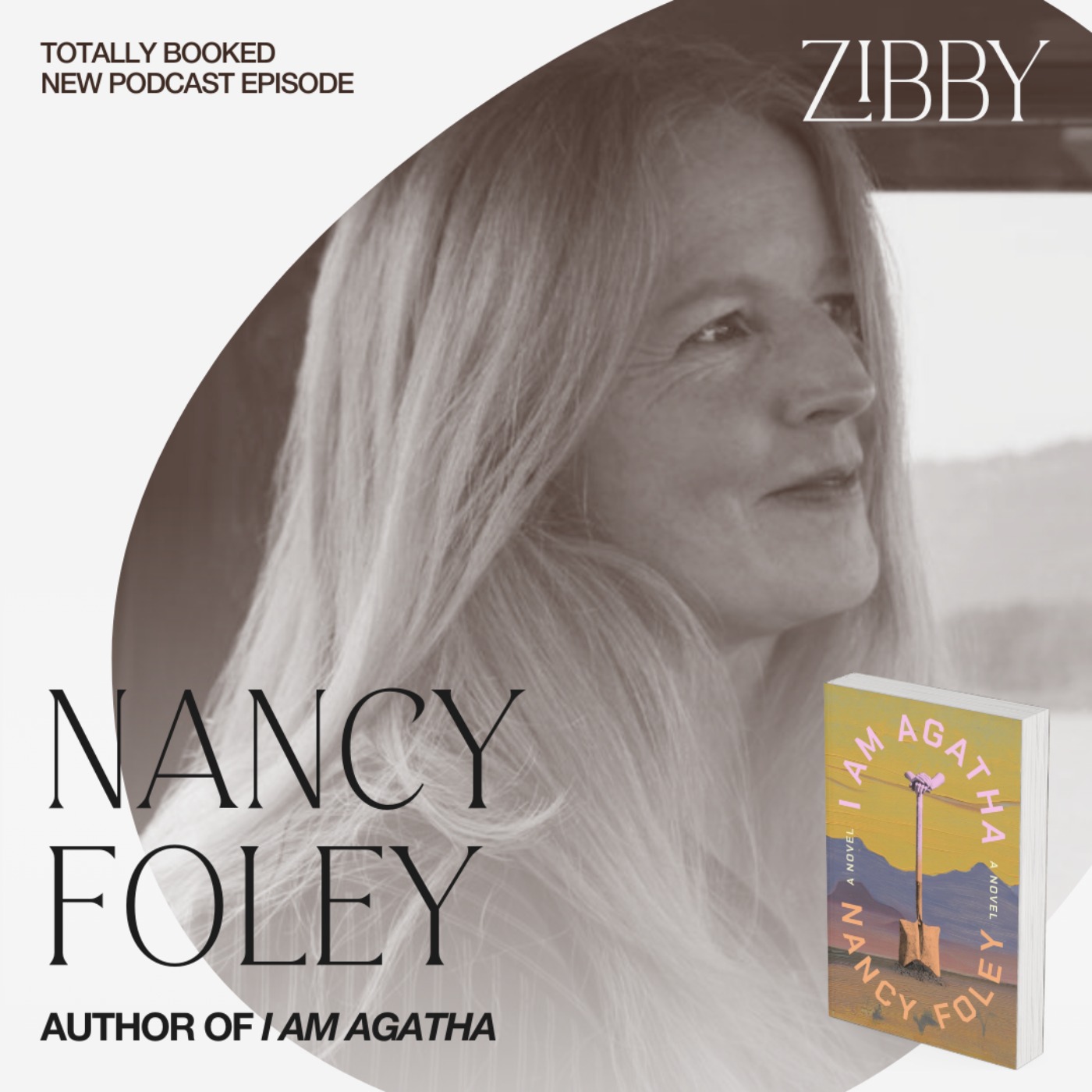
is the author of I Am Agatha. She grew up in New Mexico and has been a writer in residence at Hedgebrook and divides her time between New Mexico and Oregon. I Am Agatha is her first novel. Welcome Nancy. Thank you so much for coming on Totally Booked to talk about I Am Agatha a novel. Congratulations.
- [01:04]
B
Thank you. Thank you so much for having me.
- [01:05]
C
So you are a debut novelist. Why don't you talk about that, what I Am Agatha is about and how
- [01:13]
A
you came to publish your first novel.
- [01:14]
B
Now I'm 58 years old, so it's been a long time coming. I have been writing on my own basically for 30 years and have written a few manuscripts that I shelved and never showed around. So this is all very exciting. Anyway, I Am Agatha it's an unlikely romance. It's set in New Mexico in the 1970s. The narrator is Agatha. She is in her 60s. She's formidable. She's definitely more than a bit of a curmudgeon. She's a well known abstract painter who is looking to kind of get out from underneath some of her personal problems. She leases land on a remote mesa in New Mexico. She builds herself an adobe house and all she wants is to be left alone to do her work and sort through her problems. Instead, she falls for Alice, who's a mild mannered small town widow who's different than her in just about every way. But they fall in love and the story takes place sometime. The main action of the story takes place sometime later, kind of over a string of days when a crisis arises for the two women. Now Alice grew up in this small town. She's very deeply rooted there. She's beloved. But she also has a deepening case of dementia and this create a conflict between people in the town and the two women. The two women want to just continue living their life together, but Agatha is viewed as an outsider an interloper, someone from elsewhere. And so the town has some problems with the next phase of Alice's life and how it's going to go. And I'll stop there. There's quite a few twists and turns. Indeed. So but that the story, and I
- [02:53]
C
love that this is sort of loosely inspired by your grandmother's home. Talk a little bit about that.
- [03:01]
B
Well, I grew up in New Mexico and my grandparents lived there. It is really like the landscape of my heart. I mean I left for college, I've only lived there intermittently since then. But everything I've ever written has always been set in New Mexico. I long for it when I'm not there. So that's kind of like the baseline for my work. But I think nothing before this was ever was successful, at least to me because of these are the two characters that really made it come alive for me in this landscape. And I got the idea for these two characters from my grandmother who told me she was in her 80s. It was about two decades ago. It was really a bit of unverified hot gossip about her best friend and the real life painter, abstract painter Agnes Martin, who did in the 1970s live at Mason Portalis, not too far from my grandparents house where I often visited as a child in the 70s and 80s. So.
- [03:53]
C
So you'll probably find this nuts, but I have never actually been to New Mexico. I've been to a lot of places in the country and somehow never. I've never made it there. And I know you write about it. I feel like I've been there having read this. But for those of us and others who haven't been to New Mexico, tell me a little bit about it as a place and why it. It gets under your skin and the longing that you still feel. And just give us a little taste of it from an insider.
- [04:22]
B
You know, it's obviously beautiful. And where my grandparents lived up was. Lived was about an hour from Abiquiu, which is really Georgia o' Keeffe country. She's obviously a dominating art force there. You know, kind of shuts down the light for a lot of other artists, I would say in the area. But that is really the landscape there. And it's just. There's so much space. The vistas are gorgeous. You can see everything coming, you know. I currently live most of the year in Oregon and there's so many trees here. It's like. It's kind of crazy for me. Like there's just not the kind of space that I need. And I don't Know, I grew up in Los Alamos, which is, you know, where the Nashell Laboratory is and the Manhattan Project. And my father was a scientist. And we. It's. It's not. It's almost like growing up as an outsider in the state. It's not like anywhere else in the state. And so when you say you're from Los Alamos, you don't know sometimes in New Mexico what kind of reaction you're gonna you're gonn have. The landscape there's a little bit different. The town is built on these finger mesas. It's a little bit grayer, a little bit different colors. But we would often go and visit my grandparents who were not outsiders in any way in the state or, you know, in part of their community. My grandmother was a teacher. My grandfather worked various jobs. He owned a cafe in town. He worked at the blm, he worked on the Navajo reservation. And to go there was. The landscape was richer, it was warmer, it was redder. I just felt very much as a New Mexican there in that landscape. And I always miss it when I'm not there. I do long for it.
- [05:49]
A
Wow.
- [05:50]
C
And you wrote this during COVID when you couldn't get anywhere, really. Agatha just came to you. Tell me about hearing her voice.
- [05:57]
B
Well, my grandmother told me this anecdote, and in brief, a little bit more about Agnes Martin is she was living in New York in her 50s. She'd had some small success as an artist. She had a community there. But she also had some mental health issues. She had a breakdown. She quit painting. She destroyed a lot of her work. She kind of disappeared for about a year and a half, unaccounted for, and then turned up in this small town in New Mexico. She leased some land, she built a house, and she lived out there for the better part of a decade. And from what I've read, you know, she was battling schizophrenia, most likely kind of on her own. She did get better. She went on to start painting again and painted some of the most for me. Beautiful, consoling, like luminous paintings. I really encourage anyone to go see her work whenever possible. And I didn't know anything about her at the time as a child. My family's not art oriented in any way. But I was visiting my grandmother and, you know, she told me, oh, I said to her, did you know that this artist, Agnes Martin, used to live out here? My grandmother just. It was very shocking to me. She said, oh, yeah. And she just sort of offhandedly told me this story about her best friend who had struck up friendship, some kind of friendship with Agnes Martin at that time. And they had exchanged letters and that after the best friend died, the son burned the letters. And this was just very startling anecdote to me. My grandmother was a teacher. She was very proper. She never gossiped. And to have this. Have her sort of drop this on me was incredible. And I immediately followed up with, well, why did the son feel the need to burn the letters? And my grandmother shut me down. You know, she regretted telling. Saying anything. Obviously, she never told me any more about it. She was about 5ft tall, completely indomitable, and there was no more discussion. And she died a few years later. But they really. That really was the inspiration. I thought it was the mystery of that sort of like the kind of secret history. As to the veracity of any of that, I have no idea. But that was really the spark. And. But Agatha's voice came to me. I was sort of. I was having a lot of sense of failure about my own artistic process. You know, I. I'd written four novels. I didn't think any of them were good. I'd shelved them all. Suddenly I was about 53, and I was like, wow, this dream that I've had my whole life, that I've really dedicated myself to, is not going to happen for me. And I was quite depressed and honestly, kind of feeling sorry for myself. It was Covid. I was trying to get away from my family, so I was hiding my office, and I started paging through an Agnes Martin monograph. And I just. I thought about my grandmother's friend. I looked at some old photographs and I just. I was older. I was two decades older than when my grandmother had first told me this anecdote. And I just thought about everything. Agnes Martin was a difficult person and she had a difficult life, and she still managed to make her way through to this beautiful work and this amazing success. And I was just like, what's my problem? You know, like, my life is not as difficult as hers. I decided to stop feeling sorry for myself. And it wasn't too long after that that her V came to me. And, you know, it's not Agnes Martin's voice. I have never. I made a point to never listen to a recording or see a video or. I have read a little bit of some things. I think there are lectures that were transcribed of hers, and I found them baffling. So it wasn't her voice in my head. It was. It was me, I guess. And it came to me very strongly, and it kind of just took off from there, I read the first draft pretty quickly in about four and a half months. Wow.
- [09:28]
C
And what was the path of publication like for the book? And did you try with the other ones?
- [09:32]
B
Did you even try?
- [09:33]
C
You didn't even try?
- [09:34]
B
I didn't try with the other ones. I just, you know, I had decided when I was about 25, like, okay, I'm not going to get an MFA. I'm going to go this alone. I have always just written by myself. I never really even had a writing community. I had this idea that I wanted to also have a very full life doing other things. I have a family, just, you know, a lot of things, and. But when I finished this book, I was like, oh, I think. I think this is good. You know, I feel like this one, for the first time, I. I feel like I could do this. And so I sort of managed to get an agent at a writing conference. It was a virtual writing conference because it was Covid, and she's amazing, Susan Gollum. And we kind of went from there, but it was a rough draft. And, you know, when you finish the rough draft, you're pretty high on yourself. You think, like, this is incredible. It doesn't need any more work. But it did need a lot more work. And it was about another three years of revision, you know, before it was really ready, maybe a little less than that to send out. And it was very exciting. I mean, for months. I mean, I sold the book the same week that I took my daughter to college for the first time. And so it just really felt like, you know, a change. I woke up smiling. I went to bed smiling. You know, it's. It's been exciting.
- [10:41]
C
Oh, well, that's not usually how people describe the day they take their kids to college, so I'm glad that you had a different experience, all that, too.
- [10:49]
B
It was. It was mixed. It was.
- [10:52]
C
How many kids do you have? I have two.
- [10:55]
B
They're both in college. Yes.
- [10:57]
C
My older kids are going to college next year.
- [10:59]
B
So, yeah, it's a big change. Yeah.
- [11:03]
C
So now that you have published this, are you feeling better, so to speak, about yourself as a writer? Like, are you inspired to write your next book? Do you feel like it's not about how good a writer, it's about if you have the right story or what's your conclusion after all this time?
- [11:22]
B
I do. I had a lot of confidence on the page, and so I'm going to continue. You know, I have a couple of other ideas that I'm working on. One of them not set in New Mexico, actually. So we'll see how that goes. I don't know. That'll be a new experience. But, yeah, I mean, I'm gonna continue. It just. It's what I do. I mean, it really is to work by yourself for so long on your own. You really have to be dedicated to the process, not the outcome. Like, and I really struggled with that over the years because you kind of get in these, oh, I should try to get an agent. Oh, what if I publish this? Oh, maybe I should try to do a short story. And these are huge distractions if you're not that person. You know, like, if you're really, like, the novelist who's interested in process, which is what I like. If I don't write a little bit most days of the week, I'm pretty crabby. My family knows to stay away from me if I haven't had reading time during the day. And so it really just is a life process for me. And when I got depressed, like, oh, I'm a failure at this, it was really because I had lost track of that, like, of what is the joy and the virtue in it for me, which is just simply the doing of it, you know, and not the outcome, the publication. So I'm thrilled about the publication, but I'm thrilled also to be, you know, going to be starting something new because that's. That's the real delight in it for me, is the writing.
- [12:42]
C
So what's the most important thing you learned from Agatha?
- [12:46]
B
Do you mean as the character or just writing it?
- [12:48]
C
You would say, I mean the character.
- [12:50]
B
I just really like her difficulty as a person. She's a difficult person. She's an older person. That is my complete Venn diagram overlap of what I'm interested in. Older people, difficult people, and when they come together, I'm really entertained. And so I was raised to be accommodating. And I think as a young woman, I was born in 1967, and maybe not that uncommon, but I really enjoy a difficult person who pushes. And I also just to speak in her voice was very freeing for me, especially during COVID and especially after having raised a couple of kids, because, you know, when you have kids, you want to be a good citizen, right? And you try to always set a good example and do all these kinds of things. And I don't mean that that was, like, a big strain for me, but it was a delight to go out in my office during COVID when everything was locked down and trying to do everything the right way. And a lot of worry about A lot of people in my life. And just to kind of let loose in Agatha's voice was a real thrill, honestly. And just to spend time with an older person. Not that much older than me, actually. People have always been my. I've always had a lot of older friends, and they're kind of a. They always feel very safe and to me. And funny. I love humor. And older people are invariably funny, even in ways sometimes they're not. They don't think they are.
- [14:13]
C
Yes, I have found my mother to be very funny as she gets older. Oh, my goodness. What are you most looking forward to about the book coming out?
- [14:23]
B
I don't know. I'm a little. I mean, I sort of waver between a little bit of anxiety about it and just sort of enjoying talking to people about it because it has been so, you know, everyone is always asking me for years, what are you doing? Like, what are you working on? And can I see some of it? And I'm a big believer in not showing your work until you're really ready to show it because, you know, unwelcome criticism can be difficult and damaging working. But praise, I have found, can also be just as damaging because, you know, it's easy to follow praise. You like praise. You want more praise. And so you might kind of get away from your true voice by trying to get more praise. So I really have spent a lot of time by myself. It's been sometimes kind of mortifying, like, oh, you're still working on that book. Wait, you're working on a new one. Like, whatever. So just to get out there and talk about the book and hold the book, and I just. I'm. I'm really. I'm. I have. I'm a pretty private person. So that, to me is, you know, kind of getting out there is a little. That feels like a big deal to me. But overall, I'm just. I'm very excited to share it with people.
- [15:27]
C
So exciting. Well, congratulations. We'll share in your excitement and the end product and all that editing, essentially, that you did and not trying to put the first one just because it was done right. There can be such a pull to just like, well, let's try to sell it, or let's just see what happens or whatever. But the fact that you waited and that you knew makes it clear the rest of us can know as well.
- [15:54]
B
I think so.
- [15:57]
C
All right. Well, Nancy, thank you so much and wishing you all the best.
- [16:00]
B
Thank you. Thank you. Thanks.
- [16:02]
C
Okay, bye.
- [16:02]
B
Bye.
- [16:03]
A
Thank you for listening to Totally Booked with Zibi. Formerly moms don't have time to read books. If you loved the show, tell a friend, leave a review, follow me on Instagram ibyohans and spread the word. Thanks so much. Oh, and buy the books.