← Totally Booked with Zibby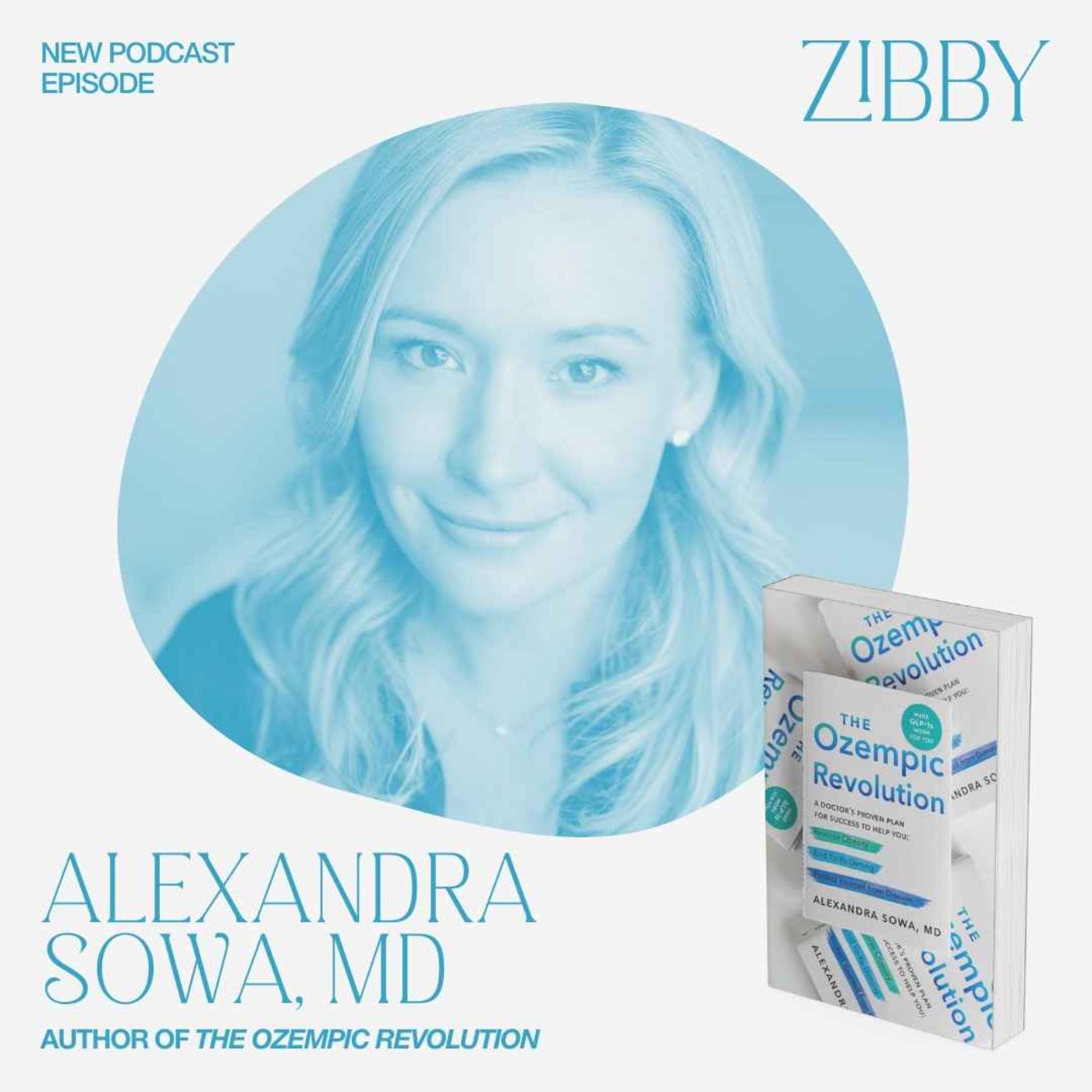
Totally Booked with Zibby
Dr. Alexandra Sowa, THE OZEMPIC REVOLUTION: A Doctor's Proven Plan for Success to Help You Reverse Obesity, End Yo-Yo Dieting, and Protect Yourself from Disease
00:28:25
Loading summary
Transcript57 lines
- [00:01]
Zibby Owens
The recent fire in LA destroyed many schools in the Pacific Palisades area where we have our home. I am currently raising money to completely rebuild the library collections of four schools in the neighborhood. If you are interested in helping me raise up to $800,000 to restock the libraries, go to zivimedia.com donate one book donate a thousand books but please help imagine if this was your school or your kids school. Thank you.
- [00:31]
Hi, this is Zibby Owens and you're listening to Totally Booked with Zibby, formerly Moms don't have Time to Read Books. In my daily show, I interview today's latest best selling buzziest or underrated authors and story creators whose work I think is worth your time. As a bookstore owner, publisher, author and obviously podcaster, I get a comprehensive look at everything that's coming out and spend my time curating the best books so you don't have to stay in the know. Get insider insights and connect with guests like I do every single day. For more information, go to zibbedia.com and follow me on Instagram ibyoans.
- [01:14]
Dr. Alexandra Soa is the author of the Ozempic Revolution, A Doctor's proven plan for success to to help you reverse obesity, end yo yo dieting and protect yourself from disease. Dr. Soa is a dual board certified Physician in internal and Obesity medicine, founder of so well, and author of the groundbreaking book the Ozempic Revolution. With over a decade of clinical experience, Dr. Soa has become a leading voice in metabolic health, specializing in GLP1 medications and their transformative role in tackling obesity and chronic illness. Through so well, Dr. Soa extends her reach beyond the clinic offering innovative telehealth services, metabolic and GLP support products and resources that reflect her philosophy of care, both holistic and evidence based. Deeply proud of her Johns Hopkins and NYU education, she now serves as Clinical Instructor at NYU School of Medicine. Her expertise has been featured in media outlets such as the New York Times, CNN and Women's Health. She lives in Summit, New Jersey with her husband and four young children. In her spare time, she loves to sleep and watch reality tv. Yes, really.
- [02:19]
Welcome Alexandra. Thanks for coming on Totally Booked with Zivi to talk about the Ozempic Revolution.
- [02:25]
Dr. Alexandra Soa
I am thrilled to be here. I've been looking so forward to this. Aw.
- [02:30]
Zibby Owens
And as we were just chatting about, you came to the most anticipated party and we got a chance to meet. So that was really wonderful.
- [02:36]
Dr. Alexandra Soa
I mean it was the best time and it's such a thrill to be included with such such Amazing authors and for you to let me into your circle. Thank you.
- [02:45]
Zibby Owens
Oh my gosh, no problem. It's great to meet you. And you know I have a vested interest in this top having been on Manjaro and I've lost like 30 pounds or something. And I am a huge advocate for GLPs, GLP1s, whatever. So getting to delve into I haven't done really any of the things you tell people to do in the book, but I appreciated that there was a book and I wish I had had that at the beginning. So why don't you tell people a little bit more about your background and how you ended up writing the book.
- [03:14]
Dr. Alexandra Soa
So I am a dual board certified internist and obesity medicine specialist. I went to Johns Hopkins, trained at NYU and I the field of obesity medicine very early on in my career because I was very disillusioned by just treating end stage disease and I knew there had to be a better way to help people prevent disease. And obesity medicine was the path forward for me. GLP1 medications have been around for actually a long time, so they were present in my education and my early on in my career. But these new weekly iterations have really changed the game and I felt like it was time to write a comprehensive guide about what specialists like me know and teach our patients. But that the rate of prescriptions has been outpacing the ability to educate holistically. And that was the inspiration behind the book the Ozempic Revolution.
- [04:05]
Zibby Owens
Wait. I am fascinated about the fact that they have been around for a while. What were they like before and can you give us a background on how they became what they are now?
- [04:14]
Dr. Alexandra Soa
Yes. So we've actually been using GLP1 medications daily for use for treatment of type 2 diabetes since 2005. The first weight loss FDA approved versions came out a little over 11 years ago at this point. The first medication was called Saxenda and it was a daily and then when Ozempic came to be and then the weight loss version of that was we go V came to be in the last five years, six years, it has really transformed the both ease of use. But really more importantly than that, it's been how efficacious it is. So the older iterations we didn't see such large weight loss. We saw maybe 7%, 8%, maybe 10% total body weight loss. Now we see 15 up to 25% total body weight loss. So they're real game changers. And more than what they can do, I think is what they can do for us on a Societal level of changing and redefining weight bias, fat stigma, however you want to call it. And finally, people are starting to say, hey, this is not a disease of willpower. This is a disease of biology, and we need to look at it like any other chronic disease. We're going to take the shame away. And we have medications to help you in this. And that is my mission in life, is to stand on my little soapbox and, you know, sit, say it as many times as I need to, that this is not about willpower. Very, very successful people struggle with their weight, right? People who are so type A will do everything, and in fact, they get themselves into patterns of eating and obsession that are so counterproductive to health. And this medication can be so freeing. We know that it's not just effective for weight management and type 2 diabetes, but now we're seeing a whole host of FDA approvals and indications that are going to go far beyond that. So treatment for sleep apnea, cardiac and stroke prevention, kidney protection. I do think that we'll see indications for dementia protection. We're reducing 16 types of cancer. And the list goes on and on, because when it comes down to it, chronic disease is about inflammation and metabolic dysfunction. So I think these medications are a revolution. But I think people need to be empowered to know, well, how do you achieve health with them? Not just achieve thinness.
- [06:40]
Zibby Owens
Can I throw one other thing in there that is not really reported, but I feel like they really help with, like, perimenopausal symptoms.
- [06:50]
Dr. Alexandra Soa
Well, perimenopause is generally a state of insulin resistance and big changes in hormones. And this medication can really help people navigate this period. People may, in perimenopause, still need HRT to manage symptoms, but we're seeing AM often paired alongside GLP1s now, too.
- [07:11]
Zibby Owens
Okay, just throwing that out in case somehow the medical community had missed it from.
- [07:16]
Dr. Alexandra Soa
Well, listen, we miss a lot of things when it comes to women reporting, right? And so I think it actually is important and it does need to be studied more. But we shouldn't be withholding it from women in this period when their body starts to change.
- [07:29]
Zibby Owens
So I know firsthand how amazing this can be. And not just the weight part, but the mind part. For me, that has been the most transformative. And I know you write about this in the book that suddenly, in fact, you have a section I found fascinating, which was how you used to be able to derive so much pleasure from food, and now you've kind of been robbed of the pleasure. Like, food does not bring as Much pleasure as it used to. And so you actually have a whole bulleted list of like, what you can do for pleasure instead of just eating. But speak to me about that because that. Yeah, tell me more about that.
- [08:06]
Dr. Alexandra Soa
So in the book, I walk people through what I think are the important foundations of how to prepare yourself for this journey. So we have habit foundations and we have food foundations. And then as we're talking about now, the thought foundations. And you need to be aware for how your brain is going to change in this journey. And we know that actually there are decreased rates of depression and anxiety on GLP1 medications. But what you're talking about about is in the book, I discuss this concept of anhedonia, which is a subtle lack of pleasure. And most people find such joy that they are freed from constant obsession about food. The food noise is quieted. They're finally losing weight. For the first time in their life. They are able to eat a variety of foods and they're able to do the things that they wanted to do always. So most people find just. They don't, they don't recognize this. But then for the people that only found their joy in excess eating of alcohol, like their whole social life is wrapped up into these things that they can't really slash, don't want to partake in anymore, they can feel a little lost. And I do, in the book advocate for before this journey even starts. Think about what you're going to do to fill that time and how are you going to even potentially reroute some of your relationship? So if your whole friend group only meets out at the bar for, you know, burgers and beer on Saturdays, is there something else you guys can do together where you still feel like you can partake and have fun? Or if your whole date night life with your spouse or significant other is just, you know, going out and eating and drinking, can you add bowling into that? Or can you do some other activity that's not fully centered? Or just going back to the basics of hab of hobbies, which we all tend to let go of in adulthood. But can you pull out the cross stitch and the needle point? Can you do that instead of snacking? You know, like at night, your hands got used to reaching for popcorn. Well, let's fill that void so that you'll be able to make those connections in your brain that bring you joy again.
- [10:17]
Zibby Owens
Interesting. Yeah, I feel like my hands didn't go to the popcorn anymore. Like it didn't even occur to me. And I thought what you were touching on as well, was like, whereas a cupcake might have brought me a 10 out of 10 on the joy, sometimes now it's like a three. And sometimes that can feel disappointing. Like I could reliably depend on a certain food to, like, give me a certain feeling. And now it just doesn't, which is fine. I mean, oh my God, this is a small price to pay, but I just hadn't read that anywhere else.
- [10:50]
Dr. Alexandra Soa
Yeah, no, I mean, that's the other side of it is that you have to be prepared for like, what else brings you joy that you can then get that same feeling from? Because it can be disappointing. The enjoyment of food does tend to come back, but it's never as robust. I mean, that's actually the whole biology of weight gain is that our brain becomes damaged by ultra processed foods. And it's the same sort of brain damage that happens in addiction with alcohol and drugs. And that's why this drug is actually effective treatment in those disorders too. And so it's also acknowledging that, okay, this is how the medication works. I'm okay, I'm going to be okay. I just have to find that sense of pleasure somewhere else.
- [11:33]
Zibby Owens
Yeah, I also feel like, and you talk about this in the book as well, that like, you can derail some progress if something like catastrophic happens, right? Like if you go through some sort of medical issue or a big loss or a catastrophe or something, that the medication is not like 100% foolproof.
- [11:53]
Dr. Alexandra Soa
Yeah, no, it's not. It's not. And I, I don't even think it's just catastrophes. I actually just, I always call them just changes. Okay. So I always put people on lookout for anything that disrupts your routine. So sometimes people get so accustomed to the medication and the things that they've been doing and they're like, I'm good, I'm golden. But if you let go of the foundational tools, which I talk about in the book, then you don't have your, your safeguards up. And yeah, everything can go crazy. And it could honestly be a vacation. It could be just moving apartments, something that just makes it so that you no longer had your eggs for breakfast or you didn't you, like, let go of your food routine? And then you're like, well, forget it. And then that's the first red flag. Sometimes people start doing funny things like, well, I knew this was always going to happen, so I might as well just skip my medication this week or not take it, or, you know, I'll just stop working out. It's just, it's Funny, our brain I found in treating thousands of people, it's always kind of ready, even years after success ready to tell you I told you this wasn't going to work. It's like a little devil on your shoulder. Like just go back to old habits, you know, it really wants to sabotage. So I call them little red flags and the things to look out for when you stop doing the things that have kept you sustained in your weight loss or on your weight loss journey. You, you have to stop and do an inventory of your life. When you're like wait a minute, I'm not going to talk myself out of blowing up my life. I'm just going to go back to the foundational habits and try to go back to basics and then I'll figure it out.
- [13:29]
Zibby Owens
What do you know about. So many people want to be on this medication and it's not insured for everybody yet and it's not in pill form yet. I heard that was coming. I don't know if that's true or not. I don't know if insurance plans are changing soon. Do you have any inside scoop on what's to come?
- [13:46]
Dr. Alexandra Soa
Right now there is a proposed rule in Congress that would allow Medicare and Medicaid to cover GLP1 medications for weight loss. They have been excluded from coverage since the early 90s when Medicare and Medicaid said we will never touch a weight loss drug. And there we've been working really hard as a society and an organization to overturn this for the last 15 years. We are at the farthest stage of this. So if you would like to see more universal coverage, please call your Congress people and put support behind this. I think it has a real shot of passing once the government starts to cover these medications then it will become more standard that insurances must do the same. We have to have some reform in this country about drug pricing. And then the complicated middleman structure of PBMs really drives up prices. In Europe it's about 100 to $200 a month. In the United States it's anywhere from 550 to $1200 a month, which is just unsustainable.
- [14:49]
Zibby Owens
Wow. Crazy.
- [14:50]
Dr. Alexandra Soa
I know.
- [14:51]
Zibby Owens
But then I think about how much it costs to buy all the clothes and all different sizes that I've been over 70 years.
- [14:58]
Dr. Alexandra Soa
It's true. And most of my patients eat so much less and drink so much less out that they even paying out of pocket, they save money. But it's really hard now to think, you know, it's hard. So we need to change that. And one of the things that's happening on the pharma side is that the pharmaceutical companies are going after different indications. So not just the weight loss. They're saying, okay, well we know that this improves sleep apnea, so we'll get an, we'll get approval for sleep apnea or that there's cardiac risk prevention. So we'll get that approval and we're just going to see more and more, I think, approvals outside of the scope of just weight loss. Interesting, because unfortunately we're very biased when it comes to weight loss.
- [15:42]
Zibby Owens
And is there going to be a pill or no?
- [15:44]
Dr. Alexandra Soa
Yes. We actually do already have a pill version of Semaglutide, but they're more effective weight loss versions and more better tolerated. That should be coming to the market in probably 2026 and that hopefully will drive down costs. But don't hold your breath.
- [16:00]
Zibby Owens
Okay? How do you feel about these medications for kids?
- [16:06]
Today's episode is sponsored by Wayfair. After the holiday hustle. There is nothing like giving your home a little tlc. Whether you're tidying up, clearing out, or just want some new looks to start the new year, Wayfair has got everything you need, all within your budget. I am obsessed with Wayfair. I used Wayfair to decorate both Zivi's bookshop in Santa Monica and my office for Zivi Publishing here in New York City. I love the items. They are all such high quality. The couches are soft and beautifully constructed and the chairs and everything for the office. All of our items are first rate. They came so quickly and were exactly as advertised for such a great price. I'm obsessed and I know you will be too. Whether it's for your home or your office, some spring accents, lighting, art, entry tables, rugs, holiday storage, closet, organization, appliances, accessories. They have everything and it's so convenient. The huge selection of home items that Wayfair has makes it easy to find exactly what's right for you. There's something for every style and every home. No matter your space or budget, Wayfair makes it easy to tackle your New Year's home goals with endless inspiration for every space and budget. Whether you need a light refresh or an organization overhaul, plus free and easy delivery. Even on the big stuff. They'll even help you set it up. So give your home the refresh it needs with wayfair. Head to wayfair.com right now. That's W A Y F A I R.com Wayfair Every style, every home While.
- [17:46]
Dr. Alexandra Soa
They are approved, I only treat adults, so it's not my wheelhouse, but they are approved for specific scenarios in younger children. My take on this is that we really need to be focusing on two things. One, making treatment more affordable for those who already suffer from obesity. But then we really need to be getting to the root cause of what went Haywire in about 1980 when obesity rates just skyrocketed and didn't stop. And we need to put a lot of attention into our food source and our environment and microplastics and all the things we need to be investigating exactly what we can change so that our children are living in a better epigenetic environment. But with that said, for some children, the genetics are just not in their favor, and they're going to develop, if they're on the trajectory to develop disease, other diseases, type 2 diabetes, hyperlipidemia, fatty liver. These medications are approved and are a good choice. It's a hard thing to wrap your head around, but really under the guidance of. Of a pediatric obesity med doctor, it can be amazing.
- [19:00]
Zibby Owens
You wrote in the book about your grandmothers and how till the end they were dieting and trying all these things. And I. I could have written the same paragraph. My grandmother was, like, going to Curves and feeling bad about cake and, like, the whole thing. It's like, you know, forever. Tell me about, like, your own family background and your experience with weight and obesity and where this, like, came from for you, this quest of helping.
- [19:24]
Dr. Alexandra Soa
It's my grandmother's. I mean, I am. I come from Eastern European hardy Polish stock. You know, we're talking about something happened in 1980, but prior to 1980, still about 10% of the population suffered from obesity due to genetic reasons. I am part of that genetic pool. Like, we just. I look back at pictures we're just made to survive tough winters and. And my poor grandmothers, both of them, it was just a constant. It was constant. It's all they talked about. You know, it permeated every family dinner and event, and they never shamed anybody else, but it was just. They felt such guilt for not being able to figure this out. My one grandmother was a college professor. My other grandmother had been on a diet since the age of eight, and it was just constant. And my grandmother, who'd been on diet since the age of eight, she. She developed cancer in her. When she was about 80, and she got very thin from the chemo. And she looked. She was so sick. She was so sick. And she actually said, well, at least I'm skinny. Now. And I will never forget where I was when she said that to me. I was like, what a sad thing. And I'm so sorry. You have lived with this your whole life. She was kind of joking, right? And she didn't value. Wasn't the most valuable thing in her life, but she just had finally achieved it. But it took her to get so sick, to get there. And they motivate everything I do because I just. Because of them, I knew it wasn't for lack of willpower. They tried everything. They tried everything. And they were, they were obsessed. They were. They were constantly thinking about it and nothing works. And they both went on to have chronic diseases that were tied to their obesity. And in fact, it wasn't the cancer that my grandmother died from, but fatty liver and fat just kind of took over her liver. And it was just so, so sad. And so for myself, even though I grew up in that environment, I really, I don't. I'm not sure where it came from, but I had a pretty healthy sense of just, this is my body and I have to take care of it. And I'm gonna try not to be obsessive. But of course, there have been periods of times where, you know, I remember when I broke up with my first college boyfriend and I got so skinny and I was like, I look amazing, right? And then you're like always trying to get back to that. How sad is that? And what I tell, what I want to tell my kids, I have three boys and I just have a baby girl. It's just all about making their bodies healthy. My kids know what I do for a living. They know that we eat our proteins and we eat our vegetables and we eat our whole carbohydrates for energy. And they are really interested in being strong and fast. And for my daughter specifically, I want her to hope she really inherits that from her brothers. And I think all girls should too. We should be strong and we should try our best to stay where we are and what God has given us and you know, what the earth has given us. Whatever you believe in, like who we are, we don't. Shouldn't try to lose five more pounds or five more pounds. Because most of the patients who come to me, they have constantly, constantly yo yoed. And that's in the title of the book, is these medications will help you end yo yo dieting. That's how strongly I feel that yo yo dieting is just, it's terrible for your health one, but it's terrible for your self worth. And so Trying to minimize that is so important. And that's really what I hope the next generation, we can teach them.
- [22:54]
Zibby Owens
It's interesting you said that story about your grandmother, because I remember so well. My mother and her best friend, this is all they would talk about, too. And sitting there and smoking and eating the cottage cheese and fruit and going to Gilda's workout. Sorry, Mom. If you're listening, no judgment. This is how it was back in the day, not even so long ago. But I remember her best friend came over when she had cancer, and she was wearing, like, a bandana on her head. She'd lost her hair and her jeans were falling off her. She had lost all this weight. And I remember, like, it was yesterday. I was, like, in the hallway, and she opened the door, and my mom was like, sally, you look so good. And she was like, can you believe it? And I remember her spinning around and both of them, like, checking out how her butt was, like, so flat and her jeans were hanging off and they were, like, laughing about it, you know? And then. And then she passed away. I mean, it's, like, terrible.
- [23:50]
Dr. Alexandra Soa
I know we all cope in different ways, but, yeah, I think it was. It was a generational attitude and it got handed down to us. Yeah, we're here to unravel it.
- [23:59]
Zibby Owens
Exactly. Oh, my gosh. That's why we're still spending our days having conversations about this and all the good stuff. Just one more sort of technical question. If you are on this type of medication, I know your book really emphasizes the importance of nutrition and protein first and all these things. And then you gave me. You were so nice, the little care package of protein powder and electrolytes. And I'll try to start doing this. I really should. That would be great. And I never have enough water, so I should do it. But you can kind of get away with not eating that healthy on this and still, like, achieving the results you want. So how do you get or achieving the weight loss? How do you motivate people to also eat healthily?
- [24:47]
Dr. Alexandra Soa
That's a great question. I think this is why I'd like people to pick up this book and really read it. Because it's health. The first thing I'll have people do in the book is, why are you doing this? And if skinny if a vanity, why is the only thing you can come up with, this whole journey probably isn't right for you. I really want you to dig deep into health metrics, and health metrics will still be impacted by how you eat and being strong and being able to get down on the floor with your grandkids and walk up the subway steps. That's strong. That's not thin. And nutrition is a big, big part of that. Also, I know because your newsletter came out about your journey on this medication. When I was writing the proposal for the book, and I was like, oh, God, I could only hope that Sibyl will read my book. But I manifested it. But I do remember, I don't think you had such a great journey on the first med. Right. And when people are armed with the right nutritional guidance, they generally minimize side effects significantly. And so knowing how to eat, prioritizing hydration and electrolytes, getting your fiber in, because it's really hard to eat your fiber at the beginning. If you kind of start that way, there'll be a planned learning. The majority of people who come to me are pretty good eaters already, and so I'm not worried about most of my patients just eating french fries for sustenance, but really knowing some simple rules about getting in your protein and how do you count it? And where is your fiber coming from? It will make you feel really good. I challenge you to. I sent over a care package of our products that I created for so well, and it's fiber, electrolytes, and protein in, like, easy little stick packs. I challenge you to do it because what people will tell me is, I thought I was feeling good. And then you start doing these things that really amp up your nutrition and hydration, and then they're like, oh, I feel amazing.
- [26:47]
Zibby Owens
Okay.
- [26:49]
Dr. Alexandra Soa
Yeah, it's. You'll feel better. And really, your whole. You know, the majority of people will have some underlying metabolic dysfunction. So remember, we need to minimize processed ultra carbs if we have insulin resistance for overall inflammation and cancer prevention. We need to minimize, you know, processed foods and increase our fiber. So I think. I think we're so burned out of diets. Like my book, I was cried when Amazon put it in the diet book category, because this isn't a diet book. It's not a diet book. And I don't tell people how to diet. I just give some very simple food rules so that you can restructure your relationship with weight loss. Because most of us have just done these restrictive diets before.
- [27:33]
Zibby Owens
So I didn't take it as a weight loss book. I mean, I'm no.
- [27:36]
Dr. Alexandra Soa
Thank you.
- [27:37]
Zibby Owens
I'm no Amazon.
- [27:38]
Dr. Alexandra Soa
Amazon.
- [27:38]
Zibby Owens
That, yeah, I know they have. Their categorization, though, is just bonkers. So, you know, at least you're not in, like, you know, 12th century spirituality or Something like that, you know, you never know.
- [27:49]
Dr. Alexandra Soa
True, true.
- [27:52]
Zibby Owens
So in terms of, like, writing the book and getting it out there and taking the time. You have four kids, you're a doctor. I mean, when did you write this book?
- [28:04]
Dr. Alexandra Soa
I wrote it very quickly because once I took the idea out to the publishing world, they were like, okay, great, can we have this yesterday? And nonfiction books go out with their proposal. Not the full book, but because I had created the program and the foundations and its tried and true method. In my practice, it was very straightforward to write. But yes, there were a lot of very early mornings and late nights with a brand new newborn baby. I will say, I feel like sometimes people say in their life that something else takes over them and they're motivated by something else. I do think my grandmothers were with me in this process. Like, I do think somewhere it was like, okay, you can do this. Like, don't think too hard about it. Just sit and write. You have the knowledge and the story to tell. It feels a little out of body actually having done this so quickly, but I'm very proud of it.
- [28:56]
Zibby Owens
That's amazing. What were your grandma's names?
- [28:58]
Dr. Alexandra Soa
Louise and Marie. Aw, I know I'm gonna cry doing the audiobook. I remember multiple times, every time I talked about them, I was like, okay, stop. They would be so proud. I know they'd be so thrilled and so excited and that there's something. And I just wish. And many of my patients tell me, you know, I'm just. I feel the same way. I wish this was here from my mother and my grandmothers and so thankful it's here for me now as a tool. And, you know, it'll be. Hopefully it'll be different for the next generations. We can get ourselves out of this obesity pickle.
- [29:33]
Zibby Owens
Oh, well, hopefully your grandmas are hanging out with my grandmas and having so much fun watching us today and, you know, kicking it and drinking hot chocolate or something. I don't know.
- [29:45]
Dr. Alexandra Soa
Yes.
- [29:46]
Zibby Owens
I hope.
- [29:47]
Dr. Alexandra Soa
I hope my grandmas are eating full fat sweets. That's what I hope. I hope they're sitting around enjoying it.
- [29:52]
Zibby Owens
Yeah, totally. Oh, my gosh. Well, congratulations on the book. It's so important, Such an important topic. And I really had not seen something so prescriptive and helpful before, as opposed to just, you know, talking about the mends, but actually giving some guidance as well. So I found it absolutely fascinating, super useful, and yeah, really appreciate it. Thank you.
- [30:14]
Dr. Alexandra Soa
Thank you.
- [30:15]
Zibby Owens
Thank you for listening to Totally Booked with Zibby, formerly Moms don't have Time to read books. If you loved the show, tell a friend, leave a review. Follow me on Instagram ibyohans and spread the word. Thanks so much. Oh, and buy the books.