Loading summary
Transcript56 lines
- [00:00]
Capital One Bank Advertiser
With no fees or minimums on checking accounts, it's no wonder the Capital One bank guy is so passionate about banking with Capital One. If he were here, he wouldn't just tell you about no fees or minimums. He'd also talk about how most Capital One cafes are open seven days a week to assist with your banking needs. Yep, even on weekends, it's pretty much all he talks about in a good way. What's in your wallet? Terms apply. See capitalone.com bank capital1na member FDIC
- [00:31]
Grow Therapy Advertiser
the to do list doesn't stop, and neither does the pressure to keep up with it if you've been running on fumes, GrowTherapy makes it easier to find care that's covered by insurance and actually built around you. Whether it's your first time in therapy or your 50th. Grow makes it easier to find a therapist who fits you, not the other way around. You can search by what matters like insurance, specialty, identity or availability and get started in as little as two days. And if something comes up, you can Cancel up to 24 hours in advance at no cost. Grow helps you find therapy on your time. Whatever challenges you're facing, Grow Therapy is here to help. Grow accepts over 100 insurance plans. Sessions average about $21 with insurance and some pay as little as $0 depending on their plan. Visit growththerapy.com acast today to get started. That's growththerapy.com acast growtherapy.com acast availability and coverage vary by state and insurance plan.
- [01:35]
Zibby Owens
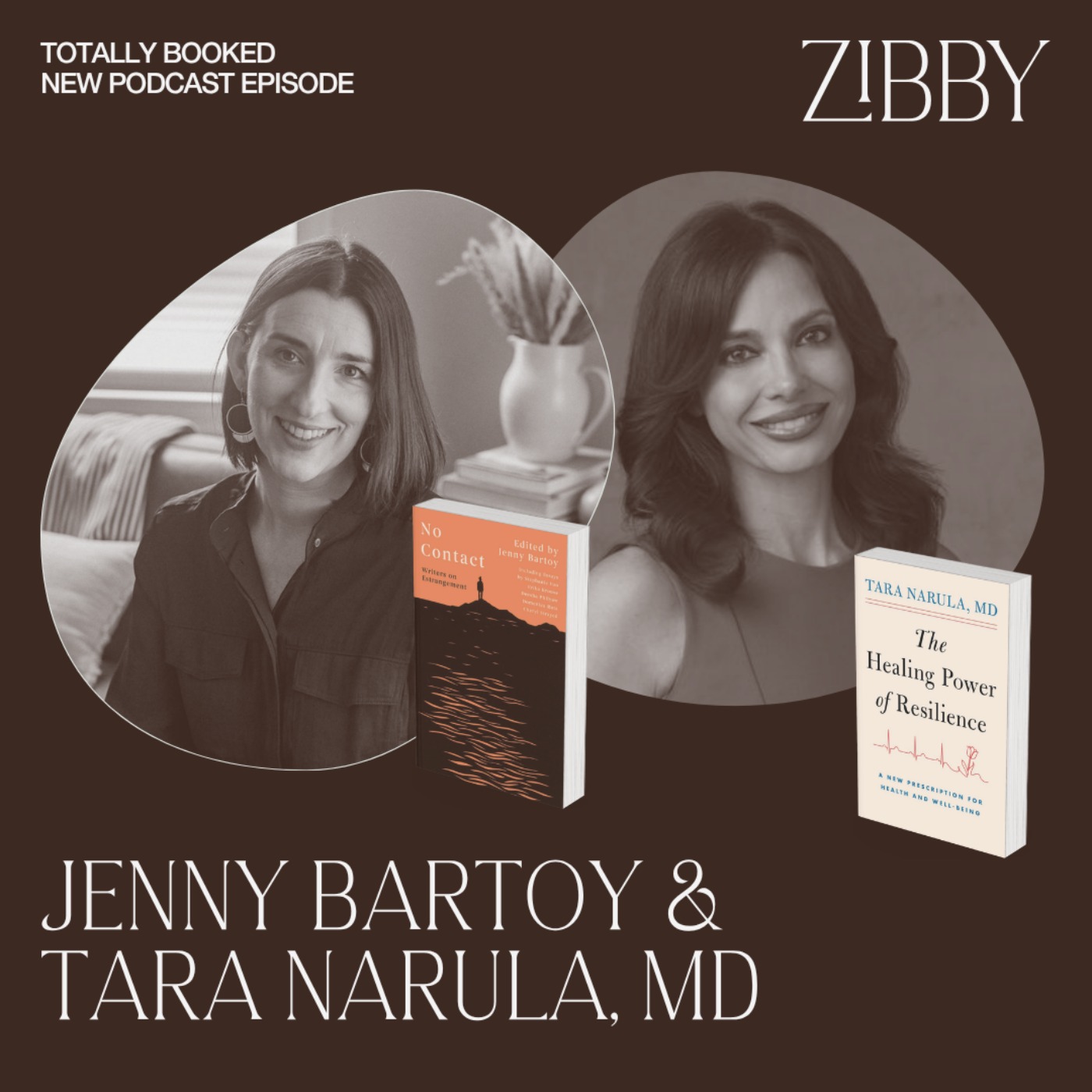
Today's episode is sponsored by Nutrafol. Do you know that feeling when you're brushing your hair and somehow it just looks a little thinner than usual, maybe a little less full? And you're like, what is going on here? Well, Nutrafol supports hair health from within, helping you grow stronger, visibly thicker hair so that those moments happen less often where you're worried about your hair. Nutrafol is the number one dermatologist recommended hair growth supplement brand and it's the number one hair growth supplement brand personally used by dermatologists and by the way, personally by me. This is the brand that I trust. Adding Nutrafol to your daily routine is easy. Order online, no prescription needed, with automated deliveries and free shipping to keep you on track. Plus, with a Nutrafol subscription, you can save up to 20% and get added perks to support your hair health journey. So let your hair be one less thing to worry about. See visibly thicker, stronger, faster growing hair in three to six months with Nutrafol for a limited time Nutrafol is offering our listeners $10 off your first month subscription and free shipping when you visit nutrafol.com and enter promo code ZIBBY Z I B b y that's nutrafol.com spelled n u t r-a f o l.com promo code ZIBBY. Enjoy. Hi, this is Zibby Owens and you're listening to Totally Booked with Zibby, formerly Moms don't have Time to Read Books in my daily show, I interview today's latest best selling buzziest or underrated authors and story creators whose work I think is worth your time. As a bookstore owner, publisher, author and obviously podcasters, I get a comprehensive look at everything that's coming out and spend my time curating the best books so you don't have to stay in the know, get insider insights and connect with guests like I do every single day. For more information, go to zibbymedia.com and follow me on Instagram Ibbeowens I love a good anthology. As you all probably know, I've edited three of them myself and had many anthology writers on the show because I love the idea of bringing stories together. Jenny Bartoy is the editor of no Contact Writers on Estrangement Jenny Bartoy is the editor of no Contact Writers on Estrangement and I've paired her episode with the fabulous Dr. Tara Nerula, MD. Dr. Nerula, who wrote the Healing Power of Resilience, A New Prescription for Health and Wellbeing. One of these, no Contact, is about how we protect ourselves emotionally from things like difficult relationships, among others. Tara Narula's book is how we protect our bodies and using our minds to do that as well. Both of them have called upon all of our resources, whether they're emotional or physical or whatever, so that we can all get through life, live better lives, make peace with whatever we have going on, and live badass lives, basically. Jenny Bartoy is a French American writer, developmental editor and critic and this is her first book which is really exciting. She lives in the Pacific Northwest. Dr. Tara Narula is a Board certified Cardiologist at Lenox Hill Hospital, also Associate professor of Cardiovascular Medicine at the Zucker School of Medicine at Hofstra Northwell Associate Director of the Women's Heart Program at Lenox Hill, Director of Communications for the Katz Institute of Women's Health, and an award winning journalist. She is the Chief Medical Correspondent for ABC News and a former NBC News Medical contributor and CNN Medical correspondent. The two authors are an unlikely pairing, but that's what Makes this episode, I think, so interesting. How do we get through and how do we use books and writing to get our message across? I hope these two authors, Jenny Bartoy and Dr. Tara Narula, entertain you, fortify you, and help you get through whatever it is you're getting through today. Welcome Jenny. Thank you so much for coming on Totally Booked to talk about your book no Contact.
- [05:50]
Jenny Bartoy
Thank you for having me.
- [05:51]
Zibby Owens
My pleasure. Talk a little bit about the inspiration for this collection of essays.
- [05:57]
Jenny Bartoy
So no Contact Writers on Estrangement is an anthology. So it's a collection of 32 essays and a few poems on family estrangement by I think, amazing writers. And this book showcases the complexities and nuances of family rupture and estrangement in a way that I felt was, I mean, I'm so grateful to hear you say you haven't seen it cover this way because that was exactly the intended, you know, the mission for this book.
- [06:25]
Zibby Owens
Well, it's almost like a flip of difficult family relationships. Like there are lots of books on the different topics that you have or the different ways reasons why you have become estranged. But then the very act of being estranged is a whole different thing as well. So it's the pain of that. I take like Nicole Grave Lipson essay on her estrangement from her brother, for example, and how her kids are like, who's that? And she's like, oh, Uncle Aaron is my brother. I think it was Aaron, Uncle Aaron is my brother. And they don't even know who that is. And the feeling that she feels and how she writes so eloquently about almost the guilt of that. And then there are people who are estranged, whose parents are just horrific. And you're like, yeah, you should be, you should. You have to distance yourself for your own safety, honestly or well being. Tell me about how you got these authors to contribute what you were looking for, hoping for and how you pieced it all together.
- [07:27]
Jenny Bartoy
First of all, I love Nicole's essay so much. I adore her writing. But this essay I think really encompasses the complexities I was just talking about, just the gamut of emotions and thoughts.
- [07:40]
Dr. Tara Narula
Right.
- [07:40]
Jenny Bartoy
That come up in these situations. I would say the idea came first from my own experience of estrangement, cutting contact with my father about 20 some years ago and really not finding a lot of resources out there for to support me through the experience. And like many stories of estrangement, it was murky. You know who I think my father would probably say I made the decision. In my opinion, he set an ultimatum that was not acceptable. And my father and I had butted heads for a long, long time. I grew up in sort of an authoritarian family dynam, and I had issues with that parenting style, but also issues that revolved around truth and accountability that were sources of conflict. And when I was in my early 20s, my mother left my father and that became sort of a catalyst for just a bigger conflict, bigger issues. And I felt, and still do think that, you know, he channeled his rage toward my mother and the situation against me and it just became someone anyway, in a nutshell, it became unsustainable. And I had to, as you said earlier, create distance for my own safety and well being. So that was my, my story, my origin story for my estrangement. And so throughout the years since then, what brought me the most healing, I would say, or helped my healing the most, was connecting with others who were estranged. I didn't feel like there were a lot of books that covered the topic. Certainly it wasn't in the, in the media, but speaking with others and it seemed to be fairly common, but just talked about that connection was the greatest source of transformation and healing for me personally. So I wanted to replicate this in a book. And how better to do it than through a collective or as I say in my introduction, a chorus of voices to sing this song together. So that was sort of the beginning. And then how did I approach writers? I've researched this because I was so hungry for other stories and for resources. I've researched this for the whole 20 some years of my own estrangement. So I had a whole, I'm also very organized. I had a whole spreadsheet, you know, of stories I had found and books I had read and articles. And so I started reaching out first to authors whose books had been transformative for me. So one of those was Domenica Ruda, who wrote with or without yout, which was, I think, the first memoir I ever read that tackled estrangement. And she was. The response across the board was so positive, so encouraging. I think everyone I approached said yes, or if they said no, it was because they were otherwise completely, you know, overbooked or overwhelmed. But everyone across the board was supportive, which was absolutely validating, but also just so amazing. And yeah, I just, I mean, started sending out emails. I had to be a real sleuth to be able to contact certain people and really worked, you know, my network connections. But amazing responses. And a few of the pieces are reprints or adaptations of other essays I had read out there. But most of the work in the anthology is original work from writers both acclaimed and established and emerging.
- [10:52]
Zibby Owens
I saw that it looks like Cheryl Strayed's essay had run somewhere as an advice column or something, but it was still so moving. And I was glad you ended with that. It was such a big sort of gut punch to the end, you know, so that, you know, kind of a standing ovation moment as you close the book. Because she's, I mean, she's just amazing.
- [11:09]
Jenny Bartoy
She's incredible. And funny enough her, her piece. So it is adapted from a Dear Sugar column that was the first I mentioned. Domenica's memoir was the first book I read about estrangement. Cheryl's piece was the first personal writing I ever read, I ever found online about estrangement. So she was top of my list for inclusion in this book. And yes, I agree, her piece is incredible.
- [11:35]
Zibby Owens
There was another one towards the beginning of. In fact, it might have been the first one, now that I'm thinking about it, but cousins and they became estranged due to political rift, particularly in the last couple years and maybe, you know, the first Trump presidency, was it first or second, anyway, and how they had slowly drifted, but then they were on such opposite ends politically. And then the cousin dies. I mean, I'm not giving anything away, it was like two pages long. But anyway, towards the end, not that we found out how, although there was an allusion to drugs or something. So maybe. Question mark, question mark. But that was like so devastating because it was like not only were they becoming estranged due to external forces in their own opinions, but then loss on top of it. And that's such a complicated grief when you're, when you have a complicated relationship and then go into loss.
- [12:25]
Jenny Bartoy
Right, right. And that, I think that is a fairly common experience in estrangement. I call estrangement very often a form of grief. You grief, grieve for the living. It resembles the stages of grief in many, many ways. And so I think actually a lot of estranged people deal with this wrestling with either the actual death of a relative from whom they're estranged or the potential of that happening. And I don't think there are any clear answers. It's very complicated. It's very hard. And I don't know that reconciliation or, you know, not reconciling really addresses or answers any questions. You know, it's like, either way, it's very complicated.
- [13:04]
Zibby Owens
There was one that was particularly hard to take. I, I feel like with the abuse of a four year old and how her mom was like, what am I going to do about it. And eventually. And insisted on the man coming to the wedding later. And I was like, oh, my gosh. Like, there are so many bad parents out there. Like, what is up with that? Like, there are so many parents who are just like, you know, am I banging the tambourine at the exact right cadence for my kid's baby class? And then parents who are like. And I know this is sounding so obvious, but it's just when you read the devastation and the effects of one of these parents who's just like, in one fell swoop can ruin your kid's life just like that. Not that it's ruined. She became an ottoman. I mean, you know, but pose enormous challenges for. For kids, right?
- [13:50]
Jenny Bartoy
That's Erica Kraus.
- [13:52]
Zibby Owens
Yes. Sorry.
- [13:52]
Jenny Bartoy
Erica Kraus wrote that piece. Yeah, it's okay. There's a lot of. A lot of stories in the book. Yes. She is an incredible writer, and I do think that is one of the hardest stories in terms of the trauma that it covers. Yeah. And I think, you know, parenting is hard. I'm a parent. I believe you're a parent as well.
- [14:10]
Zibby Owens
Yes. Yes.
- [14:11]
Jenny Bartoy
It's very challenging. It's. People call it the hardest job there is, you know, And I think no matter how hard we try, we are going to screw up our children. You know, we are going to mess up in some ways. And I think we all hope that we are doing the best we can to show true love and help our children become the best versions of themselves they can be. But I think the reality is that even while we work toward that, many of us, as I said, do mess up. Hopefully not in irreparable ways. But many people don't have the tools to, I guess, do their best work, or their best is not going to be good enough to sustain a relationship later on. I'm a developmental editor for mostly fiction and some memoir, and I write a lot of my own essays. I cover books just similar to what you do in a smaller way. I write a lot of criticism, I guess I do a lot of interviews and profiles of authors for various outlets. And, yeah, I've been working on my own writing, and this book seemed more pressing to put together than my own. So I just really sort of dedicated my whatever free time I had into putting it together. And it just. Like I said, the response was so incredible that it just sort of built with its own momentum to the book we now have in our hands or soon.
- [15:37]
Zibby Owens
I really love anthologies. People ask me about them a lot because I've edited three of them. And I love reading them. I love getting various voices all on the same topic and just sitting down and being like, well, what about you? We're all sitting in a group and it's like, really? And now her like, let's listen to this one and how about this one? And it's just like your attention gets. It keeps your attention longer. I feel like sometimes by the diverse perspectives and you learn much more about it. Anyway, I just love, I love a good anthology.
- [16:10]
Jenny Bartoy
I'm glad you do. And I do think it speaks to the times, you know, and our attention spans becoming a little bit shorter. And I think they do serve a purpose for certain topics that work really well. I mean, I think this is one such topic where the diversity of voices is necessary to understand the complexity of the, of the subject. So that really, it lends itself really well to that format when you apply
- [16:32]
Zibby Owens
your own developmental editor hat to your own work or to these essays or. But more like when you're writing or you're writing a roundup or an interview or whatever, like how do you do that without becoming too self critical?
- [16:43]
Jenny Bartoy
I don't know that I. I'm not self critical.
- [16:46]
Zibby Owens
I did just, I did just assume you were self critical. I just like make that assumption about all authors. So sor.
- [16:52]
Jenny Bartoy
Yeah, maybe I was not expecting that question. That's actually a very good question. You know what? There you go. I know how to answer that. My mission as an editor, even on my website, is that I approach all writing with honesty and compassion. Right. My editing is always honest because writers pay me to actually help them, not to just give them compliments. Although I try to do that as well if, you know, in many cases it's very much warranted. So honesty and compassion. I think writers deserve an honest assessment of the writing. But I do my utmost to be extremely compassionate because writing is so hard, we put so much of ourselves in it. So I would say in terms of my own writing, when I do veer into the overly self critical, that is something I try to remember. You know, be. Assess honestly but also be compassionate with yourself. That it's hard work. And there's always. And also I think the real, the real writing happens in editing. So we can always to a point always edit and improve and get it to where it needs to be.
- [17:55]
Zibby Owens
Amazing. Well, Jenny, thank you so much. This is so thought provoking, emotional, and I feel like I got to know all these new women and stories. So thank you for introducing me to some of them who I didn't know and reintroducing me to ones who I've read in other ways and it was really a deep dive into the resilience as well.
- [18:18]
Jenny Bartoy
Thank you so much. Thank you for having me.
- [18:20]
Zibby Owens
My pleasure. All right, take care. Bye. Today's episode is sponsored by Whatnot. Okay, so Whatnot is a live shopping platform where you can get items across all different divisions from beauty, apparel, bags and more. But what I have found is it is the perfect place to get kids birthday gifts. There are needos for those of you who don't know. Neatos are these little plastic toys which are all the craze people go neato hunting anyway. They have Neatos and Squishies and everything you can imagine for better prices than competitors. There are great deals and it is so fun to shop in this dynamic interactive platform. My steals included a jellycat heart for $5.38 and jelly cat toasty marshmallows for $9.89, not to mention a neato for $6.26. I'm not surprised that Whatnot is the largest live shopping marketplace in the country because it's a trusted shop in a real time format and There are over 10,000 fashion, beauty and bag sellers all over and you almost never pay full price, which of course is amazing. So let me tell you, I had the best time with my kids going on Whatnot and then there were things for me too, but it was more fun for them in my opinion. So download the Whatnot app today and get free shipping on your first order. Just search Whatnot and OT Whatnot in the App Store and start scoring amazing deals. Today's episode is sponsored by Wayfair. After the fire in the Palisades, we had to redo our entire outside area and we found the best stuff on Wayfair. We found adorable throw pillows that looked fabulous. We found one round carpet, one square car. But we found coffee tables and all sorts of things that made our outside feel like home again. Wayfair is amazing because it has everything you could possibly need and it's so easy to find. Wayfair made it so simple for us to narrow it down to what we wanted for our style and budget. It also features reviews, filters, and visual tools that help us find the right fit. Every style, every outdoor space. Whether your vibe is modern, coastal, farmhouse or eclectic, Wayfair has the options you need to help you create an outdoor space that's uniquely yours. And everything is in one place, from outdoor seating and grills to storage, patio, lighting and rugs and decor, which is what we got Wayfair is your one stop shop for Home Plus. You can trust in the delivery, installation and assembly services are available for a truly seamless experience. It was so easy for us to order and receive all of our items. Plus over 20 million verified 5 star reviews helped me make the right call. Real customers, real feedback and real homes. You can also shop with Wayfair Verified. Your shortcut to the good stuff. Their team of product specialists vets everything by hand using a 10 point quality inspection so you know you're getting a quality piece no matter your budget. Get prepped for patio season. For weighlast season head to Wayfair.com right now to shop all things home. That's W-A-F-A-I-R.com Wayfair every style Every Home
- [21:41]
Jenny Bartoy
Wayfair Every Style Every home
- [21:45]
Capital One Bank Advertiser
With no fees or minimums on checking accounts, it's no wonder the Capital One bank guy is so passionate about banking with Capital One. If he were here, he wouldn't just tell you about no fees or minimums. He'd also talk about how most of the Capital One cafes are open seven days a week to assist with your banking needs. Yep, even on weekends it's pretty much all he talks about in a good way. What's in your wallet? Terms apply. See capital1.com Bank Capital One NA Member FDIC.
- [22:18]
Zibby Owens
Welcome Dr. Nerula. I am so excited to welcome you on Totally Booked to talk about the healing power of resilience, a new prescription for health and well being. Congratulations.
- [22:28]
Dr. Tara Narula
Thank you so much. Thanks for having me.
- [22:30]
Zibby Owens
Talk a little bit about some of the tenets on which you based the book and why they're so important.
- [22:36]
Dr. Tara Narula
The first sort of half of the book, and really the underwriting theory is that any sort of trauma or stress elicits a stress response. So any challenge and that could be I'm going through a divorce or I've had a death in the family, my business has failed, or I have a medical diagnosis. The response in our body to any one of those challenges is the same. It is a stress reaction where we release hormones like epinephrine, adrenaline, cortisol. All of this cascade starts from the brain, goes throughout the body, and over time that stress response becomes damaging. And I don't think we currently do a great job explaining to people what the stress response is and how it's so chronically damaging to us in this country because we're turning it on all the time. So the first part really focuses on that, but the second half and the most important Part is really what we can do and response to response to that, because we clearly can't control the things that happen to us, but we can control how we respond. And so we like to say that the resilient response is an alternative way of responding to stress. And there are different definitions of resilience that psychologists have, but the psychology research has really borne out that you can utilize several strategies, some within yourself, some that involve outside forces, to move through challenge in a way that helps you grow and thrive and have meaning in your life. And that, to me, was really the crux of what resilience is. It's the ability to not bounce back to what you were, but to move forward in a way where you can still derive joy and happiness from every single day, even if the picture of those days and the picture of you is different from what you thought. And so, for me, I kind of called out what I thought were the most important tools to lay out, and I wanted to do it in a way that was very clear and understandable and easy to follow. The psychology research is there a lot of it, when you read it, is very in the weeds and in depth. I'm a journalist, a medical journalist, and what I do is sort of take information and try to make it understandable. And so for me, picking out eight, what I call tools that people could use was the way that I wanted to go about doing this so you could think through it. Okay, one, have I accepted this problem? Two, am I thinking about this flexibly? And I found that as I was writing the book and things were happening to me in my life, I was using the steps and it was easy to follow. And so as we talk about step one is acceptance, and then we walk through several more until the last one is really purpose and finding purpose. But all of these strategies are ways, as I said, to kind of carry you through stress and allow you to grow and heal and move on in life.
- [25:11]
Zibby Owens
Amazing. Wait, let's go back to love.
- [25:14]
Dr. Tara Narula
Yes, that's in there. That's one of the tools. That one was really. You know, it's interesting because I've done a lot of interviews now for the book, and everyone always says that was the one that they found the most interesting. And to be honest, that was the one that was so important for me to actually put in there. And it's not one that you hear about from the psychologist. It's really not talked about a lot. But I can say, as a physician who practices medicine and sees it in my exam rooms, sees how the love between spouses or partners or kids and parents carries them through really difficult situations. And it is a form of caring and connection that is much deeper than my friends or my social circle, which is also really important. But there is something about that intimate love that is so valuable in terms of buffering us against the stresses of life. And also self love. That was the other half of the love chapter is I wanted to really say, you can't do any of these things unless you really learn how to love yourself. And so that was important there too. But I love to give the. I gave the example in the book and I love telling the story from the documentary on Christopher Reeve where he's sitting with his wife and he says to Dana, maybe we should just let me go in the hospital bed, you know, paralyzed. And he said that her words really saved him in that moment. And she said, you know, you're still you and I love you. And he said, had she not said that, he doesn't know if he would be here. And that is something that I see, that's what I mean by my patients. I see how just the words just showing up for someone just being there is so powerful in terms of helping people recover.
- [26:53]
Zibby Owens
Wow. I mean, it's intuitive, but it's good to know that it actually it's not just something nice. It is essential to our being as humans.
- [27:02]
Dr. Tara Narula
It is. And we release hormones. We talk in the book about oxytocin, the love hormone, the bonding hormone that's released with breastfeeding or sexual encounters or physical hugging and touching. I mean, these things actually have again, physiological reactions in the body that are important in my day to day life. I'm here in my office, you know, and I see patients. As a cardiologist, we talk so much about the things that you do in your life, your lifestyle, and how that is preventative for cardiovascular disease, which again is the leading cause of death for men and women in this country. And so so much of these little small actions that we take, exercise, nutrition and sleep, for example, being the three that I mentioned in the book, can go such a long way in terms of, well, not only healing but preventing disease. And so we talk about making sure you're getting enough cardio, cardio exercise. In our world, we say 150 minutes a week of moderate cardio exercise or 75 minutes a week of vigorous cardio working in some resistance training twice a week we talk about heart healthy diets, which again, most of them are all relatively similar. The Mediterranean diet, more plant based or vegetarian diets. The DASH diet and then sleep, which American Heart association added, they had something called Life's Essential seven and they made it Life's Essential eight. The eight things you can do that change happened a few years ago. And the eighth was sleep. Because there has again been this accumulating body of evidence showing how important sleep is. A time where we think nothing's happening, but a lot is happening in our body when we're asleep. And so Getting that recommended 7, 8, 9 hours is really critical. And those things are important to do when you're trying to move forward, to not let, to not neglect those. We talked about how the mind can affect the body when you're processing something. Well, we have the power to kind of use our body to then help our mind. And that's sort of the reverse pathway with some of these things that keep you fit.
- [28:51]
Zibby Owens
I mean, 75 minutes doesn't sound like a lot, but it can, it feels like a lot.
- [28:56]
Dr. Tara Narula
I mean, it feels like a lot.
- [28:57]
Zibby Owens
Do you do 75 minutes of vigorous exercise a week?
- [29:00]
Dr. Tara Narula
I do the treadmill probably two or three mornings a week for about 30 minutes.
- [29:05]
Zibby Owens
Running?
- [29:06]
Dr. Tara Narula
Yeah. Walking on an incline.
- [29:07]
Zibby Owens
Okay.
- [29:08]
Dr. Tara Narula
Yeah, so I try. I probably don't need it exactly. But also I live in New York City where I walk everywhere, which, you know, all those little things add up and I think that's an important thing, is that people think I have to commit to 20 or 30 minutes. And we always tell them, even if you can build in 10 minutes here and 10 minutes there, all that movement in your day, that all adds up and that counts.
- [29:25]
Zibby Owens
Actually, I think you mentioned in the book that you did the treadmill on an incline because at first I thought you had said you were doing the incline stair machine and I was like, oh. But then I read it again and I was like, oh, no, she said the treadmill. That's a little more, a little more sane. What do you feel you've had to use your resilience, coping skills for the most lately?
- [29:43]
Dr. Tara Narula
That's a great question. I would say my kids, you know, being a parent I think is the most difficult job there is. And I have several jobs and that one by far the stakes are the highest. It's the most complicated, complex, heart wrenching, you know, soul sucking role and you want to do the right thing. And so I have two girls and they're always at the forefront of my mind and I think whenever things happen to them or around them, it calls on my resilience as a parent. So I would say now at this stage in my life, I just turned 50. That's probably where I pull on these tools the most, is navigating challenges with raising them.
- [30:22]
Zibby Owens
I'm with you. I also have an almost 13 year old. I'm turning 50 this year and at middle school. That is tricky, correct? Yeah, tricky time, particularly here in New York. I mean, I feel like. Anyway, can offline about that. What's your biggest hope for the book?
- [30:41]
Dr. Tara Narula
Oh, my biggest hope is that, number one, it helps, you know, even one person. And I will say I got a message, a direct message on Instagram, actually, from a woman, I think it was last week, who said she was going through breast cancer treatment. And she picked up the book and she wrote on this message how it was really helping her. And I was so excited to just get that one message from one person because I thought, gosh, it took four and a half years to get this book published. And, and you know, you hope. I hope that's my whole life is about helping people, whether it's in my office or on television. And with this, that really was the hope that even if one person feels like they can navigate their challenges better in a more healthy way. From reading this, that's great. I think the secondary hope, and I've talked a lot about this, is that hospitals and medical institutions begin to institute and create resilience training programs. What became very apparent to me in writing this book is that we are clearly missing the boat when we're trying to take care of patients by not incorporating how to manage trauma of a medical diagnosis and stress. We are handing people prescriptions and sending them out the door after telling them they have some horrible diagnosis or difficult diagnosis. And that's not fair because how can we possibly expect them to recover or do whatever we're asking them to do when they are literally paralyzed in fear from what just happened? And so I believe it is like low hanging fruit for medical institutions to build what would look like maybe a 12 or 13 or 14 week program that we could write a prescription for and send patients to. And so that is my hope that other institutions hear this and read this and say, we should be doing this. We should be creating this as a way to help people. And by the way, not only will this help them heal, I say that this book could have been called the Preventive Power of Resilience, but it is prevention. So when you do this, when you follow these steps, when you are more resilient, you are preventing chronic disease from happening because you are consistently turning off the stress response and turning on a resilient response. So all the stress related complications you are potentially preventing and all the chronic diseases processes that come from that. So that is my big hope for this book.
- [32:53]
Zibby Owens
Amazing. I feel more resilient already.
- [32:55]
Dr. Tara Narula
Good. Yeah. Bye Bye.
- [32:59]
Zibby Owens
Thank you for listening to Totally Booked with Zibby formerly Moms don't have Time to Read Books. If you loved the show, tell a friend, leave a review, follow me on Instagram, ibbeowens and spread the word. Thanks so much. Oh and buy the books. Hi, it's Hannah from Giggly Squad.
- [33:23]
Jenny Bartoy
Bottomless apps for $9.99 are back at Buffalo Wild Wings so you can mix and match favorites like mothsticks, FR onion rings, hatch queso and chips and salsa. It's perfect for a girls night, a double date or just a full on yapping session. Order your apps and keep them coming while you spiral on the same gossip from every possible angle. So grab your besties or your frenemies and head to Buffalo Wild Wings to get bottomless apps for $9.99 while you still can.
- [33:48]
Capital One Bank Advertiser
This is the exclusive table with the view. This is your name on the list. This is three times points on dining with Chase Sapphire Reserve and a $300 dining credit Chase Sapphire Reserve now even more rewarding. Learn more@chase.com Sapphire Reserve cards issued by JP Morgan, Chase bank and a member FDIC subject to credit approval with no fees or minimums on checking accounts. It's no wonder the Capital One bank guy is so passionate about banking with Capital One. If he were here, he wouldn't just tell you about no fees or minimums. He'd also talk about how most Capital One cafes are open seven days a week to assist with your banking needs. Yep, even on weekends it's pretty much all he talks about in a good way. What's in your wallet? Terms apply. See capitalone.com bank capital1NA member FDIC.