← Totally Booked with Zibby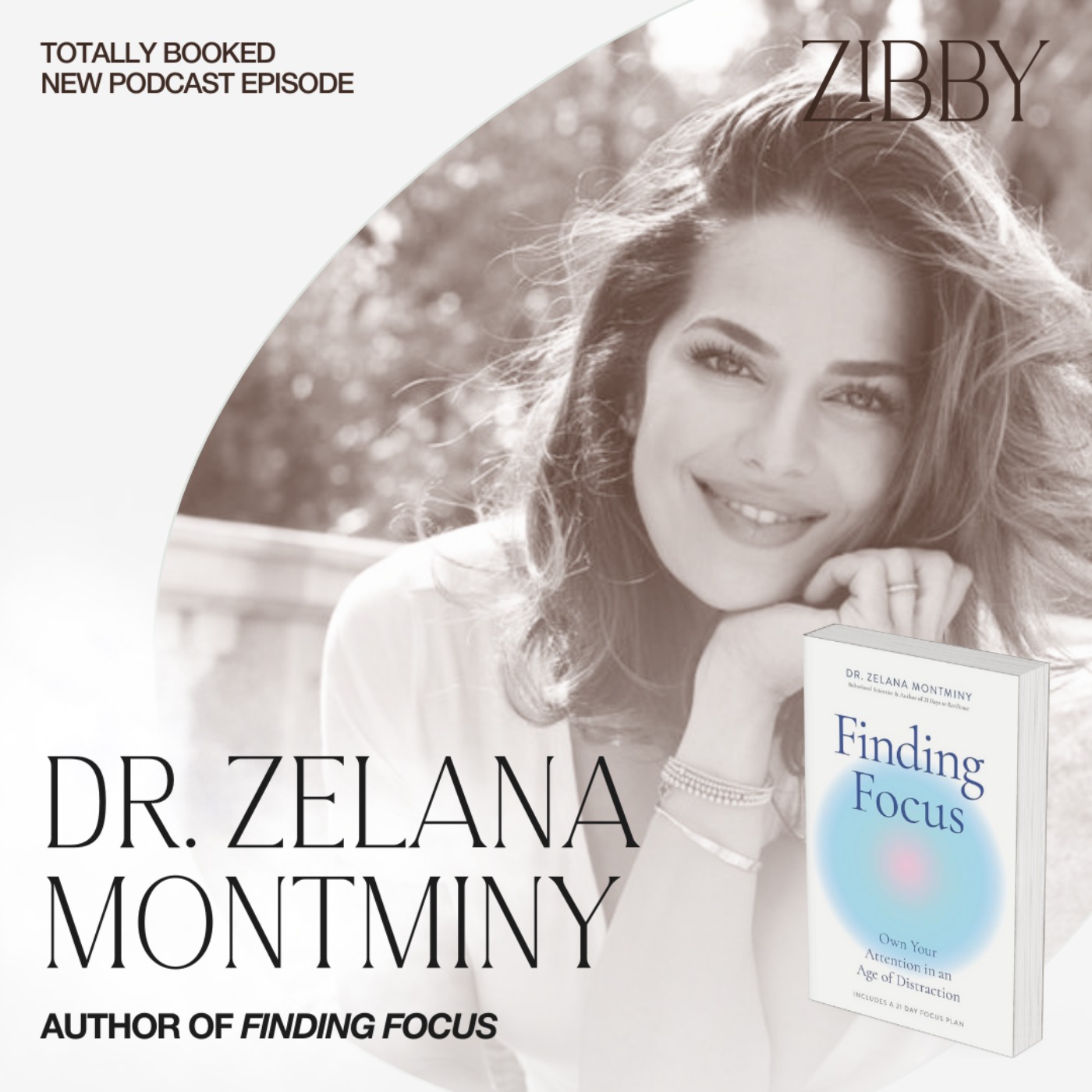
Totally Booked with Zibby
Dr. Zelana Montminy, FINDING FOCUS: Own Your Attention in an Age of Distraction
00:26:10
Loading summary
Transcript65 lines
- [00:00]
A
Hi listeners. We have totally booked live coming up this fall and I hope you'll be a part of it. We have three events in New York City September 19th, 25th and 30th in New York where I'll be doing six interviews live each day. We also have a petite retreat in Greenwich on October 4th. Go to zibbemedia.com and event or and or eventbrite and search the events and please come. I can't wait to meet you in person.
- [00:31]
B
Ready to order? Yes. We're earning unlimited 3% cash back on dining and entertainment with a Capital One Saver card. So let's just get one of everything. Everything. Fire everything. The Capital One Saver card is at.
- [00:42]
A
Table 27 and they're earning unlimited 3% cash back. Yes, Chef.
- [00:47]
B
This is so nice.
- [00:48]
A
Had a feeling you'd want 3% cash back on dessert.
- [00:51]
B
Oh, tiramisu.
- [00:53]
A
Earn unlimited 3% cash back on dining and entertainment with the Capital One Saver Card. Capital One what's in your wallet?
- [00:59]
B
Terms apply. See capitalone.com for details.
- [01:01]
C
Imagine a world of extraordinary comfort where Boland Branch Bedding wraps you in the softest. Embrace the coziest experience made from the world's finest 100% organic cotton, all so you can sleep better. Start building your fall sanctuary with Bolin Branch's iconic signature sheets made with a buttery, breathable weave that gets soft softer with every wash. Enjoy 15 off your first set of sheets with free shipping and returns at B O L L& Branch.com with code BUTTERY. See site for details and exclusions.
- [01:37]
A
Today's episode is sponsored by the Foxed Page, a podcast and YouTube channel that dives deep into the very best books. It's basically your favorite college English class, but very relaxed and way more fun. No exams, no participation, and only books you really want to read. Kimberly Ford, best selling author, one time professor and PhD in literature, offers up entertaining, often funny talks that will leave you feeling inspired and a little smarter. She digs right into everything from J.D. salinger to Miranda July, from Demon Copperhead to Madame Bovary, from Pride and Prejudice to Lessons in Chemistry. The talks on individual books are the heart of the podcast, but enriched read segments to tackle ideas like unreliable narrators, while old favorite talks treat you to a fresh adult look at childhood gems like Harriet the Spy and Are you there God? It's me, Margaret. Want to get the most out of what you read and be entertained along the way? The Foxed Page is for you. Hi, this is Zibby Owens and you're listening to Totally Booked with Zibby, formerly Moms don't have Time to Read Books in my daily show, I interview today's latest best selling, buzziest or underrated authors and creators whose work I think is worth your time. As a bookstore owner, publisher, author, and obviously podcaster, I get a comprehensive look at everything that's coming out and spend my time curating the best books so you don't have to stay in the know, get insider insights and connect with guests like I do every single day. For more information, go to zibbymedia.com and follow me on Instagram. Iby Owens Dr. Zelana Montmini is the author of Finding Own youn Attention in an Age of Distraction. She is a leading behavioral scientist, acclaim author, and one of Maria Shriver's Architects of Change. With a focus on resilience, mental health, and human potential, Dr. Montminy is transforming how individuals and organizations navigate the modern world of constant distractions and rising stress. Drawing from the latest research in behavioral science and psychology, Dr. Montminy offers practical, actionable strategies for thriving in an ever evolving world. Her expertise is sought after by a myriad of industry leaders, from Fortune 500 giants like American Express, Coca Cola and Estee Lauder to academic institutions such as UCLA and nonprofits including the Drug Enforcement Agency and Big Brother Big Sister. She empowers individuals and organizations alike. Her first book, 21 Days to Resilience, offers a structured, science backed pathway to mental strength and well being. Her work has garnered widespread attention from major media outlets including the Today Show, Good Morning America, Mind BodyGreen and Psychology Today, where she regularly shares her expertise on building unshakable resilience and mastering focus. Welcome Dr. Zelana. Thank you so much for coming on Totally Booked with Zibby to discuss your latest book, Finding Focus, which I have to say I read part of it with my son next to me like trying to get my attention and I'm like oh my gosh. She's literally writing about her being distracted and trying to get her kid getting her attention and I'm like reading the book and being distracted by it. So I don't know, it felt very meta to me. But anyway.
- [04:56]
B
Oh I love it.
- [04:57]
A
I love it.
- [04:57]
B
Well, isn't that what we're all dealing with now?
- [05:00]
A
Oh my goodness. Exactly. Tell listeners about the book.
- [05:03]
B
Well, I mean the book really is less a productivity book and more about just what it means to be human in today's day and age. And I really feel like the most valuable resource now isn't time. It's really our attention. And it's completely getting hijacked by notifications and what you're talking about, like constant, you know, things happening and we're drowning in non stop distractions and we are all feeling this so deeply. And I keep hearing, you know, clients and everyone saying, I'm so burnt out, I'm anxious, I'm this, I'm that. And I really feel like at the core of it all is our inability to sustain, sustain focus. And we just are relentlessly pulled in so many different directions and the cultural noise and everything happening that our brain just can't really sort of digest. And so it's really much more than just stealing our time. Our lack of focus is more about sort of just what it's doing to our relationships, our relationship with each other, ourselves, our mental health, and our ability to really live with intentional. So that's really what the book speaks to the most.
- [06:13]
A
You coined this phrase, or I hadn't heard it before, like focus thieves. Like, what are the things that, that take your attention from you regularly? And there are just so many of them. But I feel like part of your book is getting us to at least pay attention to the fact that that is what they are.
- [06:28]
B
Right, right, exactly. And the world is really engineered in so many ways to do that to us. So it's really less about, you know, I mean, what it is what we sort of allow, but it's, it's not. I don't want people to feel ashamed about it because they feel like there's a little element of the of shame. Like, oh, I'm triple, I'm triple screening. Like I, you know, I'm binge watching Netflix and buying groceries and emailing at the same time. And it's kind of this like, quiet thing, but really it's like we're just.
- [06:58]
A
Was there something wrong with that? Does everybody not do that? Like, how else do we get it all done?
- [07:03]
B
Everybody does it, but is that really the way to function? Does it really feel good? And I think we're seeing now, especially over the years, as this has played out. It's not, it's really not. And we're exhausted by it. We are just trying to, you know, swim against this massive current of distraction. And I think, you know, listen, it's. And it's not. Yes, of course a big piece of this is devices, but it's really the way that we've sort of engineered our days and our life. I mean, everything feels so urgent. I mean, I don't know about you, but to me, at Least and to everyone I work with, it's like there's this, this false sense of urgency that wears on us constantly. And, and now we really live in this like in between state. We live like we're between our digital life and our physical life and we're sort of like here and we're kind of grabbing at everything, right? And trying to keep up to the text messages, the DMs, the, the emails, the real live people coming at us all the time. And then there's us. And it's like, wait, where does that leave me? And how do I even begin to be regulated within all of this? And that's really what the book speaks to and is sort of the antidote for.
- [08:14]
A
And you bring up early on, because ADHD and what is ADHD versus just what has happened to most everybody at this point with attention fragmentation, how do we know where the line is drawn? How do we cope with that? I feel like everybody's always like, oh my gosh, I'm so adhd, but they don't actually have adhd. And how do you know?
- [08:38]
B
Yeah, and I think really if your inability to sustain focus goes beyond like the sort of the surface stuff that we're talking about and really impacts your work product and you truly cannot sustain focus even when you attune to it, it requires a deeper dive with a professional or a team to kind of look at that and figure that out for yourselves. I think that it's impossible to self diagnose in today's context because yes, we all struggle with attention for sure, but there really is separately a diagnosis and many do require medication. And that's something different that I'm not speaking directly to in this book. It's really more for every single one of us who is constantly tasked with switching is really who, who I speak to and certainly can be helpful for those of us with adhd, but not specifically geared toward that entirely.
- [09:35]
A
You know, can I read part of this social post that you had that went viral and all the rest of it, but the ache of being awake, is that okay?
- [09:43]
B
Yeah.
- [09:43]
A
Okay. The ache of being awake. I think I'm grieving. Not a person, but a framework, a shared sense of decency, of clarity, of what's right and what's way off lately. Everything feels a little untethered and I don't think I'm the only feeling it. This isn't burnout. It's heartbreak without a name. Oh my gosh. Love that. Talk to me a bit, a little bit about that.
- [10:06]
B
That is, you know, Me speaking to sort of what I, what I personally felt deep inside, but also clearly what everyone seems to be feeling. I mean, that reached millions and millions of people and resonated deeply. You know, I think that we are all dealing with some level of grief. And again, I think that we think of grief as like this major event in our life, whether we lose a person, a home, a place like whatever it is, but we experience loss sort of on a human level all the time and we don't really learn how to process it. We kind of, because we live this such a fast paced life and we're always struggling to keep up, we don't give ourselves those micro moments of integration. And I say that very strong specifically because it's not really like a lot of people have sort of talked about, well, I need to slow down. I need to just like plug out. I need to go take a break. I need to go on a vacation. Whatever it is, I'm not. We don't always have time for that, Right. We also don't necessarily have the financial means to do that. There are so many ways to process our losses and our feelings without necessarily taking these like huge timeouts in our life which just aren't sustainable because we still have to parent and work and function. Right. So I want to kind of step away from that and I really talk a lot more about. And this post speaks to the fact that it's about those little ways that we can integrate and process the things that we're feeling. And at first it has to do with being aware of what we're struggling with, right? And the fact that the world feels really surreal right now. There's a lot to grief, you know, and there's a lot, there's a lot of loss. There's a loss of. Also in this post, in many posts that have spoken to so many. It's. I talk a lot about sort of mourning, the moral framework that we used that was just sort of a given, right? And so now it's like, what do we, what do we believe? Who do we trust? Like where, what do we, what's our commonality anymore to being human? And so that's a lot of what this post is also speaking to.
- [12:16]
A
My gosh. So what, what do we do once we've identified that, yes, you're 100% right. Our focus is fragmented. We can'. Even it's rare to sustain a conversation. I feel sometimes that I've created this podcast so that I have an excuse to pay attention to one thing for at least 30 minutes a day. Right. Because it's like uninterrupted. And I can't, you know, because we, I, I do feel like we all crave it on some level too. But how do we get it in our lives that we crave focus? We crave, yes, the. Just the limits of, of all the things that are prying us away.
- [12:54]
B
Well, and I love that you said that, because our brain needs sustained focus in order to function and to thrive. And we've really walked away from that. And that's why so many of us find ourselves so exhausted and depleted constantly. Because it's not because of how much we're doing. It's really more about are we actually there when we're doing any of it right? Are we just going through the motions? And our brain really needs that focus and the sustained attention in little snippets to do its best work. And we've lost touch with that. We've sort of glorified multitasking when in fact that means we're not really doing anything that well or as well as we could be. And we've sort of created this myth of productivity, and that's what makes us great and successful. And really it's just a mask. It's a mask for us to not address what we actually need to focus on. And so there's a lot to work with here. I think fundamentally it's much more than just managing your devices, which so many people love to speak to. And of course there's an element of that, but the book really is more of a sort of scientifically backed map to coming back, to understanding what the root causes are of your distraction, because that's kind of where it starts, is like, what do we really need to address? And then through tools that we often forget, like, we're so focused on all of these hacks and wellness tricks and things. Things. It's like, let's just go back to the basics and simplify what it means to be human. You can do all the hacks in the world and all the red lights and all the green juices and all the things, but if you're not sleeping well and having like basic nutritional, you know, foundation and all of those, those things, like you, you won't be able to focus, you, you won't get your, your health back. Right? So it's really about retraining the fundamentals too, which people sometimes are surprised. But it matters, you know, movement, those restorative breaks, and then also really big one is social connectivity, sort of reclaiming what it Means to have friendships, like real friendships. And going deeper than, you know, what social media makes us sort of feel is satisfying, but really isn't. You know, we have tons of connections online and through these groups probably that we belong to and all these different things, but it's very, very surface. And it tricks our brain into thinking that we're okay and we have lots of friends, but we really. We crave the depth, and that's what we're glazing over, and that's really costing us a lot. So I talk, you know, a lot about that and how to sort of focus on the social connectivity that we so desperately need. And really, a lot of attention also comes down to training, right? Like, we've trained our brain for distraction. We crave distraction because that's how our brain has learned to function. And our brain is a muscle. And so what we practice really grows in those. The neuroplasticity, right? Those connections strengthen. So what we really need to do now is sort of retrain our brain with sort of the mental and emotional fitness of how to be attuned and intentionally attentive in little moments. And again, it's not. It's. I'm not talking about for hours and hours on end, by the way. That's not human either. Like, we can't actually do that successfully.
- [16:26]
A
I remember a couple years ago, a friend came over with her husband and, like, the guys were off talking or something, and she's like, I haven't even spent a minute with my husband. She's like, but, you know, I did read somewhere that all you have to do is, like, have sustained eye contact for like, 3:30 seconds and it'll change your relationship. She's like, so every day I just, like, have a timer and I look at my husband in the eye for like 30 seconds so that I know I'm paying attention to him. And I was like, okay.
- [16:57]
B
That. That honestly can. Those are those micro things that I talk about that are really important. Those tiny, tiny moments. It's like our kids, like, they don't need hours and hours on. On end of our attention. They need moments of clarity. They need. They need sustained focus. But it doesn't have to be extensive, right? Just enough to fill their emotional bank account. That I like to say. So again, it's about how do you create focus within the context of your life and prioritize the things that really matter to you? So it's not about plugging out of your daily life and completely recalibrating everything necessarily right away, right? It's about how do we sort of rebuild mental clarity within whatever you're dealing with right in the human experience. Like, it's a lot, it's a lot every day that we're all dealing with. And so it's about those, those moments and really focusing on those fundamentals and, and, and those are all the things I talk about in the book.
- [17:58]
A
Wow. So how did you become, how did you become an expert in this? How did you become an architect of change with Maria Shriver? Like, how did you get, how did you get millions of people liking all your posts? Like, where did, where did this all come from? And was this where you thought life was headed for you? Today's episode has been sponsored by Live It Up Super Greens Moms. You do everything for everyone else and somehow your own wellness always gets bumped to the bottom of the list. That's where Live It Up Super Greens comes in. It's a daily habit that actually works. No hassle, no fuss, just scoop, mix and go. Whether you're tackling school drop off, conference calls, Zooms, or the laundry mountain, this is one easy win that supports digestion, energy and immune health in just 30 seconds. Live it Up Super Greens is an all natural blend of over 20 superfoods formulated with organic vegetables, probiotics, digestive enzymes and naturally derived ingredients. Just one scoop a day can promote gut health, support your immune system and give you the feel good energy you can count on. It's designed by nutritionists, third party, tested for purity and made to be easy on your stomach. No grassy taste or chalky texture. Mix it with water, milk or a smoothie and make it a healthy habit you'll look forward to. You'd never believe a green drink tastes so good. If you haven't mixed Super Greens into your routine, Live it up is a must add it tastes so much better than the others and it's way more affordable. Live It Up Super Greens offers premium quality without the premium price. It's one of the most affordable ways to support your health daily. And by the way, it is absolutely delicious. I love it. Easy to clean up, easy to use, and amazing. Live it up has become a quick and easy way for me to stay on top of my health. So Liv it up is offering you 15% off your first order, including subscriptions with code booked. Shipping is always free. Head to letsliveitup.com booked and use code booked for 15% off your first Super Greens order. These statements have not been evaluated by the fda. This product is not intended to diagnose, treat cure or prevent any disease. Today's episode is sponsored by Quince. Fall is in full swing and it is the perfect time to refresh your wardrobe with pieces that feel as good as they look. Luckily, Quince makes it easy to look polished, save warm and save big without compromising on quality. Quince has all the elevated essentials for fall. Think 100% Mongolian cashmere from $50, washable silk tops and skirts and perfectly tailored denim all at prices that feel too good to be true. I'm eyeing their wool coats. They look designer level but cost a fraction of the price and the quality just as good if not better. By partnering directly with ethical top tier factories and cutting out the middlemen, Quince cuts out the middlemen to deliver luxury quality pieces at half the price of similar brands. It's the kind of wardrobe upgrade that feels smart, stylish and effortless. Quince's sweaters have become staples in my wardrobe. They are reliable and beautiful and I just get excited every time a Quince package arrives. Quince has really become a one stop shop so keep it classic and cozy this fall with long lasting staples from quince. Go to quince.comzybee for free shipping on your order and 365 day returns. That's quince.com zibby to get free shipping and 365 day returns. Quince.com zibby Today's episode is sponsored by Wayfair. The weather is finally cooling down and the days are getting shorter so it makes me want to make my home spaces even cozier. And Wayfair is the place to go as your trusted destination for all things home. Wayfair has everything you need to comfy up your space this fall, from recliners to warm bedding and autumn decor. Wayfair even has espresso makers so you can make that latte at home. You know the one. I recently got an amazing carpet from Wayfair which makes our dining room feel like a whole new spot. Super cozy and ready for fall. My decor style is pretty, classic and simple and Wayfair has everything that I need. Plus things come so quickly which feeds into my instant gratification. So head to Wayfair for bedding and bath basics like cozy throw blankets which I also have from Wayfair autumn themed throw pillows and all those seasonal decor items like pumpkins and warm colors and even some storage for everything you need. So there is something for every style and every home. No matter your space or budget. Wayfair makes it easy to tackle your home goals with room ideas and curated collections, plus free and easy delivery, even on the big stuff. No more huge delivery fees for furniture and no need to shop at multiple stores. You can get it all in one place. So cozify your space with Wayfair's curated collection of easy, affordable fall updates. From comfy recliners to cozy bedding and autumn decor. Find it all for way less@wayfair.com that's W a Y-F-A-I-R.com Wayfair Every style, every home.
- [23:15]
B
Well, I mean, I was always very curious about human behavior and knew that's something I wanted to study and focus on since I was a young kid and sort of where my sweet spot was with friends and kind of talking through what they're going through. So I always had an empath. You know, that's just how I function. I feel deeply and I. I want to help, but I think, you know, I was going for a clinical route and then, you know, sort of media caught on and things went from there, you know, and it's just. I just feel so blessed and so honored that my words are resonating with so many. Articulate what it means to be human these days. And I'm trying really hard to do that. And I think that that matters. Putting words to. To something that oftentimes is very hard to understand. And the more we can understand and sort of address what we're dealing with, the less power things have over us. So that's really what I'm trying, what I'm doing, and I'm just really grateful. I think my first book is about resilience and the power of that and what it means and the skill set of building that up. And over time, so many clients. And, you know, I do, I do a lot of talks and to groups and different organizations. And I realize, you know, so many people are just utterly exhausted. Even, like the ones who have, you know, who can outsource help and people who are in really, you know, high executive positions, like, no matter what socioeconomic, you know, it's like it just spans everything and everyone. And I really started peeling the layers. Like, where is this actually coming from? It can't just be that all of a sudden we just have so much more to do as people. And so when I started to really look at it all, it was very clear to me that our lack of attention and inability to focus is becoming sort of an epidemic of this generation. And that's where I wanted to really dig into and do the research and do the work. And it became very clear very quickly that this is something we need to really talk about and work on and work toward.
- [25:24]
A
So do your kids give you a hard time about not focusing when this is your life's work? Do they feel like my kids would do that?
- [25:33]
B
Listen, I think that's part of why my words resonate with people. Like, I'm right there with you, by the way. I've got three kids, I've got young kids, I've got a career. I'm doing it with you and I get it. I am not. I'm far from perfect. I look at my phone when my kids are talking too. You know, it's like, I know I shouldn't, but I do. And we have very open conversations about that and how hard this is. And we talk about what it feels like to feel torn and to feel urgent and that everything is an emergency when it's not. And so I think the key isn't about perfection at all. It's more just about talking through what this all means and how do we work with it, how do we work it into our lives, how do we do better? And so I think articulating our own process as parents and as humans. And it's like, oops, that's not how I wanted to handle that. Sorry, let me put my phone down. I was in the middle of an email. But what you have to say is important, so let's talk through that, you know what I mean? And just kind of being really open about it. And yeah, they hold me accountable. Like we just had a conversation about it yesterday. It's like, you know, and I have a 12 year old, so he's on the cusp of teenhood and, and a 10 year old girl and a 5 year old. And so we, I'm in all the ages and stages, right. And it's, it's certainly a lot, but again it's, it's really about, I think so many of us feel so guilty and ashamed and I want to really normalize this as something that we're all struggling with and we all can help each other break, break free from. And it requires a little bit of thought, but then it'll become second nature.
- [27:10]
A
So I have four kids, including a 10 and 12 year old. So maybe they can all get together in LA sometime and you know, make fun of us and just focus their attention on each other and we'll see, we'll see if we've taught them anything along the way.
- [27:24]
B
Well, I mean, if you really watch kids doing what kids do best, which is play together and really engage with each other. It really is amazing sort of how much they zone in on each other when they're just in the flow of childhood. Right. When there's nothing else going on and there's no devices and they're just playing. Even our, you know, our 13 year old or 12, almost 13 year old, when he gets together with his friends or his teams or whatever, it's like they're just in it.
- [27:53]
A
Yes.
- [27:53]
B
And that's where I see so much joy. I think we've forgotten. So many of us feel so resentful and are like on edge. Yes, because life is tough and yes, because, you know, we have unprocessed emotions and we can't really regulate in the context of our lives. But also because what we've missed is that focus also cultivates joy. We're there. We're actually feeling what it feels like to connect and to love and to appreciate and to play and to have fun or whatever it is. Right. And to talk. And that's why it feels so good to, I don't know, vent to a friend or whatever it is. Like those are those micro moments that you're like, wait, I feel much better. Why? It's not just because I dumped my negativity on someone else. It's because it's a shared connection. We're connecting. It's a shared experience. And so I think kids really can be mirrors to us as well.
- [28:52]
A
This is why I felt so much better after an epic round of sharks and minnows with my youngest. So.
- [28:59]
B
Right.
- [29:00]
A
You know, because they can do it forever, you know, once they're in it.
- [29:02]
B
Yeah. When they're in it and it's like they. It's. They have a hard time plugging out and we're sort of in the reverse as grownups, and it's like, how do we kind of trace back the steps? Right. And retrain ourselves for that intentionality again.
- [29:19]
A
But what, and what do you do, though, in times of real trauma, like after the fire and the Palisades and having to shift gears and move and all of that? I mean, this is like. It's hard enough just to have regular focus, but then when life is upended, which happens to so many people in all different terrible ways, not to be depressing, then what?
- [29:39]
B
Absolutely. And happened to us and Texas and all the things and all the time, you know, that that's survival mode. And that's really just, really just you. There's. There's not much more you can do. In those particular moments of acute trauma, other than one moment, moment by moment, it's like one foot in front of the other. Even just something as simple as, like, making a coffee can be huge for the day. And that's okay, you know, and so you move through that and it restructures you. And I think it's insanely painful and difficult. And also reprograms what is important to you in a lot of ways and illuminates a lot. And there's also a lot of beauty and connection that comes from pain. And I think if we let it, it can be a very powerful changing experience in whatever way. And yes, painful. And that's part of being human too, is the discomfort of the pain that we go through and the recalibration. But I think focusing on what you can control in those moments and knowing and letting go too, like, no, you're not going to be productive and particularly focused. And yes, your screen can provide comfort because you're connecting with your community or whatever it is. So gifting yourself a little more grace, of course, during the acute trauma phases is critical.
- [31:05]
A
Amazing. Well, thank you so much. I have loved reading your book. I also, by the way, was surprised. I was like, what? I have to eat better, sleep better to focus? No, I want to continue eating sugar all the time. But no, I'm kidding. But no, I love it and I love the message and I love just the simplicity of it, that if you're searching for joy, just focus on something for a while. Do something deeply. And it sounds so, you know, it sounds so simple, but it's not. And it's right there at your fingertips. Doesn't even cost anything.
- [31:36]
B
It doesn't.
- [31:37]
A
You're right.
- [31:38]
B
And, and, and, and sure, the book is a guide, a map, and it gives you all sorts of tools, but I was very cautious of providing too much. I don't want to overwhelm the system because often our brain says, well, no, that's too much work. Right? And I think that in this world we had so many things to do and hacks. Like, I remember I was lecturing at ucla, at the graduate school, and all these students came up to me and they, they said, oh, my God, I. Can you just tell me, like, the one thing I have to start. Like, I have so much on my to do list of, like, all these things I have to do to be healthy and well and mentally well and like, and they looked so hopeless. Like they literally didn't even know where to begin because it is like there's so many hacks and there's so many. There's like red lights, cold plunging. Like, was literally listening. She said, I need a sauna, but I can't afford a sauna, but I don't know where to go for a sauna. And I said, babe, you don't need a sauna.
- [32:32]
A
Literally yesterday somebody told me to, like start doing cold plunges. And I was like, I'm just not going to do. I'm not going to do that.
- [32:39]
B
You do cold plunge and sauna and all the things and you can fit that in and you've created a lifestyle in which that works for you. By all means, great. But for those of us who can't and don't, please don't think that we need to do all of that to be well. We need to get back to the basics of being human first. Let's master that. Let's go back to the basics and the simplicity of what it means to focus and connect. And that's really what this book is about. And that's what I want to be talking about. We need to change the narrative big time.
- [33:09]
A
I love it. Thank you so much. Thank you. This has been so fun and I am inspired for renewed focus and really renewed, deepening the meaning of all the everyday interactions. So thank you. Good, good, good, good.
- [33:23]
B
Well, we'll keep in touch.
- [33:24]
A
Okay, sounds good. Okay, thank you. Bye.
- [33:27]
B
Bye.
- [33:28]
A
Thank you for listening to Totally Booked with Zibby, formerly Moms don't have time to read books. If you loved the show, tell a friend, leave a review, follow me on Instagram, ibbeowens and spread the word. Thanks so much. Oh, and buy the books.
- [33:50]
B
If you love to travel, Capital One has a rewards credit card that's perfect for you. With the Capital One Venture X card, you earn unlimited double miles on everything you buy. Plus you get premium benefits at a collection of luxury hotels when you book on Capital One Travel. And with Venture X, you get access to over 1,000 airport lounges worldwide. Open up a world of travel possibilities with a Capital One Venture X card. What's in your wallet? Terms apply. Lounge access is subject to change. See capital1.com for details.
- [34:20]
C
Imagine a world of extraordinary comfort where Boland branch bedding wraps you in the softest. Embrace the coziest experience made from the world's finest 100% organic cotton, all so you can sleep better. Start building your fall sanctuary with bowl and Branch's iconic signature sheets made with a buttery, breathable weave that gets softer with every wash. Enjoy. 15% off your first set of sheets with free shipping and returns at B O L L and Branch.com with code buttery. See site for details and exclusions.
- [34:53]
B
Hey, I'm Paige desorbo and I'm always thinking about underwear.
- [34:56]
A
I'm Hannah Berner and I'm also thinking about underwear, but I prefer full coverage. I like to call them my granny panties.
- [35:03]
B
Actually, I never think about underwear. That's the magic of Tommy John. Same.
- [35:07]
A
They're so light and so comfy and if it's not comfortable, I'm not wearing it.
- [35:11]
B
And the bras? Soft, supportive and actually breathable.
- [35:15]
A
Yes. Lord knows the girls need to breathe. Also, I need my PJs to breathe and be buttery, soft and stretchy enough for my dramatic tossing and turning at night. That's why I live in my Tommy John pajamas.
- [35:26]
B
Plus they're so cute because they fit perfectly.
- [35:29]
A
Put yourself on to Tommy John.
- [35:31]
B
Upgrade your drawer with Tommy John. Save 25% for a limited time at tommyjohn.comfort. see site for details.