Loading summary
Transcript46 lines
- [00:01]
Zibby Owens
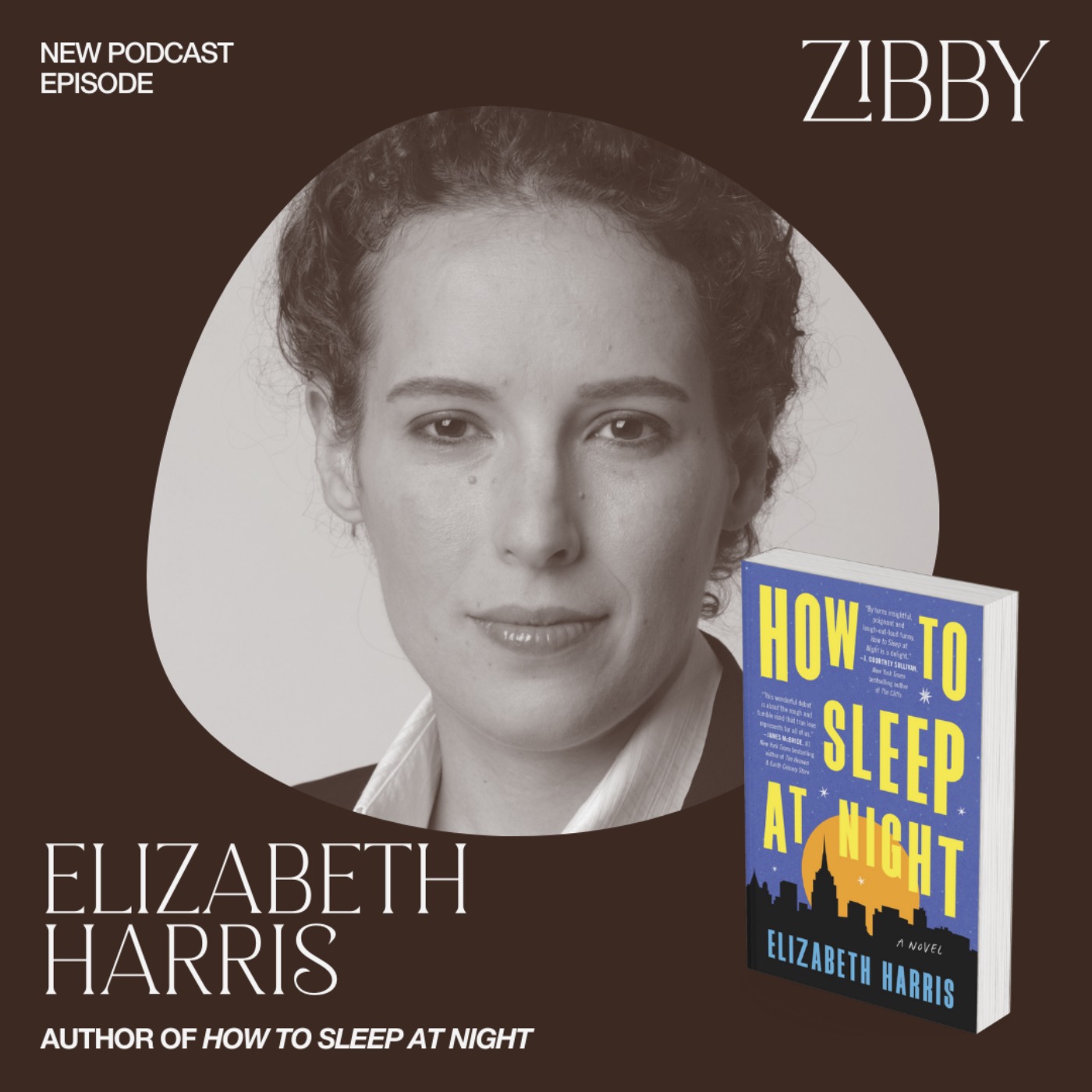
Hi, this is Zibby Owens and you're listening to Totally Booked with Zibby, formerly Moms don't have Time to Read Books. In my daily show, I interview today's latest best selling buzziest or underrated authors and story creators whose work I think is worth your time. As a bookstore owner, publisher, author, and obviously podcaster, I get a comprehensive look at everything that's coming out and spend my time curating the best books so you don't have to stay in the know, get insider insights and connect with guests like I do every single day. For more information, go to zibbymedia.com and follow me on Instagram ibeowens. Elizabeth Harris is the author of how to Sleep at Night, a novel. Liz Harris is an award winning reporter at the New York Times where she covers books and the publishing industry. How to Sleep at Night is her first novel. She lives in New York City with her wife and kids.
- [00:59]
Unknown Host
Welcome Liz, thanks so much for coming on to talk about how to Sleep at Night, your first novel. Congratulations.
- [01:05]
Liz Harris
Yay. Thank you so much for having me. Sorry, I'm a little excited.
- [01:08]
Unknown Host
You should be excited. The book is great and there's so much to discuss in the book and in the content and it's timely and yet universal with all the motherhood stuff and parenting and then politics and lost loves and there's just so much. Okay, go back and tell listeners what your book is about, please.
- [01:28]
Liz Harris
Sure. So the book is about. It's about marriage and ambition and what happens when who you are in the world doesn't match how you see yourself. So there's a woman living in suburban New Jersey who's become a stay at home mom by accident and it's a terrible fit for her and she feels like an accessory in her husband's life and desperate to feel like what she wants actually matters, she reconnects with an old girlfriend who is a woman who is a big shot political reporter at a big, big national newspaper and her career is her entire life. But it's become a job that she sort of dreads and resents. And there's this saying that people who love the uniform more than playing the game. And she's afraid she's become like that. And then meanwhile, a few towns over, we meet these two men who are married. One is a Democrat, one is a Republican. And then as the book begins, the Republican decides to run for office.
- [02:17]
Unknown Host
Amazing. Well, there's. You know, it's funny when you said your self image doesn't match. You should read this book not to, not to recommend another book while I'm talking to you about your book, but there's a book called Chasing Peace by Tom Rochert. It's nonfiction and it's basically that entire concept explored. So you two might have a really interesting conversation. Kind of out of the box.
- [02:36]
Liz Harris
I would love to. I will totally read that. I find that idea just so fascinating, like, especially. Cause sort of like as you reach different phases in your life, I feel like it's something everyone experiences. Right. Like when you graduate from college for the first, you know, you're sort of out in the world as an adult in whatever way for the first time, there's sort of this, you know, your self image probably doesn't really match kind of what you're doing and you know, your day to day. Like if you get divorced when you have kids, you know, there are all of these. When you retire or just, you know, middle age, whatever. Like there are all of these times when, you know, you just, you just feel really lost and like you've sort of lost the thread of your own story and it can. And sort of. Nothing makes people crazier than that.
- [03:14]
Unknown Host
Exactly, exactly. Yes. The hunt for some sort of acceptance can be your demise, to be honest. You know, it hard to achieve. Okay, so I love Ethan's relationship with Gabe and how you. Well, really all the relationships, but you include all the day to day stuff that like anyone in a relationship can experience. However, because of the political ambitions, there's this whole overlay. And what do you do when like you want to support someone but you don't support what they want, but you support them? Like what do you put first? Do you subse, sort of push down your own feelings or not? I don't know. So complicated. And then Ethan also has this past that comes up to sort of haunt him, but with his drinking problems and all of that. So maybe talk a little bit about that and both addiction or you know, substance stuff also with, you know, how to, how to know how to prioritize without losing yourself in your relationship.
- [04:17]
Liz Harris
Totally. I mean, I think that's, you know, I feel like that's such a, that's such a day to day problem. Right. And this is sort of just a problem and you know, something we all navigate in marriage but like on steroids. Right. And you know, trying to figure out kind of where, where you fit in your relationship and sort of how do you support that? You know, hopefully, hopefully you want all the same things and that would be lovely. But you know, life is complicated. Right. And so these two people have, you know, Gabe and Ethan have this like really a very sol. Good marriage. You know, they really take good care of each other in a sort of, you know, everyday day to day way. Like they really, like they're a really great team and a really great partnership. But then, you know, and, and when they first get together, they're not that far apart. On politics, I don't agree. But it's not, it's not that extreme. And then over the years, which does happen with some people, they sort of drift further and further away until they sort of wake up. You know, they've woken up one day and there was almost no overlap between them anymore. And I think that's something a lot of people deal with. But then, you know, one of them decides to run for office. And so that becomes their sort of this thing, the hardest part of their relationship and the thing they disagree on becomes like the center of their lives and the thing that, you know, they both become kind of famous for basically. And like, what would you do if suddenly you're known for these beliefs you find kind of abhorrent? Right. So, yeah, I mean, I thought that was, that was actually sort of where it started. The idea of thinking about people who disagree and then thinking like one day, God, it would be really terrible. One of them ran for office. Ah, it would be really terrible if one of them ran for office. That would be interesting. Right. And then from there thinking about other ways that we lose ourselves. But you know, I mean, I think that's. That that was really important to the book also. It's not, it's not like a book about campaigning or a book about politics. It's a book about marriage. And so showing their day to day and sort of how they take care of each other and all the, you know, craziness and difficulty that comes with parenting a small child and trying to have two jobs and trying to do all the things like that was really important. And also, you know, is like, as you said, is. Is something we all, not everyone, but a lot of people go through and is also just something I find really interesting. Just like how just strange this phase of life is, right? Of like having. Trying to have a career and a marriage and small children all at once. Like it's. We, you know, so many people do it, but it's a lot. Yes, it's a lot. And you know, and so I thought that, you know, that's, that's obviously like a really rich area to explore. And then another thing of just sort of like you know, kids are so like, you know, I have two. They're absolutely wonderful. And they're ridiculous. Also, like, children are so strange and so weird. You know, like, it's like. And I thought that was. And that was, you know, kind of another thing to sort of bring into it as well is like, that's a big, you know, obviously a big part of your marriage is sort of navigating these strange little beings. They're wandering around your house demanding snacks. You know, that was part of it also. So, yeah, so it was trying to sort of balance, like the focus of the book is on that stuff is on that day to day stuff and how they interact. And there's this sort of politics sort of in the background. And again, like, not. It's not about, you know, how someone chooses to run their campaign or anything like that. It's basically, it's about what this decision does to his marriage. So there's that. And on the, you know, addiction front, I mean, there's. I would say. Yeah, you're the first person to ask me about that. This is a good question. You know, I think it's. That too is really universal, unfortunately. You know, so many people either deal with it or have it in their families. And, you know, it's. It's something that is also complicated because there's still a lot of judgment around it, even though we have so much. So many people have personal experiences with it. But when you're on a public stage, it becomes something very different. And it's kind of one of the ways that, like when people become sort of, you know, politics or not, like when people become public figures, like the way they're judged is different. Right. And they become not real people anymore. They become just sort of a target for, you know, where you can stick things you like or stick things you don't. And it becomes very easy just to forget that they are also human. And, you know, that was sort of one way of. Of looking at that, of sort of the idea that like somebody in your family or a friend might have a history of addiction. And you look at it one way and then some public figure does, they have either that or they have some other, you know, thing that they've dealt with. And, you know, we have a tendency to judge people much more harshly or to not judge them at all. Right. But like, whatever it is, there's not that sort of like nuance that we give to actual, you know, people we actually know in our real lives. And that's also a piece of the book where People kind of forget at one point that, you know, like, the people that Gabe. Gabe knows at his work, his teacher, the people he works with just sort of forget that Ethan is real, basically. Right. And they just are thinking of him as, oh, that, that. That jerk who's running for office. Right. And it's like, well, he's actually also his husband. Right? He's person. So I thought that was sort of, you know, an interesting. Which wasn't something I set out to do, but it just sort of. It just sort of happened.
- [09:32]
Unknown Host
I like that. That moment at the copier, sort of towards the end and he's like, no, actually, he is still my husband. And like, could you stop now? Like, we are still married. We are going to continue to be married, so please stop.
- [09:45]
Liz Harris
Yeah, yeah. We all have those lovely people we.
- [09:47]
Unknown Host
Work with, you know, and you don't. You don't have to answer this, but was there someone in your own life who struggled with something similar that informed the narrative in this storyline?
- [09:58]
Liz Harris
Not. Not exactly. I mean, like, without getting into anyone's, like, personal things. I would say, like, broadly, yes, but nothing. But not. Not. It was not very. It was not specific to this. It was sort of like. I am broadly familiar with sort of how addiction plays out in, like, various, you know, with various people I've known, but I was not like, you know, nothing from this book is. You know, there's a lot of, like, debut novelists who. I have a friend who has written one novel and she was saying that she then tried to write another one and she hated it because the first one was not actually a novel, it was a memo. But that is not this. Like, there is nobody in this book that is just, like, straight up polled. And the addiction is not straight up polled. So it's, you know, bits and pieces are pulled from stuff I've seen, of course, but it's not kind of a wholesale lifting of anyone's experience.
- [10:48]
Unknown Host
Okay. And you also have. I know, you have been at the New York Times forever. There is also another storyline in the book which questions ethics of what happens at papers, what you have a right to do. You know, the tension between your own allegiances and your work responsibilities and that delicate dance as well. Speak a little bit about that.
- [11:10]
Liz Harris
Sure. Let's see. So, yeah, I've been at the New York Times for, oh, God, 19 years. I've been a reporter there for 15 years. It's been a very long time. And, like, I am a true believer in all of the stuff. Right. All of these ethics policies that I think, you know, are interesting. Especially, Especially now, this is not quite what happens in the book, but just as a little bit of a tangent, like, we're not allowed discuss our personal politics. Like, I can talk about what's happening in the book, but I can't tell you what I think because I'm not also not allowed to attend protests. I'm not allowed to sign petitions. Like, none of that. Because the idea is that, like, if I. If I say what I think one way or another about, you know, some hot button issue, it makes it a lot harder for the people who are covering it because then people can kind of go out and be like, well, this reporter thinks this. So I. I cover books. I don't cover said hot button issue, whatever it is. It's, you know, people see the institution as a mass. Right. And not as individuals kind of doing separate things. And so it's harmful for the institution. So. So anyway, that was a tangent, but I just find it interesting because in the.
- [12:09]
Unknown Host
Yeah, it is interesting. It's related.
- [12:11]
Liz Harris
Right. Thank you. Thank you. Very valid.
- [12:13]
Unknown Host
No problem.
- [12:14]
Liz Harris
So in the book, it's more sort of straightforward, like, try not to give anything away. But it is more about kind of what, like your, you know, her personal allegiance is essentially to her brother versus her allegiance, sort of her belief in these ethics and sort of how she. What happens, what happens there. And, yeah, I don't know how to say anything else without getting away.
- [12:37]
Zibby Owens
Today's episode has been sponsored by Wayfair. I don't know about you, but I am so excited to get rid of all the holiday clutter and make room for spring refresh in my own home and office. I trust Wayfair more than any other brand, and I'm probably their most frequent shopper because I decorated all of Zibby's bookshop on Wayfair and then all of the Zibby Media offices in New York City on Wayfair, plus my own home. I am obsessed. Wayfair has stuff for everyone and everything. Think carpets. Think comfy poofs for kids. Think couches and tables and office chairs and cute knickknacks and everything you can need to make your space feel refreshed and cozy and wonderful. Plus, it comes so fast and the prices are amazing. There's something for every style and every home and office. No matter your space or your budget. Wayfair will make it easy to tackle all your New Year's home goals with endless inspiration for every space and budget. Whether you need a light refresh or. Or an organization overhaul. So give your home the refresh it needs with wayfair. Head to wayfair.com right now. That's W A Y F A I R.com Wayfair Every style, every Home Today's episode is sponsored by Acorns. Acorns makes it easy to start automatically saving and investing so your money has a chance to grow for you, your kids and your retirement. You don't need to be an expert. Acorns will recommend a diversified portfolio that fits you and your money goals. Acorns lets you invest with the spare money you've got right now. You can start with $5 or even just your spare change so you don't need to feel like financial wellness is impossible. Acorns gives you small, simple steps to get you and your money back on track. And it's the new Year when we all make New Year's resolutions. Last year I made a resolution to go to the gym more often. I tried to say I would go once a week. Basically, I think I've gone to the gym like three times in the whole last year. But I am not giving up on my resolutions. And saving money and making smart financial decisions is a resolution that Acorns makes.
- [15:01]
Unknown Host
It really easy to keep.
- [15:03]
Zibby Owens
By the way, I invested with Acorns in 2023 and in my portfolio I am up 20.24%, which is really awesome. So you should do it too. It's amazing. Head to acorns.com books or download the Acorns app to start saving and investing for your future today. Paid client endorsement compensation provides incentive to positively promote Acorns tier one compensation provided investing involves risk. Acorn Advisors LLC and SEC registered investment advisor view important disclosures@acorns.com books well, I.
- [15:39]
Unknown Host
Just liked that knowing that that came from years of experience and that there was this extra layer of truth. And people wonder, you know, what is it like to work at a newspaper? And you know, what is, you know, and this is one of the areas where there can be some big pitfalls or conflicts. And I found that really interesting because you don't necessarily think about it.
- [16:00]
Liz Harris
So it's very tricky for people who have, like, I'm lucky enough that I have never had to deal with this, but it's very tricky for people who sort of who cover something specific. And then if a family member kind of enters that world in any kind of big way, like that can be a real problem. Often people have to change their beats, like that kind of thing. But I've lost my train of thought. So go ahead.
- [16:20]
Unknown Host
My next question. No, I loved also that there are. There are multiple sets of LGBTQ relationships in the book, right? We have a gay couple, like, past relationships for women and whatever. So tell me about writing that, because there are obviously many books in which there is one character, one couple, and then another. I don't know. Like, just talk about that and writing.
- [16:44]
Liz Harris
Totally. Absolutely. So I'm gay, so that, you know, that's where I come from. And it just sort of never occurred to me to do it differently is. Is the thing. Like, you know, I kind of started with these four characters in my head, and they just sort of popped out that way. I mean, I feel like it's. You know, there are. You know, there are a lot of books about gay people at this point, but it's still, like, relatively a really small number. You know, like, it's really. Like, it's not a lot. And like, our stories just still just aren't really out there in the same way. Obviously, a smaller number of us, all of that. And for years and, you know, centuries later, stories weren't told at all. So, you know, I don't. Like, it wasn't something I viewed as some responsibility. It was just sort of like, I was like, wow, this is who these people are. And this is where. This is sort of what I. This is how I see the world. And it's something I think about a lot. And the experience. The sort of experience of being gay right now is. Is really interesting, too. I mean, I'm 41, and the. The degree to which it's changed just in my lifetime is insane. You know, like, when I was in high school, if someone told me I would have been able to get married, I would have laughed at them, like, no way. Right? And then things changed so quickly that I got married at 28, but also, when I got married, it still wasn't legal in New York. Like, that wasn't very long ago, right. And so the. There's still, you know, it's also new. And the experience of being a gay parent, I think, something that hasn't been written about a lot. And it's. It's something I felt very, like, lucky to be in a position to do, right? And just sort of kind of just show people a little bit about what these people's lives are like and that kind of thing. But, no, I mean, it was. It was great. And I feel like I've always. I've always wanted to. I've always wanted to write novels, and I always wanted to Write about, like, you know, I've always thought of characters whenever I've come up with them. A lot of them are gay. And it's, you know, it's nice. It's lucky that it's at a point where it's not like, okay, so this is a gay book that goes in the gay section for the gay people. Right. Like, that's no longer where we are. And that was also not long ago. And so that's wonderful that like, it's. It's a. It's just considered a book. Yeah. Which is totally. And I remember the other thing I was going to say before.
- [18:57]
Unknown Host
Yes.
- [18:57]
Liz Harris
Is that one thing that sort of, I don't know, maybe may or maybe interesting, but because I was talking about how, you know, we're talking about my experience of journalism right after I had said that no one is nothing is based on anyone that I know. Right. And these things are both true. And the reason is that I wrote this book while working full time with two small children and started it during COVID and I almost killed me. But it was also wonderful. But a lot of the decisions I made, any decision I could make, that means I didn't have to do research. So I was like, someone is a workaholic. Okay. They have to have my profession because I know a lot about my profession and I don't have time to look into anybody else's profession. So it would have either been mine or my wife's a doctor. So they would have either been a journalist or a doctor. And a doctor didn't work quite the same way because it's a private function rather than a public function. So. Yeah, so that was sort of that. And it was. It's fun to. And I'm writing another book now and it does require some research and I'm on book leave for a couple months and it's allowing me time to do said research. And that's very fun. But I did not. I did not do much of that. I did. I did some research for the first book, but anything that I didn't have to, I was like, okay, decision made.
- [20:06]
Unknown Host
So they will live on my block. They will like the food I like. They will go to my kids schools.
- [20:11]
Liz Harris
With a nickname I did have. I spent like, a lot of it is in. So I. A lot of it is. It's in both New Manhattan and New Jersey. And one of the best compliments I've gotten is somebody was like, where in New Jersey do you live? And I was like, yes. Like, I did it. All right. I Did research that. I spent a lot of time in New Jersey though, so.
- [20:30]
Unknown Host
Yeah, and now you can write it off.
- [20:32]
Liz Harris
Hey.
- [20:35]
Unknown Host
By the way, how did you come up with the title and what were some other titles you were considering, if there were any?
- [20:41]
Liz Harris
Ah, my wife came up with it, which was great. We were driving around, we were visiting my in laws and we live in Kentucky and we were driving around and we. There was a title on it, which I'm not going to say because I've grown to hate it. It wasn't that bad. But I just. I love the new title and the old title. I'm like, I don't like it so much. And I was saying, like, I want a new title, I need a new title. Like. And I had her. She's read it God knows how many times. She's a very nice woman. And after that, I think that was maybe the third time she'd read it or something. Or this, I forget a second or third. And when she read it, I was like, the thing I want you to read for is the title. Like, this is what we need. Go team. And we were driving around and we were sort of talking about sort of things like guilt and sort of how. And you know, how far, sort of what we were talking about before with Ethan and Gabe, like, kind of how far can you go to support somebody when you don't believe what they're doing, but you love them and you believe in them? And then, you know, kind of similarly with some of the other plot lines, you know, how far can you go for yourself and what do you do for yourself, even if it's not in the best interest of, say, the person to whom you are married? Right. And, you know, how do we kind of make these. How, like, you know, how do we make these decisions and how do you live with them? Right. And so that was sort of the idea. And she came up with. I forget exactly what the original, original version was, but it was basically this. I was like, ah, we got it, we got it, we're done, we're done. So that was.
- [22:06]
Unknown Host
Oh, my gosh, I love that. Well, the fact that you are one of the people at the Times who covers the publishing industry, the fact that you've decided to even release a book is a vote of confidence in the industry at large. So that's good. So that's good. Knowing all that you do. And I was looking at some of your old articles, by the way, Muckrack says you've published like 1,275 articles. I don't know if that sounds about right, but wow, that's so many New York Times articles. You know, what inside information, so to speak. Having analyzed and studied the industry, are you bringing to bear as you bring this book out and deciding even how to publish, where to publish, how to promote all of that stuff?
- [22:50]
Liz Harris
I mean, yes, I would say kind of knowing to your first point about the vote of confidence, like, true, definitely. Like, people in this country buy books. Yay, keep doing it, please. But it is true that a lot of people buy the same books. Certain, you know, there are certain titles that sort of float to the top and, you know, make buckets of money. And for everyone else, it's really hard to break through. So I will admit that I am slightly terrified, but. And, you know, and I knew all of this going in about how hard it was, but I wrote the book because I wanted to write it. You know, I wanted to write a book. And I felt like, as weird as it is, it sounds ridiculous that, like, my kids were, you know, they were tiny. They were, oh, God, two and five or something. Three and five. When I started, they were really little. And it was like a year into Covid, but at that point, I still didn't have commute and my kids were back in school and my wife is a doctor, so she's always gone to work. And I sort of looked around one day and I was like, oh, I'm by myself and I'm not expected to go to the office, and I have an hour and a half when I would normally be on the train. So, like, let's see. Right? Let's see what happens. And that was kind of how it started. And I just wanted to try writing it. And then it just kind of, you know, it worked. But when I was writing it, I was like, well, just playing the odds. Probably. No one is. No publisher is going to buy this. Oh, they bought it. Oh, wow. Okay. Like, that was unexpected. How nice. So, yeah, so I think it's a little nervous making. But also, you know, the process has also been really fun, I have to say. I'm like, the people, the team I'm working with is wonderful. And I guess in terms of deciding kind of how it informs, like, decisions I would make, I would say one thing is, you know, I think you are certainly very aware that the age when you sort of like, wrote the book, gave it to your publisher and maybe sat for a few interviews, like that that is done, right? You don't. You have to, like, hustle. You really have to hustle. And so I'm trying to do that, and I'm trying to, like, be a good teammate for my publisher and my publicist. And I'm trying to do anything, anything I can. You know, I'm gonna, like, you know, if any. Any book club that invites me, I will happily join your Zoom. FYI, book clubs, if you want to invite me, I will happily show up. You know, things like that. Right. And, like, I talked to an author who. Who did that, and, you know, and her book did very well, and she was like, you know, it was one of many things. Who knows? But I enjoyed it, so. And if you were going to enjoy it, you might as well. And, you know, that's a good way to put in the legwork. Right. Like, there are some people who are, like, going to do great on TikTok or whatever. I am not one of those people. No. But I'm happy to come to a book club and talk to people who like to read. So, like, that's sort of. Those are the decisions I'm trying to make is to, like, there are so many, so many different things you can do to, you know, to promote your book, and you should do as many of them as you're going to enjoy. And so that's sort of the approach I'm trying to take.
- [25:40]
Unknown Host
Well, I love that you're getting this vantage point and it's going to inform all of the things you do. And I can't wait to hear about your experience and hopefully then read something you write about it.
- [25:53]
Liz Harris
Well, thank you. Yeah, it's definitely. It's definitely given me a lot more insight into the industry because I like. I know it's pretty. Well, I've been covering it for four and a half years, I guess, but I only know it from the outside, and it is different. And you try and talk to people all day, every day who work in the industry in various capacities, but it's not the same. The emotional appreciation is different now, so I think that's definitely valuable.
- [26:18]
Unknown Host
Amazing. Well, congratulations, Liz. Really great book. You're a great writer. I mean, you know, you're a great journalist, but it doesn't always translate. But the dialogue and the scenes and just how the pacing, just like all the things you look for in the book. Like, you did a really good job.
- [26:35]
Zibby Owens
I really liked it.
- [26:36]
Unknown Host
Yeah. Congratulations.
- [26:37]
Liz Harris
Thank you so much. And thank you so much for having me.
- [26:39]
Unknown Host
Of course. Okay, good luck.
- [26:42]
Liz Harris
Thank you.
- [26:43]
Unknown Host
Okay, bye, Liz.
- [26:44]
Zibby Owens
Thank you for listening to Totally Booked with Siby, formerly Moms don't have time to read books. If you loved the show, tell a friend, leave a review, follow me on Instagram Iby Owens and spread the word. Thanks so much. Oh, and buy the books.