← Totally Booked with Zibby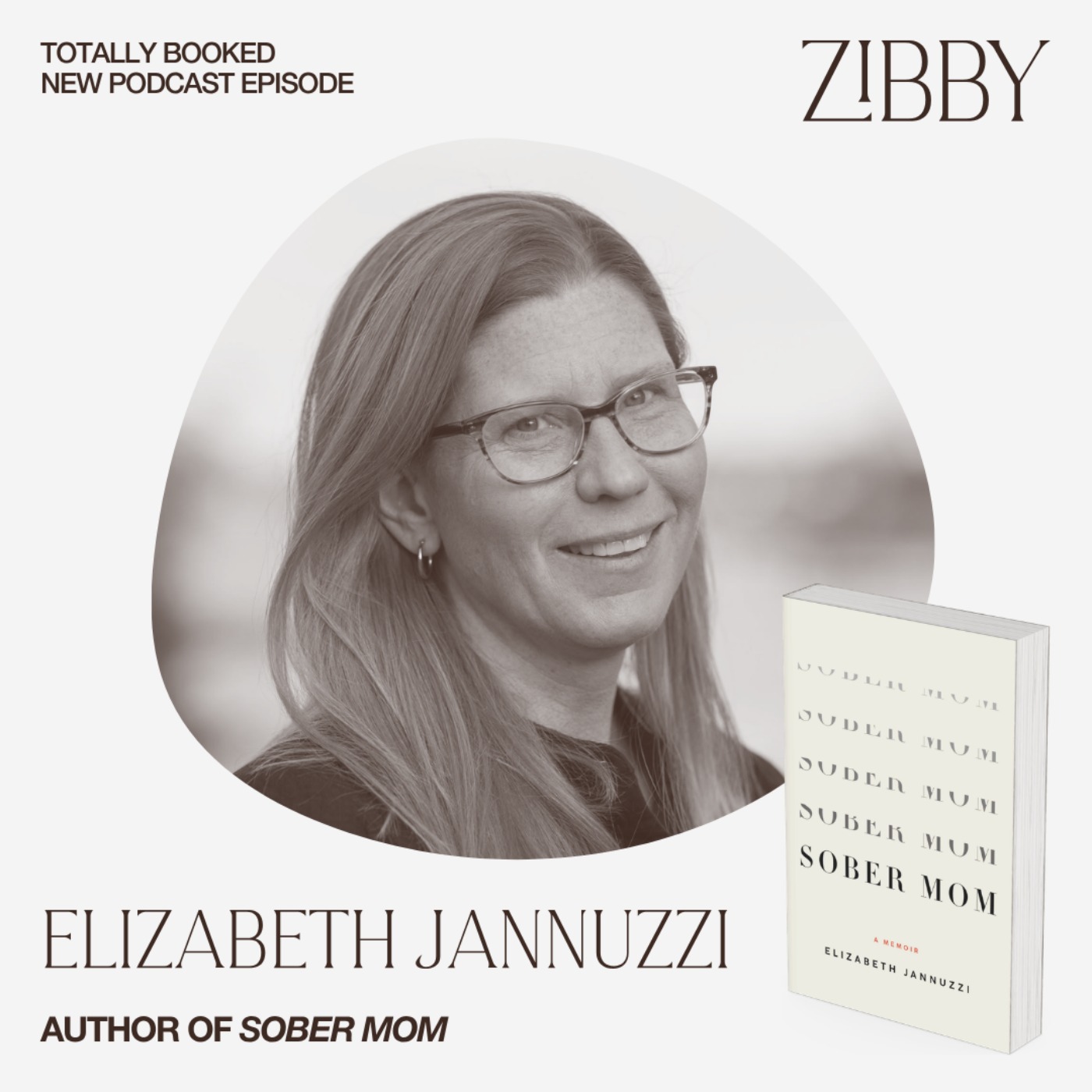
Totally Booked with Zibby
Elizabeth Jannuzzi, SOBER MOM: A Memoir
00:23:26
On Starting Over, Healing, and Writing Through it
Loading summary
Transcript53 lines
- [00:01]
A
Welcome to Totally Booked. I'm Zibby Owens. I've interviewed more than 2,000 authors on this show and learned endless amounts about
- [00:09]
B
storytelling, reinvention, and life itself.
- [00:12]
A
Because when you talk about books, you're
- [00:14]
B
really talking about life. So get ready to hear from today's
- [00:17]
A
best authors, the best selling and the not yet discovered. Come find your next great read and the story behind it. Enjoy. Elizabeth Januzi is the author of Sober A Memoir. Her work explores themes of loss, motherhood, and recovery from alcoholism, and her essays have been featured in HuffPost, the Rumpus, and more. Elizabeth earned a Best of the net nomination in 2023. She is the program director at Project Right Now, a nonprofit writing organization.
- [00:47]
B
Welcome, Elizabeth. Thank you so much for coming on Totally Booked to talk about Sober mom memoir. Congrats.
- [00:53]
C
Thank you. Thank you so much. I'm so grateful to be here.
- [00:57]
B
First of all, your book is beautifully written. It's also beautifully designed. Let me just say that too, with the way that the sober mom sort of fades and then all the chapter headers look the same way. But really, it's not the beauty of the design, it's the beauty of all of the intimate things that you're sharing and all you've gone through in your life and how you've turned it all into a work that the rest of us can read, relate to, be inspired by. It's. It's really amazing. So congratulations.
- [01:24]
A
Seriously.
- [01:25]
C
Thank you. Thank you so much. Yeah.
- [01:27]
B
Why don't we start by your explaining a little more about the book and how you became the sober mom you are and how you've gotten here.
- [01:36]
C
Yeah, Well, I know.
- [01:39]
B
Big question.
- [01:40]
C
Yeah. Do I do like the elevator pitch or the.
- [01:42]
B
Sure, let me. Why don't you share the elevator pitch, so to speak, for the book, even though the book is your life. So it's a little hard.
- [01:48]
C
Yeah. Yeah. Well. So when I was 38, living in New Jersey, in the suburbs of New Jersey, I was the primary caregiver of three young children. I was also in the throes of my disease of alcoholism. So my life imploded when my husband discovered I had a one night affair. And that was really the trap door that led me to my sobriety. Because when that admission came out, I also admitted to him something I'd been hiding for nine years of our marriage. How much I drank. That I was basically drinking, you know, and alcoholism is a progressive disease, so it wasn't like, like this the whole time, but towards the end, I was drinking vodka, you know, pretty much every Day, all day. And so I admitted to my husband, who, quite honest, was relieved because he always knew something was off and. But never could, you know, knew exactly what it was. So at that point I started recovery and went to my first AA meeting where the women told me, you know, you never have to feel this way again. And so that's where the book starts. It starts at my entrance into AA and my marriage, unfortunately at that time, like imploded with. Things were not going well and through the 12 steps, we were able to repair our marriage. So spoiler alert, it has happened.
- [03:11]
B
Well, just backing up to your family of origin because you've had so much loss and heart trauma and all of that. You lost your brother to a car accident when he was 18. You.
- [03:23]
C
I was 18. You were 18. He was 21.
- [03:25]
B
Yeah, I'm sorry, you were 18, he was 21. Your sister ended up dying by suicide, but had an eight month long protracted post coma situation, which sounded horrific. Then eventually your mother passed away. I mean, you poor thing. I was just like, I need to hug this woman. This is a lot like, it's almost no wonder you're trying to find a way to take care of yourself. Talk a little bit about that. How do you carry all of that weight?
- [03:53]
C
Yeah, well, you know, obviously that was, you know, devastating for me and my family having those tragedies especially I, you know, both sort of coming of age moments. When I was 18, you know, had just graduated high school, heading off to college, and then when my sister died, I was like just starting my life in New York City, you know, just got out of college, ready to start a career. So, yeah, they were, you know, definitely difficult. But something I'd like to emphasize is that like, I was an alcoholic before they died. You know, at age 17, I was drinking alcoholically. Like, I could answer that. You know, there was like, my brother was in recovery and he was sober three years before he went back out and died in a car accident, drunk driving. So, but we, but. So I knew about recovery and we had those brochures in our house that like asked you, you know, do you drink before the party? Do you black out when you drink? And even at 17, I could answer, answer yes to those. So although, you know, my family definitely has these tragedies, it's not what made me an alcoholic. I would have been an alcoholic anyway. What it gave me was sort of like, I don't want to say, like an excuse, but like, I could say, well, poor me, you know, you would drink too if you had These tragedies. It, like, definitely, like, subconsciously gave me this out to continue to drink the way I wanted to drink, you know, and maybe caused me to hide it longer, you know, Like, I definitely kept things under wraps. I didn't want to be a problem to my parents. You know, I definitely. And that's sort of why I became a secret drinker, like I did, you know, I realized, like, it's not safe going out and drinking in this. In the streets of New York City. And I started just to drink at home. The drinking, of course, masked the grief, numbed it for sure. But that's not why I became an alcoholic. You know, I would have been anyway. But, you know, alcoholism is a family disease. So, you know, my. My brother died of alcoholism, and though my sister died by suicide, I would say that alcoholism played a part in that, in her suicide.
- [05:56]
B
Oh, my gosh. Well, so it's just so much to carry. And did it help you writing about it in this way?
- [06:05]
C
Yeah, yeah, it did. I had. When I first started writing the book, I included all the. All. All the grief, all the stories about my brother and sister. And like you said, my sister had that eight month. Like, I could write three books about that year because it was really difficult. So I had to make the decision to focus this memoir just on my recovery and just on that, you know, that section. You know, I mean, it ends after five years of sobriety, but really it focuses on the first year of sobriety because it was too much to. To include all the details of those tragedies. So I am working on memoir number two that is about grief. Yeah, it's more difficult to write for a bunch of reasons, because it doesn't have, like, a narrative arc, you know, how do you. How do you solve grief? I don't. You know, you don't, but it's. So. Yeah, it was definitely. I mean, I always wanted to be a writer. I was, you know, when I started writing bits and pieces and seeing where I could go, I could. I saw that my recovery story, you know, could be written as like, one whole, and I focused on that. And I had to take out chapters that dealt with my brother and sister. So they'll be in the next book, hopefully.
- [07:17]
B
Well, the sobriety piece also. And sorry for starting with those losses. It just was. So. It stopped me in my tracks, you know, realizing all of the stuff that had happened to you. But anyway, the sobriety piece also, I mean, you start out, you've left your kids in a minivan in the parking lot of A liquor store. Right. While you just run in and sort of justify the size of the bottle and how you didn't buy like bigger one because that would suggest you're a family of drinkers and not a flask that you can hide in your jacket or something because you're not that way either, but just like a nice mid sized bottle that you can. And then you just jump back in the car with the kids who are playing video games. And you'd show us, even through this one example. And there are more obviously throughout the book, but just how your mood is affected by it. How you start snapping at the kids, which at bedtime, obviously so many people can relate to that mood. And you know, but then you saying, like, oh, I realize I am snapping because I drank. And then you say, like, well, I've already ruined today. I might as well just drink more. Like, fine, we'll try again tomorrow. Tell me a little bit about that. And sort of when you're in the depths of the drinking and the momming, how you felt about it and everything.
- [08:31]
C
Yeah, well, it's really, it's terrible how much like mental space it takes over your brain. You're either if you're not drinking, you're thinking about, like, how you're going to drink, you know, how you can get what you're going to drink. And so that, yeah, that chapter tried to show you, like, how it, how I would think and I would try to be like, okay, let's go on an outing so I would feel good as a mom, like, all right, we'll go do this. And then to reward myself, you know, I'd get a vodka and you'd switch liquor store. I mean, the thing is, if you go to any recovery meeting, you hear other women share these stories, which is why, like, we have to go to those meetings because you, you could hear like other. Oh, my God, that's what I did. Oh, you hid your vodka bottle in your riding boot. I did that, you know. Oh, you went to different liquor stores because you didn't want them to judge you as if the liquor store clerk is judging you. I mean, they don't care. But like, this is like the mental obsession, you know, and trying to hide it and, you know, telling yourself, not this, I'm going to, you know, this time I'll only have two drinks. You know, it's always two drinks, two drinks. But it never, you know, that's the disease is once you start drinking, you can't stop. I mean, you just have to keep drinking till you either pass out or, you know, finish the bottle. So, yeah, so there was a lot of, like, I. I don't know. Oh, I would have to. I tell all this in my AA story, but I didn't want my husband to see the charge on the credit card or our debit card at the liquor store, so I would get cash out. So it was, like, just so well thought out and planned, like, even from the beginning of the day, like, get cash out at the grocery store. And that's why. And then I had $20, and that one bot could use cash, you know, any. A different bottle might cost more than the $20 I had. You know, all these, like. Yeah. Be able to, you know, take kids, go get McDonald's or something so that. And put them in front of a movie so that I can drink. Yeah. You know, and it starts off like, maybe you just do it at night and, you know, but then, you know, like I said, a progressive disease, so it sneaks in, you know, during the day. And to the point where I was like, then I. I couldn't. I would drink, even going on the outing, you know, which is terrible. And, you know, you. You don't want. You want to stop, but that's the problem with alcoholism. Like, even though you don't want to drink that much, you just can't stop, you know, so.
- [10:50]
B
Oh, gosh.
- [10:52]
C
Yeah.
- [10:52]
B
How do you square all of that with succumbing to this disease, which now you have. Are in treatment for, essentially. Right.
- [11:00]
C
Yeah.
- [11:01]
B
With being a good, you know, quote unquote, good mom, which you also clearly want to do in the book. And how. How do you pair those things when. When one thing you're doing for yourself is actually making the other thing so much harder?
- [11:13]
C
Yeah. You don't. I mean, the thing with alcoholism is, like, your brain sort of splits. Like, you don't. You know, you don't know. You're being. You're trying to. You're trying to just be a mom, you know, and you don't. Sometimes, like, drinking would make me be a better mother. Right. Like, I'd be. Let things pass or I'd be. Have more fun with them. I wouldn't feel so tight and clenched, you know, so prickly. But, yeah, you know, I knew. But when you're drinking and you say, like, you drink and then get in the car, like, you know, you can't. Your brain, like, splits as an alcoholic. So, you know, even though, like, the next day when I'm sober, I might think, well, that was terrible. I won't do that again. You just, you can't help it, you know? And one thing I always like to share is, like, I may do things as a mom. Like, I remember this. I put the wrong Halloween costume in my son's backpack. And then I was at the Halloween parade and I saw him in this, like, too tight costume and I was like, oh my God, so upset. And I thought it was because I was drinking the night before. Like, I put the wrong costume in. Now that's something I may have done sober, right? Like easily, like, or the tooth fairy, like, forgotten to put money under the pillow. Like, something I may have done totally sober. But the fact that I knew I was drinking, like, the shame and guilt, you know, would be so, so terrible, you know? But one thing that helps with shame and guilt is just more drinking. So it's a cycle that's very difficult to get out of.
- [12:41]
B
How do you know when drinking is getting to be problematic or when it is the disease of alcoholism versus just drinking a little too much? Like, what about people who are listening who are like, well, I really like my evening drinks? Or how does she know? How did she know? How do I know, right? How do you answer that?
- [13:01]
A
Today's episode is sponsored by Quince. The best summer pieces are the ones you end up wearing on repeat. Comfortable, versatile, and somehow right for almost every occasion. That's why I love Quince. They make elevated essentials using premium materials like European linen, organic cotton and washable silk without the traditional retail markup. Quince's 100% European linen pants, dresses and tops are the pieces you'll reach for all summer long. They're lightweight, effortless to style, and start at just $32. Their denim is soft and comfy, and their organic cotton sweaters are perfect for layering when evenings cool down. Personally, I love my white tank dress that I wear all the time. I've actually pinned it to my Instagram as one of my top three posts. I also love my new jean jacket from there. And I'm just so grateful to Quince every single day. Especially because quince is priced 50 to 80% less than similar brands. And it's not just apparel. Quint's also offers elevated essentials for your home, from bedding to bath and all the kitchen essentials and furniture, so make your summer wardrobe feel easier. Go to quince.com zibby for free shipping on your order and 365 day returns now available in Canada too. That's Quince. Q U I n c e.com Queen/Zibby Z I B B Y for free shipping and 365 day returns. Quins.com Zibby Enjoy.
- [14:33]
C
I think if you're thinking about it, if you're worried about like, people who aren't alcoholics don't have a problem with alcohol. They just don't think about it. They'll go to the cocktail party and they'll have as many cocktails as they want. But someone who maybe has a substance abuse disorder would be like, okay, I'm only going to drink two drinks at this cocktail party. Like, it's, I'm not going to drink more. You know, I feel like normal people don't think like that, you know, but someone who's, you know, it's a, it's a, it's a mental obsession and a physical allergy. So the mental obsession is like thinking about, well, when I can drink, oh, how much can I drink at this party? What should I bring? Swine? You know, that's the mental obsession. And then the physical allergy is like, once you start drinking, it's difficult to stop. You know, for me, I always, like, once I had that two drinks and had that buzz, like, it would be almost painful to just like let the buzz fade away, you know, like you just didn't want. It was very difficult. And that's why you just keep drinking because you always just trying to get that feeling of that like to drink buzz feeling, you know. So, yeah, I would say if you're concerned about it, you know, try, try not drinking for 30 days and see how it goes. You know, if you're, you know, uncomfortable or if you can't even do it, you know, maybe, maybe you do have
- [15:56]
B
a problem and should they try AA or what?
- [16:00]
C
There's all different, you know, routes to recovery, for sure. You know, some people, you know, some people don't have. Some people can just stop, you know, on their own and kudos to them. I could not. That's not something I could do. Yeah, I had to go to aa. I had to find people who had the same disease as me in here. It's hard. Like alcoholics, like, don't want to hear from somebody else. Like, don't want to hear from your husband. You're drinking too much. But like, when you go to the rooms of recovery, nobody tells you what to do. They just tell you about their experience. And when you hear that someone else had the same experience you had and you feel, you know, comfortable. And so, yeah, I think, you know, there's open meetings. So if anyone's ever curious about it. You don't have to raise your hand and say you're an alcoholic. You can go to an open meeting and just sit and listen and see if it's something that's for you. You know, it's not for. It's for people who definitely want to quit all substances. It's not. We don't do the California sober or the, you know, oh, maybe I'll just have one drink a month. Like, there are other programs out there. I think, if that's what you're interested in. But it's for people who know they can't drink at all.
- [17:10]
B
You wrote also about your relationship after your high school reunion and how you accidentally left the note on your computer that your husband found and all that. How do you feel about all of that now?
- [17:26]
C
Well, it's. I mean, even still, it's difficult to admit that it's one of my most shameful moments. But now I feel like, thank God for that, because it was the trapdoor that got me into recovery that, you know, sort of what happened was like, the drinking wasn't doing it anymore, which is awesome. A problem for alcoholics. Like, this was my solution to me feeling prickly and, you know, and my solution wasn't working anymore, which is why I sort of sought out another solution to help, you know, help me get through the life. But I'm, like, now I feel. I don't want to say grateful, because if I could erase that whole scenario, I still would. You know, I feel terrible about the harm that I did to my family and my husband, but if that hadn't happened, I don't think I would have admitted I had, you know, a drinking problem. So, you know, and I was pretty good at hiding it, you know, which is, like, amazing, you know, to. I didn't really realize what a good liar I was until I went through the 12 steps, and I was like, oh, wow, I. I was a liar. But, yeah, that whole. The whole scenario is still embarrassing to me, still shameful. It's difficult for me to talk about, but yet, you know, I do think it's important to share. You know, sharing, you know, you know, helps people who may have gone through the same thing, you know, feel like they're not alone. And I do believe it was. Is. Was the. Like I said, the trap door that got me sober. So.
- [18:55]
B
Well, it's. It's great of you to talk about all of it, write about all of it. I mean, it's going to help so many people, I'm sure of It. So how do you feel about your kids reading the book, knowing all this stuff about you? Have you talked to them about it? What's going on with them?
- [19:13]
C
Yeah, it's difficult. They're all young adults now. Right. My old oldest is 23, and the youngest is 18. So I had. So once it became clear that this was happening, the book was getting published, you know, I talked to them about it, and I had to tell them. I had to say, you know, here's what happened in our marriage. I had an affair, and that's what led me to getting sober. I spoke to each one individually. You know, I suggested not reading the book just because, I mean, they probably don't want to know all the intimate details of, you know, things between me and my husband. They don't want to read about their parents. But, you know, I can't help them if they do decide to pick it up. But they all handled it in stride. You know, they're still young, and they may not understand, you know, once you've been married 25 years, like, things happen, you know, and it's. They may not get that yet, but they probably will one day. You know, I think they see how we are now, you know, so committed to each other and in a loving relationship, and, you know, hopefully that's a good example. It was difficult, not gonna lie. And I hope that they don't read it till they're a little bit older.
- [20:24]
B
Do you worry about them with drinking?
- [20:26]
C
Oh, of course. Yeah. Yeah. Constant worry about everything. Right. As parents, we just worry about. So all you can do is just, you know, say, this is in our family. I believe it's genetic. You know, here are the signs that, you know, could indicate. Here's. Here's how I knew I had a problem. You know, that's what I try to. I try to always lead with my experience, you know, not say, don't do this. Like, well, this is what happened to me and how I knew I had a drinking problem. And then you just kind of have to let go. Right? And, you know, as of yet, everyone seems okay. But, yeah, it. You know, I mean, I'm hoping. Sharing my story. I mean, if anything, they know where to go to get help, you know, if they do have a problem. And. And that's what keeps me going to AA for sure. I think about, like, well, what would happen, you know, if. So. So many people, like, get sober and then drift away. But, like, I want to make sure the meetings are still there. If someone like my kids or other young people have to go. It would be such a shame, you know, so that's what keeps me, you know, showing up to meetings because I want to make sure that, you know, it's still there for the next generation. And I will say, there's so many younger people in aa, and you can't. And you're like, wow, if I had gotten sober at 22, oh, my God. You know? But, yeah, so far, so good with my kids, so that's good. Yeah.
- [21:50]
B
Well, you say you got so good at lying over the years and hiding all these things. Like, do you feel like you are falling into the trap of hiding things now? Like, is there anything that you're like, ooh, I can feel myself sort of hiding this, and maybe this is getting to be a problem.
- [22:07]
C
Yeah. I mean, that's the other good thing about, you know, being in recovery and having, you know, we have these, like, guidelines to live by. And this is a silly example, but it's total true. Like, I can binge watch TV like a crazy person. Like, I am. I watch TV alcoholically. Right? Like, I will take a show, and I will watch it until the. You know, all day, like, while I'm Anyway. And I can be. Because I'm maybe embarrassed about that, that I'm watching so much tv, I hide it, you know? And so once you're starting to hide something, then you're like, ding, ding, ding. This is a problem, you know? So, yeah, it's like, what's great is that I can recognize these things now, you know, and it took. It took a couple years. It wasn't, you know, so easily recognized. And that's why you share things with other people in recovery, because you say, like, this is bothering me, and they'll help you realize, like, why it's both bothering you, you know? But, yeah, anytime you start to hide something, like, you know, watching Marvelous Mrs. Maisel, like a crazy person. Yeah. You know, if you have to sort of say, whoa, like, put on the. You know, halt and. And reevaluate it. You know, Maybe you shouldn't.
- [23:15]
B
Great show, though.
- [23:16]
A
Great show.
- [23:17]
C
So great.
- [23:17]
B
So good.
- [23:18]
C
I love it so much.
- [23:20]
B
Do you have any advice for aspiring authors?
- [23:23]
C
You know, find your community, you know? Yeah, I think, like, especially, like, your, you know, career just shows, like, how, you know, does for a writer. Right. Like, it's just, you know. Yes. You have to sit alone at your computer and write it, but, like, you need people around you. I mean, it's the same as recovery. I find the two very similar. Like, you just keep having to show up to the page one day at a time, you know, just like in recovery. So one day at a time. But, but surround yourself with like minded people who are going to support you and help you keep coming back. Because, you know, certainly there was like maybe even years I like, I would, you know, say, oh, I'm not doing this. I don't know why I'm doing this silly thing, you know, but then people drew me back in and now it's just now it's so fun, right? We're surrounded by these other writers talking about writing, supporting each other. I have a friend who has a book came out today, you know, and I'm so excited to support her. So just find your community, you know, I love that.
- [24:26]
B
Well, Elizabeth, congratulations. Really moving, really powerful. I'm wishing you all the best and I'm totally rooting for you. Congratulations.
- [24:34]
C
Thank you so much. Thank you. It's been a pleasure talking with you.
- [24:38]
A
You too. Thank you for listening to Totally Booked with Zibby, formerly Moms don't have Time to read Books. If you loved the show, tell a friend, leave a review. Follow me on Instagram Ibby Owens and spread the word. Thanks so much. Oh, and buy the books.