Loading summary
Transcript55 lines
- [00:01]
A
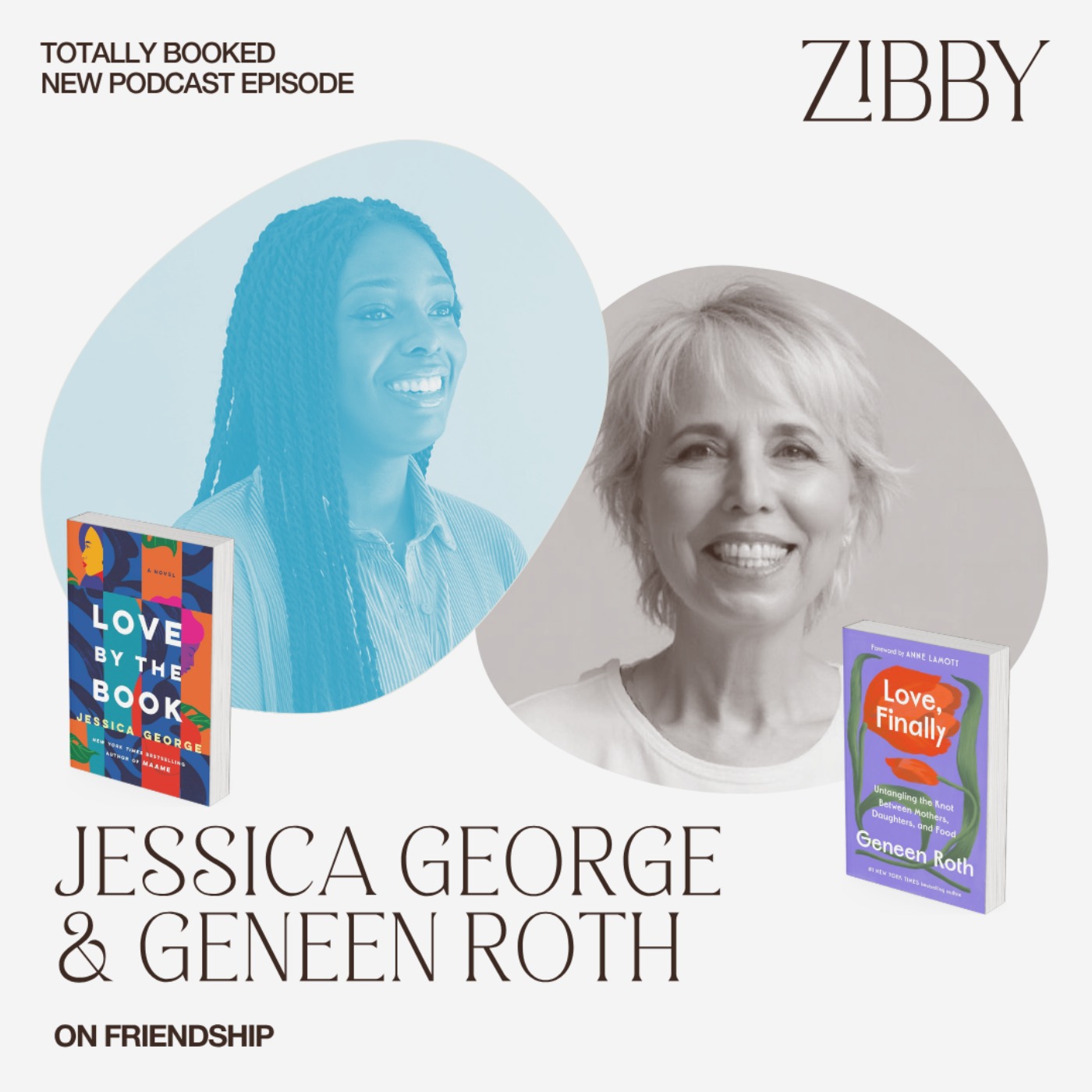
Hi, this is Zibby Owens and you're listening to Totally Booked with Zibby, formerly Moms don't have Time to Read Books. In my daily show, I interview today's latest best selling buzziest or underrated authors and story creators whose work I think is worth your time. As a bookstore owner, publisher, author, and obviously podcaster, I get a comprehensive look at everything that's coming out and spend my time curating the best books so you don't have to stay in the know, get insider insights and connect with guests like I do every single day. For more information, go to zibbymedia.com and follow me on Instagram ibbeowens okay, Love Finally Untangling the Knot Between Mothers, Daughters and Food by Janine Roth is one of my new recent favorites. She is such a powerhouse and I thought it would be interesting to pair her episode with Jessica George, who wrote Love by the Book, which is a novel about the power of female friendships. They both have love in the title, so yes, there's that, but they both have the love that they got from those in their lives that helped. Janine has a woman named Cleo who helps her through this recent understanding of her traumatic relationship with her mom. And that led to her and it's oversimplification, but her relationship to food. Jessica George writes about how in fiction, friends got each other through a terrible time and I thought that they would be an interesting counterbalance. So I've taken parts of both of these to help inform our view of how essential female friendships are. And to any of my girlfriends out there who are listening, and basically you're all my girlfriends at this point. I mean, who are we kidding? Thank you. Thank you for being a friend. Janine Roth is The author of 10 books, including New York Times bestsellers Women, Food and God, When Food is Love and Lost and Found. And then Jessica George is the New York Times bestselling author of Mama. I had her on the podcast for that and she was born and raised in London to Ghanaian parents and studied English literature at the University of Sheffield. I hope these two meet in real life at some point and talk about how women help women so very, very much welcome. Janine. Thank you so much for coming on Totally Booked to talk about love Finally Untangling the knot between mothers, children, daughters and food. Congratulations.
- [02:25]
B
Thank you, thank you. I'm really glad to be here.
- [02:28]
A
I just loved this book. I related to a lot of the eating stuff in it, complicated relationships, your therapy journey, all the different ways you've treated your body and the different fad diets and just all the things and the way you told it was so beautiful. And I just. I enjoyed it. But more than that, I finished and felt like, you know, I had, like, gained a new. A new friend. I really. I did. I emailed your editor, Whitney, after, and I was like, oh, my gosh, that was so good.
- [03:02]
B
Oh, thank you. Thank you. You know, when you. When you write, you kind of never know what people will think or feel or anything like that. So just writing the journey of it, especially my relationship with my mother. Yeah.
- [03:21]
A
Maybe tell listeners a little bit about the whole premise of the book. Did you start with. Where did you even approach starting this book? I know you've written many other books. Why this book? Why now? The whole thing.
- [03:35]
B
Yeah. I don't know if this was the very start, but I'd known for a long time I didn't want to die or have my mother die without some reconciliation between us. It's not that we weren't talking to each other. It's not that I wasn't seeing her. I mean, we did have a period of time where six months, maybe years ago, where we didn't talk to each other. I didn't want to talk to her. But more it was every time I called her. And she's now 97. She turned 97 a couple of months ago. There was this feeling of. My heart felt like it was armored and shut down. And I could hear the resentment coming up in my voice and the anger. And I realized because I teach retreats and I. Quite a few of the women talk about their relationships with their mothers. And one woman in particular had this big pile of pancakes on her plate. And I asked her, it was during an eating meditation. Do you like pancakes? No. Is there any reason you're eating pancakes? She said, yes, I want to take revenge on my mother. And I thought, okay, let's, you know,
- [04:49]
A
we have a live one here.
- [04:52]
B
Is your mother alive? No. How long has she been dead? Many, many years. And so I realized she was still alive. And she. This woman was taking herself to be the child whose mother didn't allow her to eat pancakes. And I realized I kind of take myself to be the victim of an abusive mother and who put me on a diet when I was quite young by grabbing my hand at the Good Humor ice cream truck and telling me I couldn't have two. I think it was toasted almonds or creamsicles. And after which I ran back in the house and ate frozen Milky Ways over my garbage pail. Sneaking up in my room, just in case anybody walked in, I wanted to spit it out. So that was the beginning of the mother food. If only I were thin, she would love me. But underneath that, the feeling that I was unlovable, that there was something really wrong with me. And so that's what got me started writing Love. Finally. I wanted to unpack that. I wanted to unwind the mother wound, really. I know it was a big task, but I wanted to do it while she was still alive and while I really could write about it and explore it.
- [06:15]
A
And some of your insights came from your relationship to Coco and her talking to you about the past and how you came to reframe it, really.
- [06:23]
B
Yes, that's right. So Koko is my mentor. And so her story, my story with Koko, is braided into my story with my mother. Because Koko pretty much right away said to me, your mother isn't here. This is not about your mother anymore. This is about what you believed about yourself in relationship to your mother. And, of course, Gabor Mate says the same thing about trauma. It's not what happened. It's how you interpreted what happened and your relationship to what happened. And I realized that my relationship to. To what happened was unkind, resentful, as I said before, taking myself to be a victim, and also how unkind I was to myself. I think that was the really big thing that I saw, that I had internalized my relationship with my mother or what I thought was my relationship with my mother, how I thought she treated me. And now, and this isn't really new, I learned this in therapy 101, when I was probably 28, that I was treating myself the way my mother treated me. But the problem or issue or challenge was I was still doing that. The lack of kindness towards myself was extraordinary. And I would venture to say that many, many, many people feel the same way, whether they have a noticeable and difficult, challenging relationship with their mother or whether they internalized that from the culture, from how we're supposed to treat ourselves, from what it takes to be successful, achieve attractive, beautiful, a good mother, a good friend. The amount of rules there are that we keep following and then bashing ourselves for not following is extraordinary.
- [08:28]
A
It's true. And by sharing your experience, you're really encouraging everybody else to have a little compassion for themselves and to look at that relationship that they have. And what do we believe about ourselves and why? And can we. Is that something we can get past? So I feel like by sharing your story, you're actually. It's an olive branch to everyone else as well.
- [08:46]
B
I hope so. I really do hope so. I hope that people understand that we're not seeing the world as it is. We're seeing it as our wounds are. So I do say this in the book. It's as if we're wearing a pair of yellow glasses and we see the world as yellow and we don't even realize we're wearing them. So that if I find, you know, if I feel like I don't belong here, if that's a basic conclusion of mine, because that's one of the things I write about. Enough. Finally, the never true but unavoidable conclusions that we've made, usually before we could talk, but definitely by the time we're seven through which we see people, our relationships, our work, our lives, that we can actually take those apart and not take those apart, but unlayer them. They can become transparent. We can take those glasses off because in the end, we see what we believe. It's not that we believe what we see. And we keep thinking that there's an objective external world out there. And then that person is treating me badly, has rejected me, and if only that person wasn't in my life, I'd feel better. And that was one of my first times with Coco, when my very best friend of 20 years ended our relationship on the day I got back from radiation from breast cancer. And I was expecting Coco to be outraged and to say, she was brutal. How horrible. You poor thing. How could she? Instead, she said, I don't remember if it was oh, pooh or oh, darn. I don't really remember, but it was one of those oh, pooh. It's like, oh, pooh. Seriously, that's something you say if you burn your meatloaf, not something, you know, you say when your best friend stops talking to you. And then she said to me, what was the first lie you told yourself about her? And I was shocked because she immediately put it back on what I was saying, what I was believing, how I was treating myself, how I had in many ways distorted what was going on in that relationship because I was afraid to end that relationship. I was afraid that I needed my friend. I idealized her. I thought she was brilliant and smart and funny and beautiful and that by association, it made me all those things. And somehow, if I ended the relationship, love wouldn't ever walk back in the door in terms of friendship.
- [11:40]
A
So, yeah. Well, in addition to all of that, great advice, you take us through a true rollercoaster of eating issues that you've had through some. And you're really funny. There's a lot of really funny ways of telling kind of sad stories. But your sense of humor when you write is pretty great too. Take us through. I mean, you have one which is just like a whole chapter of I did this when I was 20, I did this when I was 30. And it's like, yes, no, yes, no, yes. But it's more about how many times you've gained and lost weight and things you've tried and just take us through a little bit of that.
- [12:20]
B
So as I say in the book, and I hadn't calculated this until I was writing this book, that I've gained the equivalent in weight gain and lost of a baby grand piano. You know, I have. Or small horse. I really, truly have ricocheted up and down the scales countless times from the time pretty much I was 11 to the time I was 28, 17 years. But really it wasn't until I was in my early 40s when a doctor said to me, you're just, you're just not eating enough protein here. You know, it's not, it's. You're not really sustaining your body. And I, you know, of course those kinds of ideas and advice changed so many times over the years. But I did at that point start eating a lot more protein. Before then, I had been eating basically what people would consider normal from the time I was 28 until this doctor said that to me. And what got included from the 11 to 28 years were things like the thousand calorie a day sugar diet, the one hot fudge Sunday a day diet. I was addicted to amphetamines for four years and I loved those amphetamines. I never sleeped, of course, from the time I was 15 to the time I was 19, but. And I didn't actually lose any more weight after the first £20. I lost the first month or two. But I was afraid to go off of them because I was afraid I would gain weight. I went on the all brown diet. It was my construction. It was coffee, cigarettes and diet chest cream soda. I was on that diet for three weeks. Lost a lot of weight. Then there was a time that I wanted to become a breatharian and I was insane. I really felt insane. But underneath all of that was this self loathing and the belief that if only I could get thin and stay thin, all the demons would go away. I would have permission to be here. I would belong, I could relax. And you know, I do tell the story in the book of one of my sons, retreat students whose mother was dying and wouldn't let herself eat her mint chocolate chip ice cream because she didn't want to die with fat thighs. And then Nina Riggs talks about in her beautiful book about her mother and one of the last words that her mother said as she was dying is, I am so fucking fat. So this equivalency that I had of self worth and body size, the smaller I was, the more I was worth. And that stayed with me throughout all of those years, it's difficult, it's challenging to shake that one because we're actually now living at a time where many people have access to the GLP1 drugs. And so thinness has taken on another mantle of it's achievable for anyone, everyone, at any time. And so that worship of thinness as the pinnacle of what a woman's body can and should look like has persisted through all these years. It just keeps going. And I was utterly caught in it.
- [16:07]
A
To your point about how people feel at the end of their life. I know you have a whole section on this. I remember so well, my mother and her best friend. My mother was a cottage cheese and fruit for lunch. That's it. Exercise at Gilda's with the leg warmers. I mean, bran muffin. Half a bran muffin for breakfast. Like, I could go into the whole thing with a cigarette anyway.
- [16:27]
B
With a cigarette, right? Let's not forget the cigarette.
- [16:30]
A
Yeah, with the ashtray, like in looking at, how's your homework going? You know, Anyway. But very thin. She's still very thin, but her best friend Sally came down with terminal cancer. And I remember the last time I saw Sally, she came over to our house and she had lost her hair. She was wearing a bandana and jeans. And she walked in and my mom goes, sally, you look so thin. And she's like, right. And I remember her spinning around and both of them, like, looking at her flat butt and being like, oh, my gosh, how amazing that was. And then she passed away. I mean, it was like, what do we take from that? You know?
- [17:05]
B
Yes, we take that. We are all indoctrinated, hypnotized, entranced into the worship of thinness at any cost.
- [17:17]
A
Yeah. Yeah. And it never ends.
- [17:20]
B
No. Until we decide.
- [17:23]
A
Until we. Yes.
- [17:24]
B
To end it. Until we realize that it's, as Coco says, a category error, you know, that we're making a false equivalency where we're entranced because we believe it means something. We give it meaning. Now, does it give it mean? Does it have meaning in terms of our comfort and ease in our bodies. Does it? Yeah, it does. You know, when I was twice the size that I am now, I was uncomfortable in this body. It was hard. It was hard to move. It was hard to get around. And you know, my mother talks about her mother taking her shopping in the chubby section of Macy's and being really, really mean to her because they were very poor. They grew up in a one bedroom apartment in the Bronx, New York. They hardly had any money. But my mother's thighs were so fat that her mother had to buy special lotion for the chafing and she didn't like that at all. And that was part of what my mother was trying to help me avoid, that shame because the shame at the body weight, which is really, really. And I think that's what this book is about. Looking below that, let's look and see what the hunger is really about.
- [18:50]
A
Welcome, Jessica, thank you so much for coming on to talk about Love by the Book. Congratulations.
- [18:56]
C
Thank you so much.
- [18:57]
A
Okay, first, give listeners a sense of what Love by the Book is about.
- [19:01]
C
Okay, so for a spoiler free synopsis. It's about two women, Remy and Simone, who find themselves to be at a very lonely time in their lives, but both for different reasons. They meet by chance at a bookshop and what goes on from there is a love story of platonic proportions.
- [19:21]
A
Love it. There is. I won't spoil anything, but the sister scene was perfect. And I love, I love how you, instead of just giving us the scene, you spread it out so that we could get dribs and drabs like as we went. So thank you for that.
- [19:41]
C
You're very welcome. That was one of the. That was a relationship that took me quite a while. I think out of all the relationships that was the one that took the longest, but I felt was one of the most rewarding.
- [19:52]
A
Interesting. Very interesting. Well, you took a lot of maybe chances is the wrong word. You did a lot of creative things with this book. You used a lot of different forms. You used emails and texts and novels within novels. And like, I mean, you did so many things that articles written about people. It's very creative. It was like, how am I going to mix up the novel form and use all the tools in my toolbox? Did you just have a blast doing that? Tell me about that.
- [20:23]
C
I really did. I really, really did. I am still waiting for adult books to have pictures in them, to have, like illustrations. That's why I love children's books so much. I worked for A publishing house in the children's department. And it got back into reading children's books. And I love the pictures and I'm so upset that for some reason we don't get them as adults. So I think I just try and add as much as I can that's close enough that I can get away with. So I love different forms of media. So like you said, there's emails, there's text messages, there's articles. It's just so much a part of everyday life that it would feel strange to me to write a book following two characters. And it's just text, just like a book form.
- [21:06]
A
Well, I have all the faith in you that you will find a way to get a picture in one of these books one of these days. Maybe you should ask your publisher instead of doing the thing in the middle where you open it up and it's all those pictures from someone's childhood.
- [21:20]
C
Oh, yes, yes.
- [21:21]
A
That they put in that little insert in the middle. But instead it's illustrations of the book.
- [21:26]
C
Oh, my gosh. I would love that. I'm going to ask. There's no harm in asking. I already know it's going to be a no. But I'll still ask.
- [21:32]
A
You tackle female friendship in a beautiful way. As you said, platonic proportions. That was very clever. But all these relationships, especially from the point of view of the one left behind, Right. Because we've all, I bet, felt. I know I have felt in certain times that we are the last standing in whatever combination of friends there is, whether they move out or they move on or whatever. There are so many ways. And when we have friends from so many areas in our life, like, it's only natural that, like this group of mom friends goes this way. Way. Or this group, you know? Right. So we all, at different times in our life, have to mourn the friends who surrounded us at key moments. And how do you get past that? How do you rally? And what happens? What needs to happen to bring them back? And remember that friends don't actually ever leave, that love never disappears. Right. Even if your friends aren't near. So tell me a little bit about you and friendships and did you ever feel that way? And where did this come from?
- [22:31]
C
Oh, yeah, for sure. I think I know the word relatable is used for. To describe a lot of books, but I feel as if there are some things that are universal and this is one of them, having at least in one moment in your time being left behind or moving on from something. And I've definitely felt that in the past. And what happened when I was writing this book was how difficult it is to put into words because we don't quite have the language for it. In terms of friendship, I think we have it in terms of romance. Like romantic partners. We know how to write about a breakup, but when it comes to friendship, it's quite difficult to put into words. And so I've always been someone to write down my feelings in order to understand them. And so that is typically the crux of my books. And it was the case with Mehmet, and for this one as well, where I was trying to understand why a friendship breakup hurts as much as it does, or how to proceed or how to kind of keep them close or what do you need to do as a person to keep a friendship going? And it's definitely something I've struggled with. My friends have struggled with. I think. I don't think I've not met a person who hasn't. They just haven't been able to. We haven't been able to talk about it in a. In a clear enough way as you would a romantic partner. So my experience and the fact that I know a lot of people have experienced this is very much the driving point of this book.
- [24:01]
A
I love that. Yeah. And we all. It's so silly because I'm like, I don't have any time to spend with my friends. Meanwhile, I just read this entire book about friendship. Like, I could have gone to coffee with four people. Next time. Maybe I should do that. No, I'm kidding. I really love the book. But why is it easier for me to read books about friends than just make the time. You wrote whole books about friends. I bet you did spend more time on that.
- [24:25]
C
I know. And there's also. It's so true, because there's also a book called, I think, Friendaholic by Elizabeth Day, but it's nonfiction, and it also just talks about friendship in real life. And it's just so true. You spend your time doing something so many hours that you could, but you just. I don't know whether it's in their head, it's not a priority at the time, or you think friendships will always be there. But, yeah, I think sometimes we learn. It's a learning curve. Friendship still.
- [24:55]
A
Yeah. But you also show in the book that friends are there for us when we need them the most, sometimes just to help us get out of bed. And sometimes that's maybe what you need. And there were some dark moments in this story. Tell me a little bit about that and how you tapped into that particular sorrow and the, the just. Oh. I mean, we've all had dark days, but just, I don't know, talk a little bit about that because it felt very visceral to me.
- [25:24]
C
Yeah. So it's been my friends that have pulled me out of those dark moments. So the one that comes to mind, which is if people have read Mammy, is when my dad passed and the person most at my side and the person I was most comfortable to be. Because when you're grieving, it's a very strange thing and you kind of act differently around different people. So with my family, because I am the responsible one, I kind of felt the pressure to keep going and to make sure everyone else was okay and to keep the process moving. Whereas with my friends I could kind of just grieve and break down and be as vulnerable as possible. And I thought that was just very interesting when I was writing about Maamere. But I put so many, like there had been a lot more of the female friendship in Mami, but because it was tackling so many topics, I had to rein that in. And so that's why I was so excited to write about it in the second book. Because when I lost my dad, that was when I saw the true. I mean, I've always appreciated them, but I saw the true beauty and unconditional love in female friendship. And they were the reason I was able to get, you know, get back to. I put normal, normal life in quotations. And I don't know, that was quite unexpected for me. I wasn't expect. Because that's the first real like big grief moment I've had in my life. My grandparents were gone when I was very young, so I hadn't experienced anything like that. And so to have my friends pull me out of such a deep, dark space, I knew I was going to write about it eventually and I'm glad I got to this time.
- [27:05]
A
And how do you feel talking about all these things? I mean, the opening is an interview itself with somebody about a book having an interview about a book. And like, here we are now having an interview about this book. Which makes me feel a little self conscious about the whole thing because I'm like, oh my gosh, I hope I don't accidentally ask one of the questions that the interviewer in the book asks her because these are just the things I'm wondering about. In a way, it's almost like a light poking fun right at the whole process that all authors really have to go through that you have to get out there and talk about it and hawk your wares, if you will. And I'm sure with Mameet, you were just, like, everywhere. So I'm sure you were getting tired of it. Tell me about it.
- [27:43]
C
Thankfully, I started off. I mean, so before Mami, I'd been writing for eight years, and back then I was really writing for the market. So I was just writing with the hopes of getting published. I'd look for what's popular and try and write that. But the cliche that you should write what you love is very true because you do have to talk about it a lot, which makes it easier to talk about a lot. Mame was a bit more difficult because it was always often bringing up grief. And so my team were very great with that because they always said, well, you know, you can always learn to pivot. So if a question comes up and it's really emotional, you can learn to, like, dive into the friendship element or the career element. But with Love by the Book, I feel like I can talk about anything in there because nothing's, I guess. I mean, sadness is subjective, but nothing is as painful as, I think, the grief in Mammoth. So when topics that are included in Love by the Book come up, I find them very, very easy to talk. To talk about because they are just so much easier and less emotionally hurtful to talk about.
- [28:49]
A
Well, I'm so sorry about your father, of course, and I hope you know that I should have said, again, I think. I know we already spoke about this once, but it never hurts. I am so sorry for your loss. I'm so sorry. And actually, I really loved the dad in this book who plays. He's like a supporting character. Right? He's, like, got a bit part. He wouldn't probably get that biggest salary from showing up in this movie, but. But still, like, played a big role and had a really big presence. And I don't know if that was an ode to the role your dad played. And he's sort of like, yeah, what are you saying, young man? You know, like, I could see this man very, very clearly. Was it fun to write him? And was there any. Were there any shades of your dad in him?
- [29:34]
C
Yeah, I think the event they both go to at the end, the proud dad, I think, would have very much been my dad. And I was glad to be able to write a dad figure like the one I got to write in Love by the Book. And I think I probably will now always write dad figures in a. In an ode to mine. But, yeah, in terms of Simone's dad being proud of her end result. Yeah, that's very, very reminiscent of my dad.
- [30:01]
A
Wow. Love it. Who would you most like to go to coffee with of all these characters?
- [30:05]
C
I feel like my answer changes every time.
- [30:09]
A
People ask you this all the time, which means it's a bad question. Which means like, it means I should delete it.
- [30:17]
C
It's a great question because there are so many characters. Do you have coffee? I think, you know, because it's quite gloomy outside, quite dreary. I'd like to hang out with Remy. She feels like a real mood booster.
- [30:29]
A
I would like to go out with Simone.
- [30:32]
C
Everybody says Simone.
- [30:33]
A
Do they? Oh, sorry. Okay, everybody else.
- [30:36]
C
No, it's great. I love it. I was worried what advice would you
- [30:40]
A
have for aspiring authors?
- [30:42]
C
I always sound so cliche, but it is always going to. I probably said this after Mama as well, but to keep writing and I only say it because it's what I had to do. So it was eight years of rejection before I got to Mamet and loved by the book. And now I'm a full time author, which was always the dream. So unfortunately it is going to be the cliche. Keep writing and write what you love because you are going to have to read it multiple, multiple, multiple, multiple times.
- [31:09]
A
Thank you for listening to Totally Booked with Zibby, formerly Moms don't have Time to read Books. If you loved the show, tell a friend, leave a review, follow me on Instagram ippyowens and spread the word. Thanks so much. Oh, and buy the books.