← Totally Booked with Zibby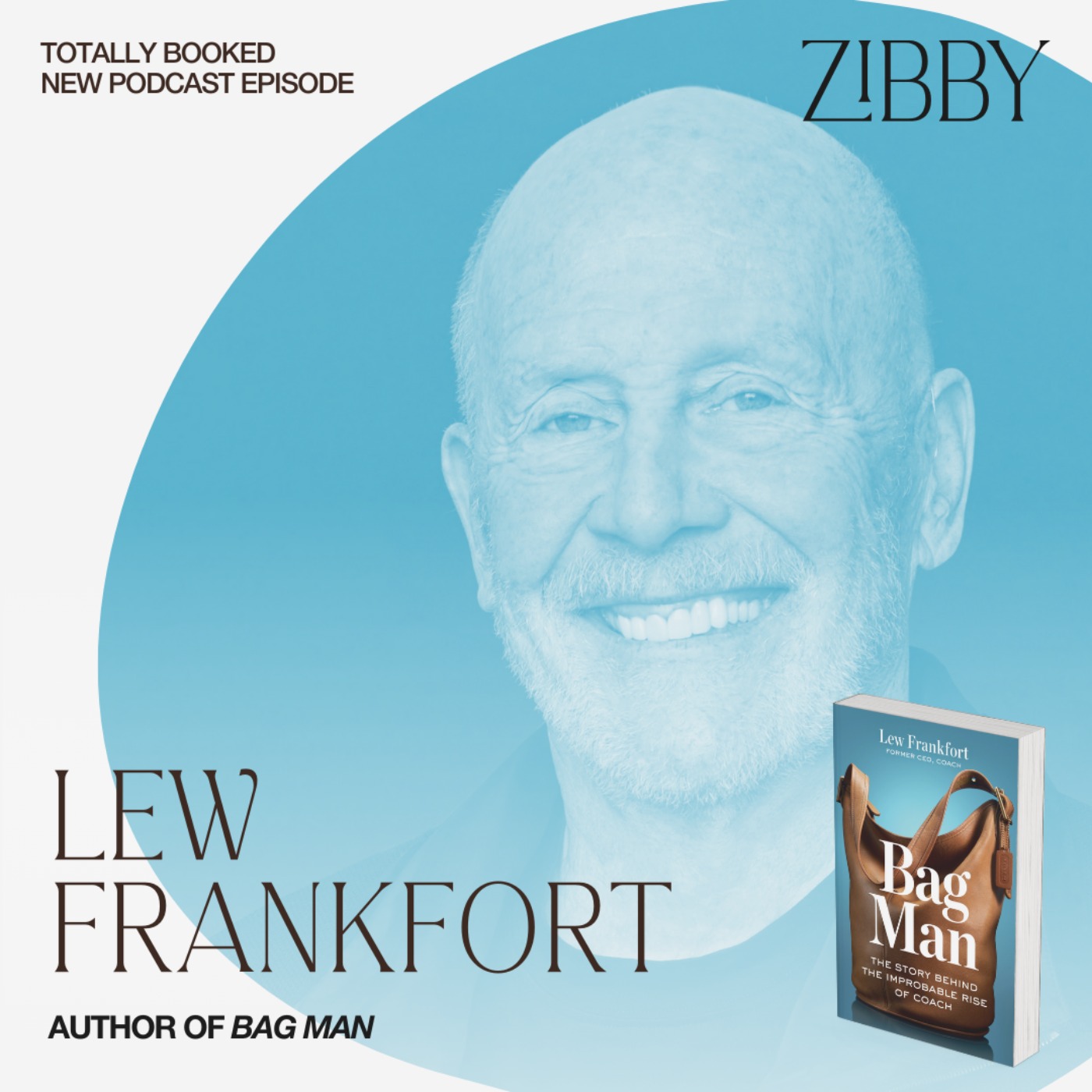
Totally Booked with Zibby
From Public Servant to Fashion CEO: Learning to Lead on the Job with Lew Frankfort
00:31:40
Loading summary
Transcript65 lines
- [00:01]
Zibby Owens
Hey everyone, it's Zivi. I am so excited to tell you about something I've created just for you, the Zip Membership Program. ZIP stands for Zivi's Important People. It's for anyone who loves books, stories and wants a little peek behind the scenes at what I'm up to and what's on my mind as a Zip member. You'll get exclusive essays, a new podcast called Zivvy's Voice Notes. No interviews, just usually discounts at Zibby's Bookshop, a free ebook, and more perks. I wanted to create a space to connect authentically and deeply, and I'd love for you to be part of it. If that sounds like your kind of thing, become a Zip today. You're already important to me. Now let's make it official. Go to zibioens.com and click subscribe. And if you already subscribe, you can upgrade to the Membership program. And now onto today's episode of Totally Booked with Zibby. Thanks for listening.
- [00:56]
Capital One Bank Advertiser
With no fees or minimums on checking accounts, it's no wonder the Capital One bank guy is so passionate about banking with Capital One. If he were here, he wouldn't just tell you about no fees or minimums. He'd also talk about how most Capital One cafes are open seven days a week to assist with your banking needs. Yep, even on weekends, it's pretty much all he talks about in a good way. What's in your wallet? Terms apply. See capitalone.com bank capital1na member FDIC.
- [01:26]
Equip Health Advertiser
We live in a culture obsessed with dieting, weight loss and exercise, and that can make eating disorder behaviors easy to miss. But the reality is, eating disorders are serious mental illnesses that take a major toll on your health and your life. But recovery is possible. Eating disorders are more common than you might think. Chances are you know someone who is struggling with one. Or maybe you're struggling yourself. If you're concerned about an eating disorder in yourself or a loved one, I want to introduce you to Equip. Equip is a fully virtual evidence based eating disorder treatment program that helps patients achieve lasting recovery at home. Every Equip patient is matched with a multidisciplinary care team that includes a therapist, dietitian, medical provider, and mentors. And you get a personalized treatment plan that's tailored to your unique goals and challenges. Equip treats patients of all ages and all eating disorder diagnoses. It's covered by insurance and there's no wait list. If you think that you or a loved one could be struggling with an eating disorder. Don't wait to get help. Visit Equip Health to learn more. That's Equip Health.
- [02:32]
Christy from Back to the Bar
Hi, this is Christy from Back to the Bar. You've probably heard about GLP1 weight loss medications and the side effects that can come with jumping in too fast. That's why I love Noom Makes getting started easy. Their microdose GLP1 program begins with a smaller dose and gradually scales up based on how your body reacts. The Noom GLP1 microdose program starts at $99 and is delivered to your door in seven days. Start your microdose GLP1 journey today at noom.com that's n o o m.com Noom micro changes big results average weight loss 8 pounds in first month meds and personalization based on clinical need and not available to all individuals. Medications are not reviewed by FDA for safety, efficacy or quality prevention. Pricing based on first month only.
- [03:21]
Lou Frankfort
Hi.
- [03:22]
Zibby Owens
This is Zibby Owens and you're listening.
- [03:25]
Podcast Host/Interviewer
To Totally Booked with Zibby.
- [03:26]
Zibby Owens
Formerly Moms don't have Time to Read Books in my daily show, I interview today's latest best selling, buzziest or underrated authors and story creators whose work I.
- [03:37]
Podcast Host/Interviewer
Think is worth your time.
- [03:39]
Zibby Owens
As a bookstore owner, publisher, author and obviously podcaster, I get a comprehensive look at everything that's coming out and spend my time curating the best books so you don't have to stay in the know. Get insider insights and connect with guests like I do every single day. For more information, go to zibbemedia.com and follow me on Instagram ibyoans Lou Frankfort is the author of the Story behind the Improbable Rise of Coach. This episode was recorded live at the Zibby's Bookshop Pop up at Minnie Rose in New York City. Lou Frankfort is Chairman Emeritus of Coach, Inc. He joined coach in 1979 and served as chairman and CEO from 1985 through 2014. During his 35 years with coach, Lou built the small leather goods company into a $5 billion global accessories and lifestyle brand and was recognized multiple times by Barron's as one of the 30 most respected CEOs around the world and and by institutional investor as one of the best CEOs in America. After retiring from Coach, Lou co founded Ben Voglio Group, an investment firm that focuses on early stage disruptive consumer brands including several where he advises and mentors senior leaders. Lou spent the first 10 years of his career in New York City government with the last three restoring the city's Head Start and daycare programs as the commissioner of the Agency for Child Development. He grew up in the Bronx and attended Hunter College and Columbia Business School. He and his wife, Bobby, live in New York City, where they are active supporters of education and the arts. They have three children, eight grandchildren, and two beloved Labradoodles. And if I sound particularly excited during this episode, two seconds before filming it, I found out that one of my twins had just gotten accepted early into college. Meanwhile, Lou was waiting to hear from his granddaughter if she was getting accepted into college too. So it was a very positive, fun experience.
- [05:39]
Podcast Host/Interviewer
Thank goodness.
- [05:39]
Zibby Owens
Anyway, moving on, everybody.
- [05:41]
Podcast Host/Interviewer
Thank you so much for coming today to talk. We're going to talk to Lou Frankfurt, Bagman, the story behind the improbable rise of Coach. Thank you so much to the whole team at Minnie Rose for welcoming us in your space. Per usual, it is always such a pleasure to be here in our collab with Cities Bookshop. So yay. And we're just so excited to have you.
- [06:00]
Lou Frankfort
Thank you.
- [06:01]
Podcast Host/Interviewer
Yay. Okay, Lou, why did you decide to write this book?
- [06:05]
Lou Frankfort
It was actually at the urgings of my children who thought that I should tell an authentic story. And it's less about my journey at Coach or my management skills, more about how that coupled with my essence, my values and mental health, how that whole thing came together to enable me to be successful at Coach. And part of their motivation was that Gen Z and Millennials could use an authentic story where people show leaders, show vulnerability, show empathy, and are not just masters of the universe like many very successful people are with. They are domain experts on subjects where they're not qualified to hold an opinion. So I decided that I would embark upon a journey that would really talk to Coach as the main subject, but with values and my own personal journey that others might be able to glean an insight from or that could be helpful in their own life's journey, whether it's business, college, entrepreneurialism.
- [07:30]
Podcast Host/Interviewer
Amazing. You have a philosophy that you said you really honed when you did your pitch to the team in Tokyo, which is magic plus logic. Talk a little bit about how that became your guiding principle for Coach and how the rest of us can use it.
- [07:44]
Lou Frankfort
When we were contemplating going into Japan in 1988, the only significant brands in Japan were European luxury brands. Japan did not have a history of local brands. World War II really disrupted everything for Japan. And post World War II, the European luxury brands, led by Louis Vuitton, followed by Prader and Gucci, entered the market. And as just and became very dominant as a way for successful Japanese men and women to express themselves through by borrowing the identity of bags to say who they are. And I always saw Coach as a democratized luxury brand, an alternative to European luxury brands. And our situation in America is we have no indigenous. No indigenous or American luxury brands. We're a country of immigrants, whether we came on a Mayflower or we came five years ago. And from my early days I thought that if we could take the best of America, grit, hard work and translate that into the values of a product and translate that through storytelling and service levels into what people might aspire to in the American dream, that we could build a successful business. So I needed to find a way to translate that into a presentation that a non speaking chairman and CEO would understand. And what I decided to do was to talk about a blend of magic and logic on the magic of America and New York. Vital and rich and successful. Everyone thinks about New York as the center of the universe. People still do. And regardless of what they may think about American politics at any particular time, they separate New York. The energy, the drive. Everyone knows someone who is living the American dream in the United States from all around the world. So I developed a presentation that talked about product, it talked about consumer, it talked about Americans. And I entitled it Magic and Logic. And the reason I entitled it Magic and Logic is that we really built our story through a blend of logic, rigor, analytics, a belief that in collaboration, but also magic in terms of having a vision, imagination, curiosity, all of those elements together was how we got to coach in 1988. So we never got past the COVID The CEO of Mitsukoshi, a leading department store that was founded, believe it or not, in 1664 or thereabouts. And only a few years before I visited the first time, did they not require people to leave their shoes at the door and give them slippers when they went through the store. Everything was white glove. It was a perfect economy in the 1970s and 80s, so we never got past the COVID He loved the concept of magic and logic and he felt that was America because it took people from all around the world and somehow it worked. Now you need to also appreciate that Japan does have limited immigration and it is largely a singular society with of course, multi classes. So that was how we got started. And he believed in the American dream, he believed in New York, and he was prepared to make a big commitment. And that's how we insinuated ourselves into the Japanese market.
- [12:05]
Podcast Host/Interviewer
Amazing.
- [12:05]
Lou Frankfort
Long story.
- [12:07]
Podcast Host/Interviewer
No, it's great.
- [12:07]
Lou Frankfort
We could abbreviate it?
- [12:08]
Podcast Host/Interviewer
No, no, no. Perfect. One of the things that you have many leadership things that you talk about in the book that I was so impressed by, one of which is getting customer feedback all the time. It used to be that you had in the very beginning, registration cards for every bag, and you had all this data and you could reach out to people. That's how you started your catalog business. And you could ask customers what they thought. You were relentless in your pursuit of information and figuring out who the consumer is. What did they need? What did the bag make them feel? And all of the behavior and thoughts and feelings behind the back. Talk a little bit about that and how important that is in any sort of retail decision.
- [12:47]
Lou Frankfort
So the secret that I share in my book is that I knew nothing about brands. I knew nothing about fashion.
- [12:57]
Podcast Host/Interviewer
I was trying to make it sound like you knew everything. Go with it.
- [13:01]
Lou Frankfort
But I did know how this be of service because I had spent 10 years in city government, and in my most senior role, I was responsible for New York City's daycare and Head Start programs. And at a time when the city was in its. Went through bankruptcy in 1976. 75. 76. And I was responsible for servicing underprivileged families and children. And I was committed to, almost messianically, to ensure that every eligible child would remain in service. The Head Start was not run well. Federally funded daycare was not run much better. State and local funding. And it became the poster child for why government is excessive and should cut back. And I accepted the position because I cared greatly and I thought that I would do what was necessary, never leaving the client alone. That's a long way to say, when I got to Coach, I was very curious about customers because they were the people I was going to serve. And long before I accepted the position, I pretended to be a Businessweek reporter. And I spoke to merchants and buyers at Bloomingdale's Bond with Taylor Macy's. And I went into a small specialty store on the Upper west side. Handbag specialty store on 72nd street between West End and Broadway, saying, I'm a freelance reporter, and for Business Week, I want to know about Coach. It was a small business, $6 million in sales. And what I learned from everyone was that people love their bag. And when I went into the specialty store, the owner, who had only one bag in stock, which was not out because it was reserved, said to me, lou, it has a cult following. You won't believe it, but people really love their coach. So coming from the 60s, and being a product of the 60s, I was intrigued. So from the very first day in Coach, I was maniacally focused on who our consumers were, who they weren't, what were their interests, how did they think about making a handbag purchase. And over the following several years, I started to go into women's closets and look at their bags to understand the brands that they carry. What role did Coach play? And out of that, we learned who our consumer was. We also learned over time about her values and her preferences. And what we were able to do, because we developed baseline statistics, was to measure changes in her values and her interests. And so we looked at past indicators, concurrent indicators, and future indicators to really understand how Coach was doing.
- [16:14]
Podcast Host/Interviewer
So interesting.
- [16:15]
Quince Advertiser
Today's episode is sponsored by Quince. Starting the year with a wardrobe refresh, Quince has you covered with luxe essentials that feel effortless and look polished. They're perfect for layering, mixing and building a wardrobe that lasts. Their versatile styles make it easy to reach for them day after day. Quince really has all the staples covered, from soft Mongolian cashmere sweaters that feel like designer pieces without the markup to 100% silk tops and skirts for easy dressing up to perfectly cut denim for everyday wear. Their wardrobe essentials are crafted to last season after season. Their Italian wool coats are real standouts. They're beautifully tailored, soft to the touch and built to carry you through years of wear, not just one season. The quality shows in every detail. The stitching, the fit, the fabrics. Every piece is thoughtfully designed to be your new wardrobe, essentially. And like everything from Quint, each piece is made from premium materials in ethical, trusted factories, then priced far below what other luxury brands charge. You've heard me say this before because I'm obsessed with Quint, but I love my winter coat, which I wear every day. And I actually just got a blue cashmere sweater as a gift from Quint this holiday season and I am obsessed. Refresh your wardrobe with quintessential don't wait. Go to Quince.com Zibby for free shipping on your order and 365 day returns. Now available in Canada too. That's Q-U I N-C-E.com Zibby to get free shipping and 365 day returns. Quince.com Zivi.
- [17:54]
Capital One Bank Advertiser
With no fees or minimums on checking accounts, it's no wonder the Capital One bank guy is so passionate about banking with Capital One. If he were here, he wouldn't just tell you about no fees or minimums he'd also talk about how most Capital One cafes are open seven days a week to assist with your banking needs. Yep, even on weekends, it's pretty much all he talks about. In a good way. What's in your wallet? Terms apply. See capitalone.com bank capital1na member FDIC.
- [18:25]
Lou Frankfort
BetterHelp Online Therapy bought this 30 second.
- [18:29]
Podcast Host/Interviewer
Ad to remind you right now, wherever you are, to unclench your jaw, relax.
- [18:37]
Zibby Owens
Your shoulders, take a deep breath in.
- [18:43]
Lou Frankfort
And out. Feels better, right? That's 15 seconds of self care.
- [18:50]
Christy from Back to the Bar
Imagine what you could do with more. Visit betterhelp.com randompodcast for 10% off your first month of therapy.
- [19:00]
Lou Frankfort
No pressure, just help.
- [19:02]
Podcast Host/Interviewer
But for now, just relax. So another innovative thing that you did that people might not even know is that there didn't used to be freestanding stores that just sold one brand. So the idea that you opened a coach store right by Bloomingdale's, you went in and talked to the head of Bloomingdale's and said you were gonna do this thing that everybody thought would be that it would enrage the Bloomingdales people because you were going elsewhere. And you said, no, I'm actually gonna bring you more sales. You started this concept and now it's like everybody does it. Talk a little bit about that.
- [19:43]
Lou Frankfort
My general view, being consumer centric, was that I wanted to make Coach available in image enhancing ways wherever consumers chose to shop. And it was clear to me when I joined Coach, when we were only a wholesale business, there was a growing mail order opportunity. And if we were able to sell products directly to consumers, we would get to know them better because we could communicate with them. We could also present our products in a carefully merchandised way, catalogs. And we started a mail order business in 1980. I joined in 1979. And I also studied European luxury brands. And the brand that I admired the most at the time was a small French brand by the name of Louis Vuitton. They had a handful of stores, but around the world, but they didn't sell to anyone else. They only sold through their stores. And the idea that we could build a store, have our trained staff there and people could have an immersive experience would only strengthen the brand. So we decided we would open a store and the founder agreed with me that we could do that. Big debate on the location. I won out. He wanted to open across from Carnegie hall between a chicken store and an umbrella store. Because we used to advertise and playbill and all of the theaters and Carnegie hall, you would always see These coach block ads. But his wife voted with me, Lillian. And it changed our destiny. Along the way, I was asked by a colleague who ran the wholesale business if I could go back to city government. And I, of course, knew why, but I thought I would ask him. And he said, miles is really fickle when this. When we're thrown out of Bloomingdale's and the store fails, he's gonna walk. He doesn't want to deal. He won't want to see you anymore. And. And he said, guess what? We also need to see Marvin Troupe, who was the godfather of department. So some of you are nodding, may he rest in peace. He was the champion in that area. And I went to see him. I went into this conference room behind the bedding department, and there was this whole section, executive wing. And in the room were these big portraits of older, excuse the term, white men dressed in suits. All they were all the leaders of. Before Marvin Traub came in and there were many staff waiting for Marvin. I came with this one person, and before he came into the conference room, he said. I was told he wanted to speak to me outside. So I went outside and he said to me, lou, I'm going to lambast you in this meeting and tell you that it's the worst partner activity you can do. But between the two of us, I think it's the smartest thing you can do for the future because consumers are really expressing themselves towards channels of preference. But you cannot tell anyone. And I actually did not tell Dick, and I never told Miles. And I subsequently, of course, spoke to Marvin about it, who tracked my coach's success. And I give him a nod in the book of appreciation for being open minded and a futurist.
- [23:40]
Podcast Host/Interviewer
So we have some lies, we have impersonation. I don't know, Lou, you're really putting it all on the table here. But you also share with us in the book some of the hardest times. You share the loss of your colleague Arun, who was one of the first people you worked with. You were on the phone with him or in meetings with him constantly. You were super close to his family, who you moved from where they lived to be closer to Coach. And then at age 39, he passed away from sudden cardiac arrest. And you can. I could feel the loss and the grief as if it was so. As if it was new. When you wrote about it in here, you can tell how much pain that brought you. Can you talk a little bit about that?
- [24:20]
Lou Frankfort
Sure. In 1985, Miles and I, at Miles decision, of course, he sold the business. And I played a role in helping him find the company that we would work with, and that was Sara Lee Corporation. I introduced a coach to Sara Lee, and I thought they were the best partner for us because they were in Chicago and we were in New York. So I would have some degrees of physical separation. It was long before the Internet. And second, they were a holding company with very strong financial disciplines. And I thought I could learn from them how to scale a business. At the time, the Sarah lee Corporation was $20 billion in sales. And this goes back now 45 years, so that would be like $80 billion in sales today. Conglomerates were very popular in the 70s and 80s. From Sara Lee, I recruited one person to begin with, and that was my chief financial officer, and he wasn't the person they recommended. I went through their recommendations and asked for someone who was not from Winston Salem, someone who was more entrepreneurial, who might not already be a cfo, but really had the bandwidth to become one. And I met this young man, Arun Rao, who had come from India about 12 years earlier, got a master's degree at Wake Forest and was rising through Sara Lee. We hit it off immediately, and he joined. Joined us. And a few months after he joined us, Arun and I helped. I helped Arun identify a home near my home in New Jersey, where he and his wife, who comes from Winston Salem, a Baptist family, could move to New Jersey. And he and I and our families, including Alana, became very close friends. And he was like a much younger brother to me and that we were family. And he died very unexpectedly. And also pleased to say we're very close with their family. Through today. I walked his two daughters down the aisle. And when the book was finalized, well before it was published, I did a zoom call with his widow, Nadine, and his two adult daughters, where we read the passages that I described in the book, and there wasn't a dry eye on that call, including Nath.
- [27:09]
Podcast Host/Interviewer
My gosh, it was so beautiful. Well, you honored his memory in such an amazing way, and now we all get to know him and his brilliance and kindness and all the rest. Thank you. And you also. You talk openly throughout the book about your feelings, not just about loss, but. But anxiety, your nightmares, your fears about losing your house. Later, you even talk about your bodywork guy who now I need to get Edgar's number. Honestly, I'm like, who is this guy? But you talk about coping strategies and how stress finds its place in the body and how you've coped with it in ways good and bad. Can you share that with us?
- [27:45]
Lou Frankfort
Sure. Our bodies don't lie to us. And I've always been driven by a drive for excellence and a fear of failure. And through last night, I have failure dreams. They don't. We can be shocked. I'm shocked. My psychiatrist says it's in your DNA. It will never go away. It will take different forms. So a failure dream is where something's important to you and it's something. And again, Sigmund Freud, if you read the Primer of Dreams, talks a lot about failure dreams. And it's our unconscious talking to us about our insecurities. And it allows us to manifest while we're sleeping the things that give us anxiety. And when that happens, it often turns into body stress. And it might be harder to sleep. You might want to just stay under the covers and lose your mojo. Your back might hurt. There's a hundred different ways it can manifest. And by the early 1990s, I was very conscious that I needed to find more balance in my life. And there were things I could do to relieve my stress, and if I was feeling overwhelmed, there were things I could do about it. And it became part of my regimen. I saw Edgar just today.
- [29:21]
Podcast Host/Interviewer
Oh, my gosh.
- [29:22]
Lou Frankfort
In my offices. Edgar is a massage therapist who I met when, 40 years ago, when Alana was a toddler. And he's gifted. He believes in energy flow. And I've been given advice to my teams, even at Coach, but certainly subsequently, both in the companies where I play a leadership role and to the next generation and the third generation, whether it's Gen Z or Millennials, if they're in some form of in between state, applying for the college, not getting into the college they might want, or having trouble finding a job or wanting career advice. And I meet many people who are close to my age who are retiring from a career and want advice. And I say, you need to plan. You cannot go from 100 miles an hour to I'm going to lie on a beach or go travel around the world. If you're a 24. 7 person, you really need to develop rituals and routines to help you through that process.
- [30:39]
Podcast Host/Interviewer
I don't know, the beach sounds pretty nice today. I'm thinking you overcome so much in the book. You start out overcoming difficulties speaking, and you detail how that affected you sort of psychologically in school and all of that. You overcome downturns in the market. You overturn when Dooney and Burke, for example, was catching up to you. You overcome sales dips and have continued to recreate the brand that's been around for so long into something amazing. How do you keep brands continually innovating? How did you, what lessons did you learn from Coach that other brands can learn from you?
- [31:20]
Lou Frankfort
First, I do believe building brands is a blend of magic and logic. And while there's logic and magic and magic and logic, you need to. If you're thinking about building a brand or you are responsible for a brand, you need to have belief in possibilities and that's magic. You have to believe in something that doesn't exist, exist and that there is a clear void need or you can identify from a consumer trend perspective that there would be acceptance. You also need to have courage, and that's on the magic side. And immersive curiosity is a constant, very fundamental. You also need to build a culture that recognizes the greater good of the total enterprise and build a team that has belief in the journey and find a way to help them participate in the journey through learning, development, career opportunities, pushing success down through, not only through executives, but even through today. Coach gives stock equity awards to every store manager across the world. When we went public, we were the first brand, I'm told, that did this in significant ways. For me, it was only my democratized roots wanting everyone to benefit from the greater good. But building a brand requires you to be constantly on guard. You can never be complacent. When you're most successful is the time when you need to run scared. And rather than step back and say, well, we beat plan, we're killing it. You need to always be listening to your consumers, understanding who they are. You need to look at the competitive framework. You need to have the right leadership team that can complement you, share your values and build a culture that's affirmative, that's optimistic, where people want to come to work. I tell people through today that if you want to really make a difference, do the very best you can in any job, even if it's not your destiny. And if you pursue something, you will learn a lot from that. Do your very best. And somehow sometimes it also helps you find your best destiny.
- [34:08]
Podcast Host/Interviewer
Is there a brand today that you think is doing a great job?
- [34:11]
Lou Frankfort
Coach. Oh, and I would not have said that five years ago. Coach is going through an incredible renaissance in its ninth decade. And I'm thrilled to say that the market cap of the company is higher than it was for 10 years to get back to where it was when it peaked, when I was there when it peaked, and the sales are higher than it ever was. And Coach is a true legacy brand. It will be Here in the decades to come. Legacy brands are those few brands that are in the hearts of minds of consumers over generations and they have really focused really wisely on Gen Z and to do that they went back to the past to go to the future. And if you look at our bestselling silhouettes today, they are modern versions of the natural leather grain product that we had in the 60s and 70s and 80s. There's a very big belief in our team at Coach and sustainability recycling products. We support customization vintage and we, we believe that Gen Z is very reminiscent of my generation from the 60s. They question authority but not, they don't accept anything, take things for granted. They know the world is really messed up and they want to live their lives and many of them want to help the world become better.
- [35:53]
Podcast Host/Interviewer
Well, as I, as I told you on our Zoom yesterday, my parents gave my 12 year old daughter a coach bag and she was like over the moon excited. So this brand is not going anywhere if she's any indication.
- [36:04]
Lou Frankfort
But you know, there are of course many great American brands and that are in my mind legacy brands today and they of course include Nike, they do include Ralph Lauren.
- [36:18]
Podcast Host/Interviewer
Amazing. Just before we open it up to questions, you write a lot about the sense of family. You say that you treat your team at work like a family, that you prioritize your own family. You write so lovingly about your wife, about your mom. What is the role of family for you?
- [36:36]
Lou Frankfort
It's integral to who I am. So when I think about life's journey, I think about two things. One is purpose and the other is relationships, authentic relationships. And when we talk family, it's not only biological family. We have family that are beloved friends and they are family. And I met most of my friends are the same friends but I had 30 and 40 years ago. And I was asked not too long ago, I think when I was in Toronto speaking at the university, how have my values changed and they haven't. I feel I'm fundamentally the same person I was 40, 50 years ago.
- [37:22]
Podcast Host/Interviewer
Well, for someone who started out struggling to find a voice, I feel like you have honed your voice and shared it with the rest of us in such a beautiful way. So thank you so much.
- [37:31]
Lou Frankfort
You're very kind with your comments.
- [37:35]
Zibby Owens
Thank you for listening to Totally Booked with Zibby formerly Moms don't have time to read Books. If you loved the show, tell a friend, leave a review, Follow me on Instagram, ibbeowens and Spread the word. Thanks so much. Oh, and buy the books.
- [37:57]
Capital One Bank Advertiser
With no fees or minimums on checking accounts. It's no wonder the Capital One bank guy is so passionate about banking with Capital One. If he were here, he wouldn't just tell you about no fees or minimums. He'd also talk about how most Capital One cafes are open seven days a week to assist with your banking needs. Yep, even on weekends, it's pretty much all he talks about in a good way. What's in your wallet? Terms apply. See capitalone.com bank capital1na member FDIC.
- [38:28]
Podcast Host/Interviewer
We interrupt this program to bring you an important Wayfair message Wayfair's got Style Tips for Every Home this is Stiles Mackenzie helping you make those rooms sing. Today's Style Tip when it comes to making a statement, treat bold patterns like neutrals. Go wild like an untamed animal. Print area rug under a rustic farmhouse table. From wayfair.com fierce this has been your Wayfair style tip to keep those interiors superior.
- [38:55]
Zibby Owens
Wayfair Every Style Every home.
- [38:59]
Lou Frankfort
ACAST powers the world's best podcasts. Here's a show that we recommend.
- [39:07]
Zibby Owens
Hey, it's Christy and I'm Kelly.
- [39:09]
Christy from Back to the Bar
You might remember us as the OG Partners in Crime from Dance Moms.
- [39:13]
Podcast Host/Interviewer
Well, this is Back to the Bar, the podcast where we drag out every insane, chaotic and iconic moment from the show.
- [39:20]
Christy from Back to the Bar
We're spilling the tea, calling out all the BS and sh, sharing stuff you definitely didn't see on tv.
- [39:25]
Podcast Host/Interviewer
New episodes drop every week, and yes, we're laughing through the drama for once.
- [39:31]
Christy from Back to the Bar
Follow grab a drink and join us as we go back to the bar.
- [39:36]
Lou Frankfort
ACAST helps creators launch, grow, and monetize their podcasts everywhere. Acast.com.