← Totally Booked with Zibby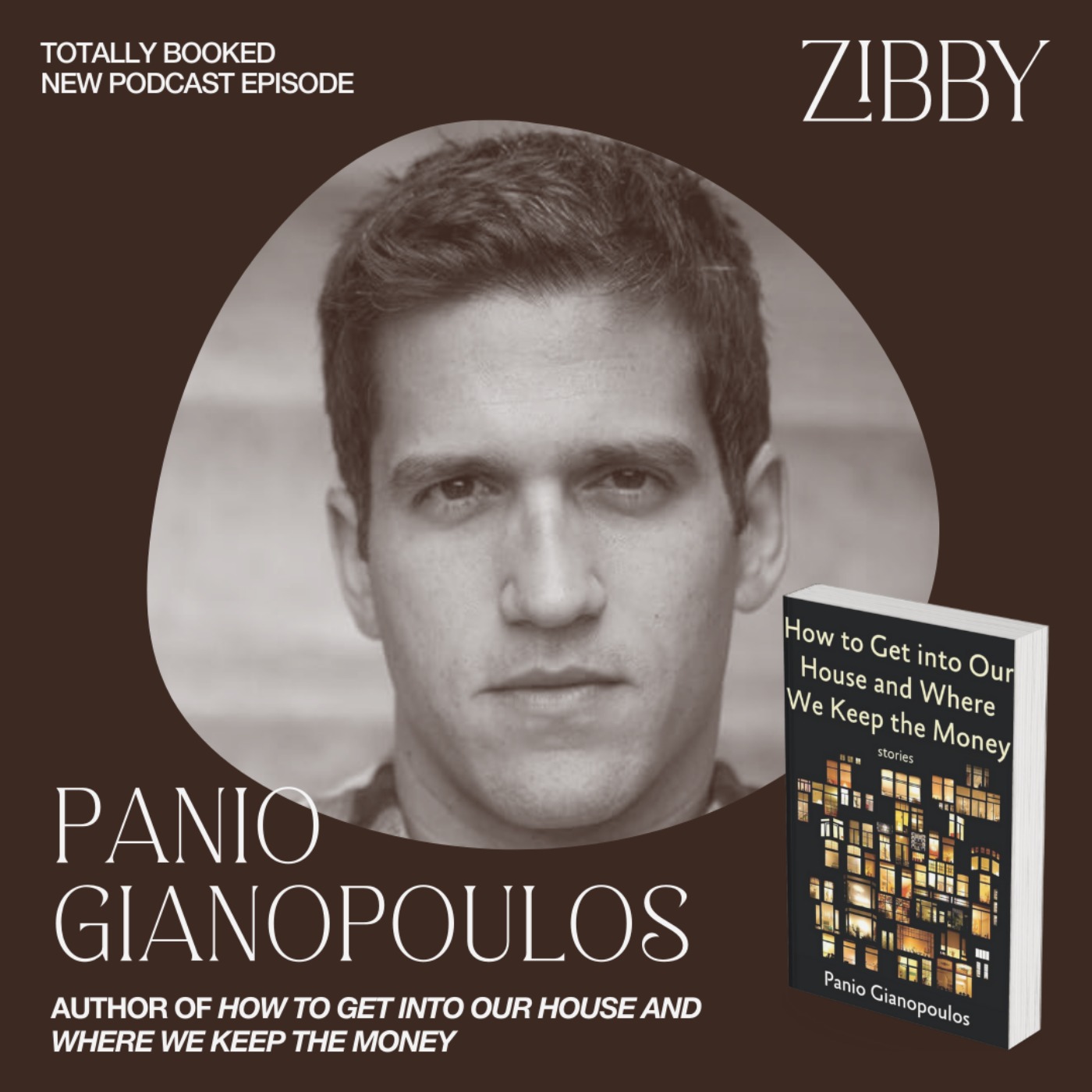
Totally Booked with Zibby
From Working in Publishing to Entrepreneur (and Author!) with Panio Gianopoulos
00:30:51
Loading summary
Transcript98 lines
- [00:01]
Zibby Owens
Hey everyone, it's Zivi. I am so excited to tell you about something I've created just for you, the Zip Membership program. Zip stands for Zivi's Important People. It's for anyone who loves books, stories and wants a little peek behind the scenes at what I'm up to and what's on my mind as a Zip member. You'll get exclusive essays, a new podcast called Zivvy's Voice Notes. No interviews, just usually discounts at Zibby's Bookshop, a free ebook, and more perks. I wanted to create a space to connect authentically and deeply, and I'd love for you to be part of it. If that sounds like your kind of thing, become a Zip today. You're already important to me. Now let's make it official. Go to zibioens.com and click subscribe. And if you already subscribe, you can upgrade to the membership program. And now onto today's episode of Totally Booked with Zibby. Thanks for listening.
- [00:56]
Boost Mobile Announcer
The longer you stay alive, the longer you can enjoy Boost Mobile's unlimited plan with a price that never goes up. So here are some tips. Do not parallel park on a cliff if you want to enjoy an unlimited plan with a price that never goes up. Do not mistake a wasp nest for a pinata if you want to enjoy an unlimited plan with a price that never goes up. Do not microwave a hard boiled egg if you want to enjoy an unlimited plan with the price that never goes up. Stay alive and enjoy Unlimited Wireless for $25 a month forever with Boost Mobile. After 30 gigs, customers may experience lower speeds. Customers $25 a month as long as they remain active on the Boost Mobile unlimited plan.
- [01:26]
Sarah Gibson Tuttle
Who here loves when their nails are done perfectly? Me. I'm Sarah Gibson Tuttle and I started Olive in June because let's be real, we all deserve to have gorgeous nails. But who wants to spend a fortune or half their day at the nail salon? That's why I created the Gel Mani system. So you can have that salon quality gel manicure right at home. And guess what? The best part? Each mani only costs $2. Yep, you heard me. $2. No more 60, 70, $80 salon trips that eat up your day. Now you can paint your nails whenever you want, wherever you want. And trust me, you're going to be obsessed with your nails and everyone is going to ask you where you got them done. And here's a little something extra. Head over to OliveAndJeune.com and get 20% off your first gel mani system with code DIYGEL20. That's code DIYGEL20 for 20% off your first mani system at OliveAndJeune.com DIY GEL20.
- [02:20]
Panio Giannopoulos
Foreign.
- [02:24]
Jenna Bush Hager
Hey guys, I'm Jenna Bush Hager from the Today show and I'm thrilled to bring you my podcast, Open Book with Jenna. Every week I sit down with fascinating people, authors, celebrities and friends to talk about life and the books that shape them.
- [02:37]
Panio Giannopoulos
If you love great conversations and discovering.
- [02:39]
Jenna Bush Hager
Your next favorite read, join me on Open Book with Jenna. Listen now wherever you get your podcast.
- [02:54]
Zibby Owens
Hi, this is Zibby Owens and you're listening to Totally Booked with Zibby, formerly Moms don't have Time to Read Books in my daily show, I interview today's latest best selling buzziest or underrated authors and story creators whose work I think is worth your time. As a bookstore owner, publisher, author and obviously podcaster, I get a comprehensive look at everything that's coming out and spend my time curating the best books so you don't have to stay in the know, get insider insights and connect with guests like I do every single day. For more information, go to zibbymedia.com and follow me on Instagram Ibbeowensk Panio Giannopoulos is the author of how to Get Into Our House and Where We Keep the Money, a short story collection, and the indie bestselling novella A Familiar Beast. His writing has also appeared In Tin House, McSweeney's Northwest Review Weekly, humorist and Literary Hub, among others. A veteran book editor, Panio has worked with authors as diverse as Anthony Bourdain, who taught him how to make linguine Vanglay Chelsea Handler, who made him blush, and and J.T. leroy, who turned out not to exist. Currently he is the co founder and editorial director of the Next Big Idea Club, a nonfiction subscription book club. He lives in New York where he is writing a novel about a multi generational Greek American family. It's a long book, it's taking a while. Welcome Panio.
- [04:22]
Interviewer
Thank you so much for coming on Totally Booked to talk about your whole career, your books, your business, everything, including.
- [04:29]
Zibby Owens
How to get into our house and.
- [04:31]
Interviewer
Where we keep the money, our collection of short stories.
- [04:33]
Zibby Owens
Congrats.
- [04:34]
Panio Giannopoulos
Thanks for having me. I'm excited to talk about books, my book and just books in general because my whole life is about books. Kind of like yours, where every capacity. So yeah, let's do it.
- [04:44]
Interviewer
Okay, well back up. Why is your life about books?
- [04:47]
Panio Giannopoulos
Well, so my career. I've been in publishing pretty much since I Got out of college. I started as an assistant editor way back at Crown at Penguin Random House. And then I was a book editor for years at Bloomsbury. And then I went off to business school, which is kind of a weird angle for literary people. I know. You did that too, right? So I went to Stanford and then. And that got me all jazzed up for entrepreneurial stuff because they sort of indoctrinate you. Like, change the world. So I started a couple media companies with a friend, which sounds more glamorous than it is. Nothing happened with them. We didn't make any money. We lost our investors money. Sorry, guys. Yeah, that sounds very LA glamorous. Yeah, nothing came of it, except we did. This was when the Kindle had just come out. And so we were doing essentially serialized YA novels with these authors. And then the idea was that our investors were a production company so they would get a first look. Nothing came of it. What we were really good at, it turns out, is sourcing talent because a lot of our writers ended up being really big. Like, Kate McKinnon was one of our writers. Oh, wow, right? Super funny, super smart. This is before she got an snl.
- [05:52]
Interviewer
Oh, my gosh.
- [05:53]
Panio Giannopoulos
She wrote two of our books. And she goes, oh, hey, I can't write the third one because I gotta go audition for snl. We're like, okay, fingers crossed. And she's like, hey, I got it. Like, okay, I guess we'll never see you again. So we didn't. Anyway, so I did all that. And then eventually I came back to New York. I'd been living in la, and I thought, okay, well, I'm done with publishing. I'm done with books. I'm going to do something totally different. And then a friend of mine who's a journalist in the New York Times, she said, hey, you should meet this guy. I know. He ran Nerve for a while and he's in the media space and he's looking for a publishing thing. I was like, yeah, I don't want to do publishing anymore. She goes, oh, just meet him. He's an interesting, smart guy. I was like, okay, fine, whatever. I'll get lunch. Never hurts to just chat with somebody. So I went and I sat down with him. His name is Rufus Griscom. And he said, oh, yeah, I'm thinking about doing this, like, nonfictions sort of network for authors. And. And he. And he said, but I need someone who's really editorialist, editorially experienced, and knows the book world inside out, but also has business background. I was like, okay, it's kind of like the Venn diagram. I'm your guy. So I, you know, it's like it's always when you don't want something that it shows up. Like, you know, you don't. Like you're not looking for a girlfriend or boyfriend and suddenly the perfect person meets you. You're not looking for a job, Suddenly it jumps in your lap. Look for a job. You'll spend a year not finding one. So I thought, oh my God, this is great. So I started with that. And so then the past nine, ten years I've been working at a company called the Next Big Idea Club, which is essentially a nonfiction book subscription club. And that's been fascinating because I've always been a fiction devotee. Like I've loved novels. I always published first time novelists. That's been my passion. I write fiction. But for the past decade I've just lived in the trenches of nonfiction. And I mean, obviously it has its strengths and it's got its charms. I feel like I've sort of done both now so deeply that probably the next thing would be for me to actually write a nonfiction book. But I don't want to. I like novels too much. I like making things up. Wow, that was a very long answer.
- [07:38]
Interviewer
No, it's perfect. By the way, I just bought the next big idea, like three pack for my brother for the holidays.
- [07:45]
Panio Giannopoulos
Oh, I love that.
- [07:45]
Interviewer
Yeah.
- [07:45]
Panio Giannopoulos
Oh, great.
- [07:46]
Interviewer
So I'm very excited. He's gonna love it.
- [07:47]
Panio Giannopoulos
Thanks.
- [07:48]
Interviewer
Anyway, actually I shouldn't. On the offhand chance he's listening. He'll find it, but he won't be anyway. Okay, well, let's go to your fiction for a few minutes because you are actually, I shouldn't say actually, you are a really talented writer. You're a beautiful, beautiful writer. Beautiful sentences, insightful. The way you write about relationships and longing and sort of all the subversive behavior and the things people don't say and sounds like you're such an auditory writer. Like this. Of that. The sound of this. It's a very immersive writing style and you're really good at it.
- [08:25]
Panio Giannopoulos
Thank you so much. That's really, it's nice to hear because I've been working on a new novel for about eight years and you know, writing, unlike acting or performing or musician, like there's no audience until you bring up the book. So I'm just writing these sentences after sentences and it's just like an empty auditorium. Like, is that good? Like no one's clapping, no one's smiling, no One's laughing, like, am I crazy? So it's nice to hear something positive about something I've written.
- [08:48]
Interviewer
I've interviewed two author pairs this week, actually, and both of them said the main thing, because they've all written separately, is that there's finally someone there to.
- [08:55]
Jenna Bush Hager
Be like, that was great.
- [08:56]
Interviewer
What a great chapter.
- [08:58]
Panio Giannopoulos
I know it's really hard to just. I know it sounds so childish, like, oh, you know, I want someone to clap for me. It's not that. It's just writing, storytelling. It's a kind of communication, you know, It'd be like, imagine you're sitting down with a really good friend and you're gonna tell them an anecdote. It's gonna take you three years, and they're not gonna say anything for three years. They're not gonna be like, wait, tell me more, or really? Or what? It's just. It's unreasonable as a pursuit to talk to somebody for that long and not get some sort of feedback, get some sort of connection with them.
- [09:28]
Interviewer
I mean, you might want to join, like, a writing group or something. Just saying.
- [09:31]
Panio Giannopoulos
You're right. No, I actually. I did start a writing group myself in my hometown about six months ago, and that has been really wonderful, actually. That's been great. I underestimated how incredibly helpful that is.
- [09:43]
Interviewer
I'm always a little afraid to share, though, because until it's done, it's like jinxing it.
- [09:49]
Zibby Owens
I don't know.
- [09:50]
Interviewer
Do you feel that way?
- [09:51]
Panio Giannopoulos
Well, that's a different thing. Jinxing. I just worry that it takes me so many drafts to get where I'm going. Like, the first story in my collection almost didn't. I almost didn't include it because it took me, honestly, 12 drafts to get it right, or as right as it gets. And I kept writing it and rewriting it, and I thought, no, this isn't right. The tone's off. No, the ending doesn't work. And I was about to give up, like, draft 10, and then finally I got there, but I just muddled through it myself. And so I thought, what if I gave draft three to somebody and they're like, oh, you should bring in a mother figure or something? And then I'd think, oh, gosh, should I bring in a mom? And I just. I guess I worry about being misdirected. Like, I feel like the struggle and the wandering and the false starts and the weird turns are sort of all part of the process of getting there, because it's so intuitive to me, like, the process of writing. And sometimes I just don't want to be overly influenced.
- [10:45]
Interviewer
I loved your first essay, by the way. I mean, I loved. I mean, not essay, story. I loved many of them. But was there something different with, like, the plot aspects? Like, was, like, what did you rewrite? Now I'm so curious. How could there be 12 drafts of this, right?
- [10:57]
Panio Giannopoulos
It's funny because I don't. I mean, I'm glad you liked it because I really. Afterwards, you're not supposed to, like, express your regrets.
- [11:04]
Sarah Gibson Tuttle
Right?
- [11:04]
Panio Giannopoulos
But I'm going to. I thought, oh, I shouldn't have put that one first.
- [11:07]
Interviewer
No, it was really good.
- [11:08]
Zibby Owens
Really?
- [11:08]
Panio Giannopoulos
It was okay. I thought it was just too, like. Not to say complex. But some of the other stories are much more straightforward, you know, like Murmur, which I wrote later, is just kind of almost like a coming of age story. It's very sweet. It's very, you know, like, you know what you're getting. And that story, you're like, wait, like, is she good? Is she bad? Am I on her side? What's happening? I just worried, like, is it. It's not like a. Like, Come into My house. I mean, that's the title of the book, right? How to get her. It's not like, come in, come in, welcome. Like, Venus and Fur is like a funny story about a guy who's competitive with his girlfriend's tiny little Pomeranian. Like, that's a very straightforward, like, entertaining. And I guess I worried that this story, and that was my struggle when I was writing. It was like. It almost felt like it needed to be a novel because you needed the emotional complexity of, like, here's this woman and she's like, muddling her way through her life. She's, you know, not to give anything away. I mean, you find out she's having this affair with this guy she meets. She doesn't really know why she's doing it. You don't really know much. Cause you don't get her husband's perspective, right? You just get her interior life as a mother. And then there's this twist where. Cause I always thought this was interesting when you. Cause I did see this in real life around me, I'd see people where, like, they were happier when they were having an affair. Like, you're not supposed to say it's like a dirty secret, right? Because it's sort of like. It's like a steam valve. Like whatever resentment she has towards her husband or her family or her situation, kind of get relieved by this exciting thing she's got going on. So I thought, what an interesting kind of reversal or inversion. It's like, here's this woman, and actually her life is going better because this is going on. She's not wracked with guilt, I guess I worry a lot about stories that feel like they're kind of moralistic fables. I don't really feel like that's what fiction's about. I feel like there's kind of two different kinds of fiction. And I know that's a guaranteed bad idea to say. But I feel like there's fiction that represents the world and human behavior and all of its contradictions and messiness and dirtiness and beauty. Don't get me wrong. And all the wonder. And then there's fiction that's kind of like how we want the world to be, right. It's like this is a fantasy version of it. I don't mean elves and dwarves. I just mean, wouldn't it be great if we behave like this? And wouldn't be great if, like, the good guys win at the end. Wouldn't it be great if all this happens? And I've always been attracted in my reading as a. You know, to a fiction that just shows you everything. Shows you the good and the bad and shows you that a person, at one moment can be wonderful and kind and another moment, they can be petty and selfish. And all those contradictions we have are so challenging to write in short fiction because you have very little time to establish enough of a pattern of behavior. So someone says, okay, I know who this character is. She's the kind of person who does this. And that's got it. But then you need to throw in the contradictions because we are not perfect little machines. And we have all these strange turnabouts within us. And it's really hard to do it. So with that story specifically, I thought, how do I create this Persona? How do I show this person who is really multifaceted and there's so much going on in her life and she's all these different people and make it believable. And you still kind of sympathize with her to some degree.
- [14:15]
Interviewer
Well, I think you totally did that, by the way. And I feel like in showing all these tiny scenes, like, I'm trying to analyze what it is you did that made that happen. Like when she's hiding in the bathroom and she's on the phone and she doesn't know how to deal with, you know, her old friend. Does she tell? Does she not when she was feeling so frustrated. And it's like, I'm like, to your point, Like, I was a better mom before. Now I'm snapping at my kids because of this. I mean, you have us go through all of her doubts and the longing that she feels because at our core, most of us want to be happier than we are.
- [14:51]
Zibby Owens
Right.
- [14:52]
Interviewer
That is a driving force. And that's, like, what she's after. And so you're kind of rooting for her even though it feels wrong a little bit.
- [14:59]
Jenna Bush Hager
I don't know.
- [14:59]
Panio Giannopoulos
Right. If you feel a little guilty. I know. Me too. I cared for her. It's weird. You care for your characters even though you invent them. And also, I mean, the story is about. It's called Another Life. Right. And I mean, who hasn't had that thought of, like, oh, what if I totally changed my life? What if I just blew it up and then went off and just did this instead? And then, of course, there's the what if I hadn't done this? What if I didn't move here? What if I went to school here instead? And, I mean, that, to me, is the heart of fiction. It's like the what if? That's what always compels me as a writer.
- [15:33]
Interviewer
I mean, I actually did blow up my life and change it completely and a completely different life. So maybe I'm relating to some of this.
- [15:41]
Zibby Owens
No, I'm kidding.
- [15:41]
Interviewer
But, yeah, because you never know. I mean, and it doesn't have to be set until, like, there's no. There's no one who says it's ever too late.
- [15:49]
Panio Giannopoulos
Right.
- [15:49]
Interviewer
That you can always take a new path. And so. Yeah, yeah, but why? I mean, you're saying, oh, I felt like it was hard to fit these characters into short form. Like, I don't. Short fiction is the thing I haven't done since, like, high school, basically, because it feels like it's so much harder, actually, as you said, to get it done quickly. So why. I mean, it's not like this was.
- [16:11]
Jenna Bush Hager
An assignment for you.
- [16:11]
Interviewer
You, like, chose to do this. Why did you choose to make a collection of short stories rather than a novel at this point? What compelled this collection to begin with?
- [16:21]
Panio Giannopoulos
Okay, well, the truth. So, honestly, as a writer who works in publishing, I knew that publishing a story collection was really stupid tactically, because it's very hard to sell short story collections unless you're, like, George Saunders or Jhumpa Lahiri. Like, you're not going to sell many copies. So I thought, okay, like, career wise, this is dumb. But the truth is that I wrote one novel, like, in my early 20s, tried to sell it, couldn't sell it. Fine. Then I wrote a kind of a second novel after that, which was really tepid and boring because my first book kind of got rejected because there was, like, too much sex and violence. And it was kind of. And the guy's like, no, no, I'm not interested in this, like, angry young man novel. It's like, okay. So then the next one, I was like, oh, I'm going to. I'll show. I'll make this really boring. Nailed it. Nothing happened. It was like, the tension wasn't great. So then that didn't sell either. And at that point, I was in my early 30s, and I had a career, I had a child. So I didn't have time to write a novel. I mean, that was the truth. I thought, okay, I just have to stick with these little things I can actually work on on weekends. So it was really just the nature of my life. I mean, if I could have taken six months to work in a book, I probably would have tried a novel again. But what I found was I liked stories because they let me pursue a question or an idea or just a hunch and then follow it to its end. Whereas with a novel, as, you know, you've written novels, it takes a few years. It's such a commitment. It's like, oh, if writing a story, you can think. Here's an example. There's a short story I want to write, but I started it. But then I put it aside because I've been busy with a novel. But the idea was, I was picking up my daughter from soccer practice. She was 14 at the time. And I pull into the parking lot, and I'm early, so I'm just sitting there by myself. It lives in a small town. And suddenly I see a crow. Okay, the bird, right? And it just lands, like, in a tree nearby. And I get really excited because I think, oh, everybody says crows are really smart. And if you befriend a crow, then it tells other crows. And then suddenly, all the crows love you, and you're just like, a crow bestie. And so I thought, I'm gonna befriend this crowd. And how do you befriend a crow? You, like, give it snacks, right? That's how you befriend animals. So I'm looking at my car, and I'm looking. I was like, God, I need snacks. I need snacks. All I have is, like, a power bar. So in, like, one of those, like, quest bars are all, like. They almost look fake. And we're like. So I was like, all right, whatever. So I break off a piece of chocolate chip cookie power power bar. I get out of the car and I put it on top of, like, this little, you know, this little, like, stair. Little stone staircase. And I back up enough so it's not intimidated by me. And I'm like, hey, crow, here's your little snack. The crow waits a little bit, flies down, looks like, observe. Looks at the thing and is like, nope, flies away. And I was devastated. I was like, ouch. I just got rejected by a crow. This sucks. So then I spent the next few days, like, looking, panning the skies, looking for a crow, thinking I want to redeem myself. Like, I started. I had crackers in the car. Now I'm like, I'm going to make friends with the crow. About a week or two later, I'm in a totally different town again. Pick my daughter. You know, this is. As a parent, you're always driving your kids around, especially in the suburbs. And I see a crow, I'm like, oh, great, great. A bunch of them, they're all on this rooftop. So I start flinging crackers like they're Frisbees. Just, like, flinging them on this rooftop. And they just could not give a crap. Like, they were just not. I was like, crackers? You're turning down crackers? So I got in my car. I gave up on becoming crows, becoming the crow friend. But then I thought, oh, there's a story there. Like, why is this person obsessed with becoming friends to crow? Like, so then I wanted to back into, who is this guy or girl? I mean, I don't know what the gender is yet of the character. What's happened to them that, like, this is their last chance. Like, how socially isolated that they need this. Then I started developing this guy, and he plays video games a lot. And his son is going to leave for college soon. So it's a bit of, like, a preempty nest thing. And maybe he's a little estranged from his wife. And I started putting together the story. Long answer your question. That, to me, is where stories come from. I thought, okay, I can spend a few weeks and just figure out, who's this guy? Why is he obsessed with crows? The guy is you, but he's not anymore. That's the thing, though.
- [20:24]
Interviewer
But I'm interested in, like, why were you trying to get the crow's attention so badly? Like, let's. Let's go there.
- [20:31]
Panio Giannopoulos
Let's go on to the crow. I mean, I don't know. I've always wanted a Crow as a friend. You know what? It's the same. Okay, here it is. It's probably a desire for some kind of validation, right? Like. Like, you know when you go to somebody's apartment for, like, a dinner or something, and they have a dog and the dog comes in and everyone secretly wants the dog to like them the most? Everyone's, like, petting the dog. And then when the dog, like, goes over to somebody else, you're a little bit like, oh, I'm not enough for this dog. Right? The dog loves this person more. So I'm sure it's some spin off of that. Like, I mean, you're not my therapist. I don't know what. Where that crow friendship desire comes from, but a lot of my stories come from that. Like, I'll have a weird little impulse, and then I'll think, and then I'll back it. I'll back up, think, well, where did that come from? And then I'll fictionalize it. And then, as you know, you change enough things, and then suddenly this person's not you anymore. You change their history, you change their dating history, who they're married to, they have kids, their gender, sexual orientation. Eventually, it's like, it's just a. You're just a. A faded memory.
- [21:30]
Jenna Bush Hager
Today's episode is sponsored by Quince. Starting the year with a wardrobe refresh. Quince has you covered with luxe essentials that feel effortless and look polished. They're perfect for layering, mixing, and building a wardrobe that lasts. Their versatile styles make it easy to reach for them day after day. Quince really has all the staples covered from soft Mongolian cashmere sweaters that feel like designer pieces without the markup to 100% silk tops and skirts for easy dressing up to perfectly cut denim for everyday wear. Their wardrobe essentials are crafted to last season after season. Their Italian wool coats are real standouts. They're beautifully tailored, soft to the touch, and built to carry you through years of wear, not just one season. The quality shows in every detail. The stitching, the fit, the fabrics. Every piece is thoughtfully designed to be your new wardrobe, essentially. And like everything from Quince, each piece is made from premium materials in ethical, trusted factories, then priced far below what other luxury brands charge. You've heard me say this before because I'm obsessed with quince, but I love my winter coat, which I wear every day. And I actually just got a blue cashmere sweater as a gift from Quince this holiday season, and I am obsessed. Refresh your wardrobe with Quince. Don't wait go to quince.com zibby for free shipping on your order and 365 day returns. Now available in Canada too. That's Q U I n c e.com Zibby to get free shipping and 365 day returns. Quince.com Zibby today's episode is sponsored by Wayfair. The new year is here. It's time to get back into an at home routine that you love and you can elevate your space with Wayfair. As you all probably know, Wayfair is like my favorite brand and I actually have a whole new storefront that I put together of all of my favorites which you can check out on my Instagram and then go to Wayfair.com to explore. From bedding and mattresses to storage solutions for every room in your house, Wayfair is your one stop shop. Refresh your living room with accent pillows and mirrors and even faux plants. For way less I've refreshed some of my kids rooms with carpets and mirrors and blankets and it's so easy and convenient. Everything that Wayfair has for your home is easy to find and there is a huge selection. Get organized, refreshed and back on track this new year. For Way less head to Wayfair.com right now to shop all things home. That's W A Y-F-A-I-R.com Wayfair every style, every home. And don't forget to check out my storefront.
- [24:21]
Panio Giannopoulos
Boost Mobile is now sending experts nationwide.
- [24:23]
Boost Mobile Announcer
To deliver and set up customers new phones. Wait, we're going on tour? We're delivering and setting up customers phones.
- [24:28]
Panio Giannopoulos
It's not a tour, not with that attitude.
- [24:30]
Boost Mobile Announcer
Introducing store to door switch and get a new device with expert setup and delivery.
- [24:33]
Panio Giannopoulos
Delivery available for select devices purchased@boostmobile.com.
- [24:39]
Sarah Gibson Tuttle
So.
- [24:39]
Interviewer
What was the spark for the story how to get into our house and where we keep the money? Was it the nephew? Was it another kid? Was it?
- [24:50]
Panio Giannopoulos
So a lot of the stories in the book are really about characters who. God this is really embarrassing. I feel like I've made more progress with you emotionally than I have in therapy. But I realize now this is what I'm here for.
- [25:02]
Interviewer
This is what I'm here for. I do this all day.
- [25:05]
Panio Giannopoulos
I feel like a lot of the stories about people who don't feel like they're seen, they feel alienated or neglected and they want attention, they want validation. Right? And so many of them are love stories or sort of flawed love stories because that's so Much what we look for in love, we look for that person to complete us, for better or for worse. So that story was based on when my wife and I were living in LA and we had, I think we just had one kid at the time. Our daughter Matilda and her nephew came to stay with us for a little while. Very sweet guy, by the way.
- [25:33]
Jenna Bush Hager
Not like, I mean, I guess not like this guy.
- [25:35]
Panio Giannopoulos
Not like this guy, he's a sweet guy, but he was into graffiti, which this guy is. He's like a graffiti artist. And he stayed with us and suddenly everybody was like, oh, he's so cool. Everybody, everybody just thought he was the coolest guy. Like, all of our friends thought he was cool. And I remember stepping back and thinking, it's crazy. Like, we're all in our 30s and some of us in our 40s, and we all want this, like, 19 year old to say we're cool, you know? And like, that's bizarre. Like, why, like, why is our obsession with, like, youth culture, like, so pervasive? And then I thought, oh, this would be great. Like, let's have him be jealous of his nephew and let's have it escalate into this almost like farce where he's just stumbling over. So that's where it came from. I mean, it's really not about her nephew, but.
- [26:15]
Interviewer
Right. But the validation when, like, the nephew thinks it's cool that he likes Neil Young or whatever.
- [26:20]
Panio Giannopoulos
Yeah, I was like, why? It's kind of like, you know, like everybody tells you, like, flattery will get you everywhere. Flattery will get. Flattery works on you, even if, you know it's just a technique. Even if, you know someone's, like, saying it, you're just like, oh, stop. You're like, actually, I kind of like this person more now that they flattered me.
- [26:39]
Interviewer
Well, I feel like your use of short story to investigate some of these moments in life is why people write. Right. Isn't that like, aren't we all just trying to make sense of what's going on around us and the issues that we all face and all of that? So when you are taking all of those questions to your new novel, tell me about that and what has propelled.
- [26:59]
Jenna Bush Hager
You to keep working on it for eight years?
- [27:01]
Interviewer
What were some of the inspirations for it?
- [27:06]
Panio Giannopoulos
Right. Well, the new novel is very different than anything I've written because even though, as we've talked about, a story might be generated by an idea or an anecdote or something happens to me, this one is very, very autobiographical in the sense that it's based on my parents. And my parents were originally from Greece, and they came to America, my dad, when he was 19. And so I always wanted to write about them. I thought it was an interesting story, but I didn't really know the way in, because, as you know, like, you can have a great story, but you're like, how do I start it? What's the drama? And then, very sadly, my mom. My mother had a terrible accident. She fell down the stairs, which is so, like, pedestrian. You think, like, oh, people die from, like, cancer. They get hit by a car. But my mom just fell down the stairs. Nobody knows how or why, and she hit her head. She had this traumatic brain injury. This is way back in 2011. And from then on, she was really, really incapacitated. She was in the hospital for a month. I flew to Greece to be with my family. My sister already lives there. And anyway, that was what happened personally to me. And then she started to get a little better, but not really. She was still struggling. And my father, who'd always battled depression but had kind of managed it, then he killed himself two months later. It was obviously devastating. And I felt terrible. I felt guilty. I felt. I was so focused on my mother and her recovery that I felt like I was. Not that I was dismissive of my father. I mean, I was sympathetic to him, but I didn't really understand the intensity of what he was going through. And so I don't know if you've ever survived suicide, had somebody who died. It's a different kind of grief in the sense of, like, you know, somebody dies who's close to you, and you miss them, and you love them and you care about them. But when someone takes their own life, in my experience, you do feel this constant, like, what if. Like, oh, what if I talked to him more? What if I'd stayed in Greece to spend time? So I felt so racked with guilt. And so that from then on, I found that I couldn't write anything. Actually, anytime I would start a story. Cause I was still writing stories, it would constantly veer into. Somebody would die. I mean, it's like, very. I'd start a story about one thing, and then by the end, like, the sister would die, and then I'd start another, and the kid would die. And I'm like, oh, my God. Every time I'm so preoccupied, just unconsciously, that I'm either gonna write nothing or I'm gonna write about this. And so, to be honest, another year went by before I wrote anything, because it was so devastating. And then I started writing this book. And the hard part about it is every time I go into it, I'm like reopening the wound, right? I'm writing about my mother's injury. I'm writing about my father's death. And it's so unpleasant. It's terrible to say. I mean, look, every writer I know says writing is hard and they struggle with it and they kind of hate it and they like it when it's done. But the truth is, I like writing. Or at least I used to. It's music. It's a kind of music, but it has a meaning in it. And you're trying to mix in story. And so the first few years writing the book were just like torture. It was awful. But I felt like there was nothing else I could do. There's nothing else I could write. And then finally, once I got to my second draft, my third draft, years went by and then it just felt like something I just had to get out. Not like it was a poison or a toxin, but it was just. It kept changing my relationship to. It kept changing. And then finally, in this last draft, and I really swear this is my last draft, I'm close. I'm on the last two chapters, I finally had enough distance where it had changed, enough where I could think, okay, this actually isn't me anymore. This isn't a memoir. At one point I thought, should I just write this, his memoir? But I decided against it. You know, I. I changed it enough that I could suddenly start making big alterations that would help the story because I no longer felt personally connected to it. So the mother was really no longer my mother. The father was. No, I was. You know, I break myself into two brothers and I thought, oh, I can make one of these brothers really awful and not feel like I'm, you know, outing myself as a bad person. Because this is a different character for me. And I pray I never have to write another book like this because it has been just like heart wrenching and devastating. Don't get me wrong, I'm proud of it. I like the book, but I would love to write something just a little less close to home and a little less about grief. Wow.
- [31:31]
Interviewer
First of all, I'm so sorry that that happened. And second of all, wait, what happened with your mom after she. What?
- [31:38]
Panio Giannopoulos
That's also sad. In fact, I really, I had to change it for the book. Cause it was too depressing. There's only so much sad to see. So she got a little better. And then she had like A stroke, like a seizure, and then got worse and worse and she just kind of got like worse and worse until eventually she just, she died like two and a half years later. So those last three years were really grim and miserable and really hard on my sister. I will say my sister and I are very close and we're even closer now after having gone through that where, you know, my mother lived with her for a while. We had a live in nurse stay with my sister. And then eventually we put her. She just needed more medical, around the clock care and then she died. And actually that's one of the changes I'm making in the book. And maybe I'm wrong. You can tell me is I thought, I can't have the mother die at the end. That's originally how I ended it because it's just such a bummer. I mean, yeah, I lived through it, but I don't want my readers to live through that. So she's not in great shape at the end of the book anymore, but she's not dead. I just, I can't do it to the reader. You know, obviously the father still dies, but he dies pretty early in the book because that's one of the big moments that kind of brings the children together, the adult children together. I've been calling it like the Greek American Corrections. As a shorthand. Yeah.
- [32:52]
Interviewer
Well, as a book it sounds amazing. As a life, it sounds really hard. So I'm sorry that you and your sister had to go through that and your family, I mean, of course that's what you want to write about, right? How can you. I mean, you have to process, like writing is a tool, right, for all of us to make sense of everything.
- [33:09]
Panio Giannopoulos
So it is. You know, people say, oh, you shouldn't write, you know, it shouldn't be your therapy. And I get that. I mean that. I think that's why it took me eight years to do it. Right. Because I do feel like that first version really was just therapeutic, just getting it out and then. And then you have to go in and think like an actual storyteller. Like, okay, what helps the story, like what makes sense. You stop thinking about what feels good and what actually moves things along.
- [33:31]
Interviewer
One thing I learned from a trauma therapist, this woman, Megan Reardon Jarvis, is that once you put the trauma down on paper, it frees up your brain. And like, I'm sure you know this. Yeah, I'm sure you've read enough nonfiction, but like, it literally is out of your brain and your brain doesn't feel like it has to remember it all the time. So it stops, like, replaying it. It's like it fixes the glitch in the DVD or whatever.
- [33:53]
Panio Giannopoulos
Absolutely. But, you know, a weird little corollary of that I found is I never keep journals. I mean, I'm very inconsistent. And so now my memories of what actually happened have been overwritten a little bit by these fictionalized versions.
- [34:09]
Interviewer
Interesting.
- [34:10]
Panio Giannopoulos
So this, like, the moment I had with my mother in the hospital when she finally woke up from the coma, she was in a medically induced coma for a month. So when she woke up, she looked at me, and she was startled, and she looked around. She had no idea where she was. Right. The last thing she remembered was, I guess, being on the stairs. And she looked at me, and I held her hand. I'm like, hey, mom, it's okay. It's me. You're in the hospital, but you're gonna be okay. And, like, slowly saw the pan subsided in her eyes, and she calmed down. And then she shut her eyes, and about 15 seconds went by, and then she opened her eyes again, and the same thing happened. She looked around, she didn't know where she was. It was like Groundhog Day. And I had to just keep reassuring her and reassuring her, and I'll never forget that. I mean, talk about a core memory. Like, it was devastating. And I was so worried about her, but I was also so grateful that she finally woke up. And then I changed that scene for the book at one point. I kind of changed it back eventually. And I remember thinking, like, wait, what happened? Like, what happened in my life and what happened in the book? And that's one of the dangers of. Personally, I feel like if you're going to write something that is heavily autobiographical, just take a weekend and even just bullet point what actually happened in your life. So you can just go back when you're done with the book and be like, okay, but these are my memories. Right? The book is not my memories. The book is a fictionalized, modified account. Because memory is so plastic and so impressionable that it's a little scary to think, like, oh, yeah, I can rethink my way into different memories.
- [35:27]
Interviewer
Okay, so basically, I could talk to you all day about the stuff. We've, like, barely scratched the surface, and our time is already up. Oh, my God, our therapy session is over. Penny, I'm really sorry to say I hope we've made some good work and hope to meet back here another time. But, you know, all that you've done with Next Big Idea Book Club and, like, all the authors you've helped and your Author Insider, like, all the stuff you do is so awesome and so helpful and it's just nice to see you as author in this little thank you session.
- [35:53]
Panio Giannopoulos
Oh, yeah, can I give a little shout out to Author Insider? It's this yes, of course. Newsletter substack that I've been running for about six months now. And it's just for, it's for authors. We have about 3,000 members. And I talk to people in the publishing industry, I talk to writers and some craft stuff. And it's been really nice because as I said earlier, like, it feels very isolating. So it's been a place for me to kind of share and create this big author community. So it's called Author Insider. If anybody wants to talk, I love.
- [36:15]
Interviewer
Your thoughts on book publicity. I'm like, okay, I'm going to change my strategy here. Thanks to interview.
- [36:20]
Panio Giannopoulos
Yeah, I was, I was like, okay.
- [36:22]
Interviewer
Yeah, good to know. Very good to know. Penyo, thank you so much. And I can't wait to read that novel. Good luck. Keep going. Okay, thanks. Okay, bye.
- [36:31]
Panio Giannopoulos
Bye.
- [36:32]
Zibby Owens
Thank you for listening to Totally Booked with Zibby, formerly Moms don't have time to read books. If you loved the show, tell a friend, leave a review, follow me on Instagram, Iby Owens and spread the word. Thanks so much. Oh, and buy the books.
- [36:55]
Boost Mobile Announcer
If you're the purchasing manager at a manufacturing plant, you know having a trusted partner makes all the difference. That's why, hands down, you count on Grainger for auto reordering. With on time restocks, your team will have the cut resistant gloves they need at the start of their shift. And you can end your day knowing they've got safety well in hand. Call 1-800-GRAINGER click granger.com or just stop by Grainger for the ones who get it done.
- [37:24]
Zibby Owens
Flowers die in three days. Matching underwear from Meundies. That's a gift that lasts. Meundies creates matching prints for couples and friends. Same adorable designs in different cuts for each of you. All made from their signature ultramodal fabric that feels impossibly soft. With 30 million pairs sold and 90,000 five star reviews, MeUndies matching prints are the perfect gift. Valentine's Day is February 14th, so don't wait. Get exclusive deals up to 50% off at Meundies.com acast code acast that's Meundies.com acasta code acast did you know that.
- [38:07]
Panio Giannopoulos
Parents rank financial literacy as the number one most difficult life skill to teach? Meet greenlight the Debit card and Money app for families. With Greenlight, you can set up chores.
- [38:18]
Jenna Bush Hager
Automate allowance and keep an eye on your kids spending.
- [38:21]
Panio Giannopoulos
With real time notifications, kids learn to.
- [38:23]
Jenna Bush Hager
Earn, save and spend wisely. And parents can rest easy knowing their.
- [38:27]
Panio Giannopoulos
Kids are learning about money. With guardrails in place. Sign up for Greenlight today@Greenlight.com podcast.