Loading summary
Transcript46 lines
- [00:01]
Zibby Owens
Hi, this is Zibby Owens and you're listening to Totally Booked with Zibby, formerly Moms don't have Time to Read Books. In my daily show I interview today's latest best selling, buzziest or underrated authors and story creators whose work I think is worth your time. As a bookstore owner, publisher, author and obviously podcaster, I get a comprehensive look at everything that's coming out and spend my time curating the best books so you don't have to stay in the know, get insider insights and connect with guests like I do every single day. For more information, go to zibbymedia.com and follow me on Instagram. Iby Owens hi everybody, this is one of the Replay bonus episodes to get you through the holiday season. Maybe you missed some. There have been over 2000 episodes. We are going into a rebrand where we're going to be changing the name of the podcast from Moms don't have Time to Read Books to Zibby's Podcast. So that is happening in the New Year. In the meantime, have a listen, enjoy and let me know what you think. Bye.
- [01:11]
Gina Yashere
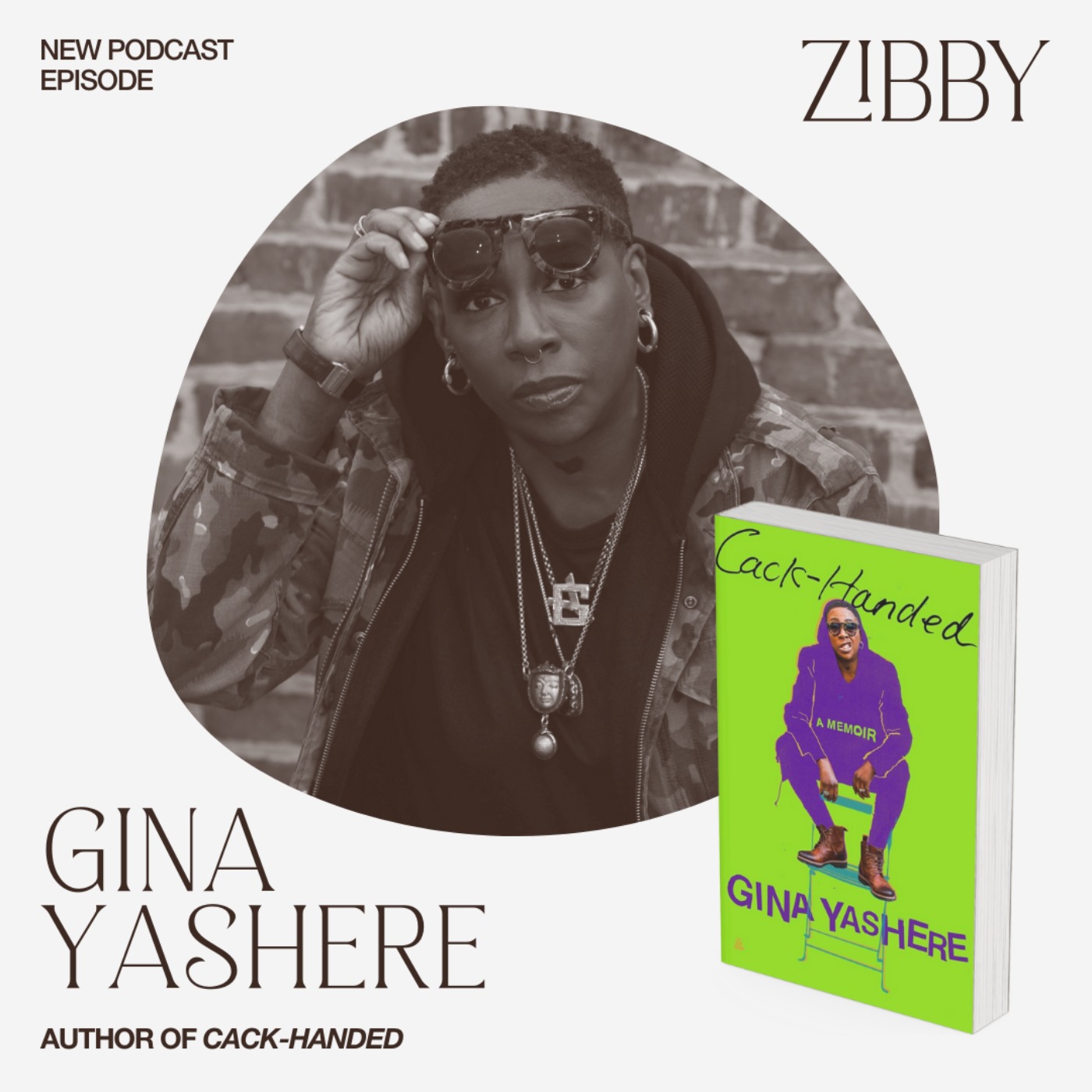
Gina Yashere is the author of Crack Handed, a Memoir. Born and raised in London to Nigerian parents, she previously worked as an elevator engineer for Otis. Gina has been a standup and TV star in the UK for numerous years now with appearances on iconic TV shows such as Live at the Apollo and Mock the Week, as well as creating and performing performing the hugely popular comedic characters Tanya and Mrs. Omo Kerade on the Lenny Henry Show. She broke onto the American comedy scene with her appearances on Last Comic Standing on NBC where she made it to the final 10 and then never went home. Gina went on to be named one of the top 10 rising talents in the Hollywood Reporter. She's also known in the US for being the only British comedian to ever appear on the iconic deaf comedy Jam, as well as for her hilarious appearances on the Tonight show and Crashing on on hbo. Gina self produced three separate one hour stand up specials, Skinny Bitch, Laughing to America and Ticking Boxes, two of which are currently streaming on Netflix. Gina's fourth Stand up special is also streaming on Netflix as part of the Stand Up Season two and is garnering rave reviews on the network. She's regularly featured on Comedy Central as the British correspondent on the Daily show with Trevor Noah and is also an in demand voice artist. She has voiced characters in various animations including Keisha in the British cult hit Bromwell High and Gravel in the latest movie from the makers of Wallace and Gromit And Chicken Run Early Man. She can currently be heard playing a starfish called Gareth on the children's ITV show the Rubbish World of Dave Spud. Gina has performed for audiences not just in Europe, the US and Australia, but she is in fact a highly sought after comedian in Asia, making numerous sold out appearances in Singapore, Cambodia, Vietnam, Malaysia and Hong Kong. It's a wonder she found the time to pick up her fourth award in a row for Best Comedian at the recent Black Entertainment and Comedy Awards in the uk Gina has performed numerous times the prestigious Just for Laughs Comedy festival in Montreal and Toronto. Feature film appearances have included Kiss Kiss bang bang and Mr. In between. And she has also appeared in the West End stage in the Vagina Monologues. Gina currently resides in Los Angeles where she is producing, writing and acting on the new sitcom Bob Abishola, which she created with Chuck Lurie and is currently airing on cbs.
- [03:21]
Zibby Owens
Welcome Gina. Thank you so much for coming on. Moms don't have time to read books to discuss. Kak Handed a memoir.
- [03:28]
Gina Yashere
Yeah, thank you. Thanks for having me.
- [03:31]
Zibby Owens
Of course. Would you mind telling listeners a little bit about your memoir and why you even decided to write one?
- [03:38]
Gina Yashere
So the memoir is basically it covers my first sort of the history of my parents, so slightly covers the history of Nigeria, where my parents came from, and then their journey to England where they met, they had me. And then so it covers my, the first sort of, I'm gonna say, 25 years of my life just growing up in London, England in the 70s, you know, being chased by skinheads. Racism was super, you know, at the forefront of everything at the time. And my experience through school, you know, then becoming an engineer, I worked for Otis who make elevators. I was repairing and building elevators as an engineer and I was their first woman engineer in their hundred year history in the uk. So. So my experiences on that job as a woman and a black woman on that, and you can just about imagine what that was like and then my foray into comedy and my experiences in comedy. So basically it's a humorous memoir, but it also covers pretty dark subjects as well. So it's a bit of both. And the reason why the book is called Cat Candid is because I'm left handed, which is an old English word for left handed. And in many cultures, African culture, Indian, Middle Eastern, the left hand is the hand is the unclean hand is the hand that's supposed to be used to wipe your bum when you go for a poo. And cac is another word for poo. Hence cac handed and also it's a metaphor for how my life and career has gone. Because you know, cac handed also means awkward and clumsy. I don't think we are awkward and clumsy. I just think it's because we live in a right handed world. If I'm next to you at a bar and I'm talking and I'm gesticulating with my left hand, I'm probably going to knock over your drink because you put it on your dominant side, which is your right side. But because 90% of the world or whatever is right handed, we're the ones seen as awkward and clumsy. So that's the meaning of the word. And so kakan it as kind of a metaphor for the light. The route that my life has taken, my career, you know, it's never been a straight line. I've had to circumvent loads of obstacles, jump over obstacles, get under obstacles, dig around them. So that's why I call the book that.
- [05:43]
Zibby Owens
Wow, excellent. I will never look at a left handed person the same way again, basically.
- [05:48]
Gina Yashere
Exactly.
- [05:48]
Zibby Owens
Yeah. You're like rebranding all the left handed people everywhere. Maybe not in such a positive light, I'll have you know. But that's okay. You know, one scene that really stood out to me was when the girl in one of the classrooms leaned out of the window and started just saying racist awful stuff to you and you decided to just run right up there. The teacher turned a blind eye and just kind of beat the living daylights out of this girl.
- [06:19]
Gina Yashere
I did.
- [06:19]
Zibby Owens
And then almost got arrested and had your life sort of take a completely different tack. And then you end up trying to sort of kill yourself and then having to pretend that you are unconscious even to the paramedics. Oh my gosh. Wait, tell me more about that whole situation.
- [06:39]
Gina Yashere
Well, you know, that incident was a culmination of years of abuse at school, years of being called names because my parents were African and very visibly African. My name was African. You know, it was years of abuse at school. Spent my years fighting people at school. You know, it was either fight or be bullied. And so I was one of those kids, I was like, well, I'm going to be the crazy scrapper because that way I won't get bullied. So if anybody even said anything to me, I'd immediately launch myself, myself at them. And then that stopped me being bullied because people go, oh no, don't mess with her, she's crazy. But they'd laugh at me and call me names behind my back or whatever. But they were like, don't mess with her. She'll attack you. She's crazy. And then as I got older, I switched that tactic and started switching more towards humor and using my humor to keep us. Like, people are laughing at me or at least laughing. If I'm making them laugh, at least they're not abusing me. So that's how my humor developed. But, yeah, this was like the last. Pretty much the last day of school. I was doing my exams, and it was just before the summer holidays, summer vacations, and so I was feeling good. I was doing my exams. I wasn't in school uniform because to come in to do your exams, you didn't have to wear the school uniform. So I picked out a cool outfit, put together, and I was. I'd finished, just done an exam. I know I passed it. I was feeling good, and I was walking through the playground. I'm on my way home. And all the other. The rest of school was in class. You know, they were in class, and this girl just leaned out the window and just started screaming abuse at me. And I'm like, I'm here in my outfit that I spent hours picking out. I'm feeling good. I passed my exams. I'm feeling positive. I'm about to go into a new journey in my life, and this girl is just dragging me back to the gutter. And I kind of just lost my temper. And she'd been one of the, you know, the main proponents of the abuse over the years. So I was like, all right, I'm done. I'm not taking this anymore. And I went up into her classroom and we got into a fight. But the fury that just I unleashed on her, she stood no chance. And the teacher. And, yeah, she was in a maths class, I believe, at the time. And the teacher did nothing. I mean, he was. I think he was Moroccan. He was an African teacher, too. So I'm sure that he'd also been, you know, subjected to some of that anti African abuse that she loved at me. So I got the feeling that he. He, you know, he pretended. Oh, Gina, stop. But he did nothing to stop me. He just kind of stood by and let it happen. And afterwards he was like, okay, off you go. And then. But he still reported me at the end, which really annoyed me. I was like, you let me do what I do. And you could at least kept quiet about it. But I suppose he had to keep his job, so. And that's what happened. And then that was just before my exams, and I was supposed to be coming back to that school as a. I mean, the years set up is different between England, America. But I was coming back to do my advanced levels, which was exams that you study that get you into college. So the first set of exams is just to get to see whether you're going to go to work or go to college and go and do vocational qualifications. So I was coming back to do my advanced levels, which would have got me into college, and I was supposed to be doing it at that same school. But after that fight, I got called into the head's office and was like, and they told me, you, you can't come back to do A levels here, so you're pretty much expelled. I was told to leave the school. Deep down, I didn't care because I hated that school. I'd spent, you know, five years being abused every day at that school. So I wanted to go to another school to do my A levels, but my mother wasn't having it. She was like, no, this is a good school to stay in here. So it was like the universe was saying, now you're going to go somewhere else and then start a new life. But my mother didn't see it that way. So she was furious and lambasted me for hours. And I was like, you know what? I'm done with this, this whole exam thing. I don't want to do any of this. This is all because you're forcing me to do this. I'm done with this life. So after my mom screamed at me for hours, I went up to my room and I went to the medicine cabinet in our bathroom and I took a bunch of aspirins. I don't know what they called it. Was it Advil? No, Advil is Abu.
- [10:51]
Zibby Owens
Probably aspirin's a thing, right?
- [10:54]
Gina Yashere
So I took a tub of aspirin and I just chug them all back with a can of Coke. I was like, I'm done with this life. I'm going to die. And hopefully float around and watch you guys crying over me and you're going to feel bad, you know? So that was. It was all anger. It was not. It was less about wanting to end my life, but more about revenge and going, you're going to see what you've been doing to me all these years. It was more about that. It was more of a cry for help, really, than me wanting to die. But then the only way I could get these things that I wanted was to die kind of thing. So I took a tub of aspirin. And in the movies, you see all these people take tablets, they swallow them, they lie down, they go into sort of a deep unconsciousness and die peacefully in their sleep or choking on their own vomit, one of the two. But I was, I was hoping that I would be the, you know, the prior where I'd be just fall asleep and just die peacefully and then float around and watch my mother scream in agony and grief. But aspirants don't do that to you. I didn't know that. So I took them and then lay there waiting to be unconscious. And I was like, when is this stuff going to kick in? I need to be unconscious soon, because in a few minutes I know my mom is going to call me to do something. You know, I lay there for like 20, 25 minutes. I'm like, oh my God, this is not happening. I'm not. But I'm just going to lie here, close my eyes and fake it till I make it. So I just closed my eyes and laid there as if I was unconscious. My mom had a bell in the house that she pressed, which rang upstairs when she wanted the kids because we were like. And we were Downtown Abbey before Downton Abbey. And so she ran. The bell, I heard the bell, I lay down, I was like, okay, quick. Unconscious, you know, unconscious. Come on, come to me now. Come on, Oblivion. Come to me. Oblivion. Nothing. My older sister comes up the stairs and goes, do you not hear mum calling you? She wants you downstairs. And I'm lying there pretending to be unconscious. And my sister's like, what's going on? She comes over, she sees the empty tub of aspirins and realized. And a note, an angry note that I'd written. And so she starts shaking me and slapping me, trying to wake me up. Now she slapped me hard. Now in normal life, I'd have been like, ouch, ouch what you did. But I was method acting at this point. So I stayed fake unconscious. So she runs downstairs, calls my younger brother, who's kind of the mediator in the family, and goes, gina's taken an overdose. I'm going to call the ambulance, blah, blah, blah. So they call an ambulance, they go tell my mom. My mom collapses on the floor screaming. So she's no use to anybody at this point. The paramedics, ambulance comes, paramedics come upstairs, they run up, I hear the footsteps because I'm obviously, I am conscious the entire time. Paramedics running. And they're looking at me, they're looking down my throat, they're looking at my eyes, they're open my eyes you know, all that kind of stuff, how dilated my pupils are, whatever. And then they say to my sister, what did she take? And my sister goes, there's an empty tub of aspirin here. So she took all of these. And then the paramedic is like. And then he kind of leans into me and goes, okay, we know you're not unconscious, love, just look, why don't you just open your eyes, we'll walk down to the ambulance, we'll have a chat on the way to the hospital, it'll all be good. But in my head I'm like, I don't know how he knows this, but I am method. I am not waking up. So I refused. I, I played unconscious to the end. And in the end, these poor paramedics, because my bedroom was on the top floor of a four story house, they had to carry my limp body down four flights of stairs into the ambulance. And I played unconscious all the way to the hospital until it got to the moment where they got me into something like a surgical room. And I heard the doctor say, gastric lavage. And I'm like, what is that? I need to know what that is. So I pretended to come out of unconsciousness. Oh, oh, what's happening? And I woke up just in time to have a vacuum cleaner pipe shoved down my throat. If anybody's taken an overdose and had their stomach pump, they'll know exactly what I'm talking about. So a gastric levitis is a stomach pump. They basically clamp your mouth open. And in some cases, which with me, because I was fighting it, they sort of clamped my arms down and basically shoved what the equivalent of a vacuum cleaner pipe down my throat into my stomach and basically vacuumed my insides out like a wet carpet. So it was, and that was my one and only experience of attempting suicide because I was like, if I ever do this again, I'm going to make sure it's something that you can't come back from. Because I never want to go through that stomach pumping experience again.
- [15:44]
Zibby Owens
Oh my gosh. And you said in the book there was like no anesthetic or anything either. They just like, no anesthetic.
- [15:49]
Gina Yashere
They do it while you're awake.
- [15:51]
Zibby Owens
Oh my gosh. I feel like you should be the poster child for why like teenagers should not commit suicide. You should be like, you know what guys like, it doesn't, it's even worse than whatever's going on. This is terrible. I don't mean to joke about it. It's obviously extremely serious.
- [16:06]
Gina Yashere
It's a Serious subject, you know, and that was a very dark time in my life, but I feel like the Stomach punk was made as a deterrent. Like, yeah, this is what happens if you try and commit suicide and you survive. This is what we're going to put you through. So go back and tell all your friends.
- [16:22]
Zibby Owens
Today's episode is sponsored by Acorns. Acorns makes it easy to start automatically saving and investing so your money has a chance to grow for you, your kids, and your retirement. You don't need to be an expert. Acorns will recommend a diversified portfolio that fits you and your money goals. Acorns lets you invest with the spare money you've got right now. You can start with $5 or even just your spare change, so you don't need to feel like financial wellness is impossible. Acorns gives you small, simple steps to get you and your money back on track. And it's the new year when we all make New Year's resolutions. Last year, I made a resolution to go to the gym more often. I tried to say I would go once a week. Basically, I think I've gone to the gym like three times in the whole last year. But I am not giving up on my resolutions. And saving money and making smart financial decisions is a resolution that Acorns makes.
- [17:17]
Gina Yashere
It really easy to keep.
- [17:19]
Zibby Owens
By the way, I invested with Acorns in 2023 and in my portfolio I am up 20.24%, which is really awesome. So you should do it too. It's amazing. Head to acorns.com books or download the Acorns app to start saving and investing for your future today. Paid client endorsement compensation provides incentive to positively promote Acorns tier one compensation provided investing involves risk. Acorn Advisors LLC and SEC registered investment advisor. View important disclos@acorns.com books we just watched.
- [17:55]
This 30 for 30 documentary. I don't know if you saw it. There was a baseball player who tried to kill himself and he shot himself and somehow missed his brain and only got his eye and had to lay there anyway. I don't even know why I'm saying this, but what an even worse story. I don't know why I'm drawn to all these, but whatever. Well, I'm delighted that everything worked out okay, obviously. And you know, that you. You came on the other side and somehow, you know, I have to say, like, reading the beginning of your story, like, you wouldn't necessarily think that, like, the character in this book is gonna end up, you know, like, producing a CBS like, primetime sitcom. Like, you know, I'm like, how did we get from here to there? It was such a fascinating journey that you had. Like, oh, my gosh. And, you know, really amazing. And by the way, the show. I watched the preview and everything about Bob. I have to, like, go watch the show. And your Netflix special, too, I watched with my kids were part of it. You're like. You were so funny because you're like, I'm not afraid of flying. I'm afraid of flying. And then suddenly not flying at all.
- [19:03]
Gina Yashere
That's the truth.
- [19:04]
Zibby Owens
I know, but that's what everybody means. But never says, which is like, you know, the genius of comedy. So did you ever think, like. And I. And I also wanted to talk about your relationship with your mom, who, you know, that is such a huge part of this book, is how you navigated her and her moods and dictates and how she raised you and how that affected you going forward and everything. Did you see any of this coming? What do you think now? Now that you've especially gone through the exercise of writing this whole book? What do you make of the whole thing?
- [19:38]
Gina Yashere
I mean, writing the book was pretty cathartic, because going back, a lot of feelings came out. When I was writing the book. Like, there was one chapter where I talked about a party that was across the street from my.
- [19:48]
Zibby Owens
So sad.
- [19:50]
Gina Yashere
Yeah. That all my school friends were going. My mum wouldn't let me go to that party. And I was like, you could see and hear. You could reach across from your couch and drag me out of the party without even getting leaving the house if you wanted to. That's how close this party was. And as. And she still let me go. And all my friends were knocking on the door as they went to the party.
- [20:08]
Zibby Owens
Crazy. I don't know why she did that. I was so mad at her on your behalf.
- [20:12]
Gina Yashere
Well, exactly. And so. And I was a good kid. It's not like I was running around doing I was a good kid. But writing that chapter, as I wrote it, the anger and resentment was still there. It came flowing out of me as I wrote that chapter. So it was pretty cathartic. I mean, looking back now, I can see why my mom was the way she was. She was abandoned in England by my father who went back to Nigeria, who was like, I cannot be a lawyer in England because this country is too racist. And they won't let us, you know, follow the careers that we're qualified for. So I'm gonna. Let's go back to Nigeria where we can live the life that we're supposed to have. And my mum was like, no, my children are British. I want them to have these opportunities to bring British entails. I'm staying here. So they broke up. My father went back to Nigeria and became a lawyer and had a great life and married somebody else and had a bunch of other kids. So my mum was abandoned in London with no friends, no family, two toddlers pregnant with a third. And you know, she was alone. She was alone. And she had to put me and my next brother into foster care temporarily while she went into hospital to have my younger brother because she had nobody, she had no support system in England at the time to help her look after her kids. So yeah, me and my brother were in foster care for like, I don't know, it felt like forever. When you're three years old it feels like forever, but. But it was probably a couple of months at most or something. Yeah. So we went into foster care while my mom went into hospital in the 70s England, which was super racist and still is the hospital system. If you look at the statistics in England now, black women are several times more likely to die in hospitals, medical care than white women because they're treated differently. The bias and racism has spread its tentacles throughout the health care system. So my mother is in hospital in England in the 70s where the racism is outward, having a baby by herself, abandoned by her husband. So that fear sort of permeated everything she did when she was raising us. The fear of, you know, if something happened to one of her kids, she'd be blamed because she had no husband. It's just her. So yeah, that fear permeated everything. And that's why she was so overprotective of us, never let, basically never letting us out of her sight. So looking back, even though it was a horrible time for me as a child, like, oh God, I can't have friends over, I can't go to friends house, I can't go to parties, I can't go on school trips, I can't learn to swim. Are you serious? Looking back, I can see why she was the way she was.
- [22:53]
Zibby Owens
And you even said somewhere that now you have a dog and so you understand, right?
- [22:59]
Gina Yashere
I don't have kids, but I have a puppy. And I kind of understand every 10 minutes I'm like, and I live in an area where, where there's a lot of nature, coyotes, bobcats, bears, you know. So I'm like, you can't leave her outside on the road, Bring her on the house, put her on the Tether, because something could grab her. And that's how I am all the time. And the dog must be looking at me like I'm a dog. Let me run. So I can understand to a much smaller extent, obviously, dog is no way equivalent to a child, but I can understand to a smaller extent that fear of something happening to something or somebody you love. Do you know what I mean?
- [23:34]
Zibby Owens
Well, I feel like there is so much value in understanding and, like putting yourself in someone's shoes and all of that, but it still, you know, can't make up for everything else. You know, I feel like when you understand people, maybe it, you know, does it really make the hurt go away? I don't know.
- [23:50]
Gina Yashere
No, but it was when I wrote the book, it all came out of me and I didn't realize I'd been holding on to a lot of the resentment, especially when I wrote the chapter about my step bastards. I call him step bastard. He was my stepfather. He was a horrible, horrible man. And when I was writing that, that chapter, all the anger and hatred came out of me. So I was like, oh, my gosh, I've been holding onto this stuff since I was a teenager. I'm nearly 50 years old now. Like, I've been holding onto this stuff. So it was great to write the book and have it all just come out. It was cleansing. And him, I don't forgive it all. If there is a hell, I hope he's in it and I hope he's burning. If there is. I don't know if there is, but I hope he's getting some kind of. I hope he comes back as a cockroach. I believe in reincarnation. I hope he comes back as a cockroach and gets splattered immediately and keeps coming back as a cockroach. But there is forgiveness with my mum. I know it was out of love. It was out of love. And so, you know, I can look back and I can forgive her for that because I know that, you know, she didn't know any other way. She had no support system. She knew no other way. She didn't the best that she could with the skill set that she had. But, yeah, so writing this book has definitely been very helpful in sort of processing all those feelings.
- [25:03]
Zibby Owens
It's amazing. I mean, they should really, like, maybe therapists, like, don't want people to know how great it is to write a book because they all be out of business. Do, you know, like, just skip 50 years of therapy, go straight to the memoir and call me in a. You know, call me in a few weeks. Well, having gotten through this huge emotional and intellectual project, what advice would you have for other people who are trying to write a book or accomplish something similar?
- [25:32]
Gina Yashere
Just do it. I mean, I didn't know if I could write a book. I didn't know it all started from Throwback Thursday hashtags on Instagram. When you post an old picture. That's how it started. I'd post an old picture and tell the story behind the picture. And people were like, oh, my God, this is so interesting. I didn't know about this, about you. Please write a book. Write a book. And then I was like, oh, okay, they might be interested. So I started just collecting these posts and just putting them in a folder. I never really thought about seriously writing a book. And then this is how the universe works. At the same time, a lit agent contacted me and HarperCollins Publishers contacted me and said, contacted my agent and were like, do you think Gina would be interested in writing a book? So that's how the universe works. So. And I didn't think I'd be able to write it, to be fair. I just got, you know, I. I got the book deal, then I got the TV show, and the TV show took over my life. Bob Hart's habitual because I'm a co exec, producer, writer, and actor on the show. So it took over my every waking hour. And I thought, I don't think I'm going to write this book because I've looked at other people who've written books, and they go off to islands or go and just sit in a room for months and just write. And I was like, I haven't got time to do that. So I spoke to somebody who was going to be my ghostwriter. I got a ghostwriter originally. Originally. And I spoke to her and I was like, I'll tell you the stories and I'll record everything and you write it. But when she came back with what she'd written, I was like, oh, no, this is. This is not me at all. This is not gonna work. I'm gonna. So I had to fire her and start again from scratch. But luckily for me, I don't think you're ever gonna hear this from anybody else. But luckily for me, Covid hit. It's a horrible way to say it, but because we're in quarantine for over a year, I was like, well, this is the universe telling me to buckle down and get my shit together. So I wrote this book during quarantine. So what my advice would be to people is you may not think you could do it, but you will somehow find that time, find the strength to do it. You'll find that skill set. You don't realize whether you can do something until you actually do it. I never knew I had a book in me, but once I sat down and and started writing, it just poured out at me. So it gives yourself the opportunity to try it and learn. If it works, great. If it doesn't, at least you tried it and that would be my advice.
- [27:52]
Zibby Owens
I love that. Well, I know, per your earlier comment about reincarnation, that you believe that there was a lot of spirit of your grandmother in you and your birthmark is in line with where she got poisoned or whatever happened. Anyway, I feel like you have taken all of her strength and used all of the the skills and made such a difference. So bravo to you and that's awesome.
- [28:14]
Congratulations.
- [28:15]
Gina Yashere
Thank you. Thank you.
- [28:17]
Zibby Owens
All right, well, best of luck, Gina. And I'll be now watching your show and watching all your comedy and, like, laughing like crazy. I'm so glad I got to know you.
- [28:26]
Gina Yashere
Thank you so much. Thank you. Thanks for reading the book. I hope all the mothers out there who haven't got time to read books read this book because I think you'll find you'll get through it pretty quickly. I keep it fast paced.
- [28:36]
Zibby Owens
You do. It did. It went very quickly and it was. Is super entertaining and emotional and great. And it's always great learning about somebody else's experience. And that's how we all grow as people. Right. Is something not similar to our lives necessarily, but, you know, there you go.
- [28:50]
Gina Yashere
Exactly.
- [28:50]
Zibby Owens
All right. All right. Bye, Gina.
- [28:52]
Gina Yashere
Thank you very much. Thank you.
- [28:53]
Zibby Owens
Bye bye.
- [28:54]
Thank you for listening to Totally Booked with Zibby, formerly Moms don't have Time to read Books. If you loved the show, tell a friend, leave a review. Follow me on Instagram, Instagram, Ibioens and spread the word. Thanks so much. Oh, and buy the books.