← Totally Booked with Zibby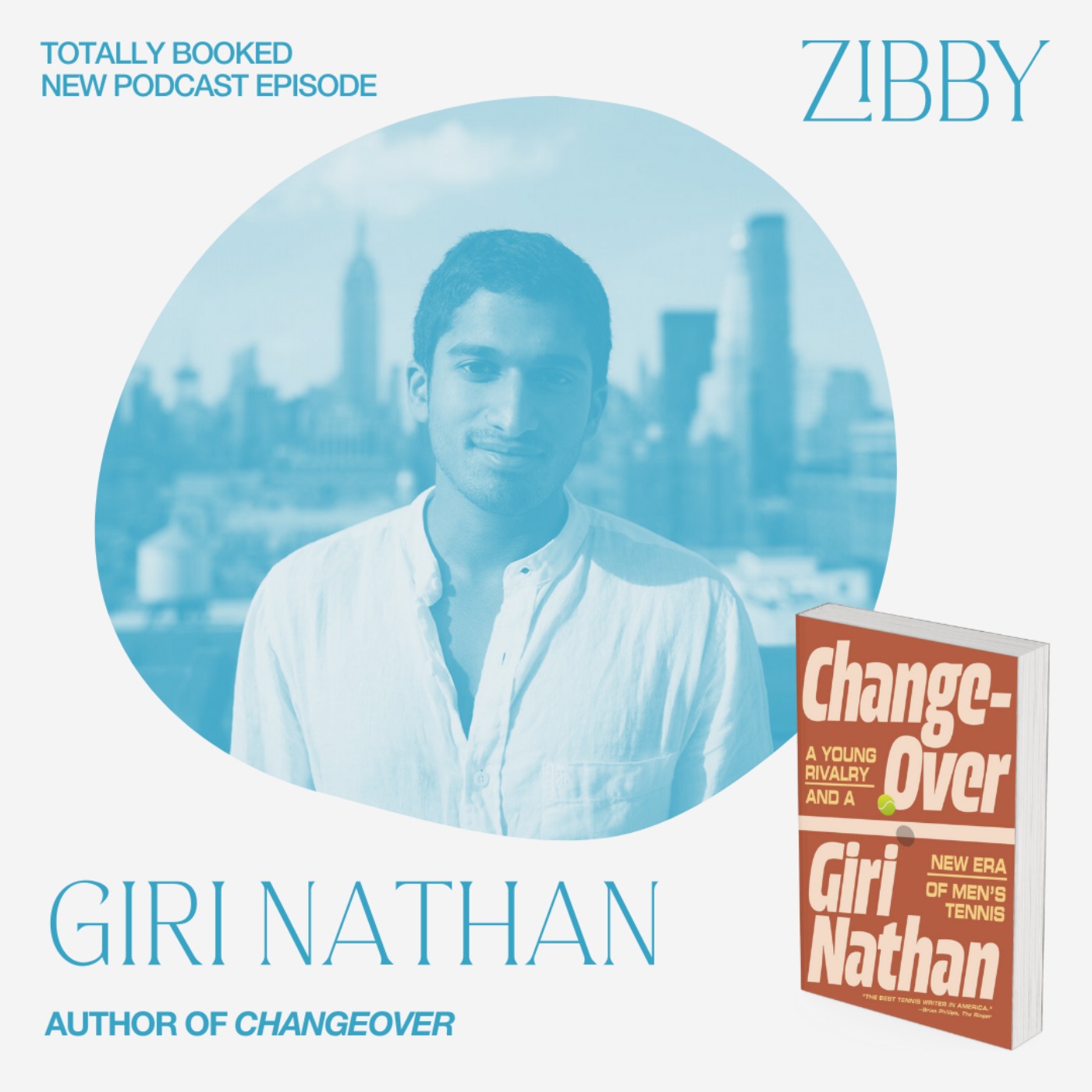
Totally Booked with Zibby
Giri Nathan, CHANGEOVER: A Young Rivalry and a New Era of Men's Tennis
00:24:28
Loading summary
Transcript43 lines
- [00:00]
A
Did you know? Adults 60 plus lose more than $60 billion each year to financial exploitation. Greenlight's new Family Shield plan empowers you to monitor your accounts for suspicious activity, protect yourself with up to $1 million identity theft coverage, and reassure loved ones that you're safe with location sharing and place alerts. Get peace of mind today@greenlight.com protect that's greenlight.com protect. Today's episode is sponsored by Gab. When my kids are at school and I can't believe it's almost back to school time, how is this even possible? I don't want social media or phones to distract them from learning and friendship. But with all the logistics of pickups and practice and drop offs and rehearsals and whatever, our kids need a phone. And I think all parents feel this way. We want our kids to be able to get ahold of us when they need to. And frankly, we want the peace of mind that comes from knowing we can reach them. But teens spend an average of 9 hours a day on screens outside of school and that's basically a full time job just scrolling mindlessly, which is obviously terrible. The US Surgeon General warns that kids who spend more than three hours a day online are twice as likely to have depression and anxiety. I don't want my kids to have depression and anxiety. And. And it's unbelievable. 45% of girls and 32% of boys feel overwhelming stress from being on social media. So here's the good news. A company called Gab has solved this problem by doing something no one else is doing. Their approach is tech in steps. Tech in steps works by providing kids safe phones and watches with no social media. Tailored to every age. Offering the right device at the right time. From GPS tracking enabled watches for young kids to increased features and parent enabled apps on the phones for tweens and teens, each device allows them to safely grow their independence. By the way, it also looks just like a real adult phone, but it's a gab phone. And so my kids are super excited about it. And I'm excited because I get constant communication. The app even tells me when their batteries are running low. And it's all so easy to use. Bottom line, you don't have to give your kid a device that was made for an adult this school year. Get them Gab, which keeps them socially connected. Senior safely. This means no social media and no Internet apps. I really can't recommend Gab enough. Use my code to get the best deal on something that will make parenting easier and give you peace of mind. Throughout the school year. Visit gab.com totallybooked and use code totallybooked for a special back to school offer. That's G A B B G A B B Gab Today's episode has been sponsored by digipud. As someone who's passionate about books and authors, I'm always excited to share resources that can help bring your stories to life. That's why I am thrilled to tell you about Digipod, a print on demand company that truly understands what authors need to make that happen. Here's what I love about Digipod. They don't just print your books and send you on your way. Their team holds your hand throughout the entire process with incredible customer service. They deliver professional grade printing quality, consistently beat their competitors turnaround times, and they can handle rush orders. They simplify the whole printing process and make it incredibly easy. To achieve your vision for your books. Head over to Digipod Zibby that's D I G G y p o d.com Zibby set up a free 15 minute printing consultation and get 10% off your first print order. You'll talk with their experts who will walk you through exactly how to set up your print job and and answer all your questions. And by the way, I've seen the books and they are amazing looking. If you've been thinking about printing your book, this is the support you want. Again, that's digipod.com zibby for your free consultation. Hi, this is Zibby Owens and you're listening to Totally Booked with Zibby, formerly Moms don't have Time to Read Books. In my daily show, I interview today's latest, bestselling, buzziest or underrated authors and storyteller creators whose work I think is worth your time. As a bookstore owner, publisher, author, and obviously podcaster, I get a comprehensive look at everything that's coming out and spend my time curating the best books so you don't have to stay in the know, get insider insights and connect with guests like I do every single day. For more information, go to zibbedia.com and follow me on Instagram ibyoens Giri Nathan is the author of Changeover A Young Rivalry and A New Era of Men's Tennis. Giri is a staff writer and co founder of Defector Media. His writing has also appeared in publications including New York Magazine, the Guardian, the New York Times, the Washington Post, National Geographic, and the New Yorker. He is a senior correspondent at the Tennis outlet the Second Serve and a regular guest on Tennis Podcasts In 2022, he received the Tom Perotta Prize for Tennis journalism. Changeover is his first book. Welcome, Giddy. Thank you so much for coming on tolibook to talk about Changeover, your latest book. Congratulations.
- [05:19]
B
Thank you so much. It's a pleasure to come chat about it.
- [05:23]
A
Yay. Okay. I'm a huge tennis fan. My husband was a former tennis pro and coached on the tour, and we have tennis on here, basically 24 7. So it's hard to miss. I hear all about all the new rise and the players. And so the fact that you have a book out now about the sinner and all these people who people don't know. My kids are like, who's that? So tell me about the book in general. And then let's go into the players.
- [05:54]
B
Yeah. So the book in general, and here's a kind of galley copy of it, but the book in general is very much about this generational shift in the game. And we had this era of almost two decades where the household names that a lot of people might recognize, like Roger Federer, Rafa Nadal, Novak Djokovic, those guys collectively had a stranglehold kind of on the biggest titles in the game, the major tournaments. And there's four of those. Wimbledon, the US Open, Australian Open, and Roland Garros, which is actually on right now. Yep. The fact that they were so dominant for so long, I think made it very hard for tennis fans to, like, look forward and see the future and see what was coming next. So what I wanted to do in this book was give people a little bit of a primer for what for that next era. And for me, it seemed very clear that it was going to be these two players, Yannick Sinner and Carlos Alcaraz, both of whom I just love to watch and have these contrasting personalities. And the way they express themselves is very different. And I just have this inkling, like a lot of other fans, that they would be really good for the next decade to come. And then it just so turned out that the season I was following for the book, they actually split the two. Split the four major tournaments between them and just kind of unfolded completely as superstars in real time. So I got really lucky with.
- [07:21]
A
And you're like, yes, if the book's.
- [07:24]
B
Bad, it's not their fault, it's my fault. They definitely held up their end. But that was kind of the goal to. You know, we've spent. I. Sometimes I call it. Tennis has a bit of a problem with reverence. It can be a little bit too obsessed with holding up people on a pedestal. It's past kind of superstars. And I was like, you know, let's write a book that captures what it's like actually to be a superstar at the very beginning of a journey. And there's a lot of, you know, it's very thrilling. There's also some awkward moments, some goofy moments. And I wanted to. A lot of that gets lost in kind of the retrospectives, which are very grand and serious in tone. So I wanted to maybe as a time capsule for future fans, capture what it was like to follow these two guys in their early 20s when they're just figuring out how to do this thing for the first time.
- [08:16]
A
I mean, really, these players are all so young when we watch, it's like, oh, this kid is 17 or 18 or, I mean, they're just so. They're like babies and yet they have all this responsibility and media spotlight. And of course, that's been another theme too, is players not being able to cope necessarily with all of that on them at a young age as well.
- [08:37]
B
Yeah, it ended up being a really interesting theme of the book because one of the two players I follow, Yannick Sinner, ended up having a doping controversy. He has strongly denied any wrongdoing. He provided an account for how this steroid got into his bloodstream, kind of an accident, but it ended up being a really interesting kind of study of how a 22 year old, 23 year old grapples with all this attention in a very unwanted way at a point in his career where he's quite reserved to begin with and was just starting to get a little more comfortable opening up. And then all of a sudden he was kind of retracting inward again and he had to keep it a secret for many, many months while it was playing out kind of in the tennis bureaucracy to see what his punishment was going to be. So not only did they play really well on the court, there happened to be this incredibly challenging off court drama that I was able to follow as well and incorporate into the book. But yeah, the media scrutiny was a huge part of his story in that season.
- [09:39]
A
How close did you get to the players doing your reporting? Like, were you. Did you friendly with them? What was like.
- [09:47]
B
It's a good question. So this is the first season that I really spent a lot of time traveling on the tour and I would end up seeing them, you know, in consecutive weeks or in different locales all over the world. Like it could be Cincinnati or it could be New York City, or it could be Paris or Turin And I like to think that once in a while I asked a question that made them pause and think, okay, maybe that's something I'd never been asked before. But I think I'm just so curious and sometimes so not self conscious that I'm sure I asked them plenty of dumb questions too. So maybe they remember my face from those as well. But I think when I'm working on a book like this, I want to definitely get, try to capture some of their sincerity and genuine moments, but there is a certain level of distance and I feel I write about this in the book. But I think the role of traditional media is changing rapidly because it used to be the case that these athletes just breaking out really needed writers or documentary filmmakers or TV producers or what have you to kind of be the vehicle for their stories and help broadcast that into their broader fandom. But as you can see now you can just open up Instagram and an athlete can, you know, beam their innermost thoughts directly to their fans. So the role of the traditional media is changing. The athletes are increasingly in charge of their own stories. I think that's interesting. I also think something is lost for the sports fan who wants kind of that third party, independent, potentially critical perspective on these personalities. You get to see the positives and the negatives in a more complex portrait. Instead of, you're saying like one big trend now is these Netflix docu series that are kind of, you know, they might have interesting moments, but in the end they're kind of just propaganda vehicles for the players that help build their personal brands, help build their sponsorship opportunities. And it's not necessarily a work of kind of independent scrutiny or artistry or what have you. So, you know, the role of the media in sports is changing in a huge way right now. It's both a interesting and challenging time to work on a project like this in a very kind of traditional format, like a non fiction book. I had a lot of fun with it. There were some huge challenges as well. But I like to think that I got enough of a kind of real, genuine window into what these guys are like just by being around them for a decent chunk of the year. And I hope some of that is captured in the book.
- [12:15]
A
Wait, what were some of the huge challenges?
- [12:18]
B
Well, I learned what it's like to work with a high powered sports agent and try to get them, try to get little bits and pieces of time with their player. And for, for an agent, you know, the player's time is money. So it's very much, there's a Concern? Well, part of the story, especially with Sinner, and no one knew it at the time, is that they really went into kind of a lockdown mode and weren't doing a lot of press because of, you know, they were undergoing all this sort of turmoil internally as he was trying to figure out what his punishment would be for this doping issue. But, you know, there's a lot of skepticism and wanting to control the narrative, let's call it. And I think that's always been true of, you know, high powered agents. But I think the fact that, as I mentioned, the athletes have kind of taken the storytelling into their own hands. They get all the more cautious about, you know, who they want to speak to and who they'd rather not. So, for example, one of the coaches, I ended up getting a decent sense of his personality and perspective, but one of the coaches I reached out to for the book said, you know, I'm cautious about talking about anything because I want to collect it all for my own memoir.
- [13:30]
A
Interesting.
- [13:31]
B
There's like kind of. There's kind of this new trend of like, why would I give my material away for someone else when I. I can monetize it myself? So, you know, it's kind of to the point I made before. I think there is something that's lost for the fan who wants kind of that outsider journalist perspective to sort of synthesize all the information and kind of convey it in a fun way. But I also kind of understand the incentive structure on their side, too. Given how much media as a whole has changed over the last decade or so.
- [14:03]
A
Do you find yourself rooting for one of them versus the other?
- [14:08]
B
No, I think it's. I mean, it does an interesting thing to your brain when you're working on a project like this, where you end up just rooting for the most narratively interesting outcome. So maybe to the extent I was rooting for anyone, it was probably when Alcaraz was doing really well, it was like, okay, maybe Sinner can balance this out a little more. So the narrative is a little more. And that is fortunately how things played out, because at the start of the book or at the start of the 2024 season, Sinner has not won any of his major titles yet. And then by the end of the season, slash book, he's won two, and Alcaraz has won two that season, two. So they're kind of coming together a little bit. But, yeah, it's a good question. I think you do kind of lose your fandom in a way when you're trying to look at these people critically. And at the same time, you do root for them to do things that are interesting to write about, which is always winning, sometimes it's losing, sometimes that offers its own wrinkle. For example, Alcaraz, after he had this incredible season winning Wimbledon and Roland Garros and Olympic silver medal, suddenly he has a phase of burnout and he flames out really early at the US Open and in Cincinnati. So for me, that was a really good window for what it's like to struggle with just the demands of torque, traveling around the world all year round, you know, being secluded from your friends and family because, you know, as much as they'd like to accompany you, they can't be, you know, flying around the world all the time. So he's. He talked pretty openly about the burnout he was experiencing. And I would. For a book that's trying to capture what it's like to figure out how to do this whole tennis superstar thing that ended up being a really kind of rich moment in time to capture. And, you know, it's not all sailing through seven matches in a row. There's a lot of challenges. And for. Alcaraz has some funny quotes where he talks about how he needs to go to the island of Ibiza to nightclubs to let off some steam after he's played a lot of tennis, and that helps him reset mentally, and then he's ready to focus on the next one. So it's. I just had a lot of fun, as you said. These are these. They're basically kids. And figuring out what their coping mechanisms are for these super high pressure situations was just really interesting to follow.
- [16:30]
A
I love that. Cold plunge or Ibiza?
- [16:33]
B
Maybe a little bit of both.
- [16:34]
A
Or both. Yeah. And what about the old guard? Have you always been interested in tennis? How far back have you been following?
- [16:43]
B
Yeah, I played just middle school and high school and was interested in following in particular Fetters at the start of his career. That was kind of one of the main things that attracted me to the sport, like many tennis fans, and then really enjoyed watching his rivalries with Nadal and with Djokovic. And the first chapter of the book kind of sets the scene for what it was like to watch those guys duke it out for. For almost 20 years. And what I kind of wanted to capture in the book was, you know, giving those guys their due, but also poking fun at, like I said, the amount of reverence that tennis has given them and to also show how difficult it can be to transition out of the game after you've been dominant for so long. So in the Roland Garros chapter, we see Nadal, who's won this tournament an unprecedented 14 times. You know, it'll never be matched in my lifetime how difficult it is for him to say goodbye to that tournament. And even though he loses in the first round, he had a very difficult draw. He was, he wasn't ready to do kind of the formal retirement farewell, thank you for the memories ceremony that they ended up doing this season.
- [17:55]
A
It was so, it was incredible. Oh, my gosh, I can.
- [17:59]
B
It was incredible. But you get this really clear. The reporting was at the time that he told the tournament directors, like, no, I'm not ready for that. And you get these little snapshots of, you know, Djokovic, couple moments where he feels he's returned to the peak of the game and all of a sudden he runs into Alcaraz in the Wimbledon final and loses, you know, straightforwardly in straight sets. So I think after you've established yourself as the greatest ever to do a given thing, it's very painful to start receding from that position and start, you know, giving way to a new generation of stars. And for someone like Djokovic, I think he's very much fired up by that challenge. And he's had some really incredible wins over Alcaraz over the last, over the last year. So it's sort of. I, I tried to ask him if that gave him a little new spark, basically, and he was very diplomatic in his answer. He was like, you know, I've had tough rivals my whole career, but it does give you a little bit of an incentive to keep fighting when you feel like, oh, here's another all time great coming along. Let me see if I can hold him at bay longer. So I tried to. Federer retired outside of the scope of this book, but he kind of lingers over the whole thing in a way, just because he's such a huge figure and symbol of tennis and the global imagination. And he even comes in practices with Alcaraz later in the season, which I talk about. But, yeah, those three guys became synonymous with the sport. So it would be very hard to tell a story about men's tennis, you know, without telling their story in a way. So I try to do that in a way that also lets us transition over to the new guys.
- [19:48]
A
Interesting. Today's episode has been sponsored by Quince. As summer winds down, I am all about refreshing my wardrobe with staple pieces for the season ahead. Quince totally nails it with luxe essentials that feel effortless. And look polished, perfect for layering and mixing. Their styles are so versatile, I find myself reaching for them again and again. In fact, you'll see me wearing them all over my Instagram feed. Think cashmere and cotton sweaters starting at $40, washable silk tops and classic denim pants. The best part is that everything with Quince is half the cost of similar brands. By working directly with top artisans and cutting out the middlemen, Quince gives you luxury without the markup. And Quince only works with factories that that use safe, ethical and responsible manufacturing practices and premium fabrics and finishes you'll see on Instagram. I love my Quince skirt. I've been wearing it all summer and it is a fabulous fabric. It's long, the pattern's amazing and it's just amazing. Plus the price was great, so I just absolutely adore it. Elevate your fall wardrobe essentials with quince. Go to quince.com zibby for free shipping on your order and 365 day returns. That's Q-U-I-N-C-E.com zippy to get free shipping and 365 day returns. Quince.com zibby.
- [21:14]
C
There'S the part of me that everyone sees. I'm Howie Mandel, the comedian. Apparently I know what funny is. Funny. He bought me a house. But I also know what isn't funny. Ocd. I've lived with OCD my entire life and people throw the term around like it's no big deal. But OCD is severe, often debilitating, a mental health condition that involves unrelented, unwanted thoughts that can make you question your character, your beliefs, even your safety. General therapy can help with some things, but for ocd, it can actually make things worse. That's why I want to tell you about no cd. No CD is the world's largest treatment provider for OCD and is covered by insurance for over 155 million Americans. Their licensed therapists specialize in ERP, the most effective treatment for OCD. If you think you might be struggling with OCD, go to nocd.com to book a free 15 minute call. They are here to help.
- [22:13]
A
BetterHelp Online Therapy bought this 30 second ad to remind you right now, wherever you are, to unclench your jaw, relax your shoulders, take a deep breath in and out. Feels better, right? That's 15 seconds of self care. Imagine what you could do with more. Visit betterhelp.com randompodcast for 10% off your first month of therapy. No pressure, just help. But for now, Just relax. Well, I'm glad that you're touching on raising more awareness of what it's really like to be on the tour. I mean, I didn't know until I was married to my husband how hard it is for all but the top 10 or so players. It's like you can be one of the best players in the world and still not make much money and have nonstop travel and just none of the perks that like if you're on a team of 40 people, you might have in a different sport.
- [23:23]
B
Totally. Yeah, it looks very glamorous from the outside, but once you start looking at kind of the budgeting, it's the you can be in the top hundred in the world that are incredibly competitive sport like tennis and still not be breaking even. Like still might have to be relying on sponsor money and things like that. So I definitely try to capture what a grind it is because it's not like kind of the, the big four American sports where you have a franchise that's footing the bill for all your travel and all your coaching and everything. You got to pay everything out of pocket. And a lot of the endorsement money which is, ends up being the bigger chunk of the finances for a player like an Alcaraz or a sinner. All that stuff is all those deals are concentrated in the top 10 or top 15 or so. So it's, it's very tricky to make a living playing this game. And part of that is because of the, the way revenues are structured. So you take a sport like the NBA and the players collectively bargain and they make sure they get 51% of all the basketball related revenue that comes in. I'm not going to misquote the exact figure, but I know in tennis it's something around 20% or just not even comparable. So I think the fact that they are all kind of independent contractors, all freelancing all around the world has also made it a little trickier for them to kind of negotiate as a collective. And Novak Djokovic, interestingly, despite being someone who doesn't need a collective to, to secure his financial fate, which he's worth hundreds of million dollars, has recently shown some interest in kind of making life easier for players lower down on the totem pole. That's be in, in the last chunk of his career, that's become one of his big off court interests. So that's kind of been kind of interesting to follow as well.
- [25:14]
A
Amazing. And back to your own trajectory. You're part of Defector Media, such an interesting company and reactionary in A way to big media and so transparent that you literally have your annual reports on the website. And I was like, oh, well, this is interesting. Let me just dive into these figures. Like how much are they spending on marketing?
- [25:39]
B
Right, right, yeah, it's, you know, we talked about the shifting media landscape and for sure, part of that is in sports media in particular. I think a lot of the kind of big storied institutions have crumbled or experienced a lot of turmoil. Like you take a magazine like Sports Illustrated and you know, they've really gone through it in the last few years. So I think one of the things we were, one of the things that inspired Defecture was trying to figure out a way to structure a media company that kind of insulates us from the unsavory parts of, you know, having management come in and tell you to do things in a certain way. We really wanted that editorial freedom and we really wanted to be able to make money despite the collapse of advertising as like a viable model for journalism. Right. So the way we made it work was kind of readers paid us directly and you're seeing this trend more and more with Substack and Patreon and other kind of reader supported models. But there's kind of no middleman, there's no ads and our readers just support the work they enjoy reading. So that's, it's been working out for us pretty well. As you said, we're super transparent about how we make it work and we encourage other groups of writers and editors to, to come chat with us if they want to try something similar. But yeah, we've been lucky that it's, it's been working really well so far and it's kind of gave me the freedom to work on a project like this because we also own our, all our ip. So all the writing that I did for Defector over the course of that season, I could grab bits and pieces of it where I needed to incorporate it into the book, you know, without having to worry about rights or things like that. So it's, yeah, I'm super grateful to be working at a place that affords me so much freedom editorially. And also, you know, I was able to travel all over the world to, to work on this too, which would have been tricky in a more conventional workplace, let's say.
- [27:44]
A
Wow. Well, that's very, very cool. There's so much changing in the sports landscape. In the sports landscape, really every day. And to have a non biased sort of open platform, if you will, to spread the word, like, do you only Cover tennis or are you. Do you do lots of sports?
- [28:03]
B
Yeah, I do a mix of stuff within sports. My interests are in tennis and basketball, so that tends to be my wheelhouse there. But also super interested in writing about books and food and culture. So that has been, I think now that I feel like I've compiled pretty much everything I had to say about tennis into a book, I'm like slightly feeling the itch to, to move on to other subject matters.
- [28:29]
A
So their burnout is now causing your burnout?
- [28:33]
B
At the very least, like I could, I need to scale it back, scale back my touring schedule a little bit while I, while I recover. But I think that's another really nice thing about defector is that I have no, nobody there has any super well defined beat. There are topics they're interested in, but as they develop new interests, they're encouraged to, to branch out into that. So it was really nice. And now I'm on parental leave, so I'm not writing kind of on a week to week basis, but I am kind of planning what am I going to be interested in writing about once I get back.
- [29:08]
A
You just had a baby?
- [29:09]
B
Yeah, yeah, I have a two month old. Yeah, she's the best. But now I'm like, oh, maybe I want to write about parenting. And I'm lucky to work at a place where it's not like they would look at my job description and be like, we hired you to do xyz. You can't do that. If I want to write an essay about changing diapers or what have you, I'm definitely allowed to do so.
- [29:31]
A
Wow, that's great. Well, congratulations. I have four kids. If you ever need any advice.
- [29:39]
B
The idea of scaling up to four right now would cause me some burnout like hell. So let's see how I handle one for now.
- [29:47]
A
All right, good luck. Did you happen, by the way, to watch the last basketball game on tnt? Did you watch it the other night?
- [29:55]
B
I am a die hard Knicks fan. That is a case actually where my job has not kind of detracted from my fandom. I still really support the team and, you know, I write critically about them, but was super excited to watch this run and it was tough, tough to see that end. And yeah, the TNT broadcast was really fun in a lot of ways. Like they had a unique, not always successful dynamic, but it has produced a lot of really funny moments. And for me, it's just part of the rhythm of my life as a basketball fan now. Like, I distinctly have this feeling of, it's like 1:15am I look up, see those faces on TV and it's like, oh wait, it's time for me to go to sleep. I watched the west coast game and I need to go to sleep now. So it's going to be weird adjusting to a new broadcast, but I'm sure they'll figure it out.
- [30:50]
A
Well, in retrospect, I wish I had had my husband do this interview with me because I did such a poor job in comparison to the 8 million things he'd want to ask you about. But it was lovely chatting with you. Congratulations on your book and thank you for shining a light on tennis and the new stars and helping the rest of us navigate.
- [31:08]
B
For sure. Thank you so much for your interest in the book.
- [31:10]
A
Okay, best of luck. Okay, bye bye.
- [31:12]
B
Thanks.
- [31:13]
A
Thank you for listening to Totally Booked with Siby, formerly Moms don't have Time to Read Books. If you loved the show, tell a friend, leave a review, Follow me on Instagram ibbyowens and Spread the Word. Thanks so much. Oh and buy the books. Consider this your sign to skip the what's for dinner debate. Tonight, Outback steakhouse has a three course meal starting at just $14.99. Start with soup or salad, then take your pick of down under entrees like our juicy towering burger or flame grilled shrimp and for dessert, New York style cheesecake. Plus $8 cocktails all day every day. Three courses starting at $14.99. Tell the group chat you'll see them at Outback. Price and participation may vary. Did you know Tide has been upgraded to provide an even better clean in cold water? Tide is specifically designed to fight any stain you throw at it, even in cold butter. Yep. Chocolate ice cream. Sure thing. Barbecue sauce. Tide's got you covered. You don't need to use warm water. Additionally, Tide pods let you confidently fight tough stains with new coldzyme technology. Just remember, if it's gotta be clean, it's gotta be Tide. Warren Chi Time. Ever heard of Warren Qi? It's an energy someone gives off when they have an American Home Shield warranty. It's the feeling of protected appliances and home systems covered repairs or replacements, hvacs, ovens, fridges. Wow. My warranty is incredible. American Home Shield don't worry, be warranty for 20% off our plans. Visit ahs.com. listen see ahs. Com contracts for coverage details including limit amounts, fees, limitations and exclusions.