Loading summary
Transcript35 lines
- [00:01]
A
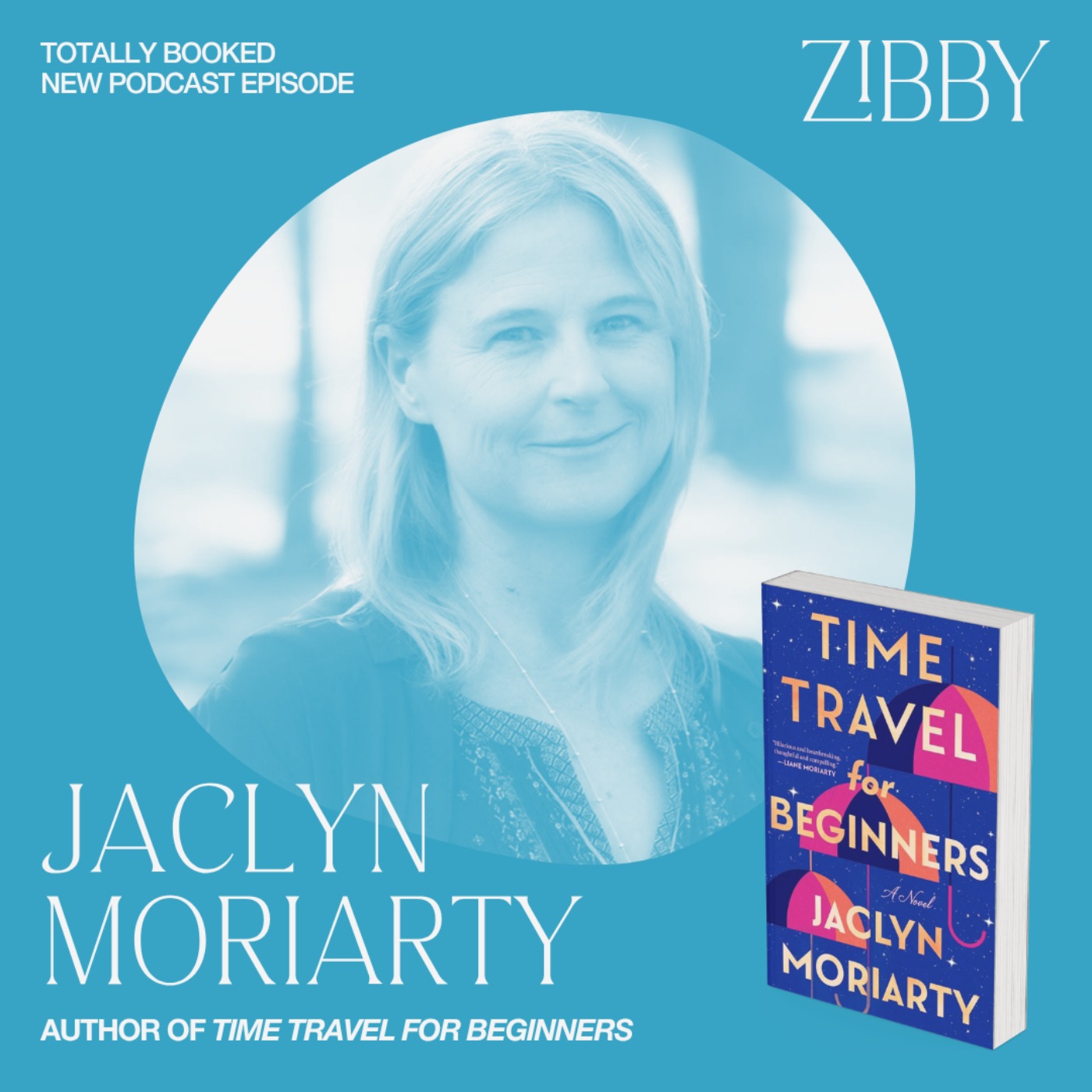
Welcome to Totally Booked. I'm Zibby Owens. I've interviewed more than 2,000 authors on this show and learned endless amounts about storytelling, reinvention and life itself. Because when you talk about books, you're really talking about life. So get ready to hear from today's best authors, the best selling and the not yet discovered. Come find your next great read and the story behind it. Enjoy. Jacqueline Moriarty is the author of Time Travel for Beginners. She is the award winning author of books for readers of all ages and has been the recipient of the NSW Premier's Literary Award, the Queensland Literary Award and the Aurelius Award for Fantasy. Her books have been named Boston Globe Honor Books, White Raven Selections and recognized by the American Library Association. A former media lawyer and one of the talented and popular Moriarty sisters, including Leanne and Nicola and Jacqueline lives in Sydney, Australia along with her teenage son. Welcome, Jacqueline. Thank you so much for coming on Totally Booked to talk about Time Traveler for Beginners, a novel. Congratulations.
- [01:08]
B
It's a pleasure. Thank you so much for having me here and thank you. Thank you.
- [01:12]
A
You're so welcome. Oh my gosh, I love your voice. All the voices of the different characters, all of the characters themselves. I am obsessed with the way that you write. How funny and smart and sad and real. You're so good. You must know this, but you are so good.
- [01:29]
B
Oh, you're so lovely. I was so happy to hear that. It's really, really lovely to hear. It's quite late here in Sydney, so I. And. But I'm a night owl anyway so it doesn't matter, but it is still the time of the night when I feel slightly dreamy, so that feels dreamy to me to hear you say such. Thank you, thank you, thank you.
- [01:53]
A
Very true. Oh my gosh. So funny. The nut stor. I mean the confluence of all the different events in the book are just so brilliant. The commentary on having teenagers as well. I have four kids and letting them go to the mall and what are they even doing there? And I thought that this would happen over time, but actually it happened overnight that suddenly they don't want to hang out. All of that resonated with me a lot as well.
- [02:23]
B
Good. How old are your kids?
- [02:25]
A
They range from 11 to 19.
- [02:28]
B
Oh, wow. Great range. Yes. Variety of different issues. My son is 19 now and he's in a really lovely face like a beautiful young man.
- [02:40]
A
Oh, well, anyway, and of course the concept of the book itself was genius. Like it really made me believe that this was possible, that it, that a Scientist could figure it out. And we can live in different versions of the multiverse. And as coined by, I guess, Henry James, as you say in the book, it was just brilliant. How did you think of this?
- [03:03]
B
You're so lovely. Thank you again. I'm just enjoying your kind words. Thank you. Where did the idea come from? I can tell you where the idea came from. Originally. It was I was riding a bus along a street in Sydney and I looked out the window and saw a time travel agency. And for one moment, I honestly believed that somebody had discovered the secret to time travel and that there was an actual storefront. I mean, I completely, genuinely believed with all my heart. And I was so intensely excited. Someone's discovered secret to time travel. And there's a storefront on this busy street. And I was thinking, why are people walking past it, paying no attention to it? And why are people on this bus not turning around and staring in amazement? And can they take you on trips anywhere you want to in time? And do they have tours and tour guides taking you through different parts of time in the time travel agency? And then I looked back again and saw that it was a billboard for Time magazine, had some slipped sideways and was leaning against the window of a local travel agency. So there was no time travel agency. And to cope with my disappointment, I decided to write a book about it.
- [04:31]
A
Got your money's worth out of the bus ride. Let me say that. I mean, part of what the book is really about, and maybe you should sort of summarize it quickly for listeners, but part of it is about overcoming heartbreak, and part of it is about the what ifs of life, the people who you go on your journeys with, and all the different potential outcomes which, of course, we all hold in our hands every day. Right. We could do this and it would affect our lives this way. Or what about this way? And the idea that in your book you can go back in time, but you can't affect the present, that it just lives on in this like, sort of other stream that could be a dream. I just find this so fascinating. So tell listeners a little bit more about the premise of the book and how you came to tinker with the exact mechanics of the time travel and the scientists behind it and what you were really after when you were writing the book.
- [05:25]
B
Sure, yes, that's a good question. And you express some of that so beautifully. You speak so beautifully. So I'll tell you what it's about. I'll tell your listeners what it's about. So time travel for beginners is the story of a nondescript storefront on a suburban street in Sydney between a sushi shop and they are Gelato Bub. And it calls itself the Time Travel Agency and promises its customers short trips anywhere they want into the past so they can go as far back as the times of when the oceans were just green primordial material, or as recently as your own kitchen last week. Or you can visit your teenage self and tell her to start washing her hair and having better posture. And the three main characters are Anna, who has just got a job in the Time Travel Agency, and Teddy, who wants to. Who is a customer at the agency, who wants to go back and visit times throughout his marriage because it has just fallen apart and he wants to figure out where he went wrong and put it back together again. And the third main character is Jade, who thinks the whole thing is a giant hoax and wants to burn the place down. And the reason I. Well, for a start, I was interested in regret and the concept of regret. And, well, my initial concept was I wanted to go a character whose marriage has broken down and I wanted to be a woman who wants to see where it went wrong and to go back and see if she can unravel that and start again. But I was telling a friend about this idea and the friend said, broken relationships and regrets, that's nothing. The real regrets we have are to do with our children and mistakes we make as we are bringing them up. And this was a long time ago. My son was 6 years old at the time. And at the time I thought to myself privately, well, surely you can just make good decisions and not have any regrets. Because I was. Things were going pretty well with my little boy at the time. And I just thought, I'll just keep making the right decisions and doing the right thing, which was such a. And I'll just keep doing that till he's 18. It was such a preposterous moment of pride because, of course, from that point on, as the kids get older, as you well know yourself, you have to make more and more decisions that are more and more complex and nuanced and difficult and bigger and bigger decisions to do with health and education and behavior. And as they get older, that sort of autonomy, you have to allow them some autonomy while at the same time protecting them. So that's why I decided two of the characters would have 13 year olds and have very different approaches to parenting and that they would be beginning to think, we've messed it up, I've messed it up, and where have I gone wrong and can you go back and start again? But I did want the Time travel agency to be a place that cannot change the present. And partly that's because when I first saw it, I was, you know, on the bus and people were just walking by and I thought, why would. And I really liked that idea that there was the secret to time travel just hiding in plain sight somewhere and that there were people who believed in it. But most people thought this is not possible and nobody has solved time travel yet. And so for that to work, for a start, you would have to, you would have to start by saying, well, the present isn't changing, so how can it actually be time travel? I went back and did this, but it's still, still this situation. But that to me made perfect sense from a quantum physics perspective, because, and I was reading a review of this book the other day, which it was a very good review. It was a very nice review. I was, I was grateful and I really liked it. But the reviewer said something like, Jacqueline Moriarty clearly had no interest in the physics of the thing. And I thought, what are you talking about? I read so much, I read so much physics before. I mean, and every now and then I even understood it for a tiny moment. But I read, I read a lot of. I really wanted to find a way to make time travel credible. And the more I read, the more I thought, well, if, if you are traveling in time, you're traveling along your own timeline. And the multi world concept of the universe must be what applies to that situation. Because a timeline is just a chronology of things that happened. So if you go back and, and visit that time and change it, you've switched the timeline and the universe. Your universe is really just your timeline. It' everything that's happened. So you create a new universe. So that was my idea, that the universe is split each time the Time travel agency sends someone back in time. And also I want the possibility that it isn't real. I want people to think, well, wait a minute, this all could be a whole. It could be a hoax.
- [11:05]
A
Well, you also talk about regret with your family of origin too, right? So Teddy has been betrayed by his brother and he goes back and tries to understand all the ways in which Mateo bullied him, why he didn't speak for a couple years as a child. Like what it was about his childhood that could make his current situation have been avoidable, or how they even got there, which I also find fascinating because sibling relationships I don't think get enough examination, particularly in fiction, like what Happens people just say as a throwaway, like, oh, yeah, I was beaten up by my brother for like years or something like that. And that's a huge thing to be. And it really affects how you develop as a person and can affect literally everything. So he doesn't just want to go back and see what did he do wrong, perhaps in his marriage, if anything, which is debatable. But how did he get to a place in his life where he can't stick up for himself too?
- [12:02]
B
Yeah, exactly. And that's such a great point about the importance of sibling relationships and the extraordinary effect that they can have on your life in the same way that any difficult home lives and that strength and courage of people who emerge from them and create themselves and have to find their own identity. So I'm really conscious of having grown up not only with very great parents, loving parents, but also with four sisters and one brother who are. And my sisters are my best friends now. But I also, I went to a doctor not long ago who. And we were just talking about medicine and I said, I have four sisters. And I always say that a little bit of pride, just a little bit. I have four sisters waiting for people. So, oh, wow, four sisters. But she looked at me and said, ah, you poor thing. And it turned out that she had two sisters and she said they were awful and unbearable and, and that they make life difficult and continue to make life difficult. And if you are, if you're background comes from, Is the context that you have of yourself and the idea that you have of yourself has different, has completely different stories to it based on. Because your siblings see you and see your childhood differently to how you see it. I think that's very fracturing and disorienting for people because everybody experiences that at a minor level. The fact that memory is unreliable. And I love that. That I love, I always love that, that something that happened. And when you get together, everyone has a different. And you can be absolutely convinced of. I spent some time recently trying to find a photograph of the camping campground where my family went to when we were kids and camped in this campground near the beach. And I was trying to find, you know, you think Google has the answers to everything. And searching, searching and diving deeper and deeper just because somebody in the family said, oh, that photograph is. I said, that photograph is in the campground that we went to at Avoca beach when we were kids and one of my sisters. No, absolutely not. That photograph is blah, blah, blah. So even that very small, completely irrelevant, innocent example of no, I have a memory of that story. I know where that story took place. And somebody else saying, you absolutely do not. And that's irrelevant. But I spent an hour or two hours trying to prove my own perspective. So I just think that people who have much bigger, more significant stories like that and different perspectives and what has happened to them and, and, and the difficulty and the trauma that they faced as children and having that denied then, then to be able to go back in a time travel agency, to go in a little booth and go back and say, now I can prove this is what happened. Just like, I think I didn't put this in the book. But I thought, you know, when you and your partner might go away somewhere and you think he's looking at his phone all the time, and he says to me, I'm looking at my phone all the time. No, are you looking at your phone more? And I imagine, let's go back in the time travel agency. Let me show you how often you look at your phone.
- [15:26]
A
So interesting. I had a thing like that with my family where my dad, my brother and I were in a car. We almost got in an accident. And now I am convinced that I was driving and they are convinced my brother was driving. Like, we all have different interpretations and it's so clear in my head and I'm like, well, I guess my memory is just not reliable in the slightest. So
- [15:49]
B
now I really want to do one of those investigations to find out. I know, I know, I know.
- [15:54]
A
But it was just us. It was just us. Close call with a tree and we'll never know.
- [15:59]
B
But it was, it was a small enough accident that there wouldn't be records of it.
- [16:04]
A
But we didn't get any accident. It was a near accident, so prevented it anyway. But when you talk about your family and all your sisters with pride or whatever, I mean, you don't come from a normal family. Your sisters, you and your sisters are so accomplished. I mean, your sister Leanne, who's been on the show, wrote big little lies that apples never fail. And I mean, your whole family is like, exceptional. How did that happen? What did your parents do? Right? Hi, it's Zibby. If you're looking for a companion podcast, totally booked, check out behind the Mic with audiophile. Behind the Mic features reviews and recommendations from Audiophile magazine. The number one audiobook review source. Every Monday through Friday. From thrilling mysteries to sweet romances and page turning memoirs, behind the Mic brings the best audiobooks right to your ears in six minutes or less. Not to mention there are exclusive bonus interviews with buzzy narrators, bestselling authors and audiobook industry insiders. So go ahead, follow behind the Mic with Audiophile wherever you get your podcasts. You can also visit audiophilemagazine.com to read thousands of reviews, listen to sound samples and Explore behind the MICS 1000 Plus Episode Archive Today's episode is sponsored by Quints. Does anyone else feel like August is like the Sunday of summer? It's the perfect time to hit reset before the autumn rush. And for me, that always starts with my wardrobe. Quince proves you don't need a crowded closet to look incredible, you just need the right pieces. Quince specializes in effortless, high quality essentials like ultra soft organic cotton and premium Mongolian cashmere sweaters. They are beautifully tailored, built to last and transition seamlessly from morning meetings to dinner. I have been wearing my striped sweater from Quint all summer long, plus a beautiful skirt that I got there and a white dress that I can't stop wearing which I switch up with different sweaters. And I just love everything that Quince makes. Plus my jean jacket is my go to and I'll be wearing it all through the fall. Quince has premium stretch denim by the way, starting at just $50 so you're all covered. And it's not just apparel by the way. Quince also brings everyday elevation to everything from hotel quality bedding and bath to kitchen staples. Upgrade your everyday Download the quint app for app exclusive offers or go to quince.com zibby get free shipping on your order and 365 day returns now available in Canada and the UK too. That's Q U I N C E.com zibby
- [18:40]
B
thank you so much. And I am so lucky with my sisters. Yeah, two of them are authors, Leanne and Nicola, authors. And two of them are not authors. And I always say if one more person asks me when I'm going to write a book. If Leanne's been on the podcast, she might have told the story of how our dad used to commission us to write stories when we were children. So he noticed that we loved telling stories. And so he said instead of giving you pocket money, I will give you $1.50 if you fill up an exercise book with words. So that was how we made a living. That was how we and the wonderful thing about that was, I'm sure because we loved writing stories, we would have anyway. But you know when you're a kid and you write stories and you often don't finish them, you think you're writing a novel and you started. And there's nothing wrong with that because everybody's evolving as a writer and changing as they grow up. You go in all kinds of directions and start scrappy stories. But having our dad say, take us very seriously and say, okay, let's you come to me and pitch me an idea for a book. And then listen solemnly to our idea and then say, okay, yep, I'd like to commission that one, please. You felt. And we were probably 7, 6, 7, 8 years old, and. And you felt so important. And also it meant that you sat down and made sure that you completed a story and polished it and illustrated it, and you had something that. A final product that you could be proud of and that he would read and take seriously and then give you some money for it. So our dad always liked to take the credit for our writing, and it definitely helped because it made you feel like this could be a profession. Because dad was someone who had always loved flying from when he was a boy, loved the idea. Sorry. Of flying an airplane. And that had been his dream, and somehow he made that dream come true. And then he made a career, built a career out of flying by building a. He started a surveying business and got into aerial mapping and aerial photography. And so he spent all his time in the air and never his whole life.
- [21:20]
A
He.
- [21:20]
B
His eyes lit up every time he talked about flying an airplane. So he always wanted to encourage us to. He had that thing where, you know, find what you love, find a way to make money from it. And an example of that is that, you know, you grow up and think, I always wanted to be a writer, but you grow up and think that's not very realistic. So I studied law and actually really liked law, and I did English and law and I did really well in law. And I remember my dad seeing those results. And usually you would think a parent, when they saw that, I mean, I came first in law at Sydney University, and when I told my dad I came first, he said, that's great, but didn't you want to be a writer? And you think that most parents would say, ah, thank God she's given up that ridiculous flighty writing idea. And so that stayed in my mind because it is what I wanted to do. And it's just the fact that he was continuing, still taking that seriously. So I went overseas and I studied more law to put off becoming a lawyer for as long as I could and went to America, to the States, and did a master's in law. And then I went to Cape Cambridge and did a PhD in law and hope. That didn't sound like I was showing off when I said I came first in law. It's a long time ago.
- [22:43]
A
It wasn't. I found it fascinating. What you're showing is like, even if you go and achieve all these things, sometimes the people you most want to validate it see another part of you that you refuse to extinguish. And they know, maybe sometimes more than you, that maybe you're chasing something else instead. So it's. It's. You illustrated the point. No, go ahead.
- [23:07]
B
It's a long time ago. It feels like another dimension of me. So it doesn't feel like showing off. But I thought, oh, does that sound like I took that opportunity? I just happened to understand how the law worked, and I did like it, but. And I would while I was doing a PhD in England. That's when I realized this is my last chance to become a writer. Because once this is finished, I'm going to have to get a job as a lawyer, and then I will disappear into the law and never be able to have a moment to write. And so I made a secret pact with myself that I was not going to be allowed to go home until I was a published writer. And in the evenings, I walked across the campus at Cambridge into their computer room because I didn't have my own computer, and wrote a novel for young adults called Feeling Sorry for Celia. And when I finished it, I sent it to a publisher in London, and they sent it straight back to me saying, no, thank you. And then I sent you another one, and they sent it back saying, no, thank you. I sent it to about 20 publishers and literary agencies. And by this time, I finished my PhD and run out of money and my visa had expired. And the secret pact with yourself not to go home until you're a published author is not legitimate grounds for extension of a visa. So I went home and got a job as a lawyer. And on my first day, I took the printout of my novel and put it in the corner of my office. And I thought, one day when I get a moment, I'll work on rewriting it. And one year later, it was still sitting on the floor of my office because it was very busy being a lawyer. And I happened to be working late one night, and I thought, I'll just give that one more chance. And I put it in an envelope and addressed it to literary agency in Sydney. And I visualized the envelope as a kind of rescue helicopter that was going to come and airlift me out of the law firm. And send it away. And a few weeks later, I heard from that agency saying they loved it and wanted to represent me. And then within a few weeks after that, they had found me publishers in Australia and America and the uk, so. So that's. Yeah. And then I just let. I faded, phased the law out gradually over time and became a full time writer.
- [25:32]
A
Wow, that's amazing. That is so inspiring. No, seriously. I mean, it speaks to timing, perseverance, rejections, not ending your career. I mean, it's amazing.
- [25:45]
B
And luck, too. Just. Yeah, exactly. Timing. Just that moment in time. And Leanne always tells the story about. She might have told you the story about how when I called her to say that I got a publishing deal, she always says I was furious because she'd kind of forgotten our childhood dream, but she hid it really well. Weren't you? She was so nice to me and happy for me. I thought she said she was in a rage because she'd kind of forgotten about that. And she was, and she is and always has been extraordinary. She was doing incredibly well in advertising and marketing and she was a big career woman, but that just reminded her of the childhood dream. I do think she would eventually have written a book anyway because she's too brilliant and too creative and imaginative. So she would have anyway. But I like that she. I do like to take the credit for reminding her to start writing. Wow.
- [26:49]
A
It's the ripple effect, right? Like just one. One thing reflecting another, and next thing you know, people are on their couch watching, you know, Reese Witherspoon and Big Little Lies, and I'm sitting here reading Time Travel for Beginners. And it all is full circle, right? It's like so neat because of your decision one day to pick up a stack of papers in the corner of your office. It's wild, right?
- [27:13]
B
Yeah. Yeah. And that's something I really was interested in in this book. That those moments in time, just a tiny little decision like you say, that change everything. But I thought the same thing, watching Big Little Lies. Everything about that whole experience just seemed impossible, that one little moment. Because I remember when Leanne, when our kids were little and we'd taken them to one of those soft play playgrounds, you know, indoor big play areas. And now kids were playing together and Leon and I were having coffee and they answered. She's gotten. She had an idea. What did I think of this idea she had about a school and there's a murder and there's a trivia night and it's an Elvis Presley, Audrey Hepburn night. And I was saying, I love it. It's fantastic. And then it just felt like one moment later we were watching Nicole Kidman dressed up as a contraps all the time. Yes.
- [28:11]
A
Wow. Well, your book so perfectly speaks to those moments passing in the night sometimes, just when you decide to cross the street and how you avoid or don't avoid a car accident, the decision to leave a job or not. I mean, all these ripple effects. And also friendship, male friendship. I mean, there's just so many themes. But best of all, in this whole book, in addition to the unique literary tours and everything that you invent is the characters and your voice and how completely addictive it is that you just don't want to. I just did not want to put the book down. And even though it is quite long, I must say, so well done. Well done you.
- [29:00]
B
Thank you. So kind of you. Thank you.
- [29:04]
A
Well, Jacqueline, thank you so much for your time and for this fabulous read. Time Travel for beginners. Congratulations.
- [29:11]
B
So lovely talking with you. Thank you. Congrats.
- [29:14]
A
Okay, bye. Bye.
- [29:15]
B
Thank you.
- [29:16]
A
Bye. Thank you for listening to Totally Booked with Zibby, formerly Moms don't have time to read books. If you loved the show, tell a friend, leave a review. Follow me on Instagram ippiowens and spread the word. Thanks so much. Oh, and buy the books.