← Totally Booked with Zibby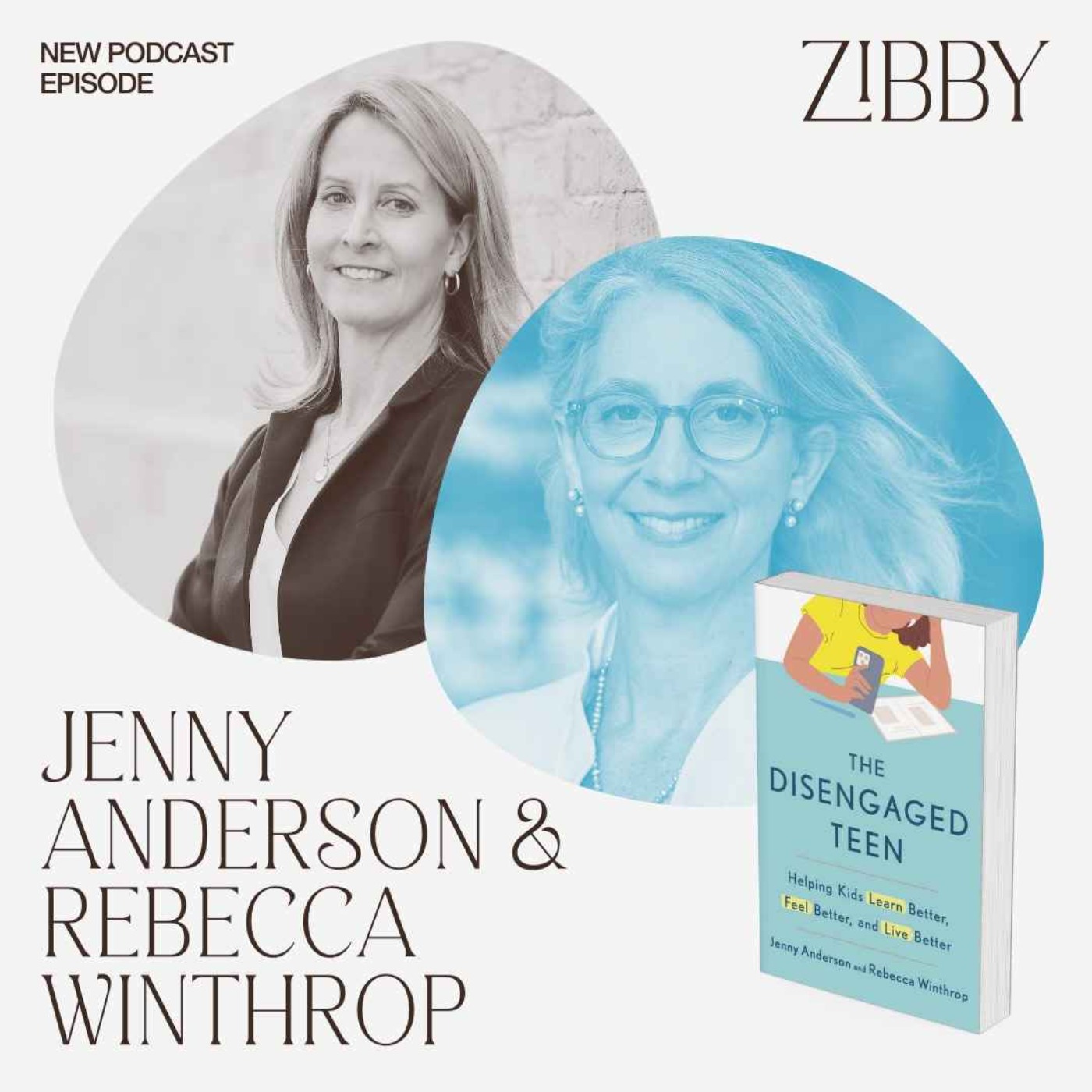
Totally Booked with Zibby
Jenny Anderson and Rebecca Winthrop, THE DISENGAGED TEEN: Helping Kids Learn Better, Feel Better, and Live Better
00:30:35
Loading summary
Transcript75 lines
- [00:01]
Zibby Owens
Hi, this is Zibby Owens and you're listening to Totally Booked with Zibby, formerly Moms don't have Time to Read Books. In my daily show, I interview today's latest best selling, buzziest or underrated authors and story creators whose work I think is worth your time. As a bookstore owner, publisher, author, and obviously podcaster, I get a comprehensive look at everything that's coming out and spend my time curating the best books so you don't have to stay in the know, get insider insights and connect with guests like I do every single day. For more information, go to zibbymedia.com and follow me on Instagram. Iby Owens, Jenny Anderson and Rebecca Winthrop are co authors of the Disengaged Helping Kids Learn Better, Feel Better, and Live Better. Rebecca Winthrop is a leading global authority on education. She is the director of the center.
- [00:57]
Rebecca Winthrop
For Universal Education at Brookings, where she.
- [01:00]
Zibby Owens
Conducts studies on how to better support children's learning and is an adjunct professor at Georgetown University. Jenny Anderson is an award winning journalist who spent over a decade at the New York Times before pioneering coverage on the science of learning at courts. She now writes a column on education in Time.
- [01:16]
Rebecca Winthrop
Welcome. Today we have two amazing women, Rebecca Winthrop and Jenny Anderson. So exciting to talk about the Disengaged teen helping kids learn better, feel better, and live better.
- [01:27]
Zibby Owens
Welcome.
- [01:28]
Jenny Anderson
Thanks for having us.
- [01:29]
Rebecca Winthrop
So lovely to be here.
- [01:30]
I feel like this could maybe be me. I feel like in addition to my teens, I'm pointing to this sort of person slumped over on the phone and it could very well be me these days. Anyway, next is the Disengaged Grownup.
- [01:43]
But anyway, you're giving us ideas already.
- [01:46]
Yeah, go ahead.
- [01:47]
Jenny Anderson
The sequel.
- [01:48]
Rebecca Winthrop
The sequel, yes, exactly. Tell listeners about your book, what it's about, the backstory, the whole thing.
- [01:54]
So our book is about to motivate your kids in school because a lot of kids really dislike school. And we dove in to really figure out why is that and discovered a lot of interesting things about how kids show up in their learning and how a lot of times we think they're super engaged in school and they're not because they're bringing home good grades, but they're not actually developing the skills that they will need to thrive in work or college. So that is what the book's about. Jenny, you want to add?
- [02:25]
Jenny Anderson
Yeah, I mean, it's a lot about demystifying learning. Learning is like a largely invisible process. And so obviously when you have little kids, you kind of see the wheels turning and you see everything happening and you feel like you kind of have a handle on it and go to middle school and then high school, and you feel a little bit at sea as to what they get and don't get and what skills they're mastering around their own learning and around their own thinking, which is kind of a lot of what happens in high school. And so it's kind of just a lot of guidance for parents on identifying how their kids are learning and some useful questions you can ask to kind of understand better that are not judgmental and not about, are you getting an A? And, you know, are you going to get into this college or that college? But much more about the process, which actually then helps predict the outcomes. So it sort of serves that purpose. But we didn't do a very good job on the backstory. Do you want the backstory? Should we do that one, too?
- [03:17]
Rebecca Winthrop
I would love the backstory.
- [03:18]
Sure. Sure.
- [03:19]
And I read all about your own kids and how, you know, some of this comes from a personal place, which made me feel better. So thank you for. Thank you for leading with that.
- [03:27]
Y. I mean, I definitely think that's one thing to emphasize to you, Zibby, but also to all your listeners that we are experts. But it's not like we figured it all out, because parenting is really hard. And as Jenny said, learning is hard to see. So I reached out to Jenny to write this book with me, because in Covid, I realized that the kid. I have two boys, they were in sixth grade and third grade at the time Covid hit, and that I realized that the kid I thought who was super engaged in school and learning and motivated was not the kid who I thought was disengaged and not motivated was. And that was a total shock to the system for me because I'm an ed expert. I've only worked in education my whole life. How could I have missed this? And it made me realize how hard it is for parents to see how engaged your kids are. And I knew that how they show up to learn is just as important as what they learn in terms of being able to be successful in high school and college and work and life. And so that was a real motivator for me. I had my. My older kid was bringing home all good grades, was coasting through perfectly happy the minute school went past fail. When Covid hit and he stopped having to chase the A, he got completely demotivated. And he said, it doesn't matter, mom, if it's not counted. It doesn't matter what you learn. And that, of course, was A dagger to the heart as an ed expert. And he basically got lost. All motivation couldn't get him out of bed. It was really difficult, as I know many parents faced. And my little one, who was struggling in school mightily with dyslexia, blossomed. He was behind two grade levels, caught up two grade levels in Covid because he actually was super motivated. He just needed a different learning environment. So that is when I turned it up, when I reached out to Jenny.
- [05:15]
Jenny Anderson
Yeah, And I was excited. I had covered finance for almost 18 years, had been very deeply mired in the world of hedge funds and private equity and investment banking, and really loved it. And then I had my own kids, and I got really interested in kind of learning and education and how kids learn and what they learn. And I was surprised that education coverage was very much about politics of education. It was about charter, not charter or teachers union. And these are super important stories, but, like, the actual. Like how kids learn and how you could help them be better learners, that didn't really exist. And I found that super annoying. And so I started carving out some of that coverage and was pleasantly surprised that there was a huge readership for it. So it wasn't that there wasn't demand for it. It was that we hadn't actually gotten around to writing it. And so when Rebecca and I was doing a lot of different things, I was doing the neuroscience of infancy. I was doing sort of teens in their phones. I was doing all of these pieces, and they were all interesting, but I wanted to cohere it all around this sort of actual science, and instead of sort of story by story, actually really try to get into the underbelly of what do I want to know as a parent? I also. I have two girls, and they're very, very different. And I just. I kind of find myself at sea most of the time, wondering whether I'm doing it right or wrong and whether I've said the right thing and whether I'm pointing them in the right direction. And so I kind of. I write my way through problems. That's what I do. I'm a writer. I wrote a book about marriage when I first got marriage. So when I first got married, and so this was like, okay, I got this big challenge in front of me. Teen years. What's the best thing to do? Write about it.
- [06:49]
Rebecca Winthrop
Totally. I should be writing about it more. Maybe that would help me. There was one chart in the beginning, which I have since, like, taken around and shown everyone in my family. You have the chart, which I'm showing to them now where basically there's a graph with three things next to each other. Math, reading and science. And things are kind of going along, although declining a little. And then there is a precipitous decline like ski mountain style around the time that phones get invented and everybody's on social media and everybody's doing everything else. And that one of your things associated with this is, well, what are we going to do in the world if like nobody's learning anything and no one's able to solve the complicated problems and heal and come up with cures and do all the things that are necessary in community for us as a species essentially to learn and thrive. So I was like completely panicked about this chart and what it meant and have been in a mental loop about it ever since. Tell me what you felt when you got that data because that is just terrifying news.
- [07:56]
Well, I can kick off, Jenny, because I live in the world of education data policy and research and we've been watch tracking this for some time. For those of us in that world, it's super concerning, super concerning because as you say, education, you know, if we can't get young people engaged in learning well in school, whatever form that school takes, you're not going to be preparing society to be democratic, to be thriving, to be prosperous, to be collaborative, all of those things to solve our problems. And for us, I think there's a real puzzle as to what exactly is going on. We know that kids have been deeply disengaged in school for a while, even before cell phones were invented. But several things are happening during that time period. One, they're disengaged and all of a sudden they have something way more entertaining in their pocket to take their attention. So that's one thing. Two, they're being asked to do a lot more. So 50 years ago, really what employers were asking schools to do is produce kids who are numerate and literate to high degrees. Now employers are asking for a lot more. You definitely need to be illiterate and numerate, but you need to have collaborative problem sol skills. You need to have self confidence awareness. You need to have deep critical thinking skills. You need to have skills that let you create novel and new ideas. So innovation and creativity skills. And so we need kids more engaged in school now than they were. And we also know there's a big gap between what they do in school and what the world is like. And that gap makes school seem irrelevant to them. So it's this sort of perfect storm of disinterest. Lack of relevance. I don't see the point, Mom. Anything I'm doing is not going to help me in the real world. And having mobile phones and social media be fabulously entertaining when what they're doing in school is not. That really is, you know, causing some of this problem.
- [10:11]
Jenny Anderson
Yeah. And I'd pick up a little bit on that relevance point. One of the things the cell phones give you is this sense of exactly what's happening in the world. So instead of school being this sort of protected space, they kind of see what is a very chaotic world. And I think there is a pervasive sense. And we heard this in our research and conversations with teens. We talked to over 100 teens over three years, and they feel deeply unprepared. Like they are so unaware. Like I was so blissfully unaware of how unprepared I was. And that was such a wonderful thing. Right. I was unprepared and so was everyone else. And it. Okay. But as Rebecca said, the world is demanding much more of us and they're more aware of it. And that is. I think we're focusing a lot on the connections between social media and mental health. And those are important. I'm glad we're having those conversations. But I also think there is this pervasive sense of both helplessness, like, I don't think I'm being prepared for this crazy world and hopelessness, which is. And I don't really know what to do about it. And I do think that that's. I mean, like, the silver lining here is parents can play a really big role here because. And not in, like, you know, self esteem. Empty. You're amazing. Here's the trophy. Like, everything's going to fine. I don't think we need to do that at all. We should be like, very authentic and real with our kids. But like, yeah, you don't have that skill. Great. Like, what do we need to do get that skill? Like, there is nothing we can't teach ourselves. I can learn alongside you. What's something you care about. Let's go and do that together. This can be done. Things are possible. Skills can be built. Growth and change is always possible. Brains are malleable. Like all of this thing. We really have to attack this sense of hopelessness and helplessness, which I think is very, very scary for young people. And it's terrifying for parents to see in their kids.
- [11:49]
Rebecca Winthrop
You know, the book made me think not just about what we can do as parents in helping our kids, but maybe we've totally missed the boat as A society here right now. And maybe there's something far bigger and more systemic that we have to address. Sometimes our kids are right. Sometimes it is boring and useless. Like, my daughter was at this class, not to name any classes, but she really wanted to take this type of an after school class. And after like one or two, she's like, this class is boring. I don't like it. The teachers aren't good. Da, da, da. I promise you, I don't like it. And I was like, you committed? You're gonna stay, you're gonna do it. We signed up, we paid for it, whatever. And then finally it got to, like, parents, open house, whatever. You got to come watch.
- [12:33]
Zibby Owens
And I was like, oh, my gosh, this class is terrible.
- [12:36]
Rebecca Winthrop
The teachers are terrible. It's really boring.
- [12:38]
It is boring.
- [12:39]
She was. No, she was 100% right. And I was like, you're out of here. We're not doing this class. And I feel like that's just an example of like, all the teens in the book and what's going on nationwide. Like, think about if we hadn't adapted professionally in the last 10 years. Right. Everything has changed how we do business. Everything is different. But schools are mostly, aside from moving online, a little bit, like doing things the way they did, teaching the same things. Like, maybe that is not what we should be doing in schools anymore. Like, maybe there needs to be something totally different.
- [13:11]
Jenny Anderson
We originally were going to write a school design book. We were like, what are the. What are the best schools? What are the optimal conditions for learning?
- [13:17]
Rebecca Winthrop
Yep.
- [13:18]
Jenny Anderson
And because we do actually know a lot, and a lot of teachers would love more freedom to be able to do more things. But there is. We're like, straight jacketed right now between like this accountability system and like the architecture of learning we have in place. And then parents feeling like they have to respond to that system. And like, you know, it's. Everybody is kind of like, this isn't working for us. Right. This is like, this is not ideal. So, like, we so hear you that there are. And we see schools. We have visited schools where they change. You know, they do change things. And the kids are so engaged. They're so. They wouldn't want to be on their phones because they're into what they're doing. They're able to work with their peers. You know, it's noisy, it's raucous. They're doing interesting things. They're led a little bit by their interests and not just, you know, kind of sit down, listen and sit still. Right. That idea of Just sit still all the time. I think that is. That's pretty pervasive. Sorry, Rebecca, I cut you off. Why don't you.
- [14:15]
Rebecca Winthrop
No, not. Not at all. Not at all. I was just going to say, Zibby, I'm so glad you picked up on that because as you know, the end of the book is here's, you know, the engagement toolkit, how to help your own kids.
- [14:25]
Yep.
- [14:26]
But, hey, if you want to. A champion. And we do need champions in every community to really shift the design of schooling. This is not a teacher problem. Teachers are doing amazing work. I think that's really important. We can't go around blaming teachers. They show up every day. But we do have a design problem. And there's a lot of great organizations that are doing this, and we have a list in the book if you need inspiration, you know, go bring them. Bring them to your. To your communities. So, yeah, I think I'm really glad you picked up on that.
- [14:58]
Jenny Anderson
But also, to your point, like, the number of kids who said to us, like, mom, when I say, or dad, when I say this, like, nothing's happening. A lot of times nothing's happening. Like, we really heard. And that's another sort of theme in the book is like, we should be listening to the experiences of kids in their day. You know, when you think about, like, a lot of feedback in the system is a lot of grownups talking to a lot of grownups and very, you know, with excellent intentions and. But, like, they are the ones who experience it every day. And, you know, only now in the past sort of decade have we really been super interested in the experience. And we now know the kind of emotions around learning deeply influence the actual learning itself. So we should care. Like, we should care how kids feel. It's not suck it up and just get through it. Right. Like, that shouldn't be our framework.
- [15:47]
Rebecca Winthrop
Yeah, and you're right, Zibi, just to add on that, and I know you're coming in in a second, but sometimes what we found is sometimes kids say I'm bored when they're behind and they're frustrated. They don't like it because they don't have the language. But a good half of the time, they are literally bored. They're not challenged enough. And if you think about the design of schooling, one teacher has to get a whole group of kids into their perfect sweet spot where it's neither too hard nor too easy. And that often, what we know from the. That often leaves the kids where it's too easy just sitting there because teachers are trying to help the kids where it's too hard, which makes sense if you're the kid. If you're the parent with the kid who's struggling, you're like, this kid needs help to get up and into their sort of. We call it the zone. You know, it's called the zone of proximal development. This sort of sweet spot of learning. And a lot of kids are bored and oftentimes we are not asking, letting them ask big questions about what they're learning. We're sort of missing the forest for the trees. It's a lot of do you know this knowledge? Do you know what does this paragraph say? How do you, rather than why did this, you know, happen? Or what is the point of this? Like really understanding it. Some, some really pushing kids to understand it. And then oftentimes we don't let kids take their knowledge they're learning and try to apply it, use it to do something. I would say if I could change, change two things, those would be two big things to try to change.
- [17:16]
Zibby Owens
Today's episode is sponsored by Acorns. Acorns makes it easy to start automatically saving and investing so your money has a chance to grow for you, your kids and your retirement. You don't need to be an expert. Acorns will recommend a diversified portfolio that fits you and your money goals. Acorns lets you invest with the spare money you've got right now. You can start with $5 or even just your spare change so you don't need to feel like financial wellness is impossible. Acorns gives you small, simple steps to get you and your money back on track. And it's the new year when we all make New Year's resolutions. Last year I made a resolution to go to the gym more often. I tried to say I would go once a week. Basically, I think I've gone to the gym like three times in the whole last year. But I am not giving up on my resolutions. And saving money and making smart financial decisions is a resolution that Acorns makes it really easy, easy to keep. By the way, I invested with Acorns in 2023 and in my portfolio I am up 20.24%, which is really awesome. So you should do it too. It's amazing. Head to acorns.com books or download the Acorns app to start saving and investing for your future today. Paid client Endorsement compensation provides incentive to positively promote Acorns tier one compensation provided investing involves risk. Acorn Advisors LLC and SEC registered investment advisor view important disclosures@acorns.com books today's episode has been sponsored by Wayfair. I don't know about you, but I am so excited to get rid of all the holiday clutter and make room for spring refresh in my own home and office. I trust Wayfair more than any other brand, and I'm probably their most frequent shopper because I decorated all of Zivi's bookshop on Wayfair and then all of the Zibby Media offices in New York City on Wayfair, plus my own home. I am obsessed. Wayfair has stuff for everyone and everything. Think carpets. Think comfy poofs for kids. Think couches and tables and office chairs and cute knickknacks and everything you can need to make your space feel refreshed and cozy and wonderful. Plus, it comes so fast and the prices are amazing. There's something for every style and every home and office, no matter your space or your budget. Wayfair will make it easy to tackle all your New Year's home goals with endless inspiration for every space and budget, whether you need a light refresh or an organization overhaul. So give your home the refresh it needs with wayfair. Head to wayfair.com right now. That's W A Y F A I R.com Wayfair Every style, every home so.
- [20:18]
Rebecca Winthrop
And maybe this is a waste of time, but now I've like, started fantasizing about these ideal schools. If you could design a school, like, if the two of you, we were like, here, take, you know, anything you need and just like, create the perfect school that would enable kids to learn and be engaged in the best way possible. Like, have you found that school? A and if you haven't, B, what would be the most essential things to put in there?
- [20:43]
Jenny Anderson
I would definitely go to Compass is where I would start. Where would you start, Rebecca?
- [20:47]
Rebecca Winthrop
No, go. Go talk about Compass. It's great.
- [20:49]
Jenny Anderson
No, there's a group of schools in Nashville, Tennessee. Oh, my God. I'm drawing a blank on the name.
- [20:55]
Rebecca Winthrop
Valor.
- [20:55]
Jenny Anderson
Valor. Thank you. Valor. Collegiate Schools. And they have this just incredible process to help kids understand themselves as people, themselves as community members. You sit in a circle at the beginning of a class every week and you sort of identify the emotion you have and you talk about that and you learn to recognize this, these emotions in others. And you learn to articulate your frustrations and your insecurities and your fears, and you learn how to support each other. It's done in a very kind of carefully mediated Gradual development of emotional skills kind of way. But what it means is that the kids turn up able to manage themselves, manage their relationships, which is such a huge part of school. Right. Like, think of middle school. Like, the reason it still traumatizes all of us to this day is it was really hard. When you can manage your own emotions, when you can manage, you know, sort of group emotions, you can turn up for your learning in a different way. And that school has extraordinarily high expectations academically, and the kids perform really, really well. And, you know, my takeaway from spending some time there, I mean, they have this sign when you walk in the door, which is, be the. Be the grown up you needed. And I mean, it's like that's what they want the adults to do, to be the grown up that those kids needed. Show those kids how to manage themselves and manage others. And I think that is a piece of it that we really overlook in this sort of furious need to get content, which is also very important. Okay, over to you, Rebecca.
- [22:23]
Rebecca Winthrop
I would add to that. I agree with that. I think I would add, Zibby, that what we need is to give kids agency, which is really the antidote to boredom and the antidote to disengagement. When you give people, young people in particular, the chance to try to practice being the authors of their own lives, which is agency. And they don't just know this coming out of the womb or just watching us. They need to practice, and they need to practice in safe places with guardrails. It really totally changes their excitement level, their motivation level. It also changes how well they do in school. They also get a lot better grades. And there are these schools out there. We give lots of examples in the book. They exist. They're just on the margins of the education system. They're not sort of the default way that schools are designed. So our hope is that we can get schools that can let kids. We call it being in explorer mode. That when kids. When schools give kids choices, let them. Not a million choices, but you want, like two to five choices on what they want to do in homework, what they want to study. Push them to make sure they're really working, not just working hard at dumb things. There's a lot of busy work, but really trying to push their critical thinking skills and then help give them opportunities to try to work with others, to. To put these skills in practice. It really lights kids up. Kids are naturally excited by good learning environments. And the sad thing we found when we did a lot of research for the book we partnered with this group, Transcend and we found that less than 10% of kids grades third through 12 said they had any chance to regularly be in this explore mode in school. So we're far off. So we hope to help with this book.
- [24:18]
Jenny Anderson
And I think one other thing just to build on this a little bit is this relevance piece that we talked about before is opportunities to get into communities and solve real problems. Like kids want to solve problems and to Rebecca's point, be agentic. They want to be. They know when what they're doing is meaningless and when what they're doing is meaningful. So trying to create. And a lot of schools do this very well either. Opportunities to get into the community, to do kind of meaningful work with a community. Solving a community problem seems to have a tremendous impact on how those kids feel about themselves and also how they then attack their learning.
- [24:52]
Rebecca Winthrop
So interesting. Okay, well then back to what parents can do because obviously we can't all change the entire system. Although I like to pretend and fantasize.
- [25:00]
You can try to change your own kids school or your schools in your community. I think parents actually have a. We will get back to what parents can do. But I just want to put a plug. Parents have a lot more power than they think, both in their own kids lives and what they do at home. It's two times more predictive than socioeconomic status actually. So this is open to any parent of any demographic. But parents also are demanding better quality education all over in many places. But they don't necessarily know what to look for and to ask for. And that actually makes a huge difference in whether we can change the design of schools. So anyways, Jenny, over to you.
- [25:41]
Concretely, and you do tell us early on, look, parents, we know you're all really busy too and you can't take on the entire responsibility of like your children's entertainment and education. But there are things you can do. So how can we improve our kids lives when it is what it is, essentially?
- [25:59]
Jenny Anderson
So one of the things we really lean into is, and this was actually super surprising to me because I think I've tried really hard to not be a tiger mom. I think I have a little tiger mom instinct in me. I'm super competitive. I was a competitive athlete. And so like I've tried hard to like check myself.
- [26:14]
Rebecca Winthrop
I'm backing away from my.
- [26:15]
Jenny Anderson
Yeah, exactly.
- [26:17]
Zibby Owens
I'll wait over there on the couch. You can.
- [26:19]
Jenny Anderson
So I've kind of always been like, you do school and we'll do family. And I think this idea of really Talking to them about the content of their learning in school was revelatory to me because it's not, how did you do in school and what grades did you get? And are you in a fight with this person? It's like not monitoring, not surveilling, but just trying to get a little bit. And you have to be really creative about this, especially with teenagers because, like, they're not going to tell you what they're doing. So figure it out and then plant some really good seeds and start having some really good conversations. And you really want to be connected to your teenagers and this is a really good way, like, what are you doing and what are you learning? And then you find out something literally ChatGPT, you don't have to know anything like, go to ChatGPT, find out a few things about the thing that they're doing and then have a conversation about it. And it, it's exciting like, and they get from that. If you think about what the sort of signal is, the signal is what you do all day long is worthwhile. I am asking about it. I want to know more about that. So that was actually kind of surprising to me because I think I've tried to tiptoe away from that, to not be sort of like that parent. Right. Rebecca, do you want to go give a couple other tangible.
- [27:29]
Rebecca Winthrop
Yeah, totally. Well, first I would say that one of the things that parents can take away from this book is being able to see what student motivation engagement looks like. Like, we, we kind of know it, but we found out that actually it's kind of hard to see a lot of it. So we developed these four modes of engagement. So you've got passengers who are basically coasting along, doing the bare minimum. That's actually most kids in middle school and high school, you've got achievers who look great, who we all think are rocking it because they're trying to get top grades. They do get top grades, captain of the sports teams, et cetera. They're going for it. They're locked in. But we did find that this group of kids has really difficult mental health problems because often they try to be perfect rather than just excellent. And no one can be perfect. And that they are fragile learners, actually. So when they fail at something, they kind of fall apart, which is not a skill we need them to have when they leave our nest. Then you've got kind of the resistor mode kids who are your typical problem children, disrupting, avoiding, skipping school, not doing homework. So that one we see. But they actually have a lot of agency, believe it or not, they are telling you in whichever way they can, often inappropriately, that this school thing ain't working for them. And we found that if you can switch their environment, these kids take off. They are not lost causes. Do not give up on them. Just find a way to switch their learning environment into explore mode. And I would say that is the explore mode is where kids are motivated and excited to learn and they have some opportunity and freedom to choose. So they're sort of practicing these being the author of their own lives skills. And those kids, when they get that opportunity, they get better grades, they're happier and they're learning the skills they need to navigate a world of AI. So it's the good trefector you want. So you can. Kids can develop these explore muscles, these explorer skills in school, but they can also develop them outside of school. So if they're not like one of my sons, I shall not name names for protection of the school. But you know, he was like, yeah, I don't really get to be an explorer mode in school. Fine, do your best in school and let's give you lots of opportunities outside school because you can in extracurricular activities at home, through churches, whatever, community service, you can develop those explorer skills. So I would say one of the really important things is to help your kids develop that agency in explorer mode because they're going to need it when they leave.
- [30:12]
Jenny Anderson
Would it be helpful, Zivi, to do a very quick what to do with each of those? One bit of advice for each of those modes?
- [30:20]
Zibby Owens
Yes.
- [30:20]
Rebecca Winthrop
One piece of advice, Quick piece of.
- [30:22]
Zibby Owens
Advice for each mode.
- [30:23]
Rebecca Winthrop
Yes.
- [30:24]
Jenny Anderson
Okay, so passengers, these are the ones who are coasting. We all want to nag these kids because they're driving us completely crazy because they won't do the thing they're meant to do. And you know that if you don't nag them, they're not going to do it. It fascinating brain research shows that when you nag, the part of their brain that actually activates problem solving shuts down. So nagging does not work. You're going to have to find a better way. So not nagging. We actually argue in the book that giving those kids a little bit more autonomy to try and fail is better than actually nagging them Achievers. These kids need to take more risks. As Rebecca said, they're very fragile and so it's getting them out of there. Instead, it's really hard to stop a kid who is succeeding on all fronts and say, take a little bit of a detour. Because that detour could, you know, hurt the 4.0 or the 4.2 or the 4.8 or whatever number we're at these days. That is actually the skill that's going to serve them the best. Take a little risk, not a huge risk. And I'm saying, like, you know, homeschool these kids, but, like, take a small risk and see and start to build up their confidence that they can do things other than just jump through every hoop that's been put in front of them. Resistors is very much about getting to the why. So these kids often seem like the problem children. They're not problem children. They're children with problems. And instead of sort of like clamping down on them, really try to get side by side with them and figure out what's going on. Because as Rebecca said, you can really turn those kids around super quickly when you just sort of understand what it is. What's the big impediment?
- [31:44]
Rebecca Winthrop
Okay, so I'm armed with tools for no matter what happens in my head, I'm drafting a note to my kids, various schools, and thinking, how can they.
- [31:53]
Zibby Owens
Also solve real world problems in the.
- [31:55]
Rebecca Winthrop
Course of their day and feel impactful? And, you know, some of them are. Some of your suggestions are easily implemented if you just know why they're important. Anyway, I assume you're going to go around and talk to a zillion schools. Is that the plan?
- [32:08]
That's the hope.
- [32:09]
Jenny Anderson
Hope.
- [32:09]
Rebecca Winthrop
So we'd be happy to come to talk to your kids.
- [32:13]
Jenny Anderson
Schools.
- [32:13]
Zibby Owens
Okay, I will.
- [32:14]
Jenny Anderson
Yeah, it would be fun to talk to schools, but also to organizations. We're talking to organizations as well because, you know, parents who are struggling with parenting, you know, sometimes struggle to turn up in the way that they want at work. And so there is also just a nice element of like. Like, I think if we feel a little bit better in our parenting, maybe we will be a little bit more focused on our work. So that's another area for focus. But schools are definitely our sweet spot.
- [32:39]
Rebecca Winthrop
Well, if I were running the government, I would put you guys as head of education and let you do your thing so.
- [32:48]
Jenny Anderson
Well, thank you for the vote of an interesting direction. Yeah, exactly. No commentary on the current political situation.
- [32:56]
Rebecca Winthrop
In the fantasy world where we appreciate.
- [33:00]
The vote of confidence.
- [33:00]
Thank you. Yes, you have my vote. Well, thank you so much. I found this so interesting and thought provoking, and I'm sure other parents and educators and concerned loved ones and just societal hopefuls will as well. So thank you so much.
- [33:15]
Thank you very much.
- [33:16]
Zibby Owens
Okay, take care. Thank you for listening to Totally Booked with Zibby, formerly Moms don't have Time to Read Books. If you loved the show, tell a friend, leave a review, follow me on Instagram, ibbeowens and spread the word. Thanks so much. Oh, and buy the books.