Loading summary
Transcript50 lines
- [00:01]
A
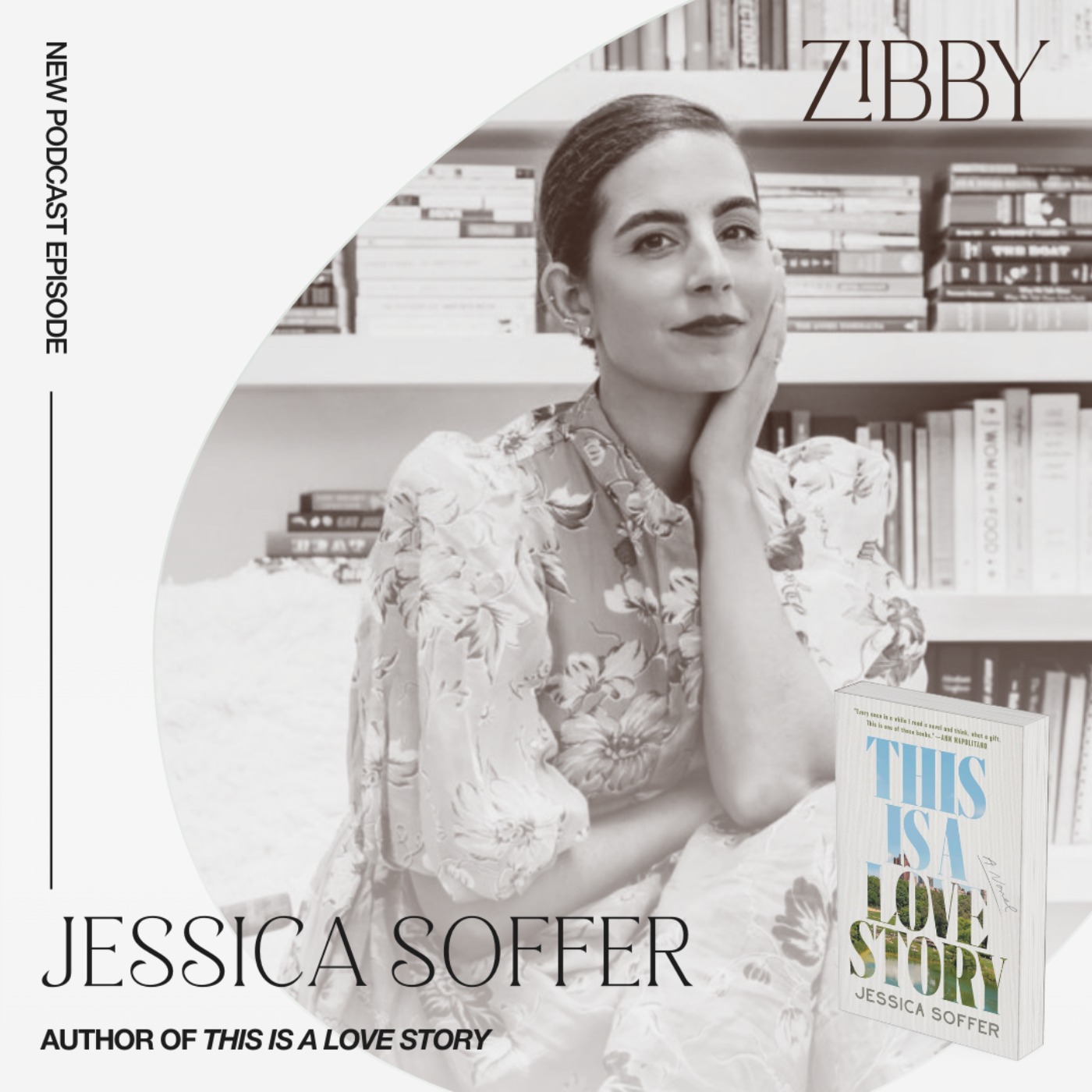
Hi, this is Zibby Owens and you're listening to Totally Booked with Zibby, formerly Moms don't have Time to Read Books. In my daily show, I interview today's latest best selling, buzziest or underrated authors and story creators whose work I think is worth your time. As a bookstore owner, publisher, author, and obviously podcaster, I get a comprehensive look at everything that's coming out and spend my time curating the best books so you don't have to stay in the know, get insider insights and connect with guests like I do every single day. For more information, go to zibbymedia.com and follow me on Instagram. Iby Owens Jessica Soffer is the author of this Is a Love Story, a novel. Jessica is also the author of Tomorrow There Will Be Apricots. She grew up in New York City, attended Connecticut College, and earned her MFA at Hunter College. Her work has appeared in Granta, the New York Times, Real Simple Sever, the Wall Street Journal, Vogue, and on NPR's Selected Shorts. She teaches creative writing to small groups and in the corporate space and lives in Sag Harbor, New York with her husband, young daughter and dog. Welcome, Jessica. Thank you so much for coming on Totally Booked with Zibby to talk about this Is a Love Story. Congratulations. Thank you.
- [01:21]
B
Thank you for having me.
- [01:22]
A
Of course. Really beautiful book. And yeah, I can't wait to discuss. Tell everybody what this Is A Love Story is about, please.
- [01:29]
B
So this is a Love story tells the 50 year romance between two characters, Abe and Jane, a writer and an artist, from the time that they meet until the very end of their relationship about 50 years later. It also includes the perspective of their son Max, who has a nuanced relationship with love, believes that his mother chose art over parenthood and can't seem to find his way into a relationship at all. Also, the perspective of a woman named Alice, a young woman, a student who sort of inserts herself into the relationship between Jane and Abe. And then there's also the kind of untraditional but ever present character of Central park itself. And sections of Central park contain literally hundreds of anecdotes about the love that happens in the park. So there's a kind of wide angle lens view of this one love story, but the kind of kaleidoscopic view of love in general.
- [02:26]
A
Love it. Excellent, excellent pitch, by the way. That was lovely. Okay, so what, were you walking through Central park one day and you're like, this would be such a cool idea for a book?
- [02:36]
B
No, Central park was actually the last part of the book to be built.
- [02:40]
A
Oh, yeah.
- [02:41]
B
I came at it a little bit backwards. For many years, I worked with just the characters of Abe and Jane and kept trying to make this one very tight, very sort of myopic story of their love work. And it just couldn't. It was too narrow, and it didn't feel like it could ever get to the place where it would be sellable. And so at a certain point, I had a friend who's also a writer, Liz Moore, who has taken the world. She read it and she said, this feels like just one part of a love story. Which kind of got me thinking about the way that no love story exists in a vacuum. Every love story is complicated and challenged and supported by other loves. And so what would it be to kind of flesh out this one love story and have it contain many more? And so that's how it contained those other two perspectives. And then I grew up spending a lot of time in Central Park. My father was an artist, and he used to sit there and just observe. And so I, by default, sat there and observed. And so when I thought about the place that taught me the most I know about love and also humanity, and the place that I kind of returned to again and again in my mind, but also, actually, it felt like Central park was the place.
- [03:58]
A
Oh, I love that. I always feel when I'm there and I see the signs on the park benches or on the walkways, like, who are they? What was this? I want the rest of it to be filled in. And then I also feel like. I wonder what it would be like if there was some magic time machine of sorts. Because I have walked through the park since I was, like, born to now. And if there was some way to, you know, like, follow the. You know, and make some sort of. Anyway, do you know what I'm talking about?
- [04:28]
B
Follow a map to have a map.
- [04:29]
A
Of you wandering how life changes, but the place sort of stays.
- [04:34]
B
I recently wrote an article, and we haven't placed it yet. I don't think about going to the park many years ago with my father when he was unwell, and then returning to that very same place unknowingly, many years later when I was pregnant with my daughter. And the ways in which this park feels like it. It's a witness for a lot of people. It holds time. It's a compa. I mean, at least for me, it's been a companion. And I find that now I don't live in the city anymore. Every time I go to the city, I'm magnetically drawn to the park, as though. As though I've missed it, which I have.
- [05:08]
A
But almost subconsciously, recently it was snowing. And in true New York fashion, as I looked into the park, there was like a long line of people waiting to sled down the hill. Like, only here would you have to. It had to be, like, annoying and, you know. But anyway, the pros and cons of New York all wrapped up in the park. You chose a really interesting way to tell the story with you as a second person for a lot of it. Why that? Why that way? And you also have these very short sort of chap paragraphs. And the way you use space on the page is interesting. Like, talk a little bit about that.
- [05:43]
B
I think that has been there since the beginning. And I would like to say that there was some very kind of dedicated reason for that. From the get go. It was just sort of the way it came out. And I think in retrospect, it feels like Abe is telling the story of his wife's end. And he's telling it in a way that is. This is scout. In a way that is fragmented and sometimes hopeful, but sometimes in utter despair. And I think it's sort of the only way that he can get it out is in a way that feels nonlinear, in a way that feels stunted. And I think it's meant to reflect that. I think it's meant to reflect the agony of somebody telling the most beautiful moments of their life at the end of a life.
- [06:26]
A
Wow. Can I read, like, just a little excerpt to give?
- [06:29]
B
Sure. Thank you.
- [06:30]
A
I mean, I really could have picked anything, but. Okay. This will be from chapter nine. You remember after that, suddenly a baby was all you wanted. You remember making love like a chore. You remember closing your eyes and knowing that there was something unhealthy down deep. What if this was actually the beginning of something? Or just not meant to be or maybe rot under the boards? You remember I slept on the couch and everything I said felt like an insult. You were grateful for the hours I was at work. It never used to be like that. Let's skip that part too. You say you can add in what you need later. What do we need in story? You can drop a few lines down. You remember in the end, it happened when we least expected it. You remember in the beginning being pregnant. Like you were apart. You were algae swaying. Or maybe the baby was and you were the salt. You remember making a mural in the nursery with frogs and sheep and roses, dragging home an abandoned dresser with no knobs for. From 70th and Columbus, painting it with white, with yellow stars, feeling that you should rest, but also fearing being too delicate, as if pregnancy was a fine balance. And also somehow up to you. So beautiful. Like you just in like not that many words. Trying to have a baby, having a baby, decorating. Like if someone were to say to you, like, spend. I don't know how many, let's just say 500 words to encapsulate that, evoke a feeling, evoke a place of space, emotion, conflict. That's a lot to do in that short of a thing. So just from a crafty perspective, talk about the writing of this. Like how to pick just the threads that tell most of the story without having to go into too many details, all of that.
- [08:14]
B
Well, I think it's a gift I've learned. It's a gift for me to not be telling one story all the way through. So Abe's section is really just one portion of the book. And the goal here, I think if one has a goal when one is writing a book, is to offer a kind of raw and unfiltered version of what a long term romance is like. And I think this romance is a really good one. Abe and Jane's relationship is really good. It's reciprocal, it's respectful, it's compassionate, it's full of trust most of the time. But at the same time it is a long term romance and life is hard and love is hard. And so, and so I didn't want to bang anyone over the head with that. And so it felt like their portion could only be small. So it's about, I think the Abe section is about one fourth of the book and that felt right. But I've been teaching writing for so long now that those things that you bring up are things that I've worked through again and again and had to make plane for students. You know, when a, when an 18 year old who's never been in a writing class before asks you what tone is, you have to figure it out for yourself. I mean, the things that I feel like at this point, having written for most of my life, certainly my adult life, are very obvious and self explanatory to me. To have to break those down I think has made me, I hope has made me a better writer. And so I was really kind of on my own case when I was writing Abe's section because I had my students questions in my ear and I had my own shtick about tone and voice and atmosphere and place and all of those things. I was very hard on Abe in that way. And Abe is also a writer, so it is his job to do those things as well as he can. As well as I can.
- [10:06]
A
So my sister in law teaches horseback riding now. She was a professional, you know, she was like a jumper and she did all the things and now she's teaching and she said it was hard in the beginning because it was so natural. Everything that she did came so naturally to her. So to have to figure out how to teach it meant she had to think about every little thing she was doing and that she does that thinking, which I feel like is what you're saying about writing. Like it might come easily to you, but then how do you show what comes naturally to someone else?
- [10:35]
C
Today's episode is sponsored by Acorns. Here's a fact that may not surprise you. 66% of men are investing in the stock market compared to just 48% of women. Here's another one that won't surprise you either. Multiple studies have shown that women are better investors than men. Why? Because men are overconfident and women actually do their research. The investing gap means less Women have the chance to build wealth now and can have huge repercussions down the road when it comes time for them to retire. The good news is is that Acorns make it easy for everyone to start investing. I've been using Acorns for over a year now and have absolutely loved how easy it is to use the returns that I've gotten and absolutely everything about it. Acorns is a financial wellness app that makes it easy to start saving and investing for your future. You don't need to be an expert. Acorns will recommend a diversified portfolio that matches you and your money goals. And you don't need to be rich. Acorns lets you get started with the spare money you've got right now. Even if all you've got is spare change. Sign up now and join the over 13 million all time customers who have already saved and invested over $22 billion with Acorns. Head to acorns.com books or download the Acorns app to get started. Paid client endorsement compensation provides incentive to positively promote Acorns Tier 1 compensation provided investing involves risk. Acorn Advisors LLC and SEC registered investment advisor. View important disclosures@acorns.com Books Today's episode is sponsored by Wayfair. After the holiday hustle There is nothing like giving your home a little tlc. Whether you're tidying up, clearing out or just want some new looks to start the new year, Wayfair has got everything you need, all within your budget. I am obsessed with Wayfair. I used Wayfair to decorate both Zivi's bookshop in Santa Monica and my office for Zivi Publishing here in New York City. I love the items. They are all such high quality. The couches are soft and beautifully constructed and the chairs and everything for the office. All of our items are first rate. They came so quickly and were exactly as advertised for such a great price. I'm obsessed and I know you will be too. Whether it's for your home or your office, some spring accents, lighting, art, entry tables, rugs, holiday storage, closet, organization, appliances, accessories. They have everything and it's so convenient. The huge selection of home items that Wayfair has makes it easy to find exactly what's right for you. There's something for every style and every home, no matter your space or budget. Wayfair makes it easy to tackle your New Year's home goals with endless inspiration for every space and budget, whether you need a light refresh or an organization overhaul. Plus free and easy delivery. Even on the big stuff. They'll even help you set it up. So give your home the refresh it needs with wayfair. Head to wayfair.com right now. That's W A Y F A I R.com Wayfair Every style, every Home My.
- [13:57]
B
Best teacher was a woman who taught me. I think I was probably in high school. She was I was taking a writing workshop and she had not been published before and had been trying for many years to be published. And she was such an excellent craft teacher because she had worked through it on the granular level so hard for so many years. And so she kind of offered up truths that were probably obvious to much more esteemed writers than her, but to her, she'd had to really sort it out for herself and could articulate it to us in a way that was amazing. I'll never forget that.
- [14:32]
A
So tell me about your whole background and when you started teaching writing. And by the way, for a long time I subscribed to your writing prompt of the week. Oh good. So you were in my inbox every week and actually kind of made me feel bad because then I would never do anything with the writing prompts. So eventually I had to unsubscribe. Not because they weren't great, but because it made my own guilt for not taking the thread and sort of, you know, unspooling it once I was handed it. I felt too Guilty about it. But anyway, so they're there for you.
- [15:04]
B
Those prompts are there for you. Thank you.
- [15:06]
A
Thank you. They're great. They're really great.
- [15:07]
B
I'm so glad. Yeah, they're still going. I mean, during the pandemic, I would get hundreds of responses every week. I think they were a lifeline for me as well. It's a subscription prompt service that's free. It's offered every Wednesday morning they go out. And during the pandemic, I got so many, they've since tapered off, which I'm great grateful for because I do respond to everyone. Anyway, I was very lucky in that I knew I wanted to be a writer young. My mother is a writer. She's been writing true crime for many, many years. And her first novel came out in the summer. It's done incredibly well. It's called Word Hunter. And so I grew up with a mother who was always writing and always reading. And I knew I wanted to do it young, which now feels like such a gift. I went to college and studied under a creative writing instructor from the get go. I applied MFAs while I was still in undergrad and ended up at Hunter College, which was wonderful at the time. I think it's since had some issues. But I was there when Colin McCann was there, Peter Carey was there, Nathan Englander and Jenny Shute. And they were wonderful, every one of them. Very distinct in their teaching styles and their writing styles and very generous. I mean, I felt like I was kind of ushered into the, the professional world of writing immediately. And I learned very quickly what meant to be a working writer. And so when I graduated, I pretty much immediately started writing and teaching. I taught at Connecticut College for many years. I taught at Stony Brook. And then during the pandemic, I started teaching in the corporate space. So big corporations either, and actually small ones as well. I taught a beauty brand at an architecture firm, and in some cases I was teaching in their wellness programs. So journaling workshops and things like that, especially during the pandemic, that felt like what was needed. But in other cases I was teaching their communications departments, and mostly those were people who had been writing all of their lives and in many cases creatively as well. And it felt like they had lost their voice a little bit in becoming in where their, their lines of work had taken them. So we kind of tried to reinvigorate finding voice and authenticity and language.
- [17:23]
A
Wow. I am impressed by the direction. Like, I felt like I wanted to be a writer, but I didn't like all the writing classes at school, and I was like, I don't want to read all those books. I kind of just think it's luck.
- [17:38]
B
I mean, I also. I've been thinking about him a lot. I had this teacher when I was in high school who it was. He was a short story. He was an English teacher, but he taught a short story class and he taught all the really good shit. And for someone who was. I think I was probably 15 to be reading Jhumpa Lahiri and Flannery O'Connor and Eudora Welty. I mean, I think I was offered up really good writing, really young. Jim Harrison, Raven Carver. And so it felt. And I think also I studied a lot of short story. I've never thought about this before, but I studied a lot of short story early on, and that felt accessible. I think the form just kind of lends itself to younger writers in a more immediate way. And so I think it's tricky when you're young and you're offered up these kind of great and legendary works that are canon to imitate them in any way. And in the beginning, it is all imitation. And not that I could ever imitate a, you know, Gabriel Garcia Marquez story with any success, but I think when. When it's 16 pages, you can dissect and dissect and dissect and for a moment think that you might be able to until you fall flat on your feet. What happened?
- [18:55]
A
It's amazing how much teachers. I feel like throughout this podcast, just having one teacher identify that you have talent or spending a little extra time with you or, you know, giving you the things that really hit home, and it makes such a huge difference, 100%.
- [19:12]
B
And at the same time, having a teacher who rips you down can be so memorable and so damaging. And I've had that happen, too. I mean, there's. There's one comment that will forever stay in my ear from a teacher who didn't understand my work, although it probably was un understandable at the time. And that stays with you. It can be so damaging, permanently.
- [19:35]
A
Yeah, it's true. And sometimes the worst stuff gets highlighted more. Like it's on the big lights. And you moved to Sag harbor now, is that right? I sign your bio. What are you doing? How come you live out there?
- [19:48]
B
My husband was offered a job many years ago, right after my first book came out. And we weren't planning on moving, but it was an amazing opportunity for him. He's a builder. He was building this incredible concrete. Building concrete house on the beach. And we thought this feels right. And I was kind of over the writing scene in New York. It had started to feel a little bit repellent, as it can. And so we moved out. I had grown up spending summers here, and we have stayed and we have a child here. We have many pets. And it feels like a really good place to be a writer, a really good place to be a human, to be a parent. It's really wonderful. The sad part about being out here at the moment is the bookstores. Kanio is just closed, I'm sure, you know, and it's sort of hard to know what's happening with the other bookstores. So that feels a little bit sad. Especially at this moment when my book's coming out. I hope that they'll carry it. I don't know. But otherwise, it's a really special place to live, you know?
- [20:47]
A
Yeah, I like Sag Harbor Books right there. That's still open, right? Yeah, yeah, they're still open. Yeah, they're still open. I mean, in all small towns, it's like all these stores trying to stay in business and rents.
- [21:03]
B
The beauty of being out here, you know, this too, is that it really gets sleepy this time of year. And it's so good for the writing. I mean, there's nowhere to go except out to dinner. And you can't do that a couple days a week because everything is closed. So there's nothing to do but write. And I love the idea of turning inward in winter. I think it's really important for write for everybody, but especially for writers. And I also feel like the buzz of what's about to happen with my book. Although it already feels like there's movement. It's really nice to be in a place where you can go outside and take a deep breath. Because I find. I mean, I grew up in the city and I loved it. And I feel like I kind of rode the wave of city momentum for so long, but it's exhausting, permanently.
- [21:47]
A
It is, yeah. Although I feel like at this point, I rely on it. Like, if I'm gone for too long, I need a little dose.
- [21:55]
B
I feel the same. I'll be there next week.
- [21:57]
A
Yeah. What are you working on now?
- [22:02]
B
I'm working on a new book. It's. I. I've had two working titles, and both of them have been one of A book just came out with the title. Oh, no, successfully so. And it seems like an amazing book. I'm really excited to read it, but it's about mothers. It's about four mothers and a kind of Scandal at the center that rocks the community around, around these mothers. But I think different perspectives on motherhood, which is sort of all I can, all I can consume and all I can concern myself with right now. I have a five year old and the women that I spend the most amount of time with are mothers and they're so smart and they have such meaningful things to say about mothers. And it's really hard and important and life giving job. And so I feel like I'm uniquely predisposed to be writing about it right now. And I also don't think I could write about anything else right now.
- [22:52]
A
Write what you know, right?
- [22:53]
B
It's not what you know. Maybe I'm taking the easy way out, but it.
- [22:56]
A
No, not at all. I mean, if you're an authority on it, on a topic.
- [23:01]
B
Right.
- [23:01]
A
Wouldn't we rather read about motherhood from you than someone who. Yeah, I mean, you know what I mean?
- [23:07]
B
Yes, I totally know.
- [23:08]
A
You mean. Do you have advice for aspiring authors?
- [23:12]
B
Yes, I think, and I say this sort of with new experience on this finding community of readers is I think the most important thing because writing can be so solitary. And I think writers as cerebral as we are can really easily get into a spin cycle. And I did that for many years. I mean, my first book came out 12 years ago and I worked on a book that now lives in a drawer for many, many years. Six or seven, I would say. And I think that could have been. That that timeline could have been greatly shifted had I had. Had I leaned on the people that I should have. I had people. And I just kind of felt like I could do it myself or I wanted it to be perfect before I offered it up. And I think I wasted a lot of time. And so finding people that you trust and that can inspire and motivate and galvanize you in moments where you start to spin I think is really, really critical. And now I have an agent who I. Who is one of the true loves of my life, Julie Baer. And I have an editor who I adore and is so thoughtful. And I think in certain ways this next book we're going to do in a way that feels collaborative. I've never done that before. Julie came to this book at the very end. I mean, it was done, it was dead by the time she came to it, although we worked on it together for a bit. And so I think that's my best advice is find the people you trust and who will get you there.
- [24:36]
A
Amazing. Julie is so awesome. Thank you. This is really exciting. Congratulations. I loved your book. It was beautiful. And yeah, I can't wait to see it launch and all the good things happen and hopefully I'll see you at some point.
- [24:52]
B
Out in the heat so much. You do such important things for writers and for readers, and we're all so grateful to you.
- [24:58]
A
Thank you. I love it. Okay, thanks a lot.
- [25:03]
B
All right, take care. See you soon.
- [25:04]
A
Bye. Thank you for listening to Totally Booked with Zibby, formerly Moms don't have time to read books. If you loved the show, tell a friend, leave a review, follow me on Instagram, ibbeowens and spread the word. Thanks so much. Oh, and buy the books.