← Totally Booked with Zibby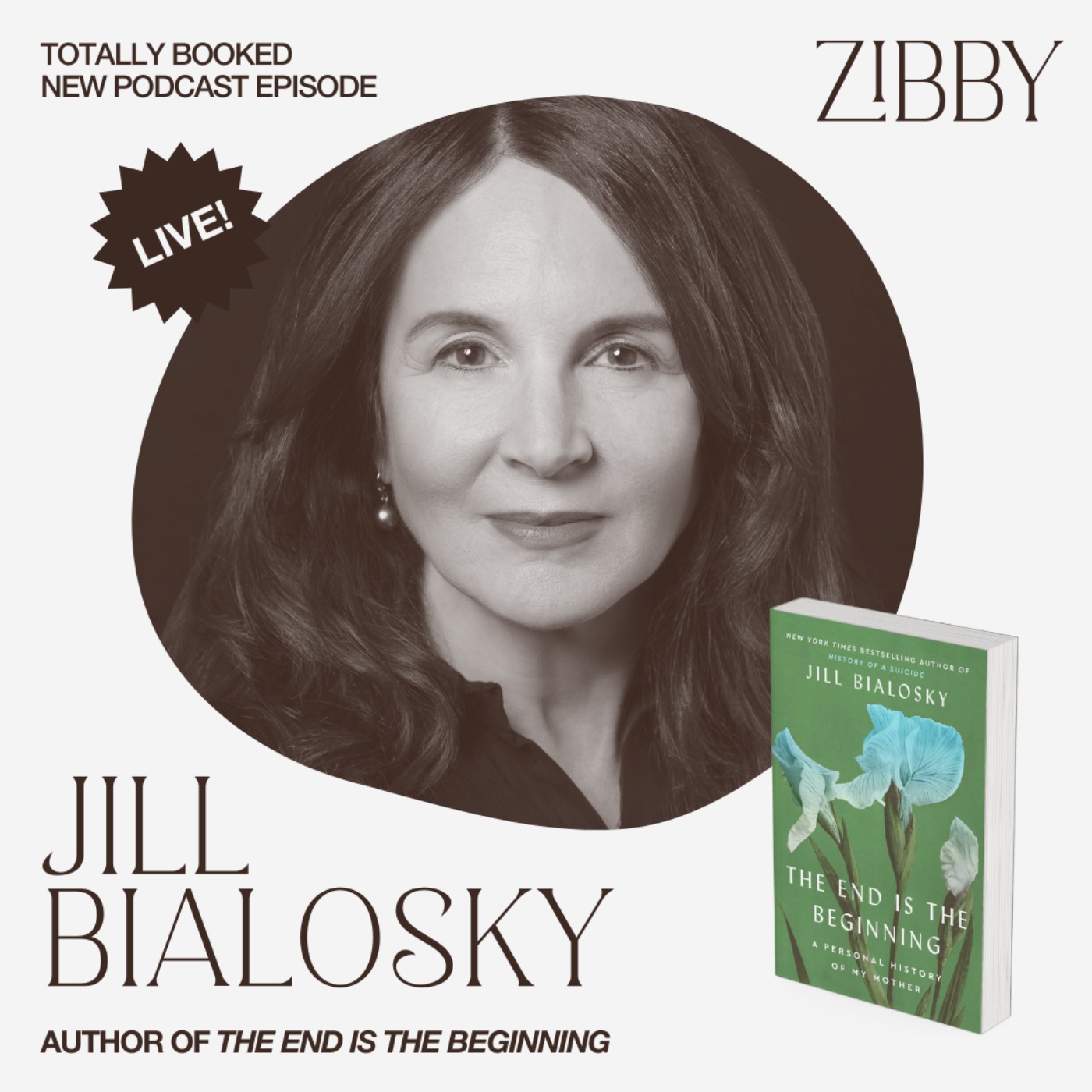
Totally Booked with Zibby
Jill Bialosky, THE END IS THE BEGINNING: A Personal History of My Mother
00:25:30
Loading summary
Transcript54 lines
- [00:01]
Zibby Owens
Clips from the Totally Booked Live series are now up on Instagram totallybooked with Zibby. Check it out.
- [00:11]
Hannah Berner
Hi guys, it's Hannah from Giggly Squad with some around the corner. I want to tell you guys how I'm staying comfy and stylish. Lululemon is my secret weapon. There are plenty of copycats out there, but nothing compares to the Lululemon fabrics and fit. I've literally had my pair of Lululemon leggings so since college and I'm out of college. I know I don't look it, but I am. The quality is next level. I especially love the Lululemon Align collection. It's made with this weightless buttery soft nulu fabric that feels like next to nothing. It's so soft. Whether you're in Align pants, shorts, a bra, tank, skirt, a dress, you get non stop flexibility in every direction so you can stretch the summer limits align even wicks sweat and as a sweaty girl. I love this. You know it's going to be my best friend when I play tennis this summer. Shop the Align collection online@lululemon.com or your nearest Lululemon store.
- [01:07]
Thrive Market
Worried about what ingredients are hiding in your groceries? Let us take the guesswork out. We're Thrive Market, the online grocery store with the highest quality standards in the industry. We restrict 1000 plus ingredients so you can trust that you'll only find the best high quality, organic and sustainable brands all free of the junk. With savings up to 30% off and fast carbon neutral shipping. You get top trusted groceries at your door and you can stop worrying about what your kids get their hands on. Start shopping@thrivemarket.com podcast for 30% off your first order and a free gift.
- [01:37]
Zibby Owens
I have this nightmare that I never finished college or that someone's going to find out that I don't have the qualifications for this job and I'm like a total fraud.
- [01:46]
He Su Jo
Sometimes even the most successful people experience Imposter Syndrome. Check out Mind if We Talk? The newest podcast helping you with tough topics. In this episode, licensed therapist He Su Jo sits down with award winning journalist Jane Marie to explore why so many of us have Imposter syndrome and why success never seems to solve it. Whether you've ever questioned your own success or felt like the odd one out, this episode's for you. Listen and subscribe to Mind if We Talk? Wherever you get your podcasts.
- [02:20]
Zibby Owens
Hi, I'm Zibby Owens. Welcome to Totally Booked, where I get to talk to my favorite author and hopefully yours too. Today we have Jill Biloski, who has already been on my podcast and is back this time with the End Is the Beginning, A Personal History of My Mother. And here is a little bit you should know about Jill Jill Wylosky is the author of five acclaimed collections of poetry, most recently Asylum. Her poems have appeared in the New Yorker, the New York Times, and the Atlantic, among others. She is the author of several novels, including the Deceptions and two other works of nonfiction, History of a Suicide and Poetry Will Save youe Life. In 2015, Jill was honored by the Poetry Society of America for her distinguished contribution to the field of poetry. She lives in New York City.
- [03:19]
Find out more.
- [03:20]
Jill biloski.com welcome Jill.
- [03:25]
Jill Bieloski
Thank you, Zippy. Thanks so much. Thank you so much for having me.
- [03:29]
Zibby Owens
It's my pleasure. Your book, oh my gosh, I like, kept tearing up reading this. It is so poignant and I don't want to scare people away by saying it's so sad because it's so beautiful. And the way we love the way we love things that we've lost is just so moving. So talk a little bit about the book and what it's about, and then I want to read a short section of it, if it's ok. Great.
- [03:53]
Jill Bieloski
Thank you. I'd love to. So my book is called the End Is the Beginning and A Personal History of My Mother. And what I wanted to do in this book is tell my mother's story from the end of her life to the beginning. And what happened that really encouraged me to pursue this book was that I lost my mother during the first month of COVID I was in New York and my mother was in Cleveland. And of course, if you remember, there were restrictions at that time where you had to quarantine for 14 days before you could leave the state. Even so, I was not able to be by my mother's side when she passed away, and she had been in a care home where she suffered for 10 years a slow decline from Alzheimer's. And I so wanted to be with her at the end. And the funeral was I was not able to go to her funeral, which was really just a graveside because of the pandemic and the quarantines. And I witnessed it via FaceTime with my sister who lived in Cleveland. There was something about that experience of not fully being able to process my mother's death and loss inspired me to really want to write her story because she led quite a remarkable life for a woman who grew up in she was born in 1933 in a very modest Jewish home. She was raised by her aunts and her father because her mother died when she was nine years old, giving birth to her brother, and her brother survived. And so my mother was coddled by her aunts and her father, who adored her. And she was really brought up to be a beautiful wife and mother, and that was her dream. And she met my father when she was 21. And in that era, they quickly got married and quickly had three daughters, all under the age of. Were 15 months apart. And then my father sadly died suddenly when he was 30, and my mother was 25 of a heart attack. And my mother, her entire world was shattered because she had no livelihood. So in some ways, I see my story also as a tale about what it was like in that era for women and how difficult it was if your life suddenly became something else you were not prepared for. But I tell the story, as I said, from the end to the beginning. And we see my mother's slow decline through her Alzheimer's and living in assisted living and then a care home. And then I go to her FaceTime burial. And it progresses through the sort of five or six pivotal periods in her life where after my father died, as women were wont to do, she really wanted to meet a new man to take care of all of us. And she was very beautiful, and she was brought up to really value that aspect of herself. And sadly, she entered a marriage that was very spontaneous and, you know, they fell in love. And my stepfather was Irish Catholic and we were Jewish, and it was a very different world. And so I also write about that period of her life. And they had another child, another daughter. So my mother had four daughters to raise on her own, and the marriage only lasted for five years. And then sadly, I write about the wonderful periods of raising our sister Kim, because I was 10 and my other sisters were 9 and 11, so she was like our baby. And some of the parts I love most about my book is the family life. And also when I narrate the story of my mother meeting my father and how in love they were. And I think you're right that my book is sad at times, but I also feel that it is such an inspiring story about love, because to the very end, my mother really felt she put back on her wedding ring after her divorce and she changed her name back to Bieloski. And she really believed that she would be reunited with my father. And that really kept her. Those memories were really precious and important. So, you know, through. Through tragedy also comes some kind of joy and beauty. That's how I see it.
- [09:27]
Zibby Owens
Wow. I had to read the whole book to get all those details. But that's okay. Now everybody else has them. No, I'm sorry for some of these losses in your life. You also, in the book, write about your sister Kim, the youngest daughter, who ended up dying by suicide, which was so devastating. And the reaction of your mother. Oh, my gosh, and you and your sisters, and it's just so heartbreaking. And then George, your former stepfather, who was abusive and pretty. Just terrible to all of you and how awful that period of time was. I love how at the end you're like. And then I just figured I would just maybe Google him to find out what happened and you hadn't even known. And just how you have weathered one thing after another, and your mother has, too. And how you put yourself in her shoes is just so beautiful.
- [10:22]
Jill Bieloski
Oh, thank you, Zibby. It was so interesting for me when I got to the parts in the book where I had to imagine my mother's life before I was born. And of course, I relied on stories and photos and things my mother told me and my relatives told me. And I did some research into the those periods. But it was really magical for me to make my mother come alive in the book. And I recognized how much we really don't know our parents outside of being their daughter or their son. And one thing that I wanted to do in the book was to think about what my mother's life was like before I was born and what informed her life that she passed down to me. And obviously the early loss of her mother was quite significant. But I really loved. Those last chapters, I think, are my favorites in the book.
- [11:31]
Zibby Owens
You had a term at the end about this that I hadn't heard before. I want to say, like reciprocal trauma, Some type of. No, not reciprocal. What's it called when you experience inherited trauma? It wasn't inherited trauma that I've heard, but there was another word. Well, anyway, it doesn't matter. But vicarious trauma. Vicarious trauma, what is that? Is that a form of inherited trauma?
- [11:57]
Jill Bieloski
In a way, I think so. I definitely feel that we inherit our parents traumas because the way that they relate to everyone, to other family members, is so informed by who they are. Right. And our losses do inform us. I mean, the beauty is that my mother was. She went through these terrible losses, but she was such a kind and loving and warm person. And to be able to maintain that without bitterness. I mean, there was one period where she was a little bitter after the divorce but that, to me, is a triumph. And what I feel my mother passed on to me.
- [12:47]
Zibby Owens
Yeah, well, you also wrote just so eloquently. And it's no surprise that you are a poet. Because that is how this memoir reads. As if it's so lyrical and poetic every step of the way. And when you write about how much you're missing your mom. And I could just. I just want to read this one section because I was tearing up as I read it. Is that okay?
- [13:10]
Jill Bieloski
Yes, please. I would love to hear someone else read it.
- [13:17]
Zibby Owens
You wrote, I hear my mother's voice when I put on a sweater and feel an itch because the label is still attached. When I scold our puppy who is barking, I hear myself say, sha, something my mother used to say when she wanted quiet. When I set the table for a dinner party, I remember how carefully she set her own table, choosing the right tablecloth. Linen napkins, never paper. I boil noodles, and when draining them, remember always to run cold water over the noodles to stop them from continuing to cook, as she taught me. Never wash your face with soap, she told me. It will dry your skin. Wash your underclothes by hand. Never put them in the washing machine. When I drive in the car and hold up my hands to view my nails, I remember my mother doing the same gesture to admire her manicure. When I break suddenly and a passenger is in the seat next to me, I shoot my arm out the same way my mother used to. To protect me from hitting the dashboard. I call my son Honey, as my mother used to call me. I remember to smile even when I'm sad. I choose kindness, as my mother always did. And I imagine, too, that some of what she had taught me. She may have learned from her own mother. Those precious nine years of her early life she had with her. And reflect upon what I now bequeath to my own son and marvel over how we are shaped by those we love. How beautiful is that?
- [14:36]
Jill Bieloski
Wow. Thank you. Now I'm tearing up a little. No, in a good way. In a appreciative way. Thank you.
- [14:46]
Zibby Owens
No. Your relationship is so special. And, of course, we can all sort of see ourselves in the passage. The things that we do that remind us of our loved ones and that once they're gone, we remember them in the gestures and the moments where we feel them sort of coming back in a way. Because the imprint never leaves. So it's just so poignant.
- [15:08]
Jill Bieloski
No, thank you, Sifi. I'm glad that I did very much want my story to reach others. That other Readers could feel their own emotions and experiences.
- [15:21]
Zibby Owens
I think there's this misconception when a parent dies at an older age or due to Alzheimer's, a long battle or whatever, that it's okay and it's not like sad or you don't, you're not, it's not okay to have the same sort of trauma response, but it's so terrible, no matter when it is. Not to make it sound worse, but it's tragic. And I could feel your loss in this book, so tangibly so. Thank you for that.
- [15:50]
Jill Bieloski
Thank you. No, I was so lucky to, as I write in the book, the ways in which my mother was not able to sort of fulfill her individual goals, I feel so lucky from her. I knew at a very young age that it was very important for me to find my own way and my own livelihood. And then I found literature and poetry and my work as an editor and a writer. And I do feel that that really has saved my life from, from sadness. I mean, you feel these sad emotions, but you also are deepened by them. And I think, as my mother was, there's more empathy.
- [16:42]
Zibby Owens
Today's episode is sponsored by Quince. I've gotten tired of clothes that looked cute online but feel cheap when I.
- [16:50]
Get them out of the box at home.
- [16:51]
I want better fabrics, better quality, better.
- [16:54]
Fit, just better everything.
- [16:55]
And with quintessential, I got it. Their quality is incredible. Everything feels intentional and the prices are shockingly reasonable. It finally feels like my clothes match my standards. For example, take their 100% European linen shorts and dresses from $30 Luxe Swimwear, Italian leather platform sandals, and so much more. The best part is that everything with quints is priced 50 to 80% less than what you'd find at similar brands. By working directly with top artisans and cutting out the middlemen, Quince gives you and me luxury without the markup. And Quince only works with factories that use safe, ethical and responsible manufacturing practices and premium fabrics and finishes. I also love their 100% organic cotton poplin tiered maxi dress in navy. So adorable. Will wear this every day all summer long, so treat your closet to a little summer glow up with quince. Go to quince.com zivi for free shipping on your order and 365 day returns. That's Q-U-I-N-C-E.com zibby to get free shipping and 365 day returns. Quince.com zibby Today's episode has been sponsored by fast growing trees. Did you know fast growing Trees is the biggest online nursery in the US with thousands of different plants and over 2 million happy customers. They have all the plants your yard or house needs, like fruit trees, privacy trees, flowering trees, shrubs, and so much more. Whatever plants you're interested in, Fast Growing Trees has you covered. Find the perfect fit for your climate and space. Fast Growing Trees makes it easy to get your dream yard. Order online and get your plants delivered directly to your door in just a few days without ever leaving home. Their alive and thrive guarantee ensures your plants arrive happy and healthy. Plus get support from trained plant experts on call to help you plan your landscape, choose the right plants and learn how to care for them. I am obsessed with the fiddle leaf fig tree, an indoor plant that I got from Fast Growing Trees. It is so beautiful and it just came right to my door. No annoying trip to a nursery or I once had to go in midtown in New York City, not even midtown. All the way to the flower district to find a tree and put it in the car. And that was such a pain. Anyway, now these came right. Everything comes right to my door and it's amazing. This spring they have the best deals for your yard, up to half off on select plants and other deals. And listeners to our show get 15% off their first purchase when using the code Readbooks at checkout. That's an additional 15% off at fast growingtrees.com using the code readbooks at checkout fast growingtrees.com code readbooks now's the perfect time to plant indoors or out. Use Readbooks to save today. Offer is valid for a limited time. Terms and conditions may apply.
- [20:06]
Hannah Berner
Hi guys, it's Hannah from Giggly Squad. With summer around the corner, I wanted to tell you guys how I'm staying comf and stylish. Lululemon is my secret weapon. There are plenty of copycats out there, but nothing compares to the Lululemon fabrics and fit. I've literally had my pair of Lululemon leggings since college and I'm out of college. I know I don't look it, but I am. The quality is next level. I especially love the Lululemon Align collection. It's made with this weightless, buttery, soft nulu fabric that feels like next to nothing. It's so soft. Whether you're in align pants, shorts, a bra, tank, skirt, a dress, you flexibility in every direction so you can stretch the summer limits align even wick sweat and as a sweaty girl. I love this. You know it's going to be my best friend when I play Tennis. This summer, shop the Align collection online@lululemon.com or your nearest Lululemon store.
- [21:04]
Zibby Owens
And you have the role as editor at one publishing house. And then you write yourself novels and memoirs and poetry and everything else.
- [21:14]
Jill Bieloski
So.
- [21:15]
Zibby Owens
So how do you. When you're writing something so deeply personal, how do you put on the more analytic editor hat to your own work and your own family and some of the hardest moments of your life?
- [21:27]
Jill Bieloski
That's a great question. How do I do it? You know, writing for me is. It's like you go down a rabbit hole, you tunnel in, and you don't quite know what's going to surface. And it's almost like a second language to me, maybe because I began writing when I was in college. I started out as a poet, and so I always felt that writing was a way for me to understand and express myself in a way that I couldn't really do with other people, that somehow, through storytelling, through going down this rabbit hole. I mean, I always have an intention. It's not like it's a blank slate. I have an intention that I really wanted to tell my mother's story as honestly as I could. And the only way that readers would appreciate it is if I didn't sugarcoat it. So that was something that I really set out to do. And as my wonderful editor, Peter Borland, who's here today, knows, I went through various drafts to get where I needed to be. And then. I'm very good at compartmentalizing, I've been told, and I think that I am. And also I'm very good at focusing. So when I'm working on my own writing, I'm extremely focused, and I really like to do it for one or two hours and then leave it alone. And then I begin my day with the other responsibilities of my life as an editor, working with colleagues in publishing, and my life as a mother and a wife and friend. And. Yeah, so for me, they all sort of connect into one whole in some strange way.
- [23:36]
Zibby Owens
Well, one of the things that distinguishes this memoir from others is the fact that it is told in reverse and that your mother's life, we start at her death and end at the very beginning, although there is a short epilogue at the end as well. And I was wondering, why do that? Was that from the outside, from the outset? Was that your intention? Or was it in the editing where you thought, wow, this would actually be much more powerful this way?
- [24:03]
Jill Bieloski
Yes, I'm glad you asked that question, because people have started asking me that. And what I remember is that I had written some of the early. Some of the chapters where I lost my mother and the funeral and some of her living in the care home. And I went to a residency for. I like to do this when I have. Working on a new project. And I went to the T.S. eliot House in Massachusetts. And of course, his books were everywhere. So I was reading his wonderful poem, the Four Quartets, which has this refrain that keeps going about the end is the beginning and how our endings are our beginnings and our beginnings are our ending. And I was thinking about that with my mother's life, that it's all circular in a way. And so then I decided that why don't I try this. Let's see what happens. If I could try to tell her story from when she was 86 years old until she was born, but just through these pivotal periods and see what would be revealed. So it was sort of. I was interested in trying to tell a story in a way that would unfold for me in an interesting way. And I didn't know if it was going to work. And Peter helped me.
- [25:52]
Zibby Owens
I think it worked. I'm giving you a check plus.
- [25:54]
Jill Bieloski
Thank you.
- [25:55]
Zibby Owens
On this experiment here.
- [25:56]
Jill Bieloski
I'm very proud of it now. I feel like it's the idea of seeing somebody disappearing through Alzheimer's and then slowly coming alive until she's a young child just felt to me like it was the right way to tell this story.
- [26:15]
Zibby Owens
The way, by the way, that you wrote about the end of her life, even the last couple decades of her life and elder care in general, and once she moved into a home and the people that you would see sort of waiting there with her, all of that was quite poignant. You wrote that she actually had sort of a midlife onset major depressive disorder and wrote through a breakdown that she had, which precipitated a change of care and diagnosis. Can you talk about that moment as well?
- [26:44]
Jill Bieloski
Yes. I think that what is so difficult about when a parent or I suppose, a loved one begins to lose some cognitive abilities, it's not always apparent right away. So my mother was living in Cleveland, and slowly I began to figure out that something wasn't right. And so me and my sisters went back to Cleveland and we took her to the Cleveland Clinic where she underwent neurological testing and the results. And she had been experiencing depression. And then the results of that, they concluded that she had something called pseudo depression and that what she needed to do was to deal with depression through medicine or through ect. And she became resistant to medication. But what was really going on was that she was losing her way, she was losing her cognitive abilities. And she, for instance, would drive. She drove to the store millions of times and then found herself lost. And when I came home one day, there were post its everywhere about things for her to remember and where this was and where that was. And I was sort of thinking, well, maybe that's, you know, because she's getting older, she was in her 70s. But things began to become more difficult and my sister and I went to Cleveland to see her. We felt like she wasn't doing well. And when we came home, and I write about this in my book, when we came there, she really was in bed and was totally not able to get up. And we didn't know what was happening. So I called the Jewish family services and asked if they had a nurse that could come over and evaluate her. And this nurse came to the house and I was so grateful because she said that the minute that she saw my mother, she knew that she was experiencing dementia. And so she told us to immediately take her to the emergency room at Lutheran Hospital, a psychiatric geriatric hospital. And then she was there for three weeks. And they did all kinds of testing. And one of the ways that you can be diagnosed with Alzheimer's is through calcification in the brain through mri. Plus she did a lot of other testing. The good news was that once she was in the hospital and was being taken care of, she came to life again. And the doctor told us that she was experiencing. What they didn't see when they said that she had this pseudo depression was that the medications that she was taking were exacerbating her cognitive abilities. So, you know, she was misdiagnosed. But as I said, the wonderful thing was that, you know, at this point she could still, you know, walk and have, you know, conversations and relate to people. And she was ready to move into assisted living. And she, for those five years that she was in assisted living before more progression happened, she was really happy and she fell in love a few times. And you know, she loved the painting classes that they had and she would go to every lecture. And it just made me feel so happy because I think she really wanted to be taken care of her whole life. And so now she was in this environment where she was.
- [31:15]
Zibby Owens
Well, just to end on a note that I found so beautiful is when she was thinking more and more about reuniting with your father in the afterlife or whatever. And she was reflecting more and more on their beautiful relationship, those short lived and she was beaming to you one day and just said, you know he chose me.
- [31:38]
Jill Bieloski
I know.
- [31:38]
Zibby Owens
And that was so beautiful. And then you said, but, mom, you chose him too. And then she, like, blushed. And it was just this beautiful, beautiful moment.
- [31:48]
Jill Bieloski
Oh, thank you, Zibby. Thank you for ending with that.
- [31:51]
Zibby Owens
Thank you, Jill. Thanks for coming on.
- [31:53]
Jill Bieloski
Yes. Thank you. It's great.
- [31:59]
Zibby Owens
Thank you. Okay, another big round for Jill.
- [32:03]
Hannah Berner
Yay, Jill. Hi guys, It's Hannah from Giggly Squad. With summer around the corner, I wanted to tell you guys how I'm staying comfy and stylish. Lululemon is my secret weapon. There are plenty of copycats out there, but nothing compares to the Lululemon fabrics and fit. I've literally had my Lululemon leggings since college, and I'm out of college. I know I don't look it, but I am. The quality is next level. I especially love the Lululemon Align collection. It's made with this weightless, buttery, soft nulu fabric that feels like next to nothing. It's so soft. Whether you're in Align pants, shorts, a bra, tank, skirt, a dress, you get non stop flexibility in every direction so you can stretch the summer limits align even wicks sweat. And as a sweaty girl, I love this. You know it's going to be my best friend when I play tennis this summer. Shop the Align collection online@lululemon.com or your nearest Lululemon store.
- [33:09]
Warby Parker
Every idea starts with a problem. Warby Parker's was simple. Glasses are too expensive. So they set out to change that. By designing glasses in house and selling directly to customers, they're able to offer prescription eyewear that's expertly crafted and unexpectedly affordable. Warby Parker glasses are made from premium materials like impact resistant polycarbonate and custom acetate, and they start at just $95, including prescription lenses. Get glasses made from the good stuff. Stop by a Warby Parker store near you.
- [33:39]
Tresemme
If you're anything like us, you love attention. And my favorite way to get all eyes on me is with next level, shiny, glossy hair.
- [33:46]
Hannah Berner
Which is why we're so excited to tell y' all about the new Lamellar gloss collection from the girlies at Tresemme and Gigglers.
- [33:54]
Tresemme
We've got you too, because Tresemme partnered with us to bring you 1-800-gloss, a special bonus episode of Giggly Squad, where Hannah and I give advice on all things hair and giving gloss. Check out the episode and grab the Lamellar gloss collection today because I'm officially declaring this spring gloss season.
- [34:14]
Zibby Owens
Clips from the Totally Booked Live series are now up on Instagram. Totallybooked with Zivie. Check it out.