← Totally Booked with Zibby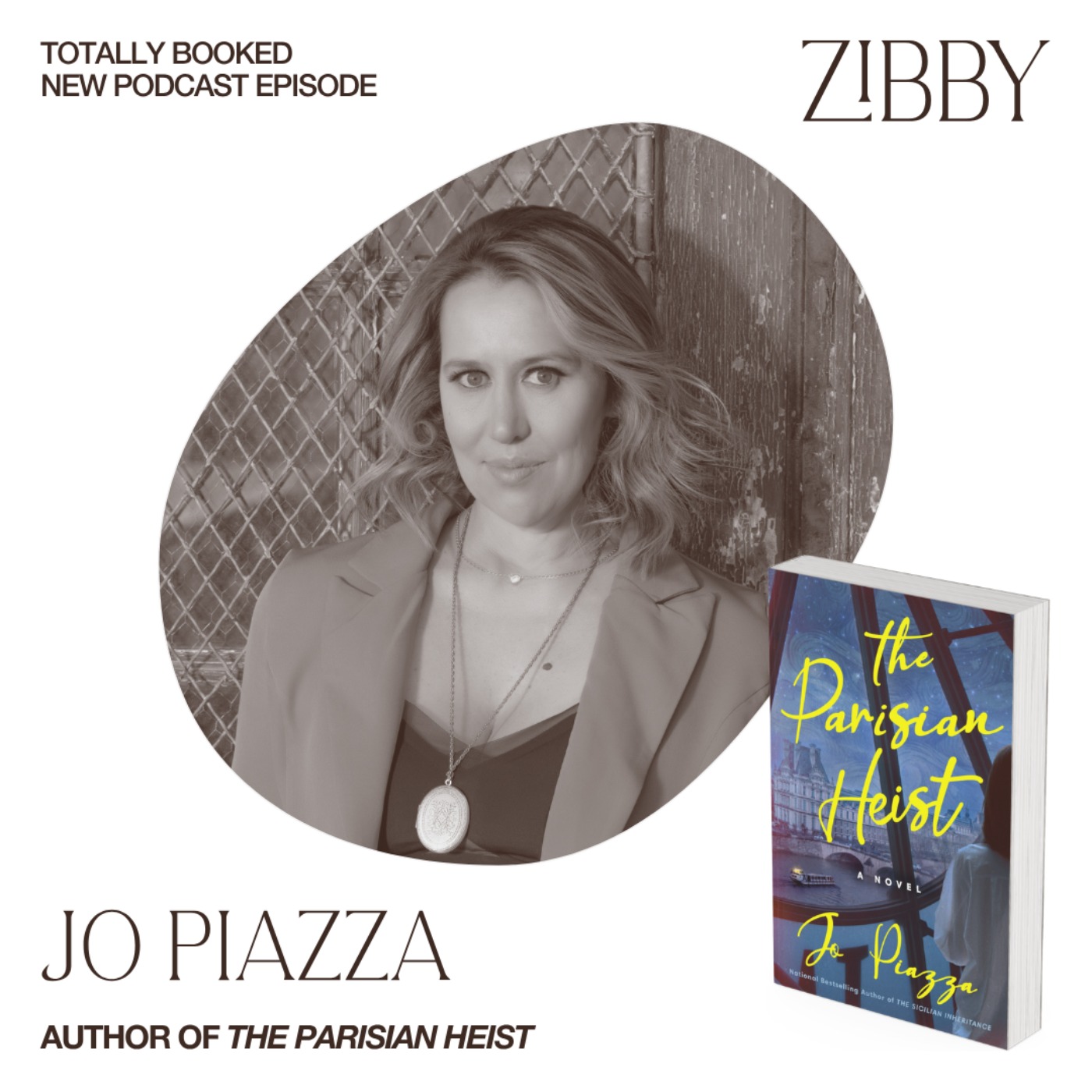
Totally Booked with Zibby
Jo Piazza, THE PARISIAN HEIST
00:22:40
On Art Heists, Forgotten Women, and the Story Behind the Story
Loading summary
Transcript76 lines
- [00:01]
A
Welcome to Totally Booked.
- [00:03]
B
I'm Zibby Owens. I've interviewed more than 2,000 authors on this show and learned endless amounts about storytelling, reinvention, and life itself.
- [00:12]
A
Because when you talk about books, you're really talking about life.
- [00:15]
B
So get ready to hear from today's best authors, the best selling and the not yet discovered. Come find your next great read and the story behind it. Enjoy. Joe Piazza is back on the podcast to talk about the Parisian heist, a novel. Joe Piazza is the international best selling author of 12 books, including the Good Morning America book club pick We Are Not Like Them with Christine Pride. She's also the host of the critically acclaimed under the Influence podcast. Thank you, Jo, for having me on that. Her work has been featured in the New York Times and the Wall Street Journal, among other publications. She. She lives in Philadelphia with her husband and three feral children.
- [00:56]
A
Welcome, Jo. Thanks so much for coming back on Totally Booked. What is this, like, your hundredth time you're the most prolific author ever to talk about the Parisian heist?
- [01:05]
C
Thank you for having me. I've got my. I actually have a hard copy here.
- [01:08]
B
Ooh, let's see, let's see.
- [01:09]
C
Oh, they just sent me the hard copy.
- [01:10]
A
Beautiful.
- [01:11]
C
Isn't she pretty? Isn't she pretty? I know. Well, I mean, I love talking to you. This is one of my favorite podcasts to do. It's like we have a date every summer. We get to do this.
- [01:19]
A
I love it. I talk to you more than some of my college friends. This is great.
- [01:22]
C
I know.
- [01:24]
A
Okay, tell listeners what the Parisian heist is about.
- [01:27]
C
Yeah, so, I mean, this one's really fun. It's kind of similar if, you know, you've read My Sicilian Inheritance, it's a dual timeline. And in. I keep calling it the modern day timeline, but y', all, it's set in 96. And for me, 96 was yesterday. And I said this to someone and they're like, that was 30 years ago. And I'm like, no, it wasn't.
- [01:44]
A
I feel the exact same way. The nineties. I am not. I have not progressed to what, the 20s? Is that even what we're calling this?
- [01:51]
C
Are we in the 20s? I don't know. And so. But I said it. It's an all female art heist set in 1996. And I said it in 96. Because a heist is so much more fun to pull off when you don't have, like, all of the knowledge of humanity at your fingertips. When you can't, like, look everything up where you have to, like, dig, to actually find information. So that's so fun. It's a bunch of struggling artists in Paris. And also in the 90s, they're, like, going to. Going to nightclubs and they're like, spotting Liam Gallagher and wearing, like, slip dresses and everyone's smoking, and they're doing this heist in the Musee d' Orsay to try to bring the world's largest art dealing family. And then in the past timeline, I tell the untold story of Jo Van Go, who was Vincent's sister in law.
- [02:33]
A
Yo, Van Gogh.
- [02:34]
C
Yo, Van Gogh, it is Yo, Van Gogh. It is. Yo, Van Gogh. Vincent's sister in law, who is the reason that we know his name today. She inherited hundreds of his paintings when her husband died that were completely worthless. And she turned him into a household name, a brand, and really reinvented herself as one of the most important people in the art world in the early 20th century. And yet no one has hear her name. Yo, Van Gogh.
- [03:01]
A
I loved learning about that. I'm a huge Van Gogh fan. I feel like we had a moment. I lived in France for a summer on, like, one of those language immersion programs in the 90s, by the way.
- [03:11]
C
Yeah, yeah.
- [03:12]
A
And I was in that area in the south of France, and I feel like a kinship. So I loved hearing more about the whole family and everything. And just the stories that are not reported on that change the history, the
- [03:25]
C
stories that aren't reported on and the women who changed history. I mean, I think that's so important to think about. Like, who are the women behind these male geniuses that we, like, uphold, you know, as a cultural phenomenon, when really we truly wouldn't. Wouldn't have known his name. And I love that you love Van Gogh because I also love Van Gogh. And this book is just so chock full of fun. Van Gogh and art tidbits that, like, it's a delicious story. But I also think you're gonna walk away being like, I pretty much, like, have an art history minor now. I have a minor in Van Gogh. So yeah, it's so much fun. I love it. We're also touring at a bunch of art museums.
- [04:02]
A
So smart.
- [04:03]
C
Which is very cool. And the sunflowers. Cause you read it. The sunflowers painting is in the book. We talk about it a lot, how there's not just one, there's many. And there's two sunflowers visiting from London to Philadelphia right now. They just got here.
- [04:16]
A
Oh, my gosh.
- [04:17]
C
And so we're gonna do something fun with the Philly Art museum, too, which will be cool.
- [04:20]
A
So did you minor in art history? You know a lot about art. You're such a connoisseur. Seriously. I was like, oh, look at that go, Jo. She's like, totally. You know, you could have been working at Sotheby's or, I don't know, something.
- [04:32]
C
Well, a fun fact, though. When I was doing so much difficult research for this book in Paris, I went to an auction at Sotheby's, which was so fun because I have an auction scene in the book. So I hung out there, and I had the best truffled croque monsieur of my life. Like, I just. I really have to talk about that truffle of sir because it did make it into the book. No, I did not minor in art history, but I just. I love art, right? I'm, like, such a massive art nerd. And for this book, I, like, I said I went to Paris, but I also went to Amsterdam and spent a lot of time in the Van Gogh library of the Van Gogh Museum, where I got to read Jo's diaries in her actual handwriting. She actually wrote some of them in English because she was practicing English. And, you know, it was just. It was really cool because I read her autobiography, which is thick. I mean, it could just. It could, you know, be a doorstop. And it was written by a man, a very, very smart man. But I think it left out a lot of the emotion and passion that Jo had. And by reading her words, that really came through for me. And so I got to create her. What I was nervous about is this is my first historical figure who is a real person, who is a real public figure. And this is fiction, right? I used her diaries. I used so many letters to create the plot, and a lot of it is true, and. But also a lot of dialogue is fictional. And I was nervous. I actually made the command decision. I was like, I'm not going to inhabit Jo's brain in here. I'm going to have a friend who watches Jo. And I felt so much more comfortable doing that. I think it's because I'm a journalist. Some authors do it really well, right? But I felt strange being inside a real human being's head. So I created a character who becomes Jo's friend, confidant, and then does ultimately betray her.
- [06:10]
A
I love this sort of Joe on Joe narrative.
- [06:13]
C
Joe on yo. Joe on yo Joe.
- [06:15]
A
Joe on yo. Joe on yo.
- [06:16]
C
Joe on yo.
- [06:18]
A
But I also really like the. I'll say contemporary in quotes timeline. The contemporary timeline, because what you're really writing about is wealth, which you start from the very beginning. You are. It is an interest, a deep dive into what it means to have wealth, to be near wealth, to like the haves and have nots, like how it informs all. Just talk a little bit about that because I feel like that is a.
- [06:44]
C
Yeah, no, and it's a huge through line throughout the book. Right. Of like how money can get you both power, privilege and access. And yeah, the first line of the book is, it's terrible to be rich. And it's the widow of the man who used to run the largest art dealing family in the world. If you Google who the largest art dealing family in the world is, you can probably see who I modeled this after. And because there's just so much drama. Right. And we're talking and she's working with these struggling female artists who are so talented and so incredible. Incredible. But they also know that without power, without money, they're never going to be elevated to the level that they want to be in the art world. And that's also true with Vincent Van Gogh and all of the painters from the Impressionist period. If you didn't have a wealthy patron, if you didn't have someone supporting you and pushing your art to the forefront, which barely any women did at all. Bertha Morissette is one of the only female impressionists that anyone has ever heard of, if they've heard of Bertha. Right. And so what about Cassatt?
- [07:54]
A
Mary Cassatt.
- [07:55]
C
And Mary Cassatt. And Mary Cassatt. Yeah. Yeah. But I think given where we're at right now, especially in American history, where we do have a class of billionaires who are controlling so many, so many things in our country, who are controlling so much of culture right now, so much of media. It's interesting to raise those questions. What can money, power and privilege bring you? But then also, what can it not? Because Scylla Swanson, our very rich matriarch in the book, is miserable. And yeah, we. I love this too, because I love books with rich people behaving badly and they behave very badly in this book. And because they're not happy, because they're not satisfied. And yet you can't say that money doesn't buy happiness. Because you'll see at the end of the book, when our young women who have been struggling do have money, power, access and privilege, they are much more comfortable and they have much more freedom. So I do hope that that starts a lot of interesting conversations about, you know, and especially in the art world, what it takes to Make a painting worthwhile in the public's eyes and also valuable. You know, even in Van Gogh's time, we were not talking about these paintings being worth millions, of course. Right. That's not something that really picked off until. Until the 50s. Jo Van Gogh did a really great job of messing around with the market in interesting ways. She would hold certain paintings back to make demand surge for them. She would play different people off of each other to increase their value. I mean, she. Incredibly savvy and a really early example of someone setting prices for these paintings and someone deciding what they should be worth as they go into the market.
- [09:40]
A
It's so interesting. Well, it's always been that there are certain families who have outsized influence on society. Right. Whether through hard work or entrepreneurship or royalty or. Right. That is just sort of the way it has always been. I don't think there's anything necessarily wrong with that. Isn't it how you use your power and influence for good?
- [10:06]
C
I think a lot of it is how you use your power and influence for good. And I think also for the first time in a long time, we're seeing a class of billionaires who are not using it in the way. In the ways that we used to see it to. To benefit society, to. To trickle down. And so, yeah, I mean, this is. This is also like a story as old as time. I can go back to the Roman Empire. I'm reading. I'm reading Char right now, actually, the biography of Alexander the Great. There's a kid version by Dom Sandbrook who does. The rest is history. It's so good. And, you know, all of that is about conquering, accumulating more wealth, accumulating more power, like it's a story of the ages. But I do think it's how you use that influence, how you use that power and how you use that money for the benefit of the common good. And I think we're seeing a lot less of that these days.
- [10:58]
A
You also have a strand of the loneliness factor as people age. And even though we're all on top of each other and so busy and, you know, just the image of an elderly lady just really wanting to speak to her cleaning lady, not wanting her to leave, just longing for connection wherever she can find it. Delighting seeing, you know, as you have in your opening scene, you know, when her step grandson comes in and just the need for human touch and connection, no matter what, is like at the base of human happiness.
- [11:30]
C
Totally, totally. Yeah. Her very sexy step grandson. We do have a spicy scene in the Louvre Friends, which I also researched not by having my own spicy scene in the Louvre, but I went there right before the book went to print and just walked around and I was like, all right, what exactly could you see and who could see in from the courtyard while this was happening? And that was very fun to imagine. But yeah, I wanted to talk about two things in this one, you know, the intense loneliness of the world that we live in right now and how we're all longing for real life and human connection and real conversations. And then also the reinvention of a woman at any age. Stella Swanson is in her 70s, you know, and she feels like she's truly at the end of her life. She is lonely and she really is kind of at her wits end. She does not know what she's going to do next, but she ends up building an entirely new life for herself and making choices and like taking agency over her own life after she'd spent an entire life in service of her husband. Which is, you know, another interesting conversation to have right now as we talk about things like trad wives and the book Strangers. You know, giving up your entire life and giving up all of your agency and financial agency to your husband and when that husband is gone, what does your life look like? And we see Stella go through this beautiful reinvention and build an entirely new life for her in her 70s. And that's, that was, that was really fun, fun for me to write one of the books that I love so much that I've been hand selling when we do our pop up bookshop, which you are such a massive inspiration for when you opened your bookstore, I was like, I can do this. I can have a pop up bookshop is Sipsworth, which is also about, you know, an older woman towards the end of her life who just completely rebuilds a community and rebuilds, you know, a second life for herself. And it was really, it was really fun to write these women in Paris in their twenties and then also Stella in her seventies and how they end up kind of building a village together.
- [13:36]
A
And tell everybody more about the pop up books. Bookshops.
- [13:40]
B
Today's episode is sponsored by Quints. The best summer pieces are the ones you end up wearing on repeat. Comfortable, versatile and somehow right for almost every occasion. That's why I love Quint's. They make elevated essentials using premium materials like European linen, organic cotton and washable silk without the traditional retail markup. Quince's 100% European linen pants, dresses and tops are the pieces you'll reach for all summer long. They're lightweight, effortless to style and start at just $32. Their denim is soft and comfy, and their organic cotton sweaters are perfect for layering when evenings cool down. Personally, I'd love my white tank dress that I wear all the time. I've actually pinned it to my Instagram as one of my top three posts. I also love my new jean jacket from there. And I'm just so grateful to Quince every single day. Especially because Quint is priced 50 to 80% less than similar brands. And it's not just apparel. Quince also offers elevated essentials for your home, from bedding to bath and all the kitchen essentials and furniture so make your summer wardrobe feel easier. Go to quint.com zibby for free shipping on your order and 365 day returns. Now available in Canada too. That's Quince Q-U-I-N C-E.com Zibbee Z I B B Y for free shipping and 365 day returns. Quince.com Zybee Enjoy.
- [15:11]
C
Oh my God guys, I love it. I love bookselling. Do you love bookselling even more than
- [15:15]
A
you thought you'd love bookselling so much? It's amazing.
- [15:18]
C
It's amazing. So yeah, we opened the bookcase books because when we started out we just had these vintage suitcases and we would take them places filled with books. But now we have a vintage camping trailer up in the Catskills where we sell the books. But we also just pop up anywhere. Like we pop up at breweries, bars, wineries. We took over our kids lemonade stand outside our house the other day, which was, but that was so awesome. And we sold so many books because people were hungry to talk about books. They were hungry for community. We met so many of our neighbors that we hadn't met before. And you learn so much about people by finding out what kinds of books they like and what kinds of books they do not like. And we just, we had like five hours of conversation like from my stoop, just like hand selling books and chatting. And I feel like I know readers so much better now as a bookseller than I ever would if I hadn't done this. And it's just like what we were saying before, like that, that connection that like real world conversation in real life. I think that we are just, we're, we're desperately hungry for it. And especially men too. Like I had so many men stop at the Pop up bookshop and they wanted to talk about books, but I think they were the kind of men who might not necessarily walk into a bookstore, right? And so. But when the books are right there, right in front of them, they want to talk. And the most fun thing is they end up loving the Sicilian inheritance because it's got, like, mafia stuff in it, right? Like, I mean, it's a book that men. It's a book men can also enjoy. And they were also really excited for Parisian heist because we've got a heist in it.
- [16:49]
A
And I remember you were posting when the whole heist actually went down at the Louvre, and you're like, oh, my gosh, this is my book.
- [16:56]
C
This is my book. This is my book. Yeah, I was actually. So the book was done when the Louvre heist happened, and we were about to reveal the COVID Like, we weren't doing it for, like, another week. The Louvre heist happens. I called the publisher, and. And I was like, we have to release this cover immediately. And they're like, I don't know. It's not ready. I'm like, it doesn't matter. We got it. We gotta. We gotta get on this today. But I interviewed so many heist experts for the book. In fact, I have a blurb from Anthony Amore, who is the head of security at the Gardner Museum, the Isabella Gardner in Boston, which, you know, has one of the most notorious outstanding heists in history. And Anthony's gonna spend the rest of his life trying to track down these paintings that are still missing. And then I'm gonna write the screenplay about him finding them. That's our agreement. But you know what I Lear heists is they're. They get very mythologized in our minds, but they're so much less sexy than you think they are. So when the Louvre heist was just so basic, I was so happy because, like, my heist is not, like, all Thomas Crown Affair, which, by the way, I rewatched Thomas Crown Affair the other day.
- [17:57]
A
So good.
- [17:57]
C
It's so good. Like, everyone. Like, that should be on everyone's summer to do list. Rewatch Thomas Crown Affair. I don't know who I want to make out with more, Rene Russo or Pierce Brosnan. Like, they're both so incredibly sexy, and it's such a smart movie. But, like, movies like that do glorify and mythologize heists. Like, you're rooting for the thieves, even though you're like, robbery's wrong, so I want these thieves to win. And so when the Louvre heist was just some guys stealing like, a cherry picker and Breaking a window. I was like, oh, thank God. Thank God. Because a heist is actually way more basic than we think it's going to be.
- [18:33]
A
If you could steal any painting from any museum and hide it in your home somewhere, what would you pick?
- [18:39]
C
I think about this all the time. I think stealing a large painting is really hard. And that is one of the things that I learned while I'm trying to pull off a heist. Like getting, getting an actual painting. My God. So yeah, if I could steal one piece of art, I would. I mean I. There are a lot of Van Goghs that I'd love to steal. I love a sunflowers. I love a sunflowers for. And I talk about this in the book because I think they truly do show all of the phases of life. Like once you start looking at them, you have the little buds who haven't opened yet. You have these like vibrant petals, like stretching towards the sun. And then you also have these leaves that are starting to wilt and die. I mean, they're in all of them. And Van Gogh also painted them, the majority of them, as a welcome present for Gauguin when they were going to live together and paint together. Instead of filling the room with flowers, he filled it with paintings of flowers. And I think it was one of the most optimistic times in his life where he really felt that there were a lot of possibilities. And I can see and feel that hope in every single one of those paintings, but they're big, so they're hard to steal. And I'm saying this as I'm like literally going to go to the Philly Art Museum to sign books in front of sunflowers. I'm not going to steal them, guys. I don't want to steal them. I know how to steal them now, but I'm not going to do it.
- [19:54]
A
Good. Thank you for that. So Jo, what chapter of your life would you say you are leaving in and entering?
- [20:05]
C
Oh my God. I'm out of the baby phase. Which I think is really, really interesting because I have been, you know, kind of in breeding Mode for about 10 years because I have a 9 year old, a 6 year old and a 3 year old who is now finally much more of a self sufficient human. And it's. I'm out of the baby phase for the first time in 10 years and I have never felt so much freedom over my body. And they're still touching me all the time. They're still like literally trying to like climb back inside of me, but at the same time and knowing that that phase is over. Knowing I'm not going back to that, I think I feel free and I feel like I've let go of a lot. And that's amazing because I'm also like, I feel more creative than ever. I talk to so many young women, and I know you do too, who are really nervous about having kids because they're like, what if I can't still be an artist? What if I can't still be a creative person in the world? And I think I've gotten so much more creative and prolific after becoming a mother because I can manage my time. But also seeing the world through my kids eyes, like just sparks so much in my brain. It's amazing and I love it. To that end, I have new news which is like breaking news, which I haven't talked about yet. I am writing a middle grade series.
- [21:23]
A
Ooh, that's exciting, right? Tell me more.
- [21:29]
C
Yeah, it's called the Bone Crew and it's about the kids of paleontologists. And so they go on digs with their parents, but they're the ones who really solve the dinosaur scientific mysteries because kids notice more than adults do. But they give their parents the credit because, you know, they want them to keep getting funding. But there's a sci fi angle. They find a glitch in one of the fossil beds where they actually enter a multiverse where the asteroid never hit and dinosaurs never died. And there's also, there's also an evil billionaire who is trying to get into the glitch to mine it for resources and possibly bring dinosaurs over to the other side. It's so much fun to write. And I did it because I have a dino kid who. There were no books for him. Like he went from baby books to hardcore nonfiction encyclopedias to there's Nothing for the 8 to 12 reader about dinosaurs. And also like really like sciencey things. Like there's a lot of magic.
- [22:27]
B
Right.
- [22:27]
C
But he's, he doesn't like magic or superheroes. So yeah, the Bone Crew. I think the first one's going to come out next year, which is going to be so much fun.
- [22:36]
A
That is so exciting. Congratulations.
- [22:38]
C
It's so exciting. It's a different part of my brain, but yeah, it's really fun. And now kids like Charlie don't have to just read Jurassic park, which is what he did. And you know, maybe a little too, maybe a little too old. But then I remember that we were reading Flowers in the attic at 11.
- [22:54]
B
Yeah.
- [22:54]
A
But then we didn't sleep for like 20 years, so.
- [22:57]
C
No we didn't. We didn't. And we all. We reread those books over and over again. I want to do a whole podcast series, just like rereading Flowers in the Attic and Petals in the Wind.
- [23:05]
A
Go for it. Love it. Well, to your point, your creativity is just overflowing, and you can see it in your enthusiasm and passion for everything that you do and every new project, and it is infectious. So thank you, Jo.
- [23:18]
C
Yeah, no, thank you. I. You know, you are. You're such a role model for everything that you do for books. And like I said, you inspired me to finally just, like, bite the bullet and build this bookstore, which I love.
- [23:28]
B
I'm so excited.
- [23:29]
A
That is amazing. I have to come shop. I have to find your book bookstore, wherever it is.
- [23:33]
C
Yeah, yeah, yeah, we're up. We're gonna be up in the Catskills for most of August, so I'll tell you when we're there. And come on up, and maybe you'll see more bears this time.
- [23:40]
A
I can't handle seeing any more bears, but maybe. Can't believe you remember that. Okay. All right, take care, Jo. Thank you so much.
- [23:47]
C
Thanks. So good to see you.
- [23:49]
A
Parisian heist.
- [23:50]
B
There you go.
- [23:50]
A
Congrats.
- [23:51]
B
Bye.
- [23:51]
A
Bye.
- [23:51]
C
Thank you. Bye, babe.
- [23:53]
B
Thank you for listening to Totally Booked with Zibi, formerly Moms don't have Time to read Books. If you loved the show, tell a friend, leave a review, follow me on Instagram, ibbeowens, and spread the word. Thanks so much. Oh, and buy the books.