Loading summary
Transcript67 lines
- [00:01]
Zibby Owens
Hi listeners of Totally Booked with Zibby this June we have one episode coming out every single day and to celebrate that I've started the June Listening Club. You can sign up on zibbedia.com or you can just keep listening and every day there'll be a little quiz on Instagram. We're giving prizes away every single day this month you're gonna get amazing stuff. You would all be invited to a party and a zoom at the end of the month to celebrate with a special certificate. So sign up on Zibbe Media today. Make sure following Totally Booked with Zibby on Instagram and get ready to listen. Make it a challenge. June is crazy. Find some airtime for yourself. Put it on in the background. Get ready to listen, learn, laugh and enjoy life.
- [00:50]
LinkedIn Ad
Does it ever feel like you're a marketing professional just speaking into the void? Well, with LinkedIn ads you can know you're reaching the right decision makers. You can even target buyers by job title, industry, company seniority, skills. Wait, did I say job title yet? Get started today and see how you can avoid the void and reach the right buyers with LinkedIn ads. We'll even give you a $100 credit on your next campaign. Get started at LinkedIn.com results terms and conditions apply.
- [01:21]
Visa Ad
If you're in business, you'd expect money movement to be easy, and it is with Visa Direct Collect, hold, convert and send payments between more than 195 countries, 160 currencies, and over 11 billion cards, accounts and wallets effortlessly and securely move money your way. Learn more@visa.com Visa Direct.
- [01:50]
BetterHelp Ad
BetterHelp Online Therapy bought this 30 second ad to remind you right now, wherever you are, to unclench your jaw, relax your shoulders, take a deep breath in and out. Feels better, right? That's 15 seconds of self care. Imagine what you could do with more. Visit betterhelp.com randompodcast for 10% off your first month of therapy. No pressure, just help. But for now, just relax.
- [02:35]
Zibby Owens
Hi, this is Zibby Owens and you're listening to Totally Booked with Zibby, formerly Moms don't have Time to Read Books. In my daily show, I interview today's latest best selling buzziest or underrated authors and story creators whose work I think is worth your time. As a bookstore owner, publisher, author and obviously podcaster, I get a comprehensive look at everything that's coming out and spend my time curating the best books so you don't have to stay in the know. Get insider insights and connect with guests like I do every single day. For more information, go to zibbymedia.com and follow me on Instagram ibeowensk.
- [03:19]
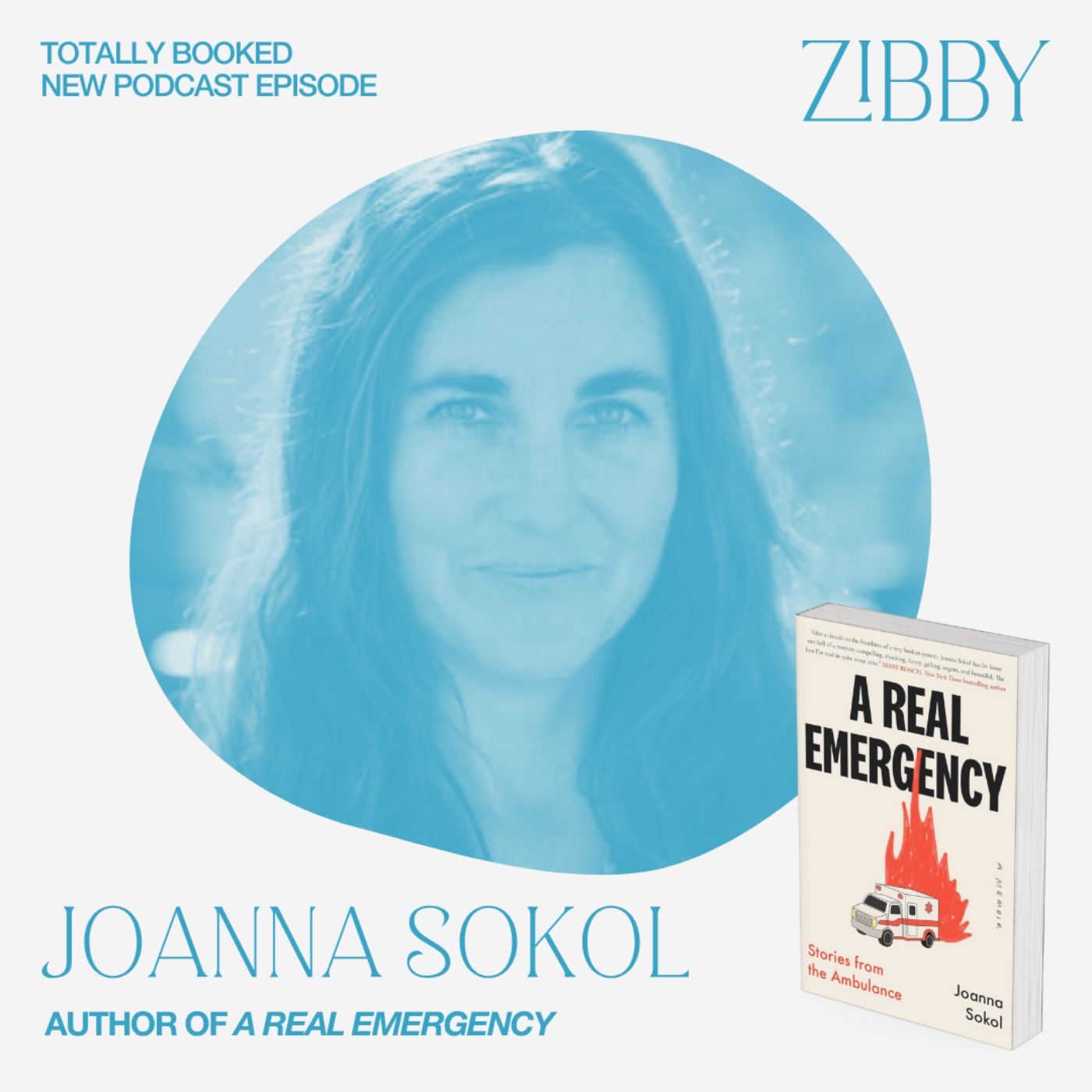
Joanna Sokol is the author of A Real Emergency Stories from the Ambulance. Joanna has worked on a 911ambulance for 10 years, along the beach in Santa Cruz, in the desert of Reno, and on the streets of San Francisco. Before that, she spent time as a ski patroller, wilderness emt, and medical standby for raves and music festivals. She holds a paramedic license and a bachelor's degree in biological sciences from the University of California at Santa Cruz. During her time at the San Francisco Fire Department, she received an award for clinical excellence and served as a member of the Street Crisis Response Team. Her literary work has appeared in Reader's Digest, Paka and Hazlitt, and she received a Sydney Award in 2019. Born and raised in Oakland, California, she currently lives in Santa Cruz with her boyfriend and a very stubborn dog.
- [04:07]
Welcome, Joanna. Thank you so much for coming on Totally Booked with Zibby to talk about a Real Emergency, a memoir. Congrats.
- [04:15]
Joanna Sokol
Thank you so much. I'm really excited.
- [04:18]
Zibby Owens
Oh, my gosh, your book was so good. I've learned so much. I had no idea about the real state of affairs of this whole industry, and I'm sort of shocked still. But anyway, tell everybody what your book is about and we'll go from there.
- [04:35]
Joanna Sokol
Yeah, okay. This is kind of the hardest question for me because I have to think of a good 30 second pitch. It's. It's about ambulances and EMTs and paramedics. I spent 14 years as an EMT and then as a paramedic, about 10 of that in the 911 system full time on an ambulance. And I've always taken notes and kept journals. It's just kind of how I interact with the world. And so very early on in the career, all this crazy stuff was happening. We see things that you've never seen before, and I found myself just forced to write it down. I was like, to the point where I was in the back of the ambulance, like, looking for scraps of paper, just like, oh my God, I have to write that down. That was crazy, you know? And so over a decade and a half, I just started collecting stories and thoughts and quotes and images. And then once I started putting them together, I realized it was actually very important to me after doing this work for so long, to include not just my voice, but the voices of some other EMTs and paramedics and to actually do some research and Find out more about, like, how this industry works and why it got so crazy and how we got here. And so I ended up putting together an essay collection. It's a collection of voices, not just mine, and stories and just, like, little paintings and snippets of what it actually feels like to do this work today, which, as you seem to have noticed, is not what people think it is.
- [05:57]
Zibby Owens
Like, oh, my gosh. Well, you start out by saying something which I also hadn't thought of, which is just how crazy it is. Let me see if I have this. You start out by talking about how. Wait, isn't it crazy that you can just dial three numbers on your phone and anyone shows right up? And that's just a service that we all take for granted? And you don't think about it, and you don't have to, like, put anything else with your call other than, like, hey, please come. Like, you don't have to defend it. You don't have to give any proof, and someone shows up. And so what does that do to a community when so many people have no other option but to call 911 or are just lonely or. So talk a little bit about that.
- [06:40]
Joanna Sokol
Oh, yeah, absolutely. It's one of the fundamental sort of paradoxes and wonderful and frustrating things about 911 is that when you pick up the phone and call dispatch and say, I need an ambulance, they don't say, okay, what's your credit card number? They don't say, you know, where are you? How bad is your emergency? Does it really deserve an ambulance? Who are you? They just start sending one. And so what that means. It's really amazing. It's really beautiful. But we have really become the last resource for a lot of people who don't have anyone else to call when you first get into the work. And I have several different medics talking about this in the book. It's really shocking and surprising because we get trained to think that we're going to run on these, like, emergency, life or death, 911. You know, everyone's always going to be bleeding out or dying. The sirens are always going to be on. Every single call is going to be like, life or death. You know, save the area away, shock the patient. And then once you get into the work, you find out that that's maybe 4 or 5% of the calls, 95%. And I've actually looked at the numbers. I kept my own notes, and I researched this. Roughly, it's like 90 to 95% of calls are not what we call code three. Returns those, like, lights and sirens, scary life or death emergencies. It's the elderly, it's the chronically sick, it's the homeless, it's addiction, mental illness, domestic violence. You know, it's. It's these. Not that domestic violence, domestic issues is kind of what I meant to say. It's people who have these long, ongoing problems. They have a tough quality of life and they just don't have anyone else to call, and they need help with their blood pressure or getting their meds checked or they need a ride to the hospital because they don't have another way to get there, or their tummy hurts and they're sort of confused and, like, don't really know what that means. And so the vast majority of our calls are not these really scary emergencies. And a lot of medics get into this work and they get really frustrated by that. They get really confused and they're like, I thought I was here for emergencies. You know, I don't want to run on this, like, boring, challenging stuff. And a lot of it is really frustrating. You know, you're going to run on the same guy three, four times in a day sometimes because he's. And we have callers who call us a few times every day because, you know, they're lonely, they're addicted to meth, they're very addicted to alcohol. They like to drink a lot and then trip and fall and hit their head on the floor and get stuck in the bathroom and we go pick them up and then they drink more and they fall down again and we go pick them back up, you know. And so it's very common to get really frustrated with these calls. But it's. I also try to find the honor in it and the virtue in it. That was one of the things that really kept me going because that's what it comes back around to, is that the phone number is free and someone will show up every time, no matter what. Even if it's your fifth time calling us today and we're all super freaking mad at you and we're sick of dealing with you. We're still going to come, we're still going to get you off the floor. We're still going to be nice to you. And it can be so frustrating. But there's also something really beautiful in it. The fact that we do show up every time, no matter who you are, no matter how frustrated we get with you. And so I really have tried to hold onto that, to the beauty and the virtue in that, and the fact that that's actually Like a really cool, amazing thing that, as you mentioned, we take for granted.
- [09:58]
Zibby Owens
Well, until your book, I hadn't worried about it going away, but now I'm worried about that.
- [10:04]
Joanna Sokol
Yeah, it's not to say it will.
- [10:06]
Zibby Owens
I'm just saying, like, because I had taken it so for granted, now I'm like, well, what if?
- [10:11]
What if we didn't have it?
- [10:12]
What if? And people complain so much, like, oh, my Gosh, it took 10 minutes for the ambulance to get there. And from an operational perspective, I'm like, I can't believe this works. I mean, think about how hard it is to get anything done in this country at all, right? To get a driver's license, like, how complicated that is. And here you're just like, Jujube. It's like you just fly through the air.
- [10:30]
Joanna Sokol
Yeah, we show up every time.
- [10:31]
Zibby Owens
It's amazing.
- [10:32]
Joanna Sokol
And it is getting harder. As the book talks about, our staffing is really rough these days. It's getting a lot harder to get ambulances there on time. And there's a lot of reasons for that, which I don't know if you want to get into or not.
- [10:45]
Zibby Owens
Well, maybe just touch on a couple that we should all know about.
- [10:49]
Joanna Sokol
Yeah, our staffing is really challenging these days. Ambulances, depending where you are, are run by a whole bunch of different services. Most of them are private, Some of them are run by the fire department or sometimes the police or hospitals. The most common one in the US is either privates or fire department. And it's really tough to keep staffing up. The ambulance, sort of famously in healthcare, does not make money. It does not create a profit. It actually loses a lot of money. Because of what I mentioned, a lot of the people that call us are elderly or poor or homeless or aren't going to pay their bill for whatever reason. And so it's very hard to collect bills and to keep an ambulance service alive. And so medics get paid really, really poorly. The median wage for a paramedic in the US is 20, $25 an hour. I think it's 2574 as of May. It's really hard to get people to go do this incredibly challenging work with really long hours for that much money. And so it's really hard to keep staff up. And they get. And we get treated really poorly at most of the places we work. And so it's hard to keep ambulances. Another big problem is that the ambulances get stuck at the hospitals. That's something that a lot of people find really surprising about ems. But when we show up to a hospital, if our patient is really critical, if they're dying, we'll usually get brought straight into a room. But if we're not, we'll get. It's called wall time. We'll go in, we'll greet the nurse, and she'll say, grab a wall. And then we'll hold up on the wall and we'll wait, sometimes for hours, for a bed to open up. And so you've got 911 calls going off in the city. There's no ambulances available because our staffing's already low. And then you've got half the ambulances in your system stuck on the wall of a hospital waiting for a bed. And so those numbers. And so someone who's trying to call an ambulance, you know, hopefully we'll get one in it. And it's funny that you said 10 minutes. That's such a New Yorker thing to say. Sorry, because. No, I love it because in a big city, yeah, the expectation is eight or 10 minutes. But in rural ambulances, you might be waiting half an hour or an hour for an ambulance because the closest one is coming really far away. And that's a reality that a lot of Americans live with.
- [12:55]
Zibby Owens
So it's tough, my spoiled New York existence here, where everything is immediate and you're in the middle if it's like five minutes long.
- [13:02]
Joanna Sokol
But yes, totally.
- [13:04]
Zibby Owens
The ambulance postmates. Where is everything? Come on, let's go.
- [13:08]
Joanna Sokol
I want my delivery Thai food and I want it now.
- [13:10]
Zibby Owens
Exactly, exactly. Oh, my gosh, it sounds terrible. I loved the scene where you had this incredibly long day and it was so terrible. And you wander around in this parking lot and come across a mirage. But actually it was true. Of an icy station and you give it to your colleague and you're sitting like basically tailgating on your ambulance, drinking these. Or eating these ices in scorching hot weather in Reno. Talk a little bit about the payoff, right? And how little it is and how these tiny little things can sometimes make the day worthwhile.
- [13:44]
Joanna Sokol
Oh, I love that. I really love that story. I put it right up at the front of the book because I wanted to sort of hint at one of the big themes of the book is, which is this job. It's so tough. It's so soul sucking. It's so exhausting. And the thing that gets you through it is the camaraderie, the partners and the people that you work with. There is a real, real brotherhood. And I'm a girl, whatever, sisterhood, brotherhood among the EMTs. And medics, the field crews that do this work that I've never experienced anywhere else in my life. There's a sense of family and of taking care of each other because we're really in the trenches together. And sometimes they are literal trenches. You know, we're like, in the dirt up to our knees, pulling stuff out. And it's four in the morning. It's five in the morning. And so that scene that. That I wrote, I actually wrote that, like, a year or two. It was much, much later. And I wasn't at work that day. I was on my day off, and I was. I just kind of had that memory, like, eating away at me. And we had run, as you said, really tough calls. It's hot, it's sweaty. We're exhausted. And one thing about being around so much death and so much dying and so much illness is that it really forces you to cherish the small moments. And I know how cheesy that sounds, but it's so.
- [15:02]
Zibby Owens
No, I get it. I get it.
- [15:04]
Joanna Sokol
You know, you get there. And so we're. We're sitting in the back of this parking lot, and I have to write my chart, and it's busy and we're exhausted, but we have, like, five minutes before we have to go run another call. There's no calls on the board for a couple minutes. And, yeah, I heard the sound of this guy selling ices. And we sat there on the back, and my partner, I really cared for, and he'd been working really hard, and I bought us two, and we sat on the back in the hot, hot sun, eating this, like, cold sticky ice for five minutes. And it was just such a beautiful. And it was like, these are the moments that this job forces you to take. And that sense of connection to the partners that you work with. You know, the men and women I've worked with on the rig are just a real family to me in a way that I think is really incredible. And they really have each other's backs. And you have to take those moments. And so it's like, even though I didn't want the book to just be like, trauma on awful, on depression, on frustration, on cynicism, even though that is sometimes what the job can feel like, because right in those worst moments when you're just exhausted and you're cynical and you're full of trauma, then one of your buddies will come by and be like, dude, I got ice cream. You know, and then. And you'll just be laughing. You'll be laughing your freaking faces off at four in the morning. And so that scene, it was about trying to cherish the sweet moments, but it was really about the partnership and the camaraderie, you know, and having a buddy that you're going through this with. And so we're sitting there on the tailgate kicking our feet and kind of elbowing each other. And it's about that. It's about the teamwork and the camaraderie. And, you know, I'm glad you like that scene. I love it.
- [16:37]
Zibby Owens
I love that scene. I loved it so much. I feel like now I need to go out and get an ic, but that's okay.
- [16:42]
Joanna Sokol
I'll wait.
- [16:47]
LinkedIn Ad
Race the rudders.
- [16:48]
Joanna Sokol
Race the sails. Race the sails. Captain, an unidentified ship is approaching. Over. Roger, wait.
- [16:55]
LinkedIn Ad
Is that an enterprise sales solution? Reach sales professionals, not professional sailors. With LinkedIn ads, you can target the right people by industry, job title, and more. We'll even give you a $100 credit on your next campaign. Get started today at LinkedIn.com results. Terms and conditions apply.
- [17:16]
Visa Ad
Imagine a world without borders, where money moves between countries fast and securely, all without having to build or manage a complex infrastructure. Introducing Visa Direct. With Visa Direct, you can move money securely to and from 195 countries in 160 currencies. Move money your way. Learn more at visa.com visa direct.
- [17:46]
1-800-Flowers Ad
When it comes to delivering flowers for life's special occasions, trust the name that's been setting the standard for nearly 50 years. 1-800-flowers.com from breathtaking bouquets to one of a kind arrangements, 1-800-flowers is your authority on quality blooms. Always fresh, always stunning, always delivered with care. And right now, for a limited time, you can save up to 40% off your bouquet and make someone's day. Save up to 40% off today at 1-800-flowers.com acast. That's 1-800-flowers. Com acast.
- [18:19]
Zibby Owens
You talked about how, logically, this does not sound like a job. That you talked about how it's a tough sell, right? The lack of the low payment, which is, you know, just like teachers, right? It's like not commensurate with their value to society. It's demanding in every sense of the word, emotionally, physically. What is it about you that made you want to do it, drawn to it, continue to do it?
- [18:48]
Joanna Sokol
Why?
- [18:49]
Zibby Owens
Why you and who else?
- [18:52]
Joanna Sokol
It's really interesting. That was, that was a part of the book. I initially didn't want to put too much of myself in the book because I was kind of embarrassed. You know, I was like, I want to write about this work, no one cares about me. I'm like a random white girl with a job. Who cares. My editor, who I deeply love, she's incredibly talented, kind of forced me to put more of me and of the people that I work with in the book. She was like, readers want to know who does this for a living. You know, who would choose to do this and then who would keep doing it. So I was, I was young, I was in my 20s. I was full of adrenaline and angst and energy. I wanted to do something exciting and badass and cool. I had tried to go into science at school and I just couldn't sit still long enough. And I found this world where you got to use science, think quickly on your feet, help real people with your hands in a very immediate way. And I just totally fell in love with it. I went in thinking, like most EMTs and medics, young EMTs and medics, that it was going to be all immers, emergencies all the time. And then I found out that it wasn't at all. And it was really the people, it was the people that I worked with. I felt like I fit in somewhere. You know, a lot of us, we joke all the time. We call ourselves the, you know, the Valley of the Broken toys. And like a team of angry misfits. And the people were just hilarious. They were so hardworking, they were so dedicated, they were so funny to be around. And I just felt, I felt like I had found my people. And like I said, that's really what kept me in it. And the work is exhausting, but it can be really rewarding. And the whole time I was doing it, even as burned out as I got and as bad as my physical injuries got and the emotional trauma I was piling on, I still felt like the work that I was doing was worthwhile. I still felt like I was helping people. I still felt like it was a worthy thing to do in the morning. And I found that was a really common theme with all of the medics that I talked to. They were. All of us have faced some level of exhaustion and burnout and frustration, but they were all like, yeah, but we love it. What else are we going to do? It's an amazing work. And on a more negative note, a lot of medics do not have college educations and a lot of them do not have a plan B. You get a two year certification. There's one of my favorite muses in the piece, an old. Park your mind, Mikey. He says, I was a high school dropout. I had a Certification that allowed me to do one job, and I didn't. And a lot of us, we get in, we build up all this trauma and this exhaustion, Then we don't really have anything else to do. Most medics will either go into nursing or fire at some point once they get physically broken by the system, but there's really not. In some senses, you kind of get stuck in it. And so that can be really tough. And that's one of the things I really want to talk about and want more people to know about, because I want there to be options. I want medics to have more options to move up, to specialize, to do things once they've reached that point where they physically aren't able to work in the field anymore. And so it's. There's. I don't want to end on the bad note. You know what I mean? I want to end on the joy and the camaraderie. But those are both definitely parts of it, of why people do this work for so long.
- [22:01]
Zibby Owens
Is there something that people who will one day be in an ambulance or be a partner of someone who is in an ambulance. Is there some insider knowledge that we all should have? I mean, now I see what it's like from your point of view. So that's like, value. That's, like, priceless information to put myself in your shoes. But for everyone else, before they've read it, what should we know?
- [22:26]
Joanna Sokol
What should everybody know about medics? Yeah.
- [22:30]
Zibby Owens
Or just like, what should we be prepared for? What should we say? Like, how should we interact? Like, what expectations are there that should be met? Like, everyone's in that moment at their most vulnerable. Right. And we're depending on the people in the ambulance, allay our biggest fears in the world. But you know what it's like on the other side. So what is it that we should carry with us?
- [22:54]
Joanna Sokol
That's such a compassionate question. I really like that. I mean, the first thing that comes to mind is another one of the medics that I interviewed, Longtime paramedic, amazing clinician. I asked her what she would want to tell the world about being a paramedic, and she said, I want them to see us as people. I want them to understand that we have good days and bad days. We occasionally need to eat and use the bathroom and sleep, and we are out there. We're trying as hard as we can, I promise. But we are actually humans. We cannot be perfect heroes all the time. And if you are partners with a paramedic, understand that we will be tired and hungry A lot because our sleep is really messed up. So having lots of snacks around is really helpful. But yeah, I think the biggest thing to the members of the public, if you're scared, that's okay. That's our job. We're very good at dealing with people that are scared and upset. That's kind of our wheelhouse. And whatever you're feeling, it's okay. We have seen it all. We will not be shocked. It is very, very challenging to shock a paramedic. Don't be embarrassed about whatever's going on. We've seen it before. We're happy to help. And yeah, just try to. There was this theme. Almost all of the medics I spoke with said something along the lines of to just be nice to us, to just understand that we are human. You know, we see a lot of people in their most challenging moments and sometimes they take out their grief on us. And that's okay. We get it, it's part of it. But try to understand that we are people, too. I think.
- [24:28]
Zibby Owens
So sad that you have to even say this, but it's true.
- [24:35]
Joanna Sokol
I mean, it's, you know, it's the only thing I could think of.
- [24:38]
Zibby Owens
No, it's a good point. And I think that people are just so accustomed to the fast service and getting what they want and, you know, when it. When a flight doesn't take off, like, yelling at the people behind the desk, like, people just don't know how to interact sometimes. And they don't imagine, like, the person behind the desk getting up and wake.
- [24:58]
You know, waking up and getting dressed.
- [25:00]
And going to work and turning on their computer and like, what are they going to do?
- [25:02]
Turn a plane around?
- [25:03]
Joanna Sokol
So anyway, sometimes when people get mad at us for. For being late or for taking so long to show up, it's like, I'm sorry, I was doing CPR on a baby. You know, it took a minute. Like, we got here as soon as we could, I promise. But, you know, as much as I come, I don't want to sound like I'm complaining. Most of the people that we deal with.
- [25:22]
Zibby Owens
You don't.
- [25:23]
Joanna Sokol
Are. Really are very nice to us. Most of the people, honestly, a lot of our interactions are cool. You know, a lot of people understand that we're there and we're trying to help.
- [25:33]
Zibby Owens
Well, if I have the presence of mind, should I be in an ambulance or should someone. I love being an ambulance. I am going to grab a bunch of snacks to rowing around and say it's because of this book a real emergency.
- [25:47]
Joanna Sokol
Yeah, we don't we don't get breaks. We don't break, so we love snacks.
- [25:52]
Zibby Owens
So how in the midst of this totally pressure filled job, why write a book in addition?
- [26:00]
Joanna Sokol
Oh yeah, well, I did actually take time off of work to write the job, or sorry, off of work to write the book, which is something that not a lot of paramedics are able to do. This is something I've actually thought about a lot because I've read a ton of doctor memoirs. And don't get me wrong, I love doctor memoirs. They're really fun to read. I've read a lot of memoirs by doctors, by professors, by scientists, by people who have, unfortunately who have the financial resources to take time off to write a memoir. And most nurses and medics just don't have the option. I spent probably about a year and a half doing research interviews, going to the library, looking up old newspaper clips, writing and rewriting and rewriting and writing and rewriting. And I was really, really lucky to be able to afford to take that time off. And so that's part of the responsibility that I feel to try to represent this in an authentic way and hopefully in a way that will help people. But yeah, like I said, over time I just collected all of these stories. I had hundreds and hundreds of pages of stories, journal entries, notes, quotes, descriptions of things, my own feelings. And I was incredibly lucky. I just really got this sort of lightning bolt series of circumstances. I had the financial bandwidth to do one of my very oldest, closest friends works in publishing and helped me put together. And she was actually the one who became my editor on this. I have to embarrass her a little bit. The wildly talented Hayley Cullingham, if anybody is listening who knows her. And so we were able to work together on this thing. And when the book deal finally came through, I was at a stage where I was really, really physically damaged. I have injuries to my back, shoulder and wrist are the big ones. And so I still liked the work, but I couldn't really physically do it anymore. And so I was kind of making choices about, okay, am I going to rock a desk for the next 20 years or am I going to try to take the time to write this book and move in a different direction? And so for me it worked out that I was able to take the time off. And as for why I wrote the book, at a certain point I felt like I was carrying it around inside of me and it was becoming really heavy. Haley told me something that I think might is common in writer's circle. She said they say you write your first book when you can't. Not anymore. And I got to this point where it honestly felt like carrying this book around inside me was really heavy and it was getting in the way and I had to get it out of me. And like I said, I got to a point where I physically couldn't work in the field anymore. And so it was time and again, I got really, really just dumb. Lucky to have to know the right people and get the book deal. So that's kind of how it came together.
- [28:43]
Zibby Owens
And so what's your plan now?
- [28:46]
Joanna Sokol
Oh, I hate this question. That's a great question. I'm teaching EMTs and paramedics at a couple of community colleges in the Bay Area. I really love that work. I find it really fun and really rewarding, and I'm picking away at prereqs to potentially go to nursing or PA school or move forward in the medical field. But right now, between the book and the teaching and just breathing a little bit, I would like to get back into the field and do patient care again at some point. But yeah, turns out writing a book is hard and it takes a lot of work. When I first left, it was like, all right, I'm going to bang out this book and then go back to school. And it turns out that was not realistic. So, yeah, I'm writing the book, I'm teaching right now, and I have no idea what's coming next. I really don't.
- [29:34]
Zibby Owens
Okay, well, I will be rooting for you in whatever you do. I'm so glad you wrote it. I really, as I said, have a new understanding of the whole thing. And every time I hear a siren going by my window, which happens, I feel like every two minutes I'll think that that's actually only 5% of the time. And it could be going nonstop and just imagining who's inside and what you all are going through. So anyway, thank you for all the work you do to help so many people.
- [29:58]
Joanna Sokol
Thank you so much. I really appreciate it and I love the podcast.
- [30:02]
Zibby Owens
Oh, thank you.
- [30:04]
Thank you for listening to Total Booked with Zibby, formerly Moms don't have Time to Read Books. If you loved the show, tell a friend, leave a review, follow me on Instagram, ibbeowens and Spread the Word. Thanks so much. Oh, and buy the books.
- [30:25]
1-800-Flowers Ad
When it comes to delivering flowers for life's special occasions, trust the name that's been setting the standard for nearly 50 years. 1-800-flowers.com from breathtaking bouquets to one of a kind arrangements 1-800-flowers is your authority on quality blooms. Always fresh, always stunning, always delivered with care. And right now, for a limited time, you can save up to 40% off your bouquet and make someone's day. Save up to 40% off today at 1-800-flowers.com acast. That's 1-800-Flowers.com acast.
- [30:56]
Remi Ad
Summer's here, but if you grind your teeth at night, the damage doesn't take a vacation. Protect your smile with Remy the custom night guard that cost up to 80 less than the dentist. Just take your impressions at home with their step by step kit. Send it back and get your dental grade night guard delivered to your door. No waiting rooms, no surprise bills, just sunny savings and professional protection backed by a 45 night perfect fit guarantee. Go to shopremi.com and use code summer to get up to 50% off. That's shop r e m I.com and use code summer for 50% off.
- [31:29]
BetterHelp Ad
Who says luxury has to come with a steep price tag? Quint's brings you hotel quality sheets and linens without the markup. From breathable bamboo bedding to spa worthy bath towels, Quint's makes every corner of your home look and feel luxurious. And by partnering directly with top artisans and ethical factories, Quince delivers premium quality at half the cost of similar brands. Upgrade your home for less at quint. Go to quince.com homeupgrade for free shipping and 365 day returns. Quince.com homeupgrade.