← Totally Booked with Zibby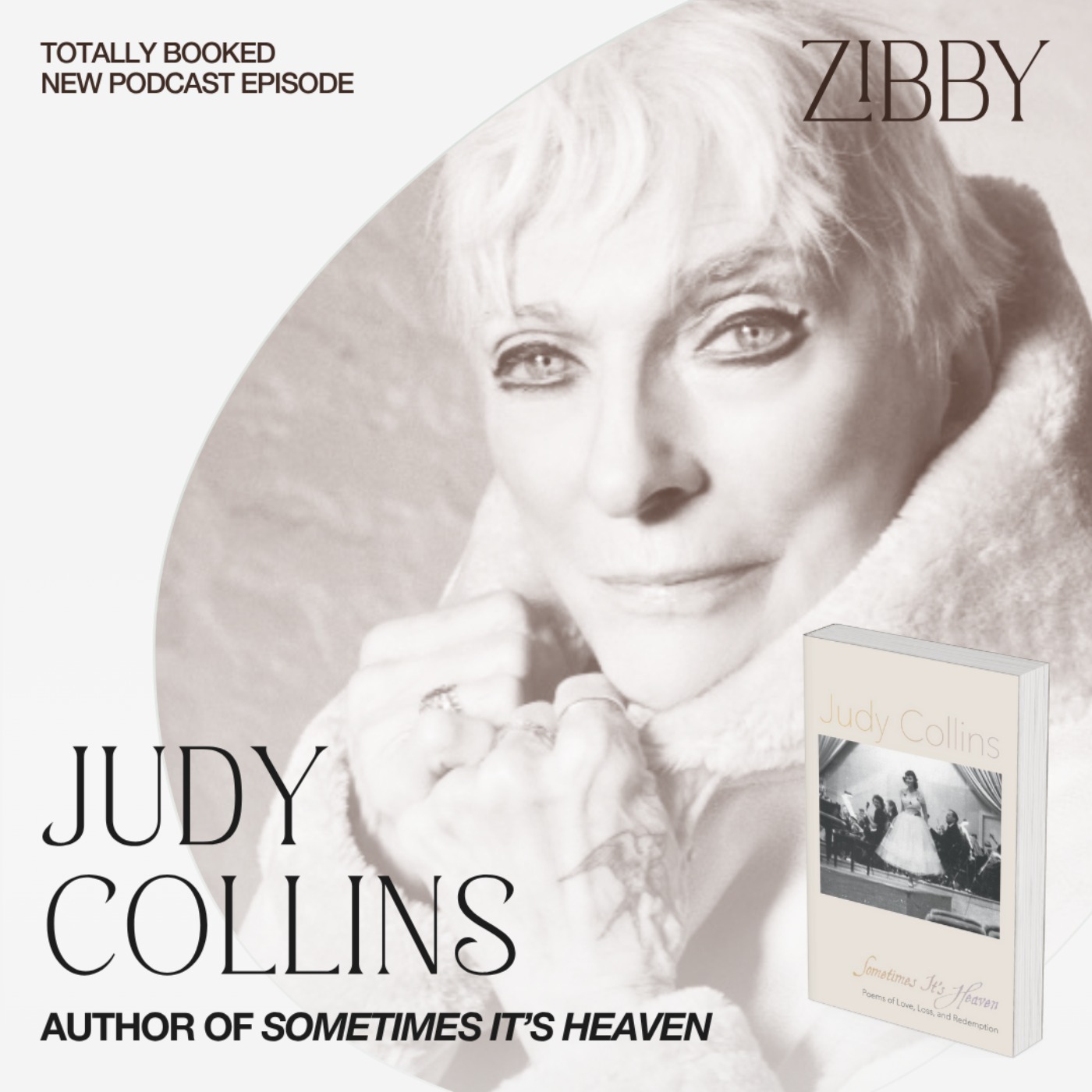
Totally Booked with Zibby
Judy Collins, SOMETIMES IT'S HEAVEN: Poems of Love, Loss, and Redemption
00:31:10
Loading summary
Transcript56 lines
- [00:00]
Judy Collins
The McDonald's Snack Wrap is back. You brought it back.
- [00:04]
Zibby Owens
Ranch snack wrap.
- [00:05]
Judy Collins
Spicy snack wrap. You broke the Internet for a snack? Snack wrap is back.
- [00:16]
Zibby Owens
Race the rudders. Race the sails. Race the sails. Captain, an unidentified ship is approaching. Over.
- [00:23]
Judy Collins
Roger, wait. Is that an enterprise sailor sales solution?
- [00:28]
Zibby Owens
Reach sales professionals, not professional sailors. With LinkedIn ads, you can target the right people by industry, job title, and more. We'll even give you a $100 credit on your next campaign. Get started today@LinkedIn.com results. Terms and conditions apply. Today's episode is sponsored by Gab. The Youth Mental health crisis is all over the news and we know social media is driving it. This this shocked me. The US Surgeon General warns that kids who spend more than three hours a day online are twice as likely to have depression and anxiety. With four kids of my own, we are constantly debating when is the right age to give some of our kids a phone? How do we monitor the phone usage for others? It is non stop, but now there's a solution. Here's the good news. A company called Gab has solved the problem by doing something no one else is doing. Their approach is tech in steps. Tech in Steps works by providing kids safe phones and watches tailored to every age, offering the right device at the right time. From GPS tracking enabled watches for young kids to increased features and parent enabled apps on the phones for tweens and teens, each device grows with your child. Bottom line, you don't have to give your kid a device that was made for an adult. Get them Gab, which keeps them socially connected safely. I can't recommend GAB enough. Use our code to get the best deal on something that will make parenting easier and give you peace of mind. Visit gab.com that's G-A-B-B.com totallybooked and use code totallybooked for a very special offer. Hi, this is Zibby Owens and you're listening to Totally Booked with Zibby, formerly Moms don't have Time to Read Books. In my daily show, I interview today's latest, best selling, buzziest or underrate curated authors and story creators whose work I think is worth your time. As a bookstore owner, publisher, author, and obviously podcaster, I get a comprehensive look at everything that's coming out and spend my time curating the best books so you don't have to stay in the know, get insider insights and connect with guests like I do every single day. For more information, go to zibbedia.com and follow me on Instagram at ibbe Owens Judy Collins is the author of Sometimes It's Poems of Love, Loss and Redemption. Judy Collins has long inspired audiences with sublime vocals, boldly vulnerable songwriting, personal life triumphs and a firm commitment to social activism. In the 1960s, she evoked both the idealism and steely determination of a generation united against social and environmental injustices. Five decades later, her luminescent presence shines brightly as new generations bask in the glow of her iconic 55 album Body of Work and heed inspiration from her spiritual discipline to thrive in the music industry for half a century. The award winning singer songwriter is esteemed for her imaginative interpretations of traditional and contemporary folk standards and her own poetically poignant original compositions. Her stunning rendition of Joni Mitchell's Both Sides now From her landmark 1967 album Wildflowers has been entered into the Grammy hall of Fame. Judy's dreamy and sweetly intimate version of Send in the Clowns, a ballad written by Stephen Sondheim for the Broadway musical Little Night Music, won Song of the year at the 1975 Grammy Awards. She has garnered several top 10 hits, gold and platinum selling records. Recently, contemporary and classic artists such as Rufus Wainwright, Sean Colvin, Dolly Parton, Joan Baez and Leonard Cohen honored her legacy with the album Born to the Breed, a tribute to Judy Collins. Welcome Judy. Thank you so much for coming on Totally Booked with Zibby to talk about sometimes. It's poems of love, loss and redemption. Congratulations. Thank you. You touched on the most sort of emotional themes in this book. I feel like I really got to know you. They were beautiful. You go from social activism to your own loss to love and lust. I mean, you really run the gamut here of a human lifespan and emotions. Why don't you tell listeners what inspired this latest collection and how you set about writing it?
- [04:50]
Judy Collins
Well, it was interesting. My husband who unfortunately died in late December last year, in 2017, so this book is really dedicated to him. In 2017 I was starting my year of writing, which I always do, I always get a new notebook out and, and I start trying to turn poems or writing into songs. That's really the, the object. And so he said, so I said to him one day, I said well, you know, I'll start doing my 90 and 90 days. And he said well, why don't you do 365 one a day? And I said well, why not? That's quite a challenge. And I. So I started and I actually did 365 poems in 365 days. So when I was finished, they Sat around for a while. I made some. I turned a few of them into songs, which came out on Spellbound, which was a coup. Well, a couple of years ago, the first album of all my own songs. And then my agent said, well, you have all these poems sitting around. Why don't we publish them? And I took the name of the book, Sometimes It's Heaven from one of the poems. Exactly. Which is sort of what you do. You kind of cruise over what you've written and figure out how you can use some of it to express what the book is about. And so we found a publisher. I had another book due. I had finished cravings for one of the other publishers, and they didn't want to do a book of poetry. So we found Mac Meal, Andrews McNeil, wonderful group of publishers, and they decided they usually don't put a picture on the COVID They usually put birds or colors or something. You know, they're all very beautiful. But towards the end of the editing situation, I found this. My. My team and I found this picture of me at 13. I should show it to you. It's. I was 13. Oh, you got it, too. I was 13 in my dress, in which I was playing Mozart with the symphony orchestra for my teachers, Antonio Brico's orchestra in Denver. And so they thought, that looks great. I think we'll use it. Which was a surprise. And I thought, I love it. I think it's a great. For me, it's a great cover picture.
- [07:37]
Zibby Owens
It is. I love it. I absolutely love it. And can't believe you were only 13 in that picture. Oh, my gosh.
- [07:43]
Judy Collins
I was always way grown up for my age. I'm sure.
- [07:48]
Zibby Owens
Do you mind if I maybe read a couple of the poems and you can talk about them? Is that okay?
- [07:53]
Judy Collins
Of course. Absolutely.
- [07:55]
Zibby Owens
This is at the end of the poem called Clark, about your late son. And I'm so sorry for your loss and love the way you wrote about him and honored his memory and all of that.
- [08:06]
Judy Collins
Thank you.
- [08:07]
Zibby Owens
He wrote, some of the bottles always blew up in the closet. What a mess. I picked Clark up and swept the glass off the floor and went to work. We had a husky named Smokey, and by the time I left for my big career, I was divorced from my starter husband and fighting to have custody of my beautiful boy, which eventually I won. We lived happily ever after until his death by his own hand in 1992. He died, as had his paternal grandfather, Gary Taylor, sometime in 1948 in a car in a garage with the motor running. Rest in peace, my Beautiful boy.
- [08:43]
Judy Collins
Well, you know, it's always a surprise. I. I don't. Although I think he was seven years sober when. When he decided to take his life, when he decided to drink. And I was shocked and devastated, but it's not, you know, if somebody is an addict and they're not working out sobriety with the kind of help. And he had great help. He was at Hazelden in Minnesota, and he was in the Aftercare program, really. But he'd been sober for a long time. Seven years is a good start. He wasn't done, apparently. And so when he took his life, it was interesting. I was here. It was the day that my husband Louis, who was a brilliant designer, industrial designer, was given the work of designing the Korean memorial in Washington, D.C. on the Mall. And he was in Washington. And one of my brothers called me and called him, and we met in Minnesota for the funeral. And it was a strange kind of synchronicity, I suppose, but it was the hardest thing I ever did. And one of my friends, Joan Rivers, was a friend of ours, and she called me. I remember standing in this hallway outside my studio a few days after the funeral, and I got a call from Joan, and she was. She was in the place where she worked so much, I forget what it's called. And she was getting ready to go on stage, and she called me and she said, you cannot cancel your shows. Her husband had just killed himself, and she was in the middle. And a lot of women in New York gathered around me and helped me to get through this. It's not the same, but it's a similar thing to what's happened to me with Lewis's death in December of last year, and he was discovered to have an undiagnosed cancer. And it had been going on for a long time. And anyway, Joan said, you can't cancel your shows. And I had started to do this in 1992, but I called my team and I said, okay, I have to listen to Joan Rivers. She knows what she's talking about. And I went out, I continued. I put everything back on the boards and. And my mother came out with me. My sister came out with me, was one of her kids, little tiny one. And Lewis came out with me, and I managed to do it. And I do think I learned a lot from it. I learned. Well, I learned that, first of all, you have to be with people you love doing something you love. So that combination was enormously helpful for me, and it fed that poem. So, you know, I'm glad I had him. I Mean, I feel the same way about Louis. I had 46 years with him, and I had 33 years with my son. And sometimes, I mean, I've heard a lot of people talk who didn't have the kind of time that I had with either my son or my husband. So, you know, it's sort of the luck of the draw. And, you know, those years that we have with people who go by whatever mode they. They have to leave on, I mean, none of us are going to stay here. We're all supposed to leave. That's the way that it's set up. How and when and where? Well, that's up to higher power and forces that we don't know anything about.
- [12:51]
Zibby Owens
So does it make you afraid of your own death, or do you feel like, at peace about it?
- [12:55]
Judy Collins
No. First of all, I'm 86, and I'm actually 27. I mean, I have a very Buddhist attitude about all of this. And one of my friends. And where are these books? I wonder what happened to them. She sent me two wonderful books about this deaths of. The deaths of many, many, many great Buddhist teachers and how they leave the planet and how they do it in such a kind and loving way. And they tell their followers not to be hysterical and not to weep and cry and pull their hair out and gnash their teeth, and they just say, go about your business and do what you have to do, because this is a normal process. This is not something that was suddenly made up just for you. The matter of law. So I fortunately, have been a devotee of Yogananda for decades, and that came from my teacher, Antonia Brico. I'm not sure I wrote a poem about her in this book. I'm not sure. But anyway, eventually I will, of course, but I was a student of hers for decades and played with her orchestra, which shows on the COVID of this book. But also, I suppose that's a poem to her, in a way, the picture. But she was. I studied with her for years, and then when she and I realized that I was going to make a movie out of her, of her life, which I did, which was nominated for an Academy Award, by the way, in 1980, 75. And while we were making the film, I was in her studio, in which I'd spent many years, and I saw this little portrait of Yogananda, you know, a bearded master, some kind of Zen person, and I said, how did that get there? Who? And then I heard this incredible story about her life and how after she had been told by every big conductor in The United States, that she could never. And other places that she could never become a conductor because she was a woman. And she found Yogananda in New York in probably 90. Well, let's see. She conducted the Berlin Philharmonic in 1929, and she was 27. So she had already met Yogananda in New York, and he had said to her, why do you. Don't let people tell you what you can do. I mean, of course, you can be a conductor. And he helped to send her to Berlin. And as I said, her first gig was the Berlin Philharmonic when she was 27. And she became, you know, the toast of the town. She was. She conducted everything, including the New York Philharmonic. So she was way ahead of her time.
- [16:02]
Zibby Owens
Wow. Can I read another poem?
- [16:05]
Judy Collins
Of course. I'm interested in your choices.
- [16:07]
Zibby Owens
Okay. I have a bunch, so how can I even pick? Well, I keep going to the ones about loss, so I'll just read this one, but then I promise I'll skip to something else. Oh, actually, this was also so interesting.
- [16:20]
Judy Collins
What do you want?
- [16:21]
Zibby Owens
Whatever I want. I know I'm drawn to loss as well. Well, this is called in the Present. In the present, all is well. Your death did not occur today. The flowers and the wishing well Are lovely in the light of May. Tomorrow has no power, no sway. What happens then is not today. The winter day you took your life does not confront this sunny now when all is well Makes one more bow and lifts a glass to. This is how to get through Mourning your last breath and stay in time. That is not death. That somewhere in the past resides I know not where and take no sides. I'll stay here where they know my name where shadows have no one to blame where memories slick with residue do not take on a darker hue. The sun shines on. In spite of death, in spite of time in spite of you. I'll stay in now where no one knows how desolate the present grows.
- [17:13]
Judy Collins
Oh, boy.
- [17:15]
Zibby Owens
That is so good.
- [17:16]
Judy Collins
Who wrote that? Who wrote that?
- [17:18]
Zibby Owens
Oh, my gosh.
- [17:21]
Judy Collins
Yeah. You don't know what you're writing. I mean, I. I find that this. You know, there used to be this idea of freehand writing and whatever happens, but it is part of your. Your creative process. Whatever is coming out that day is what's going to go on the page. And loss, you know, it's terrible. And, of course, I was surrounded by these wonderful women, including Anderson Carter's mother, Anderson's mother, Anderson Cooper.
- [17:53]
Zibby Owens
Gloria Vanderbilt.
- [17:54]
Judy Collins
Gloria. Gloria had lost a son. And I met a woman who wrote a book called My Son. My son, Iris Bolton wrote a great book. There were only two books that I found about suicide in 1992. There really was nothing. There was poetry collection called the Winter of Silence, I think. And there was Alvarez's book, book about Sylvia Plath's death, which is a very depressing book, mostly because he doesn't say anything about positive thoughts of this, you know, and. But I. I found Iris Bolton's book. She has had and is the president emeritus of a mental health organization called the Link in. In Atlanta, and she's now retired, but her son, who was 19, took his life and she wrote this book called My Son, My Son. And of course, I mean, it's a hard thing to be a person who teaches mental health and whose son dies of suicide. So, first of all, it was a wonderful book full of positive ideas and positive thoughts and just took me by surprise. It was so wonderful. It was so. She's still a friend of mine and an amazing person, and I think her book probably opened up this territory. And now, I don't know, you go to a library, you go to a bookstore, you say you see a whole wall of books about. About death, about suicide, about loss, about people talking about all kinds of sorrows that they've had that people didn't normally talk about, except perhaps elusively, in poetry. And a lot of these books are not elusive to beat the band. They're much more direct and open and understanding. Also, there is no. What is it called? There is no closure. Forget is in part of your life. It's going to hurt, it's going to be there, it's going to come up. When things are happy, when things are sad, when you go to a funeral, when you go to a wedding. I mean, it all becomes a part of the fabric of your life. And this is human. It's not just me. It's from the beginning of time. In the Garden of Eden, it was going on the two brothers. One of them killed the other, I think. So throughout the Bible, you find these stories, and they all involve death because that's part of the cycle of life.
- [20:48]
Zibby Owens
Today's episode is sponsored by Quint's. With summer in full swing, I feel that familiar urge to refresh my closet. But I'm not trying to waste money on pieces I'll only wear once or for just one season. That's where Quint's comes in. Their clothes are timeless, feel luxurious, look elevated, and the quality is way beyond what you'd expect for the price. It's the kind of wardrobe upgrade that just clicks. Think 100% European linen tops starting at $30, washable silk dresses and skirts and soft cotton sweaters. Versatile warm weather pieces you'll reach for again and again. The best part? Everything with Quince is half the cost of similar brands. By working directly with top artisans and cutting out the middlemen, Quince gives you luxury without the markup. And Quince only works with factories that use safe, ethical and responsible manufacturing practices and premium fabrics and finishes. I love Quince. I love the sweaters, in particular the oversized cotton sweater for summer. And I can't recommend this anymore. I'm totally obsessed. Give your summer closet an upgrade with Quince. Go to Quince.com Zibby for free shipping on your order and 365 day returns. That's Q-U-I-N-C-E.com Zibbee to get free shipping and 365 day returns. Quince.com Zibby Better Help Online Therapy bought this 30 second ad to remind you right now, wherever you are, to unclench your jaw, relax your shoulders, take a deep breath in and out. Feels better, right? That's 15 seconds of self care. Imagine what you could do with more. Visit betterhelp.com randompodcast for 10% off your first month of therapy. No pressure, just help. But for now, just relax. Say hello to Mia hey there. Mia runs a pet grooming service in Chicago, but getting new clients was rough until I started using acast. I recorded my ad, targeted pet owners in the area and let ACAST do the rest. Now people all over the city know about my grooming services. Mia's business is looking sharp. What's your secret for happy pets and happy clients? A fresh cut, a friendly vibe and a well placed podcast ad. Get the word out about your business through Acast. Visit go.acast.com advertise to get started. Well, in the book, in addition to Loss, which I focused on a lot here because it just moved me so much and oh my gosh, your work. You write about the many other notables that you've gotten to know over the years and I found myself growing really interested in your perceptions on fame itself and how you've watched it sort of hit yourself. Yes. But also all these other people in your orbit come and go, come and go. What do you think about that?
- [24:01]
Judy Collins
Well, it's interesting to have friends of all kinds. You know, I live in New York and I have friends who do every sort of job you could think of. Some are famous, some are not, and having working on friendships. When I came to New York, it was 1963 and I had made a suicide attempt when I was 14. Thank God I didn't succeed. I think it would have destroyed my parents. I know it would. And I did it in a kind of moment of anger at my father because he wanted me to play a very difficult piece of music. La Campagnella by Liszt? No. Was it Liszt? Yeah, it had to be Liszt. He's the difficult one. The most difficult one, or one of the most difficult. And it was a very hard piece. I still think it's a train wreck, this piece of music. And Brico had given it to me to work on, and I was working on it and he wanted me to play it at a public event, a big public event. He was a musician. He was a star in Denver. He was on the radio every day. He was a big performer in various settings in. In Denver. And so he wanted to show me off, really. I wasn't having any of it. And So I took 100 pills and. And I. Then I didn't die, because that's the way life is. Sometimes it works out, sometimes it doesn't. And I quickly. My father wrote me a very beautiful letter. He said, you can't do that. That's what parents do, you know, there's no way you can do this. You mustn't do this. You have a very impressive background already at 14, and you better get used to the fact that you're going to have to work like a maniac the rest of your life, which I have, at what you do, because you have some kind of thing going on here which people like and which you'll have to work on, because that's the only way you can make it mature. And so the life of an artist is what I've been given. And that means lots of work and lots of travel. It's an illusion that people have about creativity. They think that they can just be creative and go out and start to make a living, and they forget that they have to market themselves. The illusion that you become an artist and then it just flows. No way. You work, you produce, you promote. You go out here, you go out there. You have to deal with dealers if you're a painter, you have to deal with publishers if you're writer, you have to deal with the music business if you're a musician. So it's interesting because people think this comes out of the air and it just takes care of itself and you don't have to promote it and so on. So I Ran into the suicide idea full force. And then when I got to New York, I found it. Well, it was the drinking. I am a recovering alcoholic, for I've been sober for. For 47 years. Exactly the time I've been married. I've been with Lewis. I was. We lived in sin for 18 years and then we got married 27. So.
- [27:21]
Zibby Owens
I. I forgive you.
- [27:22]
Judy Collins
Thank you. You can be my personal guru.
- [27:26]
Zibby Owens
Yes, of course. I'm happy to take that role.
- [27:30]
Judy Collins
Gurus don't make you regret anything or, you know, renew your vows or anything like that.
- [27:37]
Zibby Owens
My goodness. You also had one moment in the book where you were standing on a back porch with a gentleman and you hear this loud scream and you don't know what it is.
- [27:52]
Judy Collins
And.
- [27:52]
Zibby Owens
Here. Wait, I. Here. It's Hockney in the mountains. Oh, David Hockney. Not just a gentleman. Okay, well, can I read this last one? Do you mind? Yes. Okay. Last one. Hockney in the mountains. It was midnight and the party was over. Our host was tall and rugged, a Colorado man, senior president of the foundation. David Hockney and I were honorary guests at the party, brought in to talk and raise money for someone or something we both believed in. We were staying at a fancy upscale condo near the Aspen Alps. I was pretty drunk and David and I went out on the pine balcony to smell the wood smoke and take in the sharp, crisp mountain air. The summer night was cold and we were giddy, standing there looking out at Ajax, when a heart stopping, blood curdling, screaming split the air and struck us like knives to the heart. I said, someone is having glorious sex. David said, someone is being murdered. We debated for a while and then had another drink. In the resuming quiet of the mountain air. I stumbled back into the room. Our host called the man at the front desk who said there was nothing they could do about noise in the mountains. Everybody screams sometimes. The air was still again, as though blood had poured out of a wound and cauterized in the freezing air. David went back to his room. I passed out and woke to the morning paper. The scream we had heard was that of a famous skier who had been stabbed to death by his jealous lover in their little cabin on the next mountainside. So hard to separate the screams of pleasure from the screams of death.
- [29:12]
Judy Collins
Yeah, what a. What a moment that was. It was Spider. Very famous skier. And the woman who killed him, she never went to jail for this. She was married to a big famous singer, Claudette. Her name was Claudette something or other. And she had a long series of trials or issues Where. But she never went to jail for it. It's interesting. It was probably manslaughter because probably she was out of her mind. She was probably drinking. She was probably both. They were probably stoned, which is no excuse, by the way. I think many of these things happen under the reign of alcohol and drugs. But it was. Boy, the whole experience got me. I. I don't know. Somebody know. Some friend of mine knows David Hockney. I. I knew him then, but I have not been. I. I haven't spent time with him since then. It was an unusual, remarkable event. But when something like this happens and you're a writer of any kind, you're bound to write on it. My manager says I should turn it into a movie. Well, maybe I will. I have a lot of time.
- [30:33]
Zibby Owens
What. What do you want to do next? Like, how do you feel? And how do you feel embarking on new projects without your husband to bounce ideas off of? Does it make it harder?
- [30:44]
Judy Collins
Well, he's definitely with me. I'm. I was practicing last night and I had put one of our wonderful photographs together. I don't remember who the photograph, but it's so wonderful. And I just kept staring at him, thinking, I've been so fortunate. And he's around. He's here. Well, I have to say I'm a little upset that I haven't had as many dreams as I would like. But I have a lot of presence of him among my friends because we had a very large coterie of friends and we. And I have always worked hard on friendships. I was going to connect the dots from my therapist, whom I started seeing in 63 when I got to New York, because I needed to stop. I needed to address my drinking, which I didn't with him. But I did talk a lot about the suicide attempt. And then I started the process that has led me to where I am today, which is that I started writing. I was in. I. It was insisted that I write my dreams down. And I'm a. I always had been a very. A large dreamer. I dreamt every single night of my life when I was a child. I was growing up with. Of course, my father was blind, incredibly successful, wonderfully bright. I was. I did a show the other night at the Library of Congress, where my. Where my archives are. But my father got everything he needed from the Library of Congress. They had a whole section, always, they have of braille books, you know, copies of everything from Dickens right down to the latest thriller. And so he always had his Braille books and he had the Recordings of all the shows that came to him from the Library of Congress and talking books so that we would hear show Shakespeare read by all the great English speaking actors. So what am I telling? Oh, yes.
- [32:54]
Zibby Owens
Well, so I was just saying any. Any projects you're excited to work on coming up?
- [33:00]
Judy Collins
I. My dreams when I was growing up Until I was 20, 22 were in black and white. And I'm sure it was because my father was blind. I had a big accident, ski accident in 1961, and they had me in the hospital. I was on Demerol every four hours, the way they used to do it. And I was there for a couple of weeks. And when they switched off the Demerol and put me on another painkiller that night, my dreams burst into color. It was very exciting. It was like, you know, it was like the Tonys. It was really exciting. And after that, I've always dreamed in color, but the dreams have slowed down and I'm not sure why, because I felt always that that was going to be a lifetime thing and that I was always going to dream anyway. I sort of feel left in the dark a little bit because I'm not having as many dreams as. But on the other hand, I have a whole life full of pictures and experiences and years and years of doing wonderful things with him. And he was very much a part of my work because he had always was suggesting things, working on things, observing things, being at the shows, making sure that I remembered everything that my singing teacher told me to do. And he studied with my singing teacher, with Max. Now I also am faced with not only another bundle of my own archives after 20 years, but I'm having to think about. And I have people who can help me with this that we need to do to get his archives somewhere because he's a big deal. He designed the Korean Memorial on the Mall in Washington, which is a big. Belongs to the country, belongs to the world. It belongs to the Koreans. Yes. And to the world. And so his archives have to be placed somewhere where somebody. People will want to come and know about Lewis Nelson, what he did.
- [35:18]
Zibby Owens
Amazing. Judy, thank you so much. I loved your collection. I loved our conversation. And I really am wishing you all the best. So thank you so much. Thank you.
- [35:28]
Judy Collins
God bless you. And thanks for reading those. That was. I haven't heard that before. So I was very touched.
- [35:34]
Zibby Owens
Oh, thank you.
- [35:36]
Judy Collins
All right, my dear. All right. Thank you.
- [35:39]
Zibby Owens
You're welcome. Thank you.
- [35:40]
Judy Collins
God bless. Have a beautiful day.
- [35:42]
Zibby Owens
You too. Bye. Bye. Thank you for listening to Totally Booked with Zibby formerly Moms don't have time to read books. If you loved the show, tell a friend, leave a review, follow me on Instagram ibbyowens and spread the word. Thanks so much. Oh and buy the book. Tipping culture is out of control. Yesterday I tipped someone just for handing me a napkin. So when hotels.com gives me up to 20% off for being a member, I finally get tipped. And you know what? It feels good. Hotels.com members save up to 20% off at hundreds of thousands of hotels, life is a workout and Smoothie King is here to help you power through. Whether you're crushing morning miles or sprinting through back to back meetings. Give your body the energy, protein and power it needs to help you clean conquer your goals. Only at Smoothie King. ACAST powers the world's best podcasts. Here's a show that we recommend so what does it mean to live a good life? Really accepting the fact that happiness requires a little bit of training? These are the questions we explore on the top ranked Good Life Project podcast, which has been downloaded and viewed over a hundred million times.
- [36:59]
Judy Collins
Spend your time and energy on things that actually matter to you. Remember what's already good and stay curious about what could be good.
- [37:07]
Zibby Owens
On Good Life Project, we sit down with leading voices and legends in health, art, science, spirituality, entertainment, industry and culture. Well, I'll just say what just came to mind, which is to be careful with yourself. Be yourself.
- [37:20]
Judy Collins
It's.
- [37:21]
Zibby Owens
You know what?
- [37:21]
Judy Collins
It's not easy always, but it's simple.
- [37:25]
Zibby Owens
Check out Good Life Project wherever you get your podcasts now. ACAST helps creators launch, grow and monetize their podcasts everywhere. Acast.com.