← Totally Booked with Zibby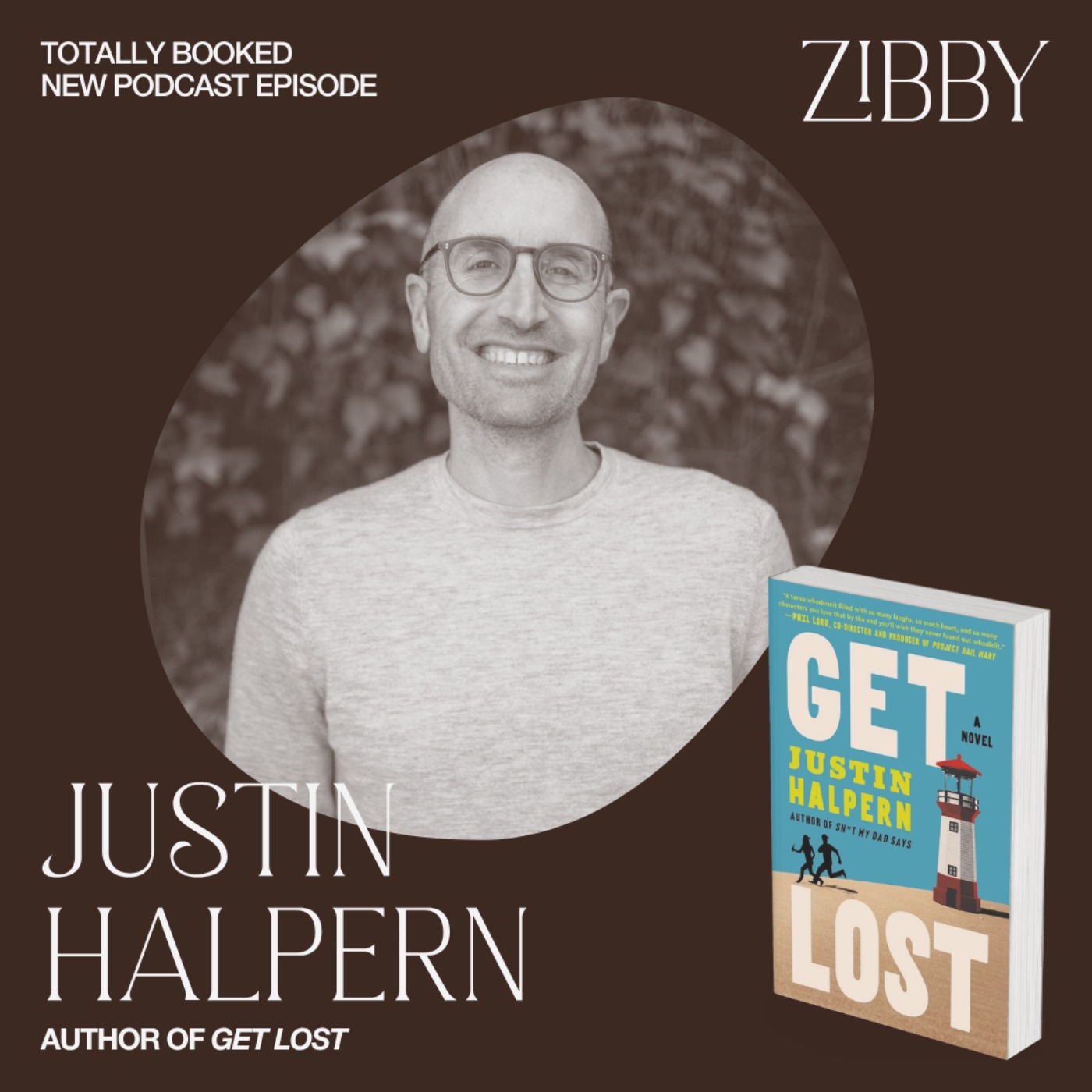
Totally Booked with Zibby
Justin Halpern, GET LOST
00:21:04
On “Abbott Elementary,” Screenwriting, Adaptations, Second Chances, and His Dad
Loading summary
Transcript51 lines
- [00:01]
A
Welcome to Totally Booked. I'm Zibby Owens. I've interviewed more than 2,000 authors on this show and learned endless amounts about storytelling, reinvention and life itself. Because when you talk about books, you're really talking about life. So get ready to hear from today's best authors, the best selling and the not yet discovered. Come find your next great read and the story behind it. Enjoy. Justin Halpern is the author of Get Lost. He is a Golden Globe winning and Emmy nominated creator, showrunner, director and executive producer through his and his creative partner Patrick Shoemaker's company, Delicious Non Sequitur Productions, which is currently under an overall deal with Warner Brothers Television. He is the executive producer and co showrunner of the Emmy winning hit series Abbott elementary on ABC alongside Quinta Brunson who by the way was also on this podcast and Patrick Schumacher. The series has been nominated for best comedy series in both 2022 and 2024, among other honors. Justin is the author of the New York Times bestselling book Shit My dad says and I Suck At Girls. Get Lost is his debut novel. Welcome Justin. Thanks so much for coming on Totally Booked to talk about your new novel, Get Lost. Congratulations.
- [01:16]
B
Thank you so much. Thanks for having me on.
- [01:18]
A
I have been sort of following you. Well, that sounds creepy, but I read Shit My Dad Says I Suck at Girls. Like I've been following along.
- [01:26]
B
Oh wow.
- [01:27]
A
For a long. Yeah, I thought that was hilarious. I am a fan. I'm such a fan. So when I heard you were writing a novel, I was so excited and it did not disappoint. So congratulations.
- [01:37]
B
Oh, thank you so much. I appreciate that. Yeah, I'm a little nervous about it.
- [01:42]
A
No, no, it's, it's really great. It's propulsive and the characters are, you know, Lila is so funny and dark and mean but like so like likable. I know you have a whole debate about this, but likable, Even in her like frank rudeness, it's like endearing in some way. I can't even explain it. But anyway, I'm a fan. Everything she said was hilarious.
- [02:04]
B
Oh, thank you. Yeah. My goal was to start that book where you dislike, you may dislike her and like her father, like Dix and by the end of it you've either flip flopped or you've come to a different understanding of both of them.
- [02:19]
A
So why don't you tell listeners a little bit about Get Lost.
- [02:22]
B
The basic sort of premise of the book is that you know this woman, Lila, she's In her early 30s, she's estranged from her dad. And she gets a call at the start of the book that says her mom's gone missing. And she's like, my mom sadly goes missing a lot. She has mental health issues. It's not fine, but it's fine. She'll come back. She always comes back. And they say, well, this time might be a little different because the cops think that your dad killed her. And so she goes back to her small town in Central Valley, California, and she, with the help of her dad, tries to figure out where her mom went, where she is. And so that's the basic premise of the book. But I can definitely get into kind of what I was trying to achieve with it.
- [03:07]
A
Yes, 100%. And by the way, you have a scene earlyish on about when she's waiting, when Lila's waiting at the jail for her, the sheriff's office, wherever for her dad to come out. And she was giving advice to someone next to her about how you have to stay stand and kind of lurk about to get attention. So I was literally at a doctor's appointment for my son earlier today, and I was like, I'm gonna do the standing thing, which I have done in the past, but I was like, I'm gonna channel Lila here and stand and hover around this reception desk to get into See this doctor faster. Which I think worked.
- [03:40]
B
You know what's funny is that specific moment in the book was one of. To me, one of the most important moments in the book. Like, because I. I originally, when I had written the book, she's so sort of caustic and abrasive, and it felt like I was like. I feel like I'm missing the humanity in her early on. You get to plenty of it later. But I was like, there are people that she has empathy for and, like, feels for. And so that moment, I put that moment in there because I. I grew up the child of a doctor. And that was what he. He would always say. He would. Like, when. When he. We would go into the ER or whatever, or we'd go. He would always just stick. Stand right by it because he's like. They'll always come ask you what's going on if you're standing. They hate it. It's like it makes him. It makes them uneasy. And so I felt like she had been through, like, in the. In the. In the show or. Sorry, in the show. In the book. You know, she's been through so many institutions. She's been in foster care. She's been, you know, in police custody before. She's been so many places that are sort of bureaucratic that I wanted to show that she understands the way that these bureaucracies move and that these were some sort of, like, hard earned knowledge that she had. But really and truly, I think the thing that I was most interested in is. Well, there was two things that prompted the book. The first is simpler and much more about the mystery element, which is that I saw a article about this small bar in Central California where It was like 15 or so, it was tiny, it was like a 1500 square foot bar. And it had one entrance and one exit, and a man walked into it and then he never walked out and no one ever found him. And they had video on the exit, and they had video on the entrance and they never found the guy. And so immediately just that was interesting to me. Like, that idea of, well, obviously didn't vanish, but what happened? And so the other part of it was I. It was like 2023, and I'm a television writer, so I was walking the sort of strike line. We were on strike against the studios. And so I was walking the picket line every day, like three, four hours a day. And I just had time to think. And I wasn't gonna write a screenplay and I wasn't gonna write a, you know, a TV show. I was on strike. And so I started to get this idea of just these two characters. And this. The larger idea I had was kind of like, how is it for a kid of someone who takes up all the oxygen in the room? Like, of someone who is, like, beloved of someone who is. It's so easy for them to be with people and people like them, and it takes no effort on their part. What does it feel like if you're the child of someone like that and it's hard for you to connect to people. And then it started to morph into. And what if you're actually a good person and they're kind of a piece of shit, you know, like, what. What is that? How that must, like, really hurt, you know? And I started thinking about this idea of, like, I want to write a book that's fun and funny and has a mystery. But I want to get into this idea of how sometimes our anger at the people that we love, it holds us back and it limits us. And we can't move forward in our lives until we can set it aside. Even if an apology never comes, right? There's a lot of stories about apologies, and I didn't want to write a story about someone seeking an Apology. I wanted to write a story about how do you move forward if you know you'll never get that apology? Like, you know it'll never come. How do you set aside that anger and move forward in your life? And so that was kind of the theme that I wanted to tackle.
- [07:16]
A
Oh, I love that. And where did the significance of the lighthouses come in? And did you ever have a lighthouse and hide anything in it yourself?
- [07:25]
B
I didn't, but. So I grew up in. In this area of San Diego called Point Loma. And it's. It's basically, when I grew up, it was just a military community. It's now much fancier. But when I was growing up, it was all people. My. I was in the Navy, so it was all people who were in the Navy. That was it. And there is a lighthouse at the end. It's a peninsula, and there's a lighthouse at the end of the peninsula called Cabrillo Monument. And people. I didn't realize sort of the culture around lighthouses until I remember going to a friend's house, and his mom had, like, tons of lighthouses, and I was like, this is a little creepy. And. And she was like, no, lighthouses are the guiding light in a dark and stormy. You know, it was like, there was a lot of symbolism and a lot of power that a lighthouse had for people. And I think also when you have. Like, I have had people in my life who have had real mental health struggles. And I think when you are so loosely tethered to the earth, you know, when you are just barely hanging on and having some real mental health crises, I think you look for little things that can keep you on this earth. And so I think that. That. That was the idea, is that Lila's mom in this book is just like, she's barely hanging on always. And. And in order to sort of, like, feel like she is a person of this planet, she. She collects these lighthouses, and she. She has them all over her house as these constant reminders of, like, it's dark right now. It's super dark, but there you can find that one light. You can find it, you know, And I think that that was. And I also wanted to show that, like, sometimes when you're having these mental health issues, it's hard for the people who love you to be around you and help. And so you isolate and you isolate and you isolate.
- [09:14]
A
And.
- [09:14]
B
And so that was kind of a thinking behind the lighthouse.
- [09:17]
A
Can you share about where in your life you encountered all the mental illness?
- [09:21]
B
Yeah, so I had a Couple aunts that I was very, very close to that really battled it, and it was really hard for them to. I think they. They had a really tough childhood. My mom as well, growing up. I think they had a lot of, like, abandonment. They had a lot of just, like, moving in and out of orphanages and. And it was really, really hard for them. And I think that they never found a place that felt like home, if that means. If that makes sense. And I think because of that, my mom did, and she married my dad, and I think they built a home together. But I think some of my. Her sisters weren't quite as lucky, and I think that it really took a toll on them mentally, and I think it. They developed a lot of mental health issues, and I would see them struggle with them, and I would see my mom spend hours and hours and hours trying to help them, trying so hard, like, beyond what anyone would consider, like, past the. Like, I've done my duty, like, way past that. Because she loved them and she didn't want to give up on them, you know, And I think that that. That informed a little bit of Lila's relationship with her mom. I think it's harder when you're a child and your parent has that because at some point you feel like, well, this relationship was supposed to be flipped. I was supposed to have been taken care of by my parent, and now I'm exclusively having to tend to my parent, who is a complete and, you know, just like, total mess, for lack of a better term. And so I thought that, like, a child might give up earlier because they have a whole life that they need to build for themselves in a way that, like, you know, my mom did. She. She stayed the course the whole way, you know.
- [11:12]
A
Oh, thank you for sharing.
- [11:14]
B
No, no, I'm sorry. I was caught off guard a little bit.
- [11:16]
A
No, sorry, I didn't mean to pry.
- [11:19]
B
No, no, no, no. Listen, I put it out there in the book. It's. It's, you know, it's fair game.
- [11:23]
A
Oh, well, it's nice in a way, though, to see your mom be such a huge advocate. Right? Like, some of those values are priceless to internalize. Like, you can say, oh, I'm going to be a good mom by doing X, Y or Z for my kid. But actually, she's being a good mom by teaching you how to care for others.
- [11:40]
B
Oh, absolutely. I think that's. That's. I tell her that all the time. I'm like, the sort of modeling. Aside from just what a great parent she was or is Just sort of the modeling of it was potentially more powerful than anything she could have said. And she said lots of amazing things.
- [11:57]
A
Yeah, amazing. Today's episode is sponsored by Quints. The best summer pieces are the ones you end up wearing on repeat. Comfortable, versatile, and somehow right for almost every occasion. That's why I love Quince. They make elevated essentials using premium materials like European linen, organic cotton and washable silk without the traditional retail markup. Quince's 100% European linen pants, dresses and tops are the pieces you'll reach for all summer long. They're lightweight, effortless to style and start at just $32 dollars. Their denim is soft and comfy and their organic cotton sweaters are perfect for layering when evenings cool down. Personally, I love my white tank dress that I wear all the time. I've actually pinned it to my Instagram as one of my top three posts. I also love my new jean jacket from there. And I'm just so grateful to Quince every single day. Especially because Quince is priced 50 to 80% less than than similar brands. And it's not just apparel. Quint also offers elevated essentials for your home, from bedding to bath and all the kitchen essentials and furniture. So make your summer wardrobe feel easier. Go to quince.com zibby for free shipping on your order and 365 day returns. Now available in Canada too. That's Quince Q U I N C E.com Queen Z I B B Y for free shipping and 365 day returns. Quince.com zibby Enjoy. So when did you get into the TV writing? I know you're writing for Abbott elementary now. That's so cool. I actually had Quinta Brunson on like years ago on podcast. Yes, I did.
- [13:40]
B
Oh, she did.
- [13:40]
A
I wonder if she even remembers. It used to be called Moms don't have time to read books. But I had her on for her book. Who memes well or something.
- [13:46]
B
Yeah, she memes well.
- [13:47]
A
She means well. She means well. But anyway, obviously that show has taken off. How has that whole thing changed your life and how did you get there?
- [13:56]
B
Yeah, I mean, it totally changed my life. Well, my partner and I, Patrick Schumacher, who's been my writing partner for 25 years, we write everything. Everything. We write in TV and movies. We write together. And he and I had written a pilot and then we'd cast the pilot and we. The original role was for like a blonde Valley girl who was like worked at a Chuck E. Cheese and Quinta Came in and read for it. Quinta, if you don't know, I'm sure you do. But for the listener, she's a 4 foot 11 black woman, and she read. And she was just so good and so such a standout that we just changed the character for. To be her. I mean, to fit her. And so we shot the pilot, and the pilot went through a lot of iterations. It was not good, but she was fantastic in it. She was incredible in the pilot. In the testing, you'd see, like, anytime she was on screen, the dials would go way up, and when she was off screen, tiles would go back down. But after that, we knew she was a writer creator. We had become friends with her on the set. And we said, listen, if there's anything you ever want to do, if you ever have any ideas, anything like that, come talk to us. Come. Come pitch it to us. And she pitched us this idea for Abbott elementary, but it was sort of like her mom was a teacher, and it was the basic building blocks of Abbott Elementary. She came in and we were like, wow, that's great. And originally she wanted to do it as an animated show because she was busy and we were busy. And so we had sort of talked about it, and then we just were kind of busy and she was busy. And so we. We sort of didn't. We talked about it a little bit. But every time my partner and I would start to, like, generate ideas for a new show, we would just be like, that idea is such a good idea. Like, the way that her way into it was a good idea. And her voice is so unique and good. And then a couple years later, my partner was. We were on. We're at our offices on the Warner Brothers lot, and Quinta was there for a meeting. And Patrick saw her, and Quinta doesn't drive. And he was like, do you want to ride home? And then while he was giving a ride home, he was like, you know, Justin and I talk about this. That show we talked about. At the time, it was called Herity elementary because it was named after her elementary school. Would you ever consider doing it live? Action. He asked her. And she was like, you know what? I've been thinking about that too. And Pat was like, well, have you ever thought about starring in it? And that. And two weeks later, you know, she came in, we started developing the pitch with her. And then two weeks later, we were like, three weeks later, we were like, out the door with that pitch, taking her out to some. So. And it completely, like, Pat and I have Been working writers very gratefully for many years and years before that. We had as well. But it's so rare. You get the chance to create something or be a part of the creation of something that just like. Like it bursts through the zeitgeist, you know. And so when that happens, it. It opened up so many more doors for us that were previously like only cracked open. And it has been like, you know, working on that show has been the blessing of my life. I would say completely like Quinta completely changed my life.
- [17:06]
A
I love that. I wonder, what was she on the set even for? Because if she hadn't have met she. If she hadn't been there that day and you hadn't crossed paths, maybe this whole thing wouldn't have happened.
- [17:15]
B
I think she had like a general. I can't remember actually. I think it was like a general meeting about something. Like she had been doing pilots. Like they hadn't been shot, but she'd been like writing and selling pilots before that. So I think she was on the lot for some other thing.
- [17:28]
A
Yeah, I think whoever that person was should be in the show's acknowledgment somewhere, probably so. Oh, that's great. Is there anything that it opened up that has been on your wish list forever that now you have the opportunity to do, aside from write this novel?
- [17:44]
B
Yes. Well, yeah, writing the novel is a big one. But yeah, we're actually turning I Suck at Girls into a show that's gonna. That's on Netflix. It's gonna be. I'm actually in the offices of it right now. It's gonna be on Netflix next year sometime. And it's fun because, you know, we had actually turned Ice Like Girls into a show 12 or 13 years ago, but it was very much based around this one particular time. And it was my father and me and it was kind of a father son thing. And originally the thing that I really wanted to do is I always wanted to Pat and I have always wanted to do like a. A teenage R rated teenage show that is like very much based on the teenagers. The adults are sort of, you know, secondary and. And that it was just about sort of the idea that you're. You. Every decision feels so important when you're a teen and that you have no idea what you're doing and. And that like, really and truly, you're just trying to figure out who you are and what skin you're going to like ultimately where. And so that was the idea that we wanted to do and we've gotten to do it like we're, we're getting to do it, which is really fun for us.
- [18:54]
A
That is so cool. Oh, I love that. Do you feel like, you know who you are now?
- [18:58]
B
I'm getting closer. Yeah. Yeah. It's funny. I mean, I think about this a lot. I think about how I'm. I'm living the life based upon decisions that 23 to 26 year old me made, but I would never, 45 year old me wouldn't have wanted to hang out with 23. Right. And I think that's the thing that's so weird about, about being young, is that you are, you are the representative for a much older version of you that's gonna have to live with everything you've done. And I think that's a fascinating idea that is, you know, really hard to swallow sometimes. But I think I, I think I am closer to sort of figuring out how I can exist in, in this world and feel good about it. Which is a challenge.
- [19:51]
A
Yeah. Challenge for all of. All of us. What chapter would you say in your own life are you leaving and what chapter are you entering?
- [20:00]
B
Well, I have two kids, they're 10 and 13, and I feel like I am leaving. The chapter of like, my life is an absolute fucking tornado. You know, like, when you have kids that age, like when they're like, you know, anywhere from like, basically born to like eight, it's. It feels like there is no. You're treading water and it feels so hectic and you're always tired and it just. And so I feel like I'm. I'm leaving that world of chaos and kind of trying to like, like that storm is. It's still drizzling, but it's about to end. And now I'm like, okay, now wait. Oh, right. We can actually, like, move towards the destination. We don't just have to like, stay afloat.
- [20:45]
A
I love that. I have a. My two younger kids are 11 and almost 13, so I'm with you.
- [20:51]
B
Same.
- [20:52]
A
Yeah, yeah, like, and I look at families in the airport with the strollers and I'm just like, thank you.
- [20:59]
B
The airport's where I notice it the most actually. It's funny you bring that up. The airport where I'm like, oh, yeah, I don't have to do any of that stuff. I have to like, travel with this car seat, do all this other kind of stuff, and I don't have to. If I turn my head for two seconds, I don't have to worry that I no longer have a child. Exactly. Yeah, I know.
- [21:15]
A
I Never. I never went the route of putting the leash on the kids, but I. I did see families doing that. And thinking like, that wouldn't be such a bad call.
- [21:23]
B
Yeah. Oh, yeah. You start to empathize with everything every parent does, if you get it.
- [21:28]
A
Exactly, exactly. Yeah. On the Getting Lost theme, you know, the kids running away, this book. Anyway. Well, Justin, thank you so much and thank you for this highly entertaining book. I'm excited you'll be at the bookstore. And now I'm excited for I Suck at Girls, the show. So lots to look forward to.
- [21:47]
B
Thank you so much. Yeah, I'm really excited to come to your store. My friend Bill Lawrence is going to be there with me, which will be really, really fun. Bill is a great guy and actually one of my sort of mentors. He gave me my first job in television. He's been. He's been entertaining TV people or entertaining people through the TV for many, many, many years. And he's always great in person. So I'm excited to be there.
- [22:11]
A
Awesome. All right, well, thank you so much.
- [22:13]
B
Thank you, Zibby.
- [22:14]
A
All right, take care. Okay, bye. Bye.
- [22:16]
B
Take care.
- [22:17]
A
Thank you for listening to Totally Booked with Zibby, formerly Moms don't have time to read books. If you loved the show, tell a friend, leave a review, follow me on Instagram, ibbeowens and spread the word. Thanks so much. Oh, and buy the books.