Loading summary
Transcript40 lines
- [00:01]
Zibby Owens
The recent fire in LA destroyed many schools in the Pacific Palisades area where we have our home. I am currently raising money to completely rebuild the library collections of four schools in the neighborhood. If you are interested in helping me raise up to $800,000 to restock the libraries, go to zivimedia.com donate one book donate a thousand books but please help imagine if this was your school or your kids school. Thank you.
- [00:31]
Kareem Rosser
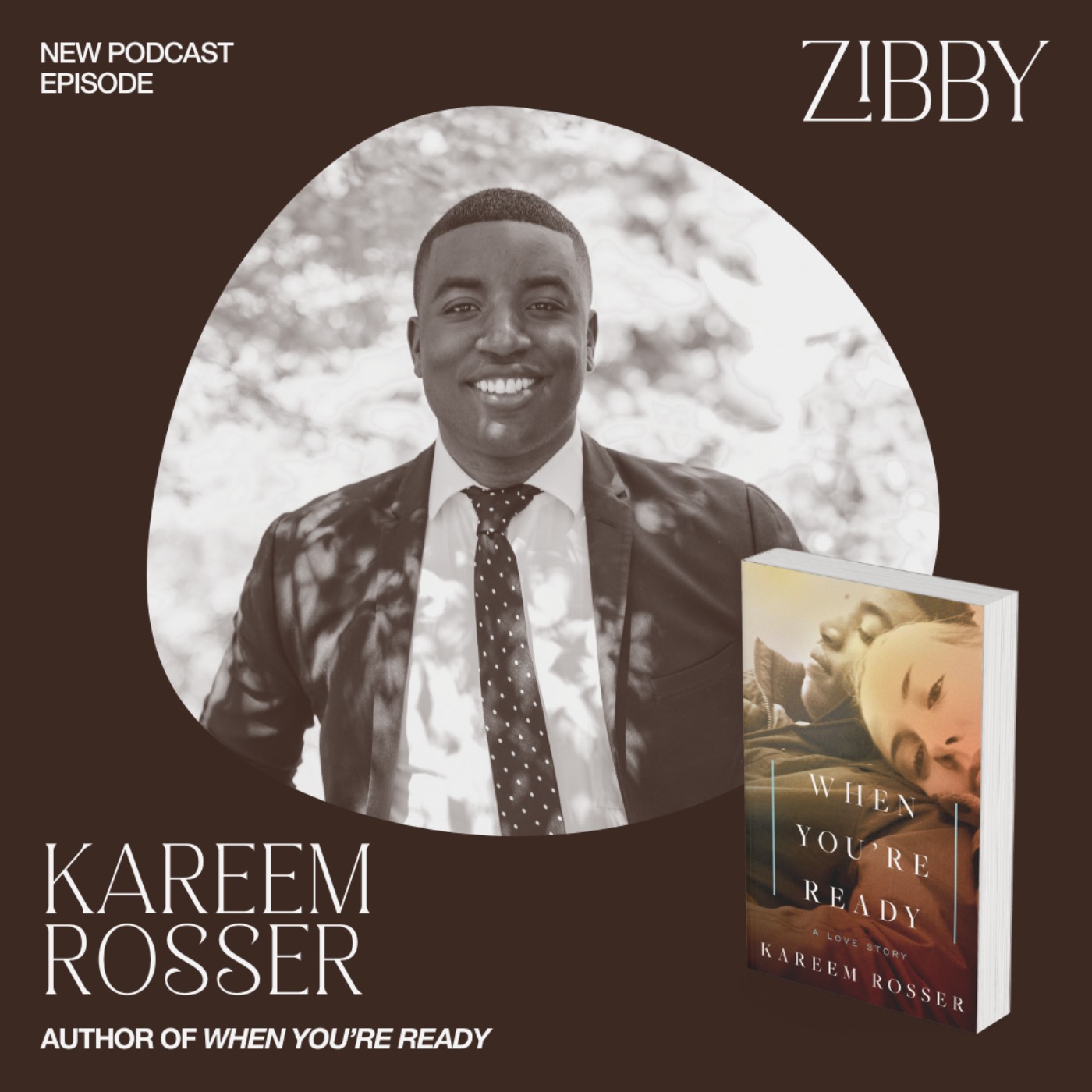
Hi, this is Zibby Owens and you're listening to Totally Booked with Zibby, formerly Moms don't have Time to Read Books. In my daily show, I interview today's latest best selling buzziest or underrated authors and story creators whose work I think is worth your time. As a bookstore owner, publisher, author, and obviously podcaster, I get a comprehensive look at everything that's coming out and spend my time curating the best books so you don't have to stay in the know, get insider insights and connect with guests like I do every single day. For more information, go to zibbymedia.com and follow me on Instagram ibyoans Kareem Rosser is the author of when youn're a Love Story. Kareem is from Philadelphia, Pennsylvania. He received a BA in Economics from Colorado State University.
- [01:24]
Zibby Owens
While at cs, he led his collegiate.
- [01:26]
Kareem Rosser
Polo team to a national polo championship. At the same time, he was honored as the Intercollegiate Polo Player of the Year. Kareem returned to work to ride, where he was originally introduced to polo and now serves as the Executive Vice President. He lives with his family in Philadelphia.
- [01:41]
Zibby Owens
Welcome Kareem. Thank you so much for coming on Totally Booked with Zibby. Your book, when you're ready. A love Story. Oh my gosh. This book, it just slayed me. It's so good. It's so emotional. It's so real. You've been through so much and you write so beautifully about it and so inspiring. I'm obsessed. Congratulations. Oh my gosh.
- [02:02]
Kareem Rosser
Thank you. Thank you so much. I appreciate it. And I'm really excited to join you today and to talk about the book. It's my first time talking about the book with anyone.
- [02:12]
Zibby Owens
No way. Oh my gosh.
- [02:13]
Kareem Rosser
Yeah. So I have not had a chance to really speak with anyone about it, about the writing experience, the book, how I felt, how I feel now. So I'm excited to hear some of your questions and hopefully, hopefully you won't have me crying on your podcast, but.
- [02:29]
Zibby Owens
We'Ll see if we can get through it. I mean, I want to know why you decided to write the book. And I want to tell everybody basically the bones of your story, or I mean, essentially your love of Lili is the through line of the book. And yet there is so much loss and so much resilience at every step that it just felt like, how could things like you just lost so many people you loved? And I. It just breaks my heart. It really breaks my heart. I hope you know how much this is a lot for any one person to have on your plate.
- [03:05]
Kareem Rosser
Yeah, absolutely. Look, I mean, it took me some time to, I guess, get to a part of my life where I felt comfortable writing about the book. I know my agent and I spent a lot of time going back and forth. Are you ready to write the book yet? And I'm like, I'm not ready yet. As you learn in the book. You know, I spent a lot of time in therapy getting to a place where I eventually got to a point where I kind of accepted who Lili is today and the loss of Lili in a sense of losing the woman that I loved and who I thought eventually I would have a long life with. But I just realized there were so many other people going through what I was going through. You know, just even walking into the rehab hospital and seeing some of the other families struggle with just the day to day loss, or trying to get their family members, their husband or their wife or their child back to health and to the strength to where they can just live a normal life. And I was battling so much quietly. Many of my folks weren't really aware of my anxiety that I was dealing with, a little bit of depression that I was dealing with during Lily's loss. I just woke up every day and I smiled and I went on with my day and I realized that Lili needed me there. And that was the only thing I was thinking about. But at the same time, you know, there were so many other people within the family that were struggling. You know, Evie, Lili's mom, you know, we showed up every day and we hugged each other and we talked, but we never really even talked about our anxiety or depression or things that we were going through. We were just so present for Lili. And so it was about time that I decided to just step back, accept it, and then write about it and hopefully share it with people and hopefully make a difference. But really I just wanted to write in a way that would let other folks know that they weren't alone.
- [04:49]
Zibby Owens
Wow. Well, you did that. You wrote in such an accessible, heartfelt, like, beautiful way that it's impossible not to feel, not to like, clutch your chest reading it. And there are plenty of very positive moments. I don't mean to suggest this is a doomsday book. This is very, you know, inspiring, really. Let's go back. So in your Lili and that, her accident, her riding accident, talk about that, how you found her. You kept hearing about her online through the writing world, growing up in the bottom, your family, your mom's abuse. Oh, my gosh, there was just so much. Your friend Mecca, right? Mecca.
- [05:28]
Kareem Rosser
Mecca, yes, yes.
- [05:29]
Zibby Owens
Oh, my gosh, even that, that was so sad. I mean, you could have written a book just about that. But anyway, there were so many things. But just give everybody an overview.
- [05:39]
Kareem Rosser
Yeah. So summer 2014, I came back to Philly because I was finishing up my second year at Colorado State University, where I was there playing polo and riding as well. And I realized in that summer that I was not. I didn't really have any plans on becoming a professional polo player. I was at some point going to use my degree in economics, and I also wanted to return back to Philadelphia. So I got an internship in Philly as a financial analyst. And that was the first time, actually, Lee and I met up because we, I guess prior to that, spent a lot of time online. I heard about her through family and friends. A lot of folks were just saying, you know, you need to meet this wonderful girl, Lili. She's beautiful. She's an amazing writer. And I had to check out. I had to go online and check her out and see what everyone was talking about. And it actually turned out to be true. She. She is this incredibly gorgeous woman who was also happened to be an amazing rider. So, you know, we. We spent, I guess, several months trying to find time to meet up. But life happens. And the summer of 2014, I finally came back to Philadelphia and she was home riding. And so we connected in that summer. It was probably one of the best summers of my life because I met the love of my life at that time, that being Lili. And then I was also playing polo. And then at the same time, I was finally getting some real world job experience and, you know, as a financial analyst or at least as an intern for the summer, because prior to that, I spent every summer riding horses, playing polo. And to me, that wasn't really a job. It was just I was doing something that I loved. And so it was about time to do something new. So Lele and I connected that summer. And the first date was incredible. I just remember it was the first time I really, like, fell in Love with a woman and also became obsessed with someone. I don't think I really ever talked about how obsessed I was with Lili. I just kind of played it cool. But she, I mean, she is. She still is just this incredible human. I mean, yes, physically, she was amazing, but just who she was as a person was incredible. So we spent that summer getting to know each. Knowing each other. She met my family, we rode together. It was the first time I really got a chance to ride with a girl that I fell in love with. And we had so many things in common, despite, you know, our backgrounds, despite the differences in our backgrounds. You know, she grew up, you know, in the wealth of Pennsylvania on the countryside, and I grew up in inner city Philadelphia. We were just in many ways opposite, but, you know, obviously the. Our love for horses. And also what I later learned is Lily's love for just, just giving back. She was just. Just a special human, you know, and the big thing that really, I guess drew me to her is her comfort around my family and friends. We grew up, as I said, mentioned a two different backgrounds, but because I saw how comfortable she was around my family, it just made me fall in love even more.
- [08:31]
Zibby Owens
No, it's okay. I mean, it's not. Take your time.
- [08:36]
Kareem Rosser
Yeah, yeah, yeah. You know, and. And so the summer went by and then I eventually went back to school. I went to Colorado State or finishing my time at Colorado State University there. And then we started our long distance relationship. And so, you know, during that time, it was as I talked about, there were so many challenges of being in a long distance relationship. You know, for me, I. I talk about my fidelity, which was honestly very embarrassing and hard to talk about. But it was part of our story and I thought it was important to share as many people deal with long distance relationships and struggle with monogamy and those things. And so that was something that was a challenge for me. But we got through our time while I was at Colorado State University. And then eventually I graduated in 2016, which was an incredible year, being the first of my family to graduate college. And I moved back to Philly, excited to start a life with Lili. It was the first time that we were going to be together in the same place. Not dealing with going back to school. She was just accepted to the University of Pennsylvania where she started a master's program in social work. I started my first job in finance as an analyst. I was living in downtown Philly. Like, life was perfect. Life was great. There was everything that I dreamed of as a kid was finally coming to life. And. And, you know, I had my dream girl, had my dream apartment. I was near my family. I finally had money in my bank account, or at least a consistent income. So there were so many things that I was happy about. And, you know, then I got back. I returned back to Philly and started to deal with the inevitable struggles around being home, being close to the neighborhood that I grew up in, that was, you know, or that is. And I guess you'd say, you know, it's very tough place to grow up and very easily to get, you know, very easily to get pulled back in. And so, you know, I was dealing with those struggles. So Lili and I broke up for a bit. And then eventually, you know, I said, this is. We're. I'm done breaking up with you. We're. We're. We're going to be together forever, and we're all done. And then December of 22nd, in 2016, it was one of the worst days of my life. You know, I get a phone call from Lili's stepfather, Philip Dutton, who tells me that Lily's been in a horrible riding accident. And, you know, at that time, I. All I knew was that Lili fell off a horse and she had her head. And she was being medevac to Christiana Hospital in Delaware. I had every thought running through my mind, she alive? You know, did I just lose the love of my life? What's happening? I had no information. And I showed up and, you know, I met. I was greeted by her parents or both her stepdad or her biological father, her mother and sisters. And the doctor walked in and said that Lili may not survive. And, yeah, I just lost it. We all lost it. And I broke down and, you know, prior to Lily's accident, I've suffered a lot of loss that you'll obviously learn about in the book, but this was a different type of loss. You know, this was the first time, you know, where I almost lost someone that I thought was going to marry. Right. So in many ways, I felt like we were already married. And then that phone call, it changed my life forever. It changed her life forever. It changed our family's life forever. And, you know, we were here, and, you know, the one thing that I said to Lili when she was in an ICU was that if she decided to live, that I will always be by her side, no matter what. And that's what I've been doing for the last eight years, is sticking by her side as her now just very, very good friend.
- [12:31]
Zibby Owens
Aw. I feel like you're more than just her very good friend. The two of you have a relationship that is so special and different, with a history, that there are no adequate words that could sum it up. And I know from finishing the book and everything how you are in your life now, I kind of don't want to give it away, because as I read it, I was like, it was such a joy to get to the end and see your whole journey, but. And I know you've had such a hard time, and I'm not going to ever say moving on, because you're not going to move on, ever. Lili's a part of you, and your love for her will never go away. But even just reducing the time for your visits was a challenge. And Dr. Berman, I guess, was such a huge help, and being like, it's okay. It's okay that you're gonna have your life. And that's not any sort of betrayal, and it's not going back on your word. It's something that. It's a gift you have to play out. And hopefully, you know, she would want that as well. And I know you've reclaimed that, but the journey to getting there and how you struggled through that and made sense of it and came to terms with it and wrote it all down so that the rest of us could read it. I mean, that is amazing. It's really amazing. So when did you start writing about any of this? Like, when did. When did you realize that would help if it did?
- [13:54]
Kareem Rosser
Yeah. So honestly, during the, like, first. When her. When her accident first happened, and it. Even, like a few years throughout her recovery, I didn't write about it at all, really. I just took a lot of photos. I mean, when she was in a rehab, when she came home, she went back into the rehab. A lot of videos, a lot of photos. But I know her mother, Evie, she did a lot of writing in her journal. But for me, I was just moving so fast in life. There were so many other things going on, too. And my way of being present is not necessarily just writing things down. It's physically being with that person. It's holding that person. It's going through the rough days, going through the great days, you know, holding her up at therapy, holding her head, you know, her hand by her bedside, feeding her, going on walks. I just wanted to be present. I wanted to be there with her. And when I was alone, you know, honestly, I was suffering, and I was just struggling with my mental health. And, you know, I would sometimes isolate myself or I would go and spend time with my friends. But I never, never sat down and did any writing. It wasn't really up until, you know, I ended up going back to my agent, Emma, and, you know, telling her, I'm ready to actually start the writing process. Where I spent time starting to, you know, put my thoughts together, looking at photos, going back to, you know, I guess several. Going back several years and reliving those experiences because I. I knew that it would be painful to relive them, to look at some of those photos, to bring back some of those memories that I didn't wanted to relive. But at the same time, I realized that it was very, very important to do it if I. If simply just help other people. And I did it in a way where I didn't want to hold anything back. I told myself that if I was going to write this book, I was going to be incredibly vulnerable, I was going to be incredibly honest, and I wasn't going to hold anything back because I didn't think it would do any justice to folks that I would hope to help heal at some point.
- [15:53]
Zibby Owens
Wow. Wait, but how did you end up with an agent and a book deal before you wrote anything? You just. You knew you wanted to write it at some point or you went out with it.
- [16:01]
Kareem Rosser
So I actually wrote. This is my second memoir. So my first one is called Crossing the Line. So I've been with my agent now for over, I guess, seven years. So this is my second book. So Emma and I have already established relationship. And then Emma said, whenever you're ready to write the second one, let's get it done.
- [16:21]
Zibby Owens
Got it. Okay. Sorry about that. I'm so sorry. I read every word of this book, but I didn't realize you had written another book. So I'm so sorry.
- [16:30]
Kareem Rosser
It's okay. It's okay. You'll have to check it out.
- [16:32]
Zibby Owens
It's called I'm going to check it out. Because now I'm kind of like obsessed with how you write and your whole story and your life and all of that. So I will definitely go back and read that as well. My gosh.
- [16:43]
Today's episode is sponsored by Wayfair. After the holiday hustle. There is nothing like giving your home a little tlc. Whether you're tidying up, clearing out, or just want some new looks to start the new year, Wayfair has got everything you need, all within your budget. I am obsessed with Wayfair. I used Wayfair to decorate both Zivi's bookshop in Santa Monica and my office for Zivi Publishing here in New York City. I love the items. They are all such high quality. The couches are soft and beautifully constructed and the chairs and everything for the office. All of our items are first rate. They came so quickly and were exactly as advertised for such a great price. I'm obsessed and I know you will be too. Whether it's for your home or your office, some spring accents, lighting, art, entry tables, rugs, holiday storage closet, organization appliances, accessories. They have everything and it's so convenient. The huge selection of home items that Wayfair has makes it easy to find exactly what's right for you. There's something for every style and every home, no matter your space or budget. Wayfair makes it easy to tackle your New Year's home goals with endless inspiration for every space and budget. Whether you need a light refresh or an organization overhaul. Plus free and easy delivery. Even on the big stuff. They'll even help you set it up. So give your home the refresh it needs with wayfair. Head to wayfair.com right now. That's W A Y F A I-R.com wayfair every style, every Home Today's episode is sponsored by Acorns. Here's a fact that may not surprise you. 66% of men are investing in the stock market compared to just 48% of women. Here's another one that won't surprise you either. Multiple studies have shown that women are better investors than men. Why? Because men are overconfident and women actually do their research. The investing gap means less women have the chance to build wealth now and can have huge repercussions down the road when it comes time for them to retire. The good news is that Acorns make it easy for everyone to start investing. I've been using Acorns for over a year now and have absolutely loved how easy it is to use, the returns that I've gotten and absolutely everything about it. Acorns is a financial wellness app that makes it easy to start saving and investing for your future. You don't need to be an expert. Acorns will recommend a diversified portfolio that matches you and your money goals. And you don't need to be rich. Acorns lets you get started with the spare money you've got right now, even if all you've got is spare change. Sign up now and join the over 13 million all time customers who have already saved and invested over $22 billion with Acorns. Head to acorns.com books or download the Acorns app to get started. Paid client endorsement compensation provides incentive to positively promote Acorns tier one compensation provided investing involves risk. Acorn Advisors LLC and SEC registered investment advisor. View important disclosures@acorns.com books.
- [20:06]
You write really well and very openly about your panic attacks and your mother's panic attack. And you know that you have this beautiful conversation together about when you both realize that you've both had panic attacks but never really talked about it till later in your life and how you cope with anxiety and how it wasn't the thing to go get therapy and all that. In your background and everything, talk about learning and coping with the fact that you have this predisposition and how you manage it. Even today.
- [20:42]
Kareem Rosser
Yeah, no, absolutely. So I think, you know, in my, my first book I set it up a little bit with my anxiety and it also wrote about Mecca in my first book as well. But you know, when I, I really, I learned about my anxiety, I guess I didn't learn looking back on it, I can figure out when I started to have panic, when I started to have panic attack. Panic attacks and anxiety was back when I was eight, nine, boy, when I lost my friend Mecca Harris, when her, her father and her mother were all executed in her basement back in 2003. That was the first time when I realized that I wasn't safe as a kid, that kids can also die and bullets weren't just meant for adults. And I also recall just that period of time in my life. There were a string of murders that occurred and there were probably a handful of kids that died. And I was very aware of kids dying at a young age. And when I became aware of that, it was, that's when I started to have anxiety. And I was having, I was having trouble breathing at night. I was afraid to sleep in the dark. I was afraid to leave my front porch because of the risk of getting shot. And at that time I thought I was just, I just had respiratory issues and, and you know, that I maybe had asthma because I know asthma is something that ran in my family. And so I spent time going to the doctors and the doctors said, nothing's wrong with you, you're absolutely fine. Never came up that I may have any mental health issues or anything around anxiety. I didn't even know anything about anxiety until later in life. And then, you know, as I eventually got older and went through, you know, my different, I guess, levels of education in high school and college, I would have panic attacks, but still didn't really have a name for was just, you know, something that was going on in my life, and I would just get over it, but not really. It wasn't really until I met Ellen, my therapist, that I truly started to understand anxiety and inability to breathe or to feel like the world is collapsing on you, you know, and my mom at that time, you know, my mom is now is probably what I think, 105 years sober. Five or six years sober. And she spent a lot of her time dealing with her anxiety, depression by just using. So, you know, she also doesn't have the vocabulary, didn't have the vocabulary to even explain how I may have felt at a particular time, because she didn't even know how she was feeling. She was just using to deal with her trauma. And I also didn't understand how trauma has informed my later years in life and how it has, you know, all the negative effects that it has on me today. There were so many things that I just didn't know that I wasn't aware of. I didn't have the vocabulary, you know, I didn't really know what the depression meant. Again, you always. At least where I grew up, you know, if you were sad, you were told to shut the F up and move on and keep on with your day, right? So I've been conditioned this certain way to live as this strong, masculine black man who, you know, shove all their problems under a mattress. But fortunately, you know, when I graduated school, my boss, Joe Manheim, you know, introduced me to Ellen, and it was my, you know, it was definitely much needed just because of it wasn't able to function at work. I couldn't think clear, and it was obvious that I needed help. And when I met Ellen, it's just I've learned so much about myself, but simply just being able to take the vocabulary and apply it or understand it and understand my feelings and my thoughts and why am I having a difficult time breathing, how an incident from 12 years ago is affecting me today. All of these things that I just started to learn about myself and learn about anxiety. But the other piece was that I learned about myself, which I thought was really cool. I use my anxiety to get me to where I am today. So there are pieces of anxiety that are actually good. Not all anxiety is bad. Anxiety informs us that we're human, we're alive. It helps us protect ourselves in many ways. And then there is a piece of anxiety that is. It's too much, right? You're in that constant fight or flight mode, right, that becomes overwhelming mentally and Overwhelming physically. Right. So you start learning about these things. And now that my mom is sober, we spend so much time talking about our anxiety and our past. And, you know, I'm now coaching my mom through her therapy sessions or the personal therapy sessions that we have with each other. You know, the other day I was explaining to my mom, you know, the dopamine chemical and how it naturally occurs and why you feel good when you work out versus the whole fight or flight thing. And I was explaining that to her and why that could become overwhelming. And your brain is on overdrive. And so all these things that was never in our world or resources that we had access to, and now we do. So we spend time talking about it a lot. And so my anxiety has not gone away, but I use it all the time to motivate me, but it's now in a place where I can manage it.
- [26:01]
Zibby Owens
Wow. I mean, that's like the therapy success story of all time, right? That is exactly why therapy exists. To give people the tools to manage their emotions, to communicate, to identify, to realize that they're not alone and all of that. And I guess, you know, a fabulous book comes out of it. That's not the worst thing that can happen. So. Yeah, yeah. Can you just give me the postscript to the whole book? Like, what is your life like now? Where are you still in finance? Like, tell me your story now.
- [26:31]
Kareem Rosser
Yeah, so I am. I'm no longer in finance. I actually transitioned out of my analyst role. I'm now working full time at the charity that I grew up in. Work to write as the executive vice president. Have been leading many of the development efforts there. We're just wrapping up a $15 million campaign that I led and raised money for on to help build a new indoor riding pole facility at our site in Philadelphia, in West Vermont, helping institutionalize the organization and build an honest succession plan for our charity. I still go and visit Lili very often. I see her about twice a month now. As you would learn in the book, I was there almost every day. I went and saw her the other day, so still very, very close with her. She is doing very well, you know, in her recovery. We would, you know, would have loved to see more out of her recovery, but she is who she is today, and we love her the same. And as I said before, I have continued to stick by her side, and I will continue to stick by her side. One of the other exciting things is I joined the board of the Riyadh Hospital, the Bryn Mawr Rehab Hospital foundation, where Lili spent majority of her time recovering. We actually are in the process of finalizing and setting up a patient's assistance fund in Lili's name. So that fund, the endowment fund, will go and support other TBI families and patients who unfortunately will suffer TBIs. One of the things, one of my goals as a member of the board was to figure out how to give folks access to a place like Bryn Mawr Rehab. It is a very, very, very special place. There's obviously has a special place in my heart and, you know, in just the simple fact of how it has helped Lili. So I want to be able to make sure that we can give other folks access to that. So we have a goal of raising $50,000 to see the within the next few months. But my goal is to grow that endowment as much as we possibly can. I'm going to commit a percentage of my book proceeds to the endowment in perpetuity. So to help that grow and support folks, there I am. I have a. Have a. Have a daughter now. I'm married, and so I'm very, very happy about that. And so I'm living my life, raising my daughter and spending time with my family, who is essentially just an extended extension of Lili's family. So we blended our families, and I'm really, really excited about that, to just be able to share these moments that I thought I would have with Lili, just the two of us, but now get to blend my family and spend time with Lily in that way. And, yeah, so now I'm just wrapping up, I guess. Not wrapping up, but starting the tour of the new book and getting and releasing the new book and hoping that it just lands in the hands of people who really need most. And I. I learned there's a lot of folks who would benefit from reading this book. It doesn't matter if you're, you know, if a family member had a, you know, TBI or. Or anything, but I think there, it just touched on so many important points in life that eventually someone will go through. And so I'm just. I'm really, really excited to get it out there. And I just want to encourage people to pick up the book. Not because I just want to have book sales, but I truly, genuinely just want the book to help whoever I think may need it.
- [30:06]
Zibby Owens
When they're ready, they will read it. Right?
- [30:08]
Kareem Rosser
Exactly. Exactly.
- [30:10]
Zibby Owens
And just quickly, like, what was the experience like for you to write through your life and relive it? And was it cathartic? Did you cry writing it? Did you feel A sense of closure. Having written about it, like, what was this experience like for you?
- [30:25]
Kareem Rosser
Yeah, it was. I mean, honestly, cliche. It was an emotional roller coaster, really. You know, it's definitely cathartic. You know, there were moments where I was just incredibly sad. There were parts of the book where, you know, I had to just stop reading for a second, writing and thinking about it, just because it was just a tough moment. I actually recently did the audio for the book, and it was my. I didn't do the audio for my first book, and I. I imagine that it would be a difficult process on many levels, but it was very, very emotional. I think I probably, I don't know, stopped a thousand times because I couldn't stop crying as I was reading the book. But just going through the writing process, yeah, it was just. It was an emotional roller coaster at the end of it. I was very proud of the work and what was done and. And happy. And now I just. I just hope that people pick up the book and just. And read it and understand that life doesn't always go as planned. And that's okay, right? You can get back up. You can find a new path. You can find new love in our viewers online. In the book, I talk about how love is not static, right? It transforms. And that's one of the things that I want people to understand. You know, sometimes loss just brings new opportunity. And one of the things that I always talk about is I can always find good and bad situations. Like, I always look for the good and bad situations. I'm more of a. Of a the glass is half full type of guy, you know, and so I found all the good things in Lili's situation or the situation or my situation with Lili and the accident. You know, I think it just. Yeah, there were so many. There were so many, I guess, things I can pick at and talk about that I thought were. That were good. And that sounds weird about, you know, how do you find good in a horrible situation with someone who has a traumatic brain injury? But there were so many good things that came, you know, just the new people that I met at the hospital and the other, you know, friends and family, ladies that I've never met before, the new relationships that I built over time. So there were so many great things that have come from the book. But I guess the long way of answering the writing process, again, it was an emotional roller coaster, but I'm very, very happy that I did it. And I just hope, again, I just really hope that it benefits more folks than Just myself.
- [32:51]
Zibby Owens
It absolutely will. The book is so good. I am sure it will find its audience. A very wide audience. It's so compelling and emotional and inspiring. I really loved it. Great job on the book. And also, sorry about David. I mean, all of your losses. I'm just. Karim, I just. If we were here, I would give you a huge hug. You need it from me. I'm sure you have plenty of hugs, but I just, you know, you can't not want to give you a hug after reading this book. So congratulations. Thank you for writing it. And I am just so rooting for you in life and for you to have all the happiness you deserve. You're such a good guy and such a giver, and it's just really beautiful to see. So thank you.
- [33:36]
Kareem Rosser
Thank you, Zebby. I appreciate it. And thanks for picking up the book and reading it and helping me share it with the world, you know? Yeah. Again, it's this. It's an exciting time, and I'm looking forward to seeing, you know, what's to come.
- [33:49]
Zibby Owens
Amazing. All right, well, congratulations.
- [33:52]
Kareem Rosser
Thank you, Zabeer. I appreciate it. All right, good luck. Yes. Good luck with everything. Thank you.
- [33:56]
Zibby Owens
You too. Thank you.
- [33:57]
Kareem Rosser
Bye Bye.
- [33:58]
Zibby Owens
Bye bye.
- [33:58]
Kareem Rosser
Thank you for listening to Totally booked with Zibby, formerly Moms don't have time to read books. If you loved the show, tell a friend, leave a review. Follow me on Instagram, ippyowens and spread the word. Thanks so much. Oh, and buy the books.