Loading summary
Transcript86 lines
- [00:01]
Capital One Advertiser
If you love to travel, Capital One has a rewards credit card that's perfect for you. With the Capital One Venture X card, you earn unlimited double miles on everything you buy. Plus you get premium benefits at a collection of luxury hotels when you book on Capital One Travel. And with Venture X, you get access to over 1,000 airport lounges worldwide. Open up a world of travel possibilities with a Capital One Venture X card. What's in your wallet?
- [00:27]
Capital One Advertiser / Meundies Advertiser / Instacart Advertiser
Terms apply. Lounge access is subject to change. See capital1.com for details.
- [00:31]
Meundies Advertiser
This Halloween, what's under your costume might just steal the show.
- [00:35]
Capital One Advertiser / Meundies Advertiser / Instacart Advertiser
Wait, is that Glow in the Dark underwear?
- [00:37]
Meundies Advertiser
Boo.
- [00:38]
Zibby Owens
Yeah.
- [00:38]
Meundies Advertiser
Meundies has dropped their spookiest collection yet. Glow in the dark undies and PJs. So comfy it's scary.
- [00:46]
Capital One Advertiser / Meundies Advertiser / Instacart Advertiser
Tricks, treats and buttery soft briefs.
- [00:50]
Meundies Advertiser
Exactly. To get cozy and spin Rookie for less, go to Meundies.com trick or treat and enter code Trick or treat to get 20% off your first order. That's 20% off your first order@meundies.com trick or treat code Trick or Treat Meundies. Treat yourself.
- [01:14]
Podcast Host / Sponsor Announcer
Today's episode has been sponsored by Paramount Pictures Corporation. Okay, you guys, there is a movie coming out called Regretting youg based on Colleen Hoover's best selling book of the same name. I know many of you already know about this because I sent out an invitation to a screening when they so kindly gave us some tickets and over 250 of you asked for tickets even though at the time we only had 20. We got a lot more. Anyway, I know you're all already excited about this movie, but for those of you who don't know, let me tell you more about it. This is about Morgan Grant, played by Allison Williams and her daughter Clara, played by McKenna Grace, as they explore what's left behind after a devastating accident, reveals a shocking betrayal and forces them to confront family secrets, redefine love and rediscover each other. Regarding you as a story of growth, resilience and self discovery in the aftermath of tragedy. Also starring Dave Franco and Mason Thames. With Scott Eastwood and Willa Fitzgerald. In theaters October 24th. Are you excited? I am so excited. Director Josh Boone is the one who did the fault in our stars, obviously Colleen Hoover. It's about mother, daughter, relationships, heartbreak, grief, first love, second chances. It's the perfect film to share with your best friend, mom, grandmother, high school niece. It's filled with love and tears and laughter. Everyone will love it. Honestly, I cannot wait to see this movie. Come with us to one of the screenings. Watch it along. Send me notes on Instagram. I want to hear what you say.
- [02:46]
Zibby Owens
We'll all watch it together. Check it out.
- [02:48]
Podcast Host / Sponsor Announcer
Regretting you.
- [02:52]
Zibby Owens
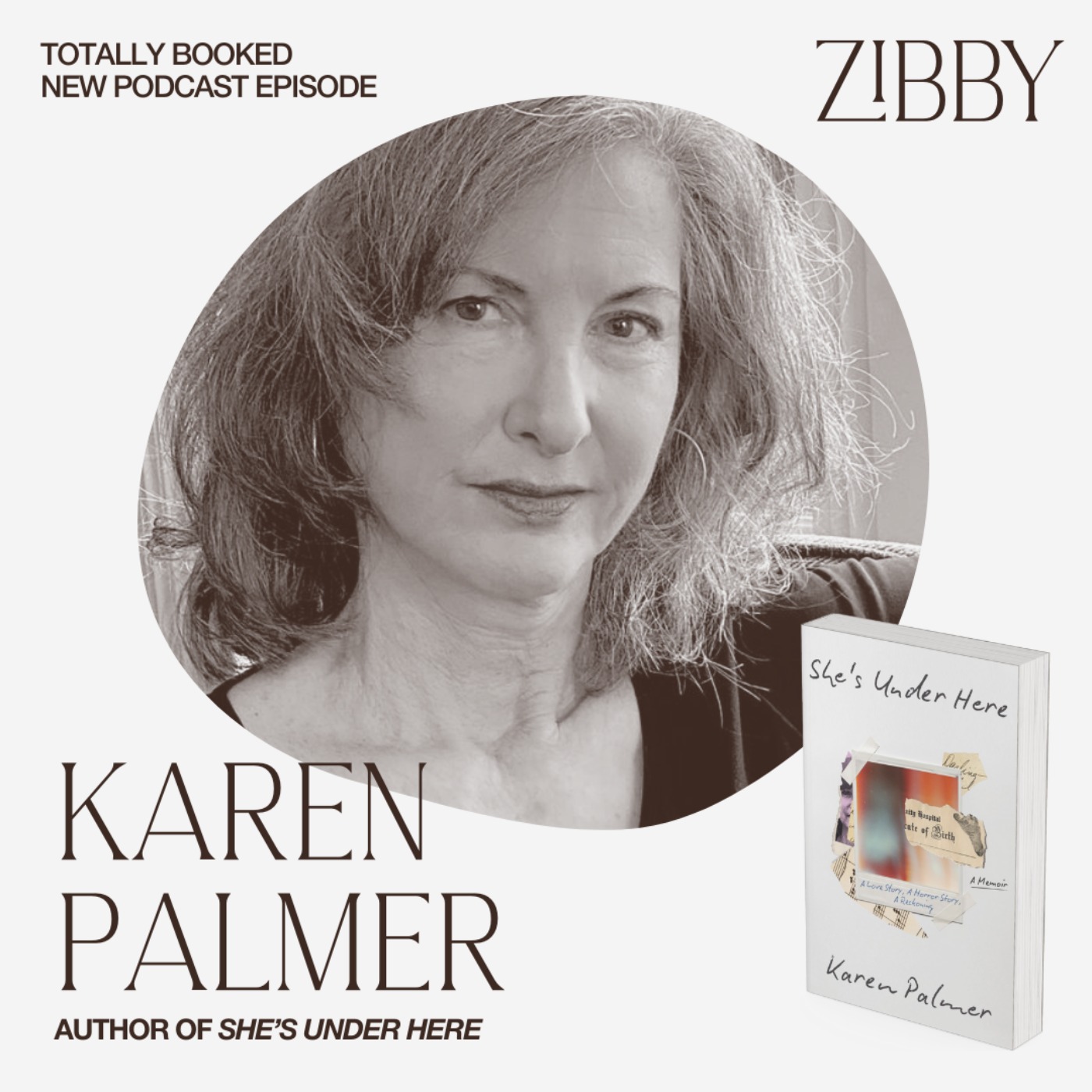
Hi, this is Zibby Owens and you're listening to Totally Booked with Zibby, formerly Moms don't have Time to Read Books. In my daily show, I interview today's latest best selling, buzziest or underrated authors and story creators whose work I think is worth your time. And as a bookstore owner, publisher, author, and obviously podcaster, I get a comprehensive look at everything that's coming out and spend my time curating the best books so you don't have to stay in the know. Get insider insights and connect with guests like I do every single day. For more information, go to zibbymedia.com and follow me on Instagram. Ibbeowensk Karen Palmer is the author of She's Under A Love Story, A Horror Story, a Reckoning. Karen is a Pushcart Prize winner and has received grants from the NEA and the Colorado Council on the Arts. She's under here grew out of her award winning essay the Reader Is the Protagonist, first published in Virginia Quarterly Review and selected by Leslie Jamison for inclusion in best American Essays 2017. She is the author of the novels All Saints and Border Dogs. More recently, her short story Birds of Paradise won the 2022 Emily Clark Balch Prize for Fiction. Her writing has appeared in the Rumpus, the Kenyon Review, Arts and Letters, and Calliope, among others. A native of Los Angeles, she currently teaches at Lighthouse Writers Workshop in Denver, Colorado, and lives with her husband in California. Welcome Karen. Thank you so much for coming on Totally Booked to talk about She's Under A Love Story, A Horror Story, A Reckoning, A Memoir. Congratulations.
- [04:31]
Karen Palmer
Thank you.
- [04:32]
Zibby Owens
Wow. All right. How do you feel about this memoir coming out?
- [04:37]
Karen Palmer
Well, it took me a really long time to write it. It was about 14 years in the making and many false starts and starting over, and it took me forever to figure out what I wanted to say and how I wanted to say it. So the idea of seeing it now actually out in the is kind of amazing.
- [05:03]
Zibby Owens
Wow. So did you know which piece of it? I mean, this is your whole story, right? So maybe explain a little bit about some of what the horror story in the book was. I mean, you take us through your whole, really most of your life and your relationships and the fear and the panic and your parents and your kids and your ex and your new relationship. I mean, we're in it with you, Karen. We are so in it.
- [05:30]
Karen Palmer
Oh, well, the Book is about having changed my identity in order to escape my dangerous ex husband and my second husband and I, virtually overnight, we disappeared. We took the kids out of school, we quit our jobs. We did phony documents to create new identities. We moved out of state. We really went as far as you could go in order to escape. And so the book is about the how and why of that. And then it's also about the repercussions, you know, what actually happens in the aftermath of such a dramatic act. You know, there are always unforeseen consequences, and there were plenty of those here.
- [06:21]
Zibby Owens
You write about books and in the book a little bit. And I was. Could I just start by reading a couple of these beautiful passages?
- [06:28]
Karen Palmer
Sure.
- [06:29]
Zibby Owens
You said, when I was a child, my mother read to me a lot. Our family life was often fraught. My father uncommunicative, physically absent and emotionally cool. Mom either at his throat or steeped in hostile despair. Reading was her lifelong escape. One effect this had on me was that I believed books were alive. Not just the tales within them, but the objects themselves. Seated in my mother's lap with a story, the stiffness of the COVID told me what it was to have a spine. The words in their regular rows were like heartbeats. The pages turning, fluttered like wings. And then you said later, the novel I'd stopped reading months ago. I couldn't recall the plot or even the title. Once stories had seen me through everything. They'd been my teachers and companions, my savers, my family. But standing there, though I felt the shape of their absence. I. I was unmoved.
- [07:19]
Karen Palmer
Yeah. Yeah. The year that I spent before we ran was both the most frightening year of my entire life and also, in some ways, the most exhilarating. But because everything was so over the top, I lost my ability to read. And I had been, as, as that passage says, a lifelong reader, just like my mom. And it was. It was shocking to me that I had no ability. You know, again, this is. This is 35 years ago. Now we all sit here with the drama in the world, and nobody can read. You know, it's like our attention span is occupied by other things. So it's like the world has caught up to that kind of experience. But back then, I mean, that was my major force, my major source of entertainment and education and how I dealt with my children. You know, books were really important to me, and to lose that was painful.
- [08:24]
Zibby Owens
Yeah, well, losing any sort of comfort in what was such a time of upheaval and terror. Oh, my gosh. I totally understand Wanting to sink into the comfort of books and yet feeling like even the most soothing thing sometimes doesn't. Doesn't do the trick.
- [08:45]
Karen Palmer
Right.
- [08:46]
Zibby Owens
You have a whole section later where it's a flashback on you younger and a pregnancy that you had a child you gave away, which was really beautiful and poignant and everything. Can I read a little bit of that as well?
- [09:02]
Karen Palmer
Sure.
- [09:03]
Zibby Owens
Okay. Stretched out, I confronted my lonely looking body. Who did it belong to now? Not me and not the baby. My belly was still mounded where my child had so recently been. In the hospital, they'd given me a shot to dry up my milk, but my breast still felt hard and my nipples leaked grudgingly. I bled scarlet threads that wound out into the water from between my thighs. When the tub cooled, I drained it a bit before blasting the hot again on the radio, songs came and went. Diana Ross sang as if directly to me about mountains and rivers that could never get in love's way. I was my son's mother. That was a fact forever. But he deserved a mother and a father. But then his mother would never be me. What made a mother?
- [09:45]
Karen Palmer
Yeah, yeah. As sort of a defining experience in my life. I mean, having a baby and giving him up for adoption led to every single other thing that happened to me in my life. I would not have met my dangerous husband without it. And I. Even if I had met him, I wouldn't have been drawn to him. The trouble I had was that I was only 16. And then after. After, you know, being in a home for unwed mothers and this terrible experience of saying goodbye to a child I did not want to give away. I couldn't deal with boys my own age anymore. So my ex husband was 19 years older than me. And you know, the sort of classic thing is you were looking for a f. I was looking for a father, but not so much for me, but for my potential children. And so I was drawn for him because at least in the early years of our relationship, he was dependable and he was fun and he had his own business and he seemed like someone that I could go through life with but didn't work out that way.
- [11:04]
Zibby Owens
When did you have your first inkling that it wouldn't be something you could fix?
- [11:09]
Karen Palmer
You know, there's that one chapter in the book, which was one of the last chapters written because it covers 14 years, is I couldn't decide how to write about the years that we were together when so many of them were normal and sort of. It's like how they describe firefighting, boredom, punctuated by terror. So I eventually settled on writing that chapter in a series of vignettes that would convey this arc of being kind of wildly in love with this man and infatuated with him through marrying him, through having the two children, through incidents that, taken alone, maybe didn't mean that much. But when you start looking at the whole shape of the 14 years and then leading up to this realization that not only does he not love me, but I no longer love him, and that's what allowed me to finally leave him.
- [12:14]
Zibby Owens
My gosh. And you had the time where he took one of your daughters and you couldn't get back to her, which as a mother, I just. I mean, I was in a cold sweat reading this passage of your book. Talk a little bit about that and looking back, even how you. How you feel about it.
- [12:31]
Karen Palmer
Well, again, it was terrifying. Terrifying. I was going to pick up my. My older daughter, who was seven at the time. She'd been visiting my mom down in San Diego, and she was flying back on the plane with her father, and I was going to meet them in the airport with the little one. And when he got off the plane with Aaron, my older child, I had this moment of, oh, I'm just an ordinary woman and here's my family. You know, it's like I felt right back in the marriage. But as he came toward me, he was exuding the most intense hatred that it was, you know, it was like being shoved. So I was very flustered. The baby was squirming. You know, I wanted to talk to my older daughter, and so I gave her to him. I passed her over, and he started walking, and he walked ahead of us. We were going towards baggage claim, and I thought, okay, let him get ahead a little bit. You know, he can spend some time with the baby, and maybe it will remind him of his duty of care toward his family. And then I knelt on the ground to say something to my older girl, and when I stood back up, they were gone. And it was nine days before I got her back. And it was. You know, it sounds over melodramatic, but you want to die. You know, it's like I was so afraid that he would vanish forever because he certainly had the capability to do that. You know, he had been a petty criminal for years, and he had multiple IDs, and he knew people all over the country, and he could have just poof. So it's very ironic that in the end I ended up doing what I was so afraid of him doing. So, you know, therein is the conflict in this story because it was such a terrible thing that he did, taking her and then I took her. The difference is he took her to punish me and we were trying to protect the kids.
- [14:47]
Zibby Owens
So how do you just move on from that? How do you, like, pick up and go to the grocery store and do the normal things after something that terrifying has happened?
- [14:59]
Karen Palmer
You know, I was not normal for a long time. When we first moved to Boulder, I had, you know, like severe PTSD where I would see him around every corner and like, I was constantly thinking he was going to show up. And it took years to lose that major edge over it. But it's never left me. Even now, I mean, my children are 44 and 39, and I still dream about them as children and about them being gone. So I figure, I mean, that's it. That's with me till the end.
- [15:41]
Zibby Owens
Gosh, I'm so sorry. I'm so sorry this happened. You know, your resilience is amazing. And I know there was not really a choice, but you did have a choice. And you know, there's a moment later in the book as well, where. Where you're feeling, you know, is life even worth living? You said. For a few weeks, I obsessively cleaned the house. House's emptiness. And then abruptly, the last of my self sufficiency drained away. I couldn't feel my edges. Food tasted strange. Dusty and dry or rotten or fishy or mushy. I stopped eating. I cried and cried and cried. I'd never felt suicidal and didn't now. But for the first time, I understood how seductive not existing could be. It's heartbreaking.
- [16:23]
Karen Palmer
Yeah. That was after we decided to move to Oregon and I was there by myself. And it was the first time since all this stuff happened where I was alone for a couple of months, where I found us the house. And, you know, I did all the paperwork and dealt with the realtors while my husband was frantically trying to wind down his business and prepare the house in Boulder for the new. The new owners that were coming in. So, I don't know, I fell into this horrible. It's like it snowballed, you know, like, it was a very small thing initially where I couldn't sleep because the people that were upstairs sounded like they were bowling all night long. So I would lie awake. So I didn't sleep. And then I stopped eating and then I started crying. And it just was this really, really fast thing that came on me all at once. And it's like it took all this trauma and I had been holding it together for so long and finally just, just gave in to how terrible it was and how hard it was. And so, you know, in a way, it was an awful experience. But every single one of these things are, you know, there's always another side. They're a gift in a way. And that time alone, even though I had this breakdown, was, was good for me. It allowed me to see some things more clearly and, you know, each step along the way because, you know, the first, the first half of the book is up till the end of the kidnapping, and then the second half of the book is the 20 years that follow that. So for 20 years each, it brings me closer to feeling like I can, you know, let it go as much as is humanly possible.
- [18:20]
Zibby Owens
So what is your life like now? Today's episode is sponsored by Live It Up. If you are someone who wants real results and not watered down promises, it's time to upgrade your greens game. Most powders out there either taste like grass or overcharge you for hype. Live It Up Super Greens is different. My cabinet is now stocked with so many different products and it all tastes good. I have a hard time finding time to fit in all of my vegetables. Sometimes I don't even get to eat meals. This is the perfect solution for me and anyone else out there who's running around trying to just make life. Fit it all in and have a good time while you're doing it. Live It Up Super Greens contains more than 20 superfoods from organic vegetables and natural ingredients, all traceable nutrition, designed and third party tasted. And did I mention it tastes good? A survey of real Live it up customers who take their greens daily report actual benefits. 98% say it helps them feel healthier overall and 96% say it increased their veggie intake. 95% say it improved digestion. Bottom line, Live it up delivers premium quality at a price that actually sticks. No gimmicks, no bloated margins. Live it up has become a quick and easy way for me to stay on top of my health. It's such a simple step that fits into my morning routine without any hassle. And I love that I don't have to overthink it. One scoop and I am set for the day. Honestly, I was surprised by how good it tastes. Not grassy or chalky like so many others. I actually look forward to drinking it, which makes it easier to stick with. I've noticed I feel more balanced throughout the day. When I make it part of my mornings, it gives me that feel good energy I can count on without the crash right now. Get 33% off your first Live It up order when you subscribe at letsliveitup.com booked and use code booked. You can cancel anytime with a 30 day money back guarantee or to get 15% off when you purchase without a subscription. Head to letsliveitup.com booked and use code booked for 15% off your first order. These statements have not been evaluated by the FDA. This product is not intended to diagnose, treat, cure or prevent any disease. Today's episode has been sponsored by Quince. Cooler days call for layers that last and Quince is my go to for quality essentials that feel cozy, look refined and won't blow your budget. Think $50 Mongolian cashmere premium denim that fits like a dream and luxe outerwear you'll wear year after year. These are the pieces that'll turn into your fall uniform. I'm eyeing their wool coats. They look designer level but cost a fraction of the price and the qual quality. Honestly just as good, if not better because Quince partners directly with top tier ethical factories and cuts out the middlemen. They deliver luxury quality pieces at half the price of similar brands. It's the kind of wardrobe upgrade that feels smart, stylish and effortless. I am particularly a fan of the Fisherman Cashmere Mongolian sweater in brown. The light brown is already sold out. I am obsessed and it is so cozy and is a staple. Find your fall staples at quince. Go to quince.com zibby for free shipping on your order and 365 day returns. Now available in Canada too. That's Q-U-I-N c e.com Zibby Z I B B Y to get free shipping and 365 day returns. Quince.com Zibby.
- [21:58]
Capital One Advertiser / Meundies Advertiser / Instacart Advertiser
Did you see the game last night? Of course you did because you used Instacart to do your grocery restock. Plus you got snacks for the game, all without missing a single play. And that's on multitasking. So we're not saying that Instacart is a hack for game day, but it might be the ultimate play this football season. Enjoy zero dollar delivery fees on your first three orders. Service fees apply for three orders in 14 days. Excludes restaurants. Instacart we're here.
- [22:26]
Karen Palmer
Oh I'm such a lucky person. My husband and I are still together 36 years now and we the girls are wonderful. My older daughter lives in Washington D.C. and I have three grandchildren, all boys 1412 and 10. And they're. As a matter of fact, I'm going to do an event at a bookstore in D.C. and my daughter is going to be my conversation partner. So, you know, that. That should be interesting because you'll be able to hear her perspective on it, which is of course different than mine. You know, she was so young. It's like she remembers her father. The little one doesn't remember him at all. My current husband is the only father that she's ever known. And psychologically that's a different experience than the older one. So.
- [23:20]
Zibby Owens
How do they feel about this book coming out?
- [23:23]
Karen Palmer
They are so supportive. They are so supportive. They have never said, don't write about this, don't write about that, or expressed anything other than tell the story you need to tell and we're behind you.
- [23:43]
Zibby Owens
Do you feel that getting the story out and in the public domain and all that, like, what does it do to you emotionally? And why. Why the 14 years writing it? Are we like, what is your. What are some of the hopes for the book? Is it, I'm sure to help people who are going through similar things, abusive relationships, the power to keep going, or how to get through really anything like you did. But tell me a little more about making this a book.
- [24:13]
Karen Palmer
I was interested in the question, how do you know who you are? It's like, are you yourself? Even if you change everything about your life, are you still you and what makes you you? So aside from telling this, you know, this story of escape, it was also an investigation into, you know, an existential question about how you see yourself. And it was very hard for me. I mean, that was part of why it took so long to wr. Because even though I am not sorry we ran, not really even for a second, but I still felt terrible about it, you know, and I had a lot of guilt because I always felt that the children were the only thing that made my ex husband human. But he used them. You know, it's like for years I told myself, well, he's a good father, but a good father doesn't torture the mother. So, you know, like, there's a lot of stuff now in domestic violence circles, not enough has changed. It's, you go to court and they'll make an argument for a man who has been severely abusive to his wife that he should have, you know, joint custody. And there are circumstances where maybe that's okay if he has done enough work on himself and has gotten past his violent tendencies. But they don't always make sure of that. And so the Woman who has been in this position is now has to relinquish her children to a man that has done this. So part of what I wanted to do also was talk about not all domestic violence is being beaten. There are so many varieties of domestic violence. And most of my situation was what they now call coercive control, where the husband belittles and demeans and pushes around and controls every aspect of the woman's life. You know, who she can be friends with, how often she can see her family, you know, those kinds of things. And the instability that you go through psychologically when you live with a person like this for a long time. So I had trouble writing about it because I kept thinking, well, maybe it wasn't that bad. Maybe people will read this and think, oh, he was fine, you're making a big deal over nothing. So I would periodically get cold feet because that would be mixed in with all my other writing problems. And I would just set it aside and not work on it for a couple of years until I couldn't stand it anymore. And then I would pull it out and try it again.
- [27:03]
Zibby Owens
Well, I feel like it's meant to be now because as you said, coercive control is so much in the public eye now. It didn't used to be talked about as much and now it is and there are ways to address it. And the book is really beautiful and heartbreaking and inspiring and I'm really glad you kept at it because it was quite a journey even just to read it.
- [27:26]
Karen Palmer
Oh, that's very kind of you to say that.
- [27:29]
Podcast Host / Sponsor Announcer
You're so welcome.
- [27:30]
Zibby Owens
What happens now? You've poured your heart and soul onto the page. It's coming out. You're gearing up for everybody to read it. Where does the next phase of your life take you? What do you think?
- [27:40]
Karen Palmer
Back to fiction.
- [27:41]
Zibby Owens
Back to fiction.
- [27:42]
Karen Palmer
Back to fiction. I had somebody ask me the other day for an interview, a friend who knows that there are things that didn't go into this book. And she said, are you going to write another memoir? And I was like, hell no, never again, never again. I mean, I'm primarily a novelist and I just, you know, I am so anxious to get back to fiction. I do imagine that I will write essays here and there. I have an essay coming out in October about the Eaton fire and my cousin who lost her house. And I do enjoy doing that, but I will never do another book length memoir project.
- [28:22]
Zibby Owens
And in this book you wrote about All Saints being published and all of that, you want to talk about how you became a novelist as well?
- [28:30]
Karen Palmer
Oh, well. You know, it's funny because when I wrote All Saints, I wanted to write something that was as far from my own life as I could possibly get. So I wound up writing about New Orleans in the 1950s, and I wanted to set something between Brown versus the board of Education. And, you know, I forget what the other incident was. It's been 25 years, the same particular, you know, slice of time. And it's like you think that you're not writing about yourself, except that you always are. When I look at that book now, I see all the same issues, you know, identity and social. Social issues, and they're all still there. But I wrote it in a complete vacuum. I don't have an mfa. I don't even have a bachelor's degree, and I was not in a writing group. I think it was better for me because I know myself, and I would have written to other people's taste. I would have been too sensitive to the criticism and tried to change things, and it was more just to entertain myself. And then I got lucky and got an agent, and the book eventually sold. So.
- [29:46]
Zibby Owens
Amazing.
- [29:47]
Karen Palmer
Love this book.
- [29:50]
Zibby Owens
Awesome. Okay, so for anyone listening who feels that maybe they. They have that instinct to run or they are in a situation where it's untenable, what. What advice do you have?
- [30:05]
Karen Palmer
Find somebody to talk to. You know, I was really isolated, and I didn't feel that I could tell my mother the truth. She was a widow at that time, and I had spent so much time defending my marriage, and my pride got in the way, and it costs me. So I would say, find somebody to talk to. There are women all over the place. Whenever I read a little excerpt from this, it's really interesting. There are people that will come up and talk to me afterwards and say, let me tell you what happened to me. So it is more acceptable now to speak out and to find support also to. I mean, it's easier to say this than to actually do it, but value yourself. You know, feel enough that you are worth protecting instead of. You know, it can be very hard to do if you're with someone who beats you down all the time psychologically. But there is that spark inside everyone, and, I don't know, nurture it and try to get help.
- [31:10]
Zibby Owens
Thank you. I love that. Karen, congratulations. She's under here. Absolutely beautiful.
- [31:16]
Karen Palmer
Thank you. Thank you so much.
- [31:18]
Zibby Owens
Thank you.
- [31:19]
Karen Palmer
All right. Bye. Bye.
- [31:20]
Zibby Owens
Bye. Bye. Take care. Hope it wasn't too bad.
- [31:23]
Karen Palmer
No, it was good. Thank you so much.
- [31:25]
Zibby Owens
Bye.
- [31:25]
Karen Palmer
Bye.
- [31:26]
Zibby Owens
Okay, bye. Thank you for listening to Totally Booked with Zibby, formerly Moms don't have Time to Read Books. If you loved the show, tell a friend, leave a review, follow me on Instagram, ibbeowens and spread the word. Thanks so much. Oh, and buy the books.
- [31:47]
Podcast Host / Sponsor Announcer
Today's episode has been sponsored by Paramount Pictures Corporation. Okay, you guys, there is a movie coming out called Regretting youg based on Colleen Hoover's best selling book of the same name. I know many of you already know about this because I sent out an invitation to a screening when they so kindly gave us some tickets and over 250 of you asked for tickets even though at the time we only had 20. We got a lot more. Anyway, I know you're all already excited about this movie, but for those of you who don't know, let me tell you more about it. This is about Morgan Grant, played by Allison Williams and her daughter Clara, played by McKenna Grace, as they explore what's left behind after a devastating accident reveals a shocking betrayal and forces them to confront family secrets, redefine love and rediscover each other. Regarding you as a story of growth, resilience and self discovery in the aftermath of tragedy. Also starring Dave Franco and Mason Thames. With Scott Eastwood and Willa Fitzgerald. In theaters October 24th. Are you excited? I am so excited. Director Josh Boone is the one who did the Fault in Our stars, obviously Colleen Hoover. It's about mother, daughter, relationships, heartbreak, grief, first love, second chances. It's the perfect film to share with your best friend, mom, grandmother, high school niece. It's filled with love and tears and laughter. Everyone will love it. Honestly, I cannot wait to see this movie. Come with us to one of the screenings. Watch it along. Send me notes on Instagram. I want to hear what you say. We'll all watch it together.
- [33:20]
Zibby Owens
Check it out.
- [33:21]
Podcast Host / Sponsor Announcer
Regretting.
- [33:21]
Zibby Owens
You.
- [33:25]
Capital One Advertiser / Meundies Advertiser / Instacart Advertiser
Ready to order?
- [33:26]
Podcast Host / Sponsor Announcer
Yes.
- [33:27]
Karen Palmer
We're earning unlimited 3% cash back on.
- [33:29]
Zibby Owens
Dining and entertainment with a Capital One Saver Card.
- [33:31]
Karen Palmer
So let's just get one of everything.
- [33:33]
Zibby Owens
Everything.
- [33:34]
Capital One Advertiser / Meundies Advertiser / Instacart Advertiser
Fire everything. The Capital One Saver card is at table 27 and they're earning unlimited 3% cash back.
- [33:40]
Meundies Advertiser
Yes, Chef.
- [33:42]
Podcast Host / Sponsor Announcer
This is so nice.
- [33:43]
Capital One Advertiser / Meundies Advertiser / Instacart Advertiser
Had a feeling you'd want 3% cash back on dessert.
- [33:46]
Karen Palmer
Ooh, tiramisu.
- [33:47]
Capital One Advertiser / Meundies Advertiser / Instacart Advertiser
Earn unlimited 3% cash back on dining and entertainment with the Capital One Saver Card. Capital One what's in your wallet? Terms apply. See capitalone.com for details.
- [33:56]
Meundies Advertiser
This Halloween, what's under your costume Might just steal the show.
- [34:00]
Capital One Advertiser / Meundies Advertiser / Instacart Advertiser
Wait, is that Glow in the Dark underwear?
- [34:03]
Meundies Advertiser
Booyah. Meundies has dropped their spookiest collection yet. Glow in the dark. Undies and PJs. So comfy it's scary.
- [34:11]
Capital One Advertiser / Meundies Advertiser / Instacart Advertiser
Tricks, treats, and buttery soft briefs.
- [34:15]
Meundies Advertiser
Exactly. To get cozy and spook you for less, go to meundies.com trickr treat and enter code trick or treat to get 20% off your first order. That's 20% off your first order at meundies.com trick or treat code Trick or Treat Meundies Treat yourself.