Loading summary
Transcript69 lines
- [00:00]
Grainger Ad
If you work as a manufacturing facilities engineer, installing a new piece of equipment can be as complex as the machinery itself. From prep work to alignment and testing, it's your team's job to put it all together. That's why it's good to have Grainger on your side. With industrial grade products and next day delivery, Grainger helps ensure you have everything you need close at hand through every step of the installation. Call 1-800-GRAINGER Click grainger.com or just stop by Granger for the ones who get it done.
- [00:30]
BetterHelp Ad
BetterHelp Online Therapy bought this 30 second ad to remind you right now, wherever you are, to unclench your jaw, relax your shoulders, take a deep breath in and out. Feels better, right? That's 15 seconds of self care. Imagine what you could do with more visit betterhelp.com randompodcast for 10% off your first month of therapy. No pressure, just help. But for now, just relax.
- [01:13]
Freddy
Race the rudders. Raise the sails. Raise the sails.
- [01:17]
Kate Broad
Captain, an unidentified ship is approaching. Over.
- [01:20]
Freddy
Roger, wait, is that an enterprise sales solution? Reach sales professionals, not professional sailors. With LinkedIn ads, you can target the right people by industry, job title, and more. We'll even give you a $100 credit on your next campaign. Get started today at LinkedIn.com results, terms and conditions apply.
- [01:45]
Zibby Owens
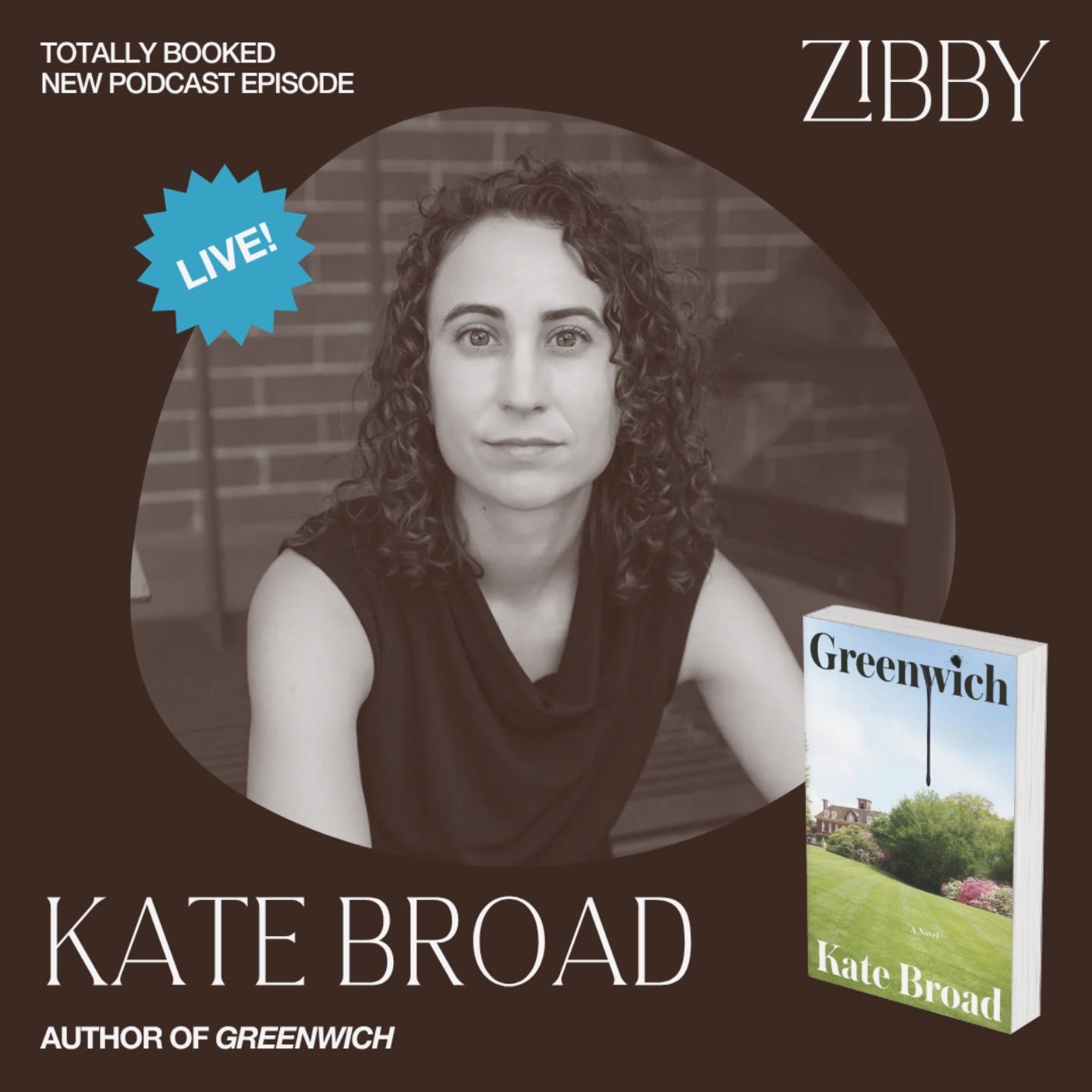
Hi, this is Zibby Owens and you're listening to Totally Booked with Zibby. Formerly Moms don't have Time to Read Books. In my daily show, I interview today's latest best selling, buzziest or underrated authors and story creators whose work I think is worth your time. As a bookstore owner, publisher, author, and obviously podcaster, I get a comprehensive look at everything that's coming out and spend my time curating the best books so you don't have to stay in the know, get insider insights and connect with guests like I do every single day. For more information, go to zibbymedia.com and follow me on Instagram ibbeowens. Welcome back to Totally Booked with Zibby. I am Zibby Owens and I am so excited to be here today with Kate Broad to discuss her debut novel, Greenwich. Yay. Clap. Thank you. I'm gonna just read a little bit about Kate and then we will dive into her delicious book. Kate Broad holds a BA from Wellesley College and a PhD in English from the CUNY.
- [02:57]
Kate Broad
CUNY.
- [02:58]
Zibby Owens
CUNY. CUNY. Sorry. CUNY.
- [02:59]
Kate Broad
People say it.
- [03:00]
Zibby Owens
I knew SUNY. Okay, CUNY Graduate Center. She is a Bronx Council of the Arts Award winner for fiction and her writing appears in the Rumpus no Tokens, the Brooklyn Review, and elsewhere. Greenwich is her first novel. Congratulations.
- [03:15]
Kate Broad
Thank you. Thank you so much for having, of course, exciting.
- [03:18]
Zibby Owens
Thank you to Katus readers for these glasses. So, so grateful. Okay, Greenwich, please tell everybody, what is your book about?
- [03:26]
Kate Broad
So it's about a woman named Rachel. And she is. She's looking back on this pivotal summer that she spent staying with her very, very wealthy aunt and uncle in Greenwich, Connecticut. And when she goes down to Greenwich, it's the summer before she's starting college. So she's about to turn 18. She's about to have this new phase in her life. It feels like everything is about to start for her. And then a terrible accident happens. And that puts her in a position where she has to make a big choice. And it's the kind of decision that it really tests her moral compass. It's her sense of right and wrong. It's her family loyalty. She has all of these competing pressures. And as she is looking back on this summer, the book is about what happened in Greenwich, but it's also about the consequences and kind of how all of the dominoes start to fall and how that affects not only Rachel's life and her future, but also her family. And then everyone who gets unfortunately caught up in their orbit.
- [04:31]
Zibby Owens
Wow. So it's really also about family loyalty. When Rachel goes to Greenwich, her sister Jules has just been diagnosed with cancer, is going under treatment. Her parents are understandably quite distracted. Her aunt and uncle, who she goes to stay with, her aunt Ellen, has just had this terrible accident, horseback riding accident, from which she's struggling to recover. And Rachel is there to sort of help take care of her daughter, but also her. And not necessarily even getting the love that she needs from really. Anyone?
- [05:06]
Kate Broad
Anyone? Yeah.
- [05:07]
Zibby Owens
And talk about what had just happened with her friend group. Because of course, at that time, being sort of expelled from a friend group is the worst.
- [05:15]
Kate Broad
Yeah. It sort of starts off there's all of this drama, high school drama that's going on. And it's very much about sort of. These are these factors that, like, there's a sort of. That push her to want to spend the summer at Greenwich. And it's that she, like you were saying, she has all of these things going on at home. Her little sister is sick and her parents are understandably so overwhelmed. And then meanwhile, she's had all of this French drama and her best friend has ditched her, is being pretty mean to her, and she is just thinking, like, she can't spend the whole summer at home in Massachusetts kind of everyone's going to parties without her, feeling like everyone's talking about her. And she sort of seizes upon this idea, which is like, she knows that her aunt needs help. Her mom was gonna go just for, like, a weekend. And then Rachel kind of has this idea that's like, I know I can be super helpful and go down and take care of my aunt and help her with babysitting. Rachel's cousin, who is three, and they have. This is such a wealthy family. Like, they have help for everything. They're hiring out for everything. So they have a live in babysitter, Claudia. But Rachel's still like, I'll go. And so she sort of tells herself this story that's like, I'm gonna be of use. I'm doing something selfless for. For my family. But I think as we dig into her psychology a little bit more, it's clear she has her own reasons and reasons that she feels kind of conflicted about. Like, should she have left her sister? Should she have left her friend group? But also, it's so nice in Greenwich, and so how could she not want to be there?
- [06:53]
Zibby Owens
You have this scene at CVS where Rachel is in one aisle and knows right away that her three old best friends are getting their hair highlighter in the carts or whatever. And you have her just, like, drop the cart and sneak out of the CVS so that her friends don't see her. And it's, like, so heartbreaking. It's just the worst.
- [07:15]
Kate Broad
It's. I mean, and I was really thinking about, like, girlhood and, like, what does it feel like to be a girl and what does it feel like to then grow up into adulthood? And it's such a transition point. And it's. I mean, I certainly felt like. Not that I've had that exact thing happen, but I think we've all had experiences of being on the outside or realizing we thought we were on the inside, and now what if we're on the outside? And a lot of it also stems from a sort of misunderstanding with her friend group. And none of them know how to talk about it, and none of them know how to resolve it. And that becomes. There's a sort of. There's a line later where Rachel is recounting to Claudia, the family's babysitter, like, what happened? And it's the first time she's kind of opening up to someone about saying, like, well, I lost all of my friends. And she's thinking to herself, like, it feels really petty. It feels really silly to be talking about these girl problems. But Rachel's also thinking about her aunt, is also navigating this social, political world of wealthy, powerful people in Greenwich. And it's the same thing. Like, it's not that different. And she's thinking about, like, her teenage years are these. It's the staging ground for the adults that they're going to become. And that I think we kind of discuss Smith's girlhood at our peril. You know, it's not. It's different and it isn't. And we sort of grow up, and yet we don't necessarily leave all of those people behind. And Rachel, in this process of coming of age, I think, is also realizing, like, that CVS doesn't change even if you're suddenly later on, like, with her aunt, it's a political stage, or it's all of these other families in Greenwich. It's like, there's some way in which, like, we're all 17 at CVS, realizing our friends are hanging out without us.
- [09:09]
Zibby Owens
Do you want to get it off your chest? Go ahead. I'm here for it.
- [09:13]
Kate Broad
I know. I know.
- [09:15]
Zibby Owens
What happened? What happened, Kate? It's okay. No, I had that moment, too. I had, like, this one group. Everybody, like, ran away, and I was like, where are we running? And then I was like, wait, are they running away from me? I know.
- [09:27]
Kate Broad
And what's so hard is, like, what if you don't know? I mean, that's always the question that I have, and I think that Rachel has, which is like, what if I don't know? And if no one talks about it. And so much of this book is about the things that we don't talk about. Like, if you can't sit down and have a conversation with your best friend that says, like, I'm afraid I might have hurt your feelings, can we talk about it? How do you become an adult who can say, I'm having a problem and I need someone to talk to? And like you were saying in the beginning of this, like, Rachel's parents are not there providing any emotional support. And in fact, no one is providing anyone with the emotional support that they need. And you can kind of see these generational cycles of, like, if no one has these emotional tools in their toolkit, how do we come to a place where we can, like, talk about things that people are feeling or talk about the things that are going wrong? Rachel's loneliness and her isolation kind of follows her to Greenwich, and then, I think, kind of follows her out of Greenwich, too.
- [10:30]
Zibby Owens
She has one moment with Claudia where she's feeling really awkward. I mean, admittedly, she's, like, spying on her. So I. Whatever. So it's justified awkwardness. But she's like, oh, no matter where I go, there I am. Like, the same awkwardness that was plaguing me at home is still here. You can't run away from your own issues.
- [10:49]
Kate Broad
Yeah. It's like a little moment of Rachel insight, which sometimes she has and sometimes she doesn't, in part because she's 17 and in part because she's just human. And that is that moment of. Right. She, like, recognizes. Yeah. Wherever you go, there you are. And that kind of follows her through her life later, too.
- [11:11]
Zibby Owens
Well, meanwhile, Rachel is observing so much. So she has her own issues. But then we get to be in her shoes as she goes through this palatial house with. Even though it hasn't been fully renovated yet and whatever. But there's, like, a pretend lake. Not a pretend. There's a lake in the beginning, you know, in the entryway and, like, a whole floor of former servants rooms or whatever that hasn't been brought up to date and whatever. And she starts looking around and finding what her aunt is hiding in her medicine cabinet. And what is her uncle doing with these very sketchy business deals. And all of a sudden, we kind of see things un. Folding a little bit because. Through her eyes.
- [11:52]
Kate Broad
Yeah. And everything is through her eyes. So there's this feeling of, like, what's really going on? What is Rachel's perspective of what's going on? Do we trust her perspective? She is. Yeah. There are all of these family secrets in this house, and Rachel wants to be part of something. She wants to sort of be an adult and be brought in so that people would confide in her or tell her. But really how she goes about doing this is right. She is. She's observing is a very nice way of putting it. She's spying on people a lot of the time.
- [12:29]
Zibby Owens
I'm trying to give Rachel the benefit of the doubt here.
- [12:31]
Kate Broad
Yes. No, you have to do that. Yes. She's eavesdropping. She's also. But she notices everything. And she is very observant. And she. That's part of, like, she's trying to figure out the world and trying to figure out her place in it. And she's doing that by kind of tracking. What are these people like? And her aunt and uncle are so different from her mom and dad in many ways. And that's, like, the appeal, right, of going to stay with your glamorous aunt and sort of checking out what this other life is like. And so seeing. You know, it's like, what do they have for breakfast? How does Ellen talk to people? Like, how is she running her business? How is she running the lawn care? Like, Rachel's just tracking everything. And the more sort of curious she gets, the more that leads her into feeling like, well, I just kind of want to know what my uncle is talking about when he's on the phone. Or I'm just like, I've never been let into my aunt and uncle's bedroom because the door is always closed and no one's there. And what would happen if I just gave it a little peek? And the whole time, she's justifying to herself that she's not necessarily doing something wrong. But she also kind of starts to get in over her head as like, she wants to be a part of the adult world and their secrets. And then she kind of finds out a lot more than she bargained for. And there's a little bit of that feeling of, like, oh, I want to give it back. Like, the adult world is very complicated, and maybe that's more than she bargained for.
- [14:01]
Zibby Owens
Yeah. She has some clues, though, because the adults in her life and in this house are so distracted. Like, they keep just, like, leaving the kid in the backseat. And she's like, wait, do they not remember that she's sitting there and starting to cook dinner and then leaving all the stuff? And she's like, am I supposed to put the mushrooms away? What am I doing here? So I think just her finding her way is in her face constantly. And us as the reader.
- [14:27]
Kate Broad
Yeah. And it is, you know, I feel for her in those moments where it's hard, especially, you know, when you're, like, a guest in someone else's home, but it's your family, so people will be like, oh, make yourself at home. And she's like, but it's not my home. Is it overstepping for her to finish making dinner while her aunt and uncle leave? Or is that what they're expecting of her? And there are so many. Part of it is that going back to all of these things that are unspoken. It's like there are so many unspoken rules, especially in a house like this and with a kind of power like this that she's trying to navigate, but no one comes out and says, this is how you behave in this kind of echelon of society. So she's trying to figure it out, but she's 17, and she has no idea. And even when she's older, I think she's just then realizing, like, should I have been left alone for all of that time? Was I old enough to handle that? And I think that we were talking about girlhood and adolescence and that transition, and it's such a both. And those times when you feel like I'm absolutely an adult, I should be trusted with these responsibilities. Of course I can make dinner for my three year old cousin. And then other times when it's like, this girl is 17, like, where are the grownups?
- [15:43]
Zibby Owens
And you technically do this. You put the book together in such an interesting way. So you have Rachel looking back and then you have these times where you give us little clues that something is ominous and it's about to happen. Like, she'll talk about the second floor of the house and then say later, police will talk about how much we could hear from the second floor. And you're like, what? What do they mean? What is happening here? How did you, from a technical standpoint, structure the book? How did you create that sense of suspense? And what was, like, what was your whole goal in the book to begin with?
- [16:20]
Kate Broad
Well, I love talking about structure. I'm like, always, because that. And I'm so excited to hear you say that because structure feels really important to me. Like, that's how the whole thing unfolds. And that's kind of. That's what makes the book the book. And I think I knew early on, as I was figuring out how to put it together, that I wanted it to have this retrospective component. This is about an adult world and an adult coming to terms with who she is and what mistakes she might have made and then how to. If it's even possible to sort of rectify those mistakes later on. And so I knew from the beginning that I wanted to have that kind of dualism. It's one character, but it's almost two because you have adult Rachel and teenage Rachel kind of coming to terms with how they have become who she is. And then of course, there's a question of, like, all right, how do I actually do that on the page? But having that adult voice come through really allowed me to be like, the Rachel who is telling this story, knows what happens, and then that lets her. But she's also sort of walking through the moment being like, where did this start? When I arrived in Greenwich, this was how it felt, but this is what sort of developed later on. And it allowed me to kind of drop in those moments where, like, when you're living your own life, you don't know what's significant when you're in the middle of it, but you can look back and be like, that's when I should have known something was happening. Or maybe that's when I wish that I had said something. Or that's when I said something and I wish that I hadn't. You know, it all kind of looks different in retrospect, and I thought I wanted it to have that quality where she can sort of do both of those things at once. And thinking about then now, like, what's the goal of the book? And a lot of it was like, Rachel is thinking through all of these things. And that was the kind of thinking that I wanted the book to do on the page and that I wanted the reader to do when they're reading.
- [18:24]
Zibby Owens
So.
- [18:24]
Kate Broad
So everything isn't necessarily wrapped up in like a neat bow with a moral and an answer to give you. Because Rachel is trying to figure this out. And then we are with her on the journey of figuring it out. And that kind of gave me a sense of like, how do I want to stitch this story together so that we are going through this whole process with her?
- [18:51]
Grainger Ad
If you work as a manufacturing facilities engineer, installing a new piece of equipment can be as complex as the machinery itself. From prep work to alignment and testing, it's your team's job to put it all together. That's why it's good to have Grainger on your side. With industrial grade products and next day delivery, Grainger helps ensure you have everything you need close at hand through every step of the installation. Call 1-800-GRAINGER Click grainger.com or just stop by Granger for the ones who get it done.
- [19:21]
BetterHelp Ad
BetterHelp Online Therapy bought this 30 second ad to remind you right now, wherever you are, to unclench your jaw, relax your shoulders, take a deep breath in and out. Feels better, right? That's 15 seconds of self care. Imagine what you could do with more. Visit betterhelp.com randompodcast for 10% off your first month of therapy. No pressure, just help. But for now, just relax.
- [20:03]
Freddy
Avoiding your unfinished home projects because you're not sure where to start. Thumbtack knows home so you don't have to. Don't know the difference between matte paint, finish and satin or what that clunking sound from your dryer is with thumbtack tac. You don't have to be a home pro, you just have to hire one. You can hire top rated pros, see price estimates and read reviews all on the app download today.
- [20:26]
Zibby Owens
And it's neat to have a character looking back like that, and having older characters in the story, in the flashback that are basically the same age as her now, so that we, as the reader can feel like, yes, I remember what it was like when I was this age and that pain or whatever. But I also am sort of relating to the parents who have a sick child and the aunt who's injured and now maybe is getting abusing some drugs or something. You can relate to all the characters in the book in some way. And then you're left thinking, well, what would I do in this situation?
- [21:01]
Kate Broad
Yeah. And that really is. That question that was kind of guiding the whole book for me was having. Wanting to feel like when I'm reading this, like, when a reader is reading this, like, what would I do? What would a reader do? I think it's really easy to, like, we can always kind of sit back and be like, well, I know I would definitely do the right thing always, because I'm a good person. And we all want to say that about ourselves. And I am sure that it is entirely true of all of us here. But the reality is, I don't know about this section. People. You know, we live in a world that has a lot of problems and where people are not always making the choices that are the best for themselves and the choices that are the best for other people, or sometimes the choices that are the best for one person also wind up hurting somebody else. And I think because we're so close to the characters in the book and we're so, like, inside Rachel's mind all of the time. It's like we hear the justifications and the. Like, her reasoning for. For things, and it kind of, as the reader, it makes you feel complicit, I think, in some ways, and it does. I wanted to have that. Sometimes it's an uncomfortable question, like, what would I do? Am I sure that I would necessarily do the right thing? Like, when Rachel has this decision that she has to make, there's a way in which the decision is very simple. And there's also a way in which it's. It's incredibly complicated. And I think it's, you know, that's what it feels like to be a person. I think that's what it feels like to be alive, is that sometimes things are very difficult and no one comes along and says, oh, this is the moment where you're making a big decision, and you should definitely do the right thing here. Because we don't always know, have you.
- [22:53]
Zibby Owens
Been in that situation?
- [22:56]
Kate Broad
Not the way that Rachel is for sure, but I think there is. You know, my hope was that there's something that feels very human and very relatable. Like, most of us have not been in Rachel's situation. Most of us do not have an extremely wealthy aunt and uncle who are like, yes, come stay with us for the summer. Like, we'll take you on vacation. We're like, here's the tab at the country club. And yet we've probably all been in situations where we can look back and be like, you know, I hope that I did the right thing, or I hope that what I did didn't hurt somebody else, even if it's not kind of on the scale of what's happening in this book.
- [23:32]
Zibby Owens
So you're a debut author. Your first book, obviously. Great book deal. Beautiful cover.
- [23:39]
Kate Broad
Isn't the COVID amazing? I love it.
- [23:41]
Zibby Owens
Amazing. I want to frame it and hang it in my house somewhere. What was the process like? Was this the first novel you ever wrote? Is this the first one to get published? But you have 10 in a drawer? And what was the whole path to acquisition and publication like?
- [23:57]
Kate Broad
Oh, God, do you have six hours for the podcast?
- [24:00]
Zibby Owens
You have, like, six minutes or so.
- [24:02]
Kate Broad
It is a long process, and for anyone who is in this position, persistence is the name of the game. This was not my first novel. It was not the first novel I wrote. It was not the first novel that I tried to get published. It was not the first novel that got very close to publication. It was almost sort of a shock when I found out that my editor was interested, because I was like, we've been here before. It's not gonna. I was already writing another book, kind of anticipating, like, I don't know what's going to happen to Greenwich. So we just keep going. And then all of a sudden, everything changed. I have other novels. I have, I don't know, probably four drawer novels that I won't touch again. I have two other novels that I still really believe in and think something could happen with. I have other books that I'm writing. There's just always a lot of things going on, and I think it's, you know, you sort of just keep going. I can't even think of any novelists that I know. I'm sure they're out there, but they don't have to tell me who, like, get their very first novel published. You know, it's not like, oh, I had an idea for a book, and I sat down and I wrote it, and I got an agent, and then the agent got me an editor, and everything was great. I mean, there's just always. I wrote this. It didn't quite work. I started something else. I finally finished this. I tried to get an agent. I didn't get an agent. I got an agent. But that agent left the industry or decided they were no longer representing these books. A million things happen, but kind of along the way, I started just clicking and connecting with the right people and finding the people who connect with the work. I think that's the most important thing is just who is really gonna fall in love with the kinds of projects that I wanna be writing, and then who is gonna be the champion for the work going forward.
- [25:53]
Zibby Owens
But why not just give up? Why not say, okay, forget it. I've got these four books and this isn't gonna sell. And da, da, da. Why?
- [26:01]
Kate Broad
I definitely thought about it, but the thought of giving up was continuously worse than anything else that could happen if I kept going. So any kind of. No that I got or any kind of setback was still like, well, at least I'm doing something and I'm writing the books that I want to write. And I think that was kind of this core truth that I had to keep coming back to. And I think that always stays with you because even when the book is published, it's. It's still, you know, it doesn't mean that every single person in the entire universe is going to love it.
- [26:34]
Zibby Owens
But that would be so nice.
- [26:36]
Kate Broad
That would be so nice. And obviously they should. But you still have to know, like, well, you keep going anyway. Or you say, this is the project that I really believe in and that I want to keep writing. And I kept coming back to that, and it was like, well, I could stop, but I have an idea for another book and I want to write it, so I'm going to keep doing that. I just kept thinking, what else am I gonna do for all of the time? Like, writing is so hard. Right? And writers always talk about how hard writing is, and it's true and it's.
- [27:07]
Zibby Owens
Hard and yet get so little sympathy.
- [27:10]
Kate Broad
Yes. And at the same time, writing is the best. Writing is the best thing that I get to do. And even being in a position where there's a no or something doesn't land the way that I want it to. I always kept coming back to the feeling. It sounds so cheesy, but I just kept being like, but I want to keep doing this. I get to keep doing this and sort of holding onto that feeling. I think if you're in a position and you're like, oh, I could Stop writing, and I could save myself all of this heartache and all of these challenges. And wouldn't that feel like such a relief? I think that's a sign to, like, don't do this to yourself. Like, you don't have to do this to yourself. But I think if that feels like grief that you would lose something, that that's a sign that you should just keep writing.
- [28:00]
Zibby Owens
So, advice for aspiring authors.
- [28:02]
Kate Broad
Yeah. Well, we definitely, you know, hitting on the persistence. I love, you know, I love talking about this stuff because it. Because it is so hard. I have a whole substack called Ask an author, where people just write in and ask questions. Because I was like, I'm getting so many questions about writing all the time. So if anyone has questions, you just, like, write to me and I will answer them. I will do my best. So I'm thinking about the persistence when I'm thinking about what is a practical, tangible thing. And I think one of the things that really helped me write Greenwich was I started setting certain parameters for myself, and people will say, oh, I write some number of words a day. And I do try to do that, and I try to reach a goal so that I'm always touching a project. But what really changed for me and helped me, I think, be able to. To finish project was I started setting limits. So I was like, I'm not writing more than a certain number of words a day. So if I'm on a roll and things are going great and I've hit my. For me, it's usually 2,000 words, but it could be anything. It could be 500. It doesn't have to be that number. If I hit my 2000 words and things are going great and I feel good and I could keep going, I don't. I stop. Because then the next day, I'm so excited to get back to it, and I'm in the groove, and I know what I want to keep working on. And so it suddenly feels like this thing that I want to do, whereas if I just work and work and work until I'm completely burned out and exhausted, then I don't really want to turn on my computer again because it feels like, oh, this is going to be so hard. And so kind of finding these little ways to trick myself or kind of set myself up for success to say, writing is something that makes me feel good. This book is a book that I want to be writing, and so I'm going to keep coming back to it and whether that means I don't do too much. So that I'm still excited or I try to sort of end on a good note for the day. Or I will, like write into the next scene so if I finish a chapter, I will write the next sentence of the next chapter, or even half a sentence. It doesn't even have to be a full sentence because then I know exactly where to pick up the next day. So it's like little tricks to say I have to keep going. And now I've set myself up to be able to keep going.
- [30:12]
Zibby Owens
I love it.
- [30:13]
Kate Broad
If that helps anybody, it helped me.
- [30:14]
Zibby Owens
So there you go.
- [30:15]
Kate Broad
But also, if that is like, not what works for you, if you're like, oh God, what a nightmare, then like, don't do it. Because I think part of it is also saying, no, we're all gonna do.
- [30:22]
Zibby Owens
It because you said. And that is it.
- [30:25]
Kate Broad
That's it.
- [30:25]
Zibby Owens
Yes.
- [30:26]
Kate Broad
I am like the ruler of what happens, because so much of it is just figuring out what works for you. And some of that might be what worked for somebody else. And some of that might be like, oh, no, that would never work for me. People, I think you can feel a lot of pressure to be like, well, this one writer drafts everything by hand, so I should draft everything by hand. And it's like, no, because I can't read my hand handwriting. So I'm not gonna do that. So you just figure it out.
- [30:49]
Zibby Owens
Amazing. Well, Kate, congratulations on Greenwich. So delicious. So fun.
- [30:54]
Kate Broad
Thank you so much. This is really fun to be here.
- [30:56]
Zibby Owens
Yay. Thank you for listening to Totally Booked with Zibi formerly Moms don't have time to read books. If you loved the show, tell a friend, leave a review, Follow me on Instagram, ibbeowens and spread the word. Thanks so much. Oh, and buy the books.
- [31:19]
Freddy
Hey, this is Freddy from Dungeons and Daddies. And if you're like me, buying anything turns into a nightmare research spiral. But listen, you're trying to upgrade your phone. I'm about to save you from yourself. Because right now you can get the new iPhone 16e with Apple Intelligence for when you switch at your nearest Boost mobile store. That's a brand spanking new iPhone 16e for the incredible price of $49.99. Plus you're getting all the latest Apple Intelligence features too, like cleanup, which removes distractions from photos with just a tap. Visit your nearest Boost mobile store for full offer details. Apple Intelligence requires iOS 18.1 or later. Restrictions apply if you're a lineman in charge of keeping the lights on. Grainger understands that you go to great lengths and sometimes heights to ensure the power is always flowing. Which is why you can count on Grainger for professional grade products and next day delivery so you have everything you need to get the job done. Call 1-800-GRAINGER, click grainger.com or just stop by Grainger for the ones who get it done.
- [32:25]
Kate Broad
This episode is brought to you by Huggies Little Movers. It's fun having a baby that loves to move, but it can be challenging to find a diaper that can keep up with them. Huggies Little Move is designed to move with your baby with either the double grip strips or the new HugFit 360 degree waistband. You can be confident relying on Huggies Little Movers for your active little ones. Huggies Little Movers made with double grip strips or the new HugFit 360 degree waistband so your little double can keep moving. Like you Huggies. We got you baby.