Loading summary
Transcript71 lines
- [00:01]
Zibby Owens
Hi, this is Zibby Owens and you're listening to Totally Booked with Zibby, formerly Moms don't have Time to Read Books. In my daily show, I interview today's latest best selling, buzziest or underrated authors and story creators whose work I think is worth your time. As a bookstore owner, publisher, author and obviously podcaster, I get a comprehensive look at everything that's coming out and spend my time curating the best books so you don't have to stay in the know, get insider insights and connect with guests like I do every single day. For more information, go to zibbymedia.com and follow me on Instagram. Iby Owens hi everybody.
- [00:46]
Laura Nicole Diamond
This is one of the Replay bonus episodes to get you through the holiday season.
- [00:52]
Zibby Owens
Maybe you missed some. There have been over 2000 episodes.
- [00:55]
Laura Nicole Diamond
We are going into a rebrand where.
- [00:57]
Zibby Owens
We'Re going to be changing the name of the podcast from Moms don't have Time to Read Books to Zibby's Podcast. So that is happening in the new year. In the meantime, have a listen, enjoy and let me know what you think.
- [01:11]
Laura Nicole Diamond
Bye.
- [01:11]
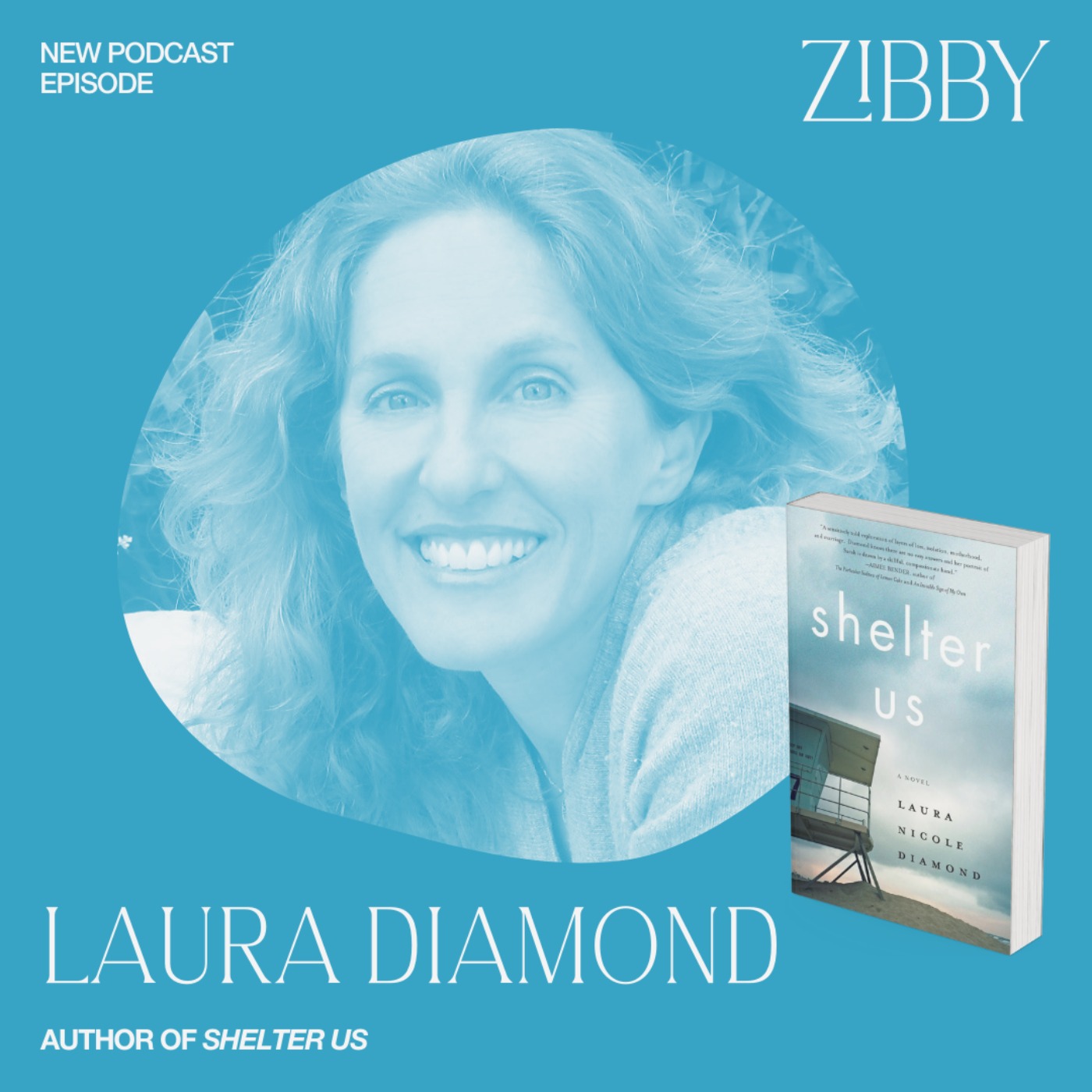
Laura Nicole diamond is the author of Shelter A Novel. She's the award winning author of not only Shelter Us but Dance With A Memoir of Her Grandmother and the editor of the anthology Deliver True Confessions of Motherhood. She writes about life, family and trying to make sense of it all on her blog lauranicolediamond.com and is at work on a memoir and fostering a teenage asylum seeker on the path to citizenship, which also has prompted her own journey to become an asylum lawyer, which we talked about. She and her husband raised their two sons in the small town in a big city where Laura grew up and where her parents and sisters still live. Though she did leave for various adventures of her own, including to Venice Beach, Spain and some epic American road trips, she can hardly believe that her nest is almost empty.
- [01:56]
Welcome Laura. Thanks so much for coming on. Moms don't have time to read books to discuss Shelter Us.
- [02:02]
Thank you so much for having me.
- [02:04]
It's my pleasure. Would you mind telling listeners what this beautiful novel is about?
- [02:10]
Sure. Well, in the big sense, I'd say it is about longing for meaning and connection. It is about survival and resilience and love and hope and all those things that sort of grabbed the human heart. And that's certainly what I think was trying to come out of me. The story is about two women, Sarah and Josie. And Sarah, she is a former lawyer, now she's a suburban stay home mom and she Is grappling with the grief and looking for meaning in those ways that I described. Josie is a young homeless mother, sort of down on her luck unexpectedly. And the two of them have an encounter, a fender bender in downtown Los Angeles. And Sarah becomes fixated on this young mother and her toddler and the stories about their burgeoning relationship and how they challenge each other and help each other find some kind of healing. I think.
- [03:15]
Well, I feel like there was so much healing to be done for Sarah. I mean, the novel begins with her. With the loss of her infant daughter, which she wrote in such. I mean, it was real. Like, my whole mood changed when I read it. I mean, it's like, very immersive and poignant, and you just like the guilt that she feels because she finally got her two kids to go to sleep in their own room. And then that her daughter doesn't make it through the night. And then the grief counseling and. Oh, my gosh. And then all of her grief from losing her mother so young. I mean, this is a lot. It's a lot on her shoulders.
- [03:50]
Yeah. And I kind of wanted to front load it so that we know at the beginning what we're dealing with as she's moving, you know, trying to cope with being present for the two children that she has and for herself and for her husband and just how overwhelming it all feels. And then this young woman comes in and just. It like pulls her out of herself in some way. You know, part of it is, I thought when I started writing it, what I knew was I had these two women I wanted to write about. I did not know how they were going to meet when I started writing it. Sarah had not suffered that loss. Like, that came up as I was writing because I was kind of trying to figure out what would make somebody do this. Why is she so willing to go back, search for this young woman she saw? What's causing this fixation and what. It's kind of one of the questions that comes up. I think that's just in a bigger sense in the world, like, what does make people sometimes act out of character? Or to breach their safe bubble, their comfort, their small world. To do something really that seems extraordinary, but to her seemed so compelling. It was like the only thing she could do. So, yes, so it does start with that heaviness, but it was. I think what it came out of was just sort of this. This parenting fear. I never had that particular loss. I was very lucky. I have two sons, and they definitely were a lot of the inspiration for Oliver And Izzy in the book, and I stole some direct quotes from them. But that fear that you don't get warned about before you become a parent, at least I didn't. And I hope it's universal because it hit me. But I mean, I don't hope it's universal, but I believe it is. Once that switch is flipped and you're taking care of another life, you see danger everywhere. There's the whole maternal safety industrial complex that's selling you all the things to keep your toilet seat closed and your electric sockets plugged so that you are always aware that there's danger everywhere and you've got to keep this precious thing safe. That part of the story came out of those feelings as a mother that I think all mothers feel, which is just, you know, oh, my God, my heart is now walking out in the world outside of me and I cannot control everything as much as I want to.
- [06:33]
Well, it's complicated too, because as a mother, you actually are in charge of making sure they are okay. I mean, it's not like I feel like I am, but really I'm not. But for a while, they are completely dependent on you and. But it is your job to make sure they're okay. And obviously things happen beyond your control, like this book and, you know, sids and all sorts of things that you can't control. But it's like, you know, you do actually have to do it. That is the mantle. You have to. And so how do you recover from that? And how do you transition to like, oh, no, they're okay by themselves because I have it. I don't think. Yeah, I was going to say it's not loosening up quite yet for me.
- [07:12]
No, my. My boys are now 21 and 17 and that means they drive and, you know, the 21 year old lives in another state in college. And yeah, there. There are different kind of coping mechanisms that most of the time we use to not think about the worst things. But that also kind of helps inform, you know, the joy and the appreciation for the day. Like, this day is a gift because we do not know what's going to happen. So I'm going to hug you despite your tantrum ing at me. Or it might be.
- [07:50]
Oh, my gosh. So, Laura, how did you get into writing? Tell me your life story. Where did you grow up? Like, how did we get here? The brief version.
- [08:00]
Yeah, I never envisioned being a novelist or a professional writer. I was almost always, you know, since. Since my childhood, a journal keeper, a diary keeper. And I remember my first Hello Kitty diary that my mom got me. It was the fact that it was hello Kitty was the main draw. But then writing in it just. It carried me through. Through high school and trauma and all the bad poems about the heartbreak. And I went to law school because I was really interested in being a public rights. Public interest, civil rights lawyer. And it carried me through that too. Keeping a journal kept my humanity going while I was reading about contracts and torts. And it allowed me to keep in touch with that. I don't just to observe. In fact, there was a scene in Shelter S that came from just a small moment that I remember writing about. I was in Berkeley and I was walking on the sidewalk and behind this old couple that was holding hands as they went down the curb ever so tenderly and gently to make sure they made it. And I wrote about that in my journal. And I think writing a journal, it's like doing scales in a way. It keeps you noticing things. It keeps you alive to detail. I. When my first son was about two and a half, I was practicing law, had gone part time. And even that was not working for me. So I decided after a lot of. Took a long time to let go of it. But I decided, you know what? I'm going to. I'm going to press pause on this law stuff. I just want to be home with him. I'm so surprised by this. I didn't expect that, but I want to be home. And the moment I made that decision, it was like, I have more time to write. And it was still just journal. And that became sort of personal narrative. And I took a class right before my second son was born and when he was napping. Finally I self published an anthology about motherhood. And one day when I was writing one of those sort of personal stories, I started making things up. And it was. I remember it was like about a day at the beach or some moment we'd had. But I started writing about this woman in the third person. And she started doing things that I hadn't done. And for a little while I followed that. And soon enough I decided, you know what? I'm writing a novel because I want to explore some of these things that I have not been through. My life's kind of dull and I want to be able to say some other things and explore this grief and explore this connection with these two characters. And I announced to everybody that I knew I'm writing a novel so that I would hold myself to it and not stop. Cause I knew I'd be too embarrassed if I Never finished it. And it took a long time. My announcement of the year of the novel was 2008, and it was published in 2015.
- [11:06]
That's not bad.
- [11:08]
It is what it is. You just keep going until it's ready. And I felt that it was ready. So that was, that was. That was my. That's my story. That's my writing journey.
- [11:23]
And what. And then how did you get. So you also do the Palisades Book Club or for the library.
- [11:29]
Right, Right.
- [11:30]
What other right?
- [11:32]
I live in a town in Los Angeles called Pacific Palisades and it is where I grew up. I did not expect to end up here. I always tell people I did leave. I did not just stay put for the whole time.
- [11:45]
That's how I feel about new. I'm like, I did escape for a while, but, you know, here I am. Right?
- [11:49]
Yeah, yeah. You know, you want to make sure you've seen the world a little bit. Yeah. So to my surprise, I ended up living back in my hometown, which is a wonderful place. It has its, you know, it has its ups and downs, its pros and cons, which I'm writing about in a memoir now.
- [12:07]
No way.
- [12:08]
Zibby Owens
Oh, my gosh.
- [12:08]
Laura Nicole Diamond
Wait, tell me about the memoir.
- [12:10]
This is very. This is weird. Life is very strange. And I. So the memoir is almost a case of life imitating art. Because after I wrote this book where Sarah, who is. She's. Her mother is Guatemalan, her father is Jewish. Her grandmother came from Guatemala as an 18 year old, pregnant, and she's the grandmother character I love. Anyway, and then Sarah spends all this emotional energy trying to decide how to help this young woman who needs a place to live and what should she do? Should she bring her in her home? No, that's crazy. That would never work. All of that after it was contracted to be published. But before it came out, I got an email from my mother that was forwarded like twice from a friend of a friend. And it said the initial writer was an immigration lawyer for a pro bono, like nonprofit in Los Angeles. And she said, I have a client, a teenage girl from Guatemala. She is this wonderful person. She's seeking asylum because. And she had to leave home. Her parents sent her to the United States because of horrible things that happened to her back in Guatemala. And what she really needs is a place to live. And I'm just, I've never done this before, the email said. But she's, you know, she's special. And we're just wondering if maybe there's someone out there who has time in their life now to foster her for a year or so. And I was reading this email thinking, that's crazy.
- [13:43]
What crazy?
- [13:45]
And I showed it to my husband without saying a word because I just wanted him to have a reaction devoid of my influence. We ended up. We were not looking to do that. We were not looking to be foster parents to a traumatized teenager from Guatemala. But I could not get this idea out of my head that what if I were born in that country and not here? And what if I was that mom and I had to send my son across the world. All I could think about was God, maybe just please let there be some mother over there who will find him and say, I've got him. Like, I could see the silhouette of a woman like. And so we couldn't delete it. We just couldn't forward it and delete it. But we didn't know what to do. So we replied to an original attorney sending it, maybe we can help. And two months later, Maria moved into our house.
- [14:44]
Oh, my gosh.
- [14:47]
It was one of those things I learned about the power of. Maybe you take one step and you take another, and then there you are. And so the memoir really explores her journey and our journey with her as a family. And it explores some of, you know, some of the same themes and frankly, as the novel, with survival and resilience and love and, you know, and just I was. I wanted to write about her because I'm just such a fan. She ended up living with us for five and a half years until she was ready to, you know, spread her wings.
- [15:30]
Did you ever meet her parents?
- [15:31]
She has not been able to go back to Guatemala to see them and they're not able to come here. So for her, it's been almost eight years since she's. She got asylum. She became a legal permanent resident, which is a green card holder, and she is now eligible to become a citizen. And she's just waiting in line. Yeah. So once she's a citizen, she will be able to safely go back and return. That's the risk is to say, if you go back to the country that you say was not safe for you, then that could jeopardize your status. So she's got a lot of longing there too. But she changed all of our lives. In fact, I went back to law part time doing asylum law, which I'd never done before. And it's amazing what she, you know, what she brought to us. So there you go. Now you don't have to read the book, but you should because it's really great.
- [16:34]
Zibby Owens
Today's episode is sponsored by Acorns. Acorns makes it easy to start automatically saving and investing so your money has a chance to grow for you, your kids and your retirement. You don't need to be an expert. Acorns will recommend a diversified portfolio that fits you and your money goals. Acorns lets you invest with the spare money you've got right now. You can start with $5 or even just your spare change so you don't need to feel like financial wellness is impossible. Acorns gives you small, simple steps to get you and your money back on track. And it's the New Year when we all make New Year's resolutions. Last year I made a resolution to go to the gym more often. I tried to say I would go once a week. Basically, I think I've gone to the gym like three times in the whole last year. But I am not giving up on my resolutions. And saving money and making smart financial decisions is a resolution that Acorns makes it really easy to keep. By the way, I invested with Acorns in 2023 and in my portfolio I am up 20.24%, which is really awesome. So you should do it too. It's amazing. Head to acorns.com books or download the Acorns app to start saving and investing for your future today. Paid client endorsement compensation provides incentive to positively promote Acorns tier one compensation provided investing involves risk. Acorn Advisors LLC and SEC registered investment advisor. View important disclosures@acorns.com books you know, I.
- [18:06]
Laura Nicole Diamond
Wanted to do, I wanted to both with Shelter Us and with with this memoir, I think this instinct, this inclination you have, like when you know somebody special and they're portrayed in media as numbers or statistics, you feel like maybe storytelling is a way to humanize that statistic.
- [18:26]
It is, yes. I mean, I feel like people just that's how we process information, is through story, not through data and numbers and percentages and all of that.
- [18:37]
Right? Let me tell you about this person I know. And that's where Josie came from too. Also the character in Shelter Us who is the homeless mother. I had been volunteering with a homelessness organization here in LA that focused exclusively on homeless families. And by that, ultimately that really ended up meaning young mothers and children. Girls who'd grown up in foster care didn't have the support network so that once they were out, they didn't have a couch to land on. If things didn't go well, if they didn't get that first Job right after high school or couldn't pay their rent. But this. By the time I met them, they were moving. They were already formerly homeless. They were moving into apartments. They were having job training and counseling with this organization. And so we spent time just getting to know them and helping them move in. And one of the young women, especially I was 10 years older than her, but we had kids the same age, and we were talking about, like, what do you do when your 14 month old throws the sippy cup on the floor? And, yeah, that's really hard. I just thought, these women are so resilient, so resourceful, and they're not really. The story of homelessness, and I think people should know about this is another side of homelessness, too. People. Just people.
- [19:59]
Yeah, it's true. There was this really powerful memoir that I read by a man who had formerly been homeless in Canada. It's like the number one bestseller in Canada or something. Well, anyway, in our interview. And now I'm. It'll come to me. My brain is working so slowly today. This is terrible. Brandon. Maybe. Anyway, he said that the number one thing with homeless people is you should always ask them their names because they feel so invisible. And it's just a reminder to them that they are human and they are seen. And right after I did this. This is not that long ago. Maybe two, three, four months, I think. Anyway, when I. I was giving money to a homeless person on my way, you know, in New York, as one does, just like, stopping. Anyway, so I gave it to this man on the street, and then I stopped and I was like, what's your name? And he told me his name, and he, like, looked me in the eye and I was like, okay. And he was like, thanks. Anyway, I was just like, okay.
- [20:55]
How did that make you feel?
- [20:57]
It made me feel great. I mean, I felt terrible for him, you know, And I'm like, goodbye now. I'm gonna go out to dinner. You know, it's terrible, but, you know.
- [21:04]
But there's a connection that you're acknowledging his humanity.
- [21:07]
Yeah.
- [21:08]
Yeah.
- [21:08]
And it's so easy to just keep walking.
- [21:11]
Yeah. And. And, you know, nobody's perfect. Nobody knows exactly what to do. And that's sort of. You know, Sarah's always wondering, what should I do? It's the right thing. And she has moments where she, you know, passes homeless people and feels different, you know, so it's complicated. And, yeah, I think that's. That's important too, to sort of. To acknowledge that these are big, messy human issues. And it's okay. To not be perfect and to just try and try again.
- [21:45]
I feel like even in Brentwood, there's all those. There's a homeless encampment now that's set up by San Vicente. That whole area.
- [21:54]
The tragedy is that is right outside the Veterans Administration building, and those are veterans.
- [22:00]
Oh, is that what's going on? Okay.
- [22:02]
Yes. And, yeah, that's terrible. Don't get us started on talking about homelessness in la. We will not have enough time to.
- [22:10]
We'll take this up another time.
- [22:12]
Yeah, yeah, well, we'll solve that. We'll solve that in the next hour. It is. It is a really intractable problem. You know, when we. When I was writing Shelter Us, I had Sarah meet Josie downtown, and there weren't really people in Pacific Palisades at that time who were homeless on the street that you would see. And that's changed now. If I wrote it now, I would have Sarah walk down the block and have a conversation with Ruby in front of the library or, you know, but they're. They're one of the great things. And this I have to tout in here. There's the. The Pacific Palisades Task Force on Homelessness, which I've not really been a part of. They're just tremendous volunteers, and they've piloted and modeled a project where they've. Rather than trying to, like, let's clear everybody off, let's get them on a bus. They raised money to hire outreach workers from a Santa Monica agency to engage people and find out, you know, what do you need? Like, more than 70 people have been housed. Oh, good. Yeah. It's really fantastic. It's very compassionate. And I think that, you know, people come to it for different reasons. Some people are coming from the, you know, I don't want to see this, and I want my kids to see this. Others are coming from, you know, this is a human tragedy. Let's, you know, let's be, you know, the uber compassionate. But everybody's. But. But the end. So, you know, the. The end goal is the same, you know. Yeah.
- [23:47]
What advice would you give to an aspiring author?
- [23:50]
Well, I give myself this advice all the time, and it is. Things take the time they take, and it is, you know, I start out talking, oh, my. I felt like my novel is taking so long, and now I feel like with my memoir, Ugh, you know, it's taking so long. Like, compared to what? You know, it's so easy. That's another bit of advice might be, you know, try not to compare yourself to other people. I Do it all the time. Like, how does that person write a novel a year?
- [24:19]
Right.
- [24:19]
You know, you just have to accept that your pace is your pace. And I have this Mary Oliver poem, that. Which is where that came from. You know, that it's. It's taped to my wall. And, you know, just. It's called. I think it's called don't worry. Things take the time they take. Don't worry. And then. And it's a very brief poem, but it goes on to just be like, you know, cut yourself a break. So that would be my advice. Just, if you're a writer, you're a writer. You always come back to it. You're a writer. That was actually advice my friend gave me. I still think of her. She's a real writer. I published a novel, but the imposter syndrome is strong. But we were talking about, what do you think makes you a writer? And she said, I think even if you didn't write for a long time, it's just some. If you. You feel compelled to come back to it, you know, even if you're still that person, just writing in the journal because it satisfies your soul or fills you in some way, it's how you engage with the world and process your emotions and maybe put it right back out to the world, whether that's on a large stage or not at all. Your writer, if that's how you. That's how you engage with your spirit and others.
- [25:43]
So I love that I learned that you can't. Things take the time they take. When I was pumping in a trailer bathroom at a wedding for my twins, who are now almost 15, and I was in there, and everybody was pounding on the door at this wedding, and I was like, I can't rush 10 minutes. I have to do 10 minutes, or I'm not gonna be able to survive. And there was like, there's no amount of stress. I couldn't speed up the time. There's, like, nothing. And I came to this whole new place of acceptance. Like, okay, time. It is what it is.
- [26:15]
Like, I'm so glad you did, because I can just. I can just as easily picture the opposite being like, I'm trying, you know? And then it all slowed down and stopped.
- [26:24]
Well, I did say at first that.
- [26:26]
Was me, and then that's when I came to this.
- [26:28]
Yeah.
- [26:28]
I was like, no, there's nothing I can do. So anyway, first of many times where there's nothing I could do about it.
- [26:36]
I think that with parenting, especially of the young ones, when it's so intense and writing have a lot in common. And one of those things is that lesson of just, you're just in the moment when you're doing it. It may procrastinate a lot to get to the page, but once you're on it, boy, time can just fall away. And the same with following a toddler around to make sure they don't, you know, fall in a, in a abyss or something. You know, you're just there. And those are some pretty powerful moments. And love them both.
- [27:12]
Yes.
- [27:13]
Zibby Owens
Laura, thank you.
- [27:14]
Laura Nicole Diamond
This was so nice. And thank you for the immersion in your book and the feelings it evoked in me and the sense of place and all of it. You're a really good writer and it was really a joy to read. So thank you.
- [27:25]
Thank you so much. I really enjoyed talking to you and thank you for having me.
- [27:30]
No problem. All right, hope to see you soon. Bye.
- [27:32]
Bye.
- [27:33]
Zibby Owens
Thank you for listening to Totally Booked with Zibby, formerly Moms don't have Time to Read Books. If you loved the show, tell a friend, leave a review, follow me on Instagram, ibbeowens and Spread the Word. Thanks so much. Oh, and buy the books.