← Totally Booked with Zibby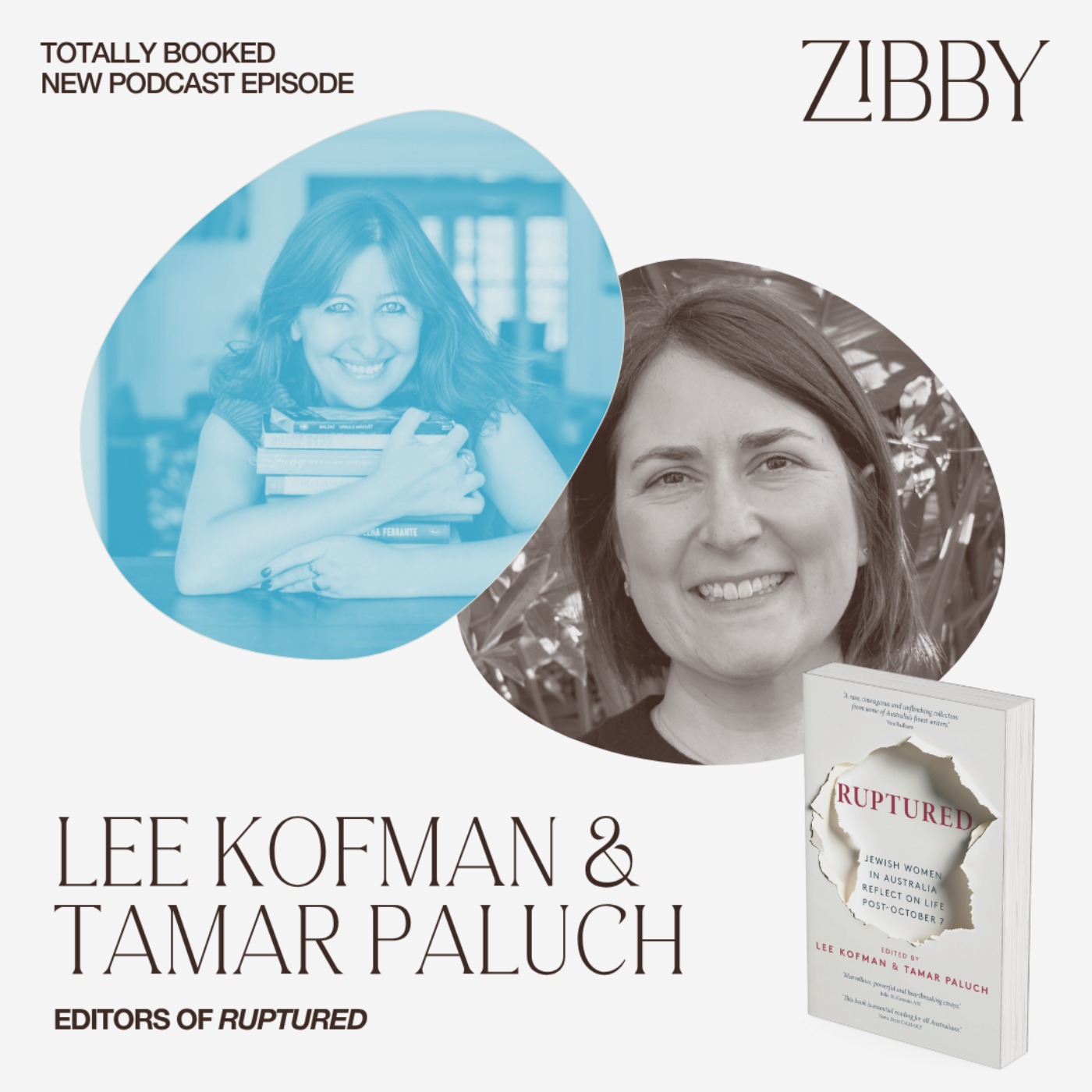
Totally Booked with Zibby
Lee Kofman and Tamar Paluch, RUPTURED: Jewish Women in Australia Reflect on Life Post-October 7
00:29:24
Loading summary
Transcript48 lines
- [00:00]
Zibby Owens
You know who's surprisingly good with money? Greenlight Kids. The other day mine stopped to think about the ROI on a bag of chips. Seriously. From getting paid for doing chores around the house to saving up for concerts, Greenlight's teaching my kids how to handle their money.
- [00:16]
Tamar Pollock
Greenlight your kids financial future with the number one family finance and safety app. Try Greenlight risk free@greenlight.com podcast.
- [00:26]
Zibby Owens
I'm here with an exciting update. After a five year hiatus, the beloved parenting podcast Longest, Shortest Time is back. And it's picking up right where it left off, sharing the most unexpected, heartfelt and downright fascinating stories about parenthood, reproductive health and beyond. Host Hilary Frank started the show in 2010 after a difficult childbirth and recovery, hoping to connect with parents and non parents alike. But what she created became so much more Conversations that are funny, poignant, sometimes edgy, and always fun. Full of surprises. In fact, Hilary was on my podcast as well. These stories are about life in all its messy, emotional and incredible forms. So don't miss out. Follow and listen to Longest, Shortest Time wherever you get your podcasts. Hi, this is Zibby Owens and you're listening to Totally Booked with Zibby, formerly Moms don't have Time to Read Books in my daily show, I interview today's latest best selling, buzziest or underrated authors and story creators whose work I think is worth your time. As a bookstore owner, publisher, author and obviously podcaster, I get a comprehensive look at everything that's coming out and spend my time curating the best books so you don't have to stay in the know, get insider insights and connect with guests like I do every single day. For more information, go to zibbymedia.com and follow me on Instagram. Ibbe Owens, Lee Kaufman and Tamara Pollack are the co editors of Ruptured Jewish Women in Australia Reflect on Life Post October 7th. Dr. Lee Kaufman is the Israeli Australian author of eight books in English and Hebrew, including Imperfect, which was shortlisted for a NIB Literary Award Split, which was long listed for Abia and the writing book the Writer Laid Bare. She has been teaching and mentoring writers for over 20 years. Tamar Pollock trained as an occupational therapist with a focus on disability rights and community development. October 7th drew her into women led activism together with her husband and two daughters. They have lived in Tel Aviv, New York City, Melbourne and now Los Angeles. She writes her way through life's twists and turns. Welcome so much Lee and Tamar. Thank you for coming on to talk about Ruptured I am so excited to Hear everything you have to say. The collection of essays was so powerful, and I can't count the number of times I sort of put my hand over my heart. So thank you for that dose of connection and reality and perspective. Why don't you tell listeners a little bit about it and we'll go from there?
- [03:11]
Lee Kaufman
Sure. What would you like to know, Xibi? Would you like us to talk about the content of the book or how it came about?
- [03:18]
Zibby Owens
Both, both. How did this collection come about? And tell me about the types of essays you were looking for, what you got, some of the themes, and I can tell you some of the things.
- [03:29]
Lee Kaufman
I saw, all of that fantastic. So I'll let Tamar tell the origin story, how it actually came about, and if that's all right with you, Tamar, and then I will check in and I'll talk about what we were looking for.
- [03:41]
Tamar Pollock
So I guess Raptured is started in response, like, well, before we had the book and the bones of the book, it really was a response to. To the events of October 7, specifically, the. Specifically ignited, I think, by that very primal response to the sexual crimes of October 7th that led us in Australia to do a series of events, rallies, vigils, over the months that followed. And it really, for me, our aptitude is like a culmination of that women's led activism. It was very grassroots, you know, really came from a very deep, painful place. And over time, what happened was in addition to that trigger within Australia, there was also a huge wave, obviously of antisemitism, but a lot of it online was. Was very female focused or gendered, I would say. And that had some very devastating local impacts in Australia. And all of a sudden we, a group of us who were organizing around the women's activism realized that actually local Jewish women were also feeling silenced, feeling like their voices were not strong enough, and looking for ways to really process and heal at a really difficult time internationally and locally. And that's where the anthology project came from. We decided to create a social media platform and then the anthology project emerged from that and we really reached out to women across the Jewish community and said, tell us how you're feeling. Our motto was right for your heart, right for the future. You know, a nod to the historical importance of documenting and the very Jewish act of, you know, committing word to paper in the pursuit of, you know, preserving memories and history, but also really giving people that opportunity to heal. And we received an amazing response. We had over 150 women submit their essays and that will form out of an Unpublished manuscript that's going to be archived in Israel and in Australia. But Raptured really is the curated version, the curated collection of essays that really evokes the heart of all that pain and all that action and all that resilience and all the hope and all the fear and everything. We condense that into Raptured and that is the book that Lee can show.
- [06:13]
Zibby Owens
Everyone the COVID Oh, it looks so good.
- [06:17]
Tamar Pollock
Yeah. So that's how. That's the origin story of Raptured. And we're really proud to. To have this as a chapter, a written chapter in Jewish Australian history and Jewish global history.
- [06:29]
Lee Kaufman
So the only thing I would like to add to this origin story is that it was actually all done by Tamar and two other wonderful activists. I came on board later and on a personal note, it could not have been a better timing to be asked to join the project. So I was not involved in the unpublished manuscript, but I came on board to do the book. It's a third ontology I've edited. And the time, you know, you know, probably about all this doxing scandal in Australia, zb.
- [06:59]
Zibby Owens
Yes. But you can tell because maybe some people listening don't know.
- [07:02]
Lee Kaufman
So it was an international scandal. I mean, there's so much to say, so I'll try to be very concise. But I was actually the founder of that notorious Z600 WhatsApp group in Australia. And we founded this group very soon after October 7th, like literally maybe three weeks later. Because then, you know, the. Our community was still sheltered, shocked. Now there's so much activism here and bold voices, people doing things. But at the time we were also shell shocked. And so we founded this group I, you know, for creatives and academics. Because in our fields, we in Australia, we experienced immediate silence after October 7th. This probably was in America, I expect as well. And then we began very quickly to be pushed out to the margins, all of us, unless we were the good Jews, the Jews who, you know, deny Israel's existence. So anyway, I had to do something, otherwise I would just for my own personal selfish reasons. Because if not to act for me was like just to go and get really depressed, seriously, because I lost all my literary tribe. I just didn't want to have them. I wasn't pushed out at the time, I just didn't want anything to do with them. So I created this WhatsApp group to support creatives, to support academics in all the anti Semitism we were experiencing. And then we were doxed by one of the members of the group who was An American journalist in New York Times, Natasha of Frost. That was all in newspapers everywhere.
- [08:31]
Zibby Owens
So for people listening who don't know what doxxed means, can you just explain that really quickly?
- [08:37]
Lee Kaufman
Yes, yes, of course. So our chat of our group was released. We felt somebody exported the chat of the group. 900 pages of three months. People talking, sharing very personal stories, exposed all our phone numbers, names, you know, and to very vicious group of very extreme, like really extreme anti Zionist, anti Israel activists who then disseminated it everywhere online. And so it was very surreal because, you know, I've been always on the left. I've been, I've always like, you know, I'm a two state solution supporter. I always. Yeah. And suddenly I kind of found myself online, my pictures with the caption of genocidal Zionist kind of thing. And so. So I lost a lot at that time during the doxing in terms of work, in terms of some relationships in illiteracy, not friendship thing. Thanks God, I don't believe in. But, but I felt very, very silenced because what happened with this doxxing? We were everywhere in the media, but the media wrote about us. They did not speak to us. We were described as what we were not as such as, you know, pro Israel lobbyists. My friends were asked if I was a Mossad agent. One of my friends said, no, she's not fit enough. But I felt very, very voiceless. That's sort of my modern being heartbroken over losing my literary tribe or even paid work. I was really, really devastated by the sense that I'm talked about. But I don't, I can't speak. And I think a lot of Jewish people in Australia have, especially in my creative academic circles, have shared that. And so when Tamar asked me to come on board with this ontology, it actually was a real gift psychologically for me. It was like creating the WhatsApp group. You know, it's like here's an opportunity again to try and somehow insert not just my voice, but our voices, like quite a few voices of women from our community, into those public conversations about us that are not really about us. There were some imaginary Jews in terms of what we were looking for essays. So the collection has sort of two types of contributors. Some selected works from those submissions, but also some Australian Jewish women with high public profile. We approached separately because we wanted their words. We wanted to reach to not just Jewish audiences and we really wanted to show to the world what we are about. Because, you know, everybody talks about Jews in Australia. Nobody knows Jews in Australia. We have A tiny, tiny minority there. It's not like in the US there's only 114,000 of Jews. So we just wanted. We strived for diversity. We wanted women from regional areas, from different types of sexuality, sexual orientation, Sephardi women, young, old. You know, our youngest contributor is 16 year old, our oldest in the 70s. And we wanted to get different stories of experiences of what it means to be Jewish. So that's why we didn't focus just on professional writers, but we actually went. We talked to sport, we asked sports person the goal.
- [11:54]
Zibby Owens
Loved that essay so much about your Australian Olympian and the story of her grandmother's necklace, who her grandmother was a Holocaust survivor. That was so moving. Oh, my gosh. That was one of my favorites, I think. Anyway, sorry to cut you off. Keep going.
- [12:09]
Lee Kaufman
Oh, no, no, no, no. I talked too much. I think the last thing I'll say is that we really. One of the briefs we gave to people we commission and one of the sort of briefs in our heads we worked with when we were editing essays was that we really wanted authenticity. We didn't want the essays to pretend that everything is fine now. If there was some positive resolution, that was great. But we didn't want to create this sort of fakely redemptive collection of essays at the time, with the war is still going on, the antisemitism is going on. So we didn't want to create a dark book or a light, a positive book. We wanted to create authentic, complex book with a range of stories and feelings. Emotionally diverse books as well.
- [12:52]
Zibby Owens
Wow. You know who's surprisingly good with money? Greenlight kids. The other day, mine stopped to think about the ROI on a bag of chips. Seriously. From getting paid for doing chores around the house to saving up for concerts, Greenlight's teaching my kids how to handle their money.
- [13:11]
Tamar Pollock
Greenlight your kids financial future with the number one family finance and safety app. Try Greenlight risk free@greenlight.com podcast.
- [13:24]
Zibby Owens
Well, I was struck by how many people obviously felt shocked and horrified, you know, as we all were by the events of October 7th. How many people had ties to the Holocaust and how triggering it was. You referenced already this propulsion compulsion, I guess, for us to record. And one essay really touched on the trauma of seeing images of the Holocaust too young and realizing how many were buried underground, as we all know as grownups, but that this is our way to record and hopefully prevent these things from happening. And yet here we are. And so I feel like there was almost this disappointment to the older generation that, like, we haven't been able to keep it up. Did you get that sense, too?
- [14:15]
Tamar Pollock
Yeah, absolutely. As the daughter of a surgeon, as we call it in Australia, I don't know if that's common to it in America. As the granddaughter of survivors on my dad's side and also on my partly on my mother's side, that was. I remember in those early days, I just would look at my dad and think about how he grew up in his home and the silence of the early years. And then how our grandparents started talking and telling us these things, stories and sharing what the number meant. And I just remember saying to him, I'm sorry. Like, I'm really sorry. I feel like you gave us the golden era and now it's over. And, like, there are lots of questions now. Is it over, or is this just going to be another cycle in Jewish history where we have this. This nadir, and then we come up again and, you know, all these conversations, really interesting, but this was so visceral for so many of us, so many people. You know, I just got a message from my friends overnight whose daughter was at. On a school excursion at one of the museums in Melbourne, and they were accosted by a group of other students yelling at them. Free Palestine. All that. And like our grandparents in Australia, we actually have the largest Holocaust survivor community outside of Israel because people wanted to get away as far as possible. And for each person who is experiencing antisemitism, who has those roots in their family, this is so deeply triggering. And I think that one of the most offensive aspects of what's been happening definitely in Australia with, like, the local activists who are very virulent, is this weaponization of our anxiety. You know, everyone speaks about us weaponizing anthemism, other people weaponizing antisemitism, but there's actually something really ugly that's happening, which is like dismissing and maligning, like, the truth of our experiences, which like many other groups, by the way, and for us, this is important. It isn't just about the Jewish story. It is the story of so many people who have suffered so much and had those migration patterns around the world, you know, to flee persecution. And for us, it's, you know, like, when it's dismissed in such a horrific way in the name of social justice, even more so. Right. It is just so painful. And I think that has been something very, very palpable in the essays Enraptured and broader collection. But, yeah, in the essays Enraptured, definitely that comes through in many places.
- [16:39]
Lee Kaufman
Can I just add to this? That's so true. This, Tamar, the weaponization of. I'm sorry to say that we're weaponizing the Holocaust. It's very. And we're weaponizing our pain. It's. It has become so fashionable. But, you know, the bodies that don't lie. And so, as one of our essays tried, and there is a research into it, which I looked at as well, the rate of mental and physical disorders among this very small Jewish community in Australia are skyrocketing at the moment. I mean, insurance insurers talk about it because it costs them a lot of money. People just ill, just really weird illnesses are erupting everywhere. So, you know, as I said, this is. This is. It's a deeply embodied intergenerational trauma. And one of the essays in our book wrote a line that really kind of, for me, was devastating. I remember when Edit and I read it again and again when editing, she wrote something like that. She's happy with. Your grandmother, who was a Holocaust survivor, is not alive today. And I mean to say something that this is very. I don't know, it says so much about our times.
- [17:49]
Zibby Owens
It's true. Oh, my gosh. Rachelle Unreich, who was actually a contributor to our anthology on Being Jewish now and contributed also to yours, and she, of course, wrote a whole book about her mother's experience in the Holocaust and all of that, but wrote in your essay in your collection about the fear. Right. And that in one of her events recently, someone, a man, got up, she couldn't see his face, and just because she was Jewish, she was talking about her book. Yes, but that wasn't about the current situation, obviously, or anything like that. It came out right after. And what if. What if he had had a weapon? What if he had turned on her? The security was lax at the event, as it is at most events. And. Well, I shouldn't say that, especially in the beginning, when people weren't prepared for the intrusions, and just how we don't know what's coming next. And I felt like that was such a perfect metaphor. Right. It's right there. But we can't see what they're up to, and all we feel is fear.
- [18:46]
Lee Kaufman
Well, I must say that I don't know what your experience was, Tamar, when you were still here, or what it's like now for you in la. But every time I go to teach these days, I am a writer, but also I make my living as a teacher of writing and mentor. And so every time I go to teach these days, for the last two years, I mean, since October 7th, I am really nervous. I look behind my shoulder, I look at the list of the names of my students. Nothing happened yet, but I had a couple of times when I had a very like I would sometimes, you know, people come to my classes, they might have some mental health problems or I have a couple of times a bit unstable looking students. And I, in the past, before October 7th, I would not have made much of it. I would, you know, I'm also a trained social worker. I worked in mental health. I'm normally not. I don't have an issue with mental illness. I'm used to it. I have it in my family as well. But since October 7th, I'm ashamed to admit this, but that's the reality. When I get people who seem a bit unstable. I think as you said, if you do, they have a weapon in their bag. As you know, did they come to my class because they know who I am because I'm a genocidal Zionist? According to, to the social media and every Jewish writer I've spoken to, including Rochelle, of course, all she wrote about it have had these experiences of being really terrified on stage somewhere.
- [20:14]
Tamar Pollock
I'll never actually forget that. And Lee, I was very lucky to know Lee through her online classes during COVID I think it was. I've, you know, been working on my writing for many years and I got to know Lee through her class and then sadly I got to know her through the doxing because I was involved in setting up some of the supports around the well being of the people who are dogs.
- [20:35]
Lee Kaufman
You're amazing.
- [20:37]
Tamar Pollock
No, no, that's. But what happened was I remember that you wrote in the group of people who would come together to help. You know, I remember that day you were going to the library and you were so worried, right? I mean, yeah. And you're so worried and we're trying to get you security guys and someone's like, I've got these two Georgian guys who can come. They're like really tough looking and you know, like it's, you know, it was so surreal and I think, you know, Deborah Conway writes about it also in her piece as well. Deborah Conway is like the queen of rock in Australia and she's had, you know, been treated horrendously because she is so proud of who she is and so outspoken and. And she also writes about this fear and actual physical, you know, actions that happened in her performances. I think it was just like it's everywhere. And the thing is, interestingly enough for Australians, security has been a reality. Since as far back as I can remember. I remember every year on the 19th of April, there would be ax marks in the fence of our school because of my own graffiti in honor of Hitler's birthday. Okay. So we always knew that it was something that was lurking. The far right in Australia has been very well documented for many years, unfortunately. So, you know, we've just kind of gotten used to it. For me, having spent a lot of time in the States, especially around the time of Pittsburgh, it was really interesting for me because it was like, all of a sudden, it was. It was a huge shock to Americans. And for me, I was like, oh, we grew up with this. Very aware of it. And so it's been really interesting crossing countries. I was in Australia for three years when October 7 happened. I was in America before that. I'm back in America now. Whatever. It's all. But I'm seeing kind of like how the different countries also are responding to it and kind of coming to terms with it. It's very interesting. But for us in Australia, security was always an issue. Now it's just.
- [22:28]
Lee Kaufman
It's.
- [22:29]
Tamar Pollock
It's from all sides and it's. You don't know where it's coming from. It's like almost like we knew where it was coming from once, and now it is. It's everywhere. It feels like it's everywhere. Let me say. But we have a very. Yeah, we have a big silent.
- [22:44]
Lee Kaufman
Can I just say which. Sorry to interrupt you, Tamar, that. But when I think Tamar and my mission was of this book, and tell me, Tamar, if I'm wrong, but our mission was with this book, not just to create a space for our community to express themselves, but really what we want to do with this book is to reach out outwardly. Because even our close friends who are non Jewish, like really close friends, they just don't understand the extent to how our lives change. I mean, these conversations we're having now, Zibi, about, you know, looking over your shoulder physically not being safe, they don't understand. They. They sort of very. They don't understand it for us, it's like every step of. Sometimes it's just every. Every day, all day, you kind of aware of how you. You're an alert. I mean, you know, my kids and. And Tamar wrote a beautiful essay for the book about what it's like to parent as a Jew now in post October Ward. And. And I really relate to this. I mean, my oldest son, who is autistic, so he's a bit emotionally young Even though he's 12, he keeps saying to me, mom, I don't want to be Jewish. I want to be Christian now. Because nobody likes Jews. And I mean, in this example, what you just gave Tamar before, about what happened here in the museum yesterday, there were even worse things, much worse things said there than Free Palestine. I know a few people, too, whose kids were there, people other kids were saying to Jewish kids, dirty Jews. I mean, this is exactly as you said, Tamar. It's reiteration of the Holocaust rhetoric. That's what we were said and told in the Holocaust as well. So my friends who love me dearly have absolutely no idea. And I. And I just thought. And I just think when this book is out and if you. This will be my greatest sort of joy to give it to my friends who. I mean, most of them will buy the book. But I really want. I feel like it. It will. It's going to be like, kind of very. In my life. In my life, at least. It will be a very significant test for my friendships to see what the responses will be, because this book is. Is. It's kind of like really opening the door and going, well, come and see what it's like to be Jewish in Australia right now as a new collection. Zibi, you know, I'm echoing the title of your collection.
- [25:02]
Zibby Owens
Yeah, no, no. I mean, we are all just trying to wrap our heads around it. And even if we know there have been like, yes, of course we were shocked and surprised. Intellectually, we know that things have been. That it's been under there the whole time. But to see it in all its terrible glory, so to speak, is really just, you know, leaving us all questioning what is the best thing. I wonder if you could share something. Like, let's say you were giving a talk in front of lots of other Jewish people from around the world. And, like, what would you say to them? Would you feel encouraging? Should we all. What can we do? What should we say? What's next?
- [25:49]
Lee Kaufman
Well, for me, my message would be very simple and I'm so sorry. I know it's kind of borders on cliche and repeats what I said before, but I think the most important thing at the moment for Jewish people all around the world is not to stay silent, is not to feel this will pass. Because I know that a lot of Jewish people, especially if they have a high profile, if they're not visibly Jewish, if they have a surname that is not very Jewish, a lot of them went into hiding and it's like they just waiting for things to pass because they worry about losing, you know, fans or following or whatever it is of work and look, and it's very, very legitimate fear. And I really, really understand them. And I don't judge. But I also think if you're not. There's so few of us in the world. Every voice matters at the moment. And that's partly for me, why I was so eager to join the project and do the ontology. We need to speak up, not necessarily in an angry manner, but just to humanize ourselves because we are so dehumanized everywhere at the moment. I mean, I've never seen. To be honest. I mean, again, I've come from a social work background. I've worked with minorities for, you know, for a long time. I just never seen any minority which has been dehumanized on account of a country they're affiliated with, even if they're loosely affiliated. And I. So. So the what? That's the last thing I'll send and I'll hand to. To Tamar. And it's really. I mean, there's a lot of arguments about is antisemitism a form of racism? And my take on it is that. That it is a form of racism, but it's not just racism because we not only discriminated on account of being of our ethnicity and religion, but also we held responsible for perceived actions or real actions of country as no other minority.
- [27:49]
Zibby Owens
Is very true. How about you, Tamar?
- [27:53]
Tamar Pollock
I'd add that I think that. I think I've been listening to this podcast, and I really love Khabib Ratnikur says that we're the strongest generation of Jews that ever existed, basically, in terms of, like, where we're at. And I feel like we should take hope from our Jewish history, which does show periods of challenge, but also how people rise up. And I think that the book, that our contributors really show in different ways how they have connected with themselves and with others and with community to do that very act of resistance, really. And I think that the book in itself, the writing of the book, is also an act of resistance in that sense as well. It draws on the biggest strengths of the Jewish people. And so for me, I feel like that's one of the things that I want. I want others to say that, but I want us as Jews to also be reminded of that. And we were just speaking with someone the other day, Lee and I, who actually spoke to that, having read the book. She said, I really just felt pointing connection. I was like, oh, like, I identify and I Can I feel validated that I was having those thoughts? And I feel like I'm taking strength from these other essayist who is going into her kitchen to bake khawa because that's what her mother did and her grandmother did. And, like, so it really kind of gives people that opportunity to feel connected both within our community and also show others the strength that have carried through generations and that we've really, you know, like, you know, I spoke about my grandparents earlier and I think about their acts of resistance or just getting up in the morning and creating the safety in Melbourne where we grew up. And, you know, so I feel like that is something that I would want as a, as, you know, as complementary to what Lee is saying. Like, there's a full suite of things that we can all be doing. And I hope that that's what people takeaway.
- [29:53]
Zibby Owens
Well, thank you so much to the two of you for putting Ruptured out into the world and for all that you are doing and for talking to me today and everything. So congratulations on the book and thanks for doing such important work.
- [30:05]
Tamar Pollock
Thank you.
- [30:05]
Lee Kaufman
Thank you so much, zb, for helping us.
- [30:08]
Tamar Pollock
We really, you know, we look across the oceans and say that you're doing incredible work as well. And so from Australia, I know that a lot of people really took a lot of strength when I'm being Jewish now came out. It was also a lot of pride having an Australian in there, Rochelle. But I know that it was really, people were like, yes, we need this. This is what we need now. We need to hear these stories. We need to write these stories. And yeah, so.
- [30:33]
Lee Kaufman
And in fact, every few days, somebody would come to me and say, do you know about Zibi Owens?
- [30:41]
Zibby Owens
Oh, okay. All right, well, hopefully we'll reconnect in person one of these days.
- [30:47]
Tamar Pollock
Wonderful. Great.
- [30:48]
Lee Kaufman
All right, thank you so much.
- [30:50]
Tamar Pollock
Bye bye.
- [30:52]
Zibby Owens
Thank you for listening to Totally Booked with Zibi, formerly Moms don't have time to read books. If you loved the show, tell a friend, leave a review. Follow me on Instagram, ibbeowens and Spread the Word. Thanks so much. Oh, and buy the books. There's a time and a place for a filet of fish, but breakfast is for sausage biscuits.
- [31:24]
Lee Kaufman
McDonald's breakfast comes first.
- [31:28]
Zibby Owens
Did you know that parents rank financial literacy as the number one most difficult life skill to teach? Meet Greenlight, the debit card and money app for families. With Greenlight, you can set up chores automate allowance and keep an eye on your kids spending. With real time notifications, kids learn to earn save and spend wisely. And parents can rest easy knowing their kids are learning about money with guardrail. Sign up for Greenlight today@Greenlight.com podcast.
- [31:58]
Lee Kaufman
Acast powers the world's best podcasts. Here's a show that we recommend.
- [32:06]
Zibby Owens
Hi, I'm Debbie Millman, and I host a podcast called Design Matters from the TED Audio Collective. Every episode, I have conversations with designers, writers, artists, and other luminaries of contemporary thought. People like Roman Mars, AI Weiwei, Ethan Hawke, and Ashley Ford. We not only talk about their crafts, but how they design the arc of their lives, what they've learned, what obstacles they've overcome, and how they've done it, and how they see the world. Join us for an inquiry into the broader world of creative culture. Find and follow Design Matters with Debbie Millman wherever you're listening to this.
- [32:50]
Lee Kaufman
Acast helps creators launch, grow, and monetize their podcasts everywhere. Acast.com.