← Totally Booked with Zibby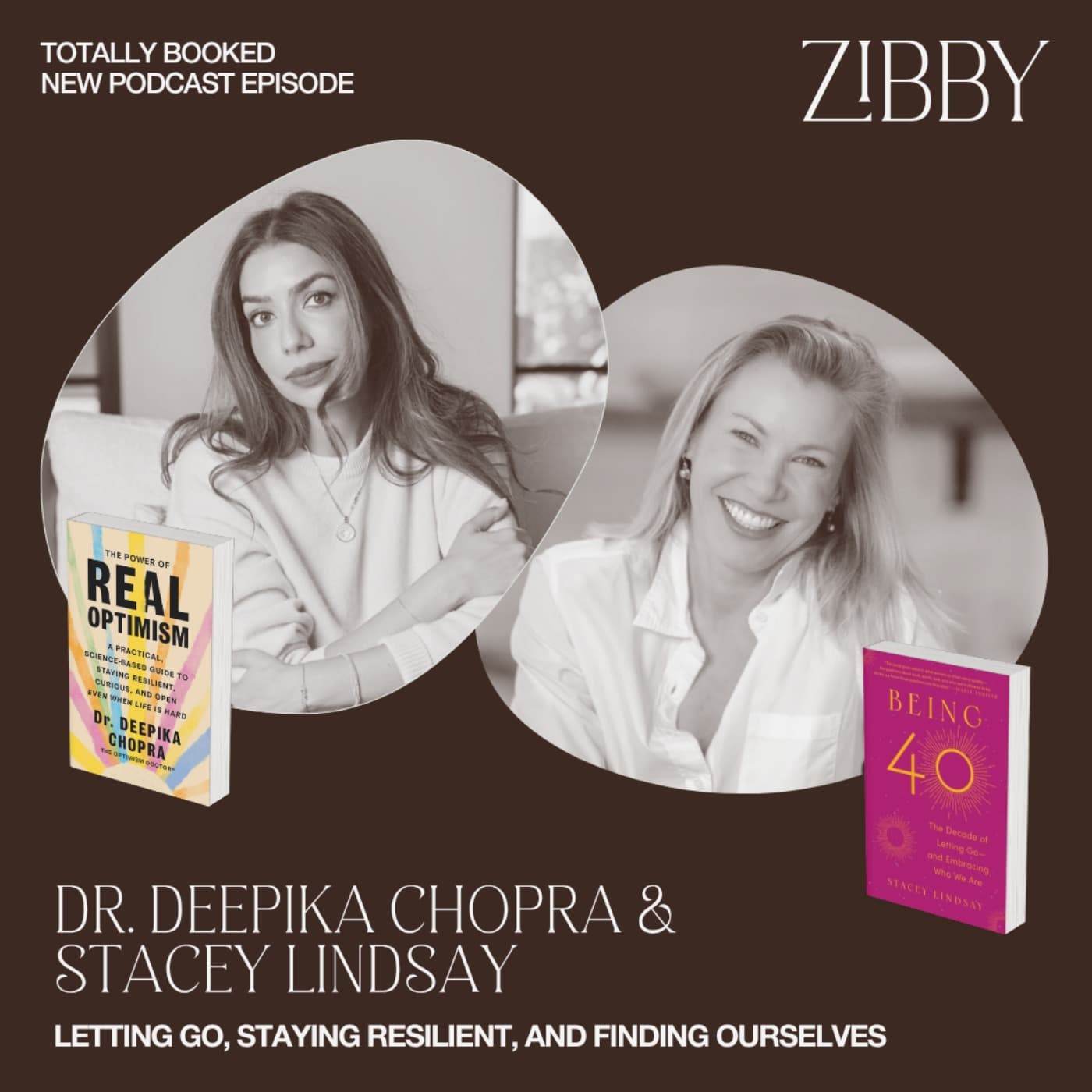
Totally Booked with Zibby
Letting Go, Staying Resilient, and Finding Ourselves with Dr. Deepika Chopra and Stacey Lindsay
00:50:23
Loading summary
Transcript131 lines
- [00:00]
Capital One Advertiser
With no fees or minimums on checking accounts, it's no wonder the Capital One bank guy is so passionate about banking with Capital One. If he were here, he wouldn't just tell you about no fees or minimums. He'd also talk about how most Capital One cafes are open seven days a week to assist with your banking needs. Yep, even on weekends, it's pretty much all he talks about in a good way. What's in your wallet? Terms apply. See capitalone.com bank capital1na member FDIC
- [00:31]
Zibby Owens
a
- [00:31]
Stacy Lindsay
better help ad hold on one second, I just need to.
- [00:42]
Zibby Owens
What if you had a room where no one interrupts? No notifications, no expectations, just space to talk with BetterHelp Therapy happens in a space that's yours. Visit betterhelp.com randompodcast for 10% off your first month of online therapy. Today's episode is sponsored by Nutrafol. Do you know that feeling when you're brushing your hair and somehow it just looks a little thinner than usual, maybe a little less full? And you're like, what is going on here? Well, Nutrafol supports hair health from within, helping you grow stronger, visibly thicker hair so that those moments happen less often where you're worried about your hair. Nutrafol is the number one dermatologist recommended hair growth supplement brand and it's the number one hair growth supplement brand personally used by dermatologists and by the way, personally by me. This is the brand that I trust. Adding Nutrafol to your daily routine is easy. Order online, no prescription needed, with automated deliveries and free shipping to keep you on track. Plus, with a Nutrafol subscription, you can save up to 20% and get added perks to support your hair health journey. So let your hair be one less thing to worry about. See Visibly thicker, Stronger, Faster Growing Hair in three to six months with Nutrafol For a limited time, Nutrafol is offering our listeners $10 off your first month subscription and free shipping when you visit nutrafol.com and enter promo code Zibby Z I B-B Y that's nutrafol.com spelled N U T R A F O L.com promo code Zibby. Enjoy. Hi, this is Zibbee Owens and you're listening to Totally Booked with Zibby. Formerly Moms don't have Time to Read Books. In my daily show, I interview today's latest, best selling, buzziest or underrated authors and story creators whose work I think is worth your time. As a bookstore owner, publisher, author and obviously podcaster, I get a comprehensive look at everything that's coming out and spend my time curating the best books so you don't have to stay in the know. Get insider insights and connect with guests like I do every single day. For more information, go to zibbymedia.com and follow me on Instagram Ibbeowens Today we have amazing women who are here to help you live a better life in all different ways. First up, we have Stacy Lindsay, the Author of Being 40 the Decade of Letting Go and Embracing who We Are. Stacy is a multimedia journalist, editor and writer specializing in women's issues and culture. Recognized for her empathic approach, Lindsay has interviewed hundreds of public figures and civilians for national outlets from Maria Shriver's Sunday paper to goop. Previously she was a CBS affiliate news anchor and reporter. She lives in the Pacific Northwest with her husband and their rescue pup, he, Andy McCowell. Next up we have Deepika Chopra, who I interviewed in person at Zivi's Bookshop, which was really fun. Her book is the Power of Real A Practical Science Based Guide to Staying Resilient, Curious, and Open Even when life is hard. Dr. Chopra, who also goes by the Optimism Doctor, is a professional psychologist, visual imagery expert, and founder of Things Are Looking Up, a consultancy devoted to the intersection of science and soul. Dr. Chopra holds a doctorate in clinical health psychology and completed a double postdoc fellowship at both UCLA and Cedars Sinai. She completed her formal dissertation on optimism and positive sensory visualization and the connection to optimal well being. She is a recurring guest on Today and her work has been featured in Forbes, Harper's Bazaar, Vogue, Goop, Variety E and more. She has led workshops for companies like Google, Amazon, and Amex, and has delivered keynotes at events including the Aspen Ideas Festival and the Atlantics In Pursuit of Happiness. She lives in Los Angeles with her husband and three children. Welcome Stacy, thanks so much for coming on Totally Booked to talk about being 40, the decade of Letting Go and Embracing who We Are. Congratulations.
- [04:57]
Dr. Deepika Chopra
Oh Zibby, thank you.
- [04:59]
Stacy Lindsay
That means so much coming from you. Thanks for having me.
- [05:01]
Zibby Owens
I am just getting in under the wire for your book because I'm turning 50 this summer. So I'm like, well, this book is for me for a couple months.
- [05:11]
Stacy Lindsay
The fun thing about it though on this journey so far is it is the conversations it's been sparking with people not in their 40s. So I've had a lot of conversations with younger women, people out of their 40s on the other end who are really excited to reflect and kind of take some of the Learnings and. And then also too with Men, which has been really fun. So it's kind of a spidery book in that sense where I'm hoping it. I mean, any book, right? It extends beyond the book. But it's fun to hear you say that.
- [05:37]
Zibby Owens
The more specific you are, like, it can always get bigger. But when you're specific, then people know, oh, okay. Like, this is totally for me. I know this is for. But I could still get something out of it. So anyway, I think it's awesome. I was really just joking I would read this in five years because I find it super interesting. Okay. Why do you find this age super interesting and what inspired you to write this book?
- [06:01]
Stacy Lindsay
You just nailed on it because it was that specificity that I was craving. And I didn't know I was craving it, but I was more and more interested. And this was. I've been in my 40s now for many years. Well, I'm 44, so. So I've been in this decade for a bit now, still figuring everything out in real time, as we all are. But it's interesting, Zibby. I think in my late 30s, I started obviously noticing changes in my body and changes in my mindset and just kind of this yearning to let go of stories, get closer to myself. This was intersecting with. I started becoming really interested in writing about the sort of pro aging landscape. People who were doing incredible things in their 50s, 60s, 70s, 80s. So that became kind of a beat that I took on unexpectedly. And then along the way, there's this amazing conversation going on about midlife that I was in my late 30s and of course, 40 entering. And it's fantastic and it's inspiring. Something wasn't totally landing for me completely. And that's when I realized I wanted to talk about the 40s, specifically, kind of this early start to, quote, unquote, midlife. And I say, quote, unquote, midlife because we never really know when we're definitely in midlife.
- [07:13]
Zibby Owens
Right.
- [07:13]
Stacy Lindsay
It's kind of a privilege to think of it that way, but I was craving that specificity. And when I really started thinking about it too, and this was once I entered my 40s, I thought things are feeling different. I thought things would have looked different when I entered my 40s. For better, for worse. I thought things were going to feel different. For better, for worse. I want to talk about this more. And I started asking other women too. How are you feeling about this age? What's going on? And they say the floodgates opened. You know, women just wanted to talk about it. And again, there was like that forties was so specific. And the other thing, Zibby too, is I find society always has something to say about this age. There's still this stigma around it, even though we're in this beautiful, pro aging, more inclusive, expansive landscape. But still, if you identify as a woman and oh, wow, you're 40, you look great or so and so on, getting married at 46 or whatever, there's always something that society wants to say. So I was like, let's look at this. This is actually a really incredible age.
- [08:12]
Zibby Owens
So there's so many things my grandmother, by the way, said nobody ever told her she looked great until she was in her 90s. And then all of a sudden she looked great. Everybody's, oh, my gosh, don't you look great.
- [08:24]
Stacy Lindsay
That's so cool.
- [08:26]
Zibby Owens
There's always, there's always expectations around aging. You never get rid of it. And I love how you have a whole section on, you know, the, the. The notion of aging gracefully and why do we have to age gracefully? Anyway, who says, like, what is that
- [08:40]
Stacy Lindsay
about my shirt feel? I sweat when I hear that because I think, okay, it sounds nice in theory. What does that mean? What does that mean?
- [08:49]
Zibby Owens
And it goes along.
- [08:50]
Stacy Lindsay
You know, you say the word expectations and it's so true. And we know there's these expectations, but sometimes I don't think we realize how they arrest us day to day in small ways. And that's what was really fun when I started writing this book. And again, it's specific to the 40s, but it really can, I hope, speak to a woman of any age. When we just start looking at all these expectations, all these false binaries and false timelines and all these shoulds put on us. And for myself, I started realizing I don't want to let this mandate my life anymore. Not that so much of it was mandating my life. I felt that I had agency, but I wanted to really interrogate some of these expectations and some of these stories and really start to work on letting them go.
- [09:35]
Zibby Owens
Do you feel like you have so much extra pressure on you now for the rest of your 40s, now that you wrote a book at age 44? Like, you better crush it by 49 or else.
- [09:46]
Stacy Lindsay
I love this. This is so fun. I promise I am trying it to myself. Like, I feel like I owe it to myself and I owe it to women who are younger than me too, to prove, like, this is a really exciting time. This is the time to get closer to yourself. But I was so careful, too, in writing it, to be so honest, just with the stuff that I have faced and continue to face. And also the way I end the book, too. This is not a. I've arrived. I have it all figured out. I'm going to be, you know, sitting up on this ivy tower and telling you everything I've learned. I've learned a lot. And I am still actively figuring this out. And I'm guessing maybe you are, too, right?
- [10:23]
Zibby Owens
Yeah. Literally, last night I was like, what am I doing with my life? Like, where do we. How do we know when to pivot? Like, maybe this chapter is ending. I don't know.
- [10:32]
Dr. Deepika Chopra
You just.
- [10:33]
Stacy Lindsay
So it. It's so fun hearing that from you, too, because I look at you and I look at everything you're doing. I have such reverence, such so much awe. And at the same time, you still have these questions, right? You're still actively figuring things out week to week, month to month. So I think that's the fun part of the conversation.
- [10:51]
Zibby Owens
Don't you think? If things are set in stone, it would just be so boring.
- [10:55]
Stacy Lindsay
It would be boring.
- [10:57]
Zibby Owens
I mean, I don't think I could handle that. I like to know that at any moment, things could change in a good way. Not like the rug being out from under my feet, too. Because that's opportunity and growth, right?
- [11:07]
Stacy Lindsay
Yeah, it is. And it can be scary, but that's. Yeah, that's when you learn. That's when you stretch. That's when you get closer to who you are.
- [11:15]
Dr. Deepika Chopra
Yeah.
- [11:16]
Zibby Owens
So in the book, you write about not only you and your expectations of 40, whether you should be married or, like, how you got together with your husband and all of that, but you take us back to your own childhood and to this very interesting, powerful scene where your mom ends up leaving your family and how that felt and how she was trying to advocate for her own needs. And, like, ironically, here you are advocating for your own needs in a really different way at this time. Can you talk a little bit about that and that time in your life?
- [11:45]
Dr. Deepika Chopra
Yeah.
- [11:45]
Stacy Lindsay
And that was such a defining moment for me because it was my mother, and she made a drastic decision. She happened to be in her late 40s, and she left. And it wasn't this. She did something wrong, she did something right. It's not easily defined, but she made a drastic decision to move closer to her truth. So in many ways, her story was a cautionary tale to me because she kept things from herself for a long time. She was trying to check, and she was checking all the boxes Doing all the right things, being an incredibly giving, loving mother, loving spouse, all the things. And she was quietly sort of atrophying inside her spirit. And so she did. She did something, and it caused pain. It caused hurt. It was very hard. And at the same time, I look at it, and I have immense respect and compassion for her now, and it's taken years, really, to fully get there. But when I look back on her, I see a woman who is really. Who was and still is, but who was declaring herself. And so that was such a pivotal moment for me, because even though I didn't really know it, I was still so young at the time. I was a teenager. But I saw. I could feel what these expectations do. I could feel that weight and the volume of the unlived life in my mother and the unlived life in my father, too. And that has really, really informed a lot of the decisions that I've made in my life. And again, I use that word, messy, because it wasn't neat. It wasn't easy. Things were hurt. People were hurt. It was messy. But also, I mean, it was a massive decision that actually led her down a different path. And I talk about it later in the book, too, and she discovered so much more of herself. So, yeah, it's a lot. It's a big one.
- [13:33]
Zibby Owens
We don't have to go there. But I'm just wondering, like, when your mom leaves, like, what does the next week look like? Like, how did you come to terms with that and. And how did you not sort of take it personally in a way?
- [13:47]
Stacy Lindsay
Oh, I did, I did, I did. And it's. It's been fun in this journey talking about the book, too, because that is something people are curious about and want to talk about more. And I think there's so much more to that story that I don't want to. I'm thinking I'll expound on that definitely in the future. It was. It was hard. I mean, I was, you know, again, a teenager, so I had. At the time I had a boyfriend, I had work, I had school, all of these things. My brain wasn't totally formed, so I was just in survival, in fun mode, I think, and getting through school. But the pain started kind of setting in a little bit, like month after month, even year after year. But also with that pain came the growth. But the week and the weeks and months after that were devastating. They were absolutely devastating. They truly were. And she called and she tried to explain, you know, and I talked to her, and it was this long period of Coming back together, I guess the two of us and our relationship now is actually really gorgeous. It actually stuns me how gorgeous it is. It's different, but it went through a period of absolute pain. Absolutely.
- [14:50]
Dr. Deepika Chopra
I'm sorry.
- [14:52]
Stacy Lindsay
Yeah.
- [14:52]
Zibby Owens
Well, it's so great that you shared it in the story because I feel like it gives us context and how you. Your point of view on this age period might be slightly different. Maybe you look at it even more closely because you try to figure out, like, how. How can you avoid having to totally change your life or getting to that point of desperation not to, like, psychoanalyze or whatever, but how could you not want to examine it?
- [15:17]
Stacy Lindsay
And that's such a beautiful point too, because it is in the examining that we come up against so many hard feelings. But that's what we need to do. And that's. I don't think women allow themselves to do it enough because we're thinking of everybody else. We're thinking about her. I don't have children. But we're thinking about our children, we're thinking about our partner, we're thinking about our friends. And if we're not even thinking about all those things, we're thinking about society. We're thinking about the culture and the expectations first. What is this going to look like? Who am I going to disappoint? Who am I going to inconvenience? We're so worried about that. But then again, when we do do that examining, it's just. We can't deny it. We can't deny the magnitude and all the life that's in us too. And it's beautiful. I think now in our culture, we are starting to talk about this. I think we always have been. I mean, again, every human contains multitudes, but women are extra fiery, extra. We're just incredible everything that's going on inside of us. But I think we're starting now to talk about there is so much more life inside of us and we're not going to let again these expectations in society hold us back. We're just not. And we're seeing this, you know, in so many different stories. We're seeing beautiful authors write about this. We're seeing this in movies and all of it. But I think more and more and more, and I feel it tells women of our age to listen to yourself, to know, don't. To don't feel silly or less than, or like something. Something is wrong with you if you do have this burning fire inside. And I also think it's a beautiful message for younger women. Too, to really listen to yourself, to listen to your gut deeply. And if you want more or you want something different or you want to change or you want to stay, that's okay. You know, life is long, and we have so much time to do all these things.
- [17:05]
Zibby Owens
I'm going to knock wood on that. Knock wood on so much time. You talk to so many authors. As we were joking about earlier, so many of the authors in the book have been guests on this podcast over the years. But what did you learn from all of the authors and experts who you talked to for the book? There's so many of them.
- [17:23]
Stacy Lindsay
I had this conversation with Tara Moore, whose work has really propelled me for over a decade. I just have so much reverence for her. And for anyone who's listening, who doesn't know Tara Moore, she's wrote this book, Playing Big, that I believe came out 12 or 13 years ago. And again, it's so much what we're talking about right now, Zibby.
- [17:39]
Zibby Owens
Right.
- [17:39]
Stacy Lindsay
Like declaring yourself and how you talk about yourself and hold yourself in the world and what you go after. And Tara and I were talking about beauty. We were talking because you can't really have a conversation, too, as a woman, about growing older without beauty coming up organically in some way, how you feel about yourself, how you think the world is judging you, all these things. And Tara said. She said, you know, and I'm going to paraphrase this, I don't remember the exact quote, but she was saying, when we are talking about beauty and growing older, we're really talking about this feeling of vitality in this feeling of aliveness inside of us. And that unlocked something for me. I get emotional talking about this, because beauty is something every single one of us is worthy of. Beauty is not something that should be performative. We're told it should be, though, by the beauty industry. And after the age of 40, into our 40s and 50s and 60s, we feel like we have to perform more. We feel like we have to stop things from changing. We have to stop, you know, the crinkles around our eyes. We have to fix things. Things. And I'm not against any of those things. I'm against a woman doing something that she wants to do as long as it makes her feel beautiful. And so it really reframed this idea when Tara said that about, beauty is a feeling. Beauty is feeling alive, Beauty is feeling sexy. Beauty is feeling embodied. And I can't buy my way into that. I have to really own that and believe that for myself. And it really shifted Things for me. And as I was writing the book, too, that informed a lot of the things around. How do I want to feel in this life in my 40s? And I'm not to say that I don't go out the door half the time and still, you know, feel insecure, or some days you feel better than others, or depending on what your body's going through, you're like, oh, I feel bloated. I feel gross. But I did realize I'm worthy of feeling beautiful. I don't have to feel like just because my face is changing or some company's telling me I need to fix something, that something. Nothing is wrong with me. Nothing is wrong with me. And so that informed a lot of my thinking. And then the whole beauty chapter in general was really interesting because I started looking at.
- [19:48]
Zibby Owens
But you actually are beautiful. Like, thank you. No, seriously. I mean, and that's another thing, as we all age to contend with. It's like, were you so beautiful as a kid that as you get older, it's a disappointment? Are you coming into your own now? Are you getting more and more beautiful as you age? Like, and how is it all completely out of our control anyway? And does it matter?
- [20:14]
Stacy Lindsay
Yeah. Yeah. But it's just the fact that what kills me, too, and this has been going on for ages and ages and ages, and I don't see it changing. But the fact that women's currency, so much of it is how we look, and that can be. There can be power in that. But again, if we don't let it completely define our lives, too. And it's easy for some of us to say that rather than to do. But I know as a woman that I have beat myself up day after day after day for decades over feeling like I have to step outside the door and look a certain way and be perfect. And if something is shifting, then shoot, I'm in trouble. I did something wrong. And I'm actively working on not feeling that way. And it's hard.
- [20:57]
Zibby Owens
And I think I would happily have been a thin, blonde woman. But that was not my. That was not my. No, I'm just.
- [21:05]
Stacy Lindsay
It's like.
- [21:05]
Zibby Owens
But who made.
- [21:06]
Stacy Lindsay
But who made that up, though, too?
- [21:07]
Zibby Owens
You know what I mean? I know.
- [21:09]
Stacy Lindsay
I know it's so hard, but I.
- [21:11]
Zibby Owens
I know what you're saying. I know. I know. We're just, like, playing. It's funny. But of course, aging just puts a microscope on everything that we might have been feeling all along the way.
- [21:20]
Stacy Lindsay
It does, it does. It really, really does.
- [21:23]
Zibby Owens
When you set out to write the book because obviously you have so many interviews. You must have had to consolidate and sort through. And as you mentioned, the architecture of the book, how did you think through how to go about doing it? And was it easy for you? Was it hard for you? Did it take a long time? Are you pleased with how it turned out?
- [21:43]
Stacy Lindsay
Yeah, it was incredibly hard for me. Incredibly hard. And I wish we talked about that more with each other too. Because I wonder, is this easy, this being. Does everybody just sit at their desk? I picture a Diane Keaton character, right, sitting at her desk. She's in the Hamptons and the words are just flowing out of her. That's not how it was for me. I don't know how you feel about how writing is for you, Zibby. I would love a behind.
- [22:11]
Zibby Owens
It's not, not a Diane Keaton moment. I don't think. I don't even think that's real. That like never happens.
- [22:17]
Stacy Lindsay
I know, I know. But there can be this idea kind of stuck in our head at least you just sit down and, you know, you get 2,000 words flow out of you. It was. The process was hard and I think it was extra hard too. Because I have ghostwritten. I have written for my career. I've been a journalist and I've written for. In various forms and ways. And I've written in the back of literally news vans, right, like on the way to having to go file a story. And. And then when I sat down to work on this book that I felt so passionate about when I wrote the Proposal. But when I sat down, I was consumed by self doubt. I was kept looking over my shoulder thinking, did they, did the publisher make a mistake on me? And I think part of that was as a journalist, I was not hiding behind other people's stories, but I was telling other people's stories. I have been my whole career. And so when I started weaving in my stories a little bit in my writing here and there, I got a little bit, a little looser around the idea of using the eye, right, and sharing more of my story. But when it came time to write this book, it scared the hell out of me to share more about myself. So that process was really hard. And it really is. You know, you think about the Anne Lamont Bird by Bird. That really is the insight and the advice that helps too. Just touching it, showing up every day. And I broke through that self doubt. And what helped me break through is I thought, you know, I have a lot of things I'm still learning in real time. As I said, it's not that I have everything figured out by any means, but I also have a lot of wisdom and I've learned a lot of kind of truths the hard way. And I know if I have, I know there's gotta be at least one other woman that has. And I'm thinking probably more than one other woman. And that's what motivated me to keep going through the really, really hard days, which is thinking this is not any, by any means, some macro. Look at your 40s. This is one small contribution to this, you know, this conversation you and I are having. All the conversations you have with incredible women, they're all contributions. And I just thought, if this is just one, this is one small contribution that I hope helps some woman feel a little closer to herself and a little less alone. And then as I continued writing it too, just that architecture of it, as I was having conversations with women, I mentioned earlier that beauty. It's hard to have a conversation around growing older and being in your 40s and 50s and 60s without beauty coming up. And I found, found that for the other subjects too, having and not having children, partnership work. Then of course in our 40s talking about perimenopause, these things just organically started coming up in these interviews and conversations. So that kind of helped me frame the book.
- [24:57]
Zibby Owens
Amazing. Well, Stacy, this was great. I know it's going to help a lot of women. Today's episode is sponsored by Whatnot. Okay, so Whatnot is a live shopping platform where you can get items across all different divisions from beauty, apparel, bags and more. But what I have found is it is the perfect place to get kids birthday gifts. There are neatos. For those of you who don't know, Neatos are these little plastic toys which are all the craze people go neato hunting anyway. They have needles and squishies and everything you can imagine for better prices than competitors. There are great deals and it is so fun to shop in this dynamic interactive platform. My steals included a jellycat heart for $5.38 and jelly cat toasty marshmallows for $9.89, not to mention a neato for $6.26. I'm not surprised that Whatnot is the largest live shopping marketplace in the country because it's a trusted shopping experience in a real time format. And There are over 10,000 fashion, beauty and bag sellers all over. And you almost never pay full price, which of course is amazing. So let me tell you, I had the best time with my kids going on whatnot and then there were things for me too, but it was more fun for them in my opinion. So download the Whatnot app today and get free shipping on your first order. Just search Whatnot wh a t n o t whatnot in the App Store and start scoring amazing deals. Today's episode is sponsored by Quints. As you guys know, I am obsessed with quints. I've been talking about them for a while because I love the quality of the clothes, the fit, the price, really everything about it. My two latest finds, which I'm sure you'll see me wearing on Instagram, are this adorable white dress. It goes to the ankle basically and has a tank top on top and I also got a jean jacket from Quint and I plan on wearing them together all summer long and I'm just super excited about it. Quince has always been my go to but now the fabrics just feel elevated. The fits are so flattering. Everything just works and I don't have to overthink it. Quince uses premium materials like 100% European linen, organic cotton and ultra soft denim. Maybe that's why I like it all so much. Their lightweight linen pants and dresses and tops start at $30 and are effortless, breathable and easy to wear on repeat. Everything at quints is priced 50 to 80% less than similar brands. It's amazing. They work directly with ethical factories and cut out the middlemen. So you're paying for quality and craftsmanship, not brand markup. Refresh your everyday with luxury you'll actually use. Head to quince.com zivi for free shipping on your order and 365 day returns. Now available in Canada too. That's Q U I n c e.com civvie for free shipping and 365 day returns. Gwens.com zibby Today's episode is sponsored by Wayfair. After the fire in the Palisades, we had to redo our entire outside area and we found the best stuff on Wayfair. We found adorable throw pillows that looked fabulous. We found one round carpet, one square carpet. We found coffee tables and all sorts of things that made our outside feel like home again. Wayfair is amazing because it has everything you could possibly need and it's so easy to find. Wayfair made it so simple for us to narrow it down to what we wanted for our style and budget. It also features reviews, filters and visual tools that help us find the right fit. Every style, every outdoor space, whether your vibe is modern, coastal, farmhouse or eclectic. Wayfair has the options you need to help you create an outdoor space that's uniquely yours. And everything is in one place from outdoor seating and grills to storage, patio, lighting and rugs and decor, which is what we got. Wayfair is your one stop shop for Home Plus. You can trust in the delivery, installation and assembly services are available for a truly seamless experience. It was so easy for us to order and receive all of our Items. Plus over 20 million verified 5 star reviews helped me make the right call. Real customers, real feedback and real homes. You can also shop with Wayfair Verified. Your shortcut to the good stuff. Their team of product specialists vets everything by hand using a 10 point quality inspection. So you know you're getting a quality piece no matter your budget. Get prepped for patio season for way less. Head to Wayfair.com right now to shop all things home. That's W A Y F A I R.com Wayfair Every style. Every Home.
- [29:49]
Dr. Deepika Chopra
Wayfair Every Style Every home.
- [29:52]
Zibby Owens
Welcome Dr. Chopra. It is lovely to meet you. First things first, let's clear up that you, Dr. Deepika Chopra, have no relation to anybody else.
- [30:03]
Dr. Deepika Chopra
To anyone else with the similar. Same last name and similar name. It is a different human. In fact, I am a woman, not a man.
- [30:12]
Zibby Owens
Do you know Deepak Chopra?
- [30:13]
Dr. Deepika Chopra
Have you ever. I don't know him personally. I've met him before, like over the time, but I don't know, like know him really personally. But there's been a lot of confusion in the last few weeks.
- [30:23]
Zibby Owens
Well, maybe that works in your favor.
- [30:25]
Dr. Deepika Chopra
Not.
- [30:25]
Zibby Owens
No.
- [30:26]
Stacy Lindsay
Okay.
- [30:26]
Dr. Deepika Chopra
Not really these days. Not these days.
- [30:29]
Zibby Owens
Gotcha. Okay. I have not been up on my.
- [30:32]
Dr. Deepika Chopra
Okay, I'll.
- [30:33]
Zibby Owens
I'll have to look into that afterwards. Okay. The Power of Real A practical Science Based guide to Staying resilient, curious and open even when life is hard. It's your butt. Congratulations.
- [30:44]
Dr. Deepika Chopra
Thank you. I was telling you this is so special to be here because this is this. I hate saying this was my neighborhood. We did recently move, but like this still feels like my neighborhood. And this was my neighborhood bookstore.
- [30:57]
Zibby Owens
It's amazing.
- [30:58]
Dr. Deepika Chopra
Yeah. My kids, all of us. I mean, this is my street.
- [31:02]
Zibby Owens
Oh, my gosh. Well, we're glad to have you back.
- [31:04]
Dr. Deepika Chopra
I visualized this.
- [31:06]
Zibby Owens
You made it happen.
- [31:06]
Dr. Deepika Chopra
I mean, I just like.
- [31:08]
Zibby Owens
You used all your tools in here.
- [31:09]
Dr. Deepika Chopra
I did. I just would see it when I'd come in here. I'm like, oh my gosh. I think, wait, is my book gonna be here? Is it gonna be in here? Yeah, you've created such a special place.
- [31:20]
Zibby Owens
Thank you.
- [31:20]
Dr. Deepika Chopra
Oh, don't stop. I won't. I won't be able to. I will not.
- [31:24]
Zibby Owens
Okay. Your book, from the outside looks like. Okay, I'm gonna get advice that I need to live a better life. But once you start reading and as you sprinkle throughout the entire thing, it is also about you and your family and your own personal struggles and the things you've gone through with your son, but even before your son was born, and your own body. And there's so much in here, it's almost. It's a lot of memoir mix. Memoir mixed with self help.
- [31:50]
Dr. Deepika Chopra
Yeah, it is. It's like really full of science, which is my specialty, science and optimism and hope theory. But it has a lot of personal memoir and client stories and it's a little bit of everything. And I think it just is a reflection of my work life is very embedded with my personal life and how I show up as a behavioral scientist and someone that studies optimism and works within it. I show up as like a human and my own experience. I always say to people I'm known as the optimism doctor, but I am not the most optimistic person by far.
- [32:30]
Zibby Owens
Well, you also challenge what we consider optimism.
- [32:34]
Dr. Deepika Chopra
Why don't you talk about that? Yeah. So, you know, most people in the world think about optimism as sort of like a twin of positivity. I think most people think that they go hand in hand. And an optimist is someone who is just positive all the time, sees silver linings immediately, wears rose colored glasses and drinks from cups that are always half full and just only sees sort of the bliss and the positive. And I've heard every stereotype about an optimist under the sun since I've been working and really focusing on this for like 15 years. And I think one of my favorites that people have always said over time that I think I used to say myself, is I'm not an optimist. I'm a realist. And what was surprising to me in the research and coming from it, from, you know, more of a behavioral science point of view, an optimist is so grounded in reality. And what we have, like, thought of as optimism is actually very different than what the science and the literature says. And the way that I define a real optimist is someone who is really grounded in reality and someone who is deeply and mindfully aware of the roadblocks and the setbacks and the less than ideal situations that, spoiler alert, we all face. None of us are immune to struggle, but the Caveat is they see these setbacks as something that is temporary and something that they have the ability to overcome, even if they don't know how or when. But it's really based in personal, historical resiliency. So all the tough days, they've already overcome. And then there's this piece of curiosity. So I really. I am out. Optimism, or. The two words that come to mind for me that are more closely related to optimism than positivity are resiliency and curiosity. So on one hand, it's really deeply knowing that whatever it is that you're going through, the good thing or the bad thing is temporary. We know that that's one of the pillars. But it's being curious about. I wonder how this will change. You don't have to have the sort of certainty that it's going to be better. That would be great. And sometimes we are there. But even just the curiosity of, like, huh, I wonder how this will change that, like, I call it sort of neutral. Plus, that sort of state of curiosity is optimism. Talk a little bit about.
- [35:02]
Zibby Owens
And if you don't mind your personal issues in the book, not issues, but your son.
- [35:07]
Dr. Deepika Chopra
There are some issues.
- [35:08]
Zibby Owens
No. Okay, fine. If you go into your autoimmune, there
- [35:11]
Dr. Deepika Chopra
are so many issues. Yeah.
- [35:13]
Zibby Owens
First of all, wait, can we talk about how sick you were during your pregnancy? Oh, my God, that sounded so horrific, I could not even believe it. I was feeling nauseous, even. No, it's not even throwing up, like, 30 times a day every day for the whole time.
- [35:27]
Dr. Deepika Chopra
I know. And so I'm living to tell about it. I had something called hyperemesis gravidarum, which I feel like not. It's. It's rare.
- [35:35]
Zibby Owens
Ish.
- [35:35]
Dr. Deepika Chopra
Not as rare as it should be, but not a lot of people know about it. And actually, interestingly enough, a couple weeks ago, I was sitting as an audience member to this, like, really powerful women's health panel on funding, you know, more research in women's health. And one of the women on the panel was or is the doctor. She herself had hyperemesis gravidarum. She is a researcher and a doctor out of usc. But she found the gene of, like, why this happens. Wow. And so there's hope. There's hope. There's definitely hope. And it was just like, it was something I didn't know that much about because I think people just think morning sickness. You know, this was not morning sickness. This was like every chronic illness. Chronic illness, every hour of the day sickness. I sort of joke with my son now. Kind of joke, but not joke. We, you know, we live in the city that I was pregnant in. And so at literally every corner or restaurant or street or highway, I'm like, I threw up there. And he's actually listening to the book right now. He's reading it and listening to the audio. And I started. He's eight, my eldest. And it starts with, you know, that. That story. And he's just like, mom. And I was like, yeah, but you were with. Yeah, so he's kind of known about that. It's one of. One of the three big reasons why I couldn't carry again, actually. So we had to go through alternate. Alternate means to bring about our next two children into the world. But I had some, believe it or not, more serious stuff even after that in this pregnancy. It was just a very trying time. And. And, you know, I think it was. It was really hard. I can joke about it now and be like, oh, 405. Threw up there. Like, this restaurant was easier to down the food. All that stuff. I can joke about it, but it was a really dark time for me. And, like, what? I. I never heard of anyone else, really. Truly. I had one friend that. That had gone through it, and I. But most people, and especially people that were around me and pregnant at the same time, I just. And what you see on social media, and this was now, you know, a number of years ago, but I just saw people, like, in bliss while being pregnant, and you feel this sense of, like, shame that your body's not truly doing what it should do with ease. And then at the same time, this, like, guilt that you don't want to complain because you are pregnant. And I was. My baby. I was having a baby. And that should be a very happy moment. And as much as I was happy about it, I couldn't really find a shred of joy during it.
- [38:14]
Zibby Owens
And that was your pregnancy with Jack.
- [38:16]
Dr. Deepika Chopra
Yep.
- [38:17]
Zibby Owens
And then you had Dio.
- [38:19]
Dr. Deepika Chopra
Then we had Dio. And that we actually. It was a really tough experience and decision. I know it sounds like it wouldn't be, but it really was. And I'm also really grateful to modern science and lots of other. And people, altruistic people who would ever think of carrying a child for someone else. But we had. We went through the surrogacy journey for him because I had a more serious issue at the end of my pregnancy with Jag, too. That was a complication and an emergency C section. It was all the things, but that, you know, when Dio came into this world, it was Covid and we were like, heavy right in the pandemic, so we were really like, closed in. But it was actually a time of a lot of joy. And I learned, you know, letting go of control over that was really scary. And it also was really beautiful because everybody around me, including my husband, could be a part of sort of Dio's initial few months with jag. I was like, just, I think psychologically after going through what I went through, I was so protective over him. Like, I didn't even pump with jag. Like, it was just fully just me. I didn't let anyone feed him. Like, obviously I was going through a lot and you're Miss Buttoned Shirt at the conference. Yes, exactly. But with Dio, it was like I struggled a lot with not carrying him emotionally and what that meant. And, you know, was I going to be connected? And I had a lot of guilt since I had carried the first. But it was also beautiful that, like, my mom, my mother in law, my husband, like, everybody could help sustain Dio, feed him and bond with him. And, you know, there was a part of it that felt like I didn't feel as special, which is kind of a silly feeling, but. And really went through like, I can't believe my body can't do what it's supposed to do. There was a lot of, like, that shame around that, but also there was like a lot of sweetness and joy and like, even JAG could feed him. Like, it just was like a let go of a bit. And Dio got to have a different experience. Experience.
- [40:28]
Zibby Owens
But then Cordillo with it sounds like there was some sort of mass or some sort of.
- [40:34]
Dr. Deepika Chopra
Yeah, so that came later. That came later. He was about two and a half. And the cruel irony was it was in the right smack dab while I was writing this book on optimism. And we got dealt a horrible out of nowhere, literally. He was like playing one day with his brother, you know, wrestling around and playing with trucks and asking for snacks and watching cars like Lightning McQueen, having dance parties. Like, all these things that he loved that are mundane for us. And then all of a sudden our lives shifted into something totally different and really leveled us and was shattering. We got a medical diagnosis that was just as they said, chalk to bad luck. It was two out of a million kids, not a lot of information. Three doctors, I think, that really knew what it was. And we were lucky that one happened to be in la, although we would have flown anywhere. And we were now faced with this really uphill, long battle of a year and a half. Learning terminology I never thought I would have to learn. Spending most of our year and a half at chla, at Children's Hospital, going through treatment, and it was harrowing and awful and really the darkest period of my life, my family's life. I feel like we put ourselves on hold for a long time. We were paralyzed and really in a dark, very hopeless state. And I just could not fathom how I was going to continue writing a book on optimism. And I didn't for a while. Like, I had to put it aside. It just didn't. I. There was nothing. There was nothing. But I remember this one moment a couple months in, and I was, like, reading something that I wrote in the book. I was kind of coming back to it. And, you know, when you are writing something, physically writing it out, whether it's pen or typing it out, your brain can't unsee it. You know, it's processed it. And so in some ways, it kind of went from cruel irony. Like, I can't believe I am this expert in optimism and writing about this. And then in the most hopeless state to. Maybe it's what saved me, like, divine intervention. Because as I was writing and getting myself back into writing, my brain was having to process and use the tools and the research and the stories of clients before and the things I would say to a client, like I was now kind of thing to myself and actually utilizing them in real time. And so the full circle moment is kind of. I understand that the book and all the language and the notions and the science in it, really, like, the tools work from a scientific point of view and from a behavioral scientist point of view. But now I know, like, I walked along with it in a really human point of view. And this part is, like, key. I had to use these tools in real time, in imperfect conditions. And it is what kept me going and kept me engaged. And I just remember this one moment with it where I shifted from. You know, for a long time, I was ruminating over just, like, why is this happening to us? Why is this happening to my two and a half year old who's just an innocent child, who's a good person? Like, we are good people, you know, that struggle of just, like, I sat in that for so long, and it caused a lot of rage of just like, why? What do you mean? Chalk to bad luck. And, you know, you search within yourself. You make yourself crazy searching, like, what did we do? What did we expose him to? What was he eating? What was he drinking? What was around us, like, you know, trying to Find any semblance of understanding of how this could have happened and something so severe and life threatening could happen and just walk away with if there are no answers is a really tough place to be in as a human. But as a mom, that uncertainty, because that then sort of means that we don't know how to prevent it further. You know, if I don't know where it came from, then what can I do? And so I remember being really stuck and ruminating in the worst part of this with why us? And then as I was writing, I just had this like opening where I kind of just shifted to why not us, why anyone, why anyone's child and why not us? And even though that still really sucks and it didn't change anything and it was still very sad, I think it lessened some of the anger. And when I was able to lessen some of the anger, I think I was able to sort of be in a place more of agency and I was able to kind of just look at was such a big shift for me. But just like, what is my next step? Like, this is now our reality. What's my next step? And so I could focus on, instead of ruminating on, like, why us and why did this happen? And researching, trying to find every move we made for two and a half years, which was not placing me in any forward motion to like, okay, I need to pack these four things in the hospital bag. And Dio really likes this snack. So, like before this, you know, treatment, packing him this lunchbox or making sure I pick up the medication or like calling insurance, like just keeping myself in forward motion and just what is my next step?
- [46:09]
Zibby Owens
And is he, how is he now?
- [46:11]
Dr. Deepika Chopra
He's doing really well right now.
- [46:13]
Zibby Owens
Okay.
- [46:14]
Dr. Deepika Chopra
That's what I say. And I really mean it because I've learned the whole thing. I wish I didn't have to learn it this way. But what I can say is I don't know what the future is going to hold. He is happy and healthy. He's a five year old now. He loves baseball, he goes to school. He's an amazing, resilient, brave kid that you really wouldn't tell. I mean, you couldn't tell what he went through except for I see them in the moment and he has a really big Scarlet, which is like a bravery badge, I think. And it lives within us, obviously. But what I will say is that I don't know what the future holds and none of us do. But in particular for him because there is no data. Like, there's nothing with this that we can say, which makes this part really upsetting and hard. Like, after a certain amount of time, if nothing's happened, then, like, the chances are a lot low. There's none of that. We just don't know anything. It's like really being in the middle of the ocean in dark, unchartered waters. But what I really, truly believe now, and I've said these words before, but I, like, feel so rooted in them now, and I know it, is that whatever does come, and if something comes again, and it very well will, might, you know, it could be something different, or it could be something related to this, and it might level us again and break me. It may. But I know whatever it is, like, we can get through it. Because I truly understand now on, like, a gut level that, like, my family and I can get through hard things. And that is. I wish I learned it a different way, but I really. There's something about that. And it's so interesting because that is real optimism. And I don't think I quite got it on that, like, human, personal level like before in any way, like, remotely similar.
- [48:09]
Zibby Owens
I'm so sorry that you've had to go through all this.
- [48:11]
Dr. Deepika Chopra
Yeah.
- [48:12]
Zibby Owens
I'm glad you've taken what you've gone through. I mean, I know you talk in the book about a sense of purpose and how purpose is so critical to optimism and finding joy and all of that, and I feel like you have taken your experience even though you were already doing it. It's just compounded that sense of purpose.
- [48:28]
Dr. Deepika Chopra
It really has. And I think there was a strong sense of purpose. And I'm sure parents can relate to this. But the interesting thing that I think crept up and surprised me and I wrote about it in the book, in the prologue, is that when we first got this diagnosis and had this uphill battle, one of the very first things I did when I was able to sort of not be numb and paralyzed, like, one of the first things that I did was I made a calendar, and we had weekly treatments, and I literally marked every treatment. So I saw the end, and that was really important. It was really far off. There were many treatments because it was weekly, and we had to do some things daily. And it was for, like, a year and a half. But I, in my mind and on a calendar, I had an end date. I wasn't looking past what was going to happen after that, but every time I could cross one off, I felt, like, excitement. And the weird part that I didn't prepare for was as we got closer to the end. And I saw like two left. You know, like, it was really like, we were almost there. My anxiety and my fear and my mental health really took a big hit. And it was so surprising to me because I said, shouldn't I feel relief and happiness? Like, we're almost done with this chunk. This the hardest part. But what I realized was, as much as I hated Tuesdays, those were our treatment days. And I hated the treatment. I hated it so much. I think there was a big sense, or I know there was a big sense of like, control and agency and we were taking action and doing something, whatever it was, even if I don't know exactly what it was doing. We were doing what we were supposed to be doing. We were being good patient advocates and bringing our kid in for treatment. We were on a path, we were being seen by doctors. And there was some sense of, this is what I know I can do and I have to do, and I'm doing it. And then as the calendar looked blank for the time when we were going to have the surgery to remove his port and no more treatment, just obviously checkups, I think it was just so scary because it started to plague my mind with so much uncertainty. Like, what do you mean? We're, we're alone in this? And like, how will I know? And am I going to be constantly looking for a reoccurrence? And it just, what are we going to be doing to like, fight against this? And I think that sense of purpose really came because I looked at my son and at that point he was 4, and I was like, I, I don't want to project all of this onto him as he comes out of this. And he still has this life to live as a four year old, like his parents, just deeply rooted in uncertainty and anxiety of when the next other shoe is going to drop. I don't want to project that on him. And it became a really strong sense of purpose for me to do some real work in living in complete and utter uncertainty and make sure that I was taking care of myself within that so that I then could not project all of that onto him.
- [51:44]
Zibby Owens
Well, you take us through so many tips and tricks and readers of the
- [51:47]
Dr. Deepika Chopra
book will find them.
- [51:48]
Zibby Owens
They're even like charts and, you know, whole things that you can do that I was like, I'm gonna copy and make a little printout of these tactics for my kids. You know, all of that because they're super useful. But you also say in one poet, and you get this from a movie that was like, not the Best. But that you were so funny to. You're like, okay, the movie was fine. Okay, this is how it was ranked in Rotten potato.
- [52:10]
Dr. Deepika Chopra
Okay.
- [52:10]
Zibby Owens
Tomatoes. Sorry, Rotten potatoes.
- [52:12]
Dr. Deepika Chopra
I like that.
- [52:13]
Zibby Owens
Rotten tomatoes.
- [52:15]
Dr. Deepika Chopra
But that.
- [52:16]
Zibby Owens
There was a quote in it that said something like, the end. You know, we don't get to plan the end.
- [52:20]
Dr. Deepika Chopra
Right. And it was so interesting because I also. That was so interesting to me too, because I truly believe that when you are. When you're regulated. So our brains do not. Do not prioritize growth. Actually, our brains prioritize safety. So when you are in a moment of regulation or you feel safe and regulated, your brain can kind of like, open itself up to growth and change and being receptive. And so I think I had a moment or a collection of moments where I did feel safe. And I think I was open. Like, I was. It was when I felt that sense of purpose and I was searching and I was like, really? I was really committed to, like, I want to do some work around this uncertainty, because my purpose is that I don't want to project this onto my child. I was really receptive and open. And you will be shocked and odd at to where, like, you get what it is that you need to receive when you're open. And for me, it was this movie. And again, I think, because I sort of pride myself in. I'm a big moviegoer and, like, storytelling
- [53:29]
Zibby Owens
reference to other ones later, too. And I was like, this girl, she is into the. I need, like, a playlist of her movies.
- [53:35]
Dr. Deepika Chopra
Oh, my. And I'm. Music's a big thing to me. I actually, like. I have a playlist of what was playing when I wrote this. And it's my playlist.
- [53:43]
Zibby Owens
90s.
- [53:44]
Dr. Deepika Chopra
Yeah. Very into the 90s. I never left, but it was so interesting to me. I was just sitting here watching this movie that just got, like, recommended to me on, like, Netflix or whatever. I think it was Netflix, and I don't know that I would have chosen it or not. And I think I was alone because my husband was traveling. And so it's just like watching this kind of fairly. I didn't call it silly because it actually had a deep, profound impact on me. But silly ish movie. And I just was at the. I was ripe and open for receiving something. And the funny thing is, so Kathy Bates is the actress in it, along with Nicole Kidman and great actors. Great actors. So there's that for the movie. But she says something to her that I take and has literally changed the way because I was just open and I was already working on some of the tools, and I was ready to receive it. But the funniest thing is what I heard in my head. And I had been telling myself what I got from that movie. When I started researching for the book, I obviously needed to get the words right. And I went back and it was not the same.
- [54:46]
Zibby Owens
You were like, google tells me this is not what I remember.
- [54:49]
Dr. Deepika Chopra
Yeah. But, like, what I took from it, and it was so. Yeah, it just. Sometimes you are open to receive and you take. You get this aha Moment. And for me, one of my biggest purposes of writing this book is to be, hopefully that aha moment in those times you need it. And I really wrote the book as a companion to the joyful seasons and the really, really tough and uncertain and heavy ones, too, so that you. You keep going back to it, and hopefully you also are unlocked and open and, like, there is this aha moment that, like, seeps in and it's what you need in that moment.
- [55:24]
Zibby Owens
Amazing. Well, if you can get through all this stuff and we hear your story and all of your grit, and I know you say there's no choice, and we would all do the same.
- [55:34]
Dr. Deepika Chopra
Yeah.
- [55:35]
Zibby Owens
But still. And maintain the sense of optimism and redefine it and everything, then the rest of us are just, you know, such huge beneficiaries of that. So thank you for the inspiration, both in the words and the tools, but also just in the way that you lived and set forward. This made a beautiful example through a really horrible time.
- [55:55]
Dr. Deepika Chopra
Thank you so much. And I think it's important because none of us are immune to struggle. And especially right now, there's just such a collective sense of uncertainty and grief and. And just confusion and heaviness. And for me, what's most important is helping to equip people with tools that they can still be in forward motion and not, like, close their eyes to what's happening or be numb to whatever it is that's going on in life. And we are so bombarded right now with exposure to every. Every struggle that is happening everywhere all at once. And our brains and nervous systems were not obviously built to experience the stimulation and exposure that way. But, you know, there's also tools in the book on how to boundary that, because I think it's important to not have the option of just like, well, I'm going to turn it all off. And ignorance is bliss. You know, this book is for deeply feeling humans that love their lives and love the lives of many other people, and they care and they want to know what's going on and they still want to be deeply feeling humans. But we can't carry it all the way we've been carrying without the proper tools.
- [57:10]
Zibby Owens
Yep, this is like the best designer tote bag ever. Thank you so much for coming on.
- [57:16]
Dr. Deepika Chopra
Thank you. Thank you for having me.
- [57:19]
Zibby Owens
Thank you for listening to Totally Booked with Zibby formerly Moms don't have Time to read Books. If you loved the show, tell a friend, leave a review, follow me on Instagram ippiowens and spread the word. Thanks so much. Oh, and buy the books.
- [57:40]
Capital One Advertiser
With no fees or minimums on checking accounts, it's no wonder the Capital One bank guy is so passionate about banking with Capital One. If he were here, he wouldn't just tell you about no fees or minimums. He'd also talk about about how most Capital One cafes are open seven days a week to assist with your banking needs. Yep, even on weekends it's pretty much all he talks about in a good way. What's in your wallet? Terms apply. See capitalone.com bank capital1na member FDIC
- [58:11]
Stacy Lindsay
does your day move faster than you can keep up with new Gatorade Lower sugar My family and I can stay at the top of our game. No artificial flavors, sweeteners or colors. 75% less sugar and all the electrolytes of regular Gatorade now available nationwide at vrbo, we understand that even the best of plans sometimes need a little support, so we plan for the plot twists. Every booking is automatically backed by our VRBO Care Guarantee, giving you confidence from the very start. Whenever you need help, it's ready before your stay, through the moments in between, and after your trip. Because a great trip starts with peace of mind and maybe a good playlist. But we've got the peace of mind part covered.