Loading summary
Transcript106 lines
- [00:00]
Lily Analick
Ready to order? Yes. We're earning unlimited 3% cash back on dining and entertainment with a Capital One Saver Card. So let's just get one of everything.
- [00:08]
Capital One Announcer
Everything.
- [00:09]
Capital One Chef Voice
Fire everything. The Capital One Saver card is at table 27, and they're earning unlimited 3% cash back.
- [00:15]
Lily Analick
Yes, chef. This is so nice.
- [00:18]
Capital One Chef Voice
Had a feeling you'd want 3% cash back on dessert.
- [00:20]
Lily Analick
Ooh, tiramisu.
- [00:22]
Capital One Chef Voice
Earn unlimited 3% cash back on dining and entertainment with the Capital One Saver Card. Capital One, what's in your wallet?
- [00:28]
Capital One Announcer
Terms apply. See capital1.com for details. Did I talk too much?
- [00:31]
Lily Analick
Can't I just let it go?
- [00:32]
Capital One Announcer
I wish I would stop thinking so much.
- [00:39]
BetterHelp Announcer
Take a breath.
- [00:40]
Lily Analick
You're not alone. Let's talk about what's going on.
- [00:44]
BetterHelp Announcer
Counseling helps you sort through the noise with qualified professionals, and online therapy makes it convenient. See if it's for you. Visit betterhelp.com randompodcast for 10% off your first month of online therapy. And let life feel better this holiday. Give the gift that says, let's cancel plans and just lounge. Meundies has dropped their new holiday collection, and it's made for maximum cozy. We're talking soft as snow, ultra modal fabric, festive prints, and loungewear so comfy your couch might get jealous. Onesies, hoodies, joggers, even delightfully quirky holiday designs. You're welcome. Knock out all your holiday gifting needs with deals up to 60% off at Meundies.com acast enter promo code acast that's Meundies.com acast code acast.
- [01:42]
Zibby Owens
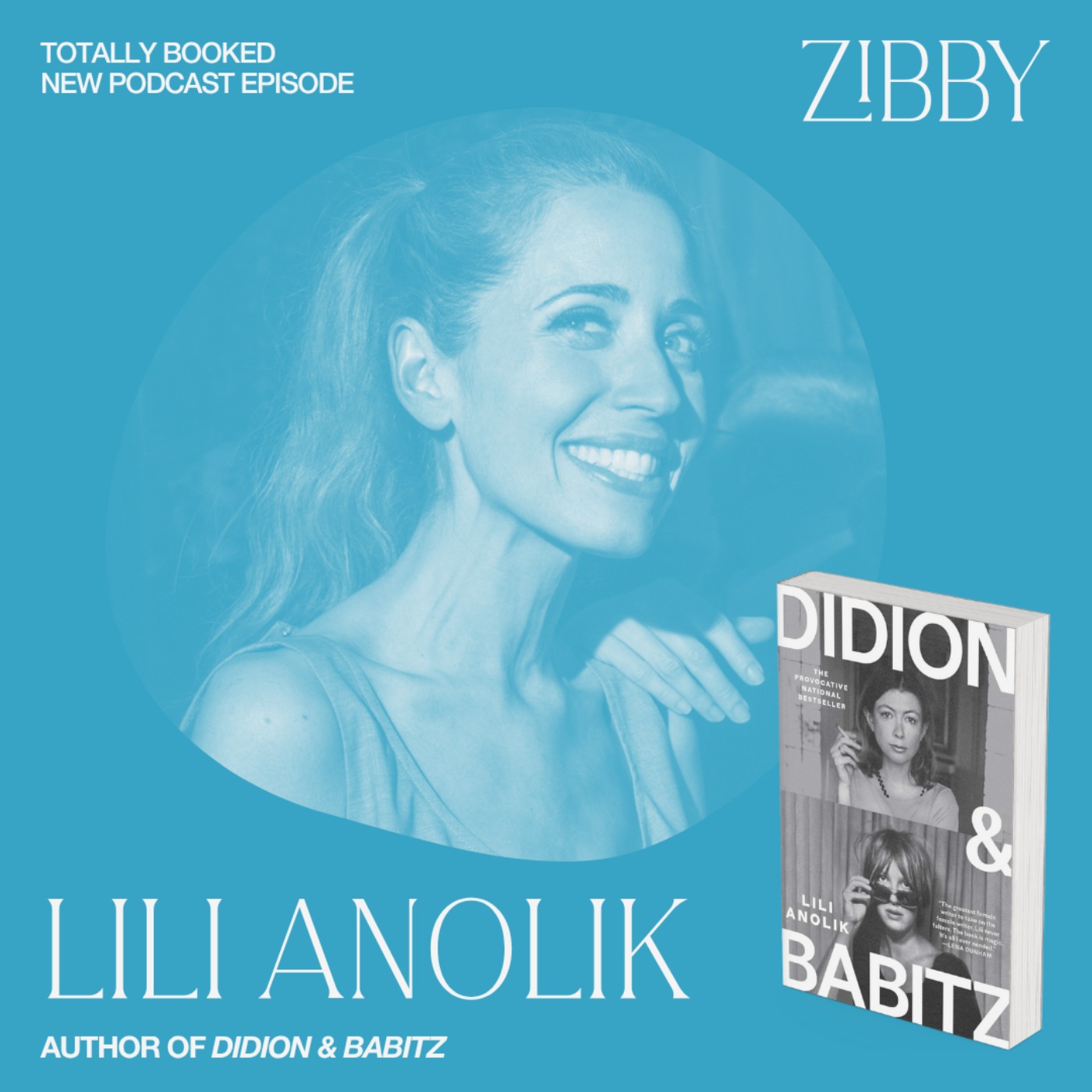
Welcome to Totally Booked live at the Whitby Hotel. I'm so excited to be in front of a room of amazing people who came out to listen. And I will be interviewing Lily, Analick, Didion, and Babbitts. We have a lot to discuss.
- [01:56]
Lily Analick
Us. Oh, I'm excited.
- [01:59]
Zibby Owens
Thank you so much for being here. All right, so welcome. Why, Lily, did you become so obsessed with Eve Babitz? You wrote about it in the book, and I loved that. But what was it about her that got you hooked right away?
- [02:12]
Lily Analick
Well, I guess some of it's the Magellan spirit. Like, you feel like you've discovered somebody, you know? So I had been. I was unpublished. It's, like, 2010. I was on the subway feeling bad about myself, and I was reading this. Does anybody here know Joe Esterhaus? He did, like, the screenplays for, like, Showgirls and Basic Instincts. Kind of great, sleazy movies. And he had this period where he was writing Memoirs. They were also sleazy, and I loved them. And he wrote this one called Hollywood Animal. And he'd begin each chapter with a quote, and there was one from a woman named Eve Babbitts. And it was about LA and sex. And I just was knocked out by it. And I remember Googling her. And she was a writer, totally out of print, And I just started reading her books, and I just. I was thrilled by her. Right. So I started stalking her. I knew she had been, like, the one bit of personal information kind of out there on her, other than that. In, like, 1963, I think she'd posed naked with Marcel Duchamp playing chess. That was out there. But then I knew.
- [03:14]
Zibby Owens
Pictures in the book.
- [03:15]
Lily Analick
Yeah, yeah, no, and she had, like, a great sex resume. I didn't know how great, but it was like, wait, what is this sex resume?
- [03:22]
Zibby Owens
Is everyone supposed to have one? Who here has a. No, no, no, it's fine.
- [03:27]
Lily Analick
Don't brag.
- [03:28]
Zibby Owens
I don't want to know.
- [03:29]
Lily Analick
I don't want to know. You know, it was like, I knew, like, on her sex resume was like, Jim Morrison and Harrison Ford. I knew it was a killer sex resume, and that was nothing compared to what I'd find out. It was a much longer and more impressive sex resume than even I had guessed. Ed Ruscha. What else is on it all? Like the Key Eagles, you know, like Don Henley, Glenn Frey, Annie Leibowitz, very young Steve Martin. Anyway, she was great.
- [03:55]
Zibby Owens
There should be a novel about what happens if all the people on your sex resume, if it all comes out. Yeah.
- [04:01]
Lily Analick
Oh, no, no, no.
- [04:02]
Zibby Owens
Right. Like, what would happen then? Maybe people wouldn't want that.
- [04:05]
Lily Analick
Okay, sorry. Keep going. Yes. No, no, I'll keep going. At any rate, the thing I knew is that she'd been very social, and I knew that in the late 90s, she'd been in a fire. Like, she'd set herself on fire accidentally. So, you know, she had no online presence, all the books were out of print. She kind of never really hit when she was actually writing in the. Mostly in the 70s and 80s. But I had a brother. I have one brother, and he was at USC for business school, and I couldn't find her anywhere. But he was living in Hollywood or West Hollywood, and he had a phone book. You know, they still had phone books in, like, 2010. And there she was. She was in the phone book. So I just walked and I started delivering letters to her. She ignored me. I just chased her for years. You know, I chased her for years, and then Vanity Fair. I was doing a little better two years later, and Vanity Fair kind of accepted a pitch to write on her. So then I really started stalking her. And then finally one of her old boyfriends called me and said, eve said, you can take her to lunch. And I flew to LA the next morning. And that's sort of how it started, but it was years, you know, and.
- [05:05]
Zibby Owens
At the end of the book, you understand when you first meet her, why she was so resistant to meeting you, and it wasn't exactly what you thought.
- [05:14]
Lily Analick
Yeah, because, I mean, she was this very kind of glamorous figure in her books and in kind of people's recounting of her. And then we met at this place at the Farmer's Market in West Hollywood. And, you know, as soon as I saw her, I knew something was wrong. I mean, it wasn't that she was, like, older. Of course I expected her to age, but she looked crazy. Like, if you saw her on the street, you'd think it was a homeless person or a crazy person and it was the fire. But she had Huntington's. Like, she didn't even know it. When I started spending time with her in 2011, I think it's at this point, but she had. I thought she was having strokes. You know, I'd come out every six or eight weeks. I'd come see her in California, and I thought she was having, perhaps strokes because she was living alone and she was living in this kind of insane squalor. But it was Huntington's. Her father had died of Huntington's. Her mother had kind of kept that from her. But Huntington's is a genetic condition, so the brain's essentially just crumbling. Yeah, no, it was bad.
- [06:09]
Zibby Owens
Can I just read a little section from when you met her? Okay. Between 2014 and 2021, Eve went from nowhere to everywhere. It was like she'd skipped fame and fortune, bougie aspirations, and gone straight to legend. To the general public, this was a happily ever after ending. A jewel had been fished out of the trash heap of history, and in the nick of time, she was still around to enjoy her glory. But the truth was, she wasn't still around. Since 2001, the year Huntingtons began to take her over, she'd existed in a kind posthumous state, as if she'd somehow contrived to outlive herself. Which is perhaps why the ending was, for Eve, unhappily ever after. It's too late, she'd mutter darkly to Mirandi as the meteorquest began to trickle in and then pour in and then you talk about how when you see her, you know that this is kind of the end. So.
- [06:56]
Lily Analick
Yeah, well, it was like. It was. It was more ambivalent than I was saying there, because I think it was also a source of pleasure for her. I mean, I don't think you start a writing career like a professional writing career if you. Fame and fortune aren't on your mind at some level. So I think it was kind of thrilling for her to kind of have this moment and to get famous late, but she was a terrorized being at some level at this point in her life. So. Yeah, so I think it was happily ever after, unhappily ever after, just a mix.
- [07:28]
Zibby Owens
And you went back and found this treasure trove of information about her, and you started reading letters and things between her and Joan Didion and their friendship and how in the end, they end up actually passing away within six days of each other, which is really surprising. Talk about the two women, their relationship, why it was so important, and why dedicate a whole book to it?
- [07:48]
Lily Analick
Well, yeah, so I actually. So I wrote this piece for Vanity Fair on Evie, and that kind of got the ball rolling. All her books started to come back into print, and I wrote a whole book on her in 2019 for Scribner called Hollywood's Eve. And I really had moved on. You know, I felt like I had done my. I tried my hardest and done my best for Eve, and I was going to move on. And I was under contract to write a book for Scribner on the writers at Bennington College in the 80s. I'd done a podcast on a porn star. I'd moved on. I was doing other things. And Evie dies Christmas time. I'm so bad on years. I think 2021 dies Christmas 2021. And she'd moved out of her house about a year before she died. She just lived. There's no overstating the squalor of her condo in West Hollywood. It was just. You couldn't move in it. The stench was just insane. It was just. It was crazy. There was something she would lose. Cats, I'm sure something, no joke, something was dead in there. And I remember when Jewish family services came to clean it out, they had to wear hazmat suits. So I really didn't think anything could have survived that environment. But her mother. Her mother was an artist and sort of a preservationist. She would draw kind of buildings that were about to be torn down in la. At any rate, the mother had kind of put together these boxes of all Eve's letters and manuscripts. And then she taped them in such a way that they were hard to open. And in the fire, Evie's face was undamaged. It was her torso, but also her hands a bit. So I think she would have gotten too frustrated trying to open them, you know, the tape. And so in the back of this closet were these stacks of, you know, of these boxes with. It was a treasure trove. It was all these letters and manuscripts. And Evie, crazy as she was at the end, she was a really charming person. And charming in the sense that that was her kind of code of honor. And to her, being charming meant not bitching, not complaining, but that meant she would always answer a question I asked, but she would never kind of admit to personal pain. I just think she thought it was bad manners. And these letters, they were letters that were never sent. Primarily, it was almost all letters she wrote, preserved, but did not send. Right. So they were almost like a diary. And, you know, all of a sudden, her interior life was kind of open to me. And the first letter, I, by the way, when I found out about these boxes, like, if I could have gotten away with it, I just would have burned them. Like, no joke. Like, I just. I felt like I knew I was going to have to come in and redo, like, the whole book, essentially, is what I was thinking. And I went, oh, you know, if no one would have known, I would have destroyed them. Not really. I probably wouldn't have. But it was not. Maybe we should look into. But to be. It was not happy knowledge. I was not happy to find this out. But anyway, the first letter I pulled out was this letter she wrote in 1972 to Joan Didion. And it contained this line, you know, could you write what you write, Joan if you weren't so tiny? Yeah, it's funny. It's like a funny line. But she was enraged with Joan, and she really felt it was about. Joan had written a piece for the New York Times, I think, collected in the White Album, that was kind of on the women's movement, and it was kind of putting down the women's movement. And Evie had her own problem with feminists. I think she didn't like their style, but she knew that there was a problem, right? And she felt that Joan wasn't acknowledging this problem. And it was just. It was a rip shit letter. Like, it was a temper tantrum, or not a temper tantrum, but like a rant. And all of a sudden, I knew that the relationship between the two women, I knew they had been friends. And I knew that Joan had helped Eve early on, had gotten her into Rolling Stone, her first piece. But I had no idea. I had no idea. Kind of the depth, the rage, the intimacy of this relationship. So it was news to me. Anyway, I was going to write about this letter for Vanity Fair, which I did, but then it ended up and I meant to just revise the Eve book. Like spend six to eight weeks revising the Eve book. But you know, I knew I was writing. I knew I was writing a new book on Eve and I knew I was writing a shadow book on Joan. And so that's sort of how it happened. But it was against my will, I guess. Is there any way?
- [11:49]
Zibby Owens
But you did it anyway.
- [11:50]
Lily Analick
I did it anyway.
- [11:51]
Zibby Owens
Thank you so much.
- [11:52]
Lily Analick
Thank you for noting my sacrifice.
- [11:56]
Zibby Owens
Today's episode is sponsored by Quince. As the air turns crisp and the holidays draw near, comfort becomes the best gift of all. Quince delivers layers that last. Sweaters, outerwear and everyday essentials that feel luxurious, look timeless and make holiday dressing and gifting effortless. Quince really has it all. 50 Mongolian cashmere sweaters made for everyday wear. Denim that never goes out of style. Silk tops and skirts that add polish and down outerwear built to take on the season. Perfect for gifting or upgrading your own wardrobe. Honestly, Quince Italian wool coats are at the top of my list. The cuts feel designer and the quality rivals high end brands, but without the high end markup. By working directly with ethical top tier factories, Quince skips the middlemen and offers prices 50% less than similar brands. Personally, I just got a new down parka in Storm blue which is so gorgeous and at retail would have been like 10 times the cost. Go check it out. So step into the holiday season with layers made to feel good, look polished and last from Quince. Perfect for gifting or keeping for yourself. Go to Quince.com Zibby for free shipping on your order and 365 day returns. Now available in Canada too. That's Q-U-I-N-C-E.com Zivvy Z I B-Y to get free shipping and 365 day returns. Quince.com Zivvy Today's episode is sponsored by Wayfair. The holiday season is just around the corner and it's time to start getting your spaces ready with Wayfair. I recently just purchased a beautiful blue console table to go behind one of our couches on Wayfair. For such a good deal, it's unbelievable they have holiday deals on everything. And Wayfair's Black Friday sale is the perfect time to score on everything for your home, no matter what your style is. Because Wayfair is the place to shop for all things home. Everything from sofas to spatulas. You name it, they have it. And you can get up to 70% off. That's 70% off during Wayfair's Black Friday sale. Wayfair also has styles you can't find anywhere else. No generic things that you've seen everywhere. You can make your home more. You get this. It starts October 30th. You can shop Wayfair's can't miss Black Friday deals, not just on one day, but all month long. Plus, you can sit back and relax because Wayfair has free and easy shipping just in time for the holidays. Again, I am obsessed with everything that I buy from Wayfair, which is probably way too much, actually. I also just got desk chairs for my office for Wayfair as well. Wayfair is the go to destination for everything home. You can earn rewards and get the best savings in the neighborhood with Wayfair's loyalty program. And you'll just get a huge selection of home goods, from appliances and area rugs to beds and wall art. Did I convince you? I am obsessed. Don't miss out on early Black Friday deals. Head to Wayfair.com now to shop Wayfair's Black Friday deals for 70 off. That's W-A-Y-F-A-I-R dot com. Sale ends December 7th. Get going.
- [15:16]
Lily Analick
Ready to order?
- [15:17]
Zibby Owens
Yes.
- [15:18]
Lily Analick
We're earning unlimited 3% cash back on dining and entertainment with a Capital One Saver card. So let's just get one of everything. Everything.
- [15:25]
Capital One Chef Voice
Fire everything. The Capital One Saver card is at table 27, and they're earning unlimited 3% cash back.
- [15:31]
Lily Analick
Yes, Chef. This is so nice.
- [15:34]
Capital One Chef Voice
Had a feeling you'd want 3% cash back on dessert.
- [15:36]
Lily Analick
Ooh, tiramisu.
- [15:38]
Capital One Chef Voice
Earn unlimited 3% cash back on dining and entertainment with the Capital One Saver card. Capital One what's in your wallet?
- [15:44]
Capital One Announcer
Terms apply. See capitalone.com for detail.
- [15:49]
Zibby Owens
So, for those who have been huge Joan Didion fans, let's just say.
- [15:53]
Lily Analick
Yeah.
- [15:54]
Zibby Owens
What does this book shine a light on that maybe they don't know? And would they feel differently about her if they read it?
- [16:00]
Lily Analick
Well, they might. I mean, temperamentally. I'm just not attuned to Joan. I mean, I know how great she is, but I have never really gravitated to Joan. But if you write about Los Angeles, literary Los Angeles. Joan is so big. She blots out the sun, right? She's. She is the towering figure. And so I had written about Joan before this book, but I guess the way I felt with Joan was that I was always standing outside a locked door because Joan writes personal essays. That's what she's sort of famous for. But she's quite opaque and quite guarded, and she only tells you what she wants you to know. And I felt when I read that first letter, it was like light was shining under the door or just it was cracking open in a way. So I feel like what this book does in no way wants to tear Joan down. Joan is great, you know, she's like one of the great American writers. But I always felt she doesn't quite tell you how she did it. Like, I never felt she really told you her origin story, or I guess, like, what it takes to be Joan Didion. That, I feel, is, like, what this book tells. That is what this book tells you, how she did it.
- [17:05]
Zibby Owens
How did she do it?
- [17:07]
Lily Analick
Well, you gotta read the book. I mean, it's a complicated question, but I kind of really understood what was going on in that marriage. And I remember. Does anyone here know a writer named Stephanie Danlor? She wrote Sweet, Bitter.
- [17:19]
Zibby Owens
Oh, my gosh, Love.
- [17:20]
Lily Analick
Yeah, she's great. She's great. And I was in Los Angeles because I was at the Huntington, which is where Eve's papers are, and I was doing research, and Stephanie and I are friends, and we were getting coffee, and I was telling her that the book had mutated and it was now going to be the book on the two women. And she said, well, have you talked to Noel Parmentel? Noel Parmentel? Like, in Joan Myth, you kind of knew he was the first love of kind of this important figure in her life, but you didn't really understand who he was or how he was important to her. He was kind of a mythological figure. And I was like, oh, Stephanie. You know, I tried. Like, he's still alive. Like, he's in his 90s. I'm like, I wrote him a letter, you know, but he's probably, you know, out of it. You know, I'm not gonna harass him. And she's like, well, you can't do a book on Joan if you don't have Noel. And so I went back to my hotel, and I knew that. I don't know how to say this politely. I knew that Noel liked women. You know, just that he was a guy who liked women. And so I figured maybe if I could get him on the phone, just the fact that I had a female voice, maybe he'd talk to me. So he's in the white pages, same as Evie, which is great. So I call and he does answer, you know, and he's a New Orleans guy in his late 90s, and he had a great voice and I do have a female voice. And he said, yeah, yeah, come over. And I said, okay. So I flew back from LA and I went out to see him in Fairfield, Connecticut. And it was, you know, I felt like I'd cracked. You know, he was, to me, he was like the kind of the wet beating heart at the center of Joan's story. You know, they were. Became lovers in the 50s. She was just out of Berkeley, a virgin. You know, she had a serious boyfriend back home who wanted to marry her and open a car dealership in Bakersfield. That could have been her fate. And Noel was older. Noel was in Iwo Jima, if I'm saying that right. You know, he'd already been a Marine, had a family from kind of a. Kind of a well born New Orleans guy and a conservative, but not really. But he's the guy who got like Norman Mailer to run for mayor. He's one of those like behind the scenes powerful people. And he got Joan into print and you know, her first book, she couldn't sell it. He bullied somebody into buying it and she wanted to marry him. And he finally kind of made her understand he wasn't going to marry again. And she had a nervous breakdown. She writes about it in Goodbye to All that. And he said to a mutual friend of theirs who I also knew because he was an old boyfriend of Eve's, Dan Wakefield, he said, it's time for Joan to get married. And he just picked somebody for her and she married John Gregory Dunn. That's how it started. Anyway. It was understanding all of this and finally she and Noel fallout because she keeps fictionalizing him, like writing about him, and it drives him crazy and they bust up. But he essentially, you know, her way of marrying him was marrying John. And John was like a great editor for her. It was just, you understood the marriage and you understood, you just understood how the Joan Persona kind of came into being and how her career started and just, you know, what it took to be Joan Didion. I feel like this book tells you that.
- [20:18]
Zibby Owens
And the thought that she just settled on this great love was very shocking.
- [20:24]
Lily Analick
It was shocking. No, it was shocking to me too. It was shocking. He picked the husband. It's wild. And what that marriage to John was like. And really, his name had been Greg. He was John Gregory Dunn. And in the 50s and early 60s, when he's working at Time, he goes by Greg. John Gregory Dunn was Joan's invention. She felt it sounded better. He'd be taken more seriously, just, you know, just seeing how she does it. Because to me, the only writers who have a Persona equal to hers are Fitzgerald and Hemingway. Right. And that's where you have to be very shrewd to do this. Like, it's where the work and the Persona match up in a particular way. You know, like, Hemingway seemed like a Hemingway character, Fitzgerald seemed like a Fitzgerald character. Joan seemed like a Joan character. And maybe Truman Capote is in that. Just where their lives are so big and they kind of are endlessly fascinating and compelling to us. I'm just talking too much, Sivi. No, you're not. You're doing great.
- [21:18]
Zibby Owens
Can you think of two contemporary writers now who have this back and forth?
- [21:23]
Lily Analick
No, it doesn't exist. It doesn't exist. The closest I think you've got. I don't think people fight anymore. Like, literary feuds, which were so great. We're just like, should we start some. Oh, Zibi. If you let me throw the first punch. And totally have. Amen. I think the closest. And it's such a smaller version. I thought it was like Caroline Calloway and Natalie beach, who would write about their own feuds endlessly and sort of that was their. But no, we don't have anything like that. And I don't think a Joan and Eve. When people ask me who is the closest to Joan, I think it's like Alina Dunham. It's like somebody who's in a different medium. I think Joan wanted the big stage, and I don't know if writers have that anymore. You know what I mean?
- [22:02]
Zibby Owens
You're on stage now.
- [22:04]
Lily Analick
I say this as I'm standing on one. Do you know just, like, where you can kind of hide. Hijack the culture in a particular way.
- [22:11]
Zibby Owens
But in the book, you show us your own deep obsession.
- [22:15]
Lily Analick
Oh, yeah.
- [22:15]
Zibby Owens
In a very, like, visceral way. Like, you cannot stop. You put your own life on hold. You are in it. And the voraciousness with which you devour the material is really amazing. So why so obsessed, like, with my nature?
- [22:33]
Lily Analick
Well, it's my nature. I mean, I also feel like I just, like. I know I'm called a biographer, but I don't feel that's what I am like, to me, a biography is like an official account of people, and I don't believe in official accounts. I'll just say this on the evening. It's complicated because I do enter the story. Because I enter the story and do that piece on her in Vanity Fair, and it changes things up. There's no way not to have that in there. So it's not just blind egomania, maybe a little. But I also just feel like, you know, this is my Eve, this is my Joan. Meaning, I feel like, you know, lives are just indiscriminate, like data dumps do, you know, like, it's just incontinent fact. You know, lives are. These women lived till their late 70s, 80s. They lived for a long time. And so this is a sleek little book. So it's just. It's me picking and choosing, and my prejudices, obsessions, fixes, or whatever are going to determine what's in this book. And so I feel it's important to cop to that, you know?
- [23:36]
Zibby Owens
And why address the reader directly so often?
- [23:39]
Lily Analick
I don't know. I just do. It's just my style. It just comes out that way, you know? And I also felt I did have to prepare people, because I do feel like Joan is like a canonical figure. And I feel like the story is so fixed, you know, even having Griffin Dunn, her nephew, do her documentary. And they don't mention Noel. I mean, so you're just gonna have to get ready. This is gonna be. This is gonna be, I don't know, contrary to the official narrative. And I just. I want you to be ready for that. If I'm going to take your virginity, if I'm going to violate you, I want to tell you first.
- [24:11]
Zibby Owens
You know, I mean, I didn't know how intimate we had gotten reading this book, but.
- [24:16]
Lily Analick
Okay, now you know.
- [24:17]
Zibby Owens
Zivi, now I know. What are you obsessed with now?
- [24:21]
Lily Analick
Well, you know, I was mentioning that line, could you write what you'd write, Joan, if you weren't so tiny? So I did do this piece for Vanity Fair's, I think, September 2022 issue. And I make my husband do my Instagram just because I can make him. He'll do it. He'll let me boss him. So he had put that piece up on my Instagram, and Vanity Fair had a pull quote, which was the line, I just, you know, could you write what you write if you weren't so tiny? And before I was doing Eve, I had done this kind of. I'd done a piece for Esquire on the writers of Bennington College, class of 86, which was Bradyson Ellis, Donna Tartt, Jonathan Letham. And then I had done a podcast on it. And so Courtney Love liked the podcast, you know, Courtney Love, you know, and she started to write me on Instagram, and she wanted me to find out who her grandfather was. She thought it was Marlon Brando. And her grandmother is Paula Fox, the Brooklyn novelist who'd given up a baby for adoption. That baby turned out to be Courtney's mother. Anyway, where I'm going with this is Courtney and I were going to do something together, then she dumped me. Aw. Well, yeah, but we're back together. But she's dumped me many times. We've had many. Yeah, a lot of breaking up and making up. At any rate, she dumped me the first time, and I just, you know, I can take no for an answer, but I'd forgotten about it, sort of. But then when Rob is my husband, he posted the Vanity Fair piece on Instagram with the pull quote. And this person, it's not Courtney Love. It's. I don't know who it is. Keeps writing and saying, oh, that letter is nothing compared to the letters Madonna and I used to exchange. Ours were much more vicious. And my favorite part was when it went, I've had other short friends, but for whatever reason, Madonna shortness enrages me. And then it said, yo, Lily, check your DMs. So I checked my DMs, and she said, it's Courtney Love Trap. So she called herself, and she goes, this is my burner account. And from then, we've been back on. So I'm working on this long thing with Courtney. On Courtney, Paula Fox and Marlon Brando.
- [26:16]
Zibby Owens
Wow.
- [26:16]
Lily Analick
Yeah. If I would.
- [26:18]
Zibby Owens
Not Courtney and Madonna, not Courtney and.
- [26:20]
Lily Analick
Madonna, I definitely wouldn't survive that one. I have a half chance here. Wow.
- [26:25]
Zibby Owens
How do you synthesize all this information? I mean, you interviewed Eve 100 plus times. You had access to enormous amounts of information, and yet you cull it down like this.
- [26:37]
Lily Analick
How? It's such a great question. I just don't have an answer. It's just intuition. I tend to go, I mean, I don't want you all to think less of me, but the way I broke into print, I knew Al Goldstein of Screw magazine. Do you know the pornographer from the 70s and 80s? He had a famous New York. And he had a New York television show called Midnight Blue. Anyway, he was. But the way he used to do, he would rate movies, pornographic movies. He had something called a Peter Meter. It was how many Erections the movie gave him, and that's how he would rate it. And I feel like a little bit that's the case with me. Like, whatever excites me the most is what I include. So it's like the parts of their life that I most. It's just. It's whatever is thrilling to me. That's how I pick and choose. If it doesn't interest me, well, it's not coming in, you know, I mean, it'll get acknowledged, of course, but I just mean I won't obsessively go into it.
- [27:30]
Zibby Owens
So do you see everything in life through this, like, sexual lens?
- [27:34]
Lily Analick
No, no, no, no, no. I mean, you know, I'm really interested in their work, but, you know, sex informs it, I guess. Okay.
- [27:40]
Zibby Owens
Anything we should know about your past while we're on the topic?
- [27:44]
Lily Analick
I'm married to my college sweetheart, a nice Jewish doctor, and I have two kids. So it's.
- [27:49]
Zibby Owens
That's. So this is your fantasy life?
- [27:51]
Lily Analick
This is. Yeah.
- [27:52]
Zibby Owens
This is not my actual life. Who are. Aside from Stephanie Danlor, I'm assuming you love her books.
- [27:59]
Lily Analick
I do.
- [27:59]
Zibby Owens
I love her.
- [27:59]
BetterHelp Announcer
She's great.
- [28:00]
Zibby Owens
Oh, my gosh. Do you have and obviously Eve, but other heroes or other people you read and you're just like obsessed with.
- [28:08]
Lily Analick
Probably like my two real sweet spots for me are Pauline Kael, the New York. She was a New Yorker. She wrote about the movies. I love her. I love her. I think she's great. And Janet Malcolm. I read. Really. I read really compulsive. I tend to read nonfiction just because that's what I do. I'm reading Cynthia Ozyk right now. She's pretty great. Yeah, that's it. That's what I've got for you.
- [28:31]
Zibby Owens
Amazing. Well, thank you for giving us really, the backstory of these two women.
- [28:36]
Lily Analick
Oh, my gosh. My pleasure.
- [28:37]
Zibby Owens
A little bit about you as well, which I found super fascinating.
- [28:41]
Lily Analick
You're nice to say Zivi. I mean it.
- [28:43]
Zibby Owens
I mean it. There's a dark side to you. I feel like it is only just emerging.
- [28:49]
Lily Analick
It might just be dark side. So I don't know. It's not hiding. This is such a pleasure.
- [28:54]
Zibby Owens
Thank you so much for coming. Okay, thank you so much.
- [28:57]
Lily Analick
Bye.
- [28:58]
Zibby Owens
Thank you for listening to Totally Booked with Zibby, formerly Moms don't have Time to Read Books. If you loved the show, tell a friend, leave a review. Follow me on Instagram ibyowens and spread the word. Thanks so much. Oh, and buy the books.
- [29:21]
Capital One Venture X Announcer
If you love to travel, Capital One has a rewards credit card that's perfect for you. With the Capital One Venture X card, you earn unlimited double miles on everything you buy. Plus, you get premium benefits at a collection of luxury hotels when you book on Capital One Travel. And with Venture X, you get access to over 1,000 airport lounges worldwide. Open up a world of travel possibilities with a Capital One Venture X card. What's IN YOUR wallet?
- [29:46]
Capital One Announcer
Terms apply. Lounge access is subject to change. See capitalone.com for details.
- [29:50]
Grainger Announcer
If you're a custodial supervisor at a local high school, you know that cleanliness is key and that the best place to get cleaning supplies is from Grainger. Grainger helps you stay fully stocked on the products you trust, from paper towels and disinfectants to floor scrubbers. Plus, you can rely on Grainger for easy reordering, so you never run out.
- [30:10]
Lily Analick
Of what you need.
- [30:11]
Grainger Announcer
Call 1-800-GRAINGER Click grainger.com or just stop by Grainger for the ones who get it done.
- [30:20]
Capital One Announcer
Why CHOOSE a Sleep Number Smart BED.
- [30:22]
Lily Analick
Can I make my site softer?
- [30:23]
Capital One Announcer
Can I make my site firmer? Can we sleep cooler? Sleep Number does that cools up to eight times faster and lets you choose your ideal comfort on either side. Your Sleep Number setting Enjoy personalized comfort for better sleep night after night. It's our Black Friday sale, recharged this season with a bundle of cozy, soothing comfort. Now only $17.99 for our C2 mattress and base plus free premium delivery price is higher in Alaska and Hawaii. Check it out at a Sleep number store or sleepnumber.com today.